
Our readers keep the lights on and the weekend projects moving. As an Amazon Associate, I earn from qualifying purchases.
The first cut a new miter saw makes is usually wrong. A blade that drifts, a fence that isn’t square, or a slide that binds can turn a simple baseboard job into a scrap pile. A beginner miter saw must forgive mistakes, not multiply them.
I’m Rikta — the co-founder and writer behind FitlyFast. I’ve spent hundreds of hours studying power tool specs, reading through thousands of verified buyer experiences, and comparing the mechanical tolerances that separate a frustration-free trim cut from a splintered mess.
Whether you’re building a deck or framing a picture, the right tool makes the difference. This guide breaks down the key specs and trade-offs to help you find the right beginner miter saw without overpaying or undershooting.
How To Choose The Best Beginner Miter Saw
A miter saw is a purchase you make once and use for years. Getting the right balance of power, accuracy, and ease of use from the start saves you the headache of upgrading after a few projects. Focus on these areas to match the saw to your actual needs.
Blade Size: 7 1/4″ vs. 8 1/2″ vs. 10″ vs. 12″
Blade diameter dictates the maximum width of material you can cut in one pass. A 10-inch blade handles 2×6 and 2×8 dimensional lumber — the most common sizes for baseboards, door casings, and deck boards. An 8-inch or 7 1/4-inch saw cuts smaller stock but is lighter and more portable. A 12-inch blade offers deeper cuts but costs more and spins heavier. For a beginner, 10 inches is the sweet spot for versatility.
Sliding or Non-Sliding
A non-sliding (chop-style) miter saw cuts material only as wide as the blade’s reach — roughly 5 to 6 inches for a 10-inch saw. A sliding mechanism pulls the blade forward on rails, extending the cut width to 12 inches or more. Sliding saws take up more bench space and can develop rail play over time, but they are the only way to crosscut a 2×12 or wide trim board. Beginners who plan to build furniture or frame walls should prioritize the sliding design.
Positive Miter Stops and Bevel Capability
Positive stops are detents that lock the saw at common angles — 0°, 15°, 22.5°, 30°, and 45° — so you don’t need to manually align each cut. A single-bevel saw tilts the blade in one direction (usually left) for angled cuts like crown molding. Double-bevel tilts both left and right without flipping the workpiece. Single-bevel is sufficient for most beginners and saves money; double-bevel is a luxury for production work where speed matters.
Laser Guide and Cut-Line Indicators
A laser guide projects a red line onto the workpiece, showing exactly where the blade will land. This is especially helpful for beginners who haven’t yet developed the eye for aligning a kerf with a pencil mark. Not all lasers stay calibrated after transport, but a quality laser saves significant setup time on repetitive cuts. Some saws use a shadow-line system instead — a bright LED casts a sharp shadow of the blade — which is more durable because it has no moving parts to misalign.
Weight and Portability
A heavier saw (over 40 pounds) offers more vibration damping and stability for precise cuts, but it is a burden to move between jobsites or store on a shelf. A lightweight saw (under 30 pounds) is easier to transport but may walk across a workbench without being clamped down. Beginners who work in a single garage spot can prioritize weight and stability; anyone who needs to bring the saw to a friend’s house or a new home should value portability just as highly.
Quick Comparison
On smaller screens, swipe sideways to see the full table.
| Model | Category | Best For | Key Spec | Amazon |
|---|---|---|---|---|
| DOVAMAN Upgraded 10″ Sliding Miter Saw | Sliding | Multi-material with dual speed | 5,000/3,200 RPM dual-speed | Amazon |
| NOVORIK 10″ Sliding Miter Saw | Sliding | Bevel versatility for furniture | 33.9 lbs, 15A motor | Amazon |
| Genesis GMS1015LC | Compound | Budget-friendly crown molding | 60T carbide blade included | Amazon |
| Hoteche 10″ Sliding Miter Saw | Sliding | Large workpieces & sliding reach | 340mm max cut length | Amazon |
| Evolution Power Tools R185SMS+ | Sliding | Cutting metal and wood | 7 1/4″ multi-material blade | Amazon |
| Metabo HPT C10FCG2 10″ Miter Saw | Compound | Lightweight portability | 24.2 lbs, shadow line | Amazon |
| Evolution Power Tools R210CMS | Compound | Tight budget multi-material | 8 1/4″ TCT blade included | Amazon |
| MarvTool JS-1017C3 10″ Miter Saw | Compound | Ultra-light budget DIY | 20.5 lbs, 2 extension tables | Amazon |
| Fulton Miter Gauge | Accessory | Table saw miter accuracy | Zero play 3/4″ bar | Amazon |
In‑Depth Reviews
1. DOVAMAN Upgraded 10″ Sliding Miter Saw

The DOVAMAN stands out for its dual-speed motor — 5,000 RPM for wood and 3,200 RPM for soft metals and PVC — a feature rarely found at this price tier. The 13-inch sliding rail and extendable side tables push the maximum cut width to 13.4 inches, enough for wide trim and 2×12 lumber. It ships with three TCT blades (two 40-tooth and one 48-tooth), giving you options for crosscutting and finer finish work right out of the box.
The ambidextrous design with dual lock switches makes it equally usable for left- and right-handed operators, a thoughtful detail for shared workshop spaces. The laser guide projects a clear red line that stays accurate after assembly, helping beginners land cuts without repeated test passes. Several users noted that the included blades are adequate but benefit from upgrading to a premium brand like Diablo for noticeably smoother cuts on hardwoods.
At 37 pounds, it sits in the middle of the weight spectrum — heavy enough to stay planted during a cut, light enough to carry to a jobsite. The sliding mechanism operates smoothly out of the box, though some units arrived with minor shipping damage that the seller resolved quickly. For a first miter saw, the DOVAMAN delivers sliding versatility plus multi-material capability without jumping to a premium price bracket.
Why it’s great
- Dual-speed motor for wood and metal cutting
- Three TCT blades included for immediate use
- 13-inch slide handles wide stock easily
Good to know
- Included blades are entry-level; upgrade for hardwoods
- Laser requires battery installation and occasional calibration
2. NOVORIK 10″ Single Bevel Compound Sliding Miter Saw

The NOVORIK brings a 15-amp motor spinning at 4,000 RPM to a sliding frame that weighs 33.9 pounds — a solid middle ground for garage workshops. Its bevel range covers 0° to 45° left, and the miter bench includes positive stops at 0°, 15°, 22.5°, 30°, and 45° in both directions. These detents lock firmly, reducing the need to fiddle with a protractor when cutting crown molding or picture frames.
The included laser guide projects a thin, visible line that made a strong impression on first-time users, who reported cutting trim and baseboards accurately without marking each board. The blade guard and dust extraction port add safety and cleanup convenience, though the dust bag fills quickly. A few buyers received units with minor cosmetic damage in transit, but the customer service team responded quickly to replace missing components.
One owner mounted the NOVORIK on a Dewalt stand and reported that it fit securely and worked well for full-day framing projects. The 10-inch blade cuts through pine, oak, and soft metals without bogging down, provided you let the blade reach full speed before starting the cut. For a beginner who values a sliding mechanism and a crisp laser above all else, this saw delivers a clean, confident first cut.
Why it’s great
- Positive stops at five common miter angles for fast setup
- Laser guide stays accurate for trim work
- Sturdy build reduces vibration during cuts
Good to know
- Some units arrive with missing small parts
- Dust bag is small and requires frequent emptying
3. Genesis GMS1015LC 10″ Compound Miter Saw

The Genesis GMS1015LC is the budget-friendly workhorse that has been on shelves for years — a sign that the design is proven. It packs a 15-amp motor, an electric brake that stops the blade in seconds, and nine positive miter stops locked into a die-cast aluminum base. The 60-tooth carbide blade included with the saw is a genuine asset: it cuts cleanly out of the box and reduces the need for an immediate blade upgrade.
This is a non-sliding compound saw, which means its crosscut capacity is limited to about 5 inches — enough for 2x4s and baseboards, but not for wide 2x12s. The laser guide uses two AAA batteries and projects a red line that users found helpful for aligning cuts on trim and shadow boxes. The dust bag attaches at a poor angle and collects only a fraction of the debris; connecting a shop vac via the exhaust port is a practical upgrade.
At only 16 ounces (the listed weight seems low — actual shipping weight is closer to 25 pounds), the Genesis is easy to carry and store. Beginners reported that it cut 2x4s and 4x4s without hesitation, though the motor is loud enough to require hearing protection. The extension wings provide support for longer boards, but users noted that boards over 8 feet will need an external roller stand. For a first saw focused on trim and simple framing, the Genesis offers reliable performance at a very accessible price.
Why it’s great
- 60T carbide blade cuts cleanly right out of the box
- Electric brake stops the blade in seconds for safety
- Die-cast aluminum base for stability and accuracy
Good to know
- Non-sliding — limited to about 5-inch crosscut width
- Dust bag is nearly useless; plan to use a shop vac
4. Hoteche 10″ Sliding Compound Miter Saw
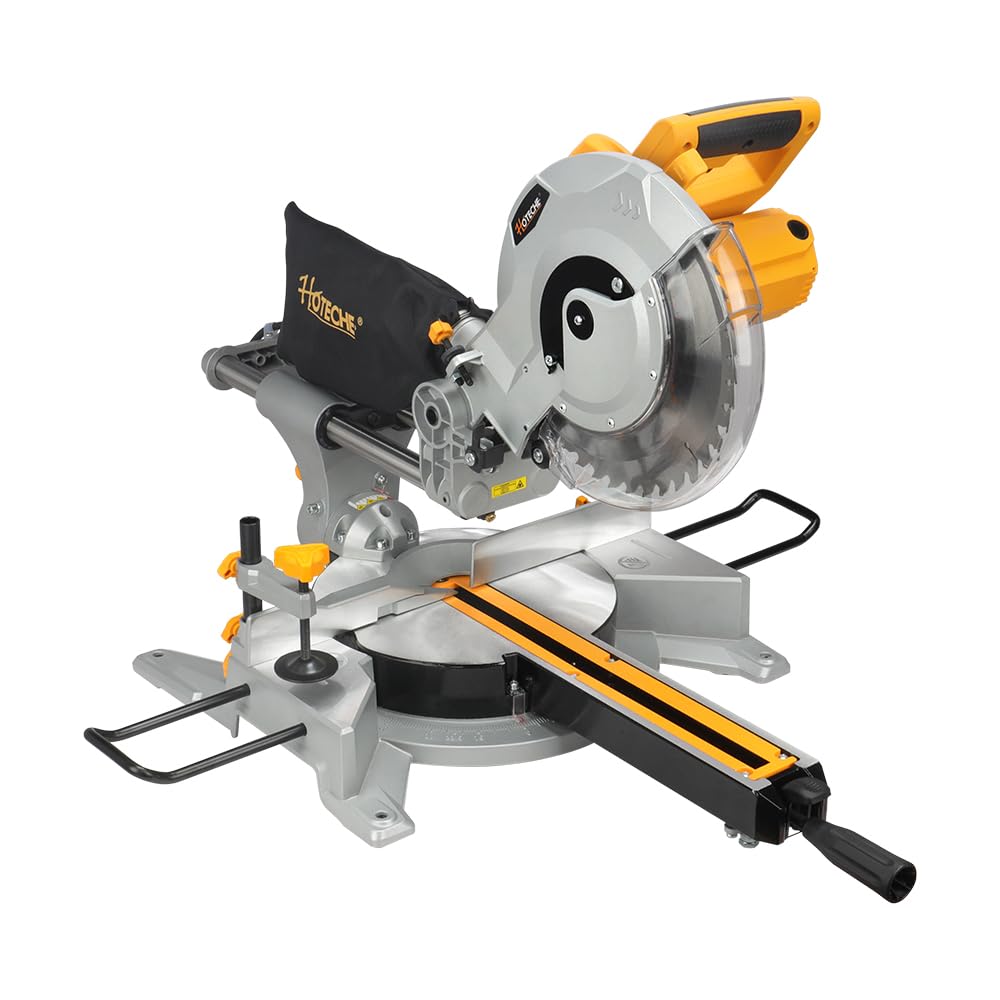
The Hoteche is a sliding 10-inch saw designed to handle workpieces up to 340mm (13.4 inches) in length, making it suitable for wide deck boards, long trim pieces, and crosscuts on 2×10 lumber. Its 15-amp motor delivers 4,500 RPM, and the 40-tooth TCT blade included with the saw cuts wood and plastic smoothly. The sliding mechanism features a single rail system that extends the blade reach significantly beyond what a chop-style saw can manage.
Users praised the laser guide for its accuracy, calling it essential for a first-time owner who needs visual confirmation of the cut line. The included accessory kit adds extension bars, a work clamp, a dust bag, and spare carbon brushes — a thoughtful inclusion for long-term motor maintenance. A few owners found the fence positioning limited the maximum cut width slightly, recommending a homemade auxiliary fence for wider boards.
At 34.9 pounds, the Hoteche is a middleweight sliding saw that sits firmly on a workbench or stand. The instructions for releasing the transport lock are not immediately intuitive; several users uploaded videos to help others. Once set up, the saw makes accurate, clean cuts on window casing, baseboards, and small framing projects. For a beginner who needs the extended reach of a sliding mechanism, the Hoteche provides it without jumping to a premium price.
Why it’s great
- Sliding rail provides 13.4-inch crosscut capacity
- Includes extension bars and spare carbon brushes
- Laser guide is accurate and easy to see
Good to know
- Transport lock release is not obvious for beginners
- Fence position limits maximum cut width slightly
5. Evolution Power Tools R185SMS+ Sliding Miter Saw

The Evolution R185SMS+ is a 7 1/4-inch sliding miter saw built around Evolution’s patented multi-material cutting technology. The included TCT blade cuts steel, aluminum, wood with embedded nails, and plastic with virtually no sparks or burrs. This makes it a unique option for a beginner who plans to work on metal shelving, conduit, or mixed-material projects in addition to woodworking.
Despite the smaller blade, the sliding mechanism extends the cut capacity significantly, and the 1,500W motor drives through mild steel smoothly. The laser guide and dust collection bag are included, though the dust bag is standard size and fills quickly when cutting metal chips. Users praised the ball-bearing slides for their smooth motion and the overall build quality for finish work — this is not a framing saw, but it excels at precise cuts on trim and metal stock.
One limitation is the absence of a ground plug on the cord, which may be a concern for some jobsite safety requirements. The saw pulls about 760W during operation, which is lower than its 1,500W rating suggests. For a beginner who wants a single saw that can start a project in wood and finish it in aluminum or steel, the Evolution R185SMS+ is a specialized and capable choice.
Why it’s great
- Cuts steel and aluminum with minimal sparks or burrs
- Smooth ball-bearing sliding mechanism
- Laser guide included for alignment
Good to know
- Smaller 7 1/4-inch blade limits depth of cut
- No ground plug on the power cord
6. Metabo HPT C10FCG2 10″ Compound Miter Saw
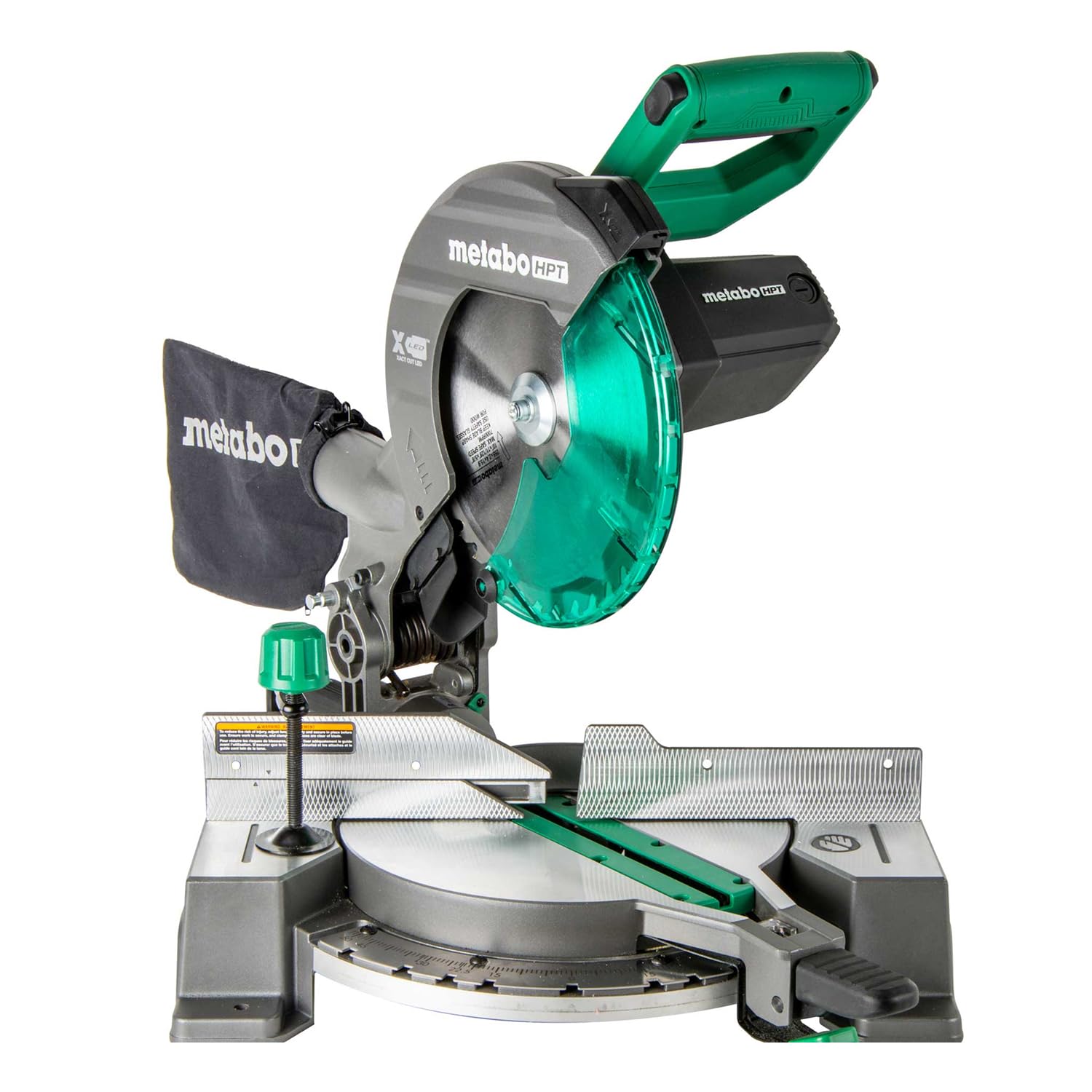
The Metabo HPT C10FCG2 is the lightest full-size 10-inch miter saw in this lineup at just 24.2 pounds, making it a top choice for anyone who needs to carry the saw between a garage and a truck bed. It uses a shadow-line cut indicator instead of a laser — a bright LED casts a sharp shadow of the blade onto the workpiece. This system has no laser diode to misalign and never needs batteries, a practical advantage for beginners who forget to check calibration.
The 15-amp motor spins at 5,000 RPM and cuts through pine, oak, and trim effortlessly. The miter range covers 0° to 52° left and right with positive stops, and the single bevel tilts 0° to 45° left. Users reported that the saw arrived square out of the box and required only a minor calibration on the 90° fence stop before making accurate cuts on baseboards and crown molding.
A few owners experienced a motor smell during the first ten minutes of use, which dissipated after break-in. The included dust collector is small but functional for a shop vac connection. The depth stop uses a set screw that some users replaced with a thumbscrew for easier adjustments on small stock. For the beginner who prioritizes portability and a durable cut-line system over sliding capacity, the Metabo HPT delivers renowned Japanese engineering in a lightweight package.
Why it’s great
- Only 24.2 lbs — extremely portable for a 10-inch saw
- Shadow line cut indicator is durable and battery-free
- 5-year warranty on the tool body
Good to know
- Non-sliding — crosscut width is about 5 inches
- Motor break-in period may produce a smell for the first 10 minutes
7. Evolution Power Tools R210CMS 8 1/4″ Compound Miter Saw

The Evolution R210CMS is an 8 1/4-inch compound miter saw with the same multi-material cutting technology as its larger sibling. It is the most compact saw in this guide, with dimensions of 15″ x 10.2″ x 15.5″ and a weight of just under 13 pounds. The included 24-tooth TCT blade cuts wood, aluminum, steel, and plastic with embedded nails, making it a true one-blade solution for small demolition and renovation projects.
The 1,200W hi-torque motor is optimized for the smaller blade diameter and cuts through 2020 aluminum extrusions and thin steel stock with minimal sparks. Users noted that the angle markings on the miter scale are too coarse for fine woodworking — an external digital angle finder is recommended for precise work. The chips and sparks fly aggressively from the blade area, so a shop vacuum with a good seal on the dust port is essential, not optional.
Several owners successfully converted the arbor to accept standard 5/8-inch blades by reversing a collar, unlocking a wider range of aftermarket blades. However, the plastic components near the blade can melt from hot metal shavings during extended metal cutting sessions. For the beginner who needs a highly portable saw for small crosscuts on mixed materials, the R210CMS is a niche tool that excels at its intended job.
Why it’s great
- Multi-material blade cuts wood, metal, and plastic
- Extremely compact and lightweight for transport
- Arbor can be converted to accept standard 5/8″ blades
Good to know
- Angle markings are too coarse for precise woodworking
- Metal shavings can melt plastic parts near the blade
8. MarvTool JS-1017C3 10″ Compound Miter Saw
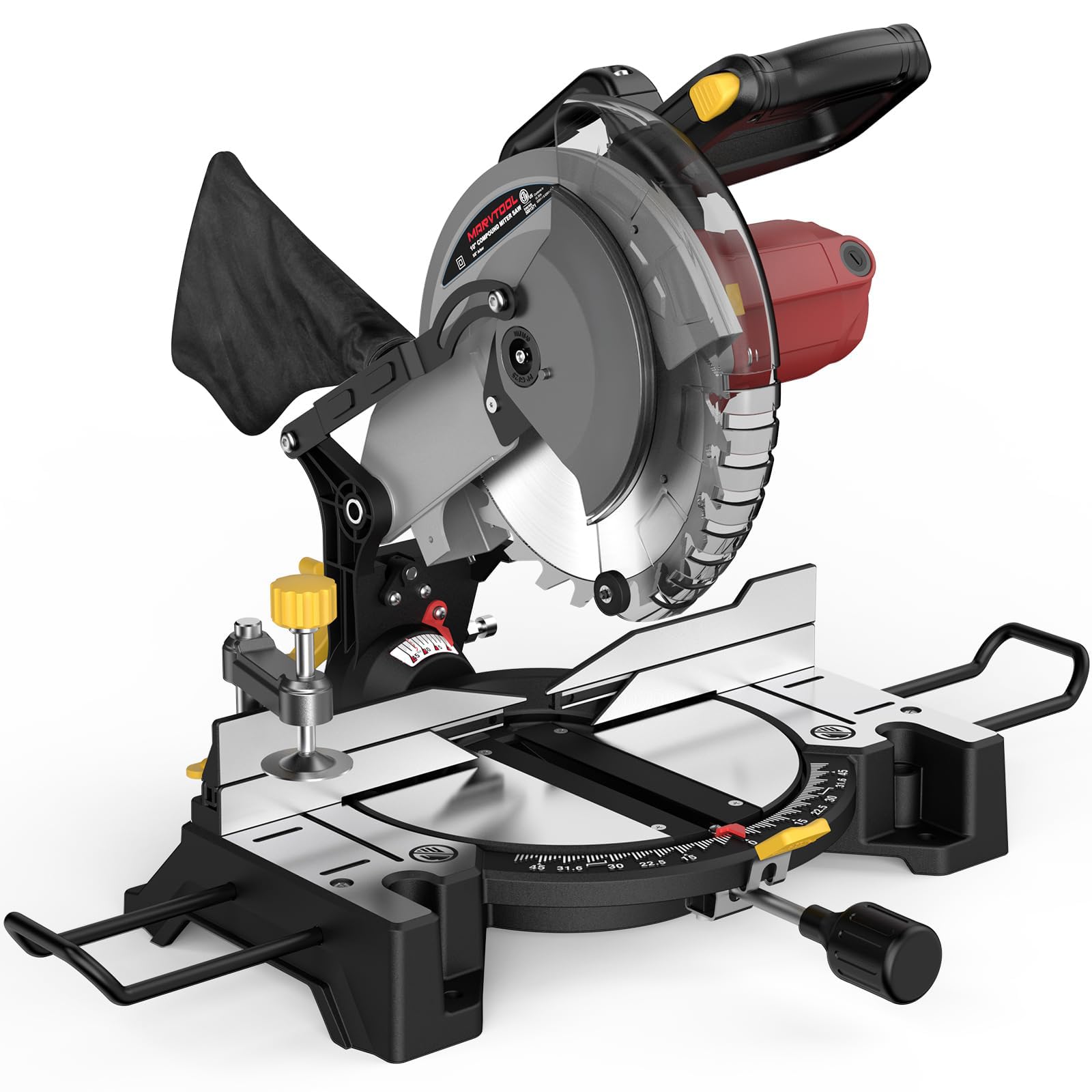
The MarvTool JS-1017C3 is one of the lightest 10-inch miter saws available at just 20.5 pounds, making it nearly effortless to move from a shelf to a workbench. The 15-amp motor produces 5,000 RPM, and the 36-tooth TCT blade handles wood, soft metal, plastic, and laminates. Two extension tables included with the saw provide extra support for longer boards, and a vise clamp secures the workpiece for consistent cuts.
Users were impressed by the saw’s power-to-weight ratio — it cuts through 2×4 and 4×4 pressure-treated lumber and even hardwood 2x4s without struggling. The miter range covers 0° to 45° left, and the bevel tilts 0° to 45° left, giving enough flexibility for basic crown molding. One owner reported using the saw for hundreds of cuts across three different blades without mechanical issues, attributing the durability to the simple, no-frills design.
The depth stop on the MarvTool is described as functional but flimsy, and several users recommended building a custom wood fence to improve accuracy on narrow cuts. The blade has a slight startup kick before reaching full speed, so clamping the workpiece is essential for safety. For the beginner on a tight budget who needs a full 10-inch blade diameter for standard trim work and light framing, the MarvTool offers surprising capability for its low weight and low cost.
Why it’s great
- Only 20.5 lbs — very easy to carry and store
- Powerful 15A motor cuts up to 4×4 lumber
- Includes two extension tables for longer boards
Good to know
- Depth stop is flimsy and may need custom fence
- Blade has a slight startup kick before reaching speed
9. Fulton Table Saw Miter Gauge
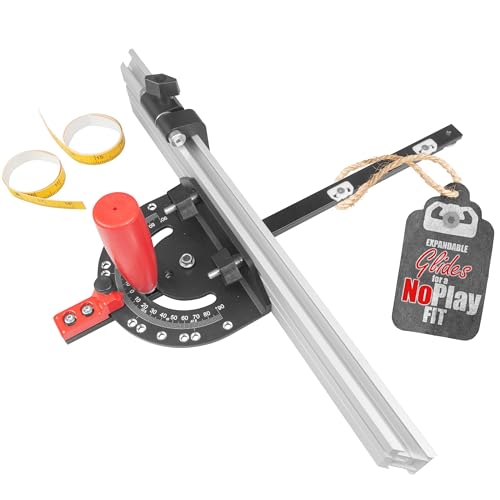
The Fulton Miter Gauge is not a standalone miter saw but an upgrade accessory for a table saw. If you already own a table saw and want to make accurate crosscuts without buying a separate miter saw, this gauge is a practical bridge solution. It features a zero-play miter bar that fits tightly in standard 3/4-inch table saw slots, reducing side-to-side movement that ruins angle accuracy.
The aluminum and steel build is sturdy, with an adjustable protractor head that offers 13 positive stops at common angles. The built-in aluminum fence provides workpiece support and slides smoothly on a UHMW base pad that protects the table surface. Users reported that the gauge arrived fully calibrated and fit a Dewalt 10-inch table saw and a Jet 14-inch bandsaw with minor adjustment.
Some users noted that the included tape measure has numbers that are hard to read, and the stock fence is too short for wide panels. Several made a custom wood fence and added a micro-adjust stop for precise repeatable cuts. For the beginner who wants miter accuracy on a table saw without buying a dedicated miter saw, the Fulton gauge is a well-reviewed and value-conscious solution.
Why it’s great
- Zero-play bar fits snugly in 3/4-inch table saw slots
- 13 positive stops for quick angle changes
- Sturdy all-aluminum build with steel components
Good to know
- Stock fence is short for wide panels
- Tape measure numbers are difficult to read
FAQ
Why do most 10-inch miter saws list a 5-inch crosscut capacity?
Can a single-bevel saw cut crown molding flat?
How often does a laser guide on a miter saw need recalibration?
Is a 15-amp motor enough for a beginner miter saw?
Final Thoughts: The Verdict
For most users, the beginner miter saw winner is the DOVAMAN Upgraded 10″ Sliding Miter Saw because it combines a dual-speed motor, a 13-inch sliding rail, three TCT blades, and a laser guide into a package that doesn’t demand a premium. If you need a lightweight, battery-free cut indicator for frequent trips between garage and jobsite, grab the Metabo HPT C10FCG2. And for a proven budget saw that handles 2x4s and baseboards with a high-quality 60T blade out of the box, nothing beats the Genesis GMS1015LC.