
Our readers keep the lights on and the weekend projects moving. As an Amazon Associate, I earn from qualifying purchases.
The most common mistake new piano students make isn’t missing a note—it’s learning on a keyboard that can’t teach their fingers how to play. A beginner piano keyboard with unweighted, spring-loaded keys builds bad muscle memory that has to be unlearned later. If you want real progress from day one, you need a keyboard designed to respond like an acoustic instrument, not a toy.
I’m Rikta — the co-founder and writer behind FitlyFast. I’ve logged hundreds of hours researching keyboard specifications, analyzing customer experiences across skill levels, and comparing the nuanced differences in key action, sound engines, and connectivity to find what truly serves a beginner.
This guide breaks down the top options to help you find the right beginner piano keyboard that balances realistic touch, quality sound, and modern learning features without overwhelming a new player.
How To Choose The Best Beginner Piano Keyboard
Before you sort through 61 or 88 keys, the decision on weighting determines whether your keyboard is a learning tool or a passing distraction. Separating what matters from marketing noise will save you time and keep you engaged as you progress.
Key Weighting: Semi-Weighted vs. Graded Hammer Action
Semi-weighted keys offer resistance without mimicking the heavier bass or lighter treble of an acoustic piano. They’re a solid upgrade from unweighted synth-action keys and are often found in mid-range portables. Graded hammer action (GHA) uses internal weights to replicate the feel of an acoustic grand, making it essential for building proper finger technique. Budget-friendly keyboards often skip this entirely, so check the spec sheet carefully.
Polyphony: The Invisible Ceiling
Polyphony is the number of notes a keyboard can produce simultaneously. A 64-note polyphony floor is recommended—128-note is better. Lower counts cause notes to drop out during fast passages or when holding the sustain pedal, which frustrates beginners who don’t understand why their music cuts short. This spec is often buried in fine print; don’t ignore it.
Learning Tools and Connectivity
Modern beginner keyboards can pair with apps that turn practice into guided lessons. USB-MIDI connectivity lets you use apps like Simply Piano or flowkey with instant feedback. Keyboards with built-in LED light guides or lesson modes are especially useful for absolute beginners, but they should never replace the importance of a good key action. Bluetooth connectivity adds convenience for wireless connection to tablets or phones.
Quick Comparison
On smaller screens, swipe sideways to see the full table.
| Model | Category | Best For | Key Spec | Amazon |
|---|---|---|---|---|
| Yamaha P225 | Premium | Realistic acoustic feel | GHC Graded Hammer Action | Amazon |
| Donner DDP-200 | Premium | Home upright experience | Graded Hammer Action | Amazon |
| Donner DDP-90 Pro | Mid-Range | Compact weighted practice | Hammer Action Weighted | Amazon |
| Donner DEP-08 | Mid-Range | Beginner with triple pedal | Velocity-Sensitive Keys | Amazon |
| Casio CT-S300 Pack | Mid-Range | Portable with bundle value | Touch Responsive Keys | Amazon |
| KUMENG KU-3506 | Entry-Level | Stylish 88-key starter | Semi-Weighted Keys | Amazon |
| The ONE Smart Keyboard COLOR | Entry-Level | LED-guided learning | Unweighted Keys | Amazon |
| FingerBallet BX20 | Entry-Level | Travel-friendly foldable | Semi-Weighted Foldable | Amazon |
| JOYMUSIC 61-Key Pack | Budget | Complete starter bundle | Unweighted Keys | Amazon |
In‑Depth Reviews
1. Yamaha P225 88-Key Digital Piano

The Yamaha P225 uses a Graded Hammer Compact (GHC) keyboard action, meaning the low keys are heavier and the high keys feel lighter—just like an acoustic grand. This builds correct finger strength from the first lesson, something no unweighted keyboard can provide. The PureCF sound engine samples Yamaha’s flagship CFX concert grand, giving beginners a rich, resonant tone that inspires consistent practice.
At just over 25 pounds, the P225 is lightweight enough to move between rooms or take to a teacher’s studio. It features dual headphone jacks for silent practice with a friend or teacher, Bluetooth audio and MIDI for wireless app connectivity, and 24 instrument voices for variety. The included sustain foot switch is a basic model, but the keyboard’s acoustic grand piano voice alone makes it worth the investment.
The Smart Pianist app unlocks guided lessons, voice selection, and practice tools through an intuitive interface. This combination of pro-level key action and beginner-friendly app integration makes the P225 a long-term investment that grows with the player—no need to upgrade after six months of practice.
Why it’s great
- Authentic graded hammer action builds proper technique
- CFX grand piano sound engine with rich resonance
- Lightweight portable design with Bluetooth support
Good to know
- Basic sustain pedal included; upgrading recommended
- Limited to 24 instrument voices
2. Donner DDP-200 Digital Piano
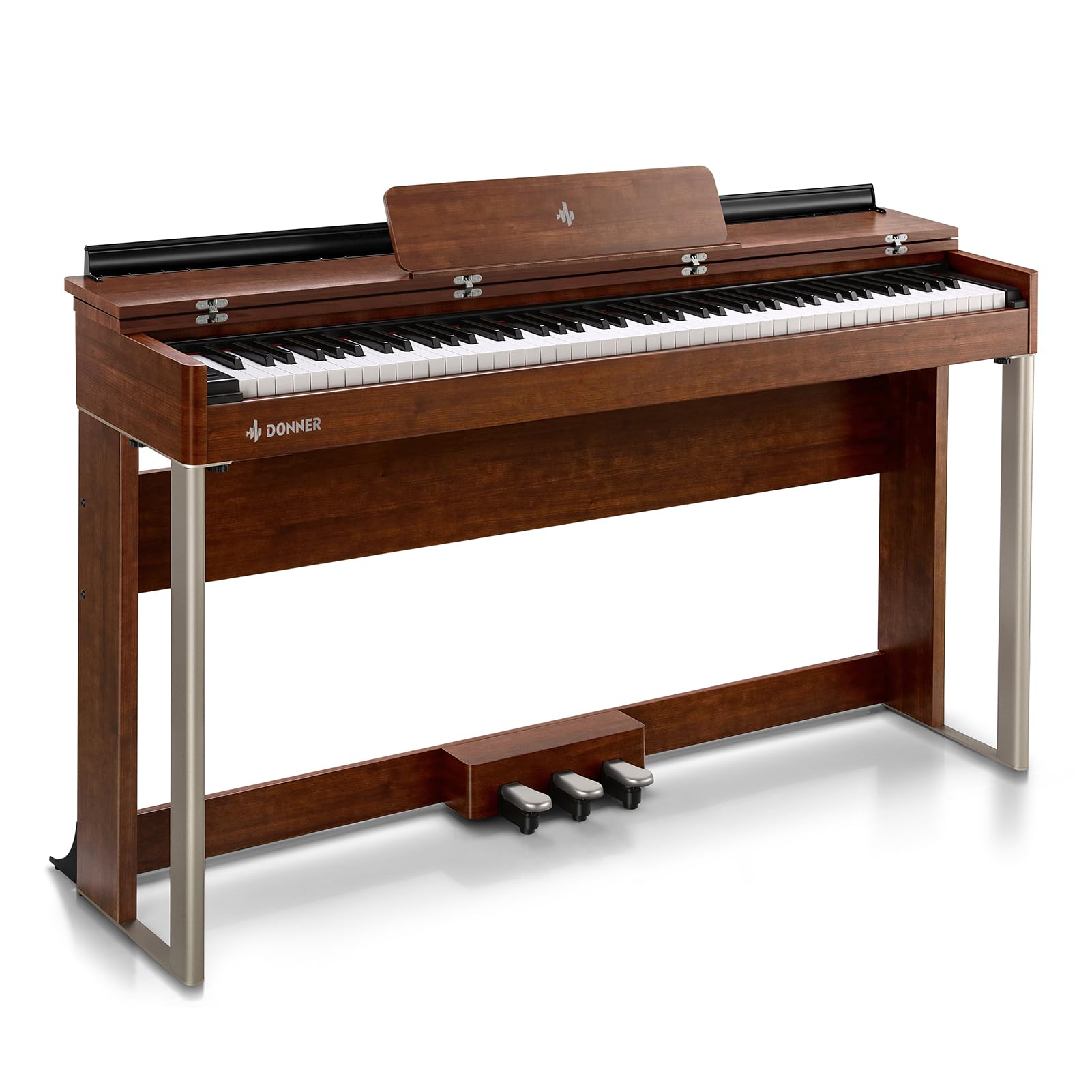
The DDP-200 uses a dual-sensor graded hammer action keyboard that closely mimics the heft of an upright piano. The new 3D speaker system uses a hanging box design to deliver a more three-dimensional soundstage, so the audio fills a room without sounding artificially boosted. With 128-note polyphony, complex pedal passages won’t choke—a critical feature for students moving beyond basic two-hand exercises.
Its wood grain cabinet doubles as attractive furniture, and the magnetic music stand accommodates both sheet music and an iPad. The 1.3-inch LCD screen displays reverb effects, tone selection, and demo songs, making navigation clear. Bluetooth MIDI connectivity allows wireless connection to notation and learning apps, and dual headphone jacks enable shared silent practice with a teacher.
The standout feature is the advanced reverb engine with five adjustable effects, which helps beginners learn how different acoustic environments change their sound. The DDP-200 is built for those who want a furniture-grade upright that sounds and plays like a real piano without the maintenance of tuning.
Why it’s great
- Realistic graded hammer action with dual sensors
- Immersive 3D speaker system with rich reverb
- Elegant wood grain furniture design with magnetic stand
Good to know
- Assembly requires two people for proper setup
- Some users report a wobbly stand on uneven floors
3. Donner DDP-90 Pro Digital Piano
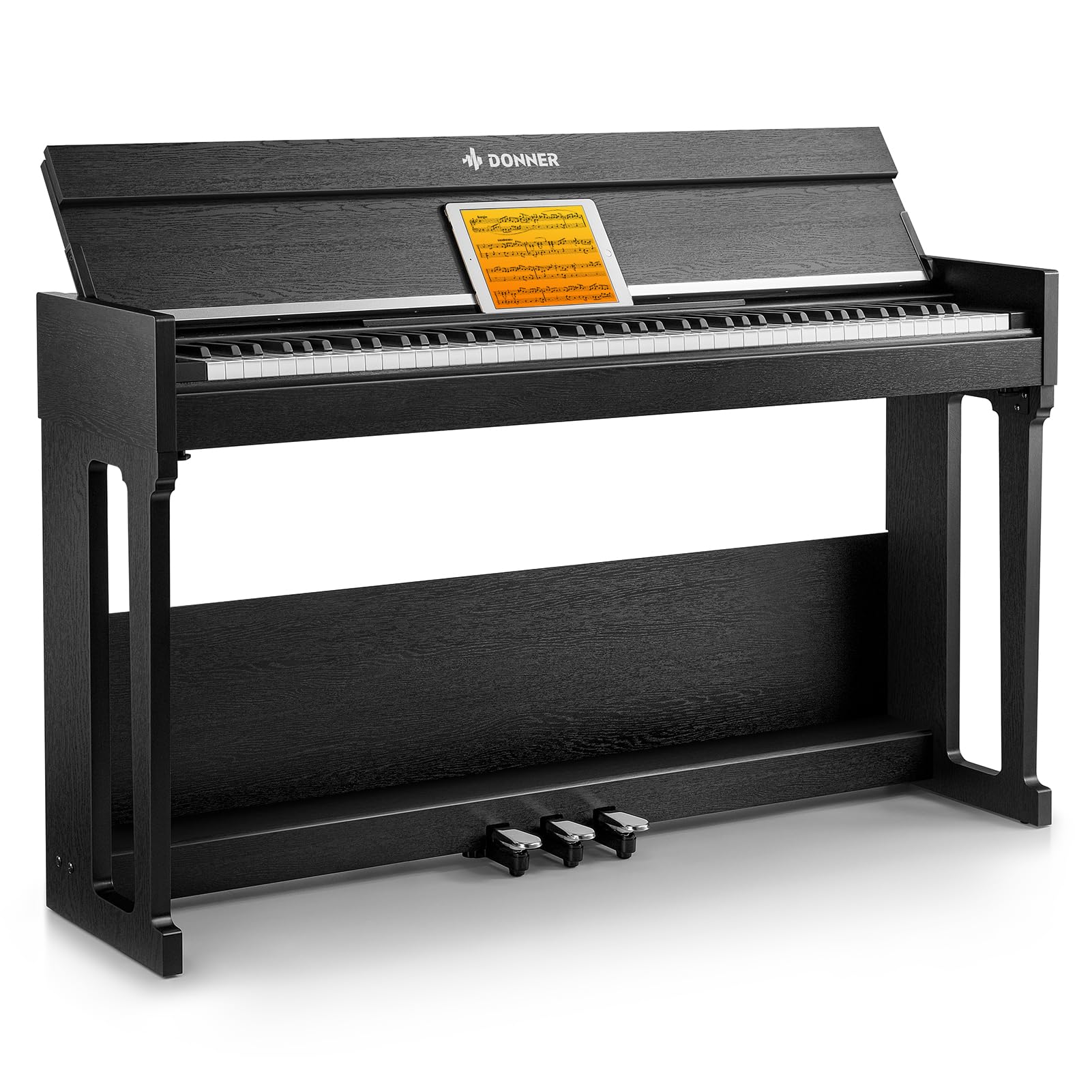
The DDP-90 Pro offers weighted hammer action keys with an ivory-feel texture, providing the resistance needed for proper finger development while still being forgiving for beginners. The 238 tones and 200 rhythms give plenty of room to explore, but the core attraction is the acoustic grand piano sample that makes practicing rewarding. Its compact upright body saves floor space without sacrificing key size.
USB-MIDI connectivity works across PC, tablet, and phone for direct use with GarageBand, Ableton Live, and lesson apps. The U-disk playback feature reads MP3 files directly from a flash drive, letting students play along with backing tracks. The metal triple-pedal system supports half-pedaling, which is advanced for a beginner but useful if they continue lessons long-term.
The slow-close fallboard protects the keys and prevents slammed lids on small fingers. While the DDP-90 Pro is heavier to move than a portable keyboard, its solid build and responsive weighted action make it a proper practice instrument for dedicated learners.
Why it’s great
- Weighted hammer action with ivory-feel surface
- Triple-pedal system for full expression
- U-disk playback and USB-MIDI connectivity
Good to know
- Heavier than portable options
- Assembly can be confusing with manual discrepancies
4. Donner DEP-08 Digital Piano

The DEP-08 uses velocity-sensitive keys that respond to how hard or soft you press, offering a realistic touch response that helps beginners understand dynamic control. The 128-note polyphony is generous at this price tier, ensuring no note drops when using the sustain pedal or playing layered sounds. It includes a removable stand and triple-pedal unit, which is rare for a compact beginner piano.
The LED digital tube display shows the current voice and rhythm selection, while the split mode divides the keyboard into two zones with different sounds—useful for teacher-student duets or exploring instrument blending. Headphone mode enables private practice, and the built-in stereo speakers deliver clear sound for small rooms. The accompaniment function provides rhythm backing in various styles, making solo practice more engaging.
Setup is straightforward, taking about 15 minutes with basic tools. The DEP-08 is slightly smaller than a standard upright, but the key size is full scale. It balances affordability with features that encourage regular practice without overwhelming a new player with unnecessary complexity.
Why it’s great
- 128-note polyphony and velocity-sensitive keys
- Triple-pedal system included with stand
- Split mode for duet teaching or dual-instrument play
Good to know
- Stand is slightly lower than standard height
- Some experienced players find keys feel slightly narrower
5. Casio CT-S300 Premium Keyboard Pack

The Casio CT-S300 offers 61 touch-responsive keys that register velocity changes, making it a step above basic unweighted keyboards. With 400 tones and 77 rhythms, it provides extensive variety to keep young beginners engaged without the commitment of a full-weighted 88-key instrument. The Dance Music Mode lets users create EDM-style tracks by layering beats and synth sounds, which is a creative hook for reluctant learners.
This bundle includes a sturdy X-stand, Samson headphones, and power supply, so there is no extra shopping for accessories after purchase. The USB-MIDI output connects to the Chordana Play app for structured lessons and real-time feedback. At just over 7 pounds, the keyboard itself is highly portable, making it easy to move between the living room and a child’s bedroom.
The CT-S300 works on 6 AA batteries for away-from-home use, which adds flexibility for outdoor recitals or travel. While the 48-note polyphony is lower than the rest of this guide, it still supports most beginner pieces without audible note dropping. This pack is ideal for families unsure about long-term commitment who want a quality entry point.
Why it’s great
- Touch-responsive keys teach dynamic playing
- Complete bundle with stand, headphones, and power supply
- Lightweight and battery-operable for portability
Good to know
- 48-note polyphony is lower than some alternatives
- Stand could be more sturdy for serious use
6. KUMENG KU-3506 Digital Piano
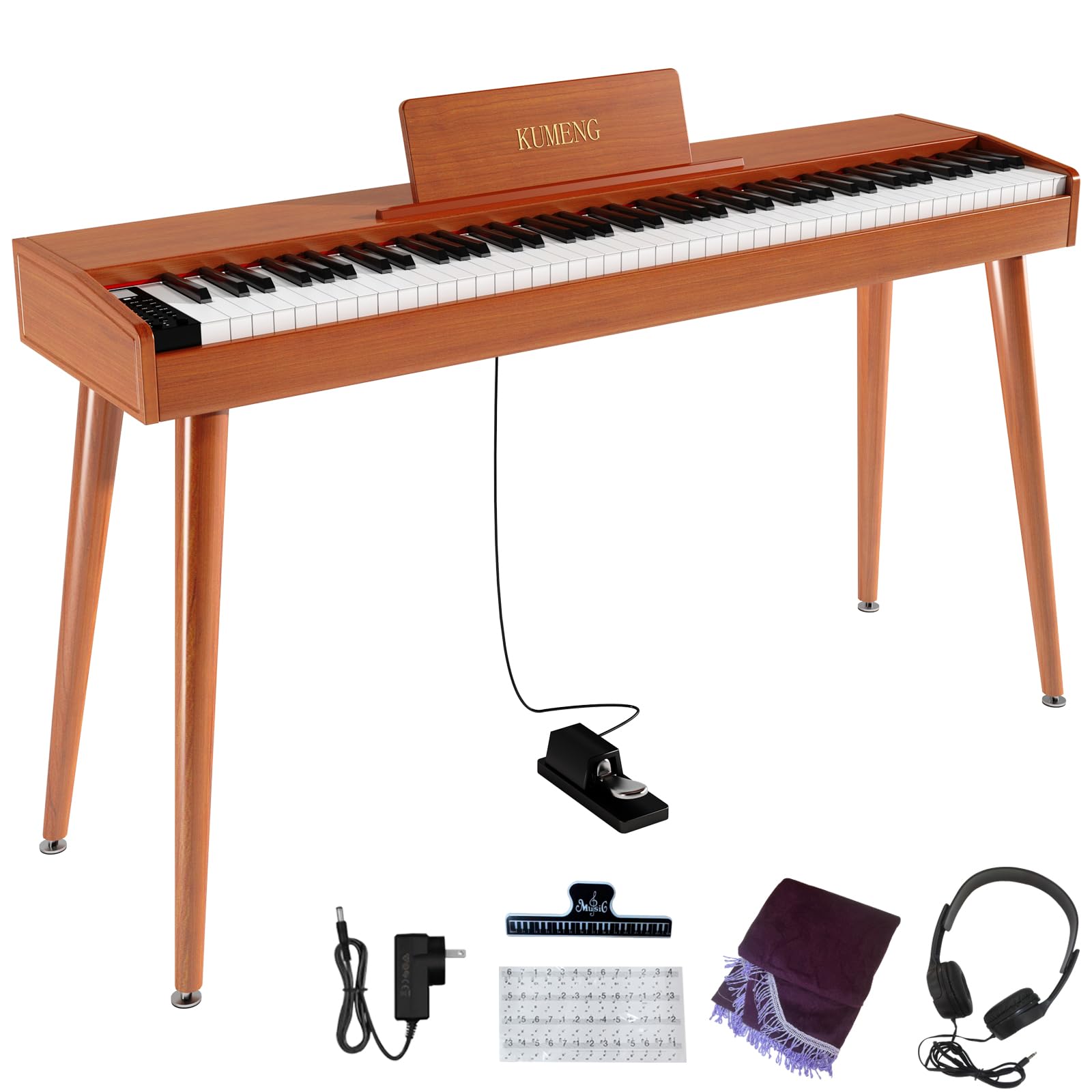
The KUMENG KU-3506 delivers an 88-key semi-weighted keyboard that offers moderate resistance, bridging the gap between synth-action and fully weighted pianos. It features 800 tones and 128-note polyphony, which is impressive for an entry-level instrument and ensures detailed sound reproduction during complex passages. The built-in recording function and dual keyboard split mode help beginners track progress and experiment with layered sounds.
USB-MIDI connectivity allows direct connection to phones, tablets, or PCs for use with GarageBand, Ableton Live, and lesson apps. The woodgrain finish and tapered legs give it the appearance of a real upright that fits naturally into a home living space. The included sustain pedal and sheet music stand mean no additional purchases are needed to start playing immediately.
The control panel uses simple buttons and a clear display, reducing the learning curve for navigating the many onboard sounds. While the keys are semi-weighted rather than fully graded, the 88-note range and high polyphony provide a correct foundation for beginners planning to transition to an acoustic piano later.
Why it’s great
- 88 semi-weighted keys with 128-note polyphony
- 800 tones and recording function for practice
- Elegant woodgrain furniture-style cabinet
Good to know
- Semi-weighted action lacks graded heft of acoustic pianos
- Design may be too compact for larger adults at the bench
7. The ONE Smart Keyboard COLOR

The ONE Smart Keyboard COLOR uses built-in red LED lights above each key that illuminate to show which notes to play, creating a visual guide that accelerates muscle memory for absolute beginners. With 61 full-sized unweighted keys, it prioritizes learning speed over acoustic feel, making it ideal for casual learners who want quick results. The companion app contains over 4,000 sheet music pieces, 100 instructional videos, and interactive games that adapt to the user’s skill level.
It offers 256 tones and 64-note polyphony, plus Bluetooth MIDI for wireless connection to third-party music apps. The keyboard runs on either the included power supply or 4 AA batteries for up to 6 hours, making it truly portable. At only 7.7 pounds, it is one of the lightest options in this guide, easy to carry between rooms or pack for travel.
The LED system works best with the companion app, which provides real-time feedback and progress tracking. Some users note the light-up feature requires the app to function. For those who want to feel a party trick and a learning tool in one package, this keyboard removes the intimidation of blank white keys and replaces it with guided repetition.
Why it’s great
- LED-guided keys teach finger placement visually
- Extensive app library with 4,000+ songs and lessons
- Extremely lightweight and battery-operable
Good to know
- Unweighted keys do not build finger strength
- Light-up feature requires app connection
8. FingerBallet BX20 Folding Piano

The FingerBallet BX20 features a unique folding design that splits an 88-key semi-weighted keyboard into two halves, allowing it to fit into a compact carrying bag for true portability. The keys are velocity-sensitive with a light weighting that is more responsive than unweighted boards but lighter than graded hammer action. It includes 128 tones, 128 rhythms, and 20 demo songs, plus Bluetooth MIDI for wireless connection to DAW software and lesson apps.
Built-in rechargeable battery lasts several hours, and the package comes with a sustain pedal, USB cable, charger, music holder, and carrying bag. The 3.5mm headphone jack allows silent practice, and the USB-MIDI port connects to computers for recording and editing. At under 10 pounds, this is the only folding option in the guide that offers a full 88-key range in a carry-on-friendly format.
Speakers are tinny at high volume, so headphones or external amplification is recommended for quality sound. The key feel is better described as semi-weighted with some spring resistance, suitable for travel practice but not ideal as a primary instrument for developing proper technique. It serves a specific niche: the traveling musician or student who needs 88 keys in a backpack.
Why it’s great
- Folding design fits in a compact travel bag
- Full 88 keys with velocity sensitivity
- Rechargeable battery and Bluetooth MIDI support
Good to know
- Built-in speakers lack clarity at higher volumes
- Key action feels springy, not weighted like an acoustic
9. JOYMUSIC 61-Key Electronic Keyboard Pack

The JOYMUSIC 61-key pack is the complete starter solution for households testing the waters of music education. It includes the keyboard, X-stand, stool, headphones, microphone, and power supply—everything needed to play out of the box. The keys are unweighted and spring-loaded, which is typical for entry-level keyboards but means no resistance training for the fingers.
It offers 255 timbres, 255 rhythms, 8 percussion pads, and 24 demo songs, with an LCD display that shows a twinkling guide to help learners hit the right keys. The master volume, accompaniment volume, and tempo controls are accessible on the front panel, and there is a recording function for capturing practice sessions. The included headphone jack allows silent practice, and the microphone adds a sing-along element for family fun.
The stool is lightweight and suited for children or smaller adults, and the stand is functional but not heavy-duty. At this entry level, the focus is on accessibility and low commitment—if interest fades, the investment is minimal. For absolute beginners, especially young children, this pack removes the friction of separate accessory purchases.
Why it’s great
- Complete bundle: keyboard, stand, stool, headphones, microphone
- LCD with guiding lights helps beginners follow along
- Low commitment option for testing interest
Good to know
- Unweighted keys do not build proper finger technique
- Stool is not sturdy for heavier users
FAQ
How many keys should a beginner piano keyboard have?
Do weighted keys matter for a complete beginner?
What is the minimum polyphony for a beginner keyboard?
Can a beginner use a keyboard with a smartphone app for lessons?
Final Thoughts: The Verdict
For most users, the beginner piano keyboard winner is the Yamaha P225 because its graded hammer compact action and CFX grand piano sound provide a realistic foundation that encourages proper technique and daily practice without needing an upgrade. If you want the furniture-style upright with advanced reverb and an immersive sound experience at home, grab the Donner DDP-200. And for the best value with velocity-sensitive keys, triple pedal support, and a compact footprint, nothing beats the Donner DEP-08.