
Our readers keep the lights on and the weekend projects moving. As an Amazon Associate, I earn from qualifying purchases.
Starting your running journey should feel liberating, not overwhelming with endless metrics and complicated menus. A solid beginner running watch cuts through the noise—it delivers accurate distance, a clear pace reading, and a heart rate check without burying you in data you didn’t ask for. Too many new runners buy a premium triathlon watch and never use half the features, or worse, grab a basic fitness band that can’t link to GPS properly.
I’m Rikta — the co-founder and writer behind FitlyFast. I’ve spent months breaking down the hardware specs, GNSS chipsets, and loading the raw metrics that actually matter when you’re learning to pace a 5K or track your first half-marathon prep.
This guide focuses on the models that deliver reliable GPS lock, readable displays, and beginner-friendly training plans without forcing you into a complicated ecosystem. After deep research, here is your definitive shortlist of the best beginner running watch choices available right now.
How To Choose The Best Beginner Running Watch
The biggest mistake beginners make is overbuying. A watch built for ultramarathoners or triathletes packs dozens of power metrics, lactate threshold tests, and multi-band navigation that you will not use until you are much further along. For your first running watch, focus on three core pillars: GPS accuracy that works on city streets and tree-covered paths, a battery that handles a full week of daily runs without panic, and a simple training plan or coach feature that helps you build a routine. Skip watches that require a paid subscription to unlock basic pace data—your training data belongs to you.
GPS Accuracy and Satellite Connectivity
Standard single-frequency GPS can drift significantly under heavy tree cover or near tall buildings. This is why you read reviews that say “my distance was way off.” Dual-band or multi-GNSS (GPS + GLONASS + Galileo) watches correct this drift nearly completely. For a beginner, a watch with dual-band GPS ensures your pace and distance are trustworthy from the first run, which builds confidence and keeps you motivated. Check for a spec that says “dual-band” or “five-satellite” support—this is the single spec most likely to save you frustration.
Battery Life That Matches Your Routine
A beginner running watch should survive a week of daily runs (30-45 minutes each) plus all-day wear for step and sleep tracking. Look for at least 10-15 days of smartwatch mode and 15+ hours of GPS mode. Watches that claim two weeks but die after five days with GPS use are common—check customer reviews for real-world battery claims. The sweet spot for a new runner is a watch that charges under two hours and still has 30 percent left on Sunday after a week of training.
Built-In Training Plans vs. Manual Programming
The most beginner-friendly watches include adaptive training plans: you tell the watch you want to run a 5K or a 10K, and it builds a weekly schedule that adjusts based on your pace and recovery. This removes the guesswork entirely. Garmin, COROS, and mibro all offer this via their free apps. Avoid watches that only offer a stopwatch and a distance log—they add no value beyond a phone app. The goal is a watch that acts like a coach, not a stopwatch.
Display Visibility and Comfort
AMOLED screens look brilliant indoors but can wash out in direct sunlight. Transflective MIP displays (like the Garmin Forerunner 55) stay readable in bright sun without cranking brightness, which saves battery. Weight is also critical: a 36g to 50g watch body disappears on the wrist, while a 70g rugged watch can feel heavy during long runs. If you have smaller wrists, a case diameter under 45mm and a nylon strap will be significantly more comfortable than silicone and steel.
Quick Comparison
On smaller screens, swipe sideways to see the full table.
| Model | Category | Best For | Key Spec | Amazon |
|---|---|---|---|---|
| COROS PACE 4 | Running Watch | Serious beginners & structured training | 32g weight, 41hr GPS, AMOLED | Amazon |
| SUUNTO Run | Running Watch | Lightweight wear & accurate dual-band GPS | 36g, 12D daily, 21hr GPS | Amazon |
| Garmin Forerunner 55 | Running GPS | True entry-level with Garmin Coach | 2-week battery, MIP display | Amazon |
| Amazfit Active 3 Premium | Running Smartwatch | Offline maps & sapphire glass | 12D battery, 6-satellite GPS | Amazon |
| Garmin vívoactive 5 | Fitness Smartwatch | Health-first runners & sleep tracking | AMOLED, 11D battery, music | Amazon |
| CARBINOX Blaze | Rugged Smartwatch | Outdoor durability & ABC tools | IP69K, 480mAh, 7 GPS modes | Amazon |
| mibro GS Pro2 | GPS Running Watch | Budget-friendly dual-band & 20-day battery | 20D daily, 20hr GPS, 5ATM | Amazon |
| CMF BY NOTHING Watch 3 Pro | Smartwatch | AI features & budget price | 1.43″ AMOLED, L1+L5 GPS | Amazon |
| mibro GS Active2 | Budget Running Watch | Ultra-light build & 15-day battery | 39g, dual-band GNSS, AMOLED | Amazon |
In‑Depth Reviews
1. COROS PACE 4 Ultralight Sport GPS Watch
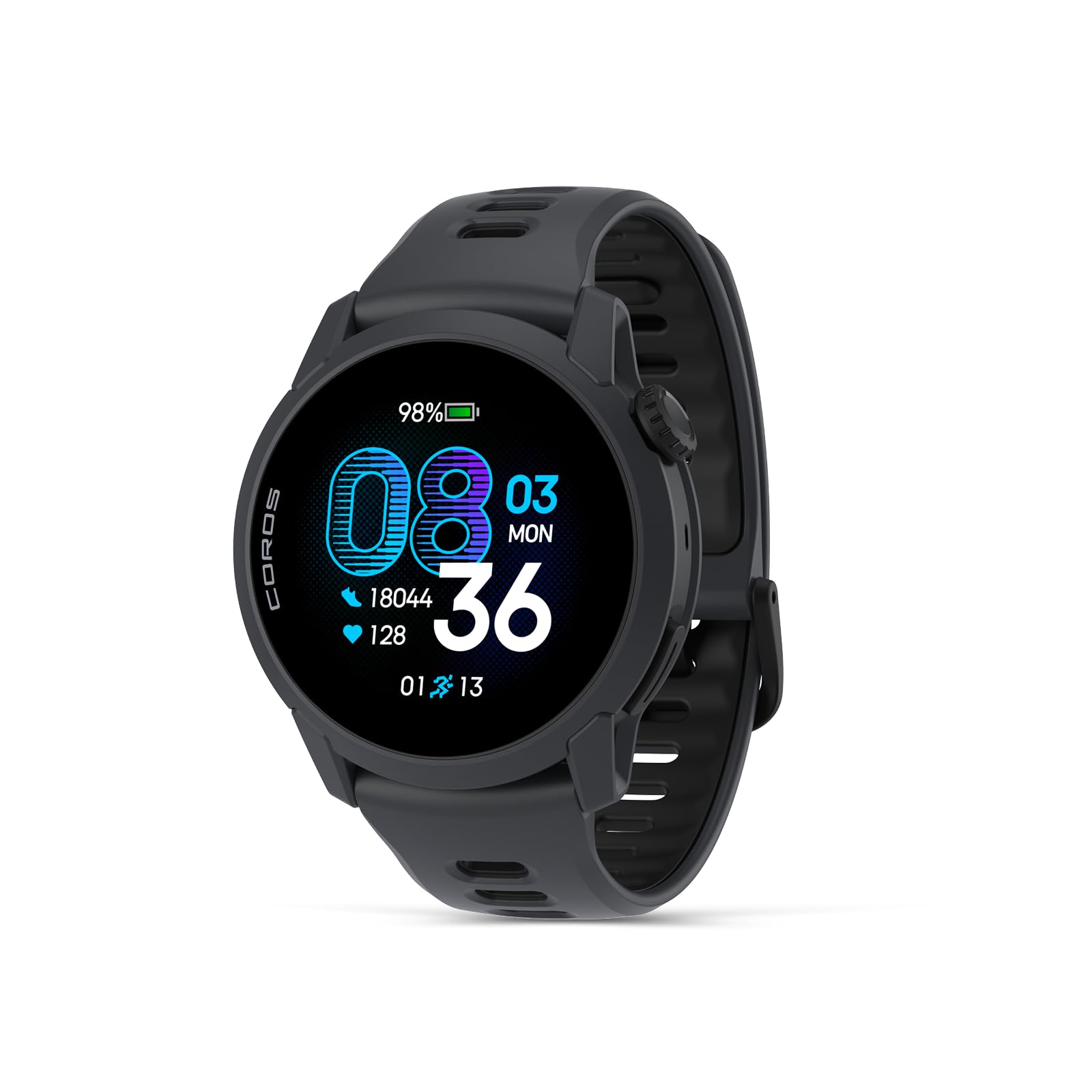
COROS designed the PACE 4 as a dedicated runner’s tool first and a smartwatch second, which is exactly the mindset a beginner needs. The weight of 32g with the nylon band is so negligible you will genuinely forget you are wearing it—this matters when you are trying to focus on breathing and form. The 1.2-inch AMOLED display is sharp and auto-adjusts brightness, and the combination of a digital crown, two buttons, and a touchscreen makes navigation instinctive even during a hard interval.
Where the PACE 4 dominates the beginner category is its training ecosystem. The COROS app generates adaptive training plans (5K, 10K, half-marathon, marathon) based on your current fitness level, and the watch itself tracks recovery time, HRV, and sleep stages to tell you when to push and when to rest. The dual-frequency GPS is among the most accurate in this tier—one reviewer noted it outperformed a high-end Garmin on a shared route. The voice recording feature lets you tag notes during a run without stopping, which is surprisingly useful for logging how a new route felt.
The battery life is class-leading: 41 hours of continuous GPS use and up to 19 days of daily wear. Even with an hour of GPS tracking each day, you will charge roughly once every two to three weeks. The only downsides are a lack of onboard music storage (4GB for COROS, not enough for big playlists) and the need to buy a screen protector separately. For the beginner who plans to run regularly and wants a watch that grows with them, this is the best place to invest.
Why it’s great
- Ultralight 32g design disappears on the wrist
- 41-hour GPS battery outlasts any multiday race
- Free adaptive training plans from 5K to marathon
- Accurate dual-frequency GPS beats many premium rivals
Good to know
- No NFC payments or onboard music streaming
- Screen is scratch-prone; a protector is recommended
2. SUUNTO Run Sports Watch
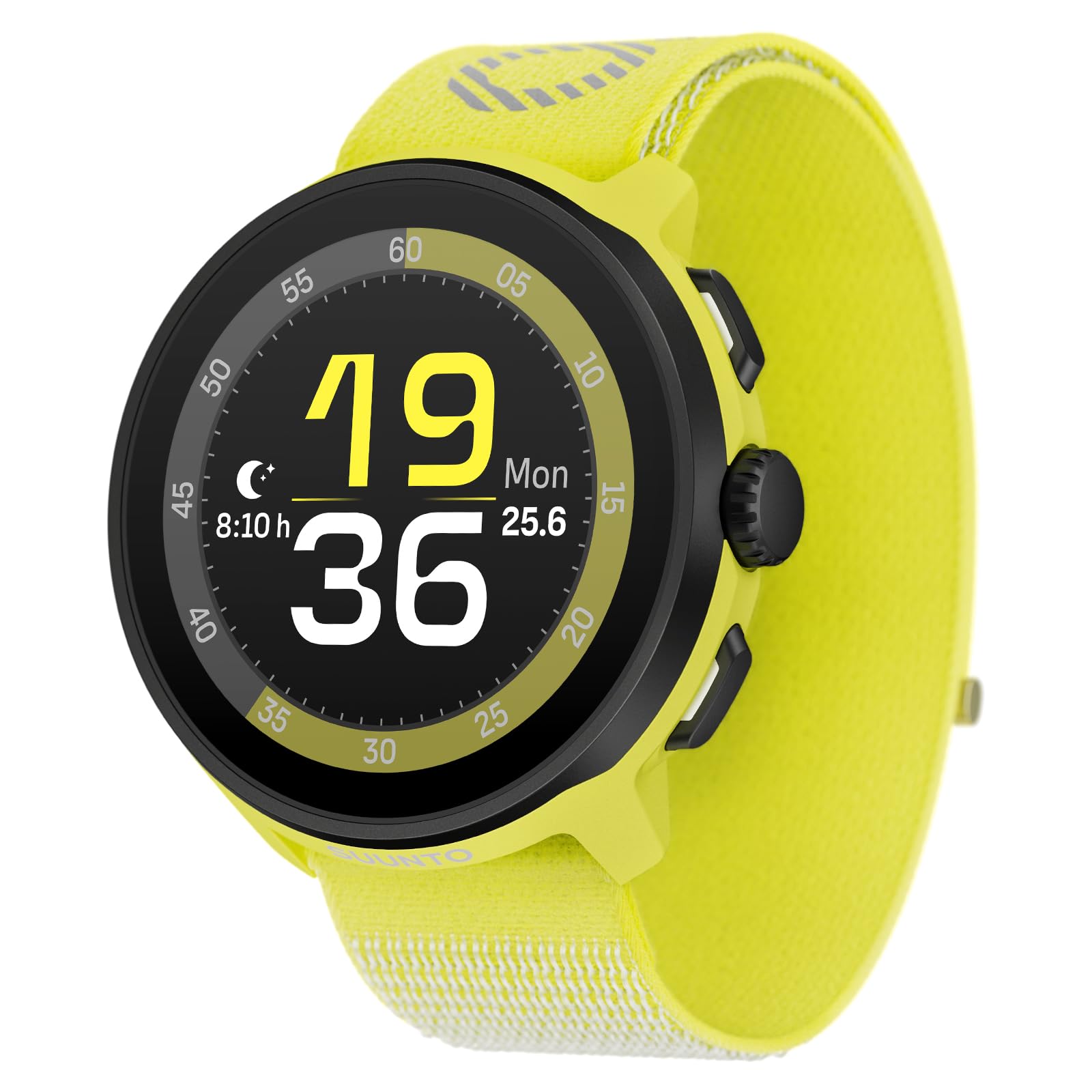
SUUNTO has long been known for serious adventure watches, but the SUUNTO Run is a focused, lightweight runner’s companion that strips away the bulk while keeping premium GPS hardware. At 36g with the textile velcro strap, it is barely heavier than a fabric wristband, and the 1.32-inch AMOLED display with a crown button provides excellent readability mid-stride. The dual-frequency GPS locks quickly and stays accurate even on winding trails under canopy cover—one reviewer who runs from 5K to ultras said the tracking is “terrific.”
Training features include Training Stress Score (TSS), post-exercise heart rate recovery, and a training load tracker that helps beginners understand when they are overtraining. The watch offers multiple sport modes (hiking, cycling, tennis, boxing) but is clearly optimized for running. The 12-day daily battery and 21-hour GPS mode mean you can train most of the week without thinking about charging, and the fast-charge reaches full in one hour. Offline music storage (4GB) lets you run phone-free if you load a few playlists.
The SUUNTO app is clean but lacks the deep weekly scheduling of Garmin Coach or COROS adaptive plans. Some users found sleep tracking less accurate than expected, and there is no NFC for contactless payments. But for the beginner who values an incredibly light wrist feel and reliable dual-band GPS above all, the SUUNTO Run is a strong mid-range pick that feels more premium than its price suggests.
Why it’s great
- Remarkably light (36g) with comfortable velcro strap
- Dual-frequency GPS delivers accurate tracks
- Fast 1-hour charge for 12 days of daily use
- Includes training load and TSS for smart progress
Good to know
- Lacks adaptive training plan building in the app
- Sleep tracking reviews are mixed
- No NFC payment support
3. Garmin Forerunner 55

The Garmin Forerunner 55 is the watch that beginners have been buying for years, and for good reason: it does not try to be a fashion accessory or a smartwatch replacement. It is a purpose-built running watch with a transflective MIP display that stays perfectly readable in direct sunlight—no glare, no squinting. The button-only interface (no touchscreen) takes a few runs to get used to, but it means no accidental screen taps during a sweaty workout. The wrist-based heart rate monitor tracks reliably, and GPS accuracy is solid for city and park routes.
The standout feature for a new runner is Garmin Coach, which offers free adaptive training plans for 5K, 10K, and half-marathon distances. You choose a coach (Amy, Greg, or Jeff) and time goal, and the watch adjusts workouts based on your actual performance and recovery. The PacePro feature provides GPS-based pace guidance for a selected course—you can enter a 5K distance and get real-time pace alerts. Wellness extras include intensity minutes, fitness age, all-day respiration, and stress tracking, all without a subscription.
Battery life is rated at two weeks in smartwatch mode and 20 hours in GPS mode. Real-world users report about five to seven days with daily GPS use, which is still well above average. The charging cable is a proprietary Garmin clip that can be finicky to align. The display is lower-resolution than AMOLED models, and there is no music storage or NFC pay. For the purest entry-level running experience with a massive app ecosystem and proven durability, the Forerunner 55 remains the benchmark.
Why it’s great
- Garmin Coach adaptive plans are free and effective
- MIP display is always readable in bright sunlight
- Solid battery life for a full week of training
- Button-only control prevents accidental inputs
Good to know
- No AMOLED screen, no touchscreen
- No onboard music or NFC payments
- Charging cable alignment can be tricky
4. Amazfit Active 3 Premium
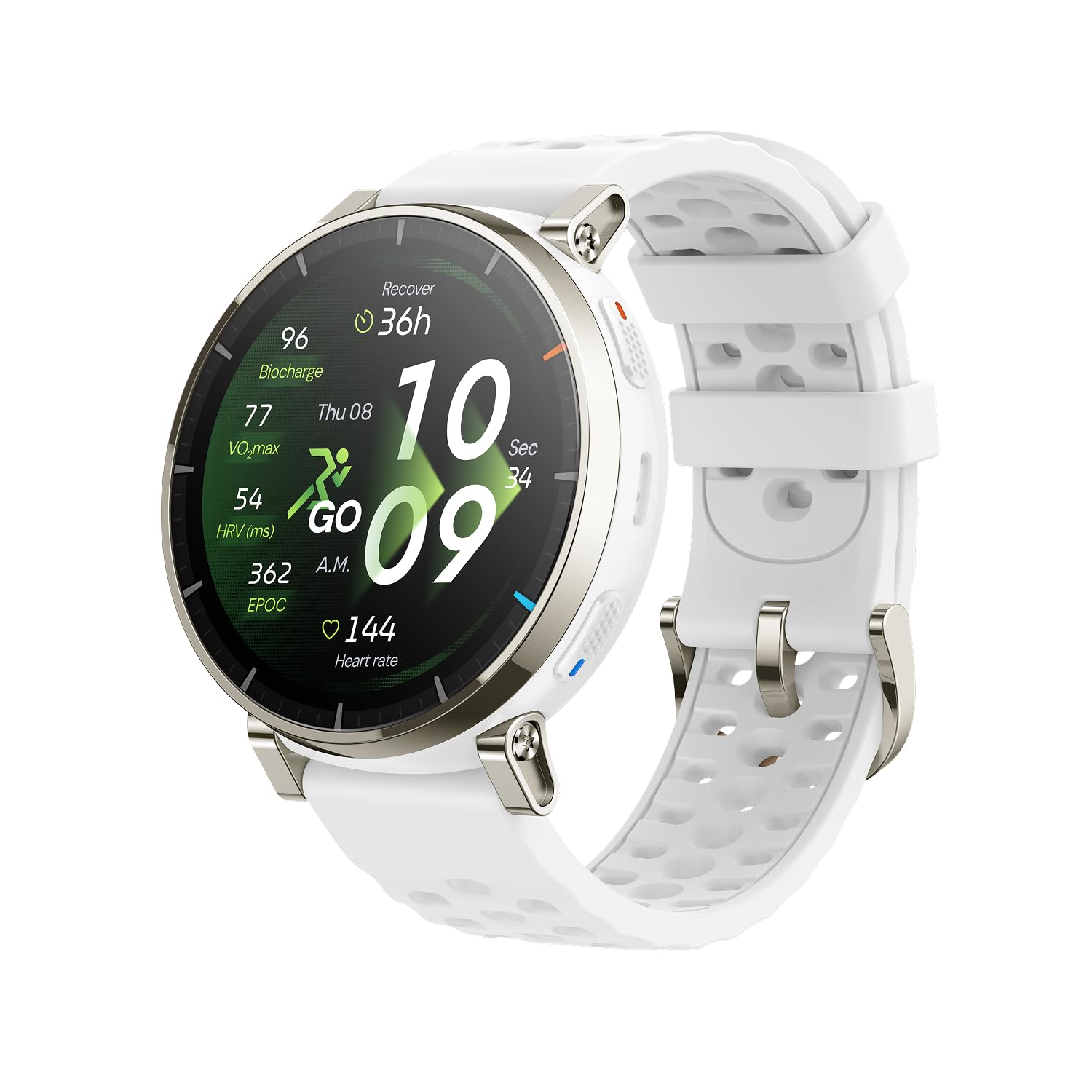
The Amazfit Active 3 Premium brings materials and features usually found on watches costing significantly more: a stainless steel frame, sapphire glass, and a 1.32-inch AMOLED display with excellent brightness. The sapphire screen is nearly impossible to scratch, which is a relief for anyone who hates applying screen protectors. The six-satellite GPS system locks quickly and maintains accuracy, and the offline maps with turn-by-turn directions mean you can navigate a new route without carrying your phone.
Training tools include the Zepp Coach, which builds personalized plans for distances from 5K to full marathon. The watch tracks running posture, ground contact time, lactate threshold, and running power—metrics that advanced runners use but that beginners can also learn from over time. The BioTracker sensor monitors heart rate, SpO₂, stress, and sleep quality, and the Zepp app summarizes trends clearly. The 12-day battery holds up well under daily use with GPS runs every other day.
Some users note that the watch faces skew toward a youthful aesthetic and that elevation data requires manual export. The app experience is polished but not as deep as Garmin Connect. Voice-to-text messaging only works fully with Android. Overall, the Active 3 Premium is an excellent choice for the beginner who wants a premium-feeling watch with a sapphire screen and offline maps, without jumping to a top-tier price bracket.
Why it’s great
- Sapphire glass is highly scratch-resistant
- Offline maps with turn-by-turn navigation
- Six-satellite GPS for accurate tracking
- Excellent 12-day battery life
Good to know
- Elevation data requires manual export
- Watch faces may look toy-like to some
- Android-only for speech-to-text replies
5. Garmin vívoactive 5

While the Forerunner line is built purely for running, the Garmin vívoactive 5 is a wellness-centered smartwatch with robust running features, making it ideal for the beginner who also cares deeply about sleep, stress, and overall health. The bright AMOLED display is a major visual upgrade from the Forerunner 55 and makes daytime reading easy. The fiber-reinforced polymer case keeps weight low, and the silicone band is comfortable for 24/7 wear.
Health monitoring is the vívoactive 5’s superpower. It offers Body Battery energy monitoring, a morning report that summarizes sleep and recovery, nap detection with personalized insights, HRV status, stress tracking, and menstrual cycle tracking. For running, it packs over 30 built-in GPS and indoor sports apps, plus Garmin Coach adaptive training plans. Wheelchair mode tracks pushes instead of steps, and wheelchair-specific workouts are preloaded. Music storage with offline playlists from Spotify/Amazon Music/Deezer means you can run phone-free.
Battery life is rated at 11 days in smartwatch mode (5 days with always-on display), which matches real-world usage at around seven to ten days. The touchscreen is responsive, and the interface is intuitive. The main downsides: no advanced running metrics like running power or lactate threshold, and the sleep tracking occasionally logs false naps. The vívoactive 5 is best for the runner who wants a stylish everyday wearable that doubles as a capable running watch.
Why it’s great
- Excellent overall health and sleep tracking
- Bright AMOLED display with always-on option
- Onboard music storage with streaming playlists
- Garmin Coach adaptive training plans included
Good to know
- No advanced running power or running dynamics
- Sleep tracking occasionally logs false naps
- No Wi-Fi, Bluetooth-only connectivity
6. CARBINOX Blaze Smart Watch
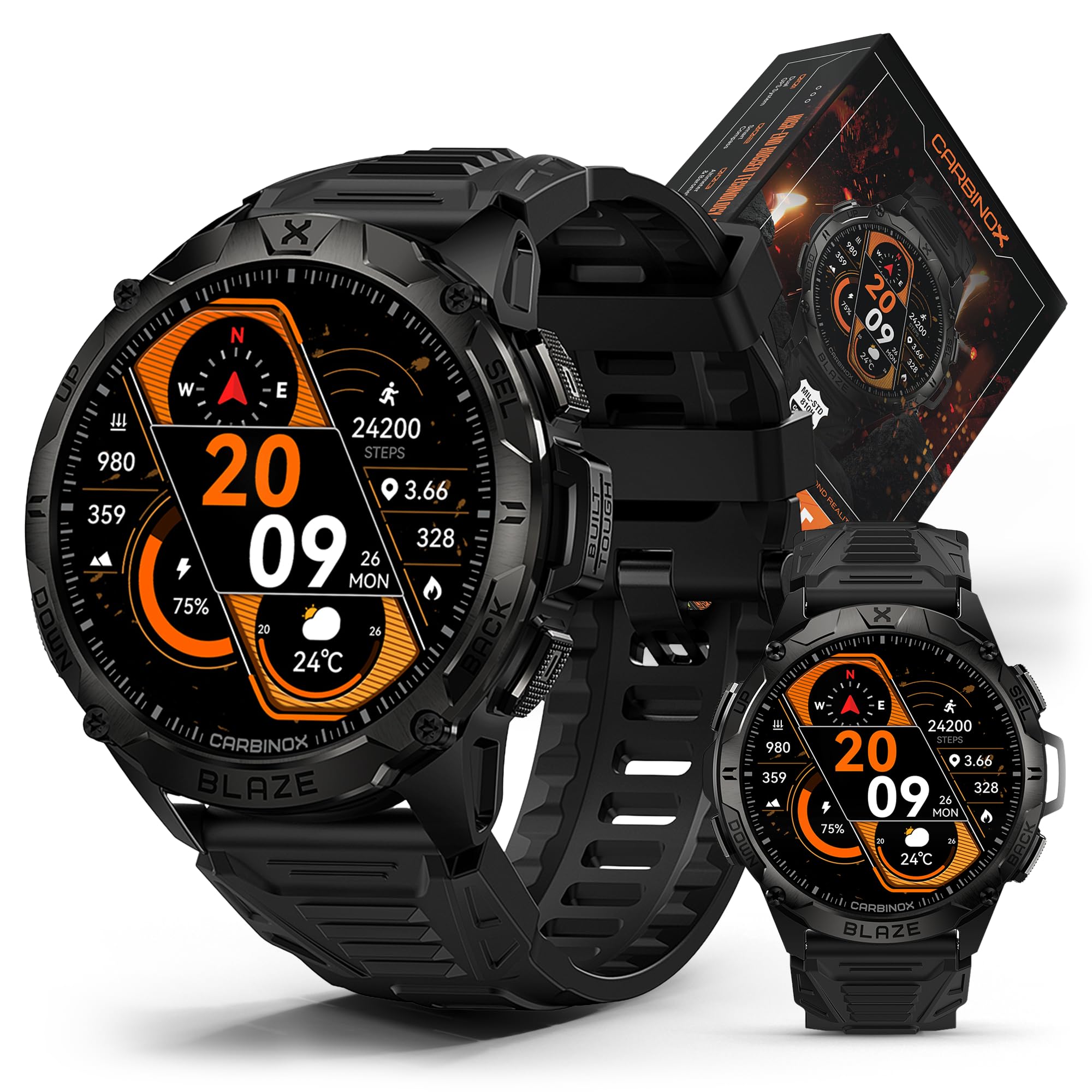
The CARBINOX Blaze is built for beginners whose runs often start on a trail, a worksite, or a backcountry path rather than a sidewalk. The IP69K rating means it can handle pressurized water jets, dust, and drops that would destroy a standard smartwatch. The Gorilla Glass display resists scratches, and the reinforced band stays secure even during hard physical labor or intense trail runs. The built-in altimeter, barometer, and compass (ABC tools) provide real-time elevation, air pressure, and directional data that are actually useful for trail navigation.
GPS accuracy comes from seven outdoor sport modes including walking, running, cycling, skiing, mountaineering, and cross-country, each with mapped route tracking. The 480mAh battery lasts about a week with daily GPS use, and the watch supports Bluetooth calling and social app notifications so you can leave your phone behind. Health monitoring covers heart rate, SpO₂, stress, and sleep stages, though the sensor accuracy is not medical-grade. Health monitoring covers heart rate, SpO₂, stress, and sleep stages, though the sensor accuracy is not medical-grade.
The watch is thicker and heavier than an AMOLED running watch, so it feels substantial on the wrist. The app is functional but not as refined as Garmin or COROS. Some users noted the original silicone band broke after a year, but a stainless steel band replacement solved that. For the beginner who runs in challenging environments and needs a watch that can handle mud, rain, and drops without complaint, the CARBINOX Blaze is the toughest option in this roundup.
Why it’s great
- Extreme IP69K waterproof and dust rating
- Built-in altimeter, barometer, and compass
- Gorilla Glass for scratch resistance
- Bluetooth calling keeps you connected hands-free
Good to know
- Heavier and bulkier than standard running watches
- Sensor accuracy is adequate but not top-tier
- App quality lags behind Garmin and COROS
7. mibro GS Pro2
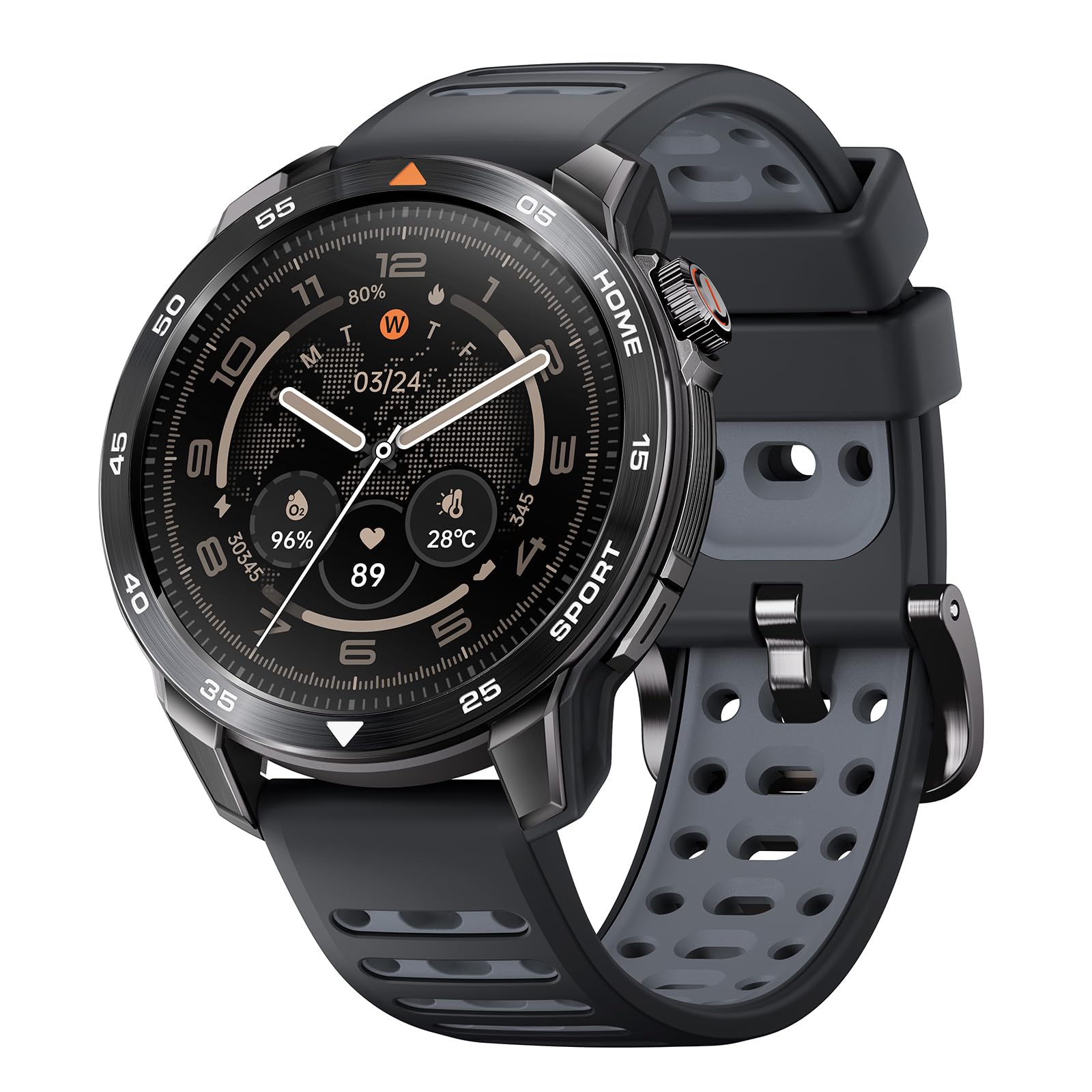
The mibro GS Pro2 packs dual-band GPS and a built-in coach into a watch that costs significantly less than most competitors. The dual-band GNSS locks quickly and maintains accuracy on tree-lined streets and near tall buildings—exactly the kind of GPS drift that frustrates beginners. The 1.43-inch AMOLED display is large and sharp, making pace and distance easy to read at a glance. The included nylon and silicone dual-strap kit adds versatility, though the strap may be tight for larger wrists.
The mibro Coach feature provides personalized training plans based on your running habits, tracking metrics like cadence, stride, and pace in real-time. The watch also tracks heart rate, SpO₂, training load, and recovery time. With 150+ workout modes and 5ATM water resistance, it handles pool swimming and rainy runs without worry. Battery life is excellent: 20 days in daily mode and 20 hours in GPS mode, which covers most training cycles without charging.
Customer reviews are overwhelmingly positive, with users praising the screen resolution and GPS accuracy. A few noted the band is too small for very large wrists, and the user interface takes a moment to learn. The brand is less established than Garmin or COROS, but the hardware quality and features at this price point are hard to fault. For the budget-conscious beginner who refuses to compromise on GPS accuracy and battery life, the GS Pro2 is an outstanding value.
Why it’s great
- Dual-band GPS delivers premium-level accuracy
- 20-day battery with 20-hour GPS endurance
- Sharp 1.43-inch AMOLED display
- Free mibro Coach adaptive training plans
Good to know
- Band may be too small for very large wrists
- Brand recognition lower than Garmin/COROS
- Interface has a slight learning curve
8. CMF BY NOTHING Watch 3 Pro

The CMF BY NOTHING Watch 3 Pro is a design-forward smartwatch that also handles running well, making it a unique pick for the beginner who values aesthetics and AI-driven features. The 1.43-inch AMOLED display is vivid, and the brushed metal case gives it a premium look that fits equally well in the boardroom and on the trail. The L1+L5 dual-band GPS provides accurate route tracking, though it is not as refined as Garmin or COROS in dense urban canyons.
The AI Energy Score analyzes your daily activity and suggests how hard to push your next workout. The watch supports 130+ sport modes, seven types of automatic motion recognition, and GOMORE-powered performance analysis. Bluetooth calling with AI noise reduction works well, and the voice notes feature lets you record quick thoughts mid-run. The 13-day battery life holds up well, and the IP68 rating handles sweat and rain. ChatGPT integration is available for Nothing smartphone users.
Reviewers consistently praise the value for the price, though some note that heart rate and sleep tracking accuracy are not on par with Garmin or COROS. The screen scratches more easily than sapphire glass models, and the watch lacks a stopwatch or timer out of the box. The app can feel slow to load. For the beginner who wants a stylish everyday smartwatch that happens to track runs accurately, the CMF Watch 3 Pro is an exceptional budget-friendly choice.
Why it’s great
- Beautiful 1.43-inch AMOLED with brushed metal design
- L1+L5 dual-band GPS for accurate running routes
- AI Energy Score guides daily workout intensity
- Excellent battery life and fast charging
Good to know
- HR and sleep accuracy lags Garmin/COROS
- Screen scratches more easily than sapphire
- No built-in stopwatch or timer
9. mibro GS Active2
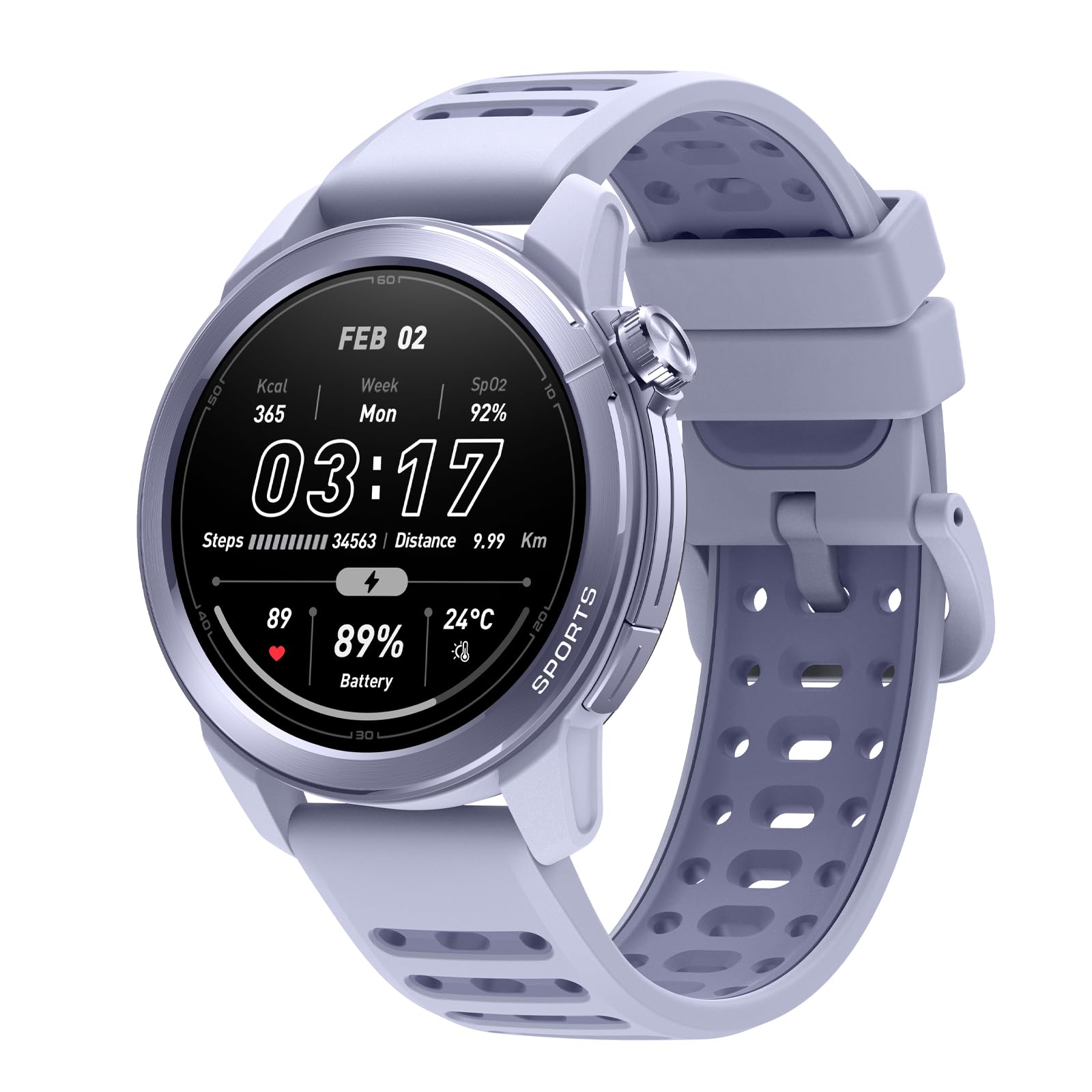
The mibro GS Active2 is the lightest watch in this roundup at just 39g with the nylon band, making it the most comfortable option for long runs and all-day wear. Despite the featherweight build, it includes dual-frequency GNSS (five-satellite system) that locks quickly and maintains accuracy, and the 1.46-inch AMOLED display is bright and colorful. The 15-day battery in daily mode and 15 hours in GPS mode are solid, though some users report slightly shorter real-world battery life.
Mibro includes free adaptive training plans for 5K, 10K, and half-marathon distances—a rare feature at this price tier. The watch calculates VO₂ Max, running ability index, cadence, stride, and pace in real-time, providing coach-like feedback that helps beginners understand their form. With 150+ sport modes and 5ATM water resistance, it handles swimming and surfing. The Bluetooth connectivity requires occasional re-pairing with the phone, and syncing with Strava or AllTrails is less seamless than with Garmin.
Customer reviews highlight the incredible value for the price, with many calling it “best for the money.” There are occasional reports of units failing after a few weeks (the seller replaced them quickly), and some users note the GPS accuracy can drift compared to higher-end brands. For the budget-conscious beginner who prioritizes a lightweight wrist feel and wants built-in training plans, the GS Active2 is an impressive entry point.
Why it’s great
- Ultra-light 39g nylon strap feels barely there
- Dual-frequency GNSS with five-satellite support
- Free adaptive 5K/10K/half-marathon training plans
- Bright AMOLED display at an entry-level price
Good to know
- Bluetooth reconnection required with some phones
- GPS accuracy not as consistent as Garmin/COROS
- Syncing with Strava/AllTrails is not seamless
FAQ
Do I need a subscription for training plans on a beginner running watch?
Can a beginner running watch track sleep and stress accurately?
How much GPS battery do I really need for 5K training?
Should I buy a touchscreen or button-only running watch?
Final Thoughts: The Verdict
For most users, the beginner running watch winner is the COROS PACE 4 because it combines ultralight comfort, industry-leading GPS battery life, and free adaptive training plans that grow with you from first run to marathon. If you want the proven reliability of the Garmin ecosystem with the best beginner coaching tools, grab the Garmin Forerunner 55. And for a budget-friendly dual-band GPS experience with a vibrant display that won’t break the bank, nothing beats the mibro GS Pro2.