
Our readers keep the lights on and the weekend projects moving. As an Amazon Associate, I earn from qualifying purchases.
A sewing machine that jams on the third seam, tangles its bobbin on the fourth, and snaps the thread before you finish a hem is not a learning tool — it is a frustration engine. Too many beginner machines are built to hit a low price point, not to survive the first project. The difference between a machine that teaches you and one that makes you quit comes down to stitch quality, feeding reliability, and how easily you can fix the inevitable beginner mistake.
I’m Rikta — the founder and writer behind FitlyFast. I’ve spent years tracking sewing machine specs, reading service manuals, and cross-referencing thousands of real-world reviews to understand exactly which mechanical and electronic choices separate a machine you outgrow in a month from one you still use years later.
This guide is built around that data. It walks through the real specs that matter for a new sewist — stitch count doesn’t matter if the feed dogs slip, and buttonhole variety is useless if the needle threader fails on day two. The goal is to match your first project stack to the machine that won’t fight back, starting with the beginner sewing machine picks that actually reward patience with progress.
How To Choose The Best Beginner Sewing Machine
Every brand advertises “beginner-friendly,” but the label alone tells you nothing about whether the machine can handle a folded seam on cotton or a curved hem on a sleeve. The following three criteria are the actual separators between a machine that teaches you and one that teaches you to hate sewing.
Frame Construction: Metal vs. Plastic
A machine with a full metal internal frame resists the vibration that causes skipped stitches when you push through multiple layers. Plastic-frame machines flex under load, which shifts the needle timing. For a beginner, a metal frame means every mistake — from a too-fast start to a stuck pin — is less likely to knock the machine out of alignment.
Bobbin System: Drop-In vs. Front-Loading
A jam-resistant drop-in top bobbin lets you see the thread supply and fix a bird’s nest without removing the entire casing. Front-loading oscillating hook systems are common on trusted mechanical machines, but they require precise bobbin winding and case loading. Beginners who value less fumbling should prioritize drop-in systems.
Needle Threader Reliability
The automatic needle threader is one of the most common failure points on budget machines. If the little metal hook bends or misaligns on day one, you are back to manual threading. Look for machines where the threader is a separate mechanical lever, not an integrated electronic function, because you can verify it works before the return window closes.
Quick Comparison
On smaller screens, swipe sideways to see the full table.
| Model | Category | Best For | Key Spec | Amazon |
|---|---|---|---|---|
| Brother CP100X | Computerized | All-in-one sewing & quilting with 100 stitches | 100 built-in stitches, metal frame | Amazon |
| Janome JW8100 | Computerized | Quilting-ready with extension table & hard cover | 100 stitches, 7-piece feed dog | Amazon |
| Brother XM3700 | Mechanical | Lightweight daily mending & garment sewing | 37 stitches, jam-resistant drop-in bobbin | Amazon |
| Janome 2212 | Mechanical | Simple, durable mechanical machine for denim & fleece | 12 stitches, snap-on presser feet | Amazon |
| SINGER HD500 | Mechanical | Heavy-duty sewing on canvas & multiple denim layers | Full metal frame, enhanced piercing power | Amazon |
| MILLEPUNTI MKR45 | Mechanical | Affordable versatility with 25 stitches | 25 stitches, automatic needle threader | Amazon |
| FEIYUE FYe390 | Mechanical | Energy-saving servo motor with jam protection | Servo motor, thread jam protection | Amazon |
| Stoigeld SM-725 | Entry-Level | Compact starter kit for light fabric home mending | 12 stitches, 2-speed control | Amazon |
| PooLin EOC06 | Computerized Embroidery | Dedicated embroidery with 200 built-in designs | 7-inch touchscreen, 200 designs | Amazon |
In‑Depth Reviews
1. Brother CP100X Computerized Sewing and Quilting Machine

The Brother CP100X delivers the widest functional range you can hand a beginner without overwhelming them. One hundred utility, decorative, and heirloom stitches plus eight auto-size buttonholes give you room to grow from hemming jeans to piecing a quilt top. The fixed needle bar and durable metal frame keep stitches consistent even when you push through denim or multiple cotton layers — a critical feature for a learner who hasn’t yet internalized feed control.
The included wide table, hard case, and ten presser feet make this a complete studio start. The one-step needle threader is easier than Brother’s older designs, though some users report it requires the needle to be perfectly aligned. The sliding speed control lets you sew without the foot pedal, which is a real advantage if back strain or limited mobility makes pedal work uncomfortable.
Quiet operation is the standout sensory win here. The machine runs smooth enough to hold a conversation over it, which reduces the anxiety of making noise while learning. Bobbin winding occasionally needs manual thread guiding to stay even, and the threader housing is bulky near the needle area. But for the combination of stitch variety, build quality, and included accessories at this tier, the CP100X is the most complete all-around pick.
Why it’s great
- 100 built-in stitches cover utility, decorative, heirloom, and quilting needs
- Full metal internal frame prevents vibration-related skipped stitches
- Includes wide extension table, hard cover, and 10 presser feet
Good to know
- Bobbin winding can be uneven and may require manual thread guiding
- Needle threader is bulky and may bend if mishandled during threading
2. Janome JW8100 Computerized Sewing Machine

The Janome JW8100 is a fully featured computerized machine that ships quilting-ready out of the box. The seven-piece feed dog system is the defining differentiator here — it moves fabric evenly across the plate, reducing shift and puckering on cotton, knits, and layered materials. Beginners who plan to quilt or work with multiple stacked pieces will notice the difference immediately on the first straight seam.
One hundred built-in stitches and seven one-step buttonholes offer the same versatility as the Brother CP100X, but the JW8100 adds an extra-wide extension table and a hard cover as standard. The LCD screen with intuitive buttons keeps stitch selection clear without a steep software curve. The start/stop button and speed control slider let you sew without the foot pedal, which helps when you are still learning consistent pedal pressure.
The metal chassis is solid and quiet — reviewers consistently note the motor’s smoothness on thick fabrics like denim and canvas. The included even feed foot and quarter-inch quilting foot eliminate the need for aftermarket purchases. The only consistent complaint is the LED light brightness, which users find dim for detailed work. If quilting is your primary goal, this is the best-structured package at this level.
Why it’s great
- Seven-piece feed dog system prevents fabric shift and puckering on layered materials
- Comes with extra-wide extension table and hard cover as standard accessories
- Even feed foot and quarter-inch foot included, making it quilt-ready immediately
Good to know
- Built-in LED light is noticeably dim for precise seam alignment in low light
- Needle height is slightly low for very thick multi-layer items
3. Brother XM3700 Sewing Machine

The Brother XM3700 hits the sweet spot for a new sewist who wants reliable everyday function without the cost of a computerized model. Thirty-seven stitches cover stretch, blind hem, and basic decorative options while keeping the interface simple enough that you are not hunting through menus to find a zigzag. The jam-resistant drop-in top bobbin is the most beginner-friendly bobbin design on the market — you drop it in, pull the thread through the guide, and the clear cover lets you see the remaining thread supply at a glance.
The automatic needle threader uses a separate mechanical lever, which makes it easier to diagnose if it ever fails. Five included feet (zigzag, zipper, blind stitch, buttonhole, and button sewing) cover the most common first-year projects. The free arm is wide enough to slide over a pant leg or sleeve cuff, and the machine weighs just over 12 pounds, light enough to move from table to storage without a dedicated cart.
Reviewers consistently report that the machine handles light to medium fabric weights well, including felt and quilting cotton. The main limitation is that the stitching quality degrades slightly at very high speeds on heavy materials — the machine walks slightly on denim if you push past 80 percent speed. But for everyday mending, garment construction, and craft sewing, the XM3700 is a reliable, fuss-free start that you can learn on without fighting the machine.
Why it’s great
- Jam-resistant drop-in top bobbin makes thread troubleshooting visible and quick
- Mechanical lever automatic needle threader is more durable than electronic versions
- Lightweight design at 12.5 pounds is easy to store and transport
Good to know
- Stitching can walk slightly on heavy fabrics like denim at high speed
- Reverse stitch placement feels slightly awkward and takes adjustment
4. Janome 2212 Sewing Machine

The Janome 2212 is a mechanical machine that values durability over decoration. Twelve stitches and a four-step buttonhole are all you get — no LCD, no stitch memory, no start/stop button. What you do get is a front-loading vertical oscillating hook bobbin system that, once you learn the winding and loading sequence, produces consistent tension across woven cotton, jersey knits, and even four layers of fleece. The five-piece feed dog system feeds fabric evenly without the puckering that plagues cheaper mechanical alternatives.
The free arm is elongated enough for sleeve and pant hem work, and the extra-high presser foot lift accommodates felt and light canvas easily. The snap-on presser foot change is quicker than screw-on systems found on older machines. Reviewers with over 100 hours of quilting time on this machine report the motor still holds alignment without timing drift — a testament to the metal frame construction and the quality control Janome is known for.
The two real limitations are the lack of a max-speed selector and the fact that the reverse lever must be held in position while sewing. For a beginner, the constant-speed pedal takes adjustment, and holding reverse while backstitching is awkward compared to a button. But if you want a machine that skips no stitches at any speed and will still be running ten years from now, the 2212 is the most dependable mechanical option on this list.
Why it’s great
- Metal frame construction delivers reliable timing alignment even after 100+ hours of quilting
- Five-piece feed dog system prevents puckering on woven and knit fabrics
- Extra-high presser foot lift accommodates thick stacks like fleece and canvas
Good to know
- Reverse lever must be held manually while backstitching, which is awkward
- No max-speed selector; pedal control determines stitching speed entirely
5. SINGER Heavy Duty 500 Classic Sewing Machine

The SINGER HD500 Classic is built around a motor that delivers 50 percent more piercing power than standard SINGER models, making it the clear choice if your first projects involve denim, canvas, or multiple heavy layers. The full metal frame absorbs the vibration that plastic machines transmit through the needle, so you get straight stitches even when sewing through eight layers of denim hem. Twenty-three built-in stitches cover the essential utility patterns plus some stretch and decorative options.
The vintage-inspired design is cosmetic but functional — the black and gold finish includes a built-in needle threader and a one-step buttonhole. The accessory kit includes five presser feet (all-purpose, zipper, buttonhole, blind hem, satin stitch) plus four class 15 bobbins. The free arm is accessible by removing the storage compartment, which also serves as a workspace extension.
The main catch is the needle position lock. Multiple users report that the needle position is fixed on the left side on some units, preventing center-position alignment for buttonholes and decorative stitching. This appears to be a quality-control inconsistency rather than a design flaw, but it is a significant enough limitation that you should test it immediately upon arrival. If you need a simple, powerful, mechanical machine and can confirm the needle position works, the HD500 is the strongest heavy-fabric option here.
Why it’s great
- Enhanced motor power handles multiple layers of denim and canvas with consistent stitches
- Full metal frame construction prevents vibration-related needle skipping on heavy materials
- Free arm accessible through removable storage compartment for hemming sleeves and pants
Good to know
- Needle position is locked on the left in some units, preventing center-position buttonhole alignment
- Stitch markings on the dial are difficult to read in normal lighting
6. MILLEPUNTI MKR45 Beginner Sewing Machine
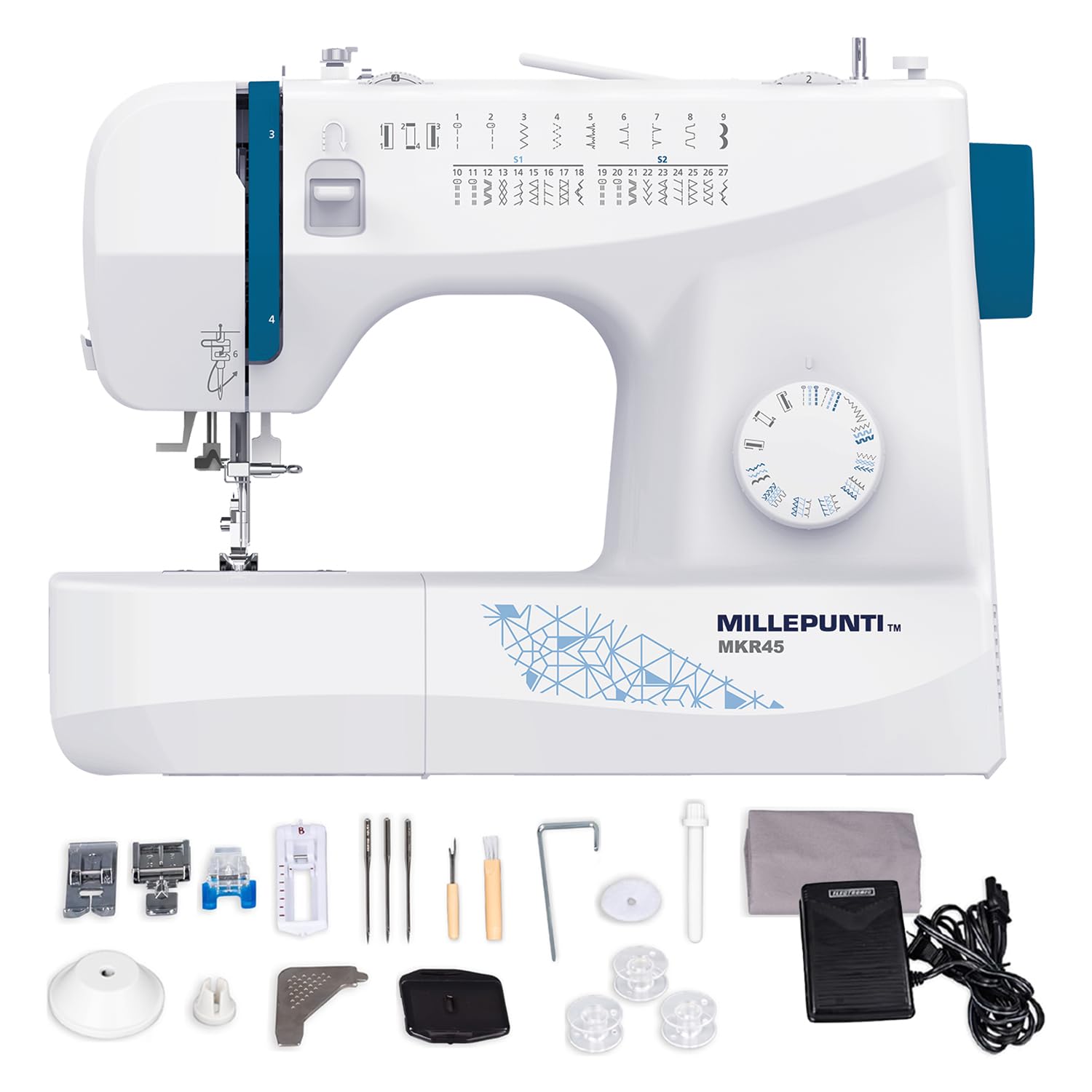
The MILLEPUNTI MKR45 offers 25 built-in stitches — including utility, decorative, and stretch options — at a price point that undercuts many 12-stitch mechanical machines. The automatic needle threader and automatic bobbin winder are genuinely time-saving features for a beginner who finds threading the needle the most frustrating part of setup. The free arm is long enough for sleeve and doll clothing work, and the included accessory kit (four sewing feet, bobbins, needles, seam ripper, quilting guide, dust cover) covers most first-year needs without extra purchases.
The machine weighs just under 15 pounds and has a metal internal frame, which provides enough stability for most light-to-medium fabrics. Reviewers who have limited eyesight praise the easy-to-read stitch selection dial and the clear thread path diagrams printed on the machine body. The machine runs quietly enough for apartment use and handles cotton, linen, and light knits without tension issues.
The durability concern comes from a minority of reviews reporting persistent thread breakage after several months of use. In those cases, the thread snapped seconds into sewing, and the issue was not resolved by adjusting tension or rethreading. This appears to be an occasional manufacturing defect rather than a systemic flaw, but it is worth noting that the MKR45 does not have the same long-term reliability track record as Janome or Brother. For the price, the feature set is generous, but you should test it thoroughly within the return window.
Why it’s great
- 25 built-in stitches including decorative and stretch patterns at a budget-friendly price
- Automatic needle threader and bobbin winder reduce the most frustrating beginner steps
- Metal internal frame provides enough stability for consistent stitching on light-to-medium fabrics
Good to know
- Some units develop persistent thread breakage after several months of use
- Long-term durability data is limited compared to established brands like Janome and Brother
7. FEIYUE FYe390 Sewing Machine
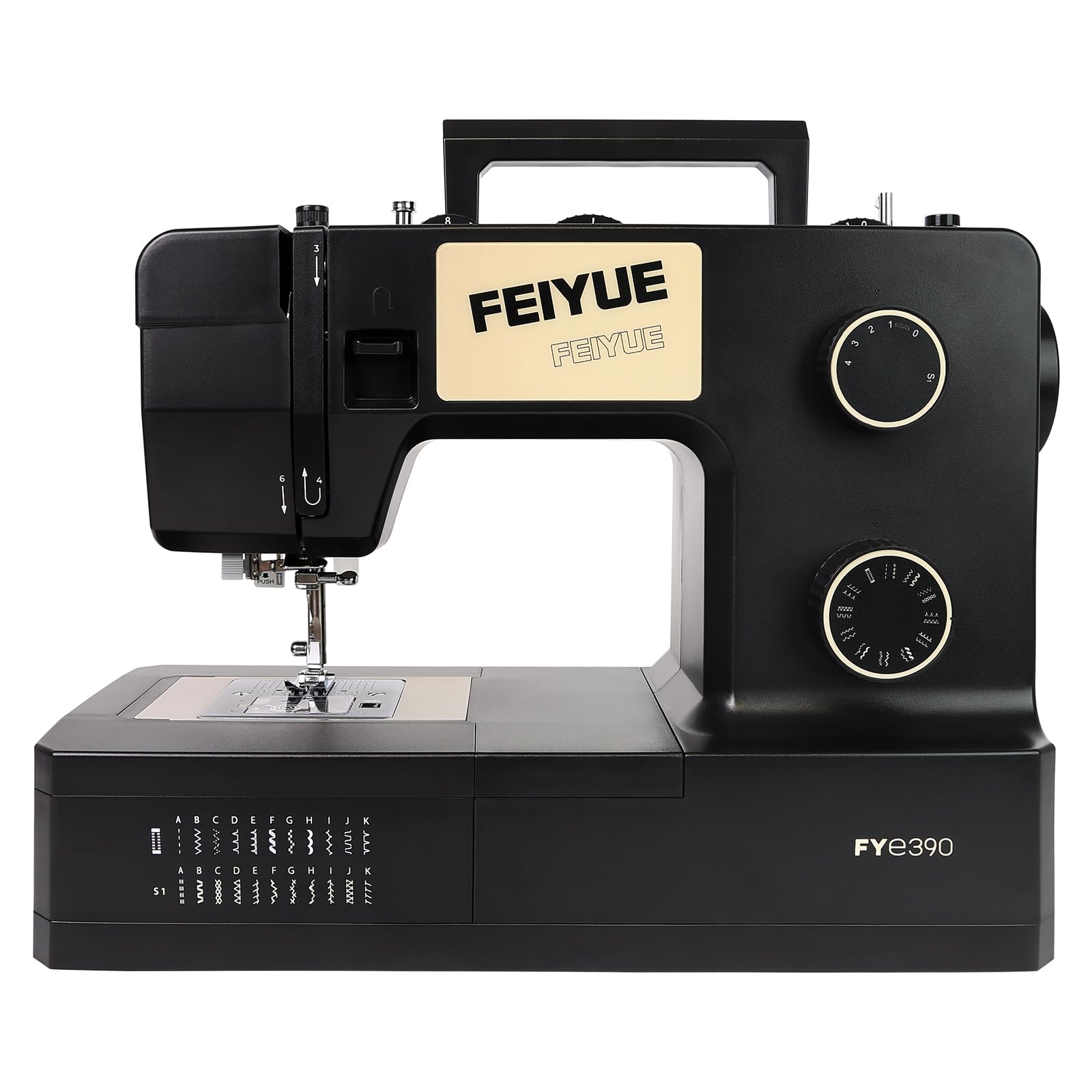
The FEIYUE FYe390 stands out in the mechanical category because of its energy-saving servo motor. Compared to traditional induction motors, the servo delivers 35 percent energy savings while providing smooth, consistent torque across a wider speed range. This translates to better low-speed control for beginners who tend to either creep or surge. The reinforced metal frame and high-torque motor handle denim and canvas layers without skipping stitches, making it one of the most capable heavy-fabric machines at this tier.
The thread jam protection system is a practical safety net — if the thread tangles or the machine is overloaded, sewing stops and a blinking light alerts you. This prevents the motor burnout and fabric damage that can happen when a beginner doesn’t immediately notice a jam. Twenty-three stitches (utility, decorative, stretch) and adjustable needle positions (left, center, right) give you precise control for zipper insertion, edge stitching, and decorative work.
The accessory kit includes six bobbins, five presser feet, and a needle set. The automatic needle threader reduces eye strain. However, some units arrive with bobbin compatibility issues — the machine requires a specific bobbin size, and using standard class 15 bobbins can cause thread tangles. Additionally, the stitch length varies slightly with speed: faster sewing produces shorter stitches, which takes practice to control. If you get a unit with correct bobbin fit, the FYe390 is a smooth, quiet performer that handles heavy work well.
Why it’s great
- Servo motor delivers smooth low-speed control and 35% energy savings over induction motors
- Thread jam protection system automatically stops sewing and alerts you with a blinking light
- Reinforced metal frame handles denim and canvas layers without skipping stitches
Good to know
- Bobbin size is specific and non-standard; using standard class 15 bobbins causes thread tangles
- Stitch length varies with sewing speed, requiring practice to maintain consistent seam appearance
8. Stoigeld SM-725 Sewing Machine
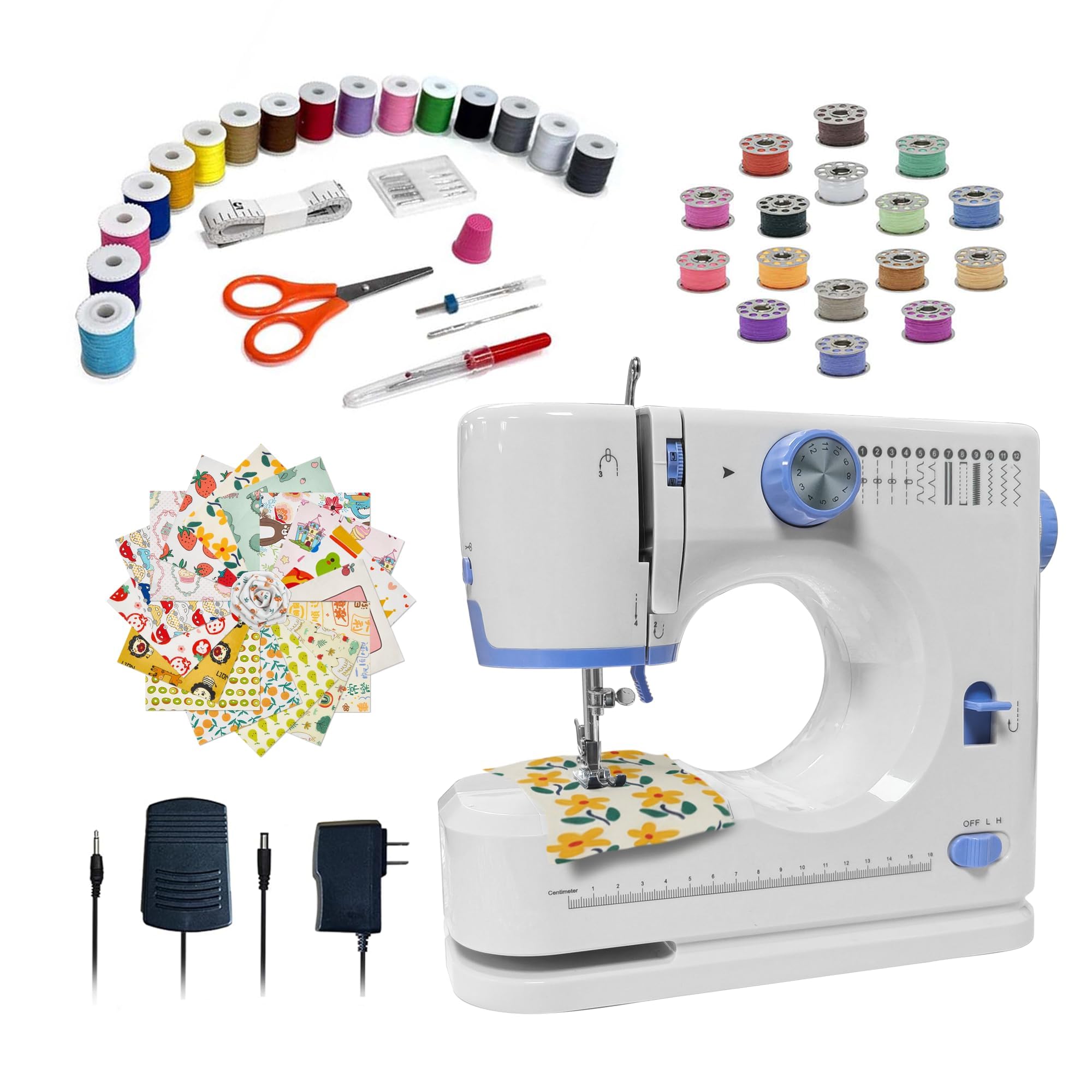
The Stoigeld SM-725 is a compact, ultralight entry machine built for small-space living and light fabric projects. The machine measures just 10 by 9 inches and weighs 4.2 pounds, which makes it genuinely portable. The two-speed switch (low/high) replaces the variable-speed foot pedal, giving you binary speed control that is easier for a complete beginner to manage. Twelve built-in stitches cover straight, zigzag, and basic decorative patterns plus a four-step buttonhole.
The complete starter kit is the strongest selling point. The SM-725 ships with 32 spools of thread, 20 fabric squares for practice, standard bobbins, needles, a threader, and a power cord — everything you need to sew the first seam without a separate supply run. The machine is intended for thin cotton, linen, and light woven fabrics up to four to six layers. It can handle denim, but only two to four layers, and the instruction manual is clear about this limit, which reduces the risk of jamming from overfeeding.
The plastic frame limits longevity and the machine is not designed for daily heavy use. The low-speed setting is genuinely slow — ideal for a child or absolute beginner learning stitch control. The high-speed setting is still below the speed of a standard mechanical machine, so you will outgrow this machine quickly if you start sewing garments. But as a trial kit to see if sewing is for you, or as a machine for a child, the SM-725 is the lowest-friction entry point available.
Why it’s great
- Complete starter kit includes 32 thread spools and 20 practice fabric squares with the machine
- Two-speed control (low/high) simplifies learning without a variable-speed foot pedal
- Ultra-compact and lightweight design at 4.2 pounds fits in small apartments and storage spaces
Good to know
- Plastic frame limits longevity and is not designed for daily heavy fabric use
- Limited to light woven fabrics; high-speed is still below the speed of standard mechanical machines
9. PooLin EOC06 Embroidery Machine
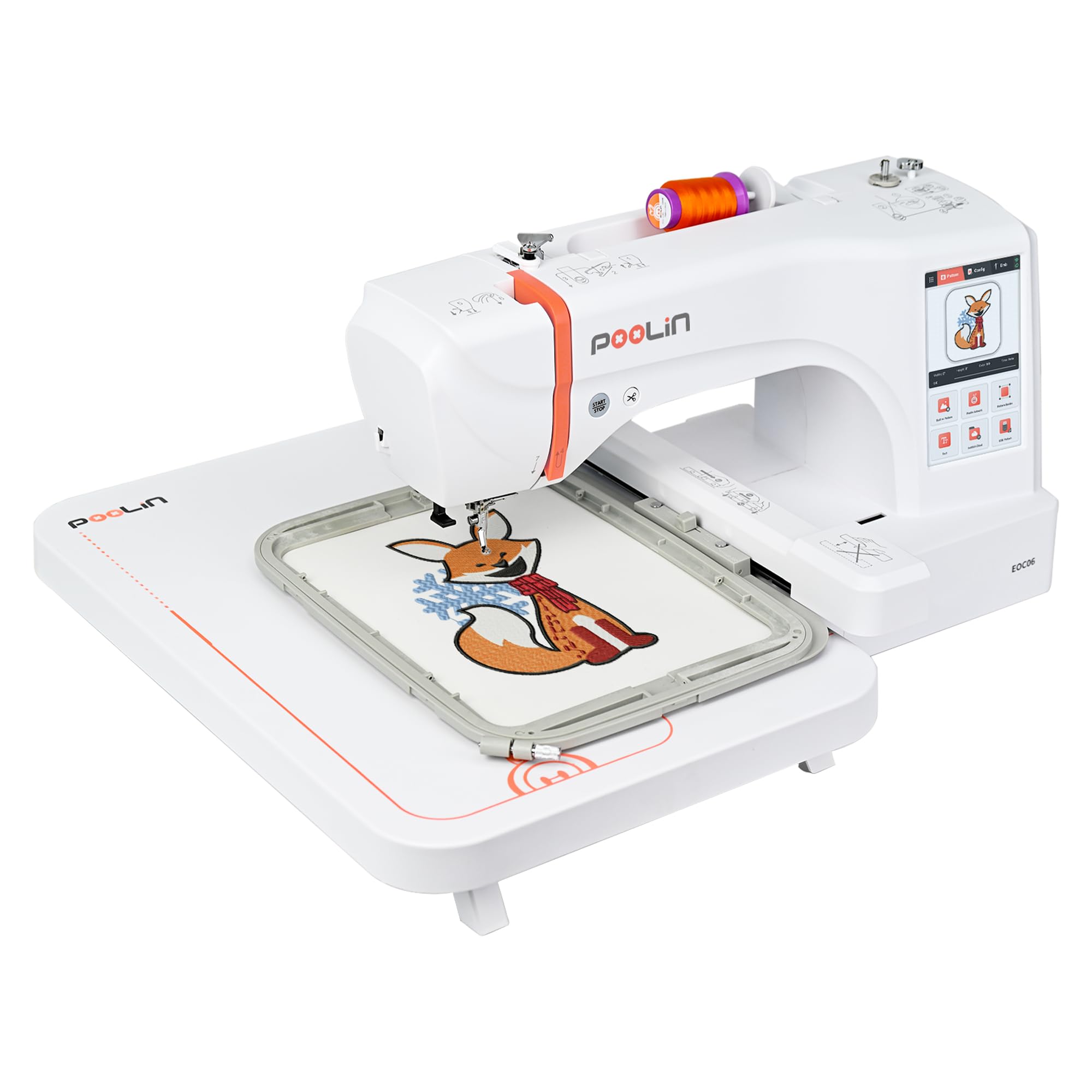
The PooLin EOC06 is a dedicated embroidery machine, not a sewing machine with an embroidery add-on. The 7-inch color touchscreen and InStitch i3 computer system let you select, edit, combine patterns, and add multi-color lettering with smartphone-like gestures. The maximum embroidery area of 11 by 7.9 inches handles shirt fronts, tote bags, and medium-sized hooped items. The machine includes three hoop sizes (5.5 by 5.5 inches, 7.9 by 7.9 inches, and 7.9 by 11 inches) for different project scales.
Two hundred built-in designs and eight fonts in ten languages give you immediate project material without digitizing experience. The USB and wireless LAN file transfer means you can import custom designs from digitizing software in DST or DSB format. The complete supply bundle includes six rolls of polyester thread, multicolor pre-wound bobbins, stabilizers, and needles — enough material for the first dozen projects.
The learning curve is steeper than a standard sewing machine. The auto-threader may not catch both threads, and the bobbin thread that ships with the machine is sewing thread, not embroidery bobbin thread, which causes tension issues until replaced. Customer support is handled through a Facebook group and direct engineer contact, which is responsive but not instant. The first unit had an electronics issue for one reviewer, and the replacement required minor setup. For a dedicated embroidery beginner, the EOC06 offers a feature set that would cost significantly more from Brother or Janome, but it requires patience with setup and support.
Why it’s great
- Large 7-inch color touchscreen makes design editing and pattern selection intuitive
- 200 built-in designs and 8 fonts allow immediate project start without digitizing software
- Three hoop sizes (max 11×7.9 inches) handle shirt fronts, tote bags, and towels
Good to know
- Requires replacing the included bobbin thread with dedicated embroidery bobbin thread for proper tension
- Customer support operates through Facebook group and engineer contact, not standard phone or email
FAQ
Do I need a computerized sewing machine as a beginner or is mechanical enough?
How many stitches should a beginner sewing machine have?
Can a beginner sewing machine handle denim or multiple fabric layers?
Final Thoughts: The Verdict
For most users, the beginner sewing machine winner is the Brother CP100X because it delivers the widest functional range — 100 stitches, metal frame, and a full accessory kit — at a price that still sits within the mid-range. If you want a dedicated quilting setup with an included extension table and even feed foot, grab the Janome JW8100. And for pure mechanical durability that will outlast your learning curve, nothing beats the Janome 2212.