
You want to see the craters of the Moon, the rings of Saturn, or the moons of Jupiter, but the sheer number of telescope options can make that first step feel overwhelming. A true beginner telescope needs to balance ease of setup, stable optics, and enough aperture to deliver real “wow” moments without overwhelming you with complexity.
I’m Rikta — the co-founder and writer behind FitlyFast. I’ve spent years analyzing the optical specifications, mount stability, and real-world user feedback across dozens of entry-level refractors so I can help you cut through the noise.
After reviewing nine models and hundreds of verified user reports, I’ve narrowed the field to the most reliable picks for anyone shopping for the best beginner telescope for adults who wants to see the Moon’s surface and planets like Jupiter with their own eyes.
How To Choose The Best Beginner Telescope For Adults
A first telescope should reward you with clear views immediately, not frustrate you with wobbly legs or blurry images. Understanding a few core specs helps you avoid the common traps.
Aperture is everything
The aperture (the diameter of the main lens or mirror) determines how much light the telescope collects. A larger aperture means brighter, sharper images of faint objects. For a beginner telescope, aim for at least 80mm; 90mm is even better for seeing planetary details like Jupiter’s cloud bands or Saturn’s rings.
Stability beats magnification
A flimsy tripod ruins every high-magnification view because even a breeze creates shaking. Look for a sturdy aluminum or stainless steel tripod with a solid head. Avoid models with cheap plastic legs that introduce wobble the moment you touch the focus knob.
Optical coatings matter
Fully multi-coated (FMC) lenses reduce internal reflections and improve contrast. This means the Moon’s craters look crisp instead of washed out. Cheaper single-coated or uncoated optics produce dimmer, lower-contrast images. Check the product description for “fully coated” or “multi-coated” wording.
Quick Comparison
On smaller screens, swipe sideways to see the full table.
| Model | Category | Best For | Key Spec | Amazon |
|---|---|---|---|---|
| Celestron Travel Scope 70 | Refractor | Portable travel & daytime use | 70mm aperture | Amazon |
| SOLOMARK 80900 | Refractor | Budget-conscious beginners | 80mm aperture / 900mm FL | Amazon |
| Dianfan 80×500 | Refractor | Family use with kids | 80mm aperture / 500mm FL | Amazon |
| Hawkko 80500 | Refractor | First-time stargazing experience | 80mm aperture / 500mm FL | Amazon |
| Celticbird 80900 | Refractor | Planetary & lunar detail | 80mm aperture / 900mm FL | Amazon |
| Dianfan 90×800 | Refractor | Bright, detailed deep-sky views | 90mm aperture / 800mm FL | Amazon |
| MEEZAA 90800 | Refractor | Versatile beginner kit | 90mm aperture / 800mm FL | Amazon |
| HUGERSTAR 90800 | Refractor | Detailed lunar observation | 90mm aperture / 800mm FL | Amazon |
| Hawkko 90900 | Refractor | Serious planetary viewing | 90mm aperture / 900mm FL | Amazon |
In‑Depth Reviews
1. Hawkko 90900 Telescope

The Hawkko 90900 sits at the sweet spot for a serious beginner. Its 90mm aperture with full multi-layer coating delivers approximately 73% higher light transmission than basic coated optics, directly translating to brighter, more contrast-rich views of the Moon’s craters and Jupiter’s cloud bands. The 900mm focal length provides natural high magnification (36X to 270X with the included Barlow) without resorting to cheap digital zoom tricks.
Setup takes about 15 minutes following the illustrated manual, and the stainless steel AZ mount tripod supports smooth 360° rotation and height adjustment from 28 to 46 inches. Users consistently report seeing sharp lunar details and even Jupiter’s moons on the first night. The complete kit includes a smartphone adapter that works reliably with most phone cases.
For the adult beginner who wants to avoid upgrading in six months, this telescope delivers professional-grade optical performance in a package that doesn’t require a second mortgage. The sturdy tripod eliminates the wobble that plagues cheaper models, making high-magnification viewing actually usable.
Why it’s great
- Professional-grade FMC optics for bright, sharp images
- Stable stainless steel tripod eliminates shake at high power
- Full accessory kit with working phone adapter
- 900mm focal length offers natural 270X magnification
Good to know
- Heavier than smaller refractors; not ultralight for hiking
- Straight-through finder scope has a learning curve
2. HUGERSTAR 90800 Telescope

The HUGERSTAR 90800 stands out for its inclusion of a moon filter, a small accessory that makes a big difference when observing the full Moon. Without it, the brightness can wash out fine detail; with it, you see craters in crisp 3D-like depth. The 90mm aperture and fully multi-coated lenses deliver images that users describe as “crystal clear” even at moderate magnification.
The stainless steel tripod adjusts from 28.7 to 46.4 inches and includes an accessory tray that keeps eyepieces organized. The tool-free assembly means you can go from box to first light in under ten minutes. The phone adapter works well for casual snapshots, though users with thick phone cases may need a different mounting solution.
This is a near-perfect option for the adult who wants detailed lunar and planetary views without spending extra on accessories later. The included 32X–240X magnification range handles everything from wide-field star clusters to the rings of Saturn, and the stable mount makes focusing a pleasure rather than a fight.
Why it’s great
- Moon filter reveals incredible lunar detail
- Sturdy stainless steel tripod with accessory tray
- Tool-free assembly in under 10 minutes
- Crisp 3D-like views at moderate magnification
Good to know
- Phone adapter may not fit thick cases
- Basic finder scope alignment takes patience
3. MEEZAA 90800 Telescope

The MEEZAA 90800 brings 90mm aperture performance to a highly competitive price point. The 800mm focal length (f/8.88) offers a good balance between wide-field views and planetary magnification, and the fully multi-coated optics produce images with minimal chromatic aberration. Users report seeing the Moon’s craters, Jupiter’s four moons, and even hints of Saturn’s rings.
The included stainless steel tripod is a major upgrade over the wobbly aluminum legs found on budget options. The AZ mount is intuitive for beginners, allowing both altitude and azimuth adjustments. Assembly is straightforward, with 90% of users completing it in about ten minutes, even without prior telescope experience.
This kit proves you don’t need to spend top dollar to get a satisfying observing experience. The phone adapter works well for sharing views on social media, and the carry bag makes it easy to bring to dark-sky locations. For the entry-level enthusiast, this is the smartest use of your money.
Why it’s great
- 90mm aperture at a budget-friendly price
- Sturdy stainless steel tripod resists wind shake
- Quick assembly with clear instructions
- Versatile magnification range (32X-240X)
Good to know
- Straight-through finder takes practice to align
- Not ideal for faint deep-sky objects
4. Dianfan 90×800 Telescope

The Dianfan 90×800 combines a large 90mm objective with a relatively compact 800mm focal length tube, making it easier to transport than longer refractors. The fully coated optics deliver bright, vivid images with good contrast, and the stainless steel tripod keeps everything steady even on uneven ground. Users describe the Moon views as “breathtaking” with visible crater detail.
Assembly takes about 15 minutes, and the intuitive design features smooth focus knobs that won’t introduce vibration. The included 45° erect image diagonal makes daytime terrestrial viewing comfortable, turning this into a dual-purpose scope for nature observation. The phone adapter works reliably for capturing images.
For adults who want a telescope that can pack up easily for camping or trips to darker skies, this model hits the sweet spot. The 32X–240X magnification range handles the Moon and planets well, though the 800mm focal length means slightly less planetary detail versus a 900mm model.
Why it’s great
- More portable 800mm optical tube
- Stainless steel tripod with stable footing
- Good for both astronomy and terrestrial use
- Bright, clear views with 90mm aperture
Good to know
- Slightly less planetary magnification than 900mm models
- Tripod adjustments can feel stiff initially
5. Celticbird 80900 Telescope

The Celticbird 80900 pairs an 80mm aperture with a 900mm focal length, giving it strong planetary magnification potential despite the smaller objective. The fully coated optics produce clear views, and users specifically note seeing Jupiter’s four moons and the Moon’s craters in good detail. The upgraded wide-angle eyepieces provide a more comfortable viewing experience than standard Kellners.
The aluminum tripod is functional but not as rigid as stainless steel options; extending the legs fully introduces some wobble at high magnification. Many users recommend keeping the legs partially retracted for stability. The included carry bag and phone adapter add genuine value for travel and sharing.
For the adult beginner on a mid-range budget who prioritizes focal length (and thus planetary detail) over maximum light gathering, this is a smart choice. The 3-year satisfaction service adds peace of mind, and the overall build quality exceeds what the price would suggest.
Why it’s great
- 900mm focal length for strong planetary magnification
- Upgraded wide-angle eyepieces included
- Lightweight and portable with carry bag
- 3-year satisfaction service
Good to know
- Aluminum tripod has some wobble at full extension
- Dust was reported on the main lens in one unit
6. SOLOMARK 80900 Telescope

The SOLOMARK 80900 features an 80mm aperture with fully coated green optics glass that users report produces “no notable aberrations” during daytime terrestrial viewing. The 900mm focal length provides 45X and 90X magnification with the included 20mm and 10mm eyepieces, and the optics deliver clean, color-fringing-free images according to verified buyers.
The adjustable aluminum full-size tripod includes a super azimuth gimbal with altitude and azimuth scales for precise aiming. The carrying bag fits all accessories, and the phone adapter is described as “well-designed” and easy to mount. The scope-to-tripod mounting takes a bit of effort initially but holds securely.
This is a dependable option for adults who want proven optical quality without paying for features they won’t use. The build is durable enough for desert stargazing, and the easy assembly means you can be observing within minutes of opening the box.
Why it’s great
- Clean optics with no visible chromatic aberration
- Well-designed phone adapter for easy imaging
- Full-size tripod with azimuth scales
- Durable construction for outdoor use
Good to know
- Star pointer is awkward; many swap for red dot finder
- Scope-to-tripod mounting takes some effort
7. Dianfan 80×500 Telescope
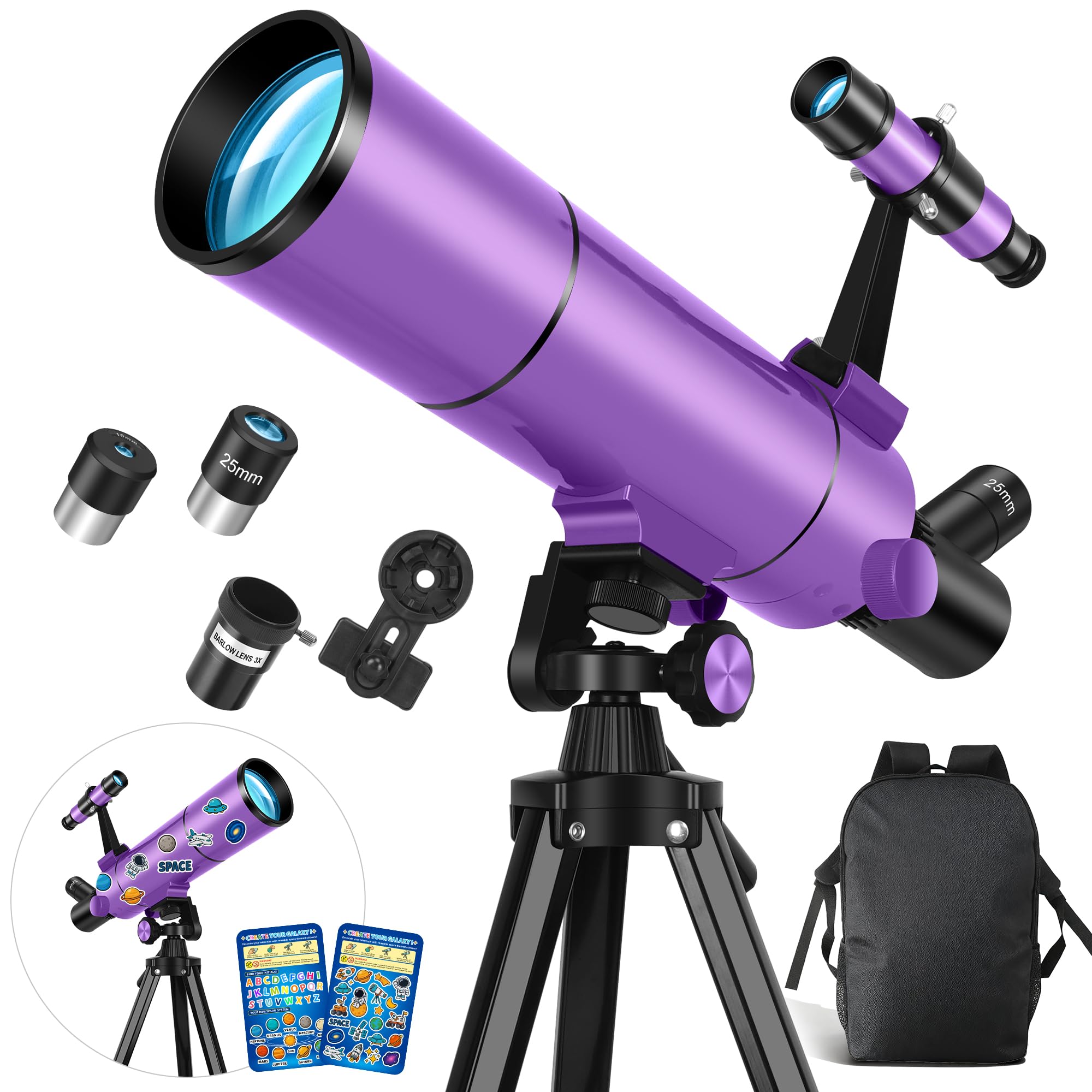
The Dianfan 80×500 is designed with family use in mind, featuring a lighter 500mm focal length tube, a purple exterior, and reusable astronomy-themed stickers for personalization. The 80mm fully coated optics deliver surprisingly crisp lunar views, and the 500mm focal length provides a wider field of view that’s better for bright star clusters and terrestrial observation.
The included backpack makes transport and storage simple, and the setup process is one of the quickest among the models reviewed. The phone adapter works well for capturing the Moon, and the 3X Barlow lens extends magnification to 150X when you want to zoom in on particular crater details. Users consistently praise the lightweight design and ease of use.
This is the best choice for adults who want to share stargazing with children or who prioritize portability over maximum planetary power. The trade-off for the shorter focal length is that Saturn’s rings and Jupiter’s detail will be smaller in the eyepiece, but the “wow” factor of the Moon remains high.
Why it’s great
- Lightweight and easy for younger users to handle
- Includes backpack for portable storage
- Fun stickers encourage personalization
- Quick assembly; clear, bright lunar views
Good to know
- 500mm focal length limits planetary magnification
- Best for Moon, star clusters, and daytime use
8. Hawkko 80500 Telescope
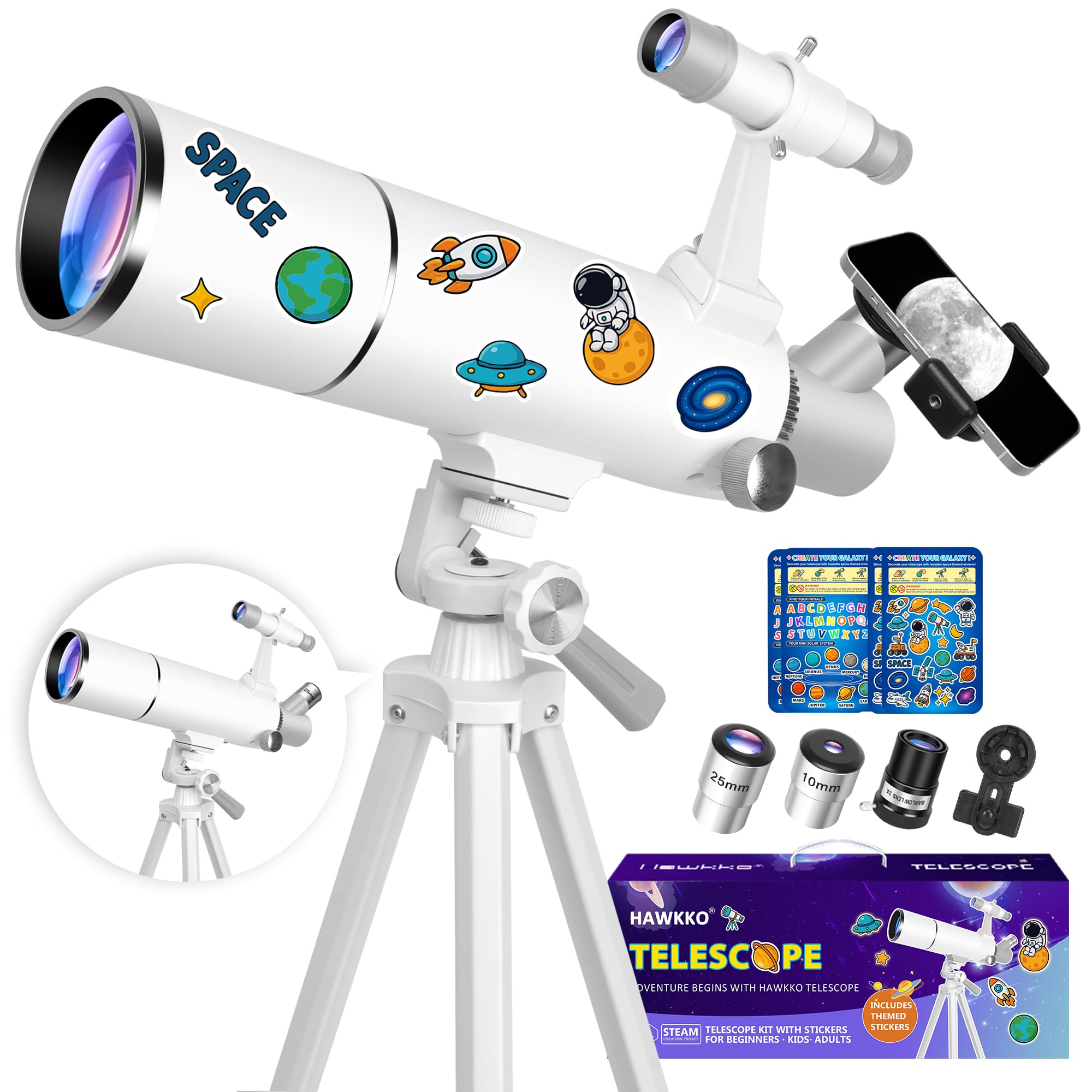
The Hawkko 80500 offers an 80mm aperture in a compact 500mm focal length package with a fun twist: space-themed stickers for personalization. The fully multi-coated objective gathers about 60% more light than 70mm models, translating to noticeably brighter views of the Moon’s craters and brighter planets. The altazimuth mount is simple enough for absolute beginners.
Users consistently rate the image quality highly, describing the views as “crisp” and “amazing” for the price point. The included bag helps with portability, and the smartphone adapter makes sharing first-look images easy. The tripod is lightweight, which helps with travel but means you’ll want a calm night for high-magnification viewing.
This is a great entry-level telescope for adults who want to dip their toes into astronomy without a large commitment. The 20X–150X magnification range covers the Moon and bright planets, and the easy setup means you spend more time observing and less time reading instructions.
Why it’s great
- 60% more light gathering than 70mm models
- Includes fun space stickers for personalization
- Compact and portable with carrying bag
- Simple altazimuth mount for quick aiming
Good to know
- 500mm focal length limits planetary detail
- Lightweight tripod can wobble in wind
9. Celestron Travel Scope 70
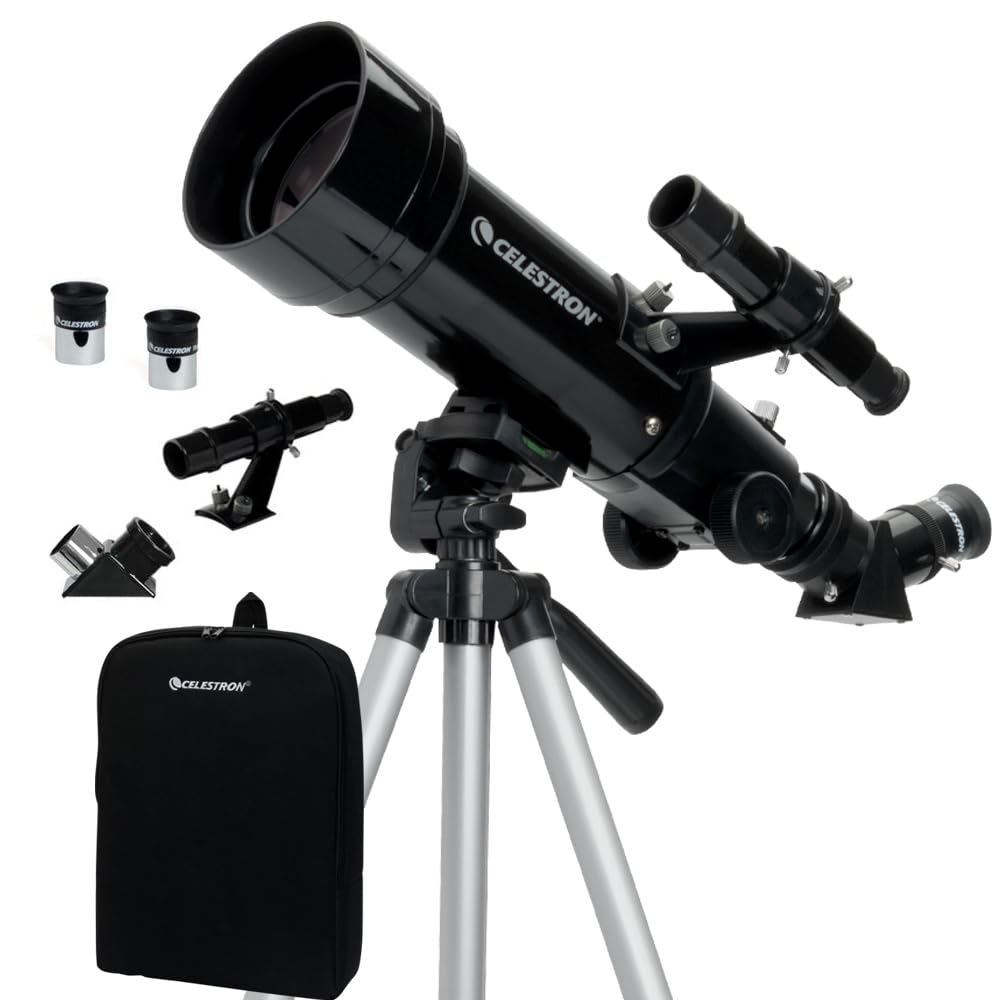
The Celestron Travel Scope 70 is the most portable option in this list, packing a 70mm refractor, tripod, and accessories into a padded backpack that fits under an airline seat. The fully coated glass optics deliver sharp daytime views and passable lunar observation, and the no-tool setup means you can be observing in under two minutes. The included Starry Night software adds educational value.
The trade-off for this portability is a smaller 70mm aperture that captures less light, making faint deep-sky objects like nebulae difficult to resolve. The included 45° erect image diagonal is comfortable for terrestrial viewing but less ideal for astronomy; many users recommend upgrading to a 90° diagonal for night use. The tripod is the weakest point, with some wobble at full extension.
This telescope is best suited for the adult traveler who wants a quick-look option for camping, hiking, or daytime nature observation. For serious astronomy from a backyard, the larger 80mm and 90mm options will provide more satisfying views of the Moon and planets.
Why it’s great
- Ultra-portable; fits in a small backpack
- No-tool setup in under two minutes
- Good for daytime terrestrial viewing
- Includes Starry Night planning software
Good to know
- 70mm aperture limits faint object visibility
- Included 45° diagonal is awkward for astronomy
- Tripod requires upgrades for stability
FAQ
Should I buy a telescope with a 700mm or 900mm focal length for my first scope?
What does a 3X Barlow lens do and should I use it?
Can I use a beginner telescope for astrophotography?
Why do some users say the included tripod is wobbly?
Final Thoughts: The Verdict
For most users, the beginner telescope for adults winner is the Hawkko 90900 because its 90mm aperture, 900mm focal length, and stable stainless steel tripod deliver the best balance of optical quality and ease of use. If you want a lighter, more portable kit for family trips, grab the Dianfan 80×500. And for the budget-conscious adult who needs a versatile travel scope, nothing beats the Celestron Travel Scope 70 for its backpack-friendly portability and proven brand reputation.