
Our readers keep the lights on and the weekend projects moving. As an Amazon Associate, I earn from qualifying purchases.
Most first telescopes deliver blurry disappointment instead of crisp planetary views — a tiny, shaky image of Jupiter that looks more like a fuzzy star than a striped giant. That painful letdown is almost always caused by choosing a toy-grade model with poor optics and a wobbly mount. This guide focuses only on scopes that deliver a genuine planet-seeing experience from your backyard.
I’m Rikta — the co-founder and writer behind FitlyFast. I’ve spent hundreds of hours analyzing optical specifications, mount stability, and real-user feedback on beginner telescopes to narrow down which models actually resolve Saturn’s rings and Jupiter’s cloud bands at an approachable skill level.
Whether you’re shopping for a curious child or starting your own journey into amateur astronomy, this curated list of the best beginner telescope to see planets will help you invest in clear, rewarding views without the frustration and buyer’s remorse.
How To Choose The Best Beginner Telescope To See Planets
Choosing your first telescope for planetary observation is about prioritizing aperture and mount stability over flashy box specs like “maximum magnification.” A scope that captures more light and tracks smoothly will always outperform a higher-magnification model built on a flimsy tripod. The three factors below separate rewarding planet views from frustrating nights spent fiddling with blurry knobs.
Aperture Diameter
Aperture (the diameter of the main lens or mirror) determines how much light your telescope collects. For planetary viewing, 80mm to 90mm of aperture is the sweet spot for beginners — it provides enough resolution to see Jupiter’s equatorial bands and Saturn’s ring separation without overwhelming your budget. Anything under 70mm will struggle to deliver crisp planetary detail at the magnifications needed.
Mount Stability & Tracking
At magnifications above 100X, even a light breeze can make an unstable mount vibrate the image out of the eyepiece. An altazimuth mount with slow-motion control cables or a computerized GoTo mount allows you to track a planet’s movement across the sky smoothly. A solid stainless steel tripod is a minimum requirement for high-power observing; avoid single-leg aluminum designs that are too lightweight.
Focal Length & Eyepiece Kit
Focal length determines the native magnification potential of your telescope. A longer focal length (700mm or more) makes it easier to achieve high magnification with standard eyepieces. Two decent eyepieces (a low-power 20-25mm for initial centering and a high-power 9-10mm for detailed views) plus a 2X or 3X Barlow lens give you the flexibility to zoom in on planets without buying extra glass immediately.
Quick Comparison
On smaller screens, swipe sideways to see the full table.
| Model | Category | Best For | Key Spec | Amazon |
|---|---|---|---|---|
| Celestron 114LCM | Computerized Reflector | Hands-off GoTo planet finding | 114mm aperture, GoTo mount | Amazon |
| Hawkko 90mm 900mm | Premium Refractor | Sharpest lunar & planetary clarity | 90mm multi-coated, 900mm focal | Amazon |
| MEEZAA 90mm 800mm | Refractor | Versatile high-magnification kit | 90mm aperture, 800mm focal | Amazon |
| Koolpte 90mm 700mm | Refractor w/ Slow-Motion Mount | Smooth tracking at high power | 90mm, Vertisteel AZ mount | Amazon |
| Dianfan 90mm 550mm | Refractor | Comfortable seated observation | 90mm aperture, includes stool | Amazon |
| Hugerstar 80mm 600mm | Refractor | Lightweight, quick backyard setup | 80mm multi-coated, 600mm focal | Amazon |
| Dianfan 80mm 500mm | Refractor | Portable travel with backpack | 80mm aperture, 500mm focal | Amazon |
| Sarblue Mak60 | Maksutov-Cassegrain | Ultra-compact tabletop planetary | 60mm, 750mm Maksutov optics | Amazon |
| Hawkko 80mm 500mm | Refractor | Affordable entry-level stargazing | 80mm aperture, 500mm focal | Amazon |
In‑Depth Reviews
1. Celestron 114LCM Computerized Newtonian Telescope
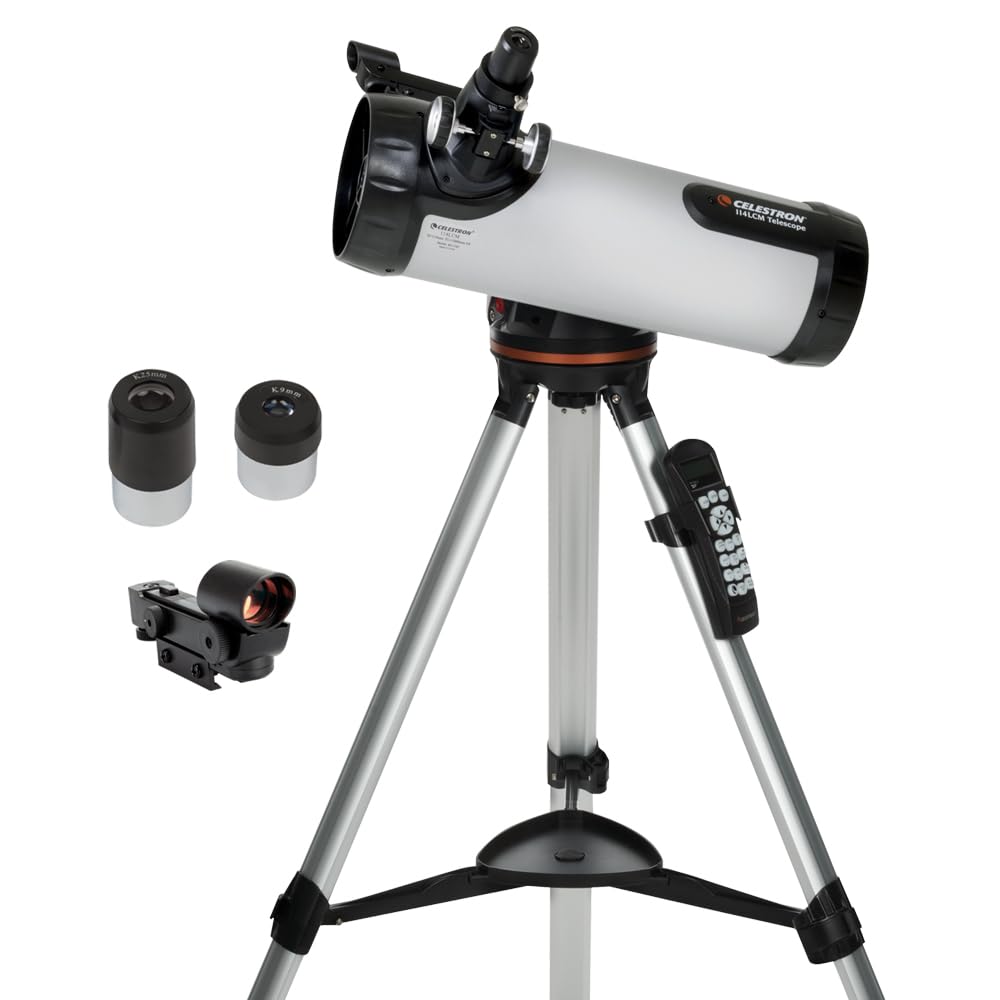
The Celestron 114LCM is the only fully computerized telescope on this list, featuring a motorized GoTo mount that automatically locates and tracks over 4,000 celestial objects. For a beginner aiming to see planets without manually searching the sky, this is a powerful advantage — press a button, and the scope slews directly to Jupiter or Saturn. The 114mm reflector aperture gathers significantly more light than any 80-90mm refractor in this guide, delivering brighter planetary images at equivalent magnifications.
The NexStar+ hand control and Sky Tour feature make it exceptionally beginner-friendly: the telescope generates a custom list of the best objects visible in your current sky. The full-height tripod with adjustable legs provides a stable base, and the StarPointer red dot finder simplifies initial alignment. The 25mm and 9mm eyepieces offer a useful range from low-power scanning to high-power planetary viewing, though many users add a moon filter separately.
Note that the 114LCM uses a Bird-Jones optical design, which includes a built-in corrector lens that functions similarly to a permanent Barlow. This design limits the effectiveness of adding an external Barlow, and collimation requires more patience than a standard Newtonian. However, for a beginner who values automated planet finding over manual tinkering, this scope provides the most direct path to seeing Saturn’s rings on the first night.
Why it’s great
- GoTo computer automatically finds and tracks planets
- 114mm aperture delivers bright, detailed planetary views
- Sky Tour feature guides new users to best objects
Good to know
- Bird-Jones design limits Barlow lens use
- Collimation is more involved than a refractor
- Requires AA batteries; rechargeable pack recommended
2. Hawkko 90mm 900mm Refractor Telescope

The Hawkko 90mm 900mm refractor stands out for its long focal length and professional-grade full multi-layer coating (FMC) technology, which the manufacturer states improves light transmittance by approximately 73%. This combination produces exceptionally sharp, high-contrast views of lunar craters and planetary features. At 900mm focal length, the 25mm eyepiece delivers 36X for wide-field centering, while the 10mm eyepiece provides 90X — and adding the 3X Barlow pushes you to 270X for close planetary inspection.
The stainless steel AZ mount tripod supports smooth 360-degree rotation and adjusts from 28 to 46 inches, accommodating both seated and standing observers. Real users consistently report seeing Jupiter’s cloud bands and Saturn’s ring separation clearly on their first night of use. The complete kit includes a finder scope, zenith mirror, accessory tray, smartphone adapter, and a carry bag that fits all components — everything you need is in the box.
While the 90mm aperture is excellent for a refractor, it cannot match the light-gathering of a 114mm reflector for deep-sky objects. However, for pure planetary and lunar observation — the stated goal of this guide — the Hawkko 90mm provides some of the sharpest images in its price tier. The slow-motion control cables on the mount enable precise tracking adjustments that are critical at 270X magnification.
Why it’s great
- Extra-long 900mm focal length for high native magnification
- Multi-coated optics deliver excellent contrast and clarity
- Sturdy stainless steel tripod with smooth AZ mount
Good to know
- Heavier than shorter-tube refractors for travel
- No motorized tracking; manual slow-motion only
- 90mm aperture limits faint deep-sky performance
3. MEEZAA 90mm 800mm Refractor Telescope

The MEEZAA 90mm 800mm refractor provides an excellent balance of aperture, focal length, and included accessories at a mid-range price point. The fully multi-coated 90mm objective lens captures enough light to reveal Jupiter’s moons and Saturn’s rings at moderate magnifications. The 800mm focal length paired with the 25mm and 10mm eyepieces offers magnifications of 32X and 80X respectively, and the 3X Barlow lens extends the range up to 240X for close planetary observation.
Build quality is notably solid for this tier: the stainless steel tripod adjusts from 28 to 46 inches, and the AZ mount provides smooth manual tracking. Users consistently praise the ease of assembly — most report being set up within 10 minutes using the included paper manual. The carry bag accommodates the entire system, making it a practical choice for backyard sessions and trips to darker sky locations. The smartphone adapter works reliably for sharing lunar and planetary images.
One limitation is that the 800mm focal length, while good, doesn’t match the Hawkko 900mm for pure planetary magnification potential without the Barlow. Additionally, the finder scope is a basic straight-through design, which may be less comfortable for some users than a red dot finder. Still, for a complete 90mm kit at this price point, the optical quality and stable mount make it a standout choice for beginners serious about planets.
Why it’s great
- 90mm aperture with fully multi-coated optics
- Stainless steel tripod provides stable platform
- Complete kit includes bag, phone adapter, and Barlow
Good to know
- Basic straight-through finder scope
- Manual tracking only; no slow-motion cables
- 800mm focal length is adequate but not class-leading
4. Koolpte 90mm 700mm Vertisteel AZ Refractor Telescope
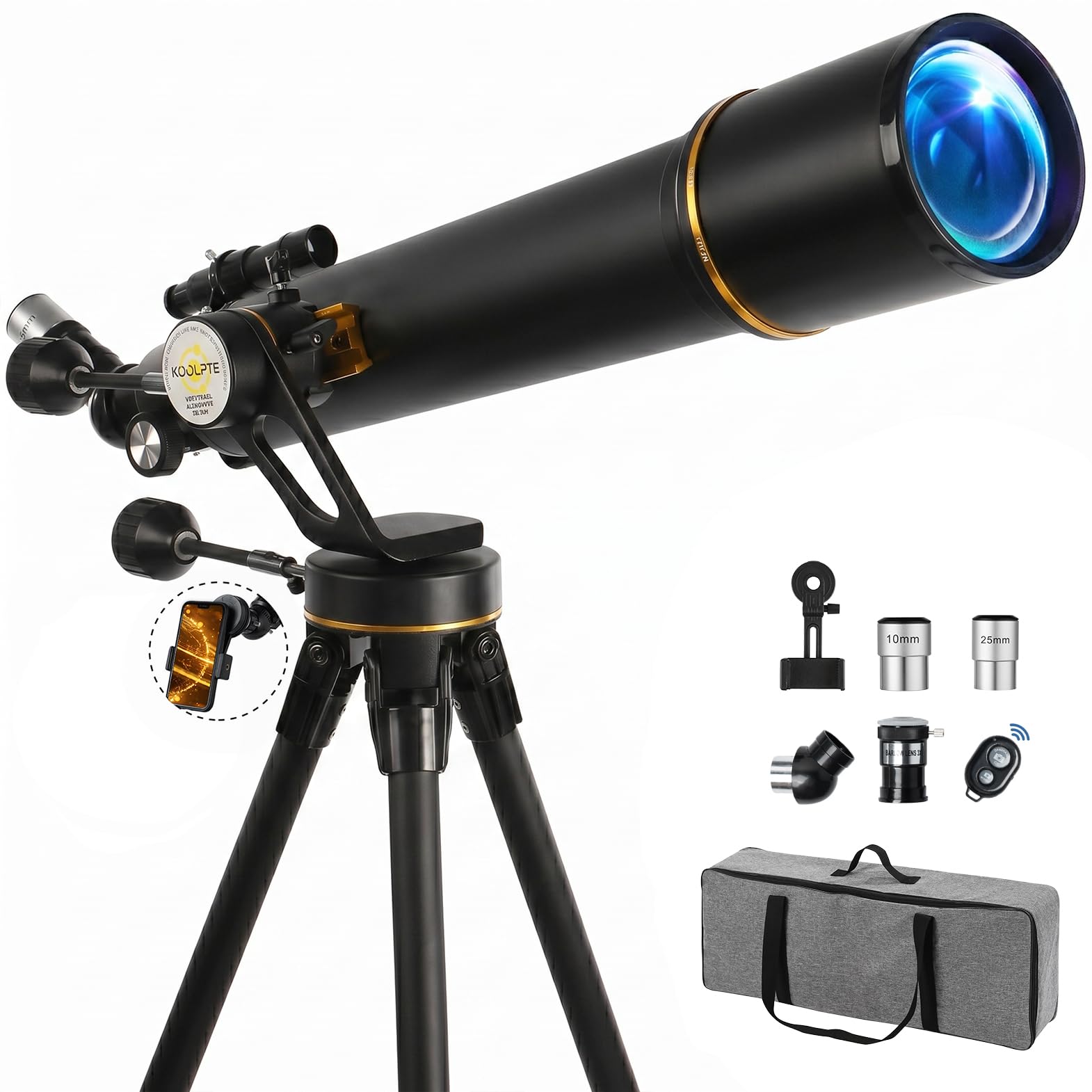
The Koolpte telescope distinguishes itself with an exclusive Vertisteel AZ Slow-Motion Mount, engineered to eliminate the overshooting and wobbling that plague many entry-level scopes at high power. This is a critical feature for planetary observing: when viewing Saturn at 210X, even a tiny vibration turns the disk into a blur. The slow-motion control knobs allow you to track the planet’s movement across the eyepiece field with precision, making long-duration observation far more enjoyable.
Optically, the 90mm aperture and 700mm focal length are paired with fully multi-coated glass that delivers 99% light transmission according to the manufacturer. The two Kellner eyepieces (10mm and 25mm) with a 3X Barlow provide a magnification range from 28X to 210X. The kit also includes a wireless remote for hands-free smartphone imaging and a padded carry bag for transport. Users report clear views of lunar craters, Jupiter’s moons, and Saturn’s ring structure.
The tripod is aluminum rather than stainless steel, which keeps weight down but makes the scope slightly less stable in windy conditions than heavier models. Some taller users note that viewing near the zenith (straight up) can be physically uncomfortable due to the tripod height limitation. For anyone whose primary frustration with previous scopes was image shake at high power, the Koolpte’s slow-motion mount offers a meaningful upgrade in tracking stability.
Why it’s great
- Vertisteel slow-motion mount for shake-free tracking
- Wireless remote enables phone imaging
- 90mm FMC optics deliver bright planetary views
Good to know
- Aluminum tripod less stable in wind than steel
- Viewing at high angles can be awkward for tall users
- 700mm focal length requires Barlow for 200X+ views
5. Dianfan 90mm 550mm Refractor Telescope
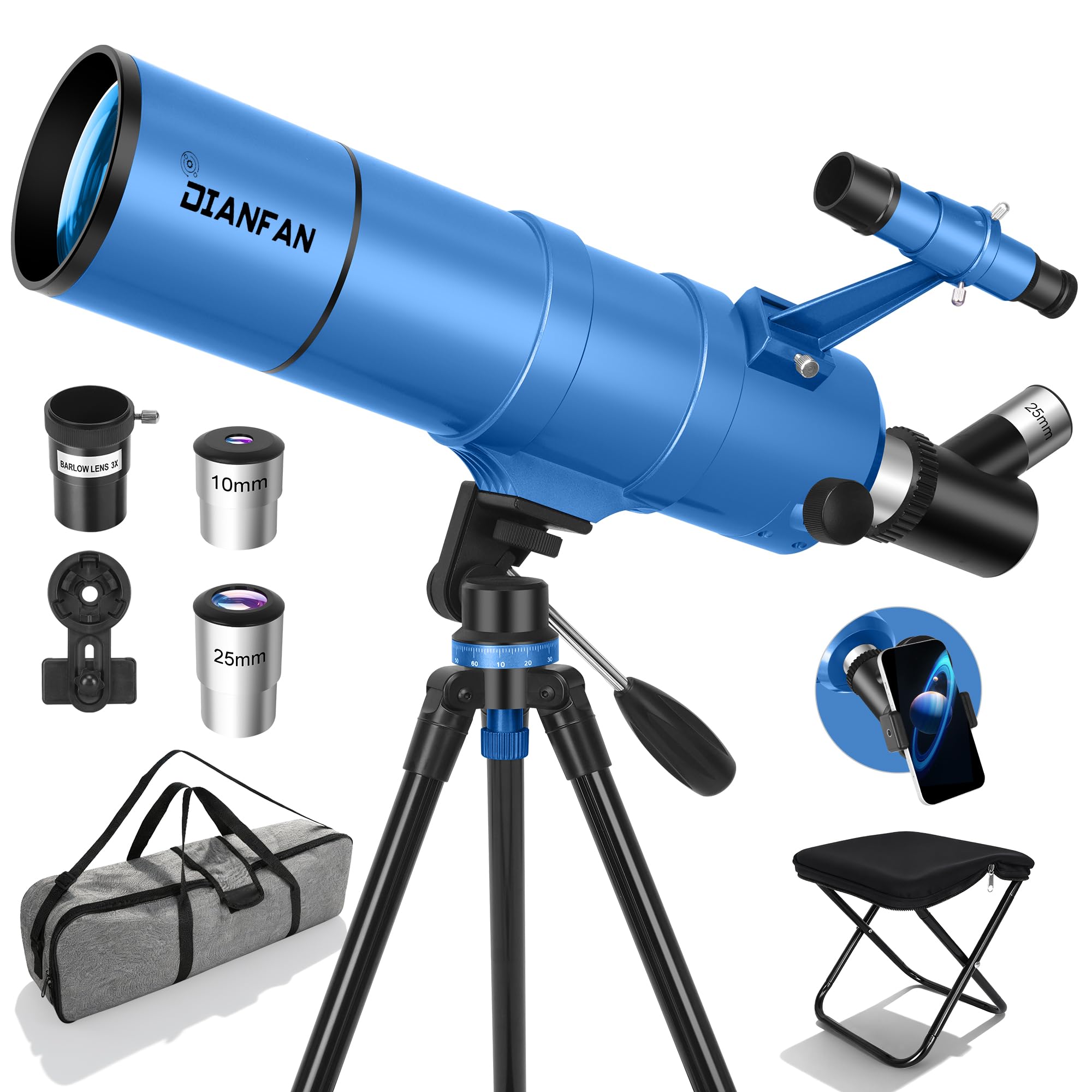
The Dianfan 90mm 550mm telescope includes a thoughtful addition that addresses a common ergonomic problem: the included folding stool allows younger or shorter observers to sit comfortably during long planetary sessions. The 90mm aperture and fully multi-coated optics provide bright, detailed views of the moon and bright planets, and the 550mm focal length paired with two eyepieces and a 3X Barlow delivers a useful 22X to 165X magnification range.
The kit is designed for portability and ease of use: assembly takes roughly 15 minutes, and the custom-fit carrying bag protects the tube and accessories during transport. The phone adapter works well for capturing images of the moon and brighter planets through the eyepiece. The finder scope and AZ mount are straightforward, making this a solid choice for a family with children who will benefit from the stool’s height adjustment.
The 550mm focal length is shorter than many competitors, meaning you’ll rely more heavily on the Barlow lens to reach high planetary magnifications. At 165X, views of Jupiter and Saturn will be decent but won’t match the native sharpness of a longer-focal-length scope at equivalent power. The tripod is lightweight, which aids portability but can be susceptible to vibration in breezy conditions. For a young astronomer’s first dedicated planet-seeing sessions, the convenience and comfort features make this a practical pick.
Why it’s great
- Includes folding stool for comfortable seated viewing
- 90mm aperture provides good light-gathering
- Quick 15-minute assembly with carry bag
Good to know
- 550mm focal length limits high-power native views
- Lightweight tripod can shake in wind
- Barlow required to reach 150X+ magnification
6. Hugerstar 80mm 600mm Refractor Telescope
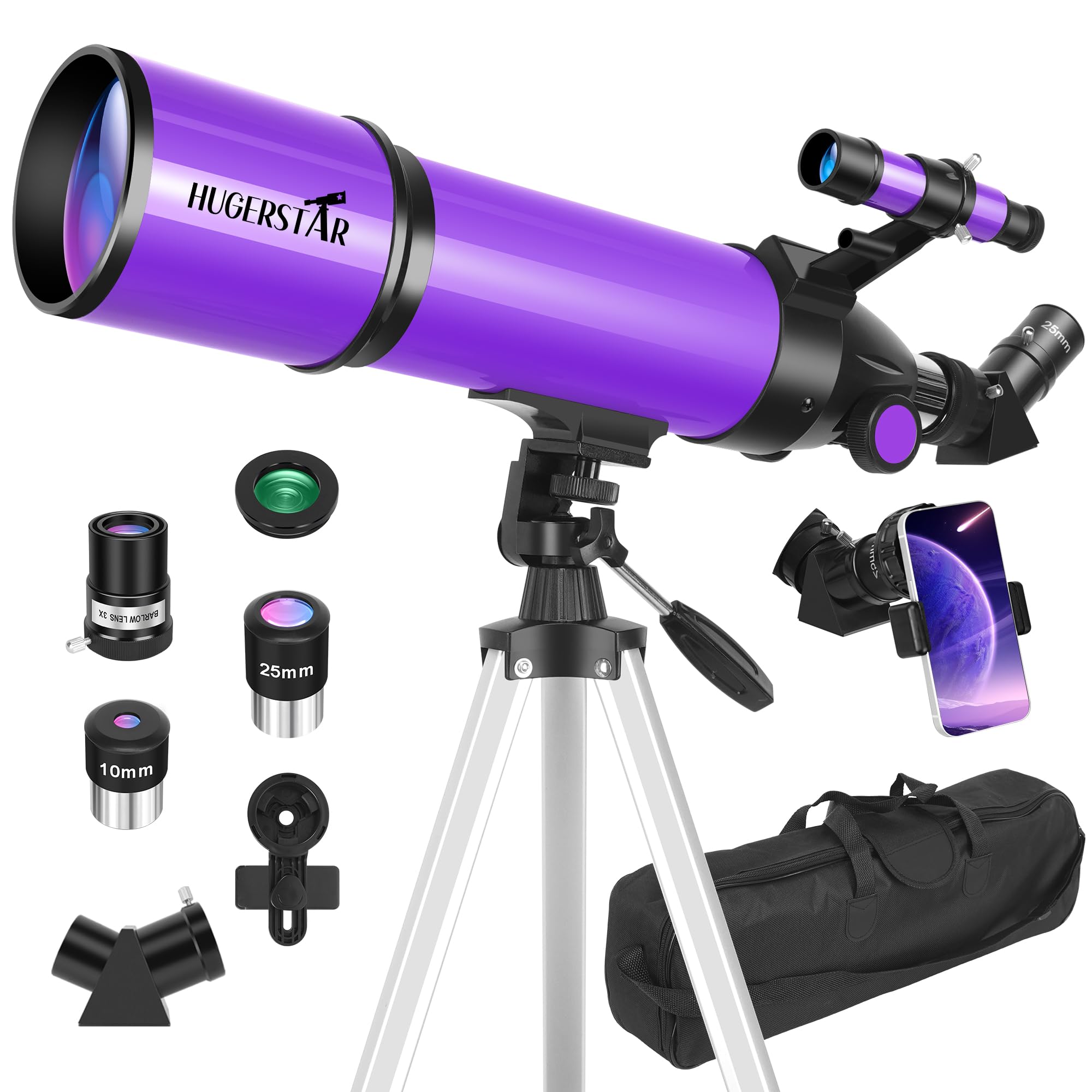
The Hugerstar 80mm 600mm refractor prioritizes simplicity and speed — the manufacturer states that 90% of users are ready to observe within 10 minutes of opening the box. The 80mm fully multi-coated objective lens gathers 60% more light than a typical 60mm beginner scope, providing noticeably brighter lunar and planetary views. The 600mm focal length with the included 25mm and 10mm eyepieces and 3X Barlow achieves a maximum of 180X magnification.
The aluminum tripod adjusts from 21.2 to 44 inches, and the AZ mount provides smooth manual movement. A moon filter is included — a welcome addition that enhances contrast during bright lunar phases and reduces eye strain. The phone adapter works for casual imaging, and the carry bag makes this a convenient grab-and-go option for backyard sessions. Users consistently report clear views of lunar craters and the ability to spot Jupiter’s moons.
As an 80mm refractor, it cannot match the light-gathering or resolution of the 90mm models in this guide for detailed planetary observation. The tripod is adequate but not as stable as stainless steel alternatives, and the mount lacks slow-motion controls. For a true beginner who wants to see the moon in impressive detail and get their first look at Jupiter and Saturn without a steep learning curve, the Hugerstar offers excellent value and minimal frustration.
Why it’s great
- Fast 10-minute tool-free assembly
- Moon filter included for glare-free lunar viewing
- 80mm multi-coated optics outperform 60mm models
Good to know
- 80mm aperture limits planetary detail vs 90mm
- Aluminum tripod less stable than steel
- No slow-motion controls for tracking
7. Dianfan 80mm 500mm Refractor Telescope
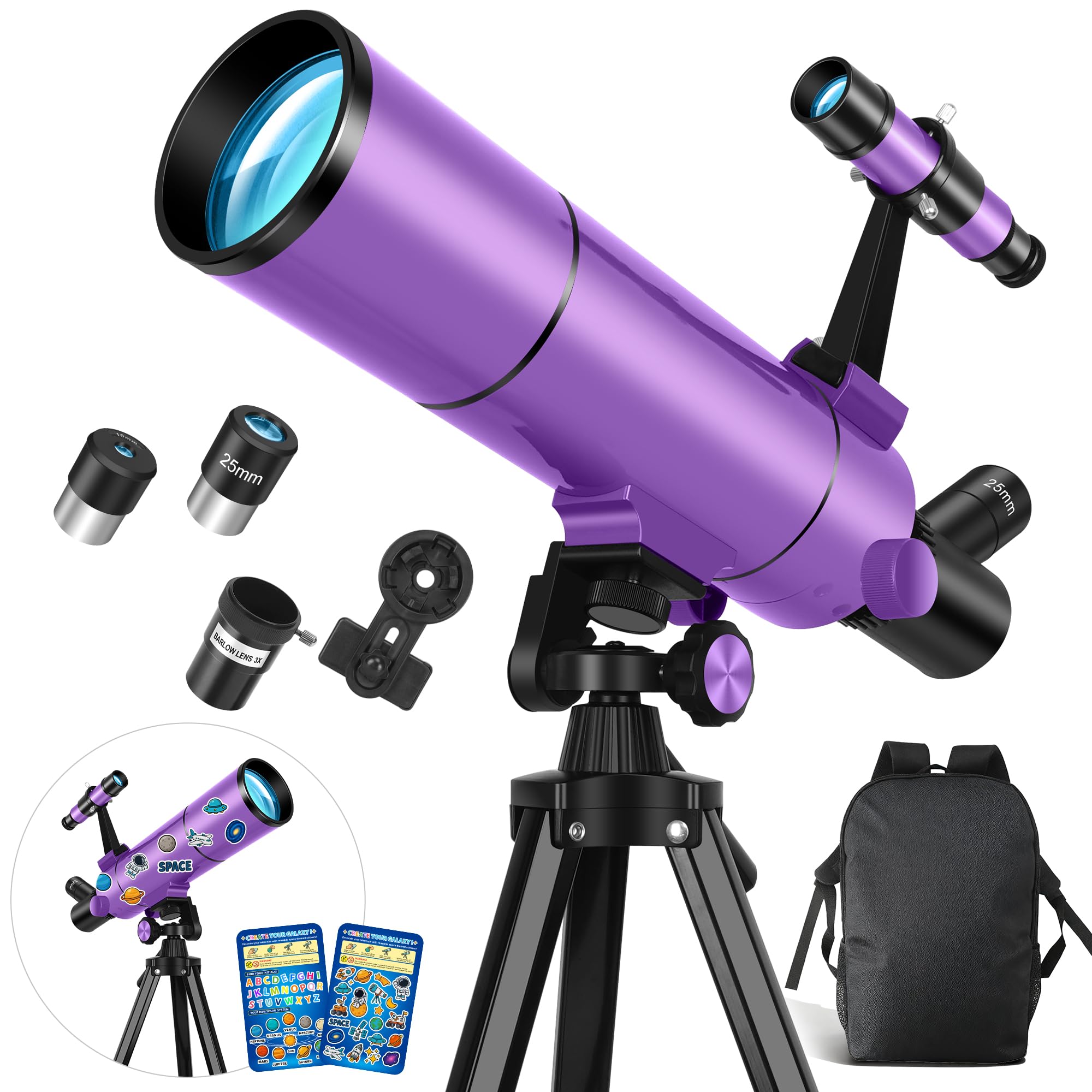
The Dianfan 80mm 500mm telescope is designed for portability, including a water-resistant custom backpack that fits the entire optical tube, tripod, and accessories for easy transport. The 80mm aperture and 500mm focal length deliver a magnification range of 20X to 150X using the two Kellner eyepieces and 3X Barlow. The fully multi-coated optics produce bright lunar views and the ability to see Jupiter’s four Galilean moons clearly.
A unique feature for a beginner scope in this range is the inclusion of reusable astronomy-themed stickers, allowing kids to personalize the purple-colored tube. Assembly is straightforward, taking around 15 minutes, and the smartphone adapter enables simple photo capture. The AZ mount and tripod provide adequate stability for low-to-mid magnification viewing.
The relatively short 500mm focal length means high-magnification planetary views rely entirely on the Barlow lens, and image sharpness at 150X is decent but not exceptional. The mount lacks slow-motion controls, making precise tracking at high power a challenge. This telescope is best suited for a young family who wants a portable, easy-to-use scope for lunar observation and introductory planet spotting during camping trips or vacations.
Why it’s great
- Includes dedicated backpack for true portability
- Kid-friendly stickers and purple design
- Quick assembly and intuitive operation
Good to know
- 500mm focal length requires Barlow for high power
- No slow-motion tracking controls
- Sticker application is permanent after removal
8. Sarblue Mak60 Maksutov-Cassegrain Telescope
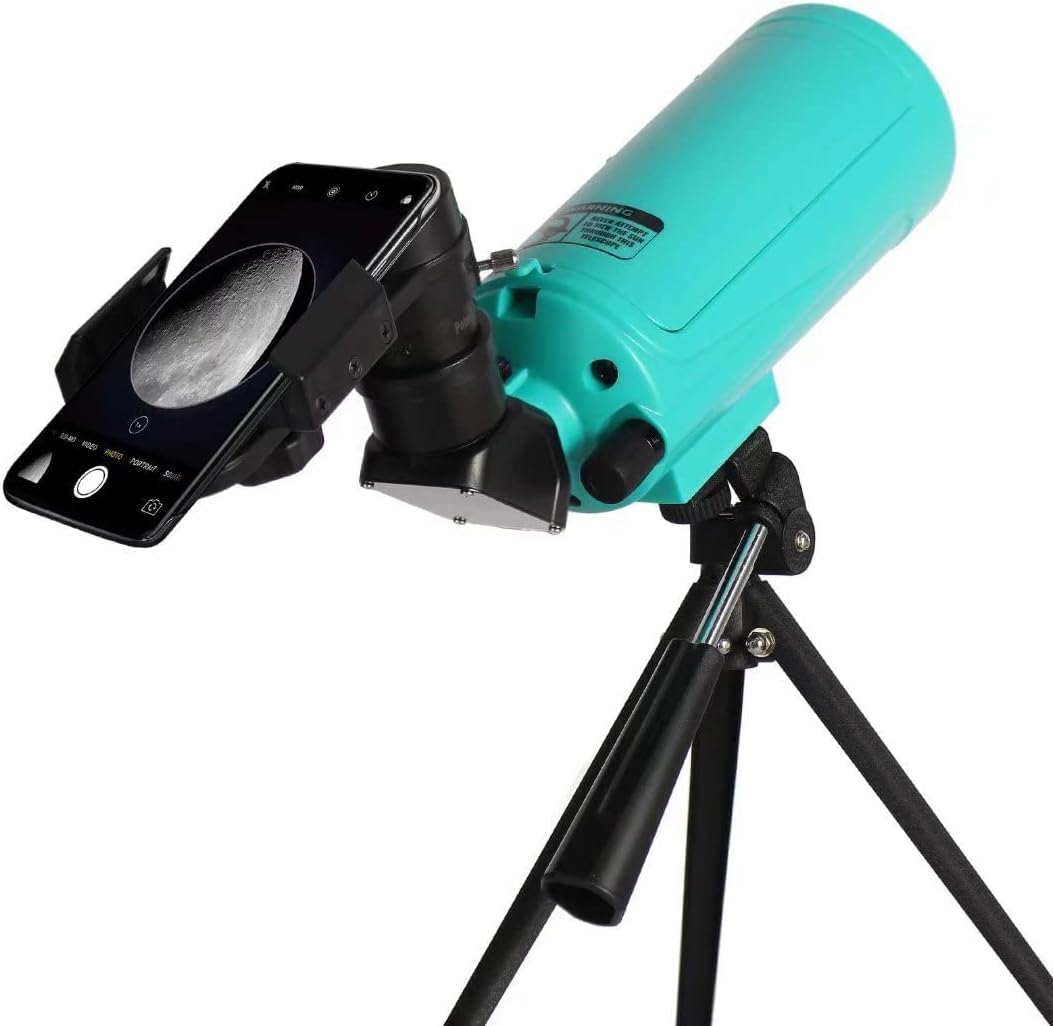
The Sarblue Mak60 is a Maksutov-Cassegrain telescope that packs a 750mm focal length into a tube only 200mm long — a remarkable feat of optical engineering. This catadioptric design (which uses a combination of lenses and mirrors) virtually eliminates chromatic aberration and spherical aberration, delivering exceptionally sharp, high-contrast images for its aperture class. At 37.5X with the included 20mm eyepiece, the moon appears crisp and detailed, and Saturn’s rings are discernible under good conditions.
The compact size makes it genuinely portable — it fits easily into a backpack and sets up on any flat surface using the included tabletop tripod. A unique educational feature is the detachable lid that reveals the internal mirror and corrector plate design, helping beginners understand how the telescope works. The phone adapter and erect-image diagonal make daytime terrestrial viewing easy, adding versatility beyond astronomy.
The 60mm aperture is the smallest in this guide, which means it captures significantly less light than even the 80mm refractors. This limits its ability to resolve fine planetary details at high magnification, especially on fainter planets like Uranus or Neptune. The tabletop tripod requires a stable surface (a picnic table or flat rock), and the included tripod is somewhat short for seated adult use. For someone who values maximum portability and image quality per inch of aperture over raw light-gathering, the Mak60 is a clever, capable choice.
Why it’s great
- Ultra-compact Maksutov design with 750mm focal length
- Excellent image contrast with minimal aberrations
- Educational detachable lid shows internal optics
Good to know
- 60mm aperture limits planetary detail at high power
- Tabletop tripod requires stable surface
- No finderscope included; harder to locate objects
9. Hawkko 80mm 500mm Refractor Telescope
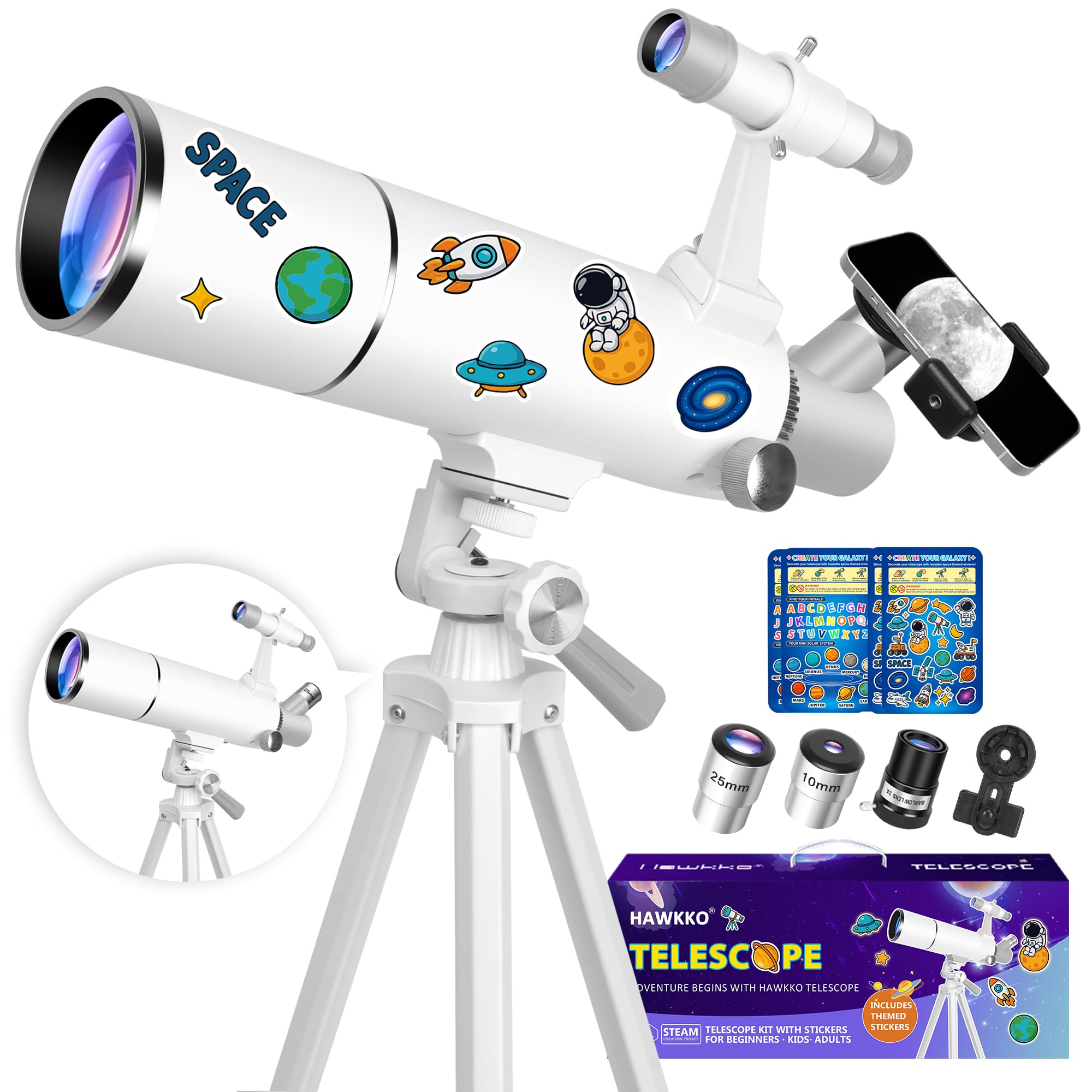
The Hawkko 80mm 500mm refractor is positioned as an entry-level option that still delivers genuine planetary capability. The 80mm fully multi-coated objective gathers significantly more light than the 50-60mm scopes typically found at the same price, enabling views of lunar craters and Jupiter’s moons. The 20X to 150X magnification range covers low-power scanning and high-power lunar observation, and the included space-themed stickers add a fun personalization element for younger users.
The kit includes two Kellner eyepieces (10mm and 25mm), a 3X Barlow lens, a straight-through finderscope, and a smartphone adapter. The aluminum tripod is adjustable for both kids and adults, and assembly is tool-free and quick. Users report that the scope provides crisp lunar images and is stable enough for casual observing sessions. The inclusion of a phone adapter makes sharing images straightforward.
At 500mm focal length, achieving high planetary magnification depends on the Barlow lens, and the image quality at 150X is serviceable but not as sharp as longer-focal-length scopes. The tripod, while functional, is lightweight and can transmit vibrations from light touches or breezes. Several reviewers noted that the finderscope is basic and requires careful alignment. For someone on a tight budget who wants a genuine telescope capable of planetary observation — not a toy — the Hawkko 80mm is the most accessible entry point in this guide.
Why it’s great
- 80mm aperture at entry-level price point
- Fun space-themed stickers for kid engagement
- Tool-free assembly with smartphone adapter included
Good to know
- 500mm focal length requires Barlow for high power
- Lightweight tripod can shake in wind
- Basic finderscope needs careful alignment
FAQ
Can I see Saturn’s rings with an 80mm telescope?
Why do my planet views look blurry at high magnification?
Do I need a computerized GoTo mount as a beginner?
Final Thoughts: The Verdict
For most users, the best beginner telescope to see planets winner is the Celestron 114LCM because its computerized GoTo mount removes the biggest barrier for beginners: finding planets in the first place. If you want the sharpest manual views of Jupiter and Saturn, grab the Hawkko 90mm 900mm. And for the ultimate portable companion that still delivers impressive planetary detail, nothing beats the compact Sarblue Mak60.