
The jump from wanting to learn the tin whistle to actually playing your first clean note is smaller than you think—but only if your first whistle doesn’t fight you. Many beginners pick up a whistle with poor tuning or a breathy, inconsistent upper register, and that frustration kills the momentum before the first tune is even learned.
I’m Rikta — the co-founder and writer behind FitlyFast. I spend my time researching and comparing the hardware specifications of musical instruments, focusing on the subtle differences in bore design, mouthpiece engineering, and material resonance that separate a rewarding first whistle from a frustrating one.
This guide is built around real user feedback and technical specs to help you find the best beginner tin whistle that will keep you playing, not fighting.
How To Choose The Best Beginner Tin Whistle
The entry-level tin whistle market is flooded with options, but the wrong choice can make the second octave sound like a dying bird. Focus on three core elements: the key, the mouthpiece design, and the material of the tube. A good beginner whistle requires low air resistance, stable tuning across both octaves, and a mouthpiece that is comfortable for small or large embouchures alike.
The Key of D Standard
Nearly all instructional material, tune books, and online lessons are written for the D whistle. Starting in any other key will limit your ability to play along with others and follow beginner courses. A D whistle gives you access to a massive library of Irish folk music and session standards right from the start.
Bore Shape and Breath Control
Conical bore whistles (like the Clarke Sweetone) require a lighter, more controlled breath and produce a sweeter, quieter tone ideal for indoor practice. Narrow-bore cylindrical whistles (like the Feadog) are brighter and louder but can be raspy in the upper register if you blow too hard. Beginners generally do better with a whistle that is forgiving of imperfect breath pressure.
Material and Durability
Brass whistles offer a warm, traditional tone that improves with age as the surface oxidizes. Aluminum whistles are lighter, more resistant to corrosion, and often have a cleaner, more consistent tone straight out of the box. Plastic composite mouthpieces are universal, but the quality of the fipple (the air channel) makes the biggest difference in how easily the whistle speaks.
Quick Comparison
On smaller screens, swipe sideways to see the full table.
| Model | Category | Best For | Key Spec | Amazon |
|---|---|---|---|---|
| Clarke Sweetone D | Conical Bore | Easy high notes & indoor tone | Conical bore, ABS/PC mouthpiece | Amazon |
| Sondery Aluminum Set C & D | Two-Key Set | Versatile keys & session volume | Aluminum body, wide bore | Amazon |
| Waltons Brass D | Standard Brass | Traditional tone & included booklet | Brass body, 6-language manual | Amazon |
| Feadog IW10 Brass D | Narrow Bore | Bright session sound | Narrow bore, brass body | Amazon |
| Feadóg Original Brass D | Made in Ireland | Traditional craft & bulk buys | Brass body, made in Ireland | Amazon |
| Sondery Brass D | Polished Brass | Durable build & protective case | Polished brass, 2-year warranty | Amazon |
| Waltons Pink Whistle | Fun Color | Kid-friendly & visual appeal | Pink-coated brass, lightweight | Amazon |
In‑Depth Reviews
1. Clarke Sweetone Tinwhistle in D
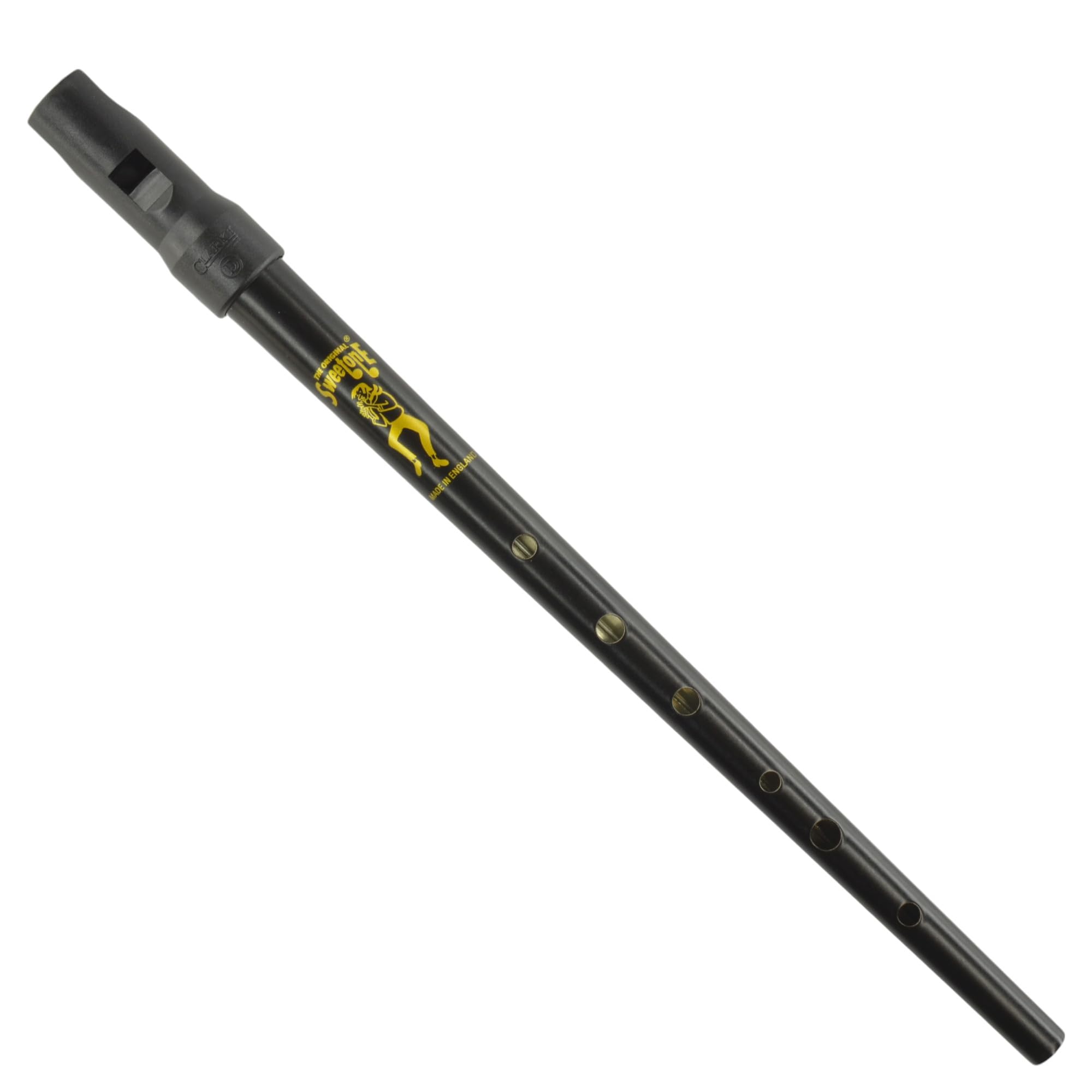
The Clarke Sweetone is the gold standard for beginners precisely because its conical bore design makes the second octave accessible without blasting. The ABS/PC mouthpiece creates a clear, sweet tone that is neither shrill nor airy, and the tapered body allows for forgiving breath control—a critical feature when you are still learning to modulate your lung pressure.
Reviewers consistently note that this whistle plays all three octaves with consistent volume and no wolf notes, which is rare even in whistles costing far more. The matte black finish and fabric bag give it a no-nonsense appearance, and the wide mouthpiece is comfortable for larger hands, though some beginners with smaller hands report hand cramps during long practice sessions.
If you want one whistle that removes the frustration from the learning curve, the Sweetone is it. Its intonation is reliable enough for recording, and the low air requirement means you can focus on fingering rather than fighting the instrument.
Why it’s great
- Exceptionally forgiving breath control across two octaves
- Sweet, clear tone that records well
- Durable ABS/PC mouthpiece
Good to know
- Wide mouthpiece may cause hand cramps in small hands
- Some find the toy-like appearance unappealing
2. Sondery Irish Tin Whistles Set C & D (Aluminum)

This Sondery set gives you two keys—C and D—at a price that typically buys a single premium whistle. The aluminum bodies are lightweight and corrosion-resistant, producing a bright, clear tone that cuts through group playing without being piercing. The wide bore design delivers strong volume, making these whistles a solid choice for anyone who wants to eventually join a session.
Professional players have tested these and report flawless tone and pitch consistency across both registers, noting the low air requirement and easy second-octave response. The C whistle has a slightly airy upper register that adds character, while the D whistle is clean and balanced. The included hard case keeps both whistles protected during transport.
If you want to explore the tonal differences between keys early in your learning, this set is unbeatable value. Just be aware that the C natural fingering on these whistles (like many aluminum models) may require the cross-fingering rather than the standard half-hole.
Why it’s great
- Two whistles in one purchase (C & D keys)
- Clean, woody tone with forgiving breath response
- Sturdy protective case included
Good to know
- C natural fingering may require alternate technique
- Short mouthpiece design
3. Waltons Brass D Tin Whistle
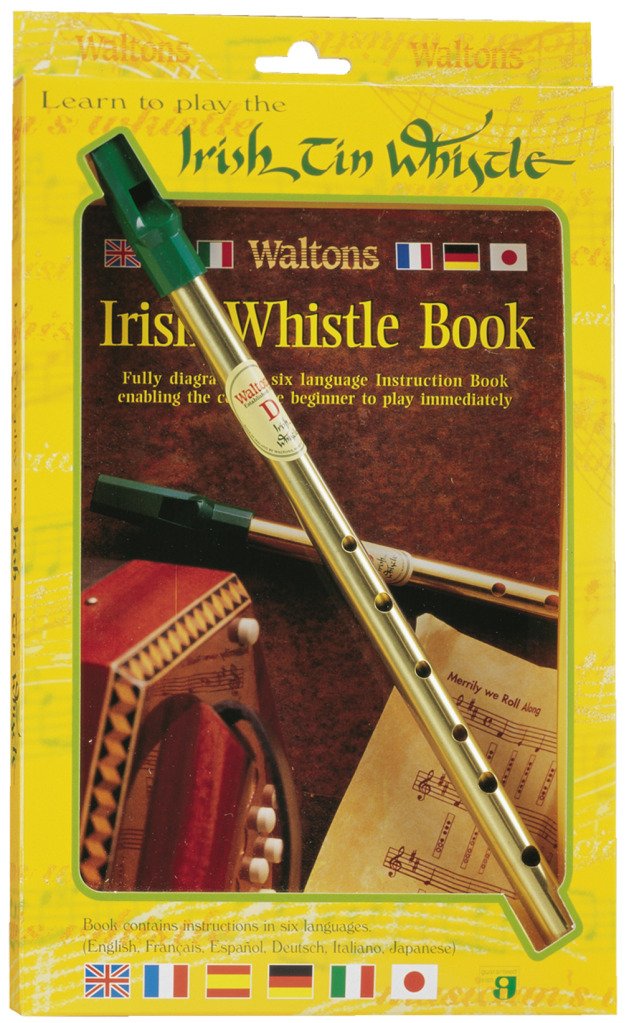
The Waltons Brass D is a standard-bearer for traditional brass whistles. Its polished brass body delivers a warm, mellow tone that many purists prefer over the brighter aluminum whistles. The included six-language instruction booklet covers basic fingering and a few simple tunes, making this a complete starter package for someone who does not want to hunt down separate learning materials.
Customer feedback shows this whistle is popular in classrooms and homeschool settings because it is durable and produces a consistent sound with moderate breath control. The brass finish develops a patina over time, which some players find aesthetically pleasing. However, some users note that moisture buildup affects the tone until they disassemble and dry the whistle.
This is a reliable mid-range choice that does nothing wrong. It will not blow you away with ease of play like the Sweetone, but it offers a classic Irish session sound that grows with you as your technique improves.
Why it’s great
- Warm, traditional brass tone
- Includes instruction booklet in six languages
- Durable classroom-grade construction
Good to know
- Moisture buildup affects tone during long sessions
- Some units have inconsistent intonation
4. Feadog IW10 Brass D Whistle

The Feadog IW10 is a narrow-bore brass whistle that produces a bright, sharp tone that cuts through a noisy session. It requires a more precise embouchure than a conical bore whistle, meaning beginners will need to work on breath control from day one. This whistle does not coddle you—it rewards good technique with a clear, bell-like tone in the first octave and a tight, focused sound up top.
Experienced players praise the Feadog for its traditional sound and solid construction, but some units come with raspy notes on the low D and high G. These flaws can vary between individual whistles, so it is worth checking the return policy. The brass wears with use, developing a natural patina that many players love.
If you want to train your ear and breath from the beginning, the Feadog IW10 is a fine instrument. But if you want the smoothest possible start, the conical bore Sweetone is a more forgiving alternative.
Why it’s great
- Bright, cutting tone ideal for sessions
- Solid brass construction
- Rewards developing technique
Good to know
- Unit-to-unit quality variation on high notes
- No included case
5. Feadóg Original Irish Brass Whistle (FW01)

Made in Ireland since 1978, the Feadóg Original is the whistle that many traditional players learned on. It is a simple, no-frills brass whistle in the key of D with a plastic mouthpiece. The tone is smooth and lively, adapting to the player’s breath—gentle blowing gives a soft, pure note, while stronger pressure brings out a louder, more cutting sound.
This whistle is a popular choice for school groups and bulk purchases because of its proven reliability and low cost. The bright, traditional sound complements fiddles and accordions well in an Irish session setting. One potential issue: a few reviewers report skin sensitivity to the plastic mouthpiece, so if you have allergies to certain plastics, this may be a concern.
For a beginner who values heritage and wants an instrument that has taught generations of players, the Feadóg Original is a respectful choice. It is not the easiest whistle to play, but it is a genuine Irish instrument with pedigree.
Why it’s great
- Authentic Irish-made instrument since 1978
- Smooth, lively tone that adapts to breath
- Proven reliability in school settings
Good to know
- Plastic mouthpiece may cause sensitivity in some users
- Not the most forgiving for absolute beginners
6. Sondery Irish Tin Whistle Brass D

The Sondery Brass D offers a polished finish and a two-year warranty, which is unusually strong for a budget-tier whistle. The aluminum and brass hybrid construction produces a bright, crisp tone with a balanced volume across both octaves. High notes are clear without being piercing, and low notes have a surprising richness for a whistle in this price bracket.
Reviewers note that this whistle arrives in high-quality packaging with a protective case—something most whistles at this price point do not include. The fipple design is forgiving, requiring less air than many comparable brass whistles, which makes the second octave easier to reach. One minor quibble: the C natural using the standard cross-fingering is out of tune, so you will need to use the alternative fingering (xxxxxx or oxxxxx).
For a beginner who wants a whistle that looks good, feels solid in the hand, and includes a case for safe storage, the Sondery Brass D is a smart pick. The bright tone also makes it a good backup for sessions.
Why it’s great
- Bright, crisp tone with balanced volume
- Includes protective case
- Two-year manufacturer warranty
Good to know
- C natural cross-fingering is out of tune
- Short mouthpiece design
7. Waltons Pink Whistle Tube
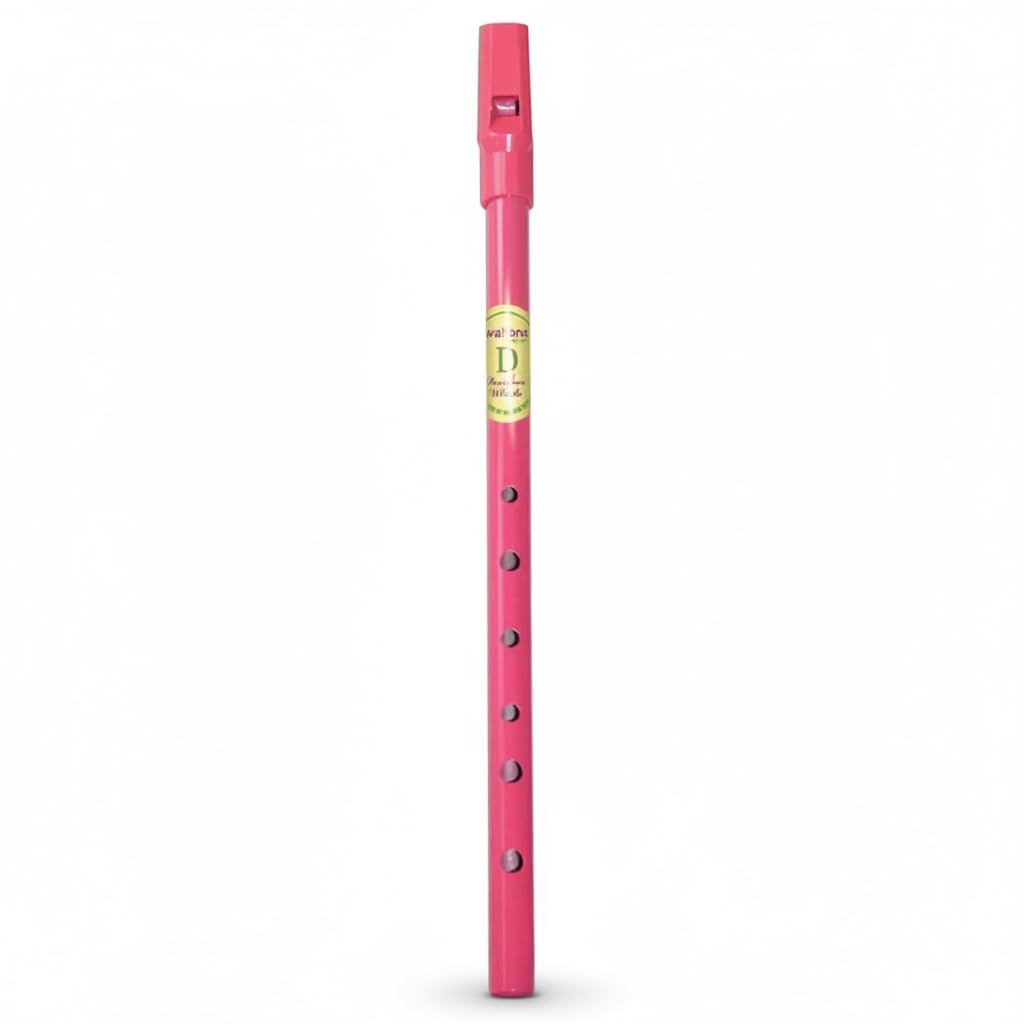
The Waltons Pink Whistle is designed specifically to be a fun, non-intimidating first instrument for kids. The pink powder-coated brass body is lightweight at just over 9 grams, making it easy for small hands to hold and manage. The mouthpiece is engineered to require minimal air pressure, so young players can produce a decent tone without blowing themselves dizzy.
Customer reviews consistently mention that this whistle survives drops and rough handling from children while still producing a sweet, pure tone. High notes are slightly airy, which is common for budget whistles, but this can be controlled with practice. The included six-language instruction booklet covers basic fingering and three simple melodies, offering a structured starting point.
If you are buying for a young beginner or someone who values aesthetics, this whistle delivers a reliable playing experience in a package that kids genuinely love. Earplugs for the parents are optional but recommended during the early practice sessions.
Why it’s great
- Extremely lightweight and durable for children
- Low air requirement for easy tone production
- Includes beginner instruction booklet
Good to know
- High notes can sound airy without practice
- Bright color may not appeal to all users
FAQ
Is a tin whistle harder to learn than a recorder?
What is the difference between a brass and an aluminum tin whistle?
Do I need to buy a tunable tin whistle as a beginner?
Final Thoughts: The Verdict
For most users, the best beginner tin whistle winner is the Clarke Sweetone Tinwhistle in D because its conical bore and forgiving mouthpiece make the learning process noticeably smoother. If you want a two-key set for exploring different tonalities from day one, grab the Sondery Irish Tin Whistles Set C & D. And for a child or someone who values a playful look and extreme durability, nothing beats the Waltons Pink Whistle Tube.