
Our readers keep the lights on and the weekend projects moving. As an Amazon Associate, I earn from qualifying purchases.
Specs are compiled from manufacturer listings and verified buyer reviews and can change over time — please confirm the key details on the product page before buying.
Picking a first violin for a child is a delicate balance: it needs to be the right size so small hands can reach the notes, durable enough to survive a few bumps, and tuneful enough to keep a beginner motivated rather than discouraged. This guide walks through seven fractional-size violins that hit that balance — from colorful quarter-size kits to solid-wood half-size outfits with performance-grade tone — so you can confidently choose the one that fits your child’s age, arm length, and commitment level.
I’m Rikta — the founder and writer behind FitlyFast. This guide is built by comparing the manufacturers’ published specifications and the patterns across verified customer reviews, so you get each pick’s real strengths and trade-offs instead of marketing spin.
Note that this list uses flexible matching for fractional-size violins, so not every pick is the exact size you searched for — the nearest same-type size serves the same purpose for young learners. Whether you end up with a 1/4 or a 1/2, what matters is finding a beginner violin for child that stays in tune and sounds pleasant enough to encourage daily practice.
Quick Picks
- Vangoa 1/2 Acoustic Violin Fiddle Kit — Top Performer
- Cecilio 1/2 Size Natural Varnish Violin — Best Overall
- Cecilio 1/4 Violin Solidwood Violin — Smart Value
- Vangoa 1/4 Kids Violin Set for Beginner — Great Starter Kit
- Pyle 1/2 Size Beginner Violin Starter Kit — Solid Budget Pick
- SKY(Paititi) 1/2 Size SKYVN102 Student Violin — Classic Looks
- Crafteem 1/4 Fiddle Purple Colored Premium — Colorful Start
How To Choose The Best Beginner Violin For A Child
The biggest mistake new parents make is buying a full-size (4/4) violin so their child can “grow into it.” That is almost always wrong. An oversized violin forces a child to stretch unnaturally, which makes fingering impossible and quickly kills motivation. You want a fractional size that fits right now — a 1/4 for most children aged 5–7, a 1/2 for ages 7–9, and a 3/4 for ages 9–11.
Size: The Single Most Important Decision
Measure your child’s arm from the neck to the middle of the palm. If that length is roughly 18–20 inches, a 1/4 size fits. At 20–22 inches, move up to a 1/2. The violin should rest in the crook of the neck while the child’s left palm wraps comfortably around the scroll — no straining or twisting. Every product below lists its size clearly in the specs.
Materials: Solid vs. Laminated Wood
A solid spruce top produces a warmer, more resonant sound that rewards a beginner’s ear. Laminated (plywood) bodies are cheaper and more durable but sound thinner. If your child is in school orchestra and needs to be heard among other instruments, a solid-top instrument like the Cecilio or the higher-end Vangoa is worth the extra spend. For a very young child unsure of commitment, a laminated top from Pyle still does the job at a lower entry point.
The Kit: What You Actually Need
A true “starter outfit” should include a bow (Brazilwood is the standard at this level), a lightweight hard case that protects the violin in a backpack, rosin for the bow, extra strings, and a shoulder rest. A digital tuner or tuner app is extremely helpful — most kits include one. A fingering tape strip (or note stickers) helps a child learn note positions in the first few weeks.
Quick Comparison
| Model | Best For | Size | Body Material | Weight | Amazon |
|---|---|---|---|---|---|
| Vangoa 1/2 Acoustic Violin | Performance-ready practice | 1/2 | Solid spruce / maple / ebony | 2 kg (4.4 lb) | Amazon |
| Cecilio 1/2 Size Natural Varnish | Orchestra-bound student | 1/2 | Solid spruce / maple | 4 lb | Amazon |
| Cecilio 1/4 Solidwood Violin | Young beginner with solid wood | 1/4 | Solid spruce / maple | 4 lb | Amazon |
| Vangoa 1/4 Kids Violin Set | Ages 5–7 starter kit | 1/4 | Solid spruce / maple | — | Amazon |
| Pyle 1/2 Size Beginner Kit | Budget-friendly school trial | 1/2 | Plywood / flamed maple veneer | 1.71 kg (3.8 lb) | Amazon |
| SKY(Paititi) 1/2 Student Violin | Classic oil-varnished look | 1/2 | Solid spruce / maple | — | Amazon |
| Crafteem 1/4 Fiddle Purple | Color-loving young starter | 1/4 | Spruce / maple | 1.65 lb | Amazon |
In‑Depth Reviews
1. Vangoa 1/2 Acoustic Violin Fiddle Kit

Performance-level resonance in a half-size frame that grows with a committed student.
You get clear, rich sound from this solid-wood setup — the spruce top and matched maple wood pattern vibrate well and produce stable timbre that buyers report is “much higher than expected” for the price. The body at 1/2 size is right for children aged 7–9, and the lightweight design at 2 kilograms (around 4.4 pounds) keeps practice sessions comfortable. Unlike the lightest option (the Crafteem at 1.65 pounds), this one adds heft that suggests a longer-lasting build.
The kit is thorough: two ebony octagonal bows (which players note have real horsehair for a more responsive grip on the strings), a large rectangular carrying case, rosin, a shoulder rest, a mute, a digital tuner, replacement strings, fretboard stickers, cleaning cloth, and a guide. One buyer bought this for an 8-year-old “to see how responsible she could be” and was “shocked at what I received” — the violin itself outperformed their low expectations. The catch is the bridge might sit the strings slightly closer together than ideal, so a local music shop may need a quick adjustment for precise fingering.
What Stands Out
- Solid spruce and maple wood construction delivers a noticeably richer tone than laminated beginner violins
- Comes with two ebony bows plus a sturdy rectangular case — practical for school transport
- Buyers praise the secure packaging and hand-numbered bridge as signs of careful craftsmanship
The Trade-Offs
- Bridge string spacing may be slightly tight, requiring a professional touch-up for ideal playability
- U-shaped rosin block is a bit awkward to apply evenly to the bow hair
- Shoulder rest feels a little cheaply made compared to the rest of the kit
Perfect for: The committed young student who needs a half-size violin that sounds good enough for stage or orchestra practice without upgrading in a year.
Consider something else if: Your child is still unsure about lessons — this is a premium price tier, and a budget kit like the Pyle makes more financial sense for a trial period.
2. Cecilio 1/2 Size Natural Varnish Violin
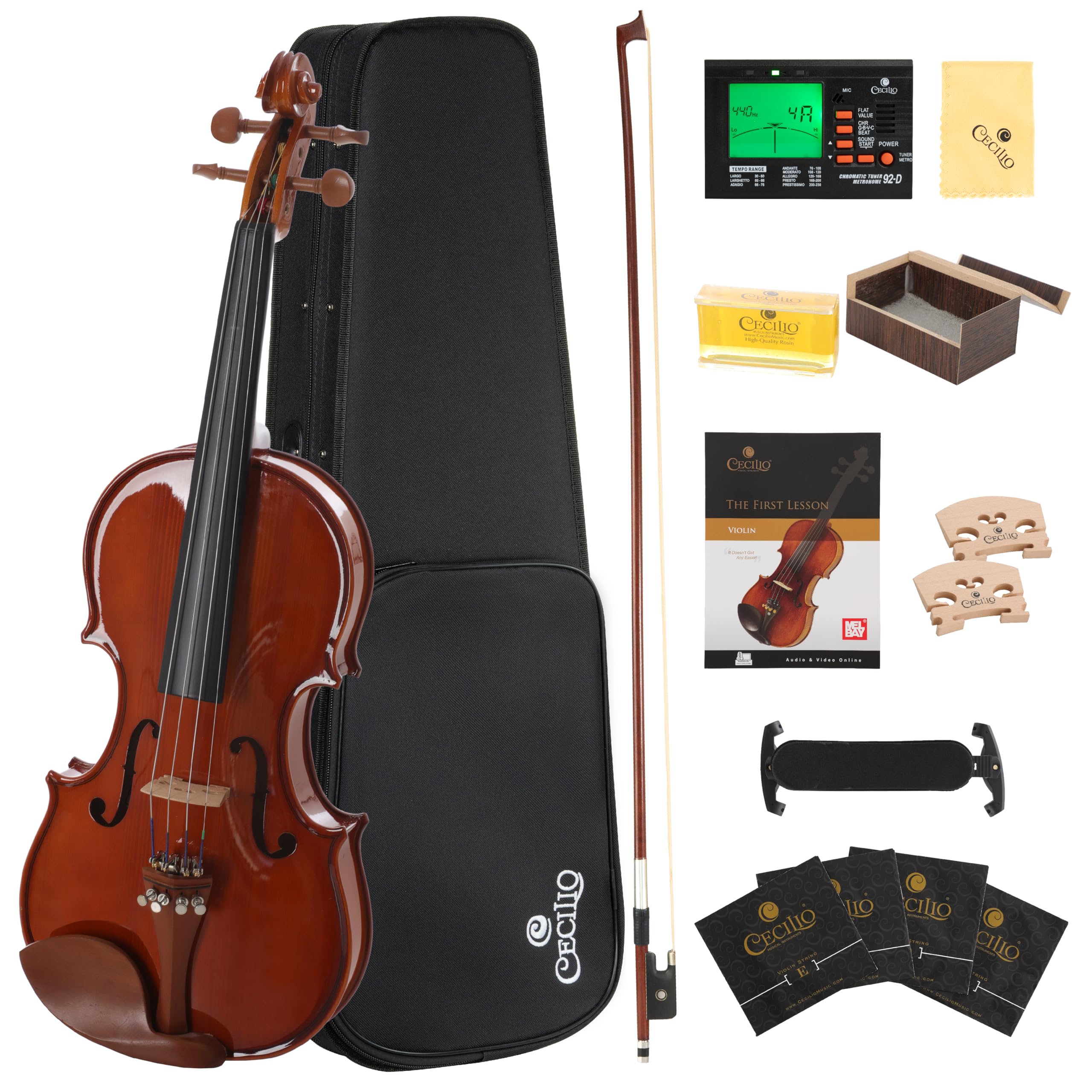
A complete starter package with solid-wood tone that encourages daily practice.
The hand-carved solid spruce top and maple back give this half-size violin a rich, resonant voice that several owners mention “exceeded expectations” and impressed a music teacher. The 1/2 size fits most children aged 7–9 and includes a comfortable maple fingerboard with boxwood pegs and nickel-plated fine tuners — so tuning small strings is less frustrating.
This kit is unusually complete: two Brazilwood bows, rosin in a protective box, an adjustable shoulder rest, extra strings and bridge, a lightweight hard case, and a Cecilio lesson book with companion CD/DVD. One parent whose daughter used this for school orchestra reported it “survived 2 years of school and rough handling by a 10-12 year old,” a strong durability vote. The main downsides: some units arrive with the bridge uninstalled, and the pegs may slip until “peg drops” or rosin is applied to the friction points. A few customers note the included shoulder rest’s knobs loosen over time.
Why It Works
- Solid spruce top and maple back produce a noticeably warmer sound than the Pyle’s plywood build
- Includes two Brazilwood bows, a lesson book, and an instructional CD/DVD — ideal for home practice
- Reviewers confirm it stays in tune after a break-in period and survives school use well
Watch Out For
- Pegs may slip initially — many buyers recommend ordering peg drops alongside the violin
- Bridge often arrives not installed; you will need to set it up or get a teacher’s help
- The original shoulder rest is flimsy; several users eventually replace it with a higher-quality one
Right for: The parent who wants a true “all in one” box that pairs solid-wood tone with education tools, so a child can start lessons immediately.
Not the best fit if: You need a violin that stays in perfect tune from day one without any setup — the peg-slip issue is common enough to plan around.
3. Cecilio 1/4 Violin Solidwood Violin
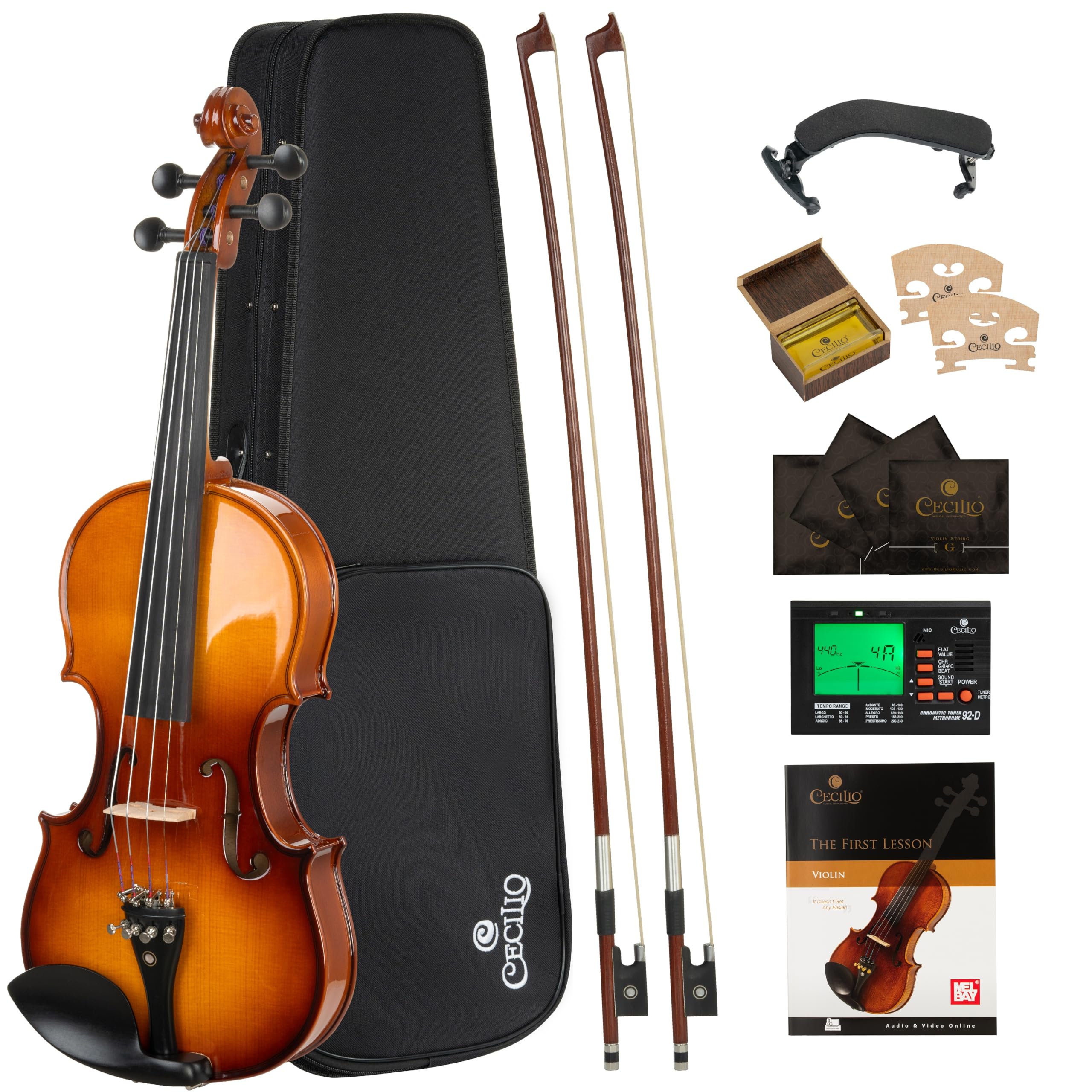
Quarter-size solid wood with quality D’Addario strings that sound better than most in this price tier.
It is rare to find a 1/4 violin with a solid spruce top and D’Addario strings at this price — the strings alone are a meaningful upgrade for tone and tuning stability. The 1/4 size is the right fit for most children aged 5–7, and the antique varnish finish with inlaid purfling makes it look elegant. At 4 pounds, it is built from real wood (spruce top, maple back and sides) rather than the plywood body of the Pyle below, so the sound is fuller and more pleasing to a new player’s ear.
The kit comes with extra strings, an extra bridge, quality rosin, an adjustable shoulder rest with padding, a chromatic string tuner with metronome, and a lightweight hard case. One reviewer’s child used this for two years of school orchestra, and the reviewer called it “durable, good quality” that survived “rough handling by a 10-12 year old.” The honest catch: some units arrive with a broken chin rest or bow, and the fine tuners on the tailpiece can be difficult to adjust even for a tutor. The included shoulder rest is also widely called “terrible” because the knobs loosen. Plan on replacing it.
What You Gain
- Solid spruce top with D’Addario strings — the tone is noticeably richer than the Crafteem’s metal-string sound
- Includes a tuner/metronome, extra bow, and extra bridge, so you don’t need to buy anything else to start
- Several school-orchestra parents confirm it lasts two years of regular use without falling apart
What to Know
- Quality control varies — some arrive with broken chin rest or bow, though customer service replaces parts quickly
- Fine tuners are stiff and hard for small fingers to turn, which frustrates beginning tuners
- Shoulder rest knobs loosen within days; budget for a replacement shoulder rest
Best for: The parent who wants a quarter-size violin with real solid-wood tone and is prepared to swap the shoulder rest for a better one.
Pass if: You need low-maintenance setup from the start — the Crafteem or Vangoa 1/4 comes with fewer assembly headaches for the same size.
4. Vangoa 1/4 Kids Violin Set for Beginner
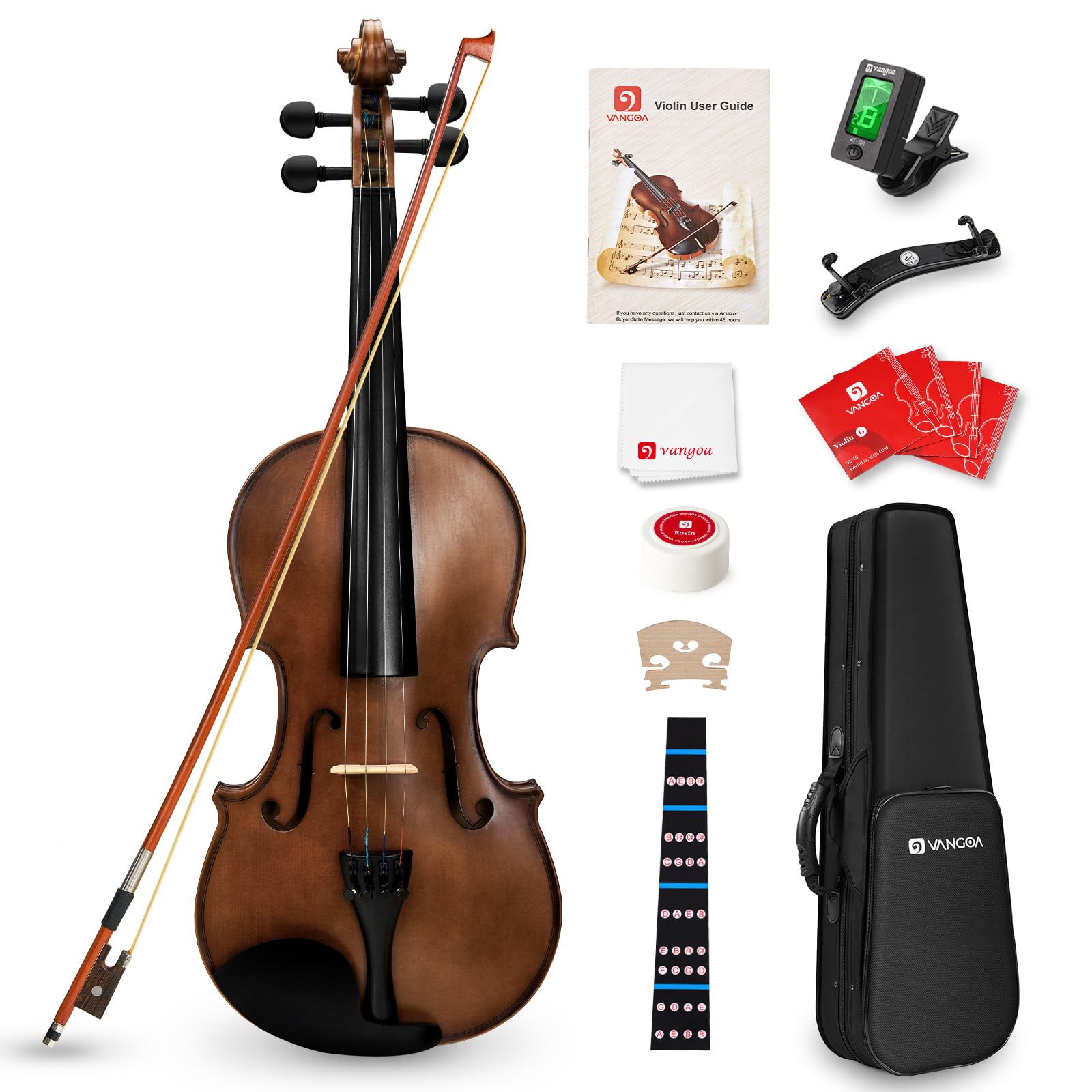
A well-packaged quarter-size set that gets a 6-year-old playing within minutes.
The 1/4 size hits the balance for children aged 5–7, and this Vangoa set makes the first week easy: the fingerboard note stickers help a child learn note positions without a teacher, and the practice mute (which fits over the bridge) lowers the volume so you don’t have to worry about disturbing neighbors while they practice. The solid spruce top and maple back and sides produce “clear and bright” sound — one reviewer noted her 6-year-old granddaughter “loves playing her violin.”
The kit includes a durable case, digital tuner, guide book, rosin, note stickers, extra strings, a Brazilwood bow, an extra bridge, and the violin mute. Setup is minimal: the bridge needs positioning and the pegs need gentle pushing in while tuning to stay wedged. The body is notably smaller than the half-size options — the item dimensions are 18.11 x 5.91 x 1.18 inches, while the SKY 1/2 measures 31 x 11 x 6 inches, so it fits a smaller child perfectly. The only complaint from several buyers is that the included rosin cake is tiny and you may need to buy a full-size rosin block separately.
The Highlights
- Practice mute lets a child play without the full volume — ideal for apartment or shared-family room use
- Note stickers on the fingerboard accelerate the first weeks of learning note positions
- Solid spruce and maple construction costs less than the Cecilio 1/4 while offering comparable wood quality
The Downsides
- The included rosin is very small; most buyers buy a separate full-size rosin after the first week
- Bridge is not pre-installed — you will need to set it up or ask a teacher for help
- Tuning pegs require firm inward pressure during tuning to stay in place, which can be tricky for a child
Reach for this if: Your child is 5–7 years old and you want a solid-wood quarter-size violin with a mute for quieter practice sessions.
Look elsewhere if: You prefer a half-size for a slightly older child — the Vangoa 1/2 above or the Pyle 1/2 would be a better arm-length fit.
5. Pyle 1/2 Size Beginner Violin Starter Kit
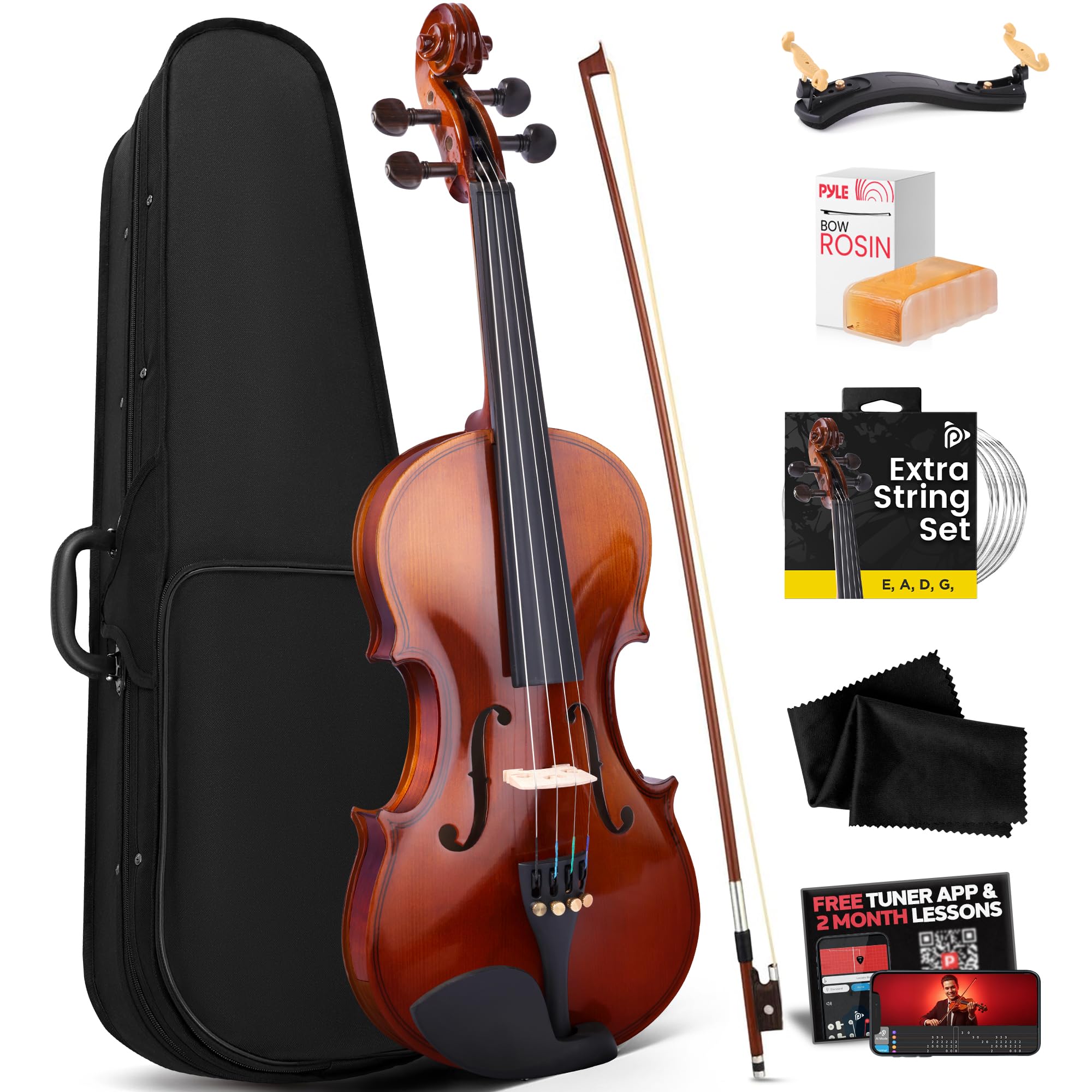
The low-risk trial violin that one buyer mentioned “will never be played at Carnegie Hall” but is perfect for finding out if a child loves the instrument.
The plywood body with flamed maple veneer and ebony fittings gives this half-size violin a decent look for the money, but the tonal quality is where the compromise sits — it sounds like a violin to untrained ears but lacks the depth of a solid-wood instrument. For a child in 6th grade school orchestra who is just trying out the instrument, that may be exactly the right trade-off: as one parent put it, “this is a perfect purchase for a kiddo just starting to try out the violin… it certainly will not discourage them by the tonal quality.” The kit includes a bow, hard travel case with backpack straps and locks, extra strings, a shoulder rest, rosin, cleaning cloth, and access to 2 months of online lessons plus a mobile tuner app.
The pre-installed bridge means you don’t have to set anything up — just rosin the bow and tune. The lightweight design at 1.71 kilograms (about 3.8 pounds) helps a child practice without arm fatigue. The honest trade-offs: the pegs are very sensitive, making tuning tricky for a beginner, and the bow’s quality is low enough that the school’s music teacher called it “kinda crappy.” One owner reported the bridge grooves are not cut in the right places, so you may need to reposition strings or get a new bridge. At this price, buyers agree: it is a trial violin, not a long-term instrument. If the child sticks with it, upgrade later.
The Good
- Comes fully assembled with the bridge pre-installed — just rosin the bow and tune, and you are ready to play
- Hard case with backpack straps is genuinely portable for school transport
- Includes 2 months of online lessons, which adds real value for a first-time learner
The Not-So-Good
- Plywood body and flamed maple veneer sound noticeably thinner than the solid-wood Cecilio or Vangoa
- Bow quality is low; a music teacher called it “kinda crappy” and several buyers upgrade to a horsehair bow
- Pegs are very sensitive, making fine-tuning difficult for a child or beginner parent
Who it fits: A budget-conscious parent who wants a functional half-size violin for a school trial period — if the child loses interest, you are not out much money.
skip it if: You want an instrument that sounds pleasant enough to inspire daily practice — the solid-wood options from Cecilio or Vangoa reward a child’s ear far better.
6. SKY(Paititi) 1/2 Size SKYVN102 Student Violin

Oil-varnished beauty with solid spruce and highly flamed maple — a visual treat for a young player.
The oil varnish finish on this half-size violin gives it a deep, rich bronze hue that looks far more expensive than its mid-range price suggests. The solid spruce top and highly flamed maple back, sides, neck, and scroll are standard for serious student instruments, and the Brazil wood bow and lightweight triangular case round out a clean, no-fuss package. At 31 x 11 x 6 inches for the case, it is the largest of the 1/2-size kits here — while the Vangoa 1/4 measures 18.11 x 5.91 x 1.18 inches — so make sure your child is on the bigger end of the 7–9 age range.
The setup is “professionally set up and ready to play” according to the manufacturer, but real-world experience varies: the bridge may need to be seated or the pegs adjusted for a snug fit. The kit is lean — a bow, case, and shoulder rest — so you will need to buy rosin, extra strings, and a tuner separately. The absence of those extras puts more setup work on you compared to the Cecilio or Pyle kits. One important note: the SKY model number is PTTVN101-1/2, and some users report the tuning pegs need a firm push to hold tune, a common trait at this price level.
what separates it
- Beautiful oil-varnished finish and highly flamed maple give it a premium appearance that stands out in a school orchestra
- Solid spruce and maple construction ensures decent resonance as the child improves
- Lightweight triangular case is easy for a child to carry to and from lessons
The Downsides
- Sparse accessory kit — no rosin, no extra strings, no tuner, no lesson book
- Bridge and pegs may need minor setup adjustments before the violin is fully playable
- Some reviews note the pegs require strong inward pressure to stay in tune, frustrating a young beginner
Best for: The parent who wants an oil-varnished half-size violin with solid-wood tone and does not mind buying accessories separately.
pass on it if: You want a complete “outfit” kit with everything including rosin and a tuner — the Pyle or Cecilio kits are more convenient.
7. Crafteem 1/4 Fiddle Purple Colored Premium Violin

Bright purple lacquer and five colors of fingering tape make this the most visually notable entry point for a young beginner.
If a child is initially hesitant about “boring brown” instruments, the purple lacquer on this quarter-size Crafteem can turn the violin into a desirable object — a gift they actually want to hold. The 1/4 size fits most children aged 5–7, and at 1.65 pounds it is the lightest violin in this guide, making extended practice sessions less fatiguing for tiny arms. The splint and maple body with metal strings is built to “correct measurements and specifications,” which is a step above many economy-level instruments.
The kit is unusually generous: a lightweight hard case, bow, rosin, five colors of fingering tape (one strip per string), a shoulder rest, and even extra consumable parts (strings and bridges) since the manufacturer expects beginners to break things. The fingering tape is a huge help — each string gets its own color, so a child can quickly find the right finger position without reading music. The catch: the violin ships with the bridge not set up and the bow slack to avoid shipping damage, so you will need to position the bridge and tighten/tune before the first lesson. The metal strings also have a brighter, less warm tone compared to the D’Addario strings on the Cecilio 1/4.
Why Kids Love It
- Bright purple lacquer finish is a hit with children who want a fun, personalized instrument
- Five-color fingering tape set makes learning note positions intuitive for a non-reading beginner
- At 1.65 lb it is the lightest pick here, so a 5-year-old can hold it for a full practice session without arm strain
Honest Trade-Offs
- Bridge arrives uninstalled — you need to set it up carefully or get a teacher’s help
- Metal strings sound brighter and thinner than the synthetic strings on the Vangoa or Cecilio models
- Some parents report the fine tuners are stiff, making it hard for a child to tune independently
Reach for this one if: You have a young child who is excited by the color purple and needs a light, easy-to-hold 1/4 size with learning aids baked in.
Pass if: You prefer a natural wood look or want a more traditional tone — the Vangoa 1/4 has a solid spruce top and a more classic brown aesthetic.
Understanding the Specs
Fractional Sizes (1/4 vs. 1/2)
These numbers refer to the violin’s body length relative to a full-size 4/4 instrument. A 1/4 violin has a body about 12–13 inches long and fits most children aged 5–7. A 1/2 violin has a body about 13–14 inches and fits ages 7–9. To check which size your child needs, have them extend their left arm: the scroll of the violin should rest in the palm of their hand without their arm being fully straight. If they have to stretch, go smaller.
Solid Spruce Top vs. Plywood Body
A solid spruce top is a single piece (or two book-matched pieces) of real spruce. It vibrates freely, producing a warmer, more complex tone that rewards a child’s ear and encourages better bowing technique. A plywood body (sometimes called “laminated”) is several thin layers glued together — it is more durable and cheaper but sounds thinner. For a child committed to school orchestra, solid wood is worth the extra cost. For a 6-year-old trying out violin for the first time, plywood at the Pyle price point is a sensible trial.
FAQ
What size violin does my 6-year-old need?
Is a solid wood violin really better for a beginner?
How do I know if the violin is set up correctly when it arrives?
Why does the violin keep going out of tune?
Does the violin come with a shoulder rest?
How long will a 1/4 size violin fit my child?
Should I buy rosin separately?
Do I need to buy a digital tuner separately?
Final Thoughts: The Verdict
For most parents, the winner among the beginner violin for child picks is the Cecilio 1/2 Size Natural Varnish because it combines a solid spruce top, a complete starter kit with a lesson book and CD/DVD, and two bows at a mid-range price that works for committed beginners. If you need a quarter-size for a 5- to 7-year-old and prefer a practice mute for quieter play, grab the Vangoa 1/4 Kids Violin Set. And if you want performance-grade solid wood in a half-size package with two professional bows, the Vangoa 1/2 Acoustic Violin delivers the kind of tone that keeps a motivated student practicing through to intermediate level.
How We Picked
We do not accept paid placement. Every pick is matched to a real buyer and a real use-case; we do not hands-on test units.
Sources & Methodology
Specifications: manufacturer listings and product documentation. Review insights: verified customer reviews, as of July 2026. Pricing: not shown on this page (it changes often); check the current price via the retailer link.
As an Amazon Associate, FitlyFast earns from qualifying purchases. This does not affect which products we feature.