
Our readers keep the lights on and the weekend projects moving. As an Amazon Associate, I earn from qualifying purchases.
A yoga mat that slides under your palms during Downward Dog or bunches up in the middle of a flow will kill your motivation before you build a habit. For a beginner, the mat is the foundation — literally everything rests on it. The wrong one adds frustration; the right one makes you want to unroll it again tomorrow.
I’m Rikta — the co-founder and writer behind FitlyFast. I’ve spent hundreds of hours analyzing TPE formulations, NBR densities, surface texture patterns, and the real-world feedback from thousands of yoga newcomers to separate mats that support from mats that just take up floor space.
Whether you are practicing on hardwood, tile, or carpet, your first mat should deliver grip, joint protection, and a flat, stable surface. That is why I built this guide around the best beginner yoga mat options that actually address those needs without overwhelming you with technical noise.
How To Choose The Best Beginner Yoga Mat
Your first mat needs to do three things well: keep you from slipping, cushion your joints, and stay flat on the floor. Glossy marketing claims about “premium feel” do not help when your hands start sliding in Warrior II. Focus on the material, the thickness, and the grip texture — those three specs determine 90 percent of your daily experience.
Material: TPE vs NBR vs PVC
TPE (thermoplastic elastomer) is the modern sweet spot for beginners. It is lightweight, offers good grip when dry or slightly damp, and is recyclable. NBR foam is thicker and cheaper, but it feels spongy, absorbs sweat, and makes balance poses harder. PVC mats are durable and sticky but heavy and can have a strong chemical smell. For a first mat, TPE delivers the best balance of weight, traction, and comfort.
Thickness: 6mm vs 10mm
A 6mm mat provides enough cushion for your knees and tailbone during kneeling poses without sacrificing stability for standing balances. A 10mm mat feels plush but can make you wobble in poses like Tree or Half Moon. Beginners with sensitive knees may prefer 8–10mm, but anyone working on core strength and balance should start with 6mm.
Texture and Grip
Look for a mat with a textured top layer — polygonal, wave, or fingerprint patterns — that prevents your palms and feet from sliding when you start to sweat. The bottom layer should also have grip ridges or wavy patterns to hold the mat in place on tile or hardwood. A mat that moves under your weight is dangerous and distracting.
Quick Comparison
On smaller screens, swipe sideways to see the full table.
| Model | Category | Best For | Key Spec | Amazon |
|---|---|---|---|---|
| UMINEUX Large Yoga Mat | Premium | Extra cushioning | 10mm TPE, 48″ wide | Amazon |
| Gruper Yoga Mat (Extra Wide) | Premium | Alignment aid | 8mm TPE, alignment marks | Amazon |
| KEEP Extra Wide Yoga Mat | Mid-Range | Wide space for poses | 7mm TPE, 32″ wide | Amazon |
| ROMIX Yoga Mat Thick | Mid-Range | High joint comfort | 10mm NBR foam | Amazon |
| Amazon Basics TPE Yoga Mat | Mid-Range | Reliable all-around use | 6mm TPE, 73.6″ length | Amazon |
| Gruper Yoga Mat | Budget | Lightweight carrying | 6mm/8mm TPE, 2.6 lb | Amazon |
| Readaeer Foldable Yoga Mat | Budget | Travel and compact storage | 6mm TPE, foldable design | Amazon |
In‑Depth Reviews
1. UMINEUX Large Yoga Mat

The UMINEUX stands out for its oversized surface — 72 by 48 inches — which gives beginners twice the space of a standard mat. That extra width is a game-changer when you are still figuring out where your hands and feet land in each pose, and it eliminates the frustration of rolling off the edge during wide-legged stretches.
At 10mm thick, this mat uses premium TPE that compresses just enough to protect your knees and spine during kneeling postures and supine exercises, yet it resists bottoming out on hard floors. The double-sided non-slip texture locks your palms in place without feeling tacky or sticky against bare skin.
Closed-cell construction means sweat beads up on the surface instead of soaking into the foam, which makes post-session cleaning as simple as a quick wipe. The mat rolls up easily and stays flat when unrolled, a detail that cheaper mats often get wrong.
Why it’s great
- Extra-wide surface prevents edge-feeling anxiety
- 10mm thickness cushions without wobble
- Non-slip texture works on hardwood and tile
Good to know
- Heavier than standard mats at 3.9 pounds
- Velcro straps are functional but basic
2. Gruper Yoga Mat with Alignment Mark

The Gruper extra-wide mat (32 inches) solves the narrow-mat problem many beginners do not anticipate: running out of lateral space. The alignment marks printed on the surface act as a visual guide for hand and foot placement, which helps when you are practicing alone at home without a mirror or instructor correcting your stance.
Made from TPE at either 6mm or 8mm thickness, this mat gives you the option to choose more cushion for your knees without sacrificing the stability needed for standing balances. The double-sided non-slip texture — a fingerprint-like top and a wavy bottom — keeps the mat planted even during active flows.
The included carrying bag and strap make transport easy, though the bag is serviceable rather than premium. The alignment symbols are printed clearly and have held up well during regular use based on owner feedback.
Why it’s great
- Alignment marks help build proper form
- Extra width provides freedom for wide poses
- Durable TPE resists tearing and deformation
Good to know
- Slippery for some users in high-sweat situations
- Carry bag stitching may wear over time
3. KEEP Extra Wide Yoga Mat
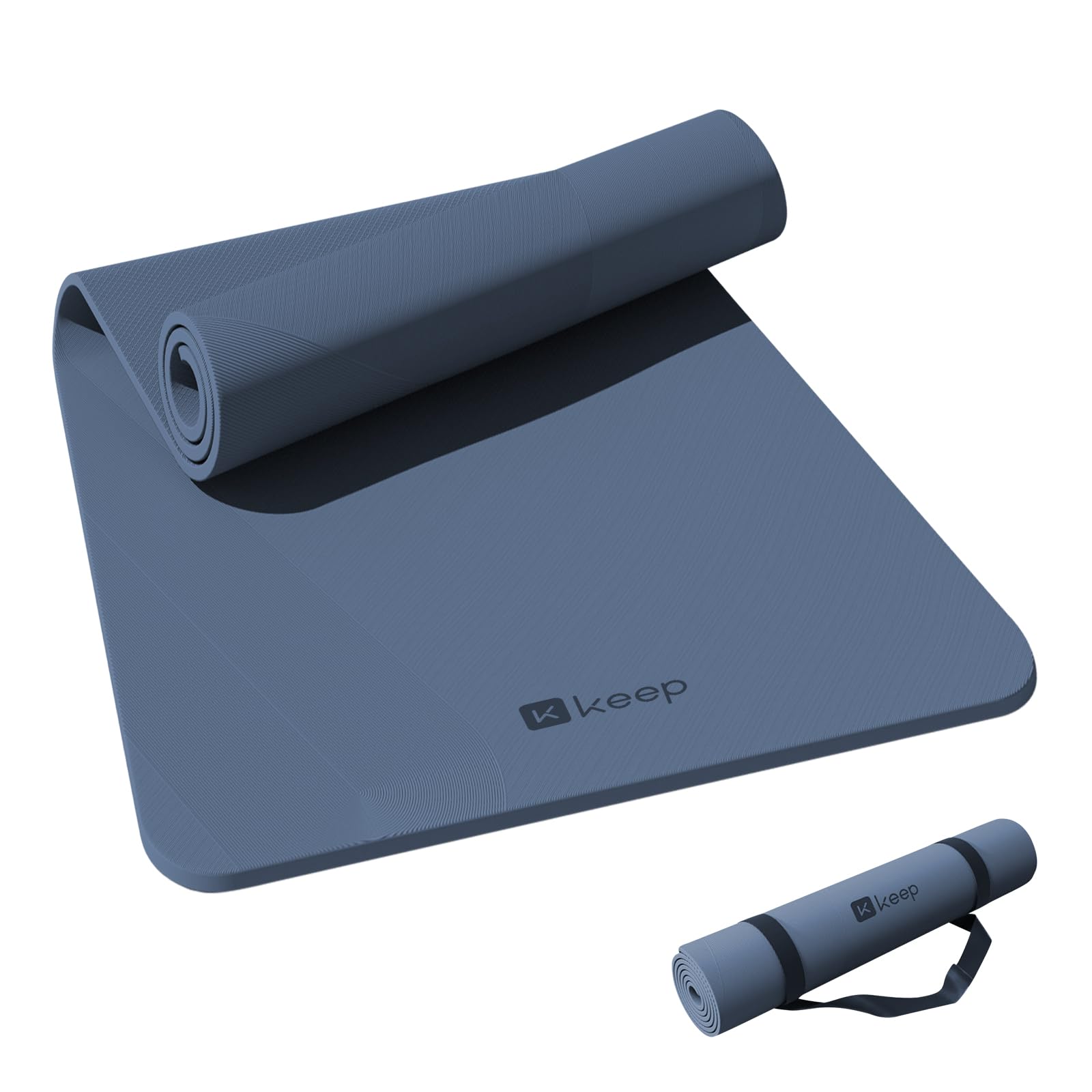
The KEEP mat hits a smart middle ground at 7mm thickness — plush enough to protect your knees during tabletop and low-lunge, yet firm enough that you do not sink during standing poses. The 32-inch width is the standout feature here, giving taller and broader practitioners real room to spread out without worrying about the edge of the mat.
The fingerprint-like anti-slip texture on the top layer provides consistent grip across dry and slightly damp skin, while the bottom layer uses a comprehensive anti-slip pattern that anchors the mat to hardwood and tile without creeping. The TPE material is free from plasticizers and formamide, making it a safer choice for indoor practice.
At just 2.86 pounds, this mat is surprisingly lightweight for its size, and the included adjustable polyester strap makes carrying it to a studio or park simple. It rolls up neatly and stays rolled, unlike some mats that fight back when you try to store them.
Why it’s great
- Wide 32-inch surface accommodates larger body types
- Lightweight and easy to carry with strap
- Eco-friendly TPE with no plasticizers
Good to know
- Some users report limited grip in high-sweat conditions
- Thinner than 10mm mats for knee-sensitive users
4. ROMIX Yoga Mat Thick

The ROMIX uses NBR foam rather than TPE, which makes it noticeably softer and thicker at 10mm. This is the mat to choose if your primary concern is joint comfort — kneeling poses, supine stretches, and floor exercises feel buoyant, and users weighing up to 100 kilograms report that the dense foam holds up without bottoming out.
The textured top surface provides decent grip, though NBR is inherently less tacky than TPE, so you may find your hands sliding during faster vinyasa flows. The bottom layer grips the floor well enough, but the mat’s spongy nature can introduce a subtle instability in balance poses.
Cleaning is straightforward because the closed-cell, water-resistant surface lets you wipe down sweat and dirt with a damp cloth. The included carry bag and strap make transport manageable, though the mat weighs only 800 grams despite its generous thickness.
Why it’s great
- Very soft 10mm cushioning for sensitive knees
- Lightweight despite thick foam construction
- Non-toxic and latex-free material
Good to know
- NBR foam can feel spongy and less stable for balance
- Grip is adequate but not comparable to TPE
5. Amazon Basics TPE Yoga Mat
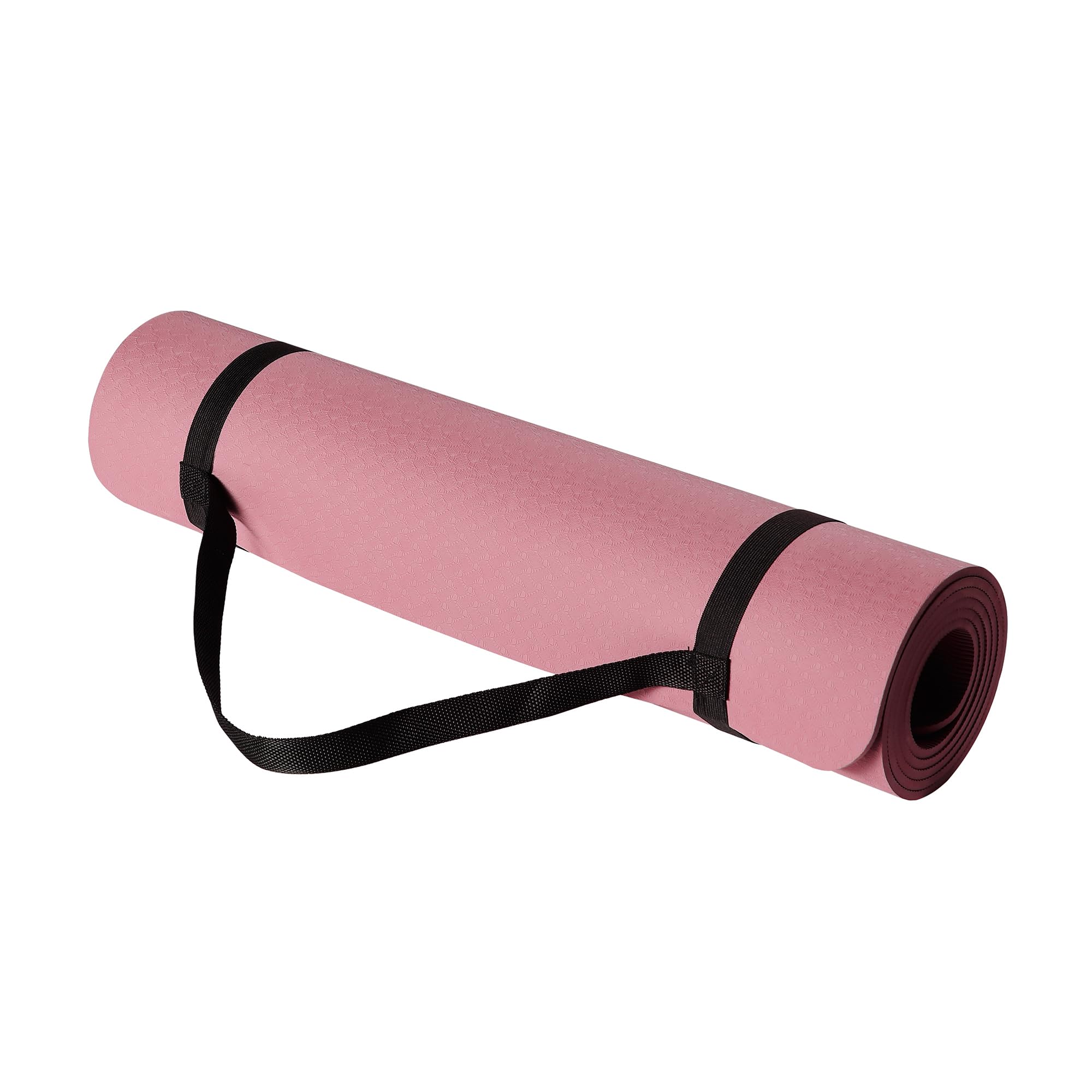
Amazon Basics delivers a no-nonsense TPE mat that skips the flashy design in favor of solid fundamentals. At 6mm thick and 73.6 inches long, it offers enough cushion for daily flows and enough length for taller users to stretch out fully without their head or feet hanging off the end.
The non-slip surface does a respectable job keeping your hands and feet planted, though some users note that it can feel slightly slippery during more dynamic movements. The spring-back elasticity of the TPE helps the mat maintain its shape over time, resisting the permanent indentations that cheaper PVC mats develop.
Weighing only 2 pounds and coming with a carrying strap, this mat is easy to take to a studio, gym, or outdoor space. It has almost no chemical odor out of the package, which is a welcome advantage over many beginner mats that need days of airing out.
Why it’s great
- Affordable entry point into TPE quality
- Long 73.6-inch length suits taller users
- No chemical smell and easy to clean
Good to know
- Can feel slightly slippery during sweat-heavy sessions
- Stretches more than premium TPE mats during holds
6. Gruper Yoga Mat Non Slip
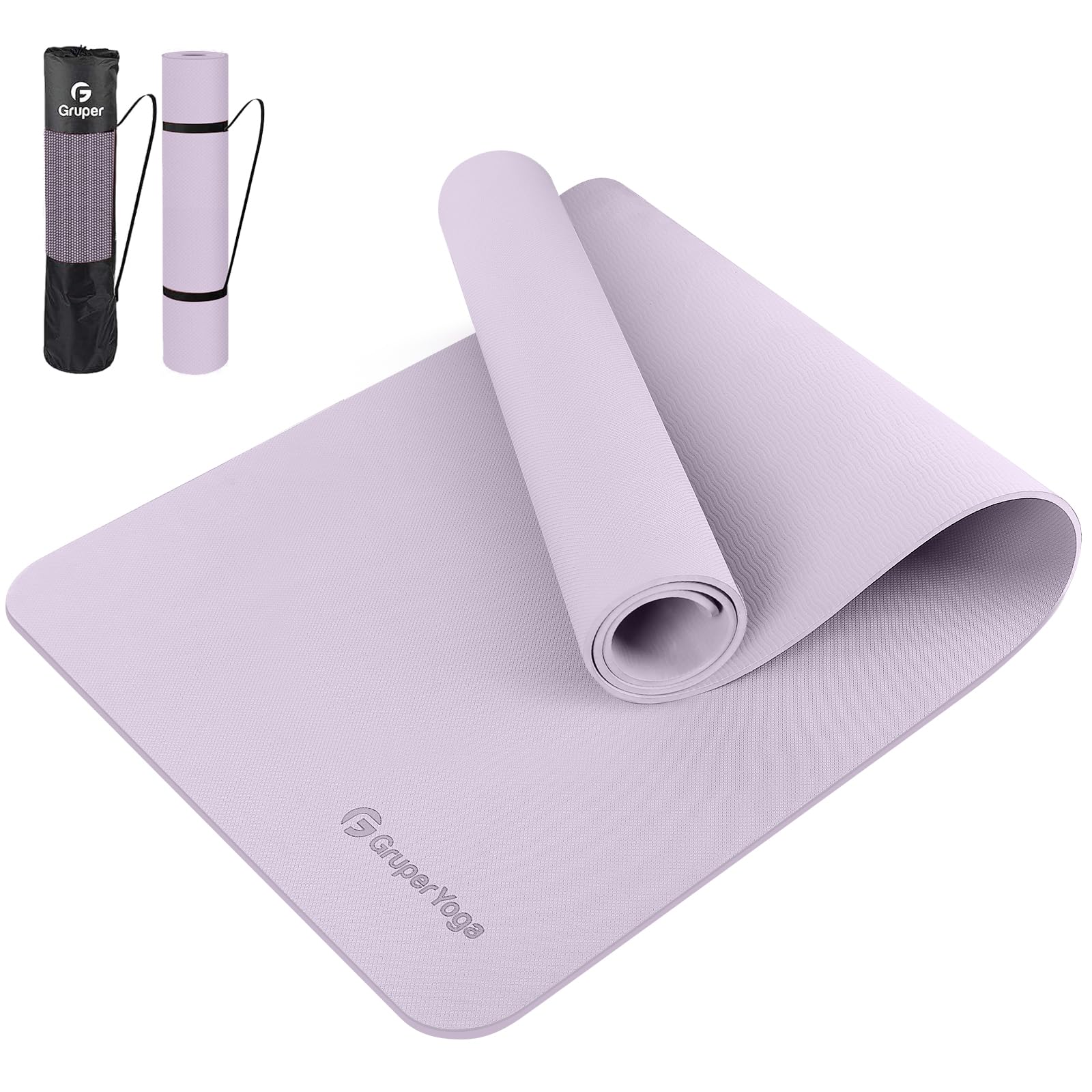
The standard Gruper mat is a strong budget entry that does not cut corners on the essentials. Available in both 6mm and 8mm thicknesses, it uses TPE material that is non-toxic, odorless, and lighter than PVC or EVA alternatives. The double-sided non-slip surfaces use a textured polygonal top and a wavy bottom to keep everything stable.
Owners consistently praise the cushioning-to-weight ratio: at just 2.6 pounds for the 6mm version, it is one of the lighter mats in this tier, yet it still provides enough padding for comfortable kneeling poses. The free carrying strap and storage bag add practical value for beginners who want to practice at a studio or park.
One note from longer-term users: the carry bag’s handle may tear after repeated use, though the mat itself holds up well without significant wear or fading. If you can live with a basic bag, the mat performs well above its price point.
Why it’s great
- Excellent value for TPE quality at this price
- Lightweight and easy to carry with included bag
- Double-sided non-slip texture works in studios
Good to know
- Carry bag handle may rip after several uses
- Thinner option may not suit very hard floors
7. Readaeer Foldable Yoga Mat
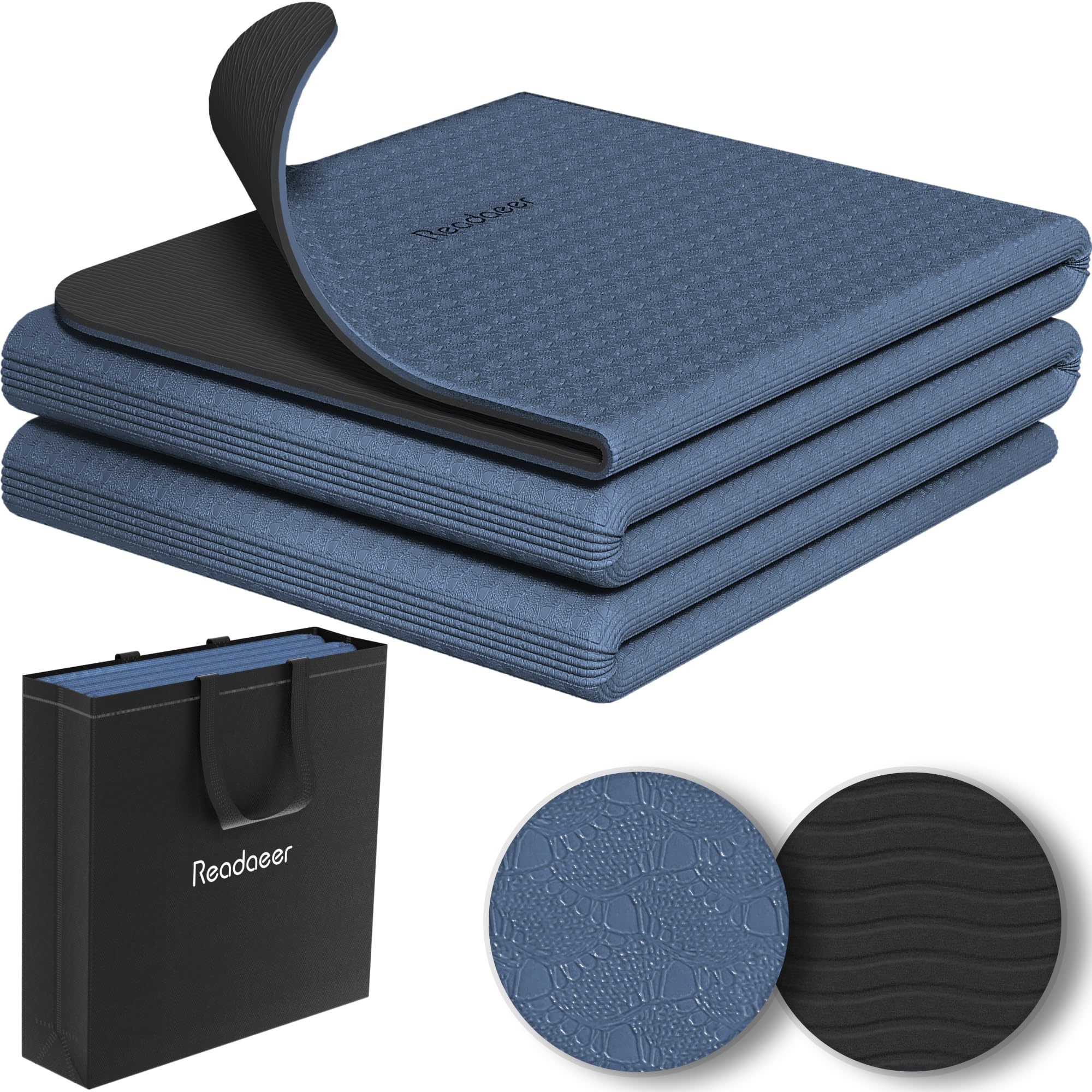
The Readaeer takes a different approach from the roll-up standard: it folds flat and comes with a storage bag, making it the most compact option for travelers and those with limited home storage. The foldable design means no curling edges or stubborn rolling — it lays perfectly flat right out of the bag.
At 6mm thick, the TPE construction provides adequate cushioning for most beginner routines, though some users with sensitive knees noted they would prefer a thicker mat for prolonged kneeling. The double-sided anti-slip design uses a polygonal texture on the top and a wave texture on the bottom, both of which work well on gym floors and home surfaces.
The included bag is described as “cheap quality” by some owners, but the mat itself has earned consistent praise for comfort and space-saving utility. If your routine involves travel, studio hopping, or just keeping clutter low, the foldable form factor is a real advantage.
Why it’s great
- Foldable design lays flat and stores compactly
- Good grip on both sides for stable practice
- Lightweight and easy to pack in luggage
Good to know
- 6mm may feel thin for kneeling on hard floors
- Storage bag quality is basic
FAQ
How thick should my beginner yoga mat be?
Is a TPE yoga mat better than PVC for beginners?
Why does my yoga mat slide on hardwood floors?
Final Thoughts: The Verdict
For most users, the best beginner yoga mat winner is the UMINEUX Large Yoga Mat because it combines premium TPE cushioning with an extra-wide surface that removes the spatial anxiety beginners often feel. If you want alignment guidance while learning poses, grab the Gruper Yoga Mat with Alignment Mark. And for a lightweight, budget-friendly option that does not compromise on grip, nothing beats the Gruper Yoga Mat Non Slip.