
Our readers keep the lights on and the weekend projects moving. As an Amazon Associate, I earn from qualifying purchases.
Below-ground wood faces uniquely aggressive decay. Soil contact accelerates fungal growth, termite activity, and moisture wicking that can rot a fence post or foundation beam from the inside out within two years without proper treatment. Selecting the right preservative is about stopping that process before it starts.
I’m Rikta — the co-founder and writer behind FitlyFast. My research for this guide involved reading hundreds of user reports and cross-referencing technical specifications, EPA registrations, and ASTM standards to separate surface-level stains from genuine wood protection.
To help you make an informed choice, I’ve organized the top options into a practical comparison. This guide to the best below ground wood preservative focuses on penetration depth, active ingredients, and real-world performance for posts, foundation lumber, and ground-contact structures.
How To Choose The Best Below Ground Wood Preservative
Not all wood stains seal out moisture, and fewer still actually kill or repel the organisms that destroy wood from the ground up. The wrong choice leaves you with a painted post that rots inside. Focus on the chemistry, not just the label.
Active Ingredient: Borates vs. Copper Naphthenate
Borate-based preservatives like disodium octaborate tetrahydrate (found in Nisus products) diffuse deep into damp wood and attack termites and decay fungi without leaving a stain. They excel indoors and in areas where you want clear treatment. Copper naphthenate, by contrast, bonds by coating wood fibers with a fungicidal copper compound — it is visible, required by code for end-cut treatment on pressure-treated lumber, and resists leaching better in direct soil contact.
Penetration Depth and Carrier Type
A surface film won’t protect the interior of a ground-contact post. Oil-based carriers (found in Penofin and TWP) penetrate deep into dense hardwoods and softwoods alike. Water-based options like Olympic WaterGuard are convenient for above-ground decking but typically lack the capillary action needed to reach vulnerable interior wood in below-ground scenarios. For buried wood, an oil or solvent-based carrier is usually superior.
EPA Registration and Code Compliance
International Building Codes (IBC 2303.1.9 and IRC R317.1.1) require treatment of all field-cut ends on pressure-treated lumber. Products carrying an EPA registration number (like TWP 1500 Series and Tenino Copper Naphthenate) give you documented compliance. Using an unregistered stain on a structural post can void a warranty or fail an inspection.
Quick Comparison
On smaller screens, swipe sideways to see the full table.
| Model | Category | Best For | Key Spec | Amazon |
|---|---|---|---|---|
| Nisus PenaShield | Borate Preservative | Clear treatment for exposed framing & below-grade posts | No VOCs, 250 sq. ft./gal | Amazon |
| Tenino Copper Naphthenate 17% | Copper Preservative | Code-compliant end-cut treatment & direct ground contact | 2% copper as metal | Amazon |
| TWP 1501 Cedartone | Low-VOC Preservative Stain | Decking & siding where UV protection is also needed | 350 sq. ft./gal coverage | Amazon |
| Penofin Deep Penetrating Oil | Oil-Based Treatment | Dense exotic hardwoods (IPE, mahogany) near ground level | 350 sq. ft./gal coverage | Amazon |
| Thompson’s WaterSeal | Semi-Transparent Stain | Above-ground fences & decks needing fade-resistant color | ASTM D-4446 rated | Amazon |
| Olympic WaterGuard | Water-Based Sealer | Quick-dry above-ground sealing with color | Up to 400 sq. ft./gal | Amazon |
| Old Masters Gel Stain | Oil-Based Gel | Indoor furniture & fiberglass refinishing | 32 oz quart size | Amazon |
In‑Depth Reviews
1. Nisus PenaShield

PenaShield is a ready-to-use borate solution that penetrates deep into raw wood without leaving any discoloration. The active ingredient — disodium octaborate tetrahydrate — diffuses through moisture and delivers long-term protection against termites, carpenter ants, wood-boring beetles, and decay fungi. One gallon covers roughly 250 square feet, making it efficient for structural framing and fence posts alike.
Users report it works undiluted in a pump sprayer on exposed framing and behind drywall during remodels. There is zero lingering smell once dry, which is rare among preservatives. Outdoors, the manufacturer recommends reapplication every one to five years depending on water repellency maintenance, but indoors the treatment is considered lifetime.
Because the formula is environmentally friendly with no harmful VOCs, it is safe for both professional crews and DIY homeowners. The trade-off is that borates leach in standing water more readily than copper naphthenate; frequent direct soil contact may require a barrier sealant atop the borate treatment.
Why it’s great
- Completely clear — no stain or discoloration after drying
- Deep capillary penetration into damp wood
- No odor and no VOCs during or after application
Good to know
- Not designed for standing-water or continuous wet-soil immersion
- Outdoor longevity depends on maintaining a water-repellent topcoat
2. Tenino Copper Naphthenate 17%

Tenino Copper Naphthenate 17% delivers the highest allowable concentration of copper for a wood preservative — 2% copper as metal — and meets the AWPA M4 standard for end-cut treatment. This is the product you reach for when you need IBC and IRC code compliance on every cut end of pressure-treated lumber. The copper formulation is both toxic to termites and repellent to wood-destroying insects while also providing a water-repellent barrier.
The liquid has a thin consistency, meaning it soaks in quickly but can drip if applied carelessly. Users suggest a brush or a rubber ear syringe for precise application into drilled holes and cut faces. The smell is strong — a naptha solvent odor that persists for days but eventually fades. One user neutralizes the smell by sealing the treated area with a pruning spray, though this is optional.
Because the product is 100% domestically sourced from recycled copper, it is both low VOC and labeled for general use, meaning the treated wood can be discarded in a standard landfill. It is the best choice for foundation sills, joists, stair stringers, and any structural member that directly touches soil.
Why it’s great
- Highest legal copper concentration for maximum rot and insect protection
- Required by building codes for treating cut ends of treated lumber
- Low VOC and landfill-safe after treatment
Good to know
- Strong solvent smell during and after application
- Thin formula drips — requires careful technique to avoid staining surrounding surfaces
3. TWP 1501 Cedartone

TWP 1501 is an EPA-registered wood preservative stain under EPA number 51578-1, which means it offers documented antifungal and anti-insect performance in addition to UV and water resistance. The low-VOC formula complies with strict state regulations without compromising durability. Coverage is strong at 350 square feet per gallon, and the Cedartone color adds a warm brown tone that blends naturally with cedar or pine.
User feedback from log home owners in North Florida shows the same TWP formulation has held up for 30 years between applications, suggesting excellent long-term adhesion on rough-sawn wood. The stain soaks in well on cypress and pine and dries within 48 hours. Application via a paint sprayer and back-rolling produces a smooth, even finish that resists peeling — a common complaint with cheaper deck stains.
On pressure-treated pine decks, TWP outperforms many oil-based alternatives in preventing flaking, though the odor of the oil carrier is noticeable for about a week. The finish remains slick until fully cured, so leaves and debris stick during the first four days. For homeowners who want a preservative that also beautifies, this is the balanced choice.
Why it’s great
- EPA-registered as a wood preservative, not just a stain
- Low-VOC formula without sacrificing penetration or durability
- Proven 30-year track record on log homes and exterior decks
Good to know
- Oil-based — strong smell lasts roughly one week
- Stays tacky for several days, attracting leaves and debris
4. Penofin Deep Penetrating Oil Treatment

Penofin is formulated specifically for dense exotic hardwoods like IPE, mahogany, and teak — woods that ordinary stains sit on top of rather than penetrating. The oil carrier drives deep into the wood pores, then seals with a transparent brown finish that shows the natural grain. It includes added ultraviolet protection and advanced mildew resistance, critical for ground-level deck beams and railing posts.
One gallon covers roughly 350 square feet on smooth hardwood. A user with a 250-square-foot IPE deck plus railing consumed the full gallon in a single coat, applying via a cheap sprayer and brushing in to avoid pooling. The key step is wiping the excess after 15 minutes; leaving oil on the surface causes gummy spots and uneven drying. The finish on previously untreated four-year-old IPE restored it to near-new appearance.
The trade-off is a strong solvent smell that can last up to a month, especially in shaded or humid conditions. The product may also raise the grain of the wood, requiring a light steel wool pass between coats. For below-ground use on hardwood posts, applying an extra coat to the buried section is recommended.
Why it’s great
- Deep penetration into dense exotic hardwoods that reject surface stains
- UV filters and mildewcide extend life in ground-level applications
- Transparent brown finish preserves wood grain appearance
Good to know
- Strong solvent smell lingers up to one month
- May gel inside the container if stored improperly — buy in small batches
5. Thompson’s WaterSeal Semi-Transparent Stain

Thompson’s WaterSeal Semi-Transparent Stain is a reliable above-ground sealer that also carries the ASTM D-4446 certification for waterproofing wood — meaning it has passed a standardized test for moisture resistance. The Chestnut Brown color is warm but runs noticeably redder than the packaging suggests, as several users noted. Application is straightforward and can be done on damp or dry wood, though thorough prep cleaning is essential for adhesion.
The finish is fade-resistant thanks to advanced polymers that block UV damage. A single coat repels water on contact when fresh, but in hot climates a second coat is usually needed to maintain protection through the summer. Coverage ranges from 150 to 400 square feet per gallon depending on wood porosity. One redwood tongue-and-groove project achieved roughly 120 square feet per quart with one coat, leaving some sealer unused.
For below-ground use, this stain is best thought of as a supplementary water-repellent layer on top of a dedicated preservative. It will not kill termites or fungi on its own. It is a strong option for fence pickets and deck boards that sit close to the ground but not buried.
Why it’s great
- Exceeds ASTM D-4446 waterproofing standard
- Fade-resistant polymers maintain color year-round
- Can be applied to damp wood for flexibility in weather conditions
Good to know
- Color is significantly more red than label photos suggest
- Not a stand-alone preservative — does not contain fungicide or insecticide
6. Olympic WaterGuard Semi-Transparent Stain
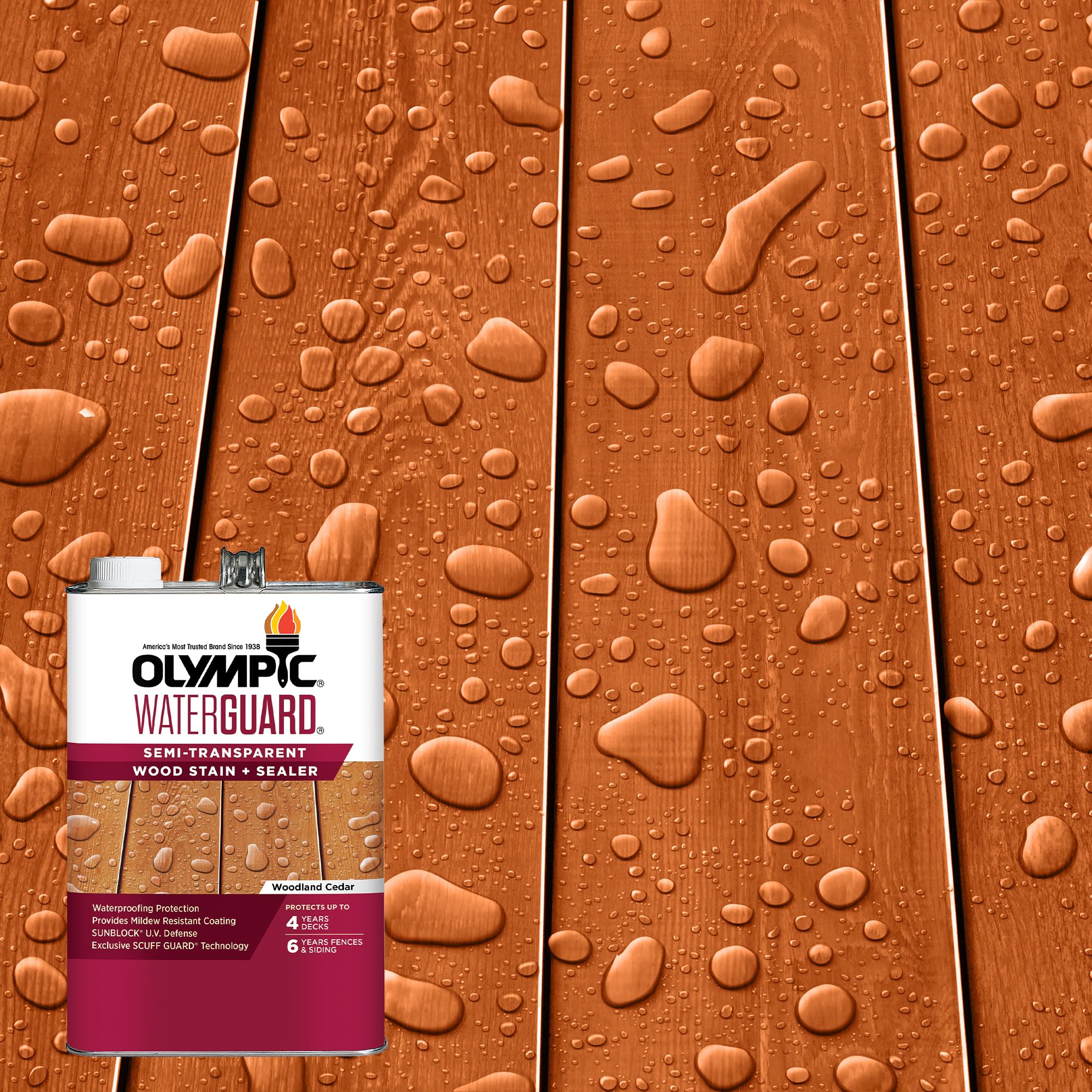
Olympic WaterGuard combines stain and sealant into a single water-based formula that cleans up with just soap and water. The Woodland Cedar color delivers a semi-transparent look, and the water-based nature means fast drying — around 24 hours. It includes SUNBLOCK UV defense and SCUFF GUARD technology to resist surface wear on decks, fences, and siding.
User reports highlight that the consistency is watery, which helps it soak into vertical surfaces like fence pickets but can cause drips if applied too thickly. Coverage is generous at 250–400 square feet per gallon depending on wood texture. On horizontal deck boards, two to three coats produce deep penetration and good long-term wear, especially after pressure washing a weathered surface.
Because it is water-based, it does not penetrate as deeply as oil-based preservatives in dense or weathered wood. For buried posts, this is a drawback — the sealer stays near the surface and does not wick into the core. It is a budget-friendly option for above-ground projects and furniture but not a primary below-ground preservative.
Why it’s great
- Water-based — easy cleanup with soap and water
- Dries in about 24 hours for quick project turnaround
- Built-in UV blockers and scuff resistance
Good to know
- Watery consistency can lead to drips on vertical applications
- Surface-level penetration — not ideal for buried wood protection
7. Old Masters 80104 Gel Stain
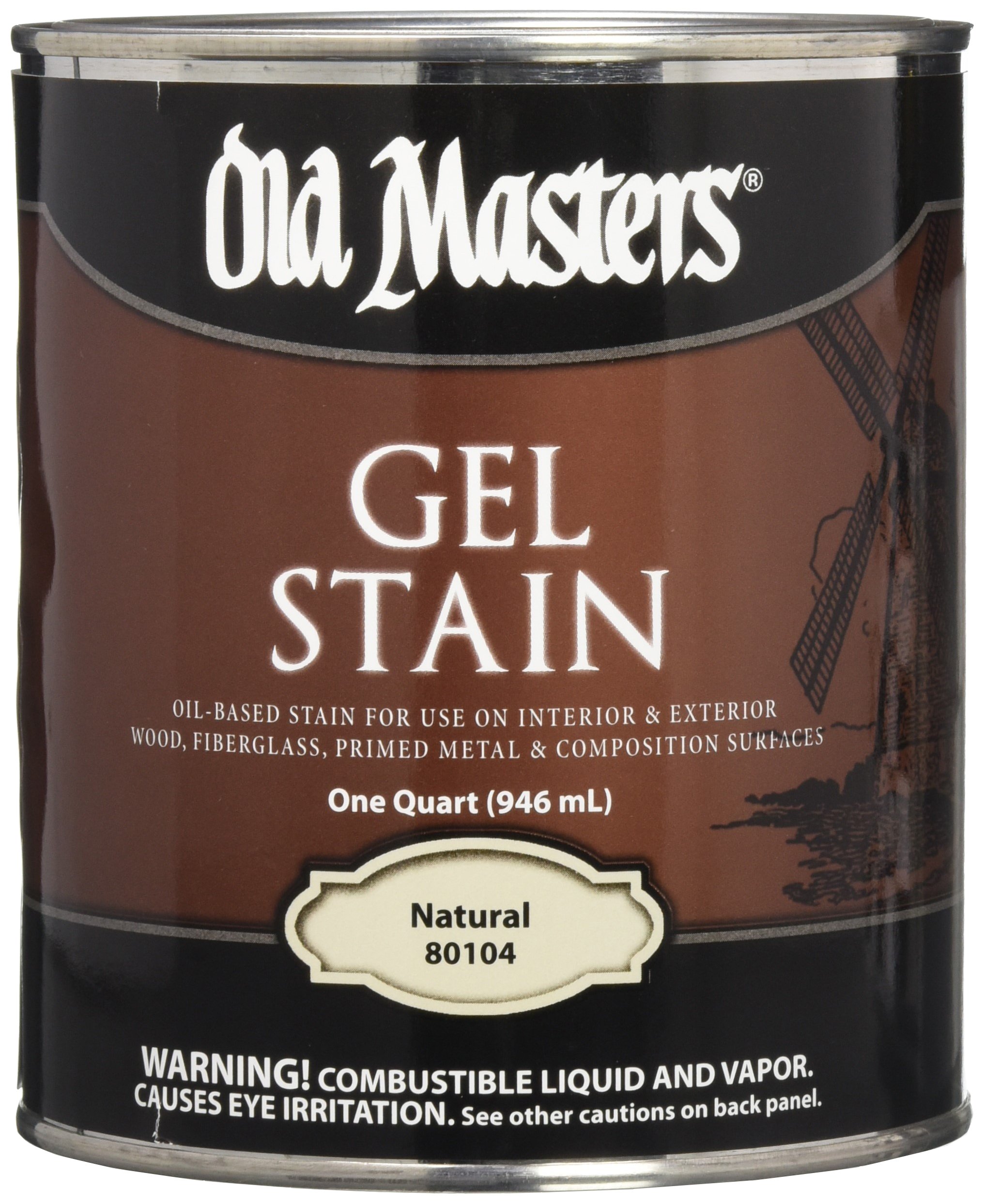
Old Masters Gel Stain in Natural is an oil-based product designed primarily for interior wood, fiberglass, and primed metal surfaces. The gel consistency allows it to sit on vertical surfaces without dripping, making it excellent for cabinet doors, stair treads, and garage door refinishing. Coverage is high for a quart — one user finished two single and one double garage door with a single quart.
The oil base means it does not raise wood grain as aggressively as water-based stains, and the natural tint is transparent enough to let the underlying grain show through. Users report rich, timeless color with no overwhelming smell compared to solvent-based alternatives. On alderwood, it applied easily with a cloth and dried fast enough for a distressed paint layer the same day.
Critical note for below-ground use: this is not a preservative. It contains no EPA-registered fungicide or insecticide. It beautifies and seals interior wood but provides zero protection against soil-borne rot or termite attack. It belongs on indoor projects, not fence posts or foundation beams.
Why it’s great
- Thick gel stays put on vertical surfaces without running
- Excellent coverage — a quart goes a long way on doors and cabinets
- Oil base does not raise wood grain and dries to a rich, smooth finish
Good to know
- Contains no wood preservative actives — no below-ground protection
- Best suited for interior furniture, trim, and fiberglass refinishing
FAQ
Can I use a below-ground preservative on pressure-treated lumber that was already factory treated?
How often should I reapply a wood preservative on buried fence posts?
What is the difference between a wood preservative and a wood stain for below-ground use?
Final Thoughts: The Verdict
For most users, the best below ground wood preservative winner is the Nisus PenaShield because it penetrates deeply, stays clear, carries no VOCs, and provides proven borate protection against termites and decay without altering the wood’s appearance. If you need code-compliant end-cut treatment or a heavy-duty barrier for direct soil contact, grab the Tenino Copper Naphthenate 17%. And for a preservative that also enriches the wood’s look on decks and siding near the ground, nothing beats the TWP 1501 Cedartone.