
Our readers keep the lights on and the weekend projects moving. As an Amazon Associate, I earn from qualifying purchases.
A solid decline press bench is the difference between a locked-in, stable press and an awkward compromise. Too many benches wobble during the negative, shift when you drive your feet, or flex under heavy loads—negating the entire purpose of the movement. Finding a bench that stays planted through the full range of motion is the priority.
I’m Rikta — the co-founder and writer behind FitlyFast. I’ve spent many hours analyzing frame geometries, weight capacities, pad densities, and adjustment mechanisms across dozens of benches to separate the truly stable from the merely adequate.
Whether you need a dedicated station for focused chest development or a multi-use bench for all your pressing, the right bench for decline press eliminates the guesswork and delivers the rigid platform your training demands.
How To Choose The Best Bench For Decline Press
A decline press bench must anchor your upper body while allowing your legs to engage. The wrong bench creates a gap between the seat and back pad, lacks a secure foot catch, or flexes under load. Focus on the specs that directly affect your pressing mechanics.
Frame Stability and Steel Gauge
Look for a one-piece welded steel frame with a wide base. Commercial-grade steel thickness (at least 2mm wall thickness) and a triangular support design resist lateral wobble. Benches under 70 pounds often lack the mass to stay planted during heavy decline presses—weight capacity ratings above 1000 pounds suggest a thicker, more rigid frame.
Foot Catch and Leg Hold-Down System
The decline angle requires your legs to be anchored firmly. A good leg hold-down or foot catch prevents sliding and keeps your hips locked into the pad. Adjustable, detachable systems are ideal—you can remove them when using the bench for flat or incline work. Soft foam rollers reduce pressure on the shins and allow comfortable positioning for different leg lengths.
Pad Width, Density, and Seat Gap
Your shoulder blades need a stable platform. A wide pad (at least 11 inches) supports scapular retraction without letting your shoulders slip off the edge. High-density foam (not plush) prevents bottoming out during heavy eccentrics. Check the seat-to-backrest gap—a large gap can cause lower back discomfort during decline presses, where your body is angled downward.
Quick Comparison
On smaller screens, swipe sideways to see the full table.
| Model | Category | Best For | Key Spec | Amazon |
|---|---|---|---|---|
| Keppi Fitness Bench6000 | Premium | Heavy decline pressing | 1500 lb capacity / 97 lb frame | Amazon |
| Titan Fitness Elite Series FID | Premium | Multi-position versatility | 1000 lb flat / 500 lb incline | Amazon |
| Keppi Fitness Bench3000 Max | Mid-Range | All-in-one with leg attachments | 1200 lb capacity / leg extension | Amazon |
| HARISON Bench1000 MAX | Mid-Range | Decline with barbell rack | 1000 lb capacity / 65mm pad | Amazon |
| REP AB-3100 | Mid-Range | Foldable storage | 700 lb capacity / folds vertical | Amazon |
| FLYBIRD 1200 Bench | Mid-Range | Wide pad stability | 1200 lb capacity / 12″ pad | Amazon |
| JOROTO MD80 | Value | Budget-friendly quality | 1300 lb capacity / triangular frame | Amazon |
| JOROTO MD65 | Value | Entry-level decline | 1500 lb capacity / 9 backrest angles | Amazon |
| Pooboo Y-160 | Value | Budget entry point | 1500 lb capacity / 31.5″ backrest | Amazon |
In‑Depth Reviews
1. Keppi Fitness Bench6000 (2026 Version)
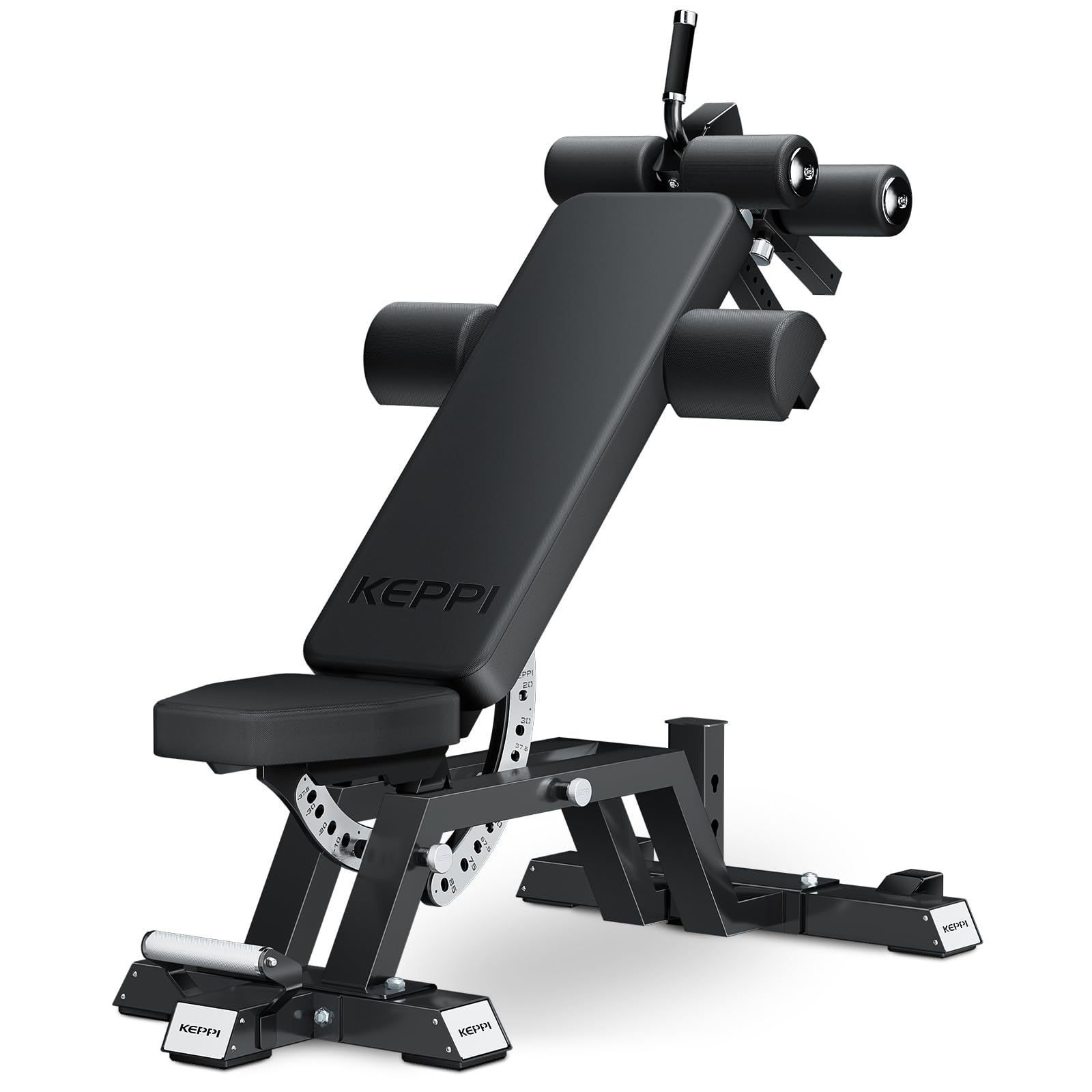
The Keppi Bench6000 is the benchmark for serious decline pressing. Its 97-pound Q235 steel frame eliminates any perceptible wobble, even during heavy eccentrics. The 17-inch IPF-standard seat height ensures proper leg drive transfer, and the 2.75-inch thick high-density pad resists compression under 300+ pounds. No sag, no flex—just a planted platform.
The 11 backrest positions plus 8 seat adjustments include a true decline angle that locks securely. The configurable leg hold-down attachment accommodates various leg lengths and keeps your hips pinned during decline presses, sit-ups, and Nordic curls. The included bicep curl pad with five height settings adds versatility without crowding the floor space.
Upright storage (3.5 square feet footprint) makes it practical for home gyms with limited square footage. The PVC leather has a grippy texture that prevents sliding when your back is sweaty. For anyone who pushes heavy decline presses seriously, this is the most complete package under commercial pricing.
Why it’s great
- Rock-solid 97 lb frame with no wobble under max loads
- IPF standard height optimizes leg drive for pressing
- Highly adjustable leg hold-down anchors securely during declines
Good to know
- Pop pins for seat adjustments could feel more precise
- Leg attachment connection has a small amount of lateral play
2. Titan Fitness Elite Series FID Bench

The Titan Elite Series FID bench is built with 11-gauge steel and a tripod base design that provides plenty of clearance for foot placement during decline presses. The foam foot anchor is a standout feature—it locks your legs in place securely, eliminating the sliding that plagues many decline positions. The 1000-pound flat capacity is honest and tested.
Six back pad angles (0, 15, 30, 45, 60, 85 degrees) and four seat positions give you a functional decline angle for pressing and sit-ups. Laser-cut numbers on the adjustment ladder make changes fast. The HeftyGrip vinyl covering is tough and resists tearing, though the pad itself is on the firmer side—which is actually preferable for heavy decline work where you need support, not sink.
It folds vertically and rolls on rear wheels for storage, though the 71-pound frame isn’t exactly lightweight by folding standards. The assembly instructions are minimal (diagram-only), but the bench arrives mostly pre-assembled. A few quality-control reports of cosmetic damage exist, but the structural integrity is consistently praised.
Why it’s great
- Foam foot anchor provides excellent leg security for declines
- Heavy 11-gauge steel frame with no wobble
- Folds upright for compact storage with builtin wheels
Good to know
- Assembly instructions are poor with unlabeled parts
- Minor cosmetic damage reported in some shipments
3. Keppi Fitness Bench3000 Max
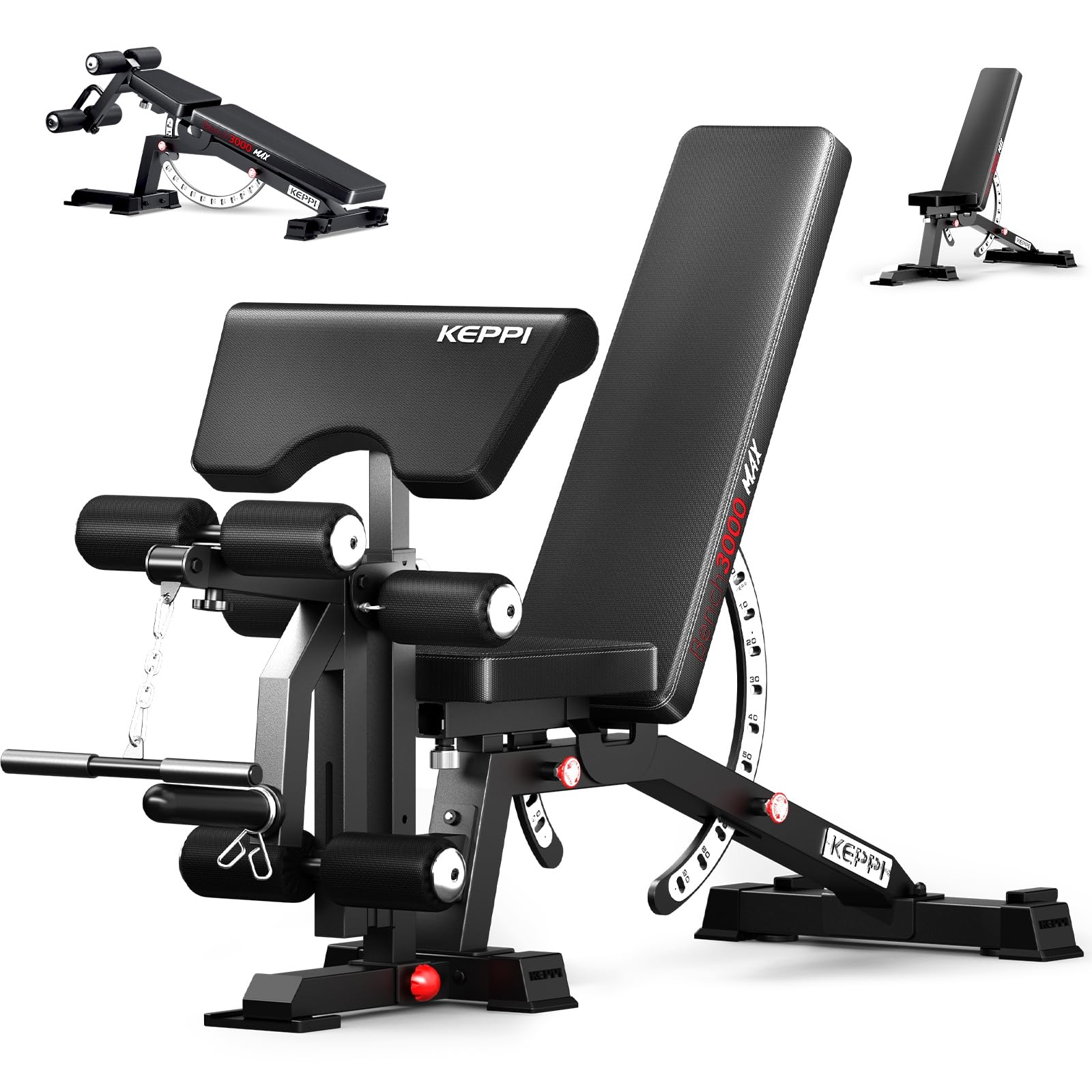
The Bench3000 Max packs 12 backrest angles (from -20° to 90°) and three seat positions, giving you a specific decline angle that matches your preference. The IPF-style pad at 11.41 inches wide and 2.36 inches thick provides solid shoulder blade support without excessive width that could interfere with hand placement on a barbell.
This bench includes a leg extension/curl system with five lower support positions and a removable preacher curl pad, making it a true all-in-one station. The 20-inch seat height is notably tall—lanky lifters will appreciate the extra leg room, but shorter users may find it awkward for pressing. The leg roller pads have been noted by some as pressuring the thighs during curls.
Assembly takes around 40 minutes, and the 76-pound frame is manageable to move with the integrated wheels. The attachments accept both 1-inch and 2-inch plates. For the price, you get a functional decline bench plus leg training capacity, which is a strong value proposition for a compact home gym.
Why it’s great
- Wide range of decline angles with secure locking
- Built-in leg extension/curl and preacher pad for full body work
- Accepts both 1-inch and 2-inch weight plates
Good to know
- 20 inch seat height may feel too tall for some users
- Leg roller pads can be uncomfortable on the thighs
4. HARISON Bench1000 MAX

The HARISON Bench1000 MAX uses 2.8 by 2.4-inch commercial-grade thick steel with triangular mechanical support. This geometry distributes force efficiently, preventing the frame from twisting during decline presses. The 65mm multi-layer foam padding is one of the thickest in this price tier, providing a stable surface without excessive give.
Six backrest and five seat settings allow for precise angle selection. The standout feature is the integrated barbell rack that accommodates both Olympic 2-inch and standard 1-inch plates, making leg training and curls immediately accessible without needing a separate stand. The leg extension and preacher curl attachments are removable for cleaner pressing sessions.
Industrial-grade bearings in the rotating parts ensure smooth leg curl motion without catching. The 30-day trial and one-year warranty provide a safety net. Assembly requires following a video guide (paper instructions are small), but most users complete it within an hour. Customer service is responsive with replacement parts if needed.
Why it’s great
- Thick steel frame with triangular support eliminates frame flex
- Integrated barbell rack works with both plate standards
- Industrial bearings provide smooth leg attachment motion
Good to know
- Assembly instructions are small and require video supplement
- Width may feel restrictive for broader-shouldered users
5. REP AB-3100

The REP AB-3100 is a no-nonsense FID bench that folds vertically for storage. The steel frame is solid for its weight class, and the high-density pad with sweat-resistant vinyl provides a stable pressing surface. The 700-pound capacity is lower than other benches here, but it’s honest for its intended market of home lifters training in the moderate-heavy range.
Adjusting between flat, incline, and decline positions is straightforward with the ladder-style adjustment system. However, the decline function requires you to add a block under the front legs (as noted by users) to achieve a true decline angle. The bench doesn’t include a dedicated foot catch, so you will need to anchor your legs under the pad or use a DIY solution for decline presses.
At 75 pounds, it’s heavy enough to stay put but light enough to move around a garage gym. The 50.5-inch length is compact, but taller users (over 6 feet) may find the pad slightly short for full leg support during declines. For those who prioritize flat and incline pressing with occasional decline work, this is a clean, reliable choice from a respected brand.
Why it’s great
- Folds vertically for minimal floor storage footprint
- Solid steel frame with no wobble during presses
- Easy transition between flat and incline positions
Good to know
- Requires a DIY block to achieve true decline angle
- No built-in foot catch for decline leg anchoring
6. FLYBIRD 1200 Lb Weight Bench
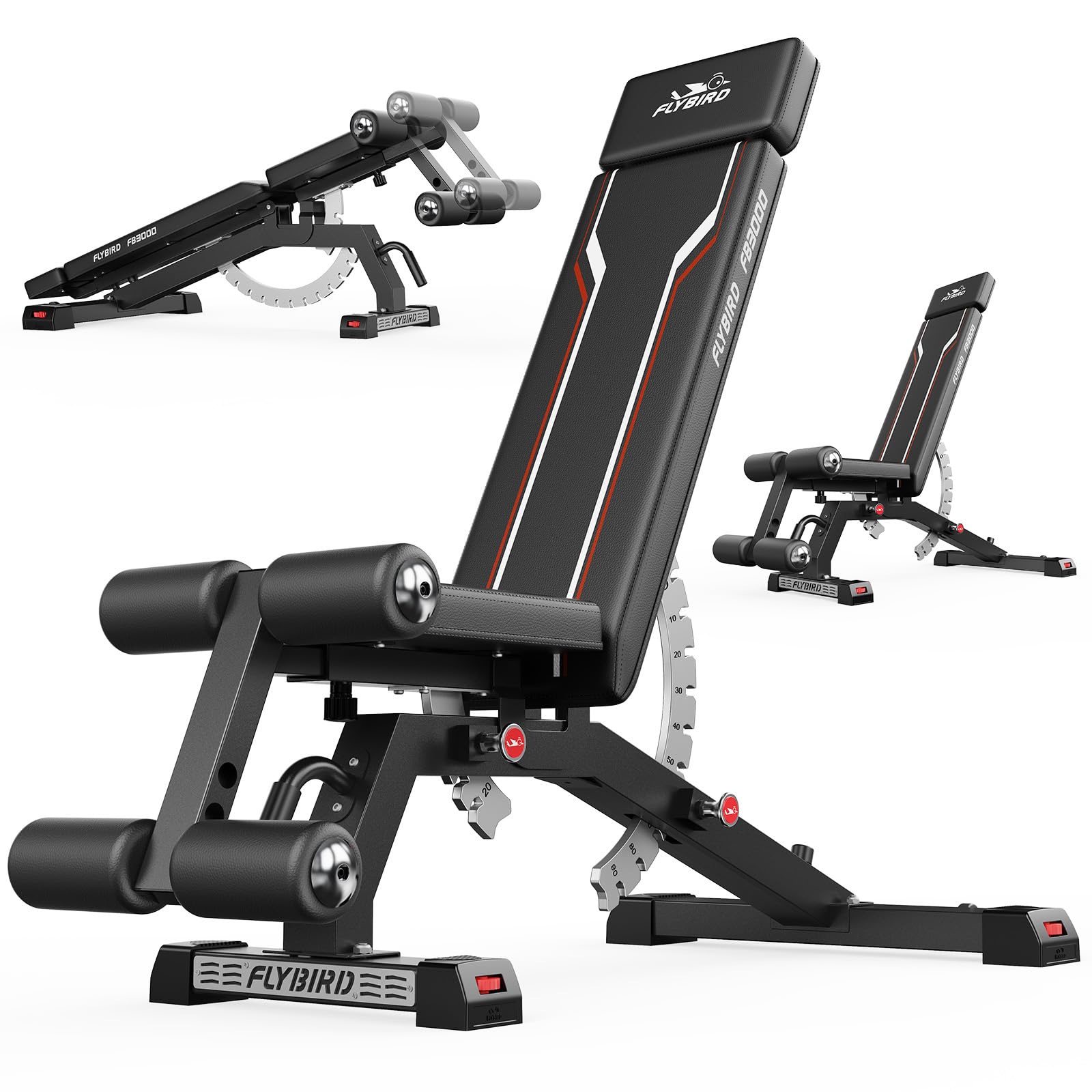
The FLYBIRD bench was engineered specifically for bench press power, with a 12-inch extra-wide back pad that gives full scapula support and prevents shoulder blades from slipping off the edge during decline presses. The removable headrest extends the pad to 40 inches, accommodating taller users who need full back coverage during declines.
Its 17.5-inch IPF-standard height locks your feet for maximum leg drive. The 18-inch front and 21-inch rear base provides 200 percent more stability than single-point round supports, and the four height-adjustable TPR feet adapt to uneven floors. The 2mm heavy-duty tubing and 5mm gear-lock support bar are overbuilt for the 1200-pound tested rating.
One notable limitation: the seat lacks knee padding for declines, which some users report creates pressure points that make extended decline sets uncomfortable. If you plan to prioritize decline work, you may need to place a small pillow or pad under your knees. For flat and incline work, this bench is superb. The three-year warranty underscores the build confidence.
Why it’s great
- 12 inch wide pad prevents shoulder blade slip during presses
- IPF standard height optimizes leg drive and force transfer
- Adjustable leveling feet adapt to uneven garage floors
Good to know
- Seat lacks knee padding for comfortable decline positioning
- Flat position may feel slightly high for shorter users
7. JOROTO MD80
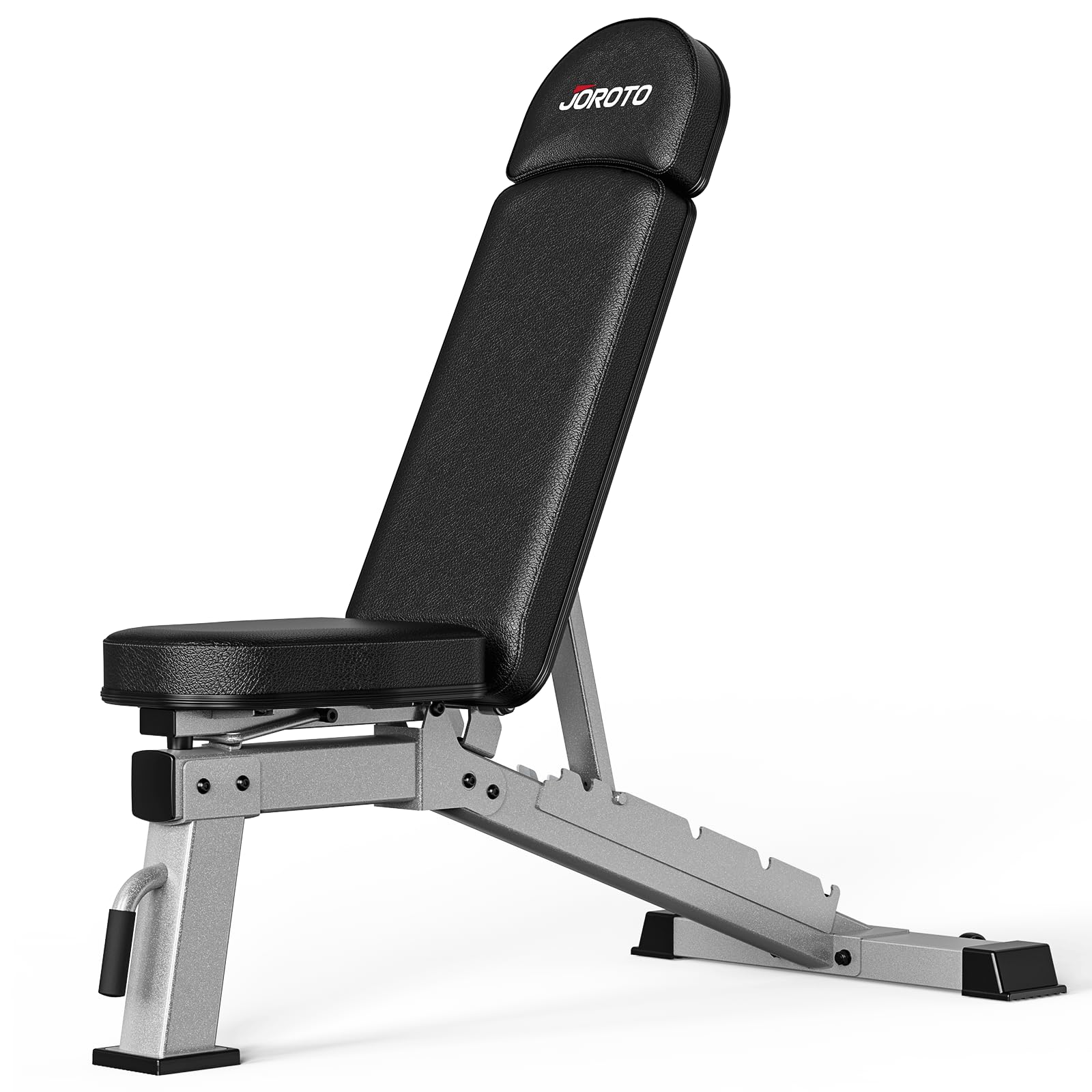
The JOROTO MD80 uses a reinforced triangular steel frame that resists lateral flex effectively. Tested to 1500 pounds (rated at 1300), the frame is built with high-grade alloy steel and tight welds. The pad is thick and dense—firm enough for heavy pressing without feeling like a concrete slab. The 17-inch seat height is comfortable for most users and allows solid foot planting.
Seven backrest angles and two seat adjustments cover the essential decline, flat, and incline positions. The bench is compatible with dumbbells, barbells, and power racks. Users report it beats Titan, REP, and Rogue offerings for the price-to-quality ratio in this bracket. The widened backrest accommodates larger athletes without shoulder overhang.
One missing feature: there is no padded foot rest for decline work, which means you will need to use the included transport wheels as a makeshift anchor or purchase a separate leg hold-down. Assembly is straightforward with only five screws. The sweat-resistant grey upholstery looks clean and resists staining after repeated use.
Why it’s great
- Commercial-grade build with tight welds and zero wobble
- Thick, dense pad that doesn’t compress under heavy loads
- Widened backrest fits larger users comfortably
Good to know
- No padded foot catch included for decline exercising
- Only two seat adjustment positions limit flexibility
8. JOROTO MD65
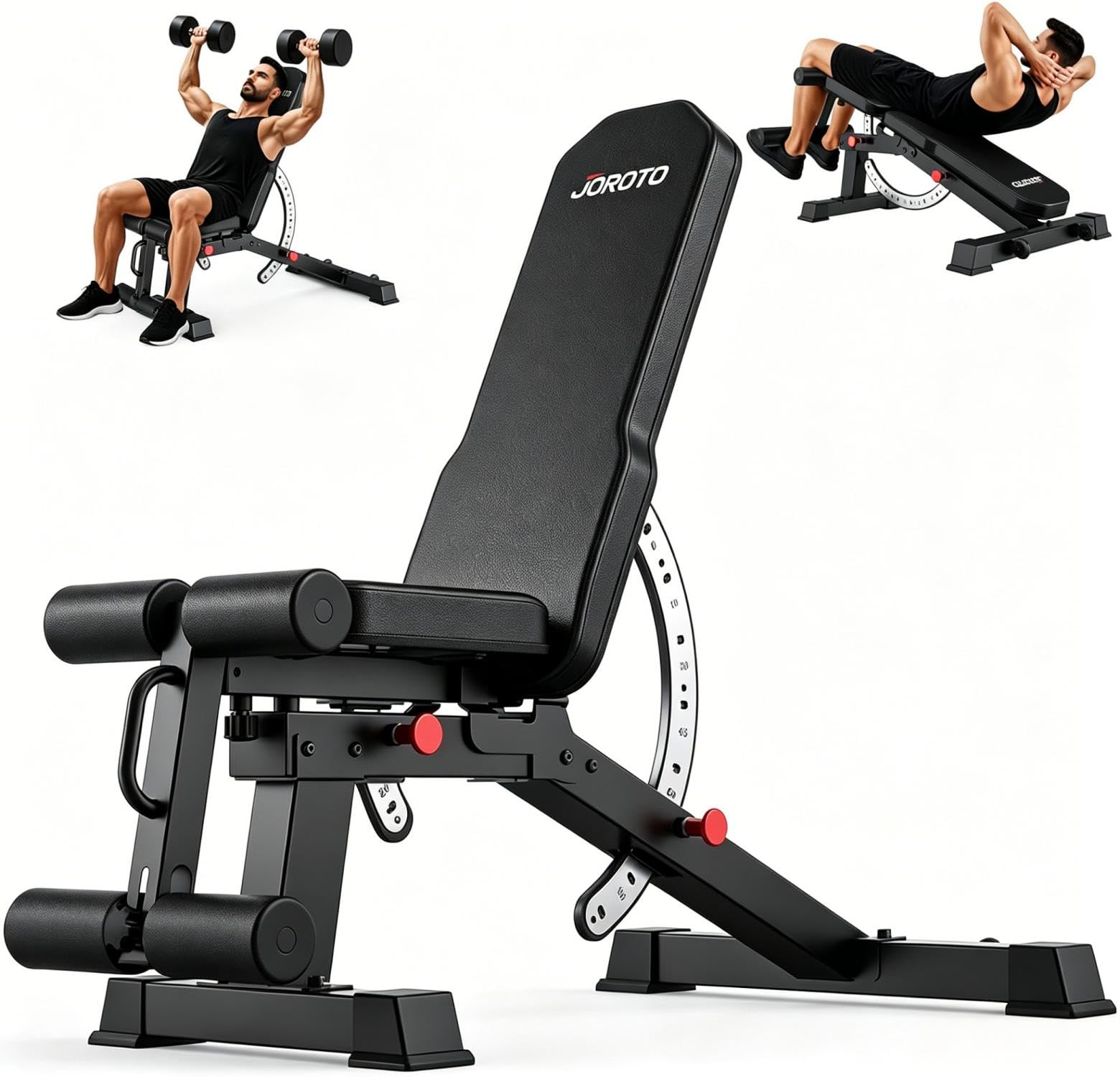
The JOROTO MD65 is a budget-friendly entry that doesn’t compromise on weight capacity. The 1.5mm commercial-grade steel frame supports up to 1500 pounds, and the nine backrest positions with three seat adjustments provide 27 possible configurations including decline. The adjustable, detachable foot catch with soft foam rollers offers secure leg anchoring for decline presses.
The foam padding is high-density and wrapped in durable leather upholstery. However, some taller and heavier users (over 6 feet and 240 pounds) report that the seat-to-backrest gap causes discomfort—the butt can land in the gap during decline positioning. At 45.9 inches long, the bench is also relatively short, which may limit full leg coverage for taller athletes.
Assembly takes about 10 minutes with included tools and numbered parts. Built-in transport wheels and an ergonomic handle make repositioning easy. For the price, you get a functional decline bench with a proper foot catch, which many pricier models lack. Just be aware of the sizing limitations if you are taller or have a longer torso.
Why it’s great
- Includes a detachable foam foot catch for decline security
- High weight capacity at an accessible price point
- Quick assembly with numbered parts and tools included
Good to know
- Seat gap may cause discomfort for taller or larger users
- Bench length is shorter than average for tall athletes
9. Pooboo Y-160
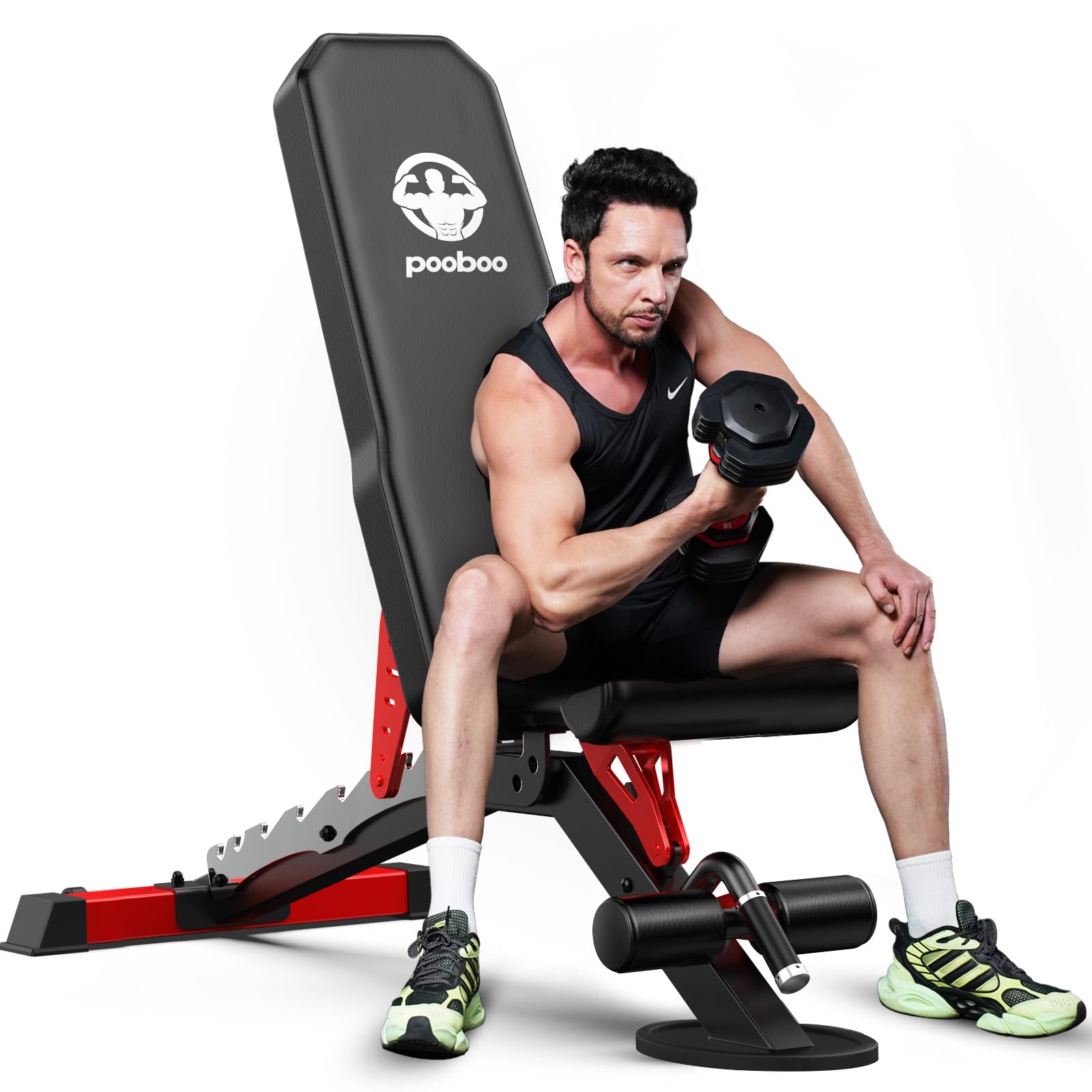
The Pooboo Y-160 is the most affordable entry in this roundup, but it still delivers a 1500-pound weight capacity via commercial-grade square steel construction. The triangular structure design with dual back supports provides uncharacteristically good stability for its price tier. The C-shaped lock catch allows backrest adjustment by simply pushing the pad—no pin fumbling.
Eight backrest positions and three seat settings cover incline, flat, and decline modes. The 31.5-inch backrest is long enough to support most users during decline pressing. The high-grade leather padding is 2.5 inches thick, which is comfortable for moderate-weight sessions. Non-slip rubber caps on the rear legs keep the bench planted during dynamic movements.
The built-in transport wheels and handle make it easy to move, and the 96 percent pre-assembled build means you can set it up in under 10 minutes. The main trade-offs are a slightly shorter backrest than premium models and a seat gap similar to other budget benches. For light to moderate decline pressing, this is a capable starter bench that won’t break the bank.
Why it’s great
- Excellent stability for the price with triangular frame design
- Simple C-shaped lock catch for quick angle changes
- Requires minimal assembly out of the box
Good to know
- Backrest is shorter than some commercial alternatives
- Seat gap can be felt during decline positioning
FAQ
What decline angle is best for decline bench press?
Can I use a flat bench with a decline attachment for decline press?
Why does the seat gap matter for decline press?
Final Thoughts: The Verdict
For most users, the bench for decline press winner is the Keppi Fitness Bench6000 because its 97-pound frame and 1500-pound capacity deliver commercial-grade stability for heavy decline work without breaking the bank. If you need a folding design for tight spaces, grab the Titan Fitness Elite Series FID with its effective foam foot anchor. And for a compact gym that needs leg training attachments included, nothing beats the value of the Keppi Fitness Bench3000 Max.