
Our readers keep the lights on and the weekend projects moving. As an Amazon Associate, I earn from qualifying purchases.
Buying a bench press bench means trusting a steel frame with your neck, your shoulders, and your personal records. A wobbling base or a pad that shifts during a heavy set turns a productive session into a dangerous one. The difference between a smart purchase and a regrettable one comes down to frame gauge, pad density, and how well the bench holds a flat plane under load.
I’m Rikta — the co-founder and writer behind FitlyFast. I’ve spent years analyzing steel thickness specs, weld patterns, and weight distribution geometry across hundreds of home gym benches to separate the stable from the shaky.
Whether you need a flat base for heavy barbell work or a multi-angle setup for dumbbell isolation, this guide cuts through the noise to help you find the right bench press bench for your home gym without wasting money on unstable designs.
How To Choose The Best Bench Press Bench
Every bench press bench shares the same basic job — hold you and the weight steady while you push. But small differences in steel thickness, pad composition, and adjustment mechanism determine whether a bench feels solid for a decade or develops a wobble within months. Focus on these four factors first.
Frame Steel and Weld Quality
The frame carries everything. Look for benches made from 11-gauge or thicker steel (2mm to 4mm wall thickness). Welded one-piece frames distribute stress better than bolted multi-piece designs. The triangular reinforcement pattern used by brands like Pooboo and MAJOR FITNESS reduces flex at the pivot points where adjustable benches most commonly fail.
Pad Dimensions and Density
A 12-inch wide pad supports your shoulder blades during a flat bench press without forcing your arms into an unstable position. The foam density matters more than the total thickness — 160D pearl sponge or high-density foam (around 2.5 inches thick) maintains its shape under hundreds of sessions. Soft padding feels comfortable for the first month but compresses unevenly, introducing instability during heavy singles.
Adjustability Range and Locking Mechanism
If you train for general strength, look for a bench that goes from at least -15 degrees decline to 90 degrees upright. The locking mechanism should be a C-shaped catch or gear-lock system that engages without requiring you to hold a pin while balancing the weight of the pad. The seat and backrest should adjust independently so you can dial in the angle for landmine presses or seated dumbbell work.
Base Stability and Floor Contact
Wide rear feet (18 inches or wider) prevent tipping during unilateral exercises like single-arm dumbbell rows. Adjustable rubber feet compensate for uneven garage or basement floors. Benches with transport wheels weigh more but save your back during daily setup — consider that trade-off if you need to move the bench out of a parking spot after every session.
Quick Comparison
On smaller screens, swipe sideways to see the full table.
| Model | Category | Best For | Key Spec | Amazon |
|---|---|---|---|---|
| YOLEO Commercial Adjustable | Adjustable | Heavy powerlifting sessions | 2315 lb test load capacity | Amazon |
| FLYBIRD WB7 Adjustable | Adjustable | Taller lifters needing full support | 34-inch extra-long backrest | Amazon |
| MAJOR FITNESS Adjustable | Adjustable | Versatility with 36 positions | 36 adjustable positions total | Amazon |
| JOROTO MD80 Adjustable | Adjustable | Durable vinyl and wide pad support | 1300 lb weight capacity | Amazon |
| FLYBIRD 1200lb Adjustable | Adjustable | Bench press focused with wide base | 12-inch extra-wide back pad | Amazon |
| Pooboo Y-160 Adjustable | Adjustable | High capacity at mid-range price | 1500 lb weight capacity | Amazon |
| REP Fitness Flat Bench | Flat | Dedicated barbell bench press | 11-gauge steel frame | Amazon |
| MAIDOMA Standard Bench | Multi-Function | Full body on a budget | Includes leg extension / curl | Amazon |
| REP AB-3100 Adjustable | Adjustable | Foldable space-saving design | Folds vertically for storage | Amazon |
In‑Depth Reviews
1. YOLEO Commercial Adjustable Weight Bench
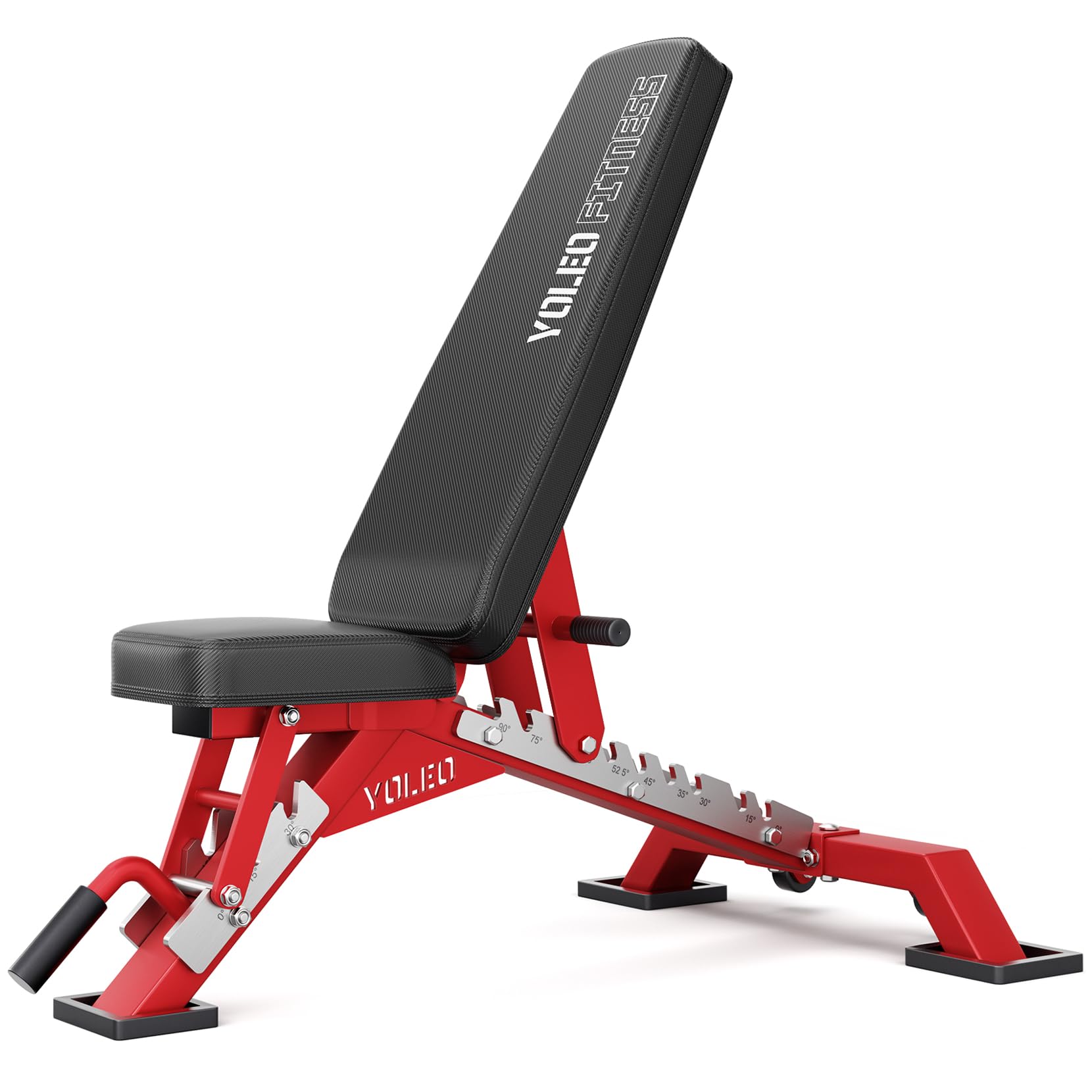
The YOLEO bench stands apart because of its 3-post structural design — a configuration that eliminates the side-to-side wobble that plagues many adjustable benches during heavy dumbbell work. The 8-gauge (4.0mm) steel tubing and H-shaped back support create a platform that feels fixed to the floor even when you push past 400 pounds. The 2.4-inch 160D high-density pearl sponge pad provides enough firmness to maintain stability without bruising your upper back during high-rep sets.
The adjustment range covers -15 degrees decline to a full 90-degree upright, with 10 backrest positions and 3 seat settings. The C-shaped locking mechanism engages quickly — you don’t need to hold a spring-loaded pin while balancing the pad weight. At roughly 60 pounds with integrated wheels, moving it between positions in a garage gym takes minimal effort. The 3-inch wheels are larger than most competitors, so they roll smoothly over rubber floor mats.
Assembly takes around 20 minutes because the unit arrives 80-percent pre-assembled. The 10-year frame replacement warranty reflects the manufacturer’s confidence in the steel integrity. The only real concern is that the three-leg base can produce a subtle sway on perfectly level floors if the rubber feet aren’t adjusted evenly — a minor issue solved with the included leveling caps.
Why it’s great
- Extremely high test load capacity with 8-gauge steel frame
- 10-year replacement warranty on frame and components
- Full 90-degree upright position for shoulder work
Good to know
- Three-leg base requires careful foot adjustment on uneven floors
- Premium pricing places it above many adjustable benches
2. FLYBIRD WB7 Adjustable Weight Bench
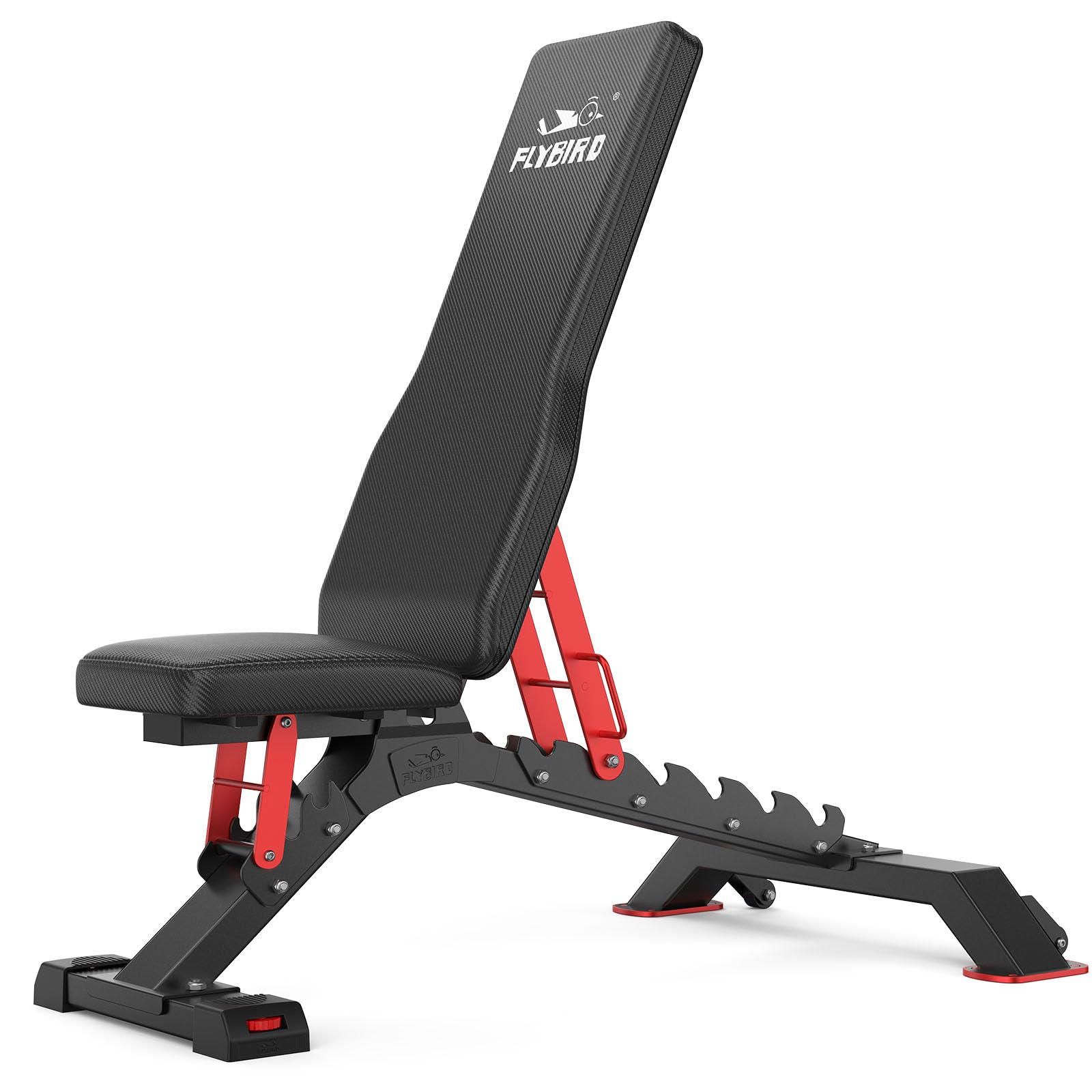
The FLYBIRD WB7 addresses the most common complaint from taller lifters — benches that leave your head hanging off the end of the pad. The 34-inch backrest provides full support from hips to crown for users up to around 6-foot-3, allowing you to maintain a neutral spine position during both flat and incline presses. The pad width measures 13 inches, giving your scapulae room to retract without forcing your elbows into a flared position.
The frame uses 3.2-by-1.6-inch commercial-grade tubular steel with a triangle-reinforced structure that resists torsion during unilateral lifts. The 1300-pound tested capacity is conservative given the 3mm steel wall thickness and integrated one-piece frame design. The QuickShift adjustment system uses a C-shaped buckle that releases and locks in about one second — you can change angles between sets without breaking your rhythm. The seat adjusts between 0 and 25 degrees, which helps dial in the exact hip angle for decline work.
The matte finish resists paint peeling better than glossy-coated competitors, and the woven leather covering has held up well in long-term user reviews showing minimal wear after 18 months of regular use. The wheels are functional but smaller than the YOLEO’s — they work fine on smooth concrete but catch slightly on rubber tiles. Assembly takes under 30 minutes with the pre-installed components.
Why it’s great
- 34-inch backrest supports head and neck fully for taller users
- One-second C-shaped buckle adjustment maintains workout rhythm
- Commercial-grade steel with clean welds and matte finish
Good to know
- Smaller wheels catch slightly on rubber floor mats
- Upholstery material felt thin to some users after extended use
3. MAJOR FITNESS Adjustable Weight Bench
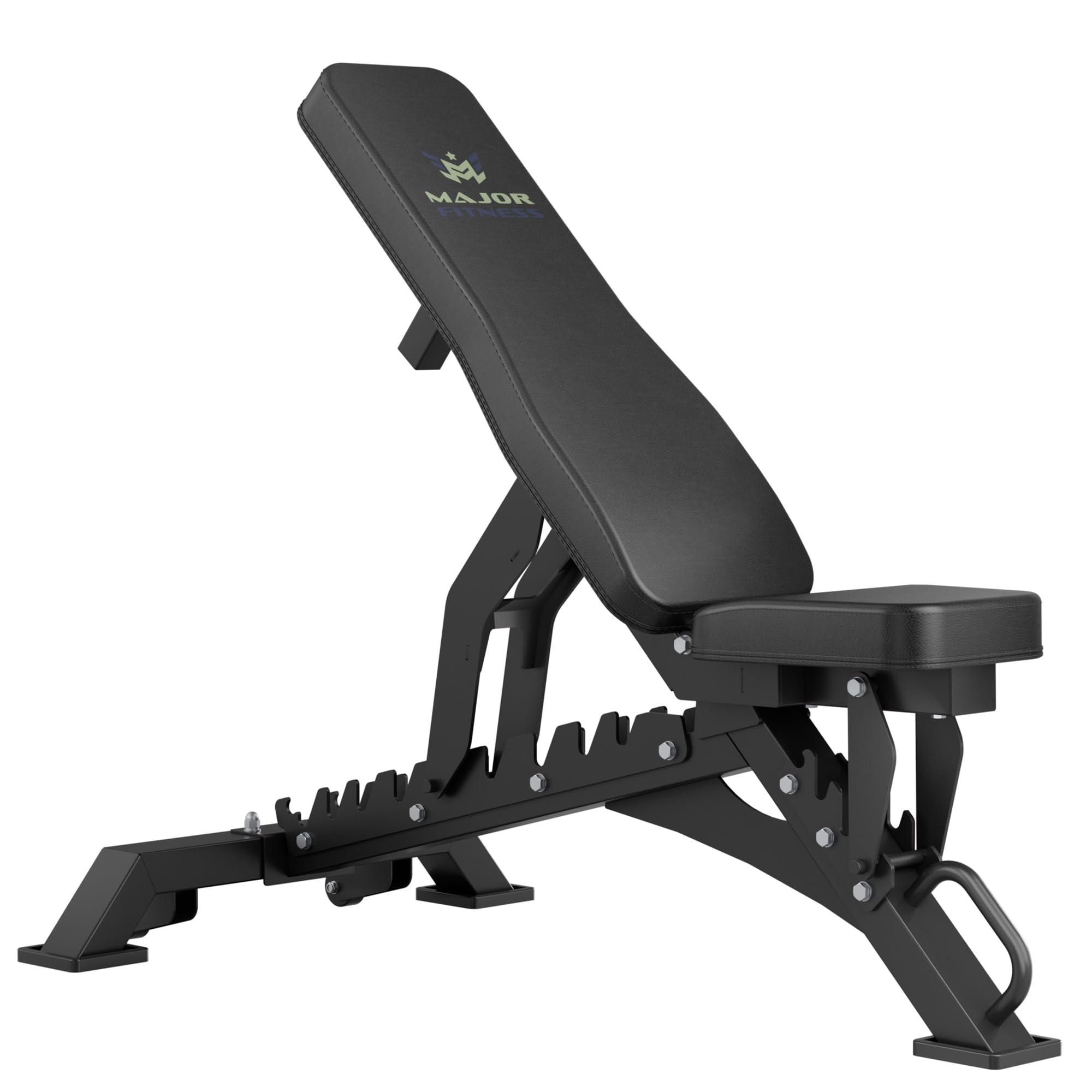
The MAJOR FITNESS bench offers 36 total adjustment positions — 9 backrest settings and 4 seat angles — making it one of the most configurable benches in this price tier. The dual-track backrest support bar uses a C-shaped lock catch that eliminates the pin-and-hole system found on cheaper benches. The backrest reaches a full 90 degrees, allowing you to use the bench as an upright seat for overhead press variations without needing a separate attachment.
The triangular frame structure and commercial-grade square steel deliver a 1300-pound capacity that feels genuine under load. The 2.5-inch thick padding and 31.5-inch long backrest provide adequate support for most users, though the pad width is slightly narrower than the FLYBIRD WB7 — broad-shouldered lifters may prefer the extra inch of scapula room. The PU leather cover resists sweat absorption and wipes clean easily, which matters for daily training.
The built-in handle and dual wheels make relocation straightforward despite the bench’s heavy-duty construction. Users report stable performance under 345-pound bench press loads with no noticeable frame flex. The 1-year component replacement warranty is shorter than the YOLEO’s decade-long coverage, but the build quality at this price point still represents strong value for home gym setups that prioritize adjustment range over maximum load capacity.
Why it’s great
- 36 adjustment positions cover every training angle needed
- 90-degree upright backrest for seated overhead work
- Thick PU leather cover is sweat-resistant and easy to clean
Good to know
- Pad width is narrower than some competitors at this price
- Warranty period is shorter than premium alternatives
4. JOROTO MD80 Adjustable Weight Bench
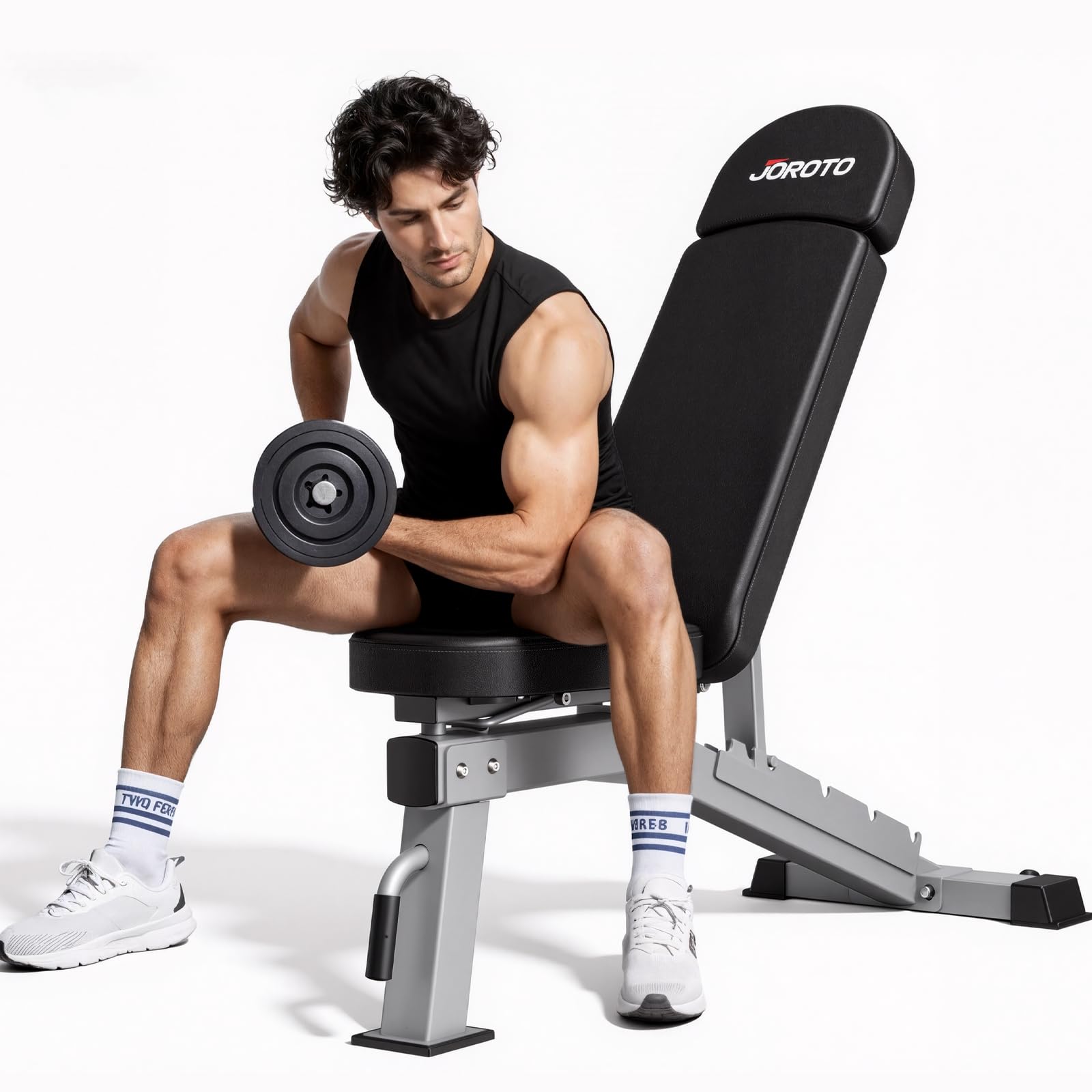
The JOROTO MD80 earns its place through dense high-quality foam padding wrapped in heavy-duty vinyl that resists tearing better than the faux leather used on some budget competitors. The 1300-pound capacity is supported by a reinforced triangular steel frame that uses thicker alloy than the entry-level adjustable benches in the same price bracket. The 17.7-inch seat height matches IPF standards, enabling proper leg drive for bench press.
The bench offers 7 backrest positions and 2 seat adjustments — fewer total positions than the MAJOR FITNESS, but the independent locking mechanism for each section allows you to find a comfortable groove for chest, shoulder, and arm work. The widened backrest provides solid scapula support, and users over 6 feet tall report no head-overhang issues. The sweat-resistant leather covering shows minimal wear after several months of regular use.
Assembly requires only five bolts thanks to a 90-percent pre-assembled design. The transport wheels and handle make it easy to relocate, though the bench at roughly 53 pounds requires some effort to roll over thresholds. The curved locking notches on the adjustment ladder are designed to prevent snapping under heavy eccentric loads, a detail that suggests careful engineering beyond the basic capacity rating.
Why it’s great
- High-density foam pad with durable heavy-duty vinyl cover
- IPF-standard 17.7-inch seat height for leg drive
- Curved notches prevent adjustment latch failure under load
Good to know
- Only 2 seat adjustment positions limit decline variety
- No padded foot attachment for flat resistance work
5. FLYBIRD 1200lb Adjustable Weight Bench
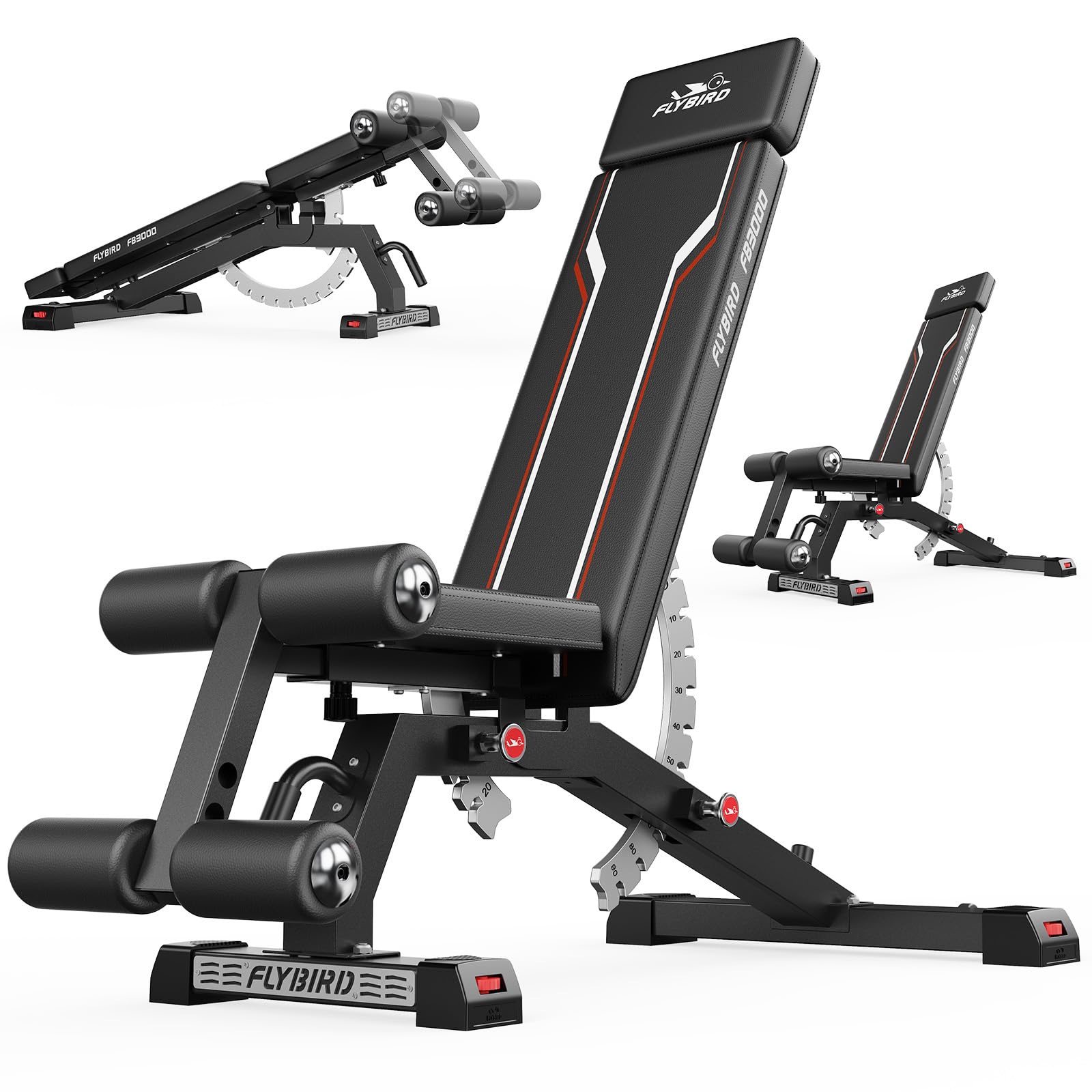
This newer FLYBIRD model focuses specifically on the bench press movement with a 12-inch extra-wide back pad and a removable headrest that extends the total pad length to 40 inches. The 17.5-inch IPF-standard height locks your feet into the floor for maximum leg drive. The wide 18-inch front and 21-inch rear base produces significantly more lateral stability than single-post designs — the manufacturer claims 200-percent more steadiness, and user reports confirm no wobble during heavy work.
The frame uses 2mm heavy-duty tubing with a 5mm gear-lock support bar that underwent 20,000 load cycle tests without failure. The ASTM and EN957 certifications provide objective validation of the safety claims. The high-density foam pad wrapped in microfiber leather offers a premium feel without excessive squish. The 7 backrest positions and 2 seat adjustments cover the essential angles for incline flat decline work.
The transport wheels and front handle allow easy movement, and the bench can be stored upright to reclaim floor space — a thoughtful feature for garage gyms with limited square footage. The 3-year warranty is stronger than most adjustable benches at this price point. The main drawback reported by shorter users (under 5-foot-9) is that the flat position feels slightly high relative to their leg length, potentially compromising foot drive for some body types.
Why it’s great
- 12-inch wide pad and 40-inch total length for full-body support
- ASTM and EN957 certified safety and durability standards
- Wide 21-inch rear base eliminates wobble during heavy presses
Good to know
- Flat position feels slightly high for shorter lifters
- Seat cushion lacks wrap-around padding, affecting decline comfort
6. Pooboo Y-160 Adjustable Weight Bench
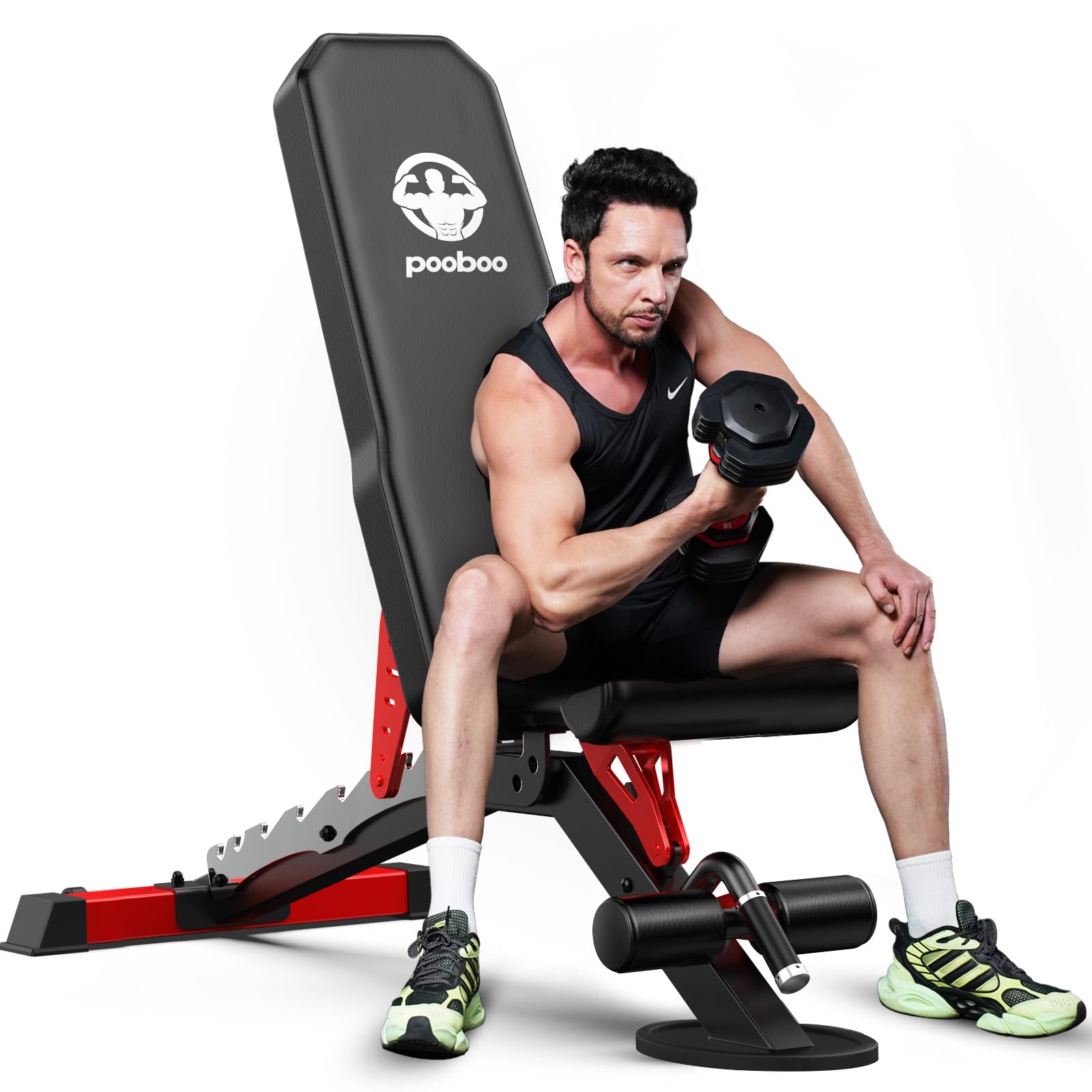
The Pooboo Y-160 delivers a 1500-pound weight capacity that outranks every other adjustable bench in this lineup except the YOLEO. The commercial-grade square steel frame uses an integral main frame design with dual back supports that prevent the pad from flexing during heavy loads. The triangular structure and oval base adapt well to slightly uneven floors, reducing the wobble that cheaper adjustable benches develop over time.
The 8 backrest positions and 3 seat settings provide enough variety to cover flat, incline, and decline work, though the backrest is 2 inches shorter than the FLYBIRD WB7’s 34-inch pad. The high-grade leather with dense stitching holds up well against sweat and daily use. The 2.5-inch thick padding offers a good balance of comfort and stability, though some users note the foam is slightly less dense than the JOROTO’s 160D pearl sponge.
Assembly is notably quick — the bench arrives 96-percent pre-assembled, and most users report completing setup in under 10 minutes. The transport wheels and handle make relocation easy despite the bench’s substantial weight. The free towel included with email registration is a minor bonus, but the real value lies in achieving a 1500-pound capacity at a mid-range price point that undercuts most competitors with similar load ratings.
Why it’s great
- 1500-pound capacity at a mid-range price point
- 96-percent pre-assembled for quick 10-minute setup
- Triangular structure and oval base adapt to uneven floors
Good to know
- Backrest is shorter than premium adjustable options
- Foam density is slightly lower than some competitors
7. REP Fitness Flat Weight Bench
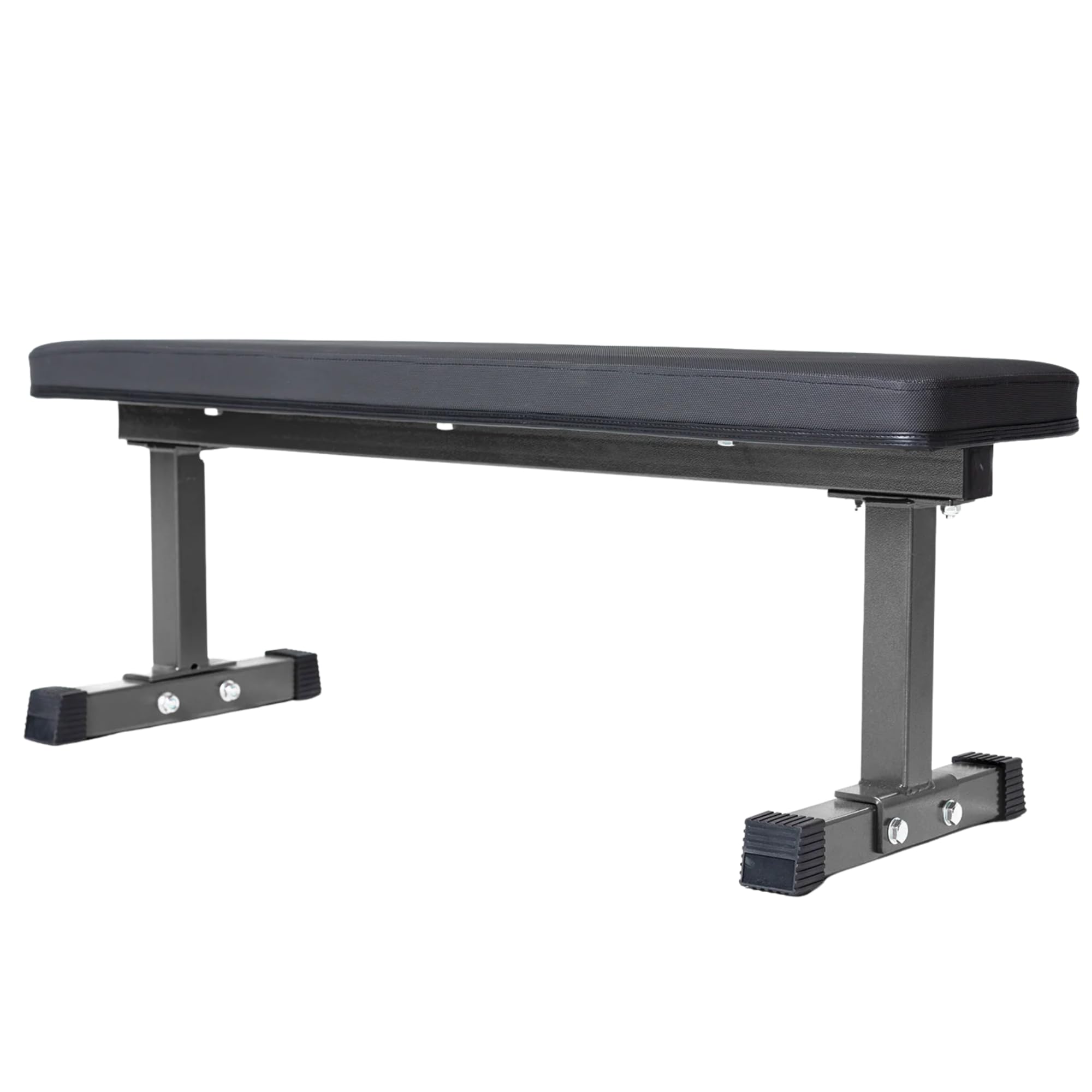
The REP Fitness Flat Bench strips away complexity to deliver one of the most stable platforms for dedicated barbell bench press. The 11-gauge steel frame with a thick plywood base layer — not particle board — provides a solid foundation that doesn’t twist during heavy singles. The 12-inch wide pad at IPF-spec 17.5-inch height allows proper leg drive and scapula retraction, matching the specs used in competition powerlifting.
The 2.5-inch thick pad combines a dense foam core with a grippy top layer that prevents your back from sliding during sweaty sessions. The 16-inch wide base provides excellent lateral stability, and the 45-pound weight makes it easy to reposition without being flimsy. Users report comfortable use under 300-pound bodyweight plus 315-pound bench press loads with no frame flex or wobble — exactly what you want from a simple flat bench.
Assembly takes about 15 minutes with the included wrenches. The bench arrives well-packaged and includes adjustable leveling bolts to compensate for uneven floors. The grippy pad wipes clean with a damp cloth. The trade-off is obvious — you get zero adjustability — but for lifters who train primarily on flat barbell bench press, this bench outperforms most adjustable models in raw stability at a similar price.
Why it’s great
- 11-gauge steel with plywood base provides exceptional rigidity
- IPF-spec 17.5-inch height and 12-inch pad width
- Adjustable leveling bolts compensate for uneven floors
Good to know
- Flat only — no incline, decline, or upright adjustments
- Grippy pad texture wears slowly but is not replaceable
8. MAIDOMA Standard Weight Bench Set
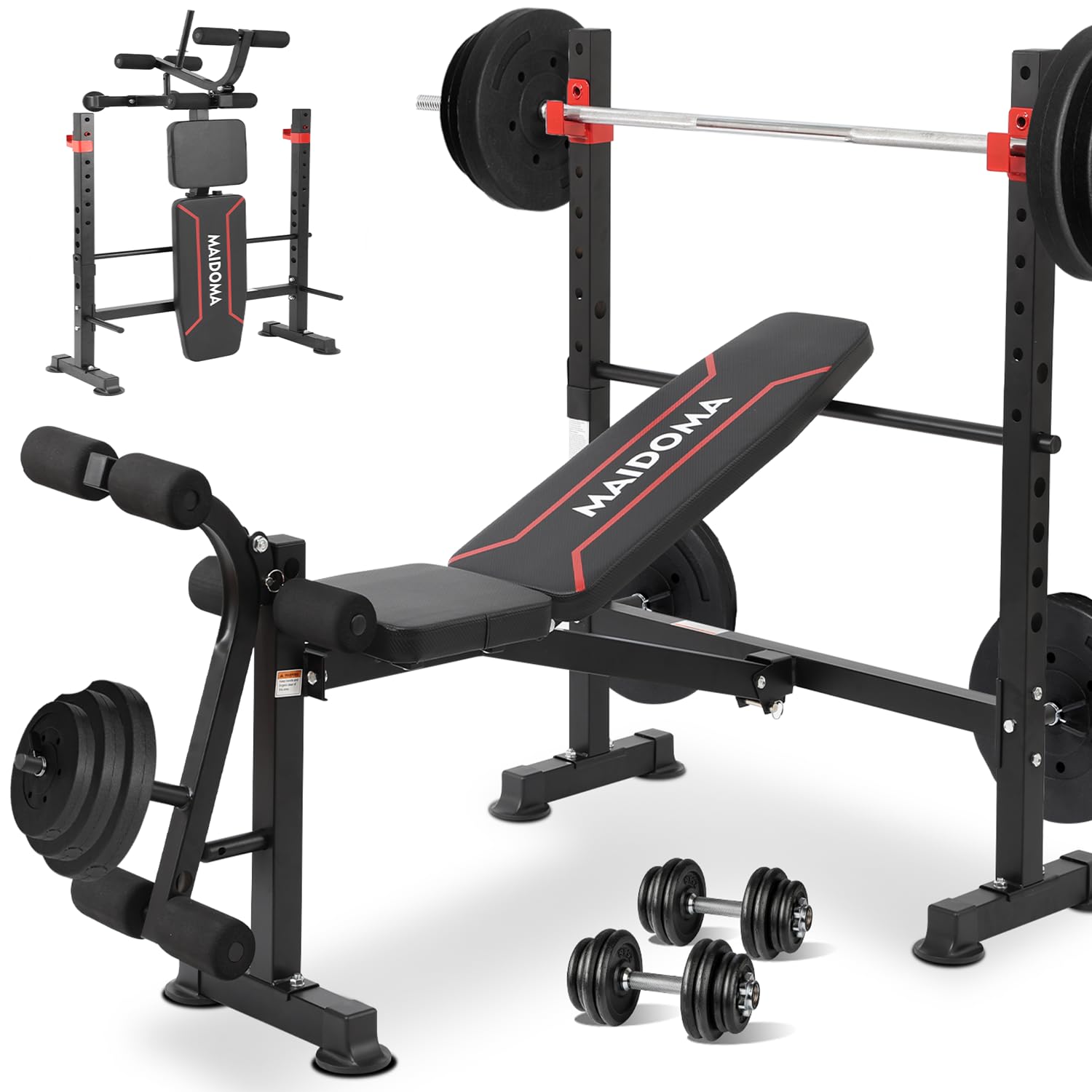
The MAIDOMA bench stands out for including a leg extension and leg curl attachment at a budget-friendly price point. The dual-function leg developer allows you to train quadriceps and hamstrings without buying a separate piece of equipment. The adjustable weight rest offers four height options for the barbell, making it workable with both Olympic and standard bars. The foldable design collapses to save up to 80-percent of floor space when not in use.
The frame uses a stable triangular design with thick alloy steel, and the 750-pound capacity is adequate for intermediate lifters who aren’t pushing elite numbers. The backrest adjusts to four positions covering incline, decline, and flat — fewer positions than the premium adjustable benches but sufficient for general muscle building. Users report sturdy performance for bench presses, dumbbell work, and sit-ups.
The assembly is straightforward, and the rubber pads protect your floor from scratches during use. The main limitation is that the seat adjustment requires removing a pin completely rather than using a spring-loaded mechanism, which slows down transitions between exercises. The bench also lacks the wide pad and dense foam of higher-tier options, so heavy singles above 300 pounds may reveal some pad compression.
Why it’s great
- Integrated leg extension/curl attachment for lower body work
- Foldable design saves significant floor space when stored
- Stable triangular frame with rubber floor-protecting pads
Good to know
- Seat adjustment requires removing a pin — slower transitions
- Pad density is lower than mid-range and premium benches
9. REP AB-3100 Adjustable Weight Bench

The REP AB-3100 delivers REP’s known build quality in a foldable format that stores vertically, making it a strong choice for apartment gyms or shared spaces where floor area is at a premium. The solid steel frame supports up to 700 pounds — lower than the heavy hitters in this lineup, but still adequate for the vast majority of home lifters. The flat incline decline FID design covers all the essential angles for chest, shoulder, and back work.
The high-density foam padding and sweat-resistant vinyl upholstery provide comfortable support during extended sessions without excessive compression. The bench weighs roughly 75 pounds, which feels reassuringly solid during presses while still being movable thanks to the built-in handle. Users report stable performance for bench press, dumbbell rows, and seated shoulder work with no frame twist or wobble.
Assembly is straightforward, and the quality control on welds and frame finish matches what you’d expect from REP’s reputation. The longer pad accommodates users up to around 6 feet without head overhang. The main trade-off is the 700-pound capacity — if you’re performing heavy rack pulls or plan to use the bench with a power rack at loads exceeding that number, one of the higher-capacity options would be a better fit. But for general strength training in a space-constrained home gym, this bench offers an excellent balance of stability and storability.
Why it’s great
- Folds vertically to reclaim floor space in small gyms
- REP’s solid steel frame and quality control standards
- Comfortable high-density foam with durable vinyl upholstery
Good to know
- 700-pound capacity limits use for elite powerlifting loads
- Pad is narrower than some competitors at 11.75 inches
FAQ
What is the ideal bench height for proper leg drive?
How many adjustment positions do I really need for home training?
Is a 12-inch wide pad better than a 10-inch pad for bench press?
Final Thoughts: The Verdict
For most users, the bench press bench winner is the YOLEO Commercial Adjustable Weight Bench because its 3-post design, 8-gauge steel frame, and 10-year warranty deliver unmatched long-term stability for heavy training. If you want a dedicated flat bench for pure barbell work, grab the REP Fitness Flat Bench — its 11-gauge steel and IPF-spec dimensions make it one of the most solid flat benches available. And for space-constrained home gyms that still need adjustability, nothing beats the REP AB-3100 for its foldable vertical storage and reliable build quality.