
Our readers keep the lights on and the weekend projects moving. As an Amazon Associate, I earn from qualifying purchases.
A bench vise that wanders under torque or lets a workpiece slip mid-drill isn’t a tool—it’s a liability. The difference between a frustrating afternoon and a productive build often comes down to the alloy of the body, the teeth of the jaw, and the precision of the screw that pulls it all together. You need a unit that eats vibration, delivers repeatable clamping force, and won’t fatigue after the thousandth cycle.
I’m Rikta — the co-founder and writer behind FitlyFast. I’ve spent hundreds of hours cross-referencing specifications, reading long-term owner reports, and stress-testing material claims across dozens of bench vise models to separate genuine industrial-grade builds from painted-iron impostors.
best bench vise options range from ductile-iron monsters with 9,900-lb clamping forces to lighter cast-iron units that fill a weekend workshop’s needs without breaking the budget.
How To Choose The Best Bench Vise
Choosing the right bench vise means looking past the brand badge and focusing on material quality, jaw design, and the clamping mechanics that keep your work stable. Here are the key factors that separate a lifetime tool from a frustration magnet.
Ductile Iron vs. Cast Iron Body
The body material dictates how much abuse the vise can handle. Ductile iron (60,000 PSI tensile strength) offers superior impact resistance and won’t shatter under sudden load like older grey cast iron. For any serious metalworking or repetitive hammering, ductile iron is the baseline. Budget-friendly vises often use standard cast iron, which is fine for woodworking and light holding but lacks the fracture toughness for heavy pounding.
Clamping Force and Jaw Opening
Clamping force (measured in pounds or kN) determines how tightly the vise holds a workpiece. A 5,000-lb clamp is adequate for most hobby work, while 9,000+ lb models suit more demanding fabrication. Jaw opening dictates the maximum part thickness you can secure—measure your largest common workpiece before committing to a 4-inch or 5-inch opening. Throat depth also matters: deeper throats let you clamp parts further inside the jaws for better stability.
Swivel Base vs. Rotating Head
A 360-degree swivel base lets you rotate the entire vise horizontally; dual lockdown bolts keep it from drifting under load. Some premium vises add a rotating head that tilts the jaw assembly vertically or locks at 30-degree increments. This dual-axis rotation is invaluable for welding and pipe fitting where the workpiece must stay clamped while you work around it. If your work is mostly linear, a standard swivel base is sufficient.
Quick Comparison
On smaller screens, swipe sideways to see the full table.
| Model | Category | Best For | Key Spec | Amazon |
|---|---|---|---|---|
| Yost Vises 760-DI | Premium | Professional fabrication & dual-axis rotation | 9900 lbs clamping force, 75.8 lbs weight | Amazon |
| COGNATIVE 6″ Ductile Iron | Premium | Heavy-duty repetitive clamping | 8800 lbs tensile strength, 3.11″ throat | Amazon |
| IRWIN Multi-Purpose 5″ | Premium | Reliable multi-purpose grip | 33.1 lbs total weight, 5″ opening | Amazon |
| VEVOR 6.5″ Ductile (5620 lbs) | Mid-Range | Dual 360° rotation & pipe repair | 5620 lbs clamp force, 5″ jaw opening | Amazon |
| PONY 5″ Heavy Duty | Mid-Range | Versatile woodworking & clamping | 5512 lbs clamping force, 5″ opening | Amazon |
| GOEHNER’s 6″ Bench Vise | Budget | Medium-duty DIY tasks | 60,000 PSI cast iron, 270° base | Amazon |
| VEVOR 6.5″ Ductile (4496 lbs) | Budget | Entry-level home workshop holding | 4496 lbs clamping force, 27 lbs weight | Amazon |
In‑Depth Reviews
1. Yost Vises 760-DI Multi-Jaw Rotating Vise 6″
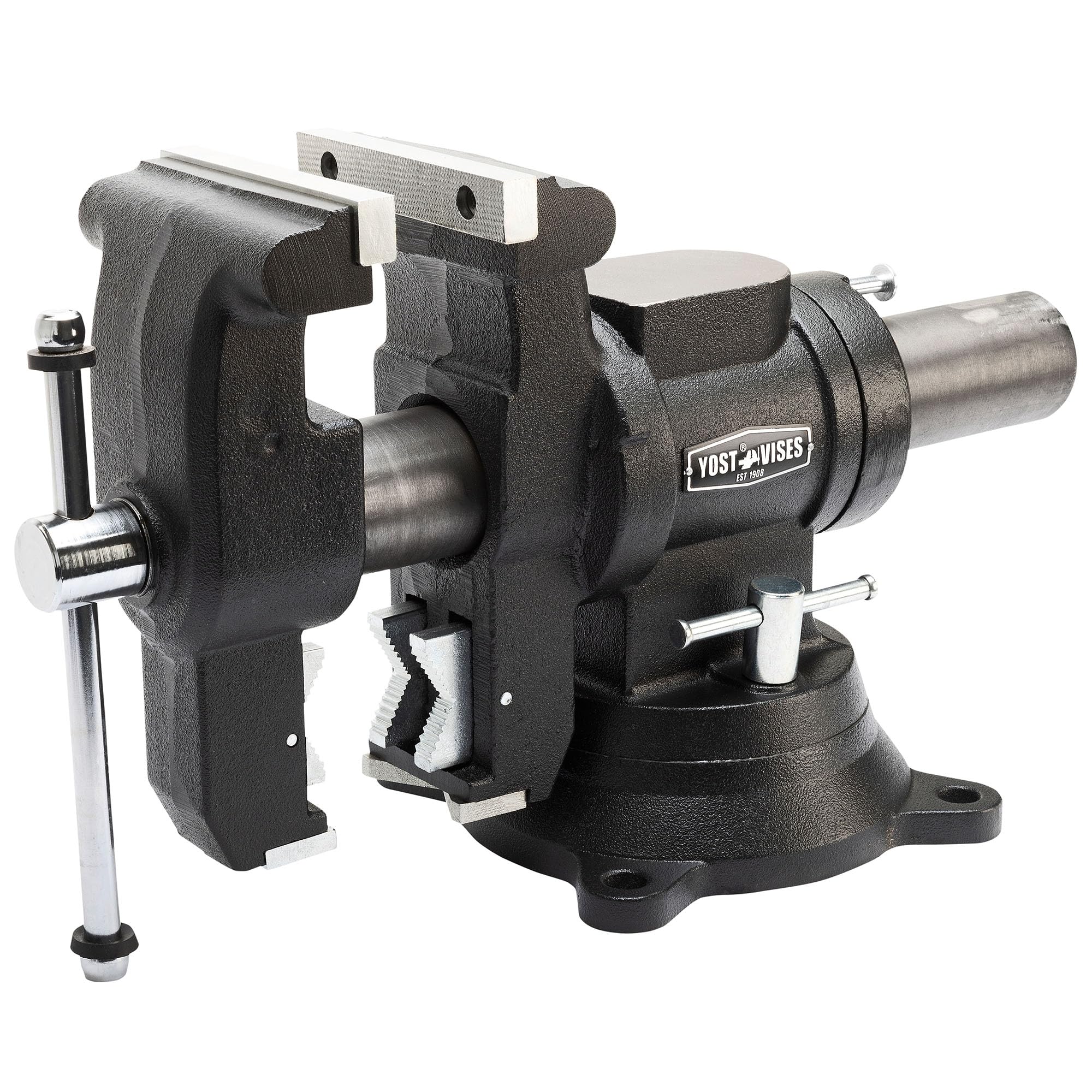
The Yost 760-DI is a serious piece of iron—75.8 pounds of ductile iron that delivers a 9,900-lb clamping force. The dual-axis rotation system lets you pivot the head vertically at 30-degree increments while the swivel base rotates horizontally, making it ideal for welding, fabrication, and any job that requires precise part positioning without unclamping. The 4.31-inch throat depth is the deepest in this lineup, giving you more reach inside the jaws for stable work on larger components.
Three sets of replaceable jaws (parallel serrated, pipe jaws, and V-jaws) cover flat stock, round pipe, and irregular shapes. Owners report that the anvil surface absorbs 4-lb sledgehammer hits without deformation, and the handle moves buttery smooth with a stop at the end to prevent screw damage. The interlocking V-grooved swivel base uses two lockdowns that lock the vise rock-solid at any angle—no creeping under heavy file or saw work.
The only realistic concession is the weight: you’ll need a sturdy steel workbench or at least a reinforced wood top to support it. Some users note minor casting finish flaws and a slight oily residue out of the box, but neither affects performance. If you need maximum clamping force in a dual-axis package and have the bench to handle it, this is the reference standard.
Why it’s great
- Deep 4.31-inch throat for stable large-part clamping
- Replaceable hardened steel jaws (serrated, pipe, V-jaw)
- Dual-axis rotation with 12 locking positions
Good to know
- Requires heavy-duty bench due to 75.8-lb weight
- Minor casting finish variations reported
2. COGNATIVE 6″ Heavy Duty Ductile Iron Bench Vise
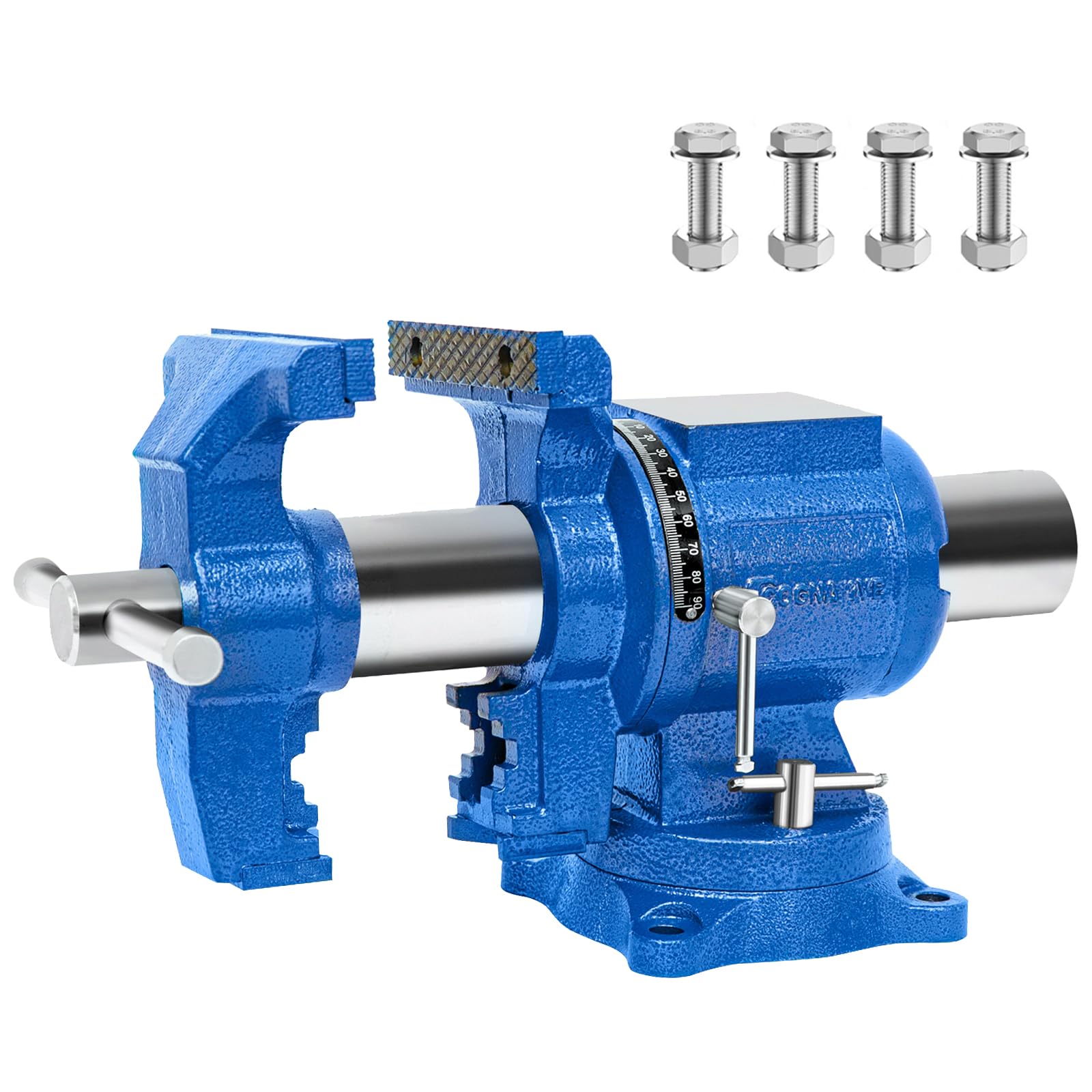
COGNATIVE’s offering matches the Yost’s 9,900-lb clamping force but in a slightly lighter package (37 pounds) with a 3.11-inch throat depth. The ductile iron body is rated at 60,000 PSI, and the blue powder-coated finish resists rust in damp workshop environments. The integrated anvil measures 3.38 x 2.55 inches, providing a stable platform for shaping and light hammer work directly on the vise.
The 360-degree swivel base operates smoothly, and the main screw turns with minimal friction—though some users found the rotating mechanism stiff out of the box and needed a quick WD-40 treatment to loosen it. The pipe capacity spans 16-64 mm diameter, which covers most household and automotive plumbing tasks. Straight and round scales on the body help with positioning repeatability during precision work.
A few owners reported a 1/8-inch left-right misalignment between the jaws, but the jaws stayed level on top, and the gap didn’t affect clamping performance for DIY projects. If you want the clamping force of the premium tier without the 75-pound anchor weight, this blue vise delivers a strong middle path.
Why it’s great
- 9,900-lb clamping force from ductile iron body
- Large anvil surface for shaping and hammering
- Integrated positioning scales for repeatable work
Good to know
- Rotating base may need lubrication initially
- Minor jaw alignment variance in some units
3. IRWIN Tools Multi-Purpose Bench Vise, 5-Inch
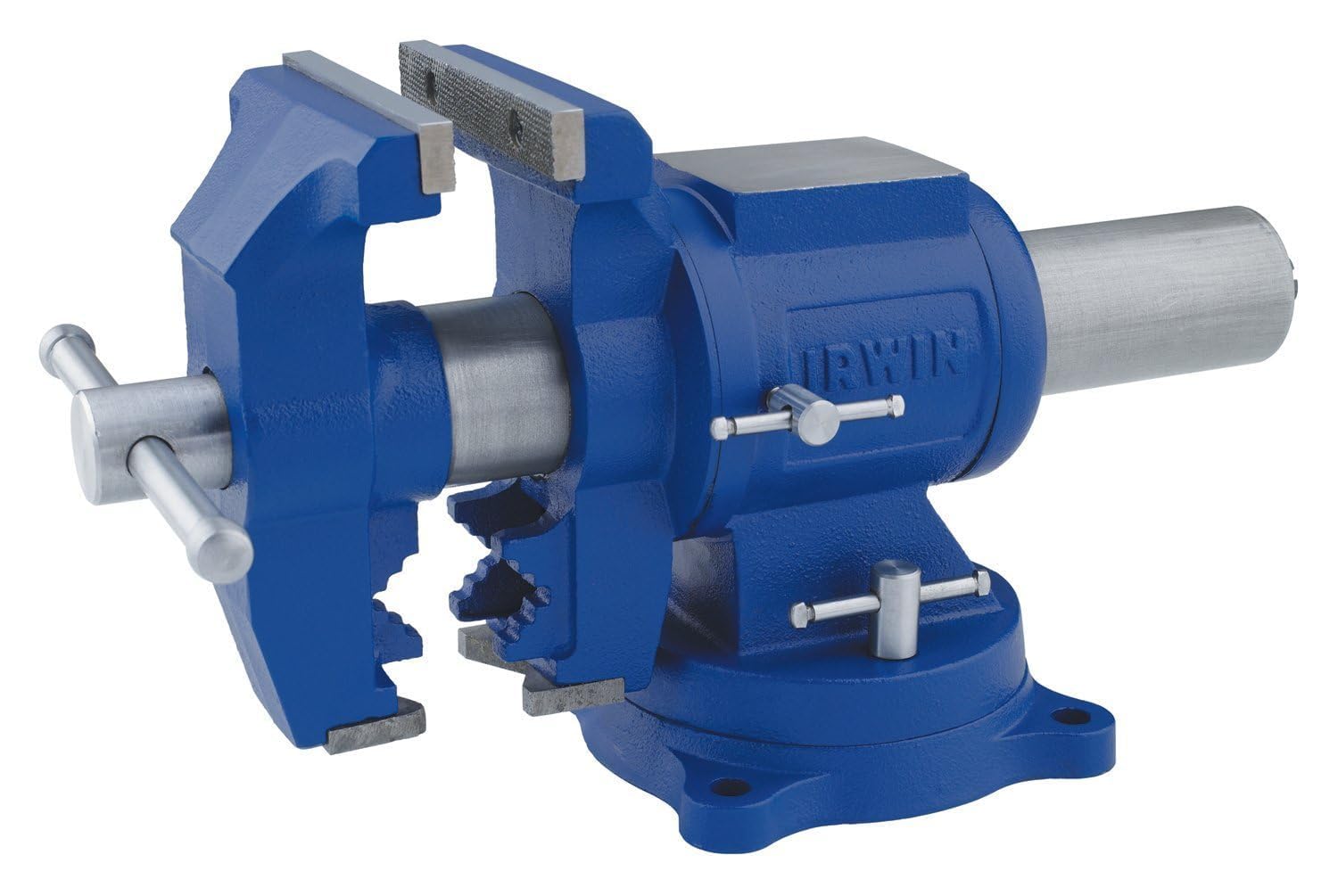
The cast iron body weighs 33.1 pounds and incorporates a fused steel handle that won’t bend or snap under heavy torque. The swivel base rotates 360 degrees, and the built-in anvil provides a flat striking surface for light metal forming and rivet setting.
One of the standout features is the quick-release mechanism that allows you to open the jaws rapidly without spinning the handle endlessly. The rotating pipe jaws accept round stock and let you clamp vertically or horizontally by pivoting the entire head assembly. Owners who have used this vise for ten-plus years report the jaws staying square and the screw mechanism holding alignment despite regular use with cheater pipes for extra leverage.
The 3,000-lb tensile strength is lower than the ductile-iron models, so this isn’t the right choice for repeated sledgehammer abuse or high-force production work. But for a home shop that sees woodworking, general holding, and occasional metal filing, the IRWIN offers proven durability at a weight that a standard workbench can handle.
Why it’s great
- Quick-release handle for fast jaw adjustment
- Fused steel handle resists bending
- Proven decade-long reliability in owner reports
Good to know
- Lower tensile strength than ductile iron vises
- Pipe jaw depth limited by casting design
4. VEVOR Heavy Duty 6.5″ Ductile Iron Bench Vise (5620 lbs)
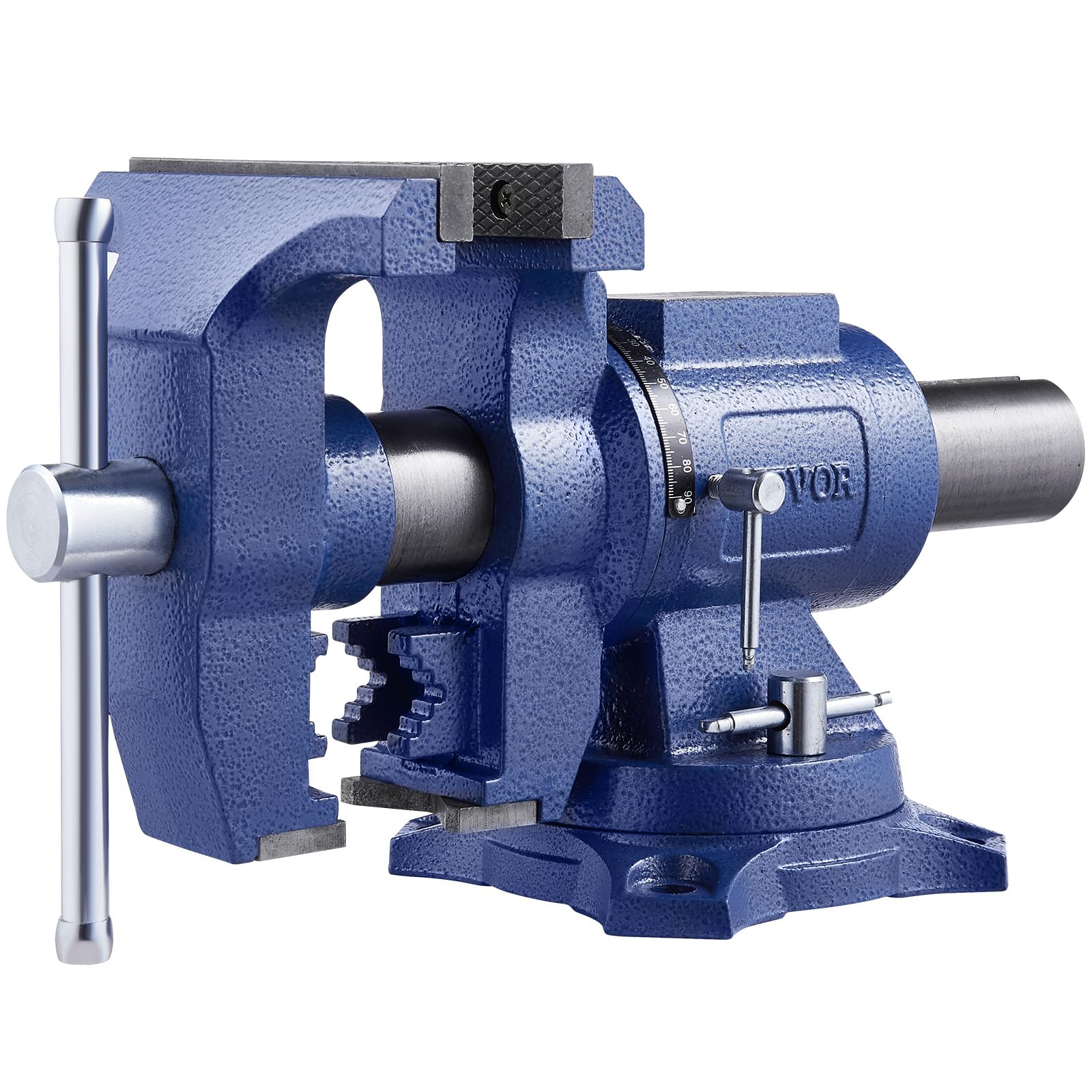
This VEVOR model brings dual-axis rotation to the mid-range segment without sacrificing ductile iron construction. The head and base both rotate 360 degrees independently, meaning you can position the workpiece at any angle in two axes for welding, cutting, or pipe assembly. The 5-inch max jaw opening pairs with a 3-inch throat depth, giving you room for medium to large parts while keeping the overall unit weight at 38.9 pounds—manageable for one-person mounting.
Clamping force is rated at 5,620 lbs from the ductile iron body, which is ample for automotive repairs, metal fabrication, and heavy woodworking. The included magnetic jaw pads protect delicate materials, and the pipe jaws handle diameters from 0.59 to 2.56 inches. Owners doing dirt bike suspension work and fabrication report near-zero runout and smooth operation comparable to name-brand vises costing significantly more.
The baked enamel finish resists chips better than basic powder coating, and the anvil surface (3.11 x 2.60 inches) gives you a solid platform for light shaping. The only knock is the measuring tape printed on the main shaft, which some users find unnecessary, and the handle could be longer for extra leverage. For the price, the dual-axis capability and ductile iron body make this a strong value proposition.
Why it’s great
- Independent 360° rotation on head and base
- Ductile iron body at a mid-range price point
- Includes magnetic jaw pads for soft materials
Good to know
- Handle length may limit leverage for some users
- Printed scale on shaft adds little functional value
5. PONY Heavy Duty Bench Vise, 5-Inch

PONY has been a trusted name in clamping for decades, and this 5-inch model continues the tradition with alloy steel construction and a clamping force of 5,512 lbs. The vibrant orange powder coating makes it easy to spot on a cluttered bench, and the dual lock nuts on the swivel base keep the vise from rotating under heavy load. The ground and polished anvil surface (3-5/32 x 2-9/16 inches) is large enough for hammering and shaping tasks.
The replaceable hardened steel serrated jaw faces bite aggressively into metal and wood without rounding off over time. An integrated safety feature prevents the jaw from falling out if you open it past the normal range, which is a thoughtful touch for users who work quickly. Owners report that after a full year of heavy use, the worm screw and jaws show no wear or damage, requiring only monthly cleaning and oiling to maintain smooth operation.
The 5-inch jaw opening and 2-5/8-inch throat depth are adequate for most home shop tasks, though you might find the opening limiting for larger fabrication projects. The lack of a rotating head (only the base swivels) means you can’t tilt the workpiece vertically. If your work is mostly flat clamping with occasional hammering, this orange workhorse delivers excellent longevity at a fair price.
Why it’s great
- Alloy steel body with 5,512-lb clamping force
- Safety feature prevents jaw dislodgement
- Large polished anvil for hammer work
Good to know
- No vertical head rotation capability
- 5-inch opening may limit large projects
6. GOEHNER’s Upgraded Bench Vise 6″
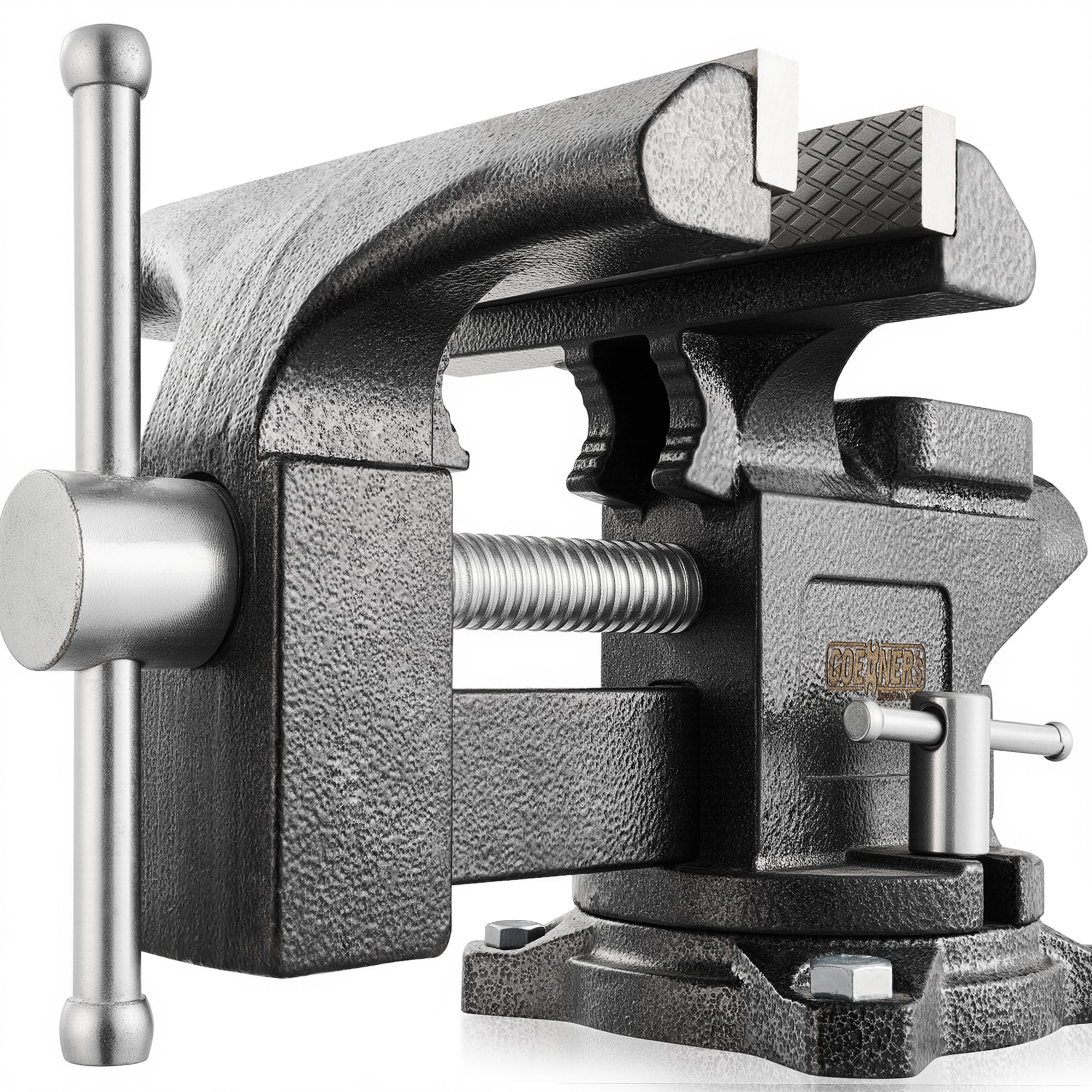
GOEHNER’s 6-inch vise is designed for the home DIYer who needs solid holding power without the 40-pound anchor weight of larger models. At 13.66 pounds, this cast iron unit is easy to move between benches or take on the go for trailer repairs and job site work. The 270-degree swivel base provides nearly full rotation, and the double lockdown feature keeps the vise from shifting during aggressive file or saw work.
The 2-in-1 jaw design combines flat jaws for standard stock with integrated pipe jaws for round material up to 2.5 inches in diameter. The replaceable hardened steel jaws are engraved for extra grip and show minimal wear over time. Owners who use the vise for gunsmithing, chainsaw sharpening, and general fixing report that the included magnetic plastic inserts protect delicate finishes while still providing a secure hold.
The 4.3-inch jaw opening and 2-inch throat depth are the shallowest in this lineup, so larger workpieces may not fit as comfortably. Some users note that the casting tolerances could be tighter, resulting in minor slop when the vise is fully closed. If you need a portable, light-duty vise for occasional projects and want to avoid a permanent bench installation, this unit fills the role well.
Why it’s great
- Lightweight and portable at 13.66 pounds
- Magnetic plastic inserts for delicate work
- Double lockdown for drift-resistant clamping
Good to know
- 2-inch throat depth limits workpiece reach
- Casting tolerances allow minor play when closed
7. VEVOR Bench Vise, 6.5″ Ductile Iron (4496 lbs)

This VEVOR vise is the entry-level ductile iron option in the lineup, offering a 6.5-inch jaw width and 4,496-lb clamping force at a weight that won’t overwhelm a standard workbench. The forward jaw opens 6.5 inches, while the reverse opening expands to 9.3 inches, giving you extra capacity when you flip the head around. The 360-degree swivel base locks in any position, and the powder-coated finish provides basic rust resistance for indoor workshop use.
The replaceable serrated jaw plates are made from carbon steel and grip flat stock securely without slipping. The included magnetic nylon jaw pads protect softer materials during finishing work. Owners who use this vise for drilling, grinding, and pipe cutting report smooth operation and easy mounting thanks to the included hardware and bolt template. The 2.8 x 3-inch anvil provides a decent work surface for light forming tasks.
The ductile iron body is rated at 60,000 PSI, but the clamping force is notably lower than other ductile iron vises in this roundup. The screw mechanism is adequate for home use but may show wear under daily heavy operation. If you’re setting up a first workshop and want a ductile iron vise without stretching the budget, this model gets you solid material quality at the lowest entry point.
Why it’s great
- Ductile iron body at a budget-friendly price
- Reverse jaw opening reaches 9.3 inches
- Includes mounting hardware and nylon jaw pads
Good to know
- Clamping force lower than comparable ductile iron vises
- Softer jaw plates may require early replacement
FAQ
What is the practical difference between ductile iron and grey cast iron in a bench vise?
How do I determine the right jaw opening size for my projects?
What does the swivel base locking mechanism need to hold securely?
Final Thoughts: The Verdict
For most users, the best bench vise winner is the Yost Vises 760-DI because it combines a deep 4.31-inch throat, dual-axis rotation, and a 9,900-lb clamping force in a ductile iron body that can handle years of fabrication without fatigue. If you want a lighter premium option with the same clamping force, the COGNATIVE 6″ Ductile Iron Vise delivers at 37 pounds with a solid anvil platform. And for a mid-range dual-axis rotator that won’t break the budget, the VEVOR 6.5″ Ductile Iron Vise offers independent head and base rotation that makes pipe fitting and welding work far easier than a fixed-head design.