
Our readers keep the lights on and the weekend projects moving. As an Amazon Associate, I earn from qualifying purchases.
Oklahoma’s summers punish a lawn with relentless heat, sudden dry spells, and heavy clay soil that bakes hard. Choosing the wrong grass seed means watching your investment turn brown or wash away in the first gullywasher. Bermuda grass is the only warm-season turf that thrives under those conditions—but only if you pick a variety bred for the state’s unique transition zone climate.
I’m Rikta — the co-founder and writer behind FitlyFast. I have spent hundreds of hours analyzing turfgrass specifications, reading field trial reports, and comparing seed purity, germination rates, and stress tolerance claims to build this guide for Oklahoma homeowners.
Whether you are starting a new lawn from scratch or overseeding bare patches, finding the best bermuda grass seed for oklahoma means looking past flashy bags and zeroing in on the specs that actually survive a summer in the Sooner State.
How To Choose The Best Bermuda Grass Seed For Oklahoma
Oklahoma sits in the USDA transition zone, where neither cool-season nor warm-season grasses have it easy. Bermuda grass is the default choice for full-sun lawns, but seed selection hinges on four critical factors: cold tolerance, drought resistance, seed purity, and establishment speed. Ignoring any one of these can leave you with patchy, weed-ridden turf by August.
Cold Tolerance Is Non-Negotiable
Standard common Bermuda often suffers winterkill during Oklahoma’s occasional hard freezes. Look for improved varieties like Blackjack II, Oasis, or Tahoma 31—these have been bred specifically to survive cooler soil temperatures without going dormant too early. A seed blend that includes cold-tolerant genetics is your insurance against spring dead spots.
Drought Resistance and Soil Adaptability
Oklahoma’s clay-heavy soils drain slowly but dry out fast on the surface. Bermuda grass with a deep, aggressive root system—often listed as having “drought tolerance” in the spec sheet—can reach moisture deeper in the profile. Avoid seeds that require constant irrigation; the best options for Oklahoma are those marketed as “low water usage” or “drought tolerant.”
Seed Purity and Weed-Free Guarantees
Many mass-market grass seed bags contain fillers, weed seeds, or annual rye grass that dies after one season. For a lawn that lasts, chase down the weed-free and no-filler claims. Premium blends that advertise “99.9% weed free” or explicitly state they are “uncoated” deliver better long-term coverage without invasive crabgrass hitchhikers.
Quick Comparison
On smaller screens, swipe sideways to see the full table.
| Model | Category | Best For | Key Spec | Amazon |
|---|---|---|---|---|
| Jonathan Green Black Beauty | Cool-Season | Transition zone lawns needing heat tolerance | Waxy leaf coating for moisture retention | Amazon |
| Pennington Bermudagrass | Warm-Season | Cold-tolerant Bermuda establishment | Penkoted technology for seedling health | Amazon |
| Outsidepride Maya Blackjack II | Warm-Season | Fine-textured, carpet-like lawns | Coated seed for moisture retention | Amazon |
| Outsidepride Oasis Bermuda | Warm-Season | High-traffic, sunny areas | Hybrid blend of 3 Bermuda varieties | Amazon |
| Lesco All-Pro Tall Fescue | Cool-Season | Lawns with partial shade | Endophyte enhanced for insect resistance | Amazon |
| Tahoma 31 Bermuda Plugs | Warm-Season | Cold-tolerance and water conservation | Uses 50% less water than standard Bermuda | Amazon |
| Scotts Professional Turfgrass | Cool-Season | Large-area sun and shade coverage | 99.9% weed free, 50 lb bag | Amazon |
In‑Depth Reviews
1. Outsidepride Oasis Bermuda Grass Seed – 5 lbs

The Outsidepride Oasis Bermuda is a hybrid blend that combines three top-performing Bermuda varieties, giving it a genetic edge over single-variety seeds when facing Oklahoma’s stress factors. Its aggressive growth habit helps crowd out weeds naturally, reducing the need for chemical herbicides early in the season. The 5-pound bag covers roughly 2,500 square feet on new lawns, making it a practical size for mid-sized yards.
Customer results show that with proper soil preparation and consistent moisture, germination begins around day 10 and fills in over the following weeks. Users planting in full-sun spots with clay loam reported dense, bright green coverage that handled foot traffic well. The blend is specifically formulated for warm-season planting, which aligns with Oklahoma’s late spring and early summer seeding window.
Some users experienced lower germination rates in areas with poor soil contact or inconsistent watering. The seed requires soil temperatures above 65°F to sprout reliably, so early spring seeding before the ground warms up may lead to disappointment. Coating the seed helps with moisture retention but also demands careful watering discipline—drying out even once can stall establishment.
Why it’s great
- Three-variety hybrid blend improves disease and drought resistance
- Aggressive growth helps suppress weeds without extra treatments
- Proven performance in full-sun, high-traffic Oklahoma lawns
Good to know
- Requires soil temperatures above 65°F for reliable germination
- Coated seeds need consistent moisture for first two weeks
2. Outsidepride Maya (Blackjack II) Bermuda Grass Seed – 5 lbs

The Blackjack II variety used in this Outsidepride offering is bred specifically for exceptional seedling vigor and improved cold tolerance—two traits that directly combat Oklahoma’s erratic spring temperatures and winter dormancy challenges. Its fine-textured blades create a carpet-like appearance that many homeowners prefer over coarser Bermuda types. The 5-pound bag is coated to retain moisture, which helps germination in Oklahoma’s often dry spring conditions.
Reviews from users in similar transition-zone climates report that seeds sprouted within 7 days when planted in properly tilled soil with starter fertilizer. The grass establishes a dense root system that holds up well against heat and moderate foot traffic. The product is marketed as GMO-free and works well for both new lawns and overseeding existing Bermuda.
Some buyers experienced poor germination when planting too early in cool soil or without adequate watering. The coated seed can also be tricky to spread evenly with a broadcast spreader if not calibrated correctly. A few users noted customer service was unhelpful when seeds failed to germinate, so proper soil prep is critical here.
Why it’s great
- Blackjack II variety offers superior cold tolerance for transition zones
- Fine-textured turf creates a dense, carpet-like lawn finish
- Coated seeds retain moisture better during dry germination windows
Good to know
- Requires careful soil temperature monitoring for consistent germination
- Coated seeds can clog spreaders if not calibrated properly
3. Tahoma 31 Bermuda Grass Plugs – 100 Large Plugs
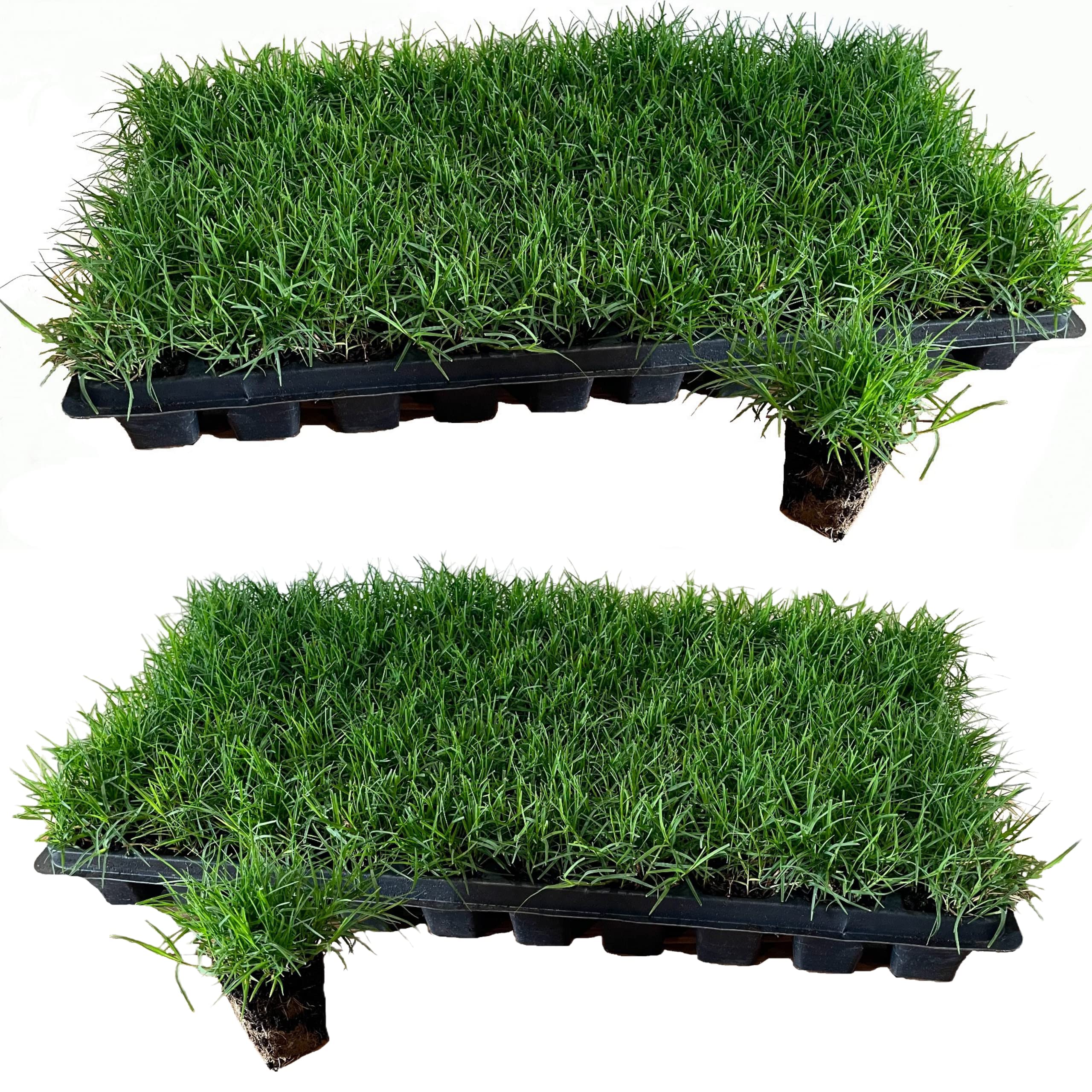
Tahoma 31 is a university-developed Bermuda variety that tests up to 75% more cold tolerant than standard Bermuda, making it a standout choice for Oklahoma lawns that face winterkill risks. Unlike seed, these are mature plugs already producing runners, so establishment is faster and more reliable—especially on lawns with poor soil or partial shade. Each order contains 100 plugs covering roughly 100 square feet when planted on 12-inch centers.
Users reported that plugs arrived with visible roots and greened up within days of planting. The grass spreads aggressively with stolons reaching 6 to 8 inches within weeks, choking out weeds naturally. The variety also uses 50% less water than standard Bermuda, which is a significant advantage during Oklahoma’s summer water restrictions.
The upfront investment is higher than seed, and planting plugs requires digging or a plug tool, which adds labor. Some plugs arrived slightly yellow from shipping but recovered quickly with water. The 100-square-foot coverage may feel small for larger lawns, and multiple orders are needed for full-yard conversion.
Why it’s great
- Superior cold tolerance tested up to 75% better than standard Bermuda
- Pre-established plugs establish faster and more reliably than seed
- Uses 50% less water—critical for Oklahoma summer restrictions
Good to know
- Higher upfront cost per square foot compared to seed
- Requires labor-intensive planting with a plug tool
4. Pennington Bermudagrass Grass Seeds for Lawn, 5 lb

Pennington’s Bermudagrass includes improved cold-tolerant varieties and their exclusive Penkoted technology, which coats the seed with a protective treatment to enhance seedling vigor and disease resistance. This is a warm-season blend that goes dormant in winter but bounces back strong in spring. The 5-pound bag is ideal for overseeding or small new lawns, and the seed is designed for low mowing heights—attractive for homeowners who want a manicured look.
Customer feedback shows that with proper watering and warm soil, the germination rate is solid. Users in southern states reported that the seed filled thin areas within a few weeks. The aggressive spreading habit helps repair bare spots naturally. The blend is also formulated to produce fewer clippings, reducing mowing frequency during peak growth.
Some batches experienced delayed germination, taking up to 14 days longer than expected even with twice-daily watering. A few users reported zero germination, possibly due to storage conditions or poor batch quality. The tiny seed size requires multiple passes with a spreader to avoid patchiness.
Why it’s great
- Penkoted technology improves seedling health and disease resistance
- Cold-tolerant varieties reduce winterkill risk in Oklahoma
- Low mowing height supports a manicured, fairway-style lawn
Good to know
- Batch consistency can vary—some bags show delayed germination
- Tiny seeds require careful spreader calibration for even coverage
5. Jonathan Green Black Beauty Heat & Drought Resistant Grass Seed, 3 lb

Jonathan Green’s Black Beauty blend uses tall fescue and Texas bluegrass, not Bermuda, but its heat and drought tolerance makes it a strong alternative for Oklahoma lawns that receive light shade. The waxy leaf coating reduces evaporation, helping the grass survive 100°F days without constant watering. The 3-pound bag covers up to 1,500 square feet for overseeding, which is cost-effective for spot repairs.
Users in transition-zone climates reported that the seed sprouted in about 7 days with proper soil prep and produced a dark green, dense turf. The deep root system—up to 4 feet—accesses moisture that Bermuda cannot reach in clay soils. This seed is best planted in mid-August to mid-October or mid-March to mid-May, aligning with Oklahoma’s shoulder seasons.
Because it is a cool-season grass, it will brown during Oklahoma’s hottest summer weeks unless irrigated. Some customers had zero germination results, possibly due to soil temperature being too high at planting. The 3-pound bag is small for larger lawns, requiring multiple bags for full coverage.
Why it’s great
- Waxy leaf coating reduces water loss during high heat events
- Deep root system accesses moisture in heavy clay soils
- Works well in partially shaded areas where Bermuda struggles
Good to know
- Cool-season grass goes dormant in peak Oklahoma summer heat
- Small bag size requires multiple purchases for larger lawns
6. Lesco All-Pro Transition Tall Fescue Grass Seed Blend, 10 lbs
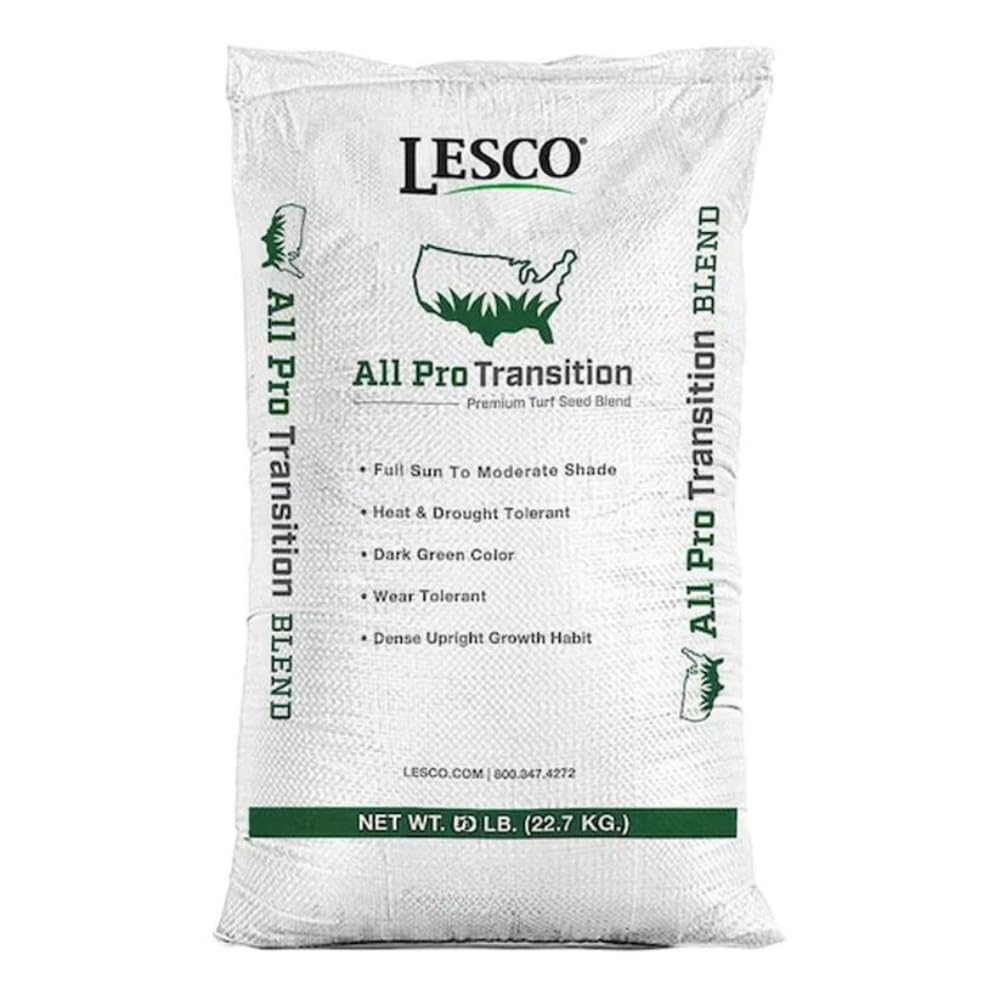
Lesco’s All-Pro blend is a tall fescue, not Bermuda, but it earns a spot here for Oklahoma lawns that have moderate shade or face insect pressure. The seed contains endophytes that naturally deter surface-feeding pests like chinch bugs—a common problem in Oklahoma’s hot, dry summers. The 10-pound bag offers solid value for overseeding larger areas, and the blend is tested for color, texture, and disease resistance.
Users report fast germination within a week in warm, moist soil, producing a thick, vibrant green lawn that handles foot traffic well. The tall fescue stays green longer into fall than Bermuda and greens up earlier in spring, extending the visual appeal of the lawn. Many customers found it cleaner (fewer weed seeds) than big-box store brands.
This is a cool-season grass, so it will need irrigation during Oklahoma’s July and August heat to stay green. The seed is non-returnable, so careful soil prep is essential. Some users noted slower emergence in cooler spring soil compared to ryegrass blends.
Why it’s great
- Endophyte enhancement naturally deters chinch bugs and sod webworms
- Stays green longer into fall and greens up earlier than Bermuda
- Excellent for lawns with partial shade that Bermuda cannot handle
Good to know
- Cool-season grass requires summer irrigation in Oklahoma’s heat
- Non-returnable—soil preparation mistakes are costly
7. Scotts Professional Turfgrass Seed Sun and Shade Mix, 50 lb

The Scotts Professional Turfgrass Seed Sun and Shade Mix is a cool-season blend that covers up to 10,865 square feet for new lawns or 21,735 square feet for overseeding. It is uncoated and 99.9% weed free, meaning every pound is pure seed with no filler. For Oklahoma homeowners managing large properties or HOA common areas, this bulk bag reduces the number of trips to the store and the cost per square foot significantly.
Users saw germination around day 10 with consistent watering, and the blend performed well in both full sun and moderately shaded spots. The grass filled in patchy areas quickly and tolerated low mowing heights suitable for a golf-practice or fairway-style lawn. The uncoated nature means it requires more frequent watering initially, but once established, the drought tolerance is respectable for a cool-season mix.
Some recent batches reportedly introduced more crabgrass and weeds than in previous years, suggesting quality control may vary. The 50-pound bag is heavy and requires a large spreader or physical effort to apply. Being a cool-season grass, it will go dormant in Oklahoma’s summer heat without regular irrigation.
Why it’s great
- Exceptional value per square foot for large lawn projects
- 99.9% weed free guarantees no invasive hitchhikers
- Uncoated seed means no filler—pure germination potential
Good to know
- Recent batches show inconsistent weed-free performance
- Cool-season grass demands irrigation during Oklahoma summers
FAQ
Is Bermuda grass or tall fescue better for Oklahoma?
When is the best time to plant Bermuda grass seed in Oklahoma?
How often should I water new Bermuda grass seed in Oklahoma?
Will Bermuda grass survive Oklahoma’s winter freezes?
Can I overseed Bermuda grass with tall fescue in Oklahoma?
What is the difference between coated and uncoated Bermuda grass seed?
Final Thoughts: The Verdict
For most users, the bermuda grass seed for oklahoma winner is the Outsidepride Oasis Bermuda because its hybrid blend offers the best balance of drought tolerance, cold hardiness, and aggressive weed suppression for the state’s transition-zone climate. If you want the fastest establishment and the most cold-tolerant option available, grab the Tahoma 31 Bermuda Plugs. And for large-area projects where cost per square foot matters most, nothing beats the Scotts Professional Turfgrass 50 lb bag.