
Our readers keep the lights on and the weekend projects moving. As an Amazon Associate, I earn from qualifying purchases.
The science is clear: you don’t need to lift heavy to build serious muscle. Blood flow restriction (BFR) training uses controlled pressure to trick your muscles into a hypertrophic response using loads as light as 20% of your one-rep max. The challenge? Finding a band that applies that pressure safely, consistently, and comfortably — without cutting off arterial flow or slipping mid-set.
I’m Rikta — the co-founder and writer behind FitlyFast. I’ve spent hundreds of hours analyzing BFR product specs, comparing occlusion chamber designs, pump accuracy ratings, and nylon weave densities to separate the tools that deliver measurable results from the ones that just squeeze. This guide is built from that deep spec-level research.
Whether you are a rehabilitation patient rebuilding after surgery or a powerlifter pushing past a plateau, the best bfr bands must combine precise pressure application with durable materials and a fit that stays locked during every rep.
How To Choose The Best BFR Bands
Blood flow restriction bands are not all the same. The wrong design can slip, dig into your skin, or apply uneven pressure that compromises safety. Focus on the three factors that determine whether a band works — or wastes your time and money.
Closure and Pressure System
There are two main designs: elastic nylon bands with a metal ratchet or buckle, and inflatable cuffs with a pump and pressure gauge. Nylon bands are simpler and cheaper, but they rely on your subjective feel to set tension — and that tension can loosen as you sweat. Inflatable cuffs let you dial in a specific PSI or mmHg, giving you repeatable, science-backed pressure session after session. If you are serious about LOP-based protocols, inflatable is the clear choice.
Band Width and Limb Fit
Research shows that a band width between 1 and 2 inches is optimal for BFR. Wider bands increase the risk of arterial occlusion (which you do not want). Narrower bands can dig in and cause nerve discomfort. The best bands are contoured to fit the taper of your arms and legs and stay put without constant re-adjustment. Look for curved designs or multi-chamber cuffs that conform to your limb shape rather than flattening it.
Build Quality and Durability
The forces involved in BFR training — especially on the legs — can exceed 200 mmHg of pressure. Cheap nylon webbing stretches over time, and plastic buckles crack under load. Prioritize metal buckles with grip teeth or non-slip ratchets on the nylon side. For inflatable systems, ensure the pump connector is metal-reinforced and the cuff material is a thick TPE or reinforced polyester-cotton blend that won’t leak or fray at the seams.
Quick Comparison
On smaller screens, swipe sideways to see the full table.
| Model | Category | Best For | Key Spec | Amazon |
|---|---|---|---|---|
| Puxhoea BFR Cuffs | Inflatable System | Precision protocol training | Multi-chamber with pump & gauge | Amazon |
| Dr. Gains BFR Pro 2.0 | Inflatable System | Premium professional use | TPE ultra-soft chamber cuffs | Amazon |
| DR. GAINS Nylon Cuffs | Nylon Ratchet | Budget-friendly occlusion | 1-inch nylon with metal buckle | Amazon |
| lewitools Inflatable Bands | Inflatable System | Home gym hypertrophy | Accurate pump for precise pressure | Amazon |
| ALongSong Pull Up Assist | Resistance Band | Pull-up progression | 4x 80lb latex bands with foot pedal | Amazon |
| WOQQW Resistance Set | Resistance Band | Full-body general training | 6 bands, 30-350lb total resistance | Amazon |
| TRX Strength Band Set | Resistance Band | Rehab and assisted training | 5-150lb TPE loop bands | Amazon |
In‑Depth Reviews
1. Puxhoea BFR Blood Flow Restriction Bands
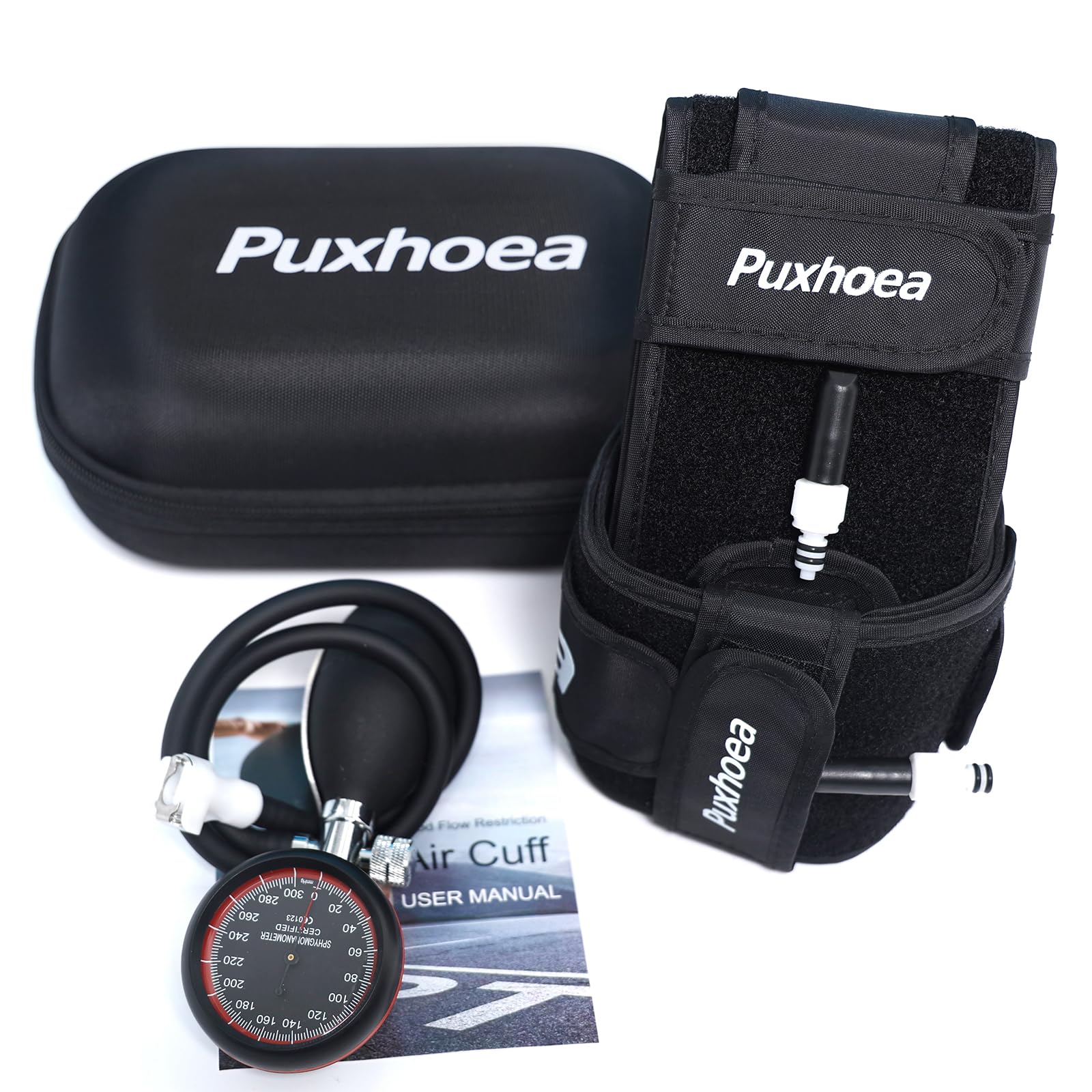
The Puxhoea BFR system is the most complete inflatable kit in the mid-range tier, and it earns the top spot because it solves the two biggest problems with BFR training: pressure inconsistency and limb fit. The multi-chamber design wraps around your arm or leg without pinching, and the included pump with a pressure gauge lets you set your occlusion level to a specific PSI rather than guessing by feel. That repeatability is what makes BFR protocol training actually work.
At 16 ounces, the cuffs are light enough for single-leg rehab work and compact enough to toss in the included carry bag. The polyester-cotton blend material breathes better than cheaper nylon alternatives and holds its shape under repeated inflation cycles. Users recovering from ACL surgery and knee replacements report that the bands stay secure during leg raises and extension holds without migrating up the thigh.
The downside is that the instruction manual is thin, and the pump connection can feel delicate if you over-torque it. You will need to research your own limb occlusion pressure levels to get the most out of this system. But for the price-to-performance ratio, this is the one to beat for anyone serious about BFR who is not ready to spend on the premium tier.
Why it’s great
- Multi-chamber design conforms to limb shape for even pressure distribution
- Pressure gauge enables repeatable, LOP-based training sessions
- Lightweight and portable with dedicated storage case
Good to know
- Instruction manual lacks depth on proper BFR protocol usage
- Pump connector requires careful handling to avoid detachment under pressure
2. Dr. Gains BFR Pro 2.0
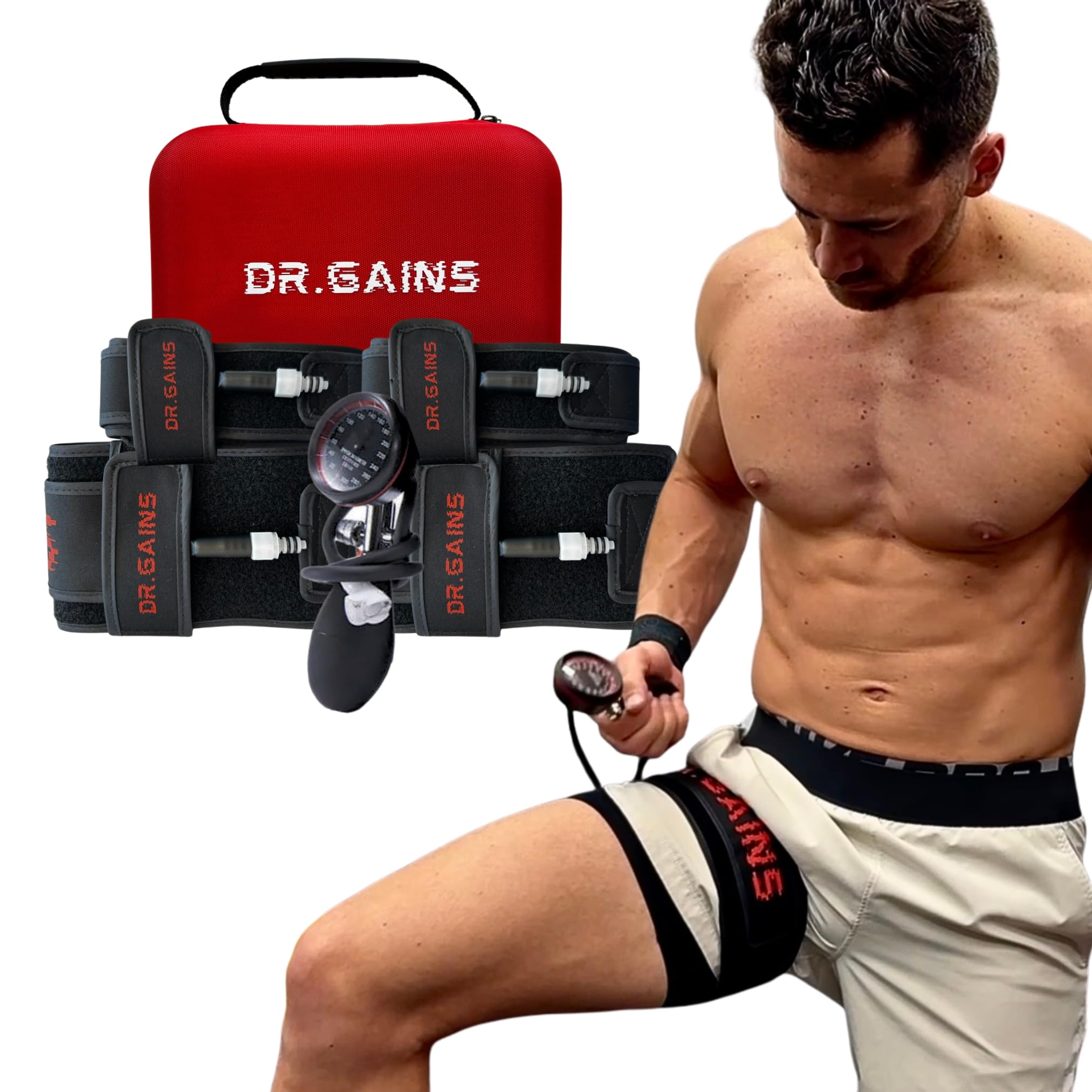
The Dr. Gains BFR Pro 2.0 represents the ceiling of consumer BFR technology. The inflatable cuffs are made from a thermoplastic elastomer that is noticeably softer than the standard silicone chambers used by competitors — it molds to your arm without the rigid edge digging into your bicep during curls. The thin chamber design (reportedly 40% thinner than typical inflatable cuffs) leaves your biceps and triceps fully visible, which helps with form monitoring during isolation work.
The CE-certified pump and gauge deliver pressure in a controlled, repeatable manner. The real differentiator is the lifetime access to Dr. Gains’ Total Body BFR workout program — a structured protocol that removes the guesswork from set volume, rest periods, and target pressure. For a user new to BFR, that guidance alone is worth the premium. The cuffs come with both arm and thigh bands, making this a true full-set system out of the box.
At this price point, expectations are high, and some users report that the arm band failed to hold pressure after a short period of use. The company offers customer support, but the inconsistency is a concern for a premium product. If you are a professional athlete, physical therapist, or someone who demands the softest, most comfortable cuff available, this is the top choice.
Why it’s great
- Ultra-soft TPE material prevents skin digging and discomfort during long sets
- Lifetime access to professional-grade BFR training program with video tutorials
- Thin arm cuffs allow full range of motion without blocking muscle visibility
Good to know
- Inconsistent quality control reports of arm band pressure failures
- Price is significantly higher than comparable inflatable systems
3. Dr. Gains Nylon BFR Bands
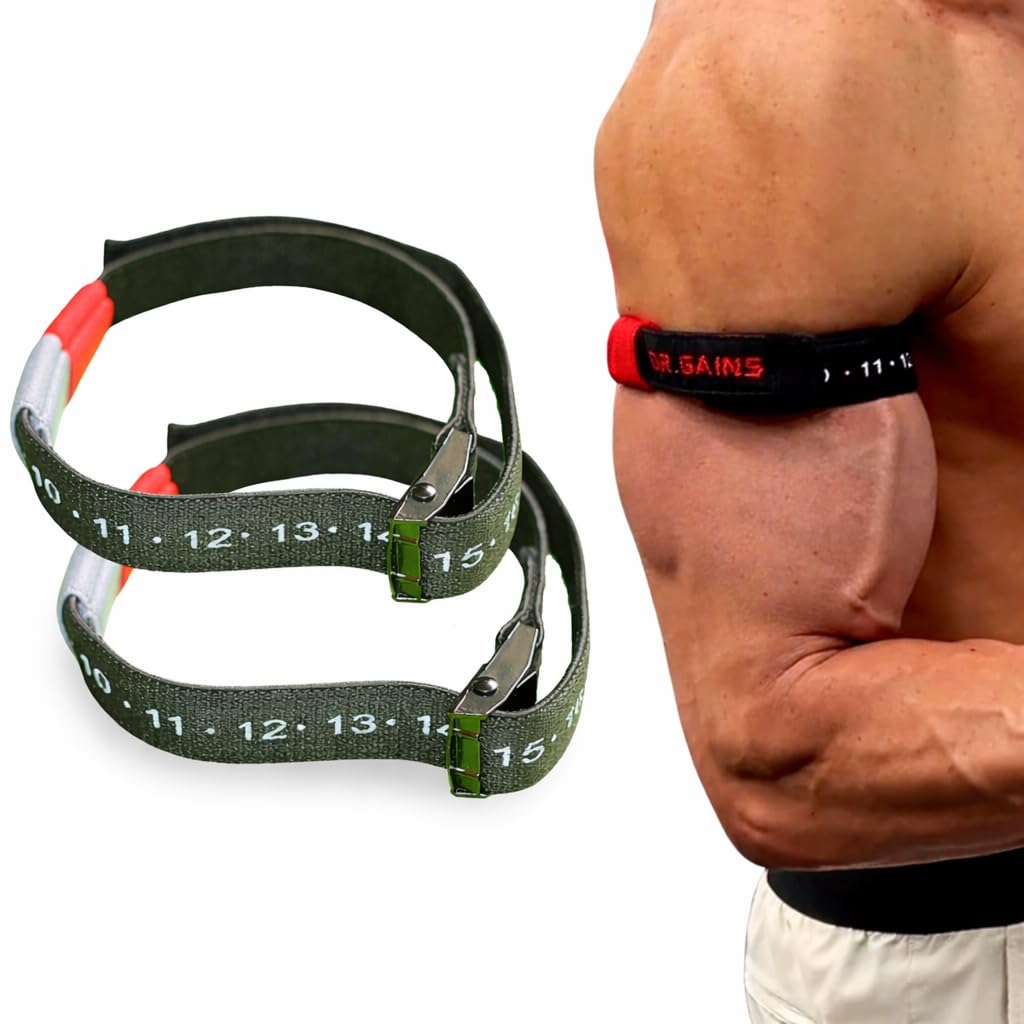
If you want the simplicity of a nylon strap system without the flimsy plastic buckles that plague low-end BFR bands, this Dr. Gains kit is the right pick. The 1-inch width is exactly what the research recommends for arm occlusion — wide enough to restrict venous return without pinching the brachial artery. The metal buckle uses grip teeth that lock the strap in place, and the spring-loaded EZ-Adjust lever lets you tighten or loosen with one finger between sets.
The nylon material is heavy-duty and holds its shape after repeated use, unlike the cheap elastic webbing found on no-name bands that stretch out after a month. Users report that the cuffs stay secure through multiple sets of curls and tricep extensions without requiring constant re-tightening. The included carrying case makes it easy to throw in a gym bag, and the QR code video (though brief) covers the basics of BFR setup.
The main limitation is that nylon bands rely on your subjective feel for pressure. Without a gauge, you cannot replicate a specific LOP percentage from session to session. Some users also find the nylon scratchy against bare skin and prefer to wear a compression shirt underneath. For a budget-friendly entry into BFR that does not cut corners on build quality, this is the standard.
Why it’s great
- Metal buckle with grip teeth prevents slipping even under high tension
- 1-inch strap width aligns with scientific BFR recommendations for arm use
- One-finger EZ-Adjust lever enables quick tension changes between exercises
Good to know
- No pressure gauge means you cannot measure or repeat exact occlusion levels
- Nylon texture can cause skin irritation when worn without a sleeve
4. lewitools Inflatable BFR Bands

Lewitools enters the inflatable BFR space with a solid middle-ground option that balances pressure precision and cost. The pump provides a noticeable upgrade over manual nylon tightening, allowing you to apply consistent pressure to both arms and legs. The cotton-blend cuff material is softer against the skin than the stiff nylon or rubber alternatives and doesn’t trap sweat the way neoprene cuffs do during longer sessions.
The systemic response from BFR training — anti-aging, faster recovery, and increased muscle endurance — depends entirely on using the correct pressure. The lewitools pump gives you the tool to dial that in, though the included documentation is sparse on how to calculate your individual LOP. Users who already understand BFR protocol will find this a capable tool. The bands work well for partner training since the dual-cuff setup supports simultaneous arm and leg work.
The biggest reliability concern is the pump connection point. Several users report that the pump attachment failed after about 6 months of use, and the cuff itself has been reported to lose its seal over time. If you treat the connector carefully and avoid over-inflating, the system works well, but it is not built to the same durability standard as the premium tier.
Why it’s great
- Cotton-blend cuff is breathable and comfortable for extended wear
- Pump enables controlled, repeatable pressure application for legs and arms
- Versatile enough for partner or team training with dual-cuff setup
Good to know
- Pump connector has been reported to fail after several months of use
- Minimal included instruction on BFR protocol and LOP calculation
5. ALongSong Pull Up Assistance Bands
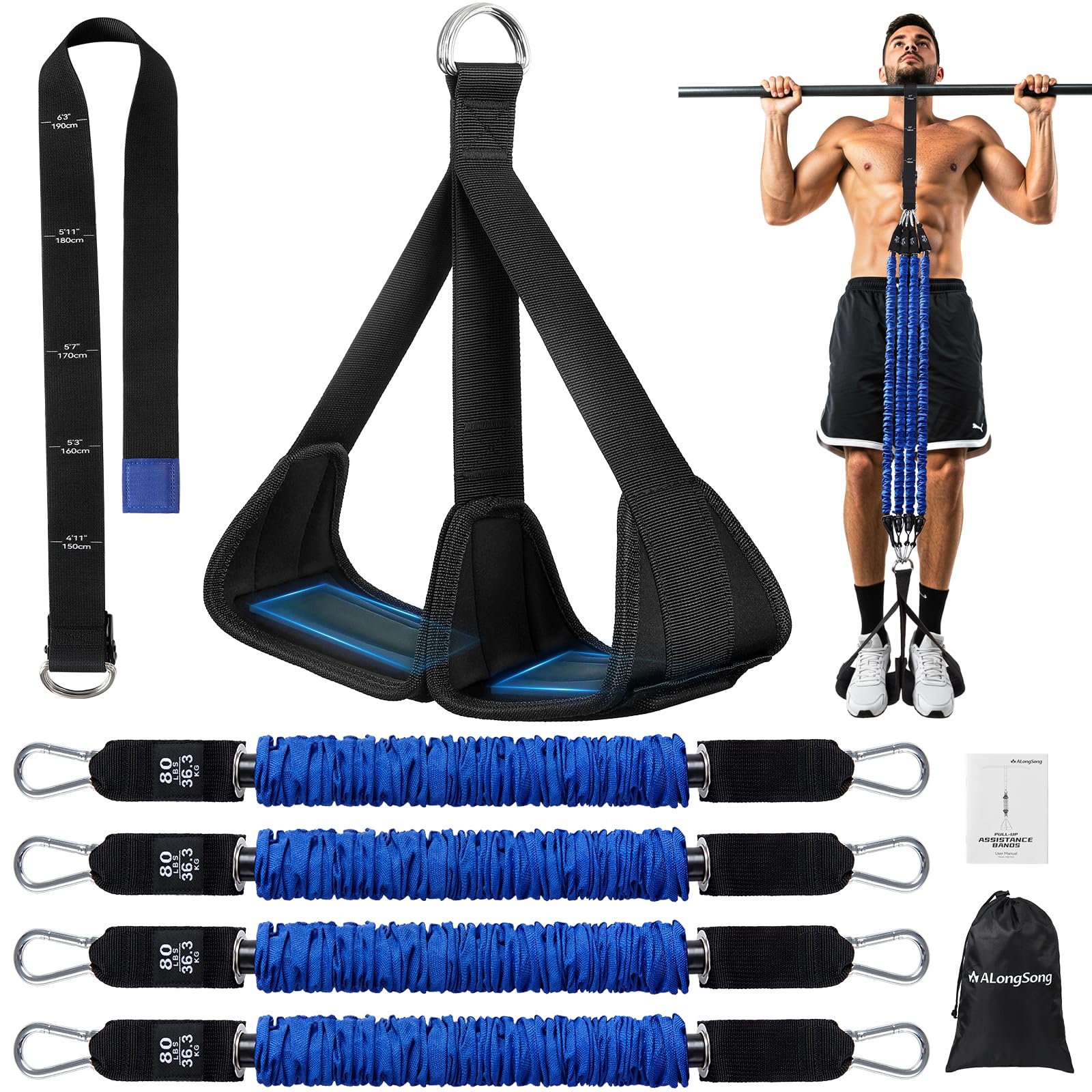
While not a true BFR occlusion band, the ALongSong system earns a spot here because it solves the problem of pull-up progression using resistance bands — and the foot pedal design is a smart innovation for assisted training. The kit includes four 80-lb latex bands, a reinforced foot pedal, and a height-marked strap that adjusts from 4’11” to 6’3″. The pedal provides a stable platform that prevents the bands from slipping out from under your feet, a common frustration with band-only setups.
The measured strap lets you adjust the tension precisely depending on how much assistance you need. Beginner users report being able to do their first pull-ups with this system, and more advanced athletes use fewer bands for progressive overload. The protective woven fabric covering the latex tubing reduces the risk of snap and extends band life compared to raw rubber bands.
The foot pedal is sewn in a way that some users find limits balancing between both feet, and the maximum recommended user weight is 176 lbs. This is not a replacement for BFR bands — it does not create venous occlusion — but for anyone who needs to build pull-up strength as a component of their training, this is a well-designed tool.
Why it’s great
- Reinforced foot pedal provides stable, non-slip footing during assisted pull-ups
- Measured strap allows precise tension adjustment for progressive overload
- Fabric-covered latex bands are more durable than standard exposed rubber
Good to know
- Maximum user weight of 176 lbs limits use for larger athletes
- Foot pedal design can feel unbalanced for users who prefer independent foot placement
6. WOQQW Heavy Resistance Bands Set
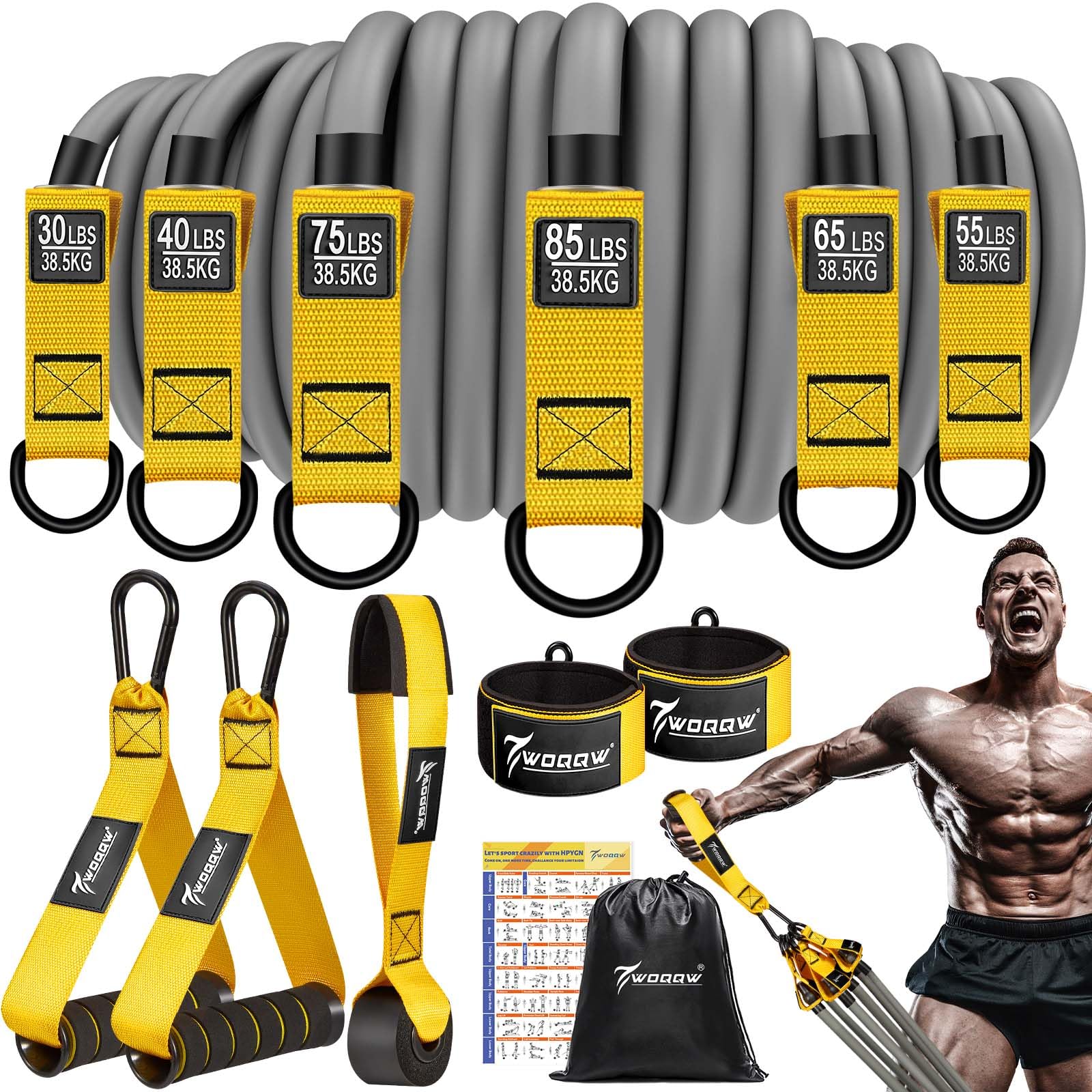
WOQQW targets the heavy-resistance market with a six-band set ranging from 30 to 85 lbs per band, stacking up to a combined 350 lbs. The bands are made from 100% natural latex, and the included handles feature military-grade ABS construction with thick sponge padding that survives aggressive pulling without digging into your palms. This is a traditional resistance band set, not a BFR system, but it pairs well with BFR bands for users who want to add external load while under occlusion.
The door anchor and ankle straps expand the exercise library beyond basic pulls — think leg extensions, glute bridges, and lateral walks — making this a versatile companion to a dedicated BFR routine. Users who previously snapped cheap bands from other brands report that these hold up much better under heavy tension, thanks to the reinforced connector ends and thick band walls.
The marketing language is heavy on masculine framing, but the product itself is suitable for anyone who needs high-resistance training at home. The carry bag is a nice touch for portability. The bands do have a strong latex smell when first opened that takes a few days to air out, and the resistance markings on the bands can wear off over time.
Why it’s great
- Six resistance levels from 30 to 350 lbs allow precise progressive overload
- Military-grade ABS handles with thick sponge padding for comfort under heavy loads
- Includes door anchor and ankle straps for a wide variety of lower-body exercises
Good to know
- Strong latex odor out of the box requires airing before use
- Printed resistance levels on bands fade after repeated use and cleaning
7. TRX Strength Band Set

TRX brings its reputation for suspension training into the resistance band category with a four-band set made from thermoplastic elastomer rather than natural latex. That material choice matters: TPE is latex-free, odorless, and does not degrade under UV light the way latex does. For users with latex allergies or those who rehab outside, this is a meaningful advantage. The resistance spans from light (5 lbs) to extra-heavy (up to 150 lbs depending on the pack).
The included TRX Bandit handles add versatility for pull-up assistance and row variations, and the bands work well as a complement to BFR training for the active recovery portion of your session. The connection to the TRX Training Club app gives you access to guided routines from certified trainers, which beginners will find helpful for learning proper form and band placement.
The TPE material, while durable, has a different stretch profile than latex — it feels slightly stiffer and less elastic, which some users dislike for dynamic movements. The bands also do not hold their shape as well when doubled or tripled for heavier resistance. For general conditioning, prehab, and post-surgical strengthening, this is a quality set from a trusted brand.
Why it’s great
- Latex-free TPE material eliminates odor and allergen concerns for sensitive users
- TRX Training Club app access provides structured, trainer-led workout guidance
- Multiple resistance levels (5-150 lbs) suit beginners through advanced rehab patients
Good to know
- TPE has a stiffer stretch feel compared to natural latex bands
- Bands lose shape when folded or doubled for heavier resistance work
FAQ
How tight should BFR bands be during training?
Can I use nylon BFR bands for leg occlusion training?
How long can I wear BFR bands during a workout?
Final Thoughts: The Verdict
For most users, the best bfr bands winner is the Puxhoea BFR Cuffs because it combines a multi-chamber inflatable design with a precision pump and gauge at a price that makes science-backed occlusion training accessible. If you want the most comfortable cuff on the market and are willing to invest in a premium system with included training protocols, grab the Dr. Gains BFR Pro 2.0. And for a budget-friendly nylon entry that prioritizes build quality over guesswork, nothing beats the Dr. Gains Nylon BFR Bands.