
Our readers keep the lights on and the weekend projects moving. As an Amazon Associate, I earn from qualifying purchases.
Standard solar panels only capture direct sunlight, but that leaves a surprising amount of energy on the table. Bifacial panels use a transparent backsheet or double-glass construction to absorb reflected light from the ground or roof surface, boosting total output by anywhere from 5% to 30% without increasing your panel count. This technology transforms a standard installation into a higher-yield system for off-grid homes, RVs, and marine setups.
I’m Rikta — the co-founder and writer behind FitlyFast. I’ve spent hundreds of hours analyzing solar panel efficiency metrics, real-world power output data, and cell architecture to separate the hardware that actually delivers on its promise from the models that fall short. This guide focuses on the specific specs that matter for bifacial performance: N-type vs. P-type cells, 16BB busbar design, temperature coefficients, and translucent backsheet transmittance rates.
I’ve ranked the top options based on verified wattage tests, build quality, and long-term durability for both stationary and mobile use. Whether you’re outfitting a cabin or adding range to a Class B van, this roundup of the bifacial solar panels will steer you toward the right module for your power goals and site conditions.
How To Choose The Best Bifacial Solar Panels
Selecting a bifacial module requires a different evaluation framework than a standard monofacial panel. The rear-side power contribution relies entirely on the reflectivity of the surface underneath — known as albedo — and the panel’s own design choices regarding cell architecture, encapsulation, and junction box protection. Understanding these variables prevents overpaying for a spec sheet that won’t translate to real-world gains in your particular setup.
Evaluate the Cell Architecture: N-Type vs. P-Type
The cell type determines both the maximum theoretical efficiency and the long-term degradation curve. N-type cells, which use phosphorus-doped silicon, exhibit zero light-induced degradation and a lower temperature coefficient — around -0.29%/°C compared to -0.35%/°C for common P-type PERC cells. In a rooftop installation where ambient heat builds up in summer, that difference means 5–8% less power drop on hot afternoons. N-type panels also maintain at least 88.9% output after 30 years, whereas P-type panels typically guarantee 80% after 25 years. The premium for N-type is small, but the yield advantage over a 25-year lifespan is substantial.
Check the Bifacial Gain and Backsheet Transmittance
The advertised wattage on a bifacial panel (e.g., 200W or 450W) usually refers to front-side output under standard test conditions. Real-world total output depends on the rear-side contribution, which is listed as a separate “bifacial factor” — typically 70-80% for N-type cells and 60-70% for older P-type designs. A panel with 80% bifacial factor and high backsheet transmittance (around 91.5%) will produce noticeably more power when mounted over a reflective surface like white gravel, snow, or a light-colored roof membrane. If your mounting surface is dark asphalt shingles or grass, the rear-side gain will be much lower, making a high bifacial factor less critical.
Consider the Busbar Count and Anti-Shade Architecture
The number of busbars — the thin metal strips that collect current from the solar cells — directly affects both efficiency and durability. Panels with 16 busbars (16BB) capture current more uniformly, reduce the distance electrons must travel across the cell, and create lower thermal stress at individual connection points. This design also makes the panel more tolerant of microcracks that can form during shipping or thermal cycling. Some bifacial modules add a dual-module parallel architecture, splitting the panel into two electrically independent halves — if one half is shaded by a vent pipe or antenna, the other half continues producing at full voltage rather than dropping to near zero.
Verify the Junction Box Rating and Frame Longevity
Bifacial panels are often installed at lower tilt angles or flat on roofs, which increases water exposure compared to angled monofacial panels. The junction box must carry an IP68 rating — not just IP65 or IP67 — to prevent moisture ingress over years of outdoor service. The frame should be anodized aluminum alloy with corrosion resistance for coastal or high-humidity environments. Verify the wind (2400Pa) and snow load (5400Pa) ratings match your local climate; panels that fail under high snow load can cause entire array failures and safety hazards.
Quick Comparison
On smaller screens, swipe sideways to see the full table.
| Model | Category | Best For | Key Spec | Amazon |
|---|---|---|---|---|
| Callsun 200W | N-Type Bifacial | Anti-shade rooftop arrays | TwinCell anti-shade dual-module design | Amazon |
| HQST 200W N-Type | N-Type Bifacial | Compact RV and trailer installs | 6% smaller, 5% lighter than P-Type | Amazon |
| BougeRV 24V 200W | N-Type 24V | Single-panel 24V battery charging | Voc 36.4V for direct 24V charging | Amazon |
| JJN 200W Bifacial | N-Type Bifacial | Full-time camper living off-grid | 88.9% output warranty at 30 years | Amazon |
| SOLUPUP 200W Portable | Foldable Bifacial | Camping and emergency backup | 12.9 lb, folds to 24.4 x 24.0 inches | Amazon |
| ECO-WORTHY 200W | Bifacial Monocrystalline | Budget-friendly start kits | 91.5% backsheet transmittance | Amazon |
| Callsun 450W 2-Pack | Double-Glass Bifacial | Large rooftop and ground arrays | Double-glass, 25.4% efficiency | Amazon |
| Renogy 1180W 2-Pack | N-Type Bifacial | Residential high-power 590W panels | 590W per panel, 1180W total package | Amazon |
| SUNGOLDPOWER 560W 2-Pack | N-Type PERC | Off-grid whole-house power | 560W per panel, up to 30% efficiency | Amazon |
In‑Depth Reviews
1. Callsun 200W N-Type Bifacial Solar Panel

The Callsun 200W panel stands out for its TwinCell anti-shade architecture, which splits the panel into two independently operating halves. This design ensures that if a tree branch or roof vent shadows one section, the other half continues producing at full voltage rather than collapsing to near-zero output — a critical advantage on partially shaded rooftops where most standard 200W panels would lose half their power.
Built with N-type 16BB cells, it delivers up to 25% conversion efficiency and a low temperature coefficient of -0.3%/K. Real-world tests from owners consistently show the panel overperforming its 200W front-side rating — one user reported 420W peak from a single panel due to bifacial gain from ground reflection, and multiple reviews confirm 275-300W average output on sunny days with the panel mounted 3–4 feet above a reflective surface. The 51.3 x 30.3 x 1.4 inch footprint fits Class B van roofs without overhang.
The IP68 junction box and 30-year performance warranty (84.5% output at 25 years) make this a long-term investment. Downside: the pre-attached cables are relatively short, so you’ll need extension cables for installations where the charge controller is more than 6 feet from the panel.
Why it’s great
- TwinCell anti-shade design maintains output when partially covered
- Consistently overproduces rated wattage in real-world tests
- Compact footprint fits tight rooftop spaces
Good to know
- Pre-attached cables are short — plan for extension cables
- Higher OCV in cold weather requires careful series voltage calculation
2. HQST N-Type 16BB 200W Bifacial Solar Panel
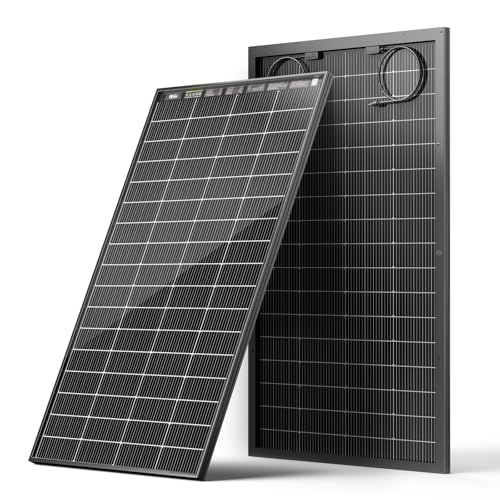
The HQST N-Type panel shaves off 6% of the frame size and 5% of the weight compared to standard P-Type 200W panels — dimensions of 50 x 30 x 1.2 inches and 20 pounds make it one of the most space-efficient 200W bifacial panels on the market. For RV owners working with limited roof real estate, that size reduction can mean fitting a 200W panel where a standard one would overhang or require bracket extensions.
True N-type cells with 16BB busbars deliver up to 25% conversion efficiency and a -0.29%/°C temperature coefficient, which minimizes power loss in hot summer conditions. The bifacial technology adds up to 12% extra output, and owners report hitting 900W total from a 4-panel array in Central Florida. The IP68 waterproofing and 5400Pa snow load rating ensure reliable operation in harsh weather.
The all-black anodized aluminum frame looks clean on residential roofs, and the panel is IP68 rated for water and dust ingress. On the downside, some users noted that the backside output could be higher if mounted closer to a reflective surface — the panel needs at least 6–12 inches of clearance for optimal rear gain.
Why it’s great
- 6% smaller and 5% lighter than typical 200W P-Type panels
- Grade A+ 16BB cells with EL test for zero microcracks
- Proven 900W output from a 4-panel ground array
Good to know
- Bifacial gain requires panel clearance for rear reflection
- Some units arrived with minor shipping scuffs
3. BougeRV 24V N-Type 16BB 200W Bifacial Solar Panel

The BougeRV 200W panel is designed specifically for 24V battery systems — its open-circuit voltage of 36.4V means a single panel can charge a 24V lithium battery without needing a second panel in series. This eliminates the current losses inherent in series/parallel connections, making it ideal for small off-grid systems where you want a single-panel solution for a 24V golf cart, boat, or cabin lighting setup.
N-type cells with 16BB busbars deliver 25% conversion efficiency and an 80% bifacial factor — the highest rear-side contribution ratio among the 200W panels tested. The dual-module parallel design ensures that if half the panel is shaded, the other half continues producing. Zomerviews from owners confirm 170W average output from a single panel, with peak numbers reaching near the front-side rating.
The panel measures 50.7 x 30.2 x 1.4 inches and weighs about 20 pounds, making it manageable for a single person to lift onto a roof. However, some owners reported condensation forming inside the glass during temperature swings, and customer service response times varied. The 10-year product support is decent, but the warranty resolution process required persistence for some buyers.
Why it’s great
- Single-panel 24V charging eliminates series/parallel losses
- 80% bifacial factor delivers strong rear-side contribution
- Dual-module anti-shade design maintains output in partial shade
Good to know
- Condensation reported in some units under temperature swings
- Customer support responsiveness inconsistent
4. JJN Bifacial 200 Watt Solar Panel

The JJN 200W bifacial panel features 16BB N-type cells that achieve up to 25% conversion efficiency, and the company offers a 30-year output warranty guaranteeing at least 88.9% of rated power — one of the strongest long-term performance commitments in this segment. For owners planning to live full-time off-grid for a decade or more, that warranty provides real peace of mind that the panel will continue performing into its third decade.
Real-world owners have reported impressive results: one user with eight panels on a flat camper roof saw 720W (90% of rated) in June and up to 1,060W from ten panels (92-106% of rated) by spring. The panels are heavier than the HQST option at 23.2 pounds, but the anodized aluminum frame and IP67 connectors provide robust weather sealing. The 53.7 x 30.3 inch dimensions mean it may not fit on very small van roofs without overhang.
The transparent backsheet allows 91.5% light transmission, which translates to strong rear-side gain even on overcast days. On the downside, a few units arrived with cosmetic micro-damage dots on some cells — while output wasn’t affected, it’s a quality-control inconsistency worth noting. The panel is also on the heavier side for a 200W module, which could be a consideration for roof loading limits.
Why it’s great
- 30-year output warranty at 88.9% — best long-term guarantee
- Proven 90-106% of rated output in real-world off-grid setups
- High 91.5% backsheet transmittance for strong rear gain
Good to know
- Heavier than some 200W competitors at 23.2 lbs
- Occasional cosmetic micro-damage on cells from shipping
5. SOLUPUP 200W Portable Bifacial Solar Panel
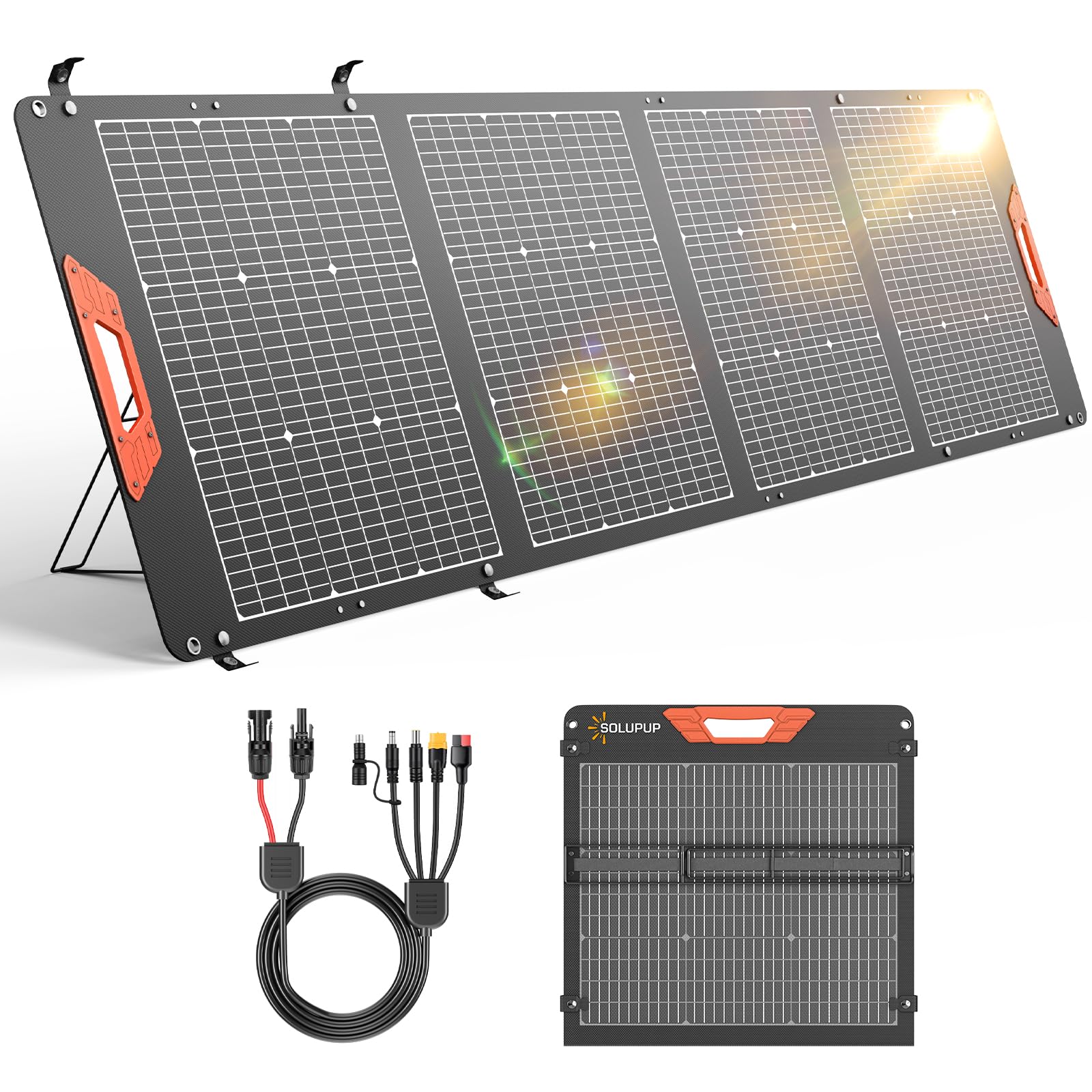
The SOLUPUP 200W takes a different approach — it’s a 4-section folding portable panel weighing just 12.9 pounds that packs down to 24.4 x 24 x 0.8 inches. This is the only foldable bifacial panel in the roundup, designed for campers who want portable power without the permanent mounting commitment. The ETFE coating provides superior impact and heat resistance compared to standard PET laminates.
The panel includes an MC4 to 5-in-1 DC cable that covers XT60, DC5521, DC7909, DC8020, and Anderson connectors, making it plug-and-play with most Jackery, EcoFlow, and Anker power stations. Owners have measured 205.9W peak output in mid-March — exceeding the 200W rating even with limited sun. The folding design with adjustable kickstand and hanging holes lets you angle it toward the sun without a separate frame.
On the downside, the 16 AWG wire gauge is thinner than the 12 AWG found on rigid panels, which introduces some voltage drop over longer cable runs. The kickstand legs are only three in number and can be unstable on uneven ground. It’s also not suitable for unattended use in windy conditions unless staked down or hung securely.
Why it’s great
- Ultra-light 12.9 lbs, folds to briefcase size for travel
- Versatile MC4 to 5-in-1 cable fits major power station brands
- Exceeded 200W rating in independent outdoor tests
Good to know
- 16 AWG wires — longer cable runs will incur voltage drop
- Kickstand is unstable on uneven or windy terrain
6. ECO-WORTHY 200 Watt Bifacial Solar Panel (2x100W)

The ECO-WORTHY kit comes as two 100W panels rather than a single 200W unit, which offers more flexibility in placement — you can mount them in series for 24V or parallel for 12V, or place them on separate roof surfaces. Each panel uses 16BB solar cells with a composite backsheet achieving 91.5% light transmittance, matching the transmission rate of much more expensive panels.
Owners report an average 16% power gain over monofacial panels in identical test setups, and the panels have reliably maintained charge on 50Ah LiFePO4 battery systems for months without issue. The pre-drilled holes and pre-assembled 2.95 ft cables simplify mounting, and the IP68 junction box handles rain without concern. Each 100W panel weighs 11.68 pounds, so the pair totals 23.36 pounds — competitive with single 200W modules.
The main trade-off is that the dual-panel design requires more cabling and connectors than a single panel, slightly increasing installation complexity and potential failure points. Some owners noted that the peak output of 154W total from the pair during ideal conditions is lower than the 200W combined rating, though 120W average was more typical for their setups. At this price point, the real-world output per dollar is still very strong.
Why it’s great
- Two 100W panels offer flexible series/parallel configuration
- 91.5% backsheet transmittance — matches high-end panels
- Proven 16% average power gain over monofacial in same space
Good to know
- Dual-panel design adds cable connections and complexity
- Real-world peak around 154W vs. 200W combined rating
7. Callsun 450W Bifacial Solar Panel 2-Pack
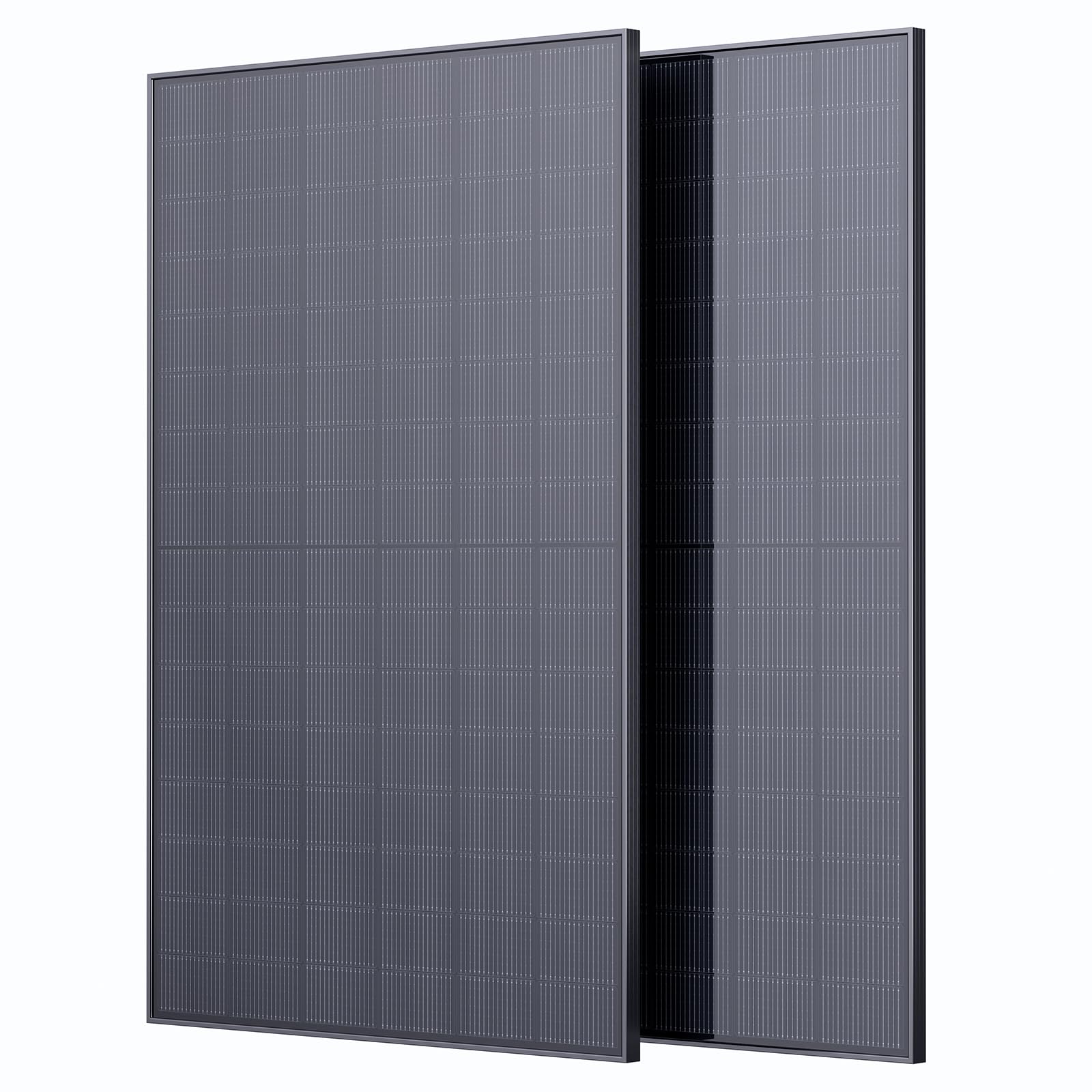
The Callsun 450W 2-pack bundles two high-wattage double-glass bifacial panels that deliver 25.4% conversion efficiency and a 14.97 amp current rating. The double-glass construction — using low-iron tempered glass on both the front and rear — provides superior durability compared to backsheet designs, especially in ground-mount installations where the rear side is exposed to physical impact from rocks, tools, or vegetation.
The dual-module parallel anti-shade architecture ensures that if one half of a panel is blocked by a chimney or tree line, the other half continues producing at full voltage. Owners have measured consistent overproduction — one user reported 420W peak from a single 450W panel, attributing the extra to bifacial gain from white gravel ground reflection. The 69.4 x 44.7 inch dimensions mean these are large panels; only suitable for roofs with ample clear space.
The 10-year technical support and 25-year output warranty (84.5% at year 25) provide solid long-term backing. The main consideration: these panels are physically imposing, and you’ll need a minimum of two people for safe roof installation. The weight is not specified per panel but double-glass 450W modules typically weigh 55–65 pounds each.
Why it’s great
- Double-glass construction for superior rear-side durability
- Consistently overproduces rated wattage in real-world tests
- 25.4% efficiency — among the highest in this class
Good to know
- Large panels require substantial roof space and two-person install
- Higher likelihood of shipping damage due to size and weight
8. Renogy 1180W Solar Panels (2x 590W N-Type Bifacial)
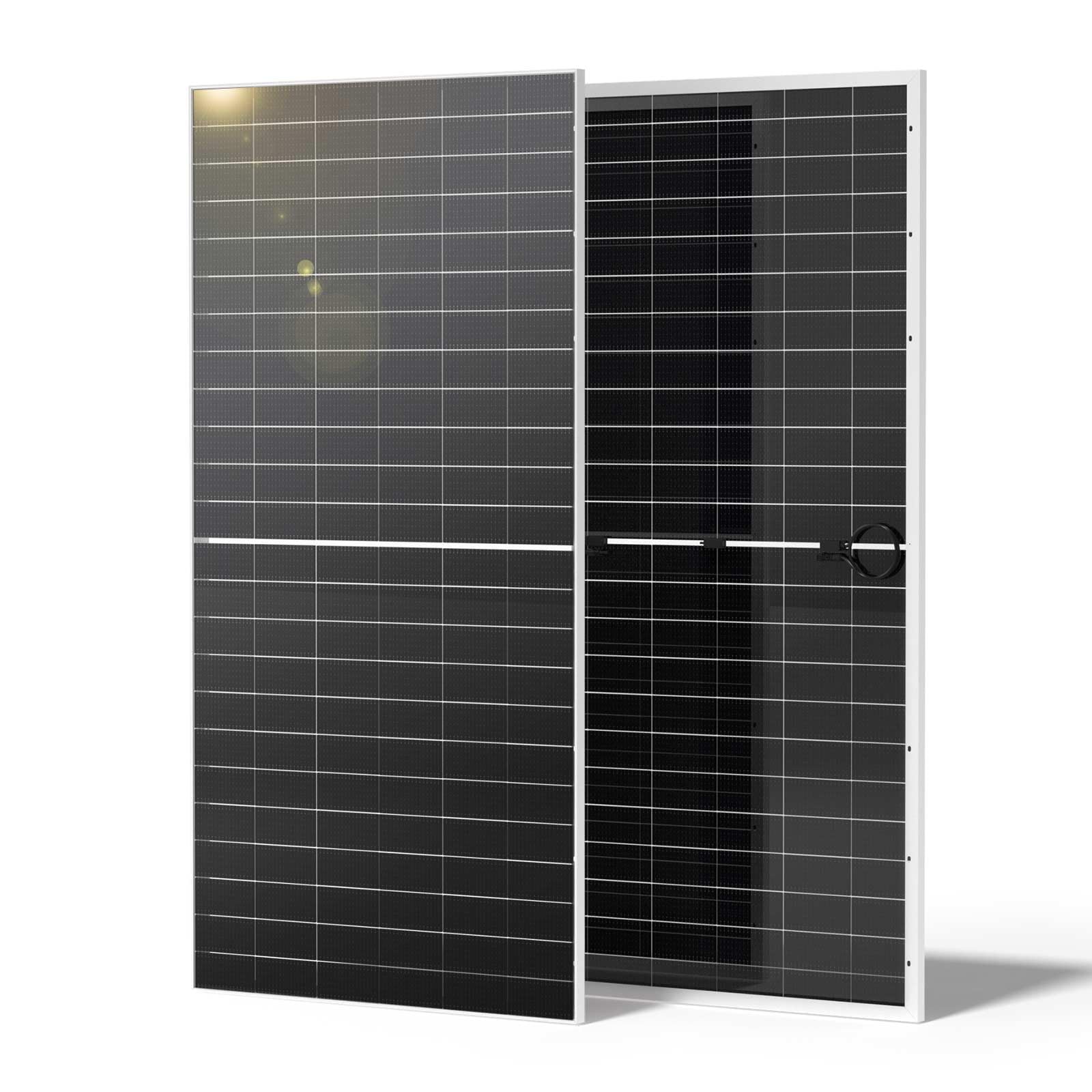
The Renogy 590W N-Type bifacial panels are the highest-wattage residential modules in this roundup, with each panel pushing 590W front-side rating. The two-pack delivers 1,180W total, making it a serious solution for whole-house off-grid or grid-tie systems. Renogy is a well-established brand in the solar market, and the panels feature A+ grade N-type cells with 16BB technology for 25% higher conversion efficiency than standard PERC modules.
Bifacial transparency enables 5-30% additional energy production, which owners have validated — one reported over 1,000W at noon on a 1,180W-rated array with 150 feet of 8 AWG cable, which accounts for some line loss. The panels are built to withstand 2400Pa wind loads and 5400Pa snow loads, with an IP68-rated junction box. The corrosion-resistant black aluminum frame is designed for extreme weather durability.
The biggest drawback is sheer size: each panel measures 89.7 x 44.6 x 1.4 inches and weighs roughly 58.4 pounds for the pair, meaning each panel is around 29 pounds — manageable for two people but too large for most RV roofs. Installation required four people in one owner’s experience due to the panel dimensions. The 30% residential clean energy tax credit eligibility is a welcome bonus for US homeowners.
Why it’s great
- Highest per-panel wattage at 590W — fewer panels needed per array
- Strong brand reputation with verified performance and support
- 5400Pa snow load and IP68 rating for extreme conditions
Good to know
- Massive panel size — not suitable for small roofs or vans
- AWS cable length required careful planning for some installations
9. SUNGOLDPOWER 16BB N-Type 560W Bifacial PERC 2-Pack
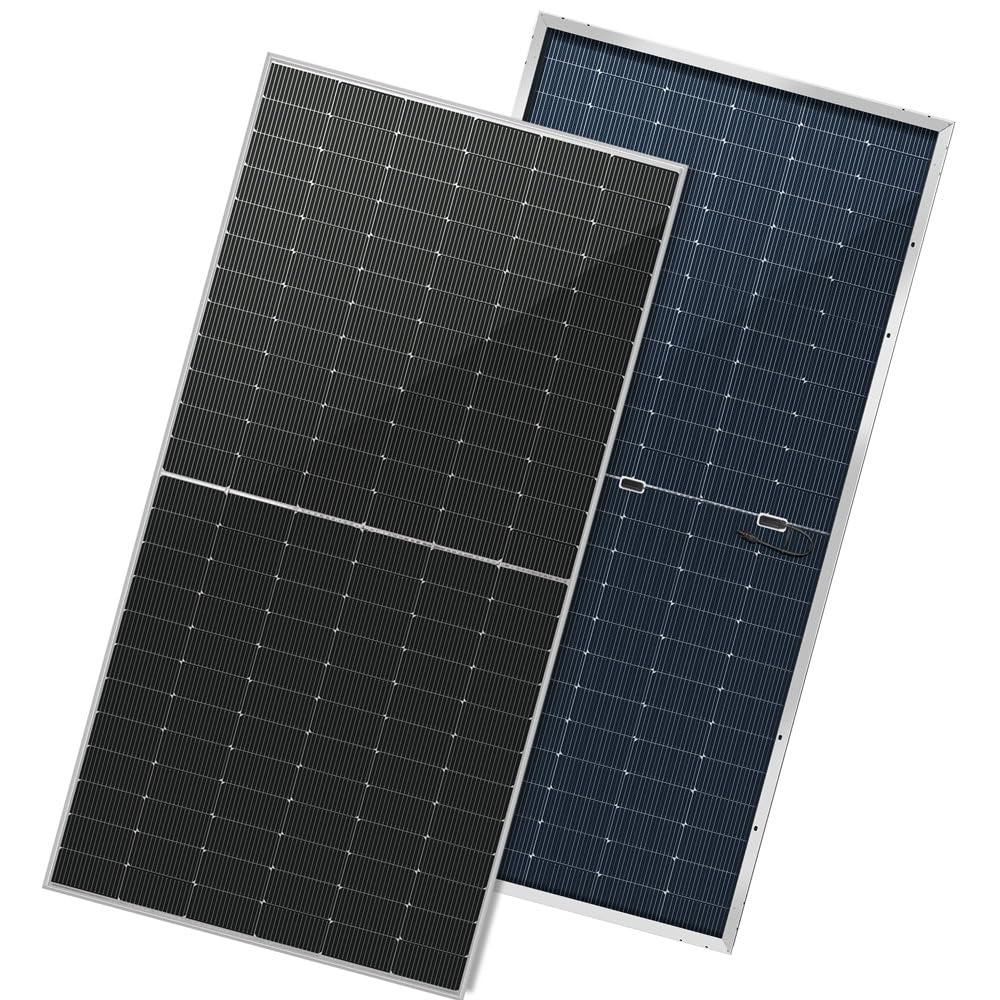
The SUNGOLDPOWER 560W 2-pack offers 1,120W total from two large-format bifacial panels that can generate up to 30% more energy than standard monofacial modules. The N-type 16BB cell architecture provides a 30-year operational life expectancy, and the high-transmission low-iron tempered glass allows strong rear-side capture even when mounted close to a non-reflective surface.
Owners have reported over 600 watts per panel in full sun — exceeding the 560W front-side rating due to bifacial gain — and the panels power entire off-grid homes with EcoFlow Pro Ultra and 10,000W inverters. The panels measure 89.8 x 44.6 x 1.4 inches and weigh 67.9 pounds each, making them the heaviest modules in the roundup. Proper structural support and a crew are required for installation.
The 30% residential clean energy tax credit eligibility applies, and the company includes MC4 connectors ready for standard inverters. The primary downside is the weight — each panel is heavier than half the reviewer, making solo installation impractical. Some owners noted that the lift gate delivery was too small for the pallet, requiring neighbor assistance to offload. The high price also makes this a serious investment best suited for owners committed to long-term off-grid living.
Why it’s great
- Up to 30% efficiency with bifacial gain — exceeds 600W per panel
- N-type 16BB cells for 30-year lifespan and low degradation
- Powers whole off-grid homes with large inverters
Good to know
- Extremely heavy at 67.9 lbs per panel — requires crew installation
- Delivery logistics can be challenging due to pallet size
FAQ
How much extra power do bifacial solar panels really produce compared to monofacial panels?
Can I install bifacial solar panels on a standard sloped residential roof with dark shingles?
Is the IP68 junction box rating important for bifacial panels specifically?
Final Thoughts: The Verdict
For most users, the bifacial solar panels winner is the Callsun 200W N-Type because its TwinCell anti-shade design delivers real-world overproduction that handheld testers confirm, and the IP68 build quality ensures decades of reliable service. If you need a compact panel that fits tight van roofs without overhang, grab the HQST 200W N-Type. And for a whole-house off-grid system demanding maximum per-panel wattage, nothing beats the Renogy 590W 2-pack.