
Our readers keep the lights on and the weekend projects moving. As an Amazon Associate, I earn from qualifying purchases.
Moving from a standard desktop printer to a big build volume model is a leap in capability, but it also introduces a new set of challenges: maintaining thermal stability across a massive plate, calibrating a gantry that spans over a foot, and ensuring the frame can handle the forces of high-speed motion without introducing artifacts. The right machine makes the difference between a pile of failed spaghetti and a finished, functional prototype that stands as a single piece.
I’m Rikta — the co-founder and writer behind FitlyFast. My research for this guide involved cross-referencing hundreds of verified buyer reports, analyzing the mechanical design trade-offs of CoreXY versus bed-slingers, and comparing the real-world reliability of heated chambers, auto-leveling systems, and extruder setups across the full price spectrum of large-format printers.
Whether you are printing cosplay armor, architectural models, or production jigs, choosing the right machine is the single most important decision you will make. This guide breaks down the top contenders to help you find the best big 3d printer for your specific workshop needs and budget.
How To Choose The Best Big 3D Printer
Choosing a large-format machine means balancing physical footprint, structural rigidity, and the thermal demands of printing big parts. The wrong choice can lead to warped bases, failed prints, and a machine that shakes itself apart at high speed.
Build Volume: Not All Inches Are Equal
The advertised cubic inches can be misleading. A 400x400x400mm cube is great for tall, wide models, but a printer with a very tall Z-axis but a small X/Y bed limits what you can actually create. Consider the specific dimensions of your largest intended project. A “big” printer should excel in the axis you need most — often the X and Y for functional parts or the Z for tall statues and vases.
Kinematics: CoreXY vs. Bed Slinger
For large formats, a CoreXY design is almost always superior because the print bed moves only on the Z-axis, keeping the heavy, large part stable. A traditional bed-slinger moves the bed forward and backward, which causes inertia and ringing at high speeds with large, heavy prints. CoreXY allows for faster, more accurate prints without shaking the model loose.
Enclosure and Heated Chamber
Printing large parts in materials like ABS, ASA, or Nylon requires a stable, warm environment to prevent warping and layer separation. A heated chamber (not just an enclosure) is a premium feature that actively maintains a specific ambient temperature, drastically increasing your success rate with engineering-grade filaments. For PLA-only users, a simple enclosure is often sufficient.
Quick Comparison
On smaller screens, swipe sideways to see the full table.
| Model | Category | Best For | Key Spec | Amazon |
|---|---|---|---|---|
| Anycubic Kobra 3 Max | Jumbo Budget | Monumental single-piece models | 420x420x500mm build volume | Amazon |
| QIDI Max4 Combo | Industrial Enclosed | Engineering-grade materials | 390x390x340mm / 65°C chamber | Amazon |
| Sovol T500 | Giant Open Frame | Massive PLA/PETG prints on a budget | 500x500x500mm build volume | Amazon |
| Creality Ender 5 Max | Print Farm Ready | Batch production and large prototypes | 400x400x400mm / 1000W bed | Amazon |
| Original Prusa CORE One | Premium Workhorse | Reliable, open-source, high-quality prints | 250x220x270mm / 55°C chamber | Amazon |
| Creality K2 Combo | Multi-Color Enclosed | Vibrant, multi-material models | 260x260x260mm / 16-color CFS | Amazon |
| QIDI Q2 | Mid-Range Enclosed | High-temp materials in a compact enclosure | 270x270x256mm / 65°C chamber | Amazon |
| FLASHFORGE Adventurer 5M Pro | All-in-One Speed | Ultra-fast prototyping and beginners | 220x220x220mm / 600mm/s speed | Amazon |
| ELEGOO Neptune 4 Plus | Value Speedster | Fast, large prints with Klipper firmware | 320x320x385mm / 500mm/s speed | Amazon |
| Longer LK5 Pro 3 | Stable Beginner | New users needing a large, stable frame | 300x300x400mm / triangular frame | Amazon |
| Bambu Lab P1S | Plug & Play Enclosed | Out-of-box reliability for all skill levels | 256x256x256mm / enclosed CoreXY | Amazon |
In‑Depth Reviews
1. Anycubic Kobra 3 Max

The Kobra 3 Max delivers a truly massive 420x420x500mm build volume at a price that undercuts almost everything else on the list. This machine is designed for a single purpose: printing oversized models without needing to split them into parts. The big footprint is complemented by a dual-axis core design and high-precision bearings that aim to keep the motion system stable despite the large gantry.
Its compatibility with the Anycubic ACE Pro enables multi-color printing, transforming it from a large-format workhorse into a creative powerhouse. The base model focuses on high-speed, single-material prints, but adding the ACE Pro opens up 4-color or even 8-color capability. The magnetic, washable build plate simplifies removing large prints, which is a significant convenience given the surface area involved.
Reports from users confirm that when it works, it produces fantastic results with great speed and detail. However, some units have exhibited reliability issues, including problems with the AI spaghetti detection and occasional head failures. This printer offers immense capability for the price but may require a tolerance for troubleshooting and a solid, sturdy table to handle its 47-pound frame.
Why it’s great
- Unmatched 420x420x500mm build volume for single-piece models.
- Fast 600mm/s printing with decent detail for its size.
- Multi-color upgrade path via the ACE Pro unit.
Good to know
- Some reports of intermittent reliability and QC issues.
- Requires significant physical desk space and a sturdy base.
- AI failure detection is not always reliable per user feedback.
2. QIDI Max4 Combo
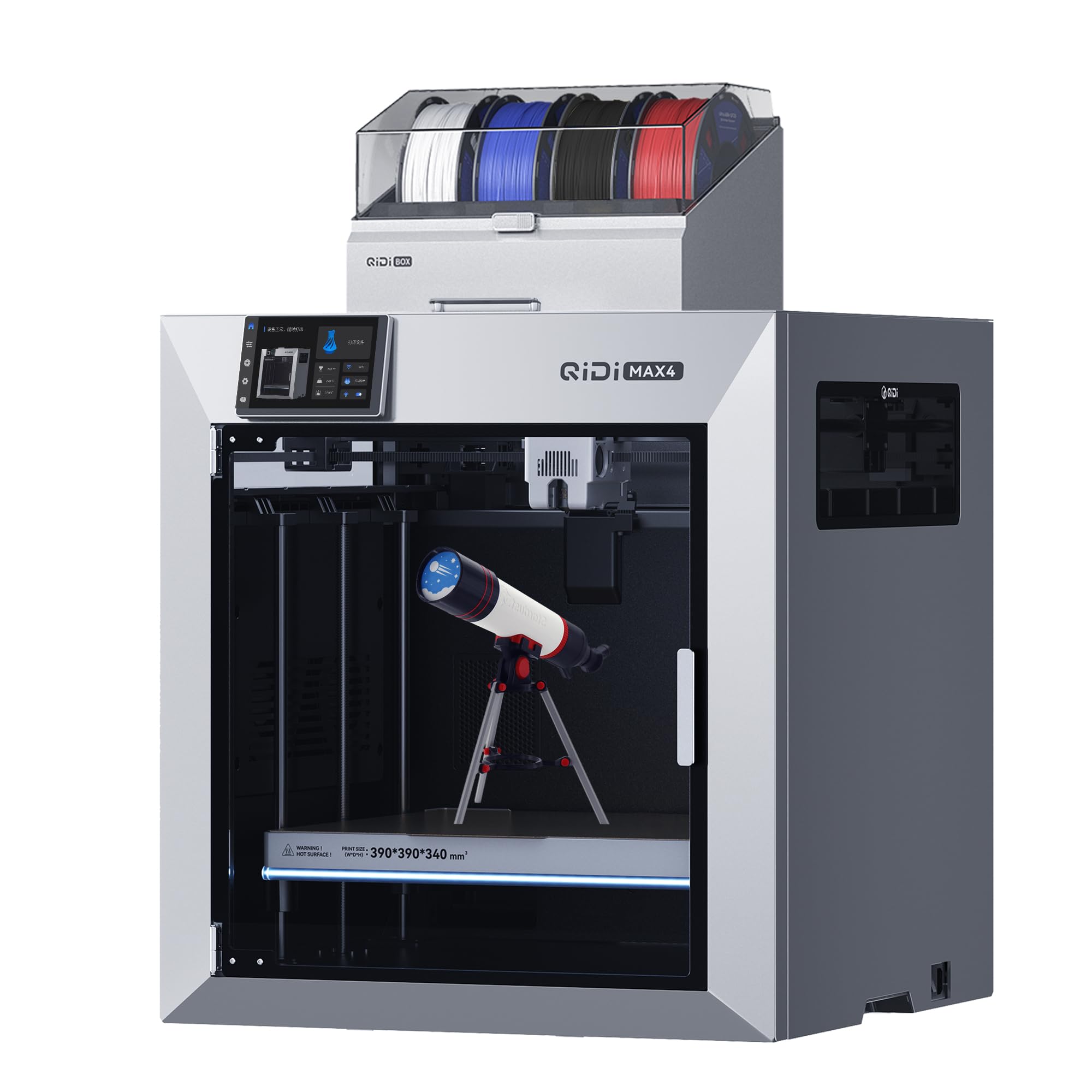
The QIDI Max4 Combo sits at the intersection of industrial capacity and user-friendly features. With a 390x390x340mm build volume and a powerful 65°C actively heated chamber, it is a serious tool for production environments that need to print reliably with engineering materials like ABS, PC, and nylon. The closed-loop motors on the X and Y axes maintain precision even during rapid 800mm/s prints.
Its 40mm³/s high-flow hotend is built for speed and material versatility, including carbon-fiber-reinforced nylon. The integrated AI camera monitors for failures, and the large touchscreen interface is surprisingly intuitive for such a feature-packed machine. The ability to add up to 16 colors via the QIDI BOX system makes it a formidable contender for both functional and aesthetic prints.
User feedback highlights excellent print quality with engineering filaments and a solid, premium feel. The main drawbacks include a long pre-print calibration process, some initial teething issues like a warped bed on a few units (quickly replaced by QIDI), and the Polar Cooler being a separate purchase. It is a heavy, 120-pound investment that pays off in reliability and material range.
Why it’s great
- Active 65°C heated chamber for warp-free engineering prints.
- High-flow hotend and closed-loop motors for speed and precision.
- Robust build quality with a right-to-repair philosophy.
Good to know
- Heavy and expensive, requires dedicated space.
- Pre-print calibration sequence is lengthy.
- Polar Cooler accessory is an additional purchase.
3. Sovol T500

The Sovol T500 offers the absolute largest cubic build volume on this list at a half-meter in each dimension. This open-frame giant is a popular choice for makers who need to create massive single-piece models or batch-produce parts that would be impossible on smaller beds. The Klipper-based 7-inch touchscreen makes navigating its size manageable, and the 300°C all-metal hotend handles a wide range of filaments.
Its industrial-grade linear rails on all axes are a key feature for maintaining stability across such a large print area. The direct drive extruder with a 6.5:1 gear ratio provides strong, consistent extrusion for tall models. With 95% pre-assembly, the T500 gets you to a 500mm print quickly, though its sheer weight requires a dedicated, reinforced table.
User reviews confirm that the print quality is excellent once the machine is properly tuned, but initial setup can involve significant troubleshooting. Common issues include Y-axis tensioner breakage and a gantry that needs manual adjustment. The open-frame design means it is best suited for PLA and PETG, as materials like ABS will struggle without a supplemental enclosure. It is a fantastic value for size but demands a hands-on owner.
Why it’s great
- Massive 500mm³ build volume at a surprisingly low cost.
- Klipper firmware with a high-resolution touchscreen for easy control.
- Linear rails across all XYZ axes for smooth motion.
Good to know
- Open frame design limits material choice without an enclosure.
- Several reports of initial QC issues needing user intervention.
- Large and heavy, requires significant dedicated space.
4. Creality Ender 5 Max
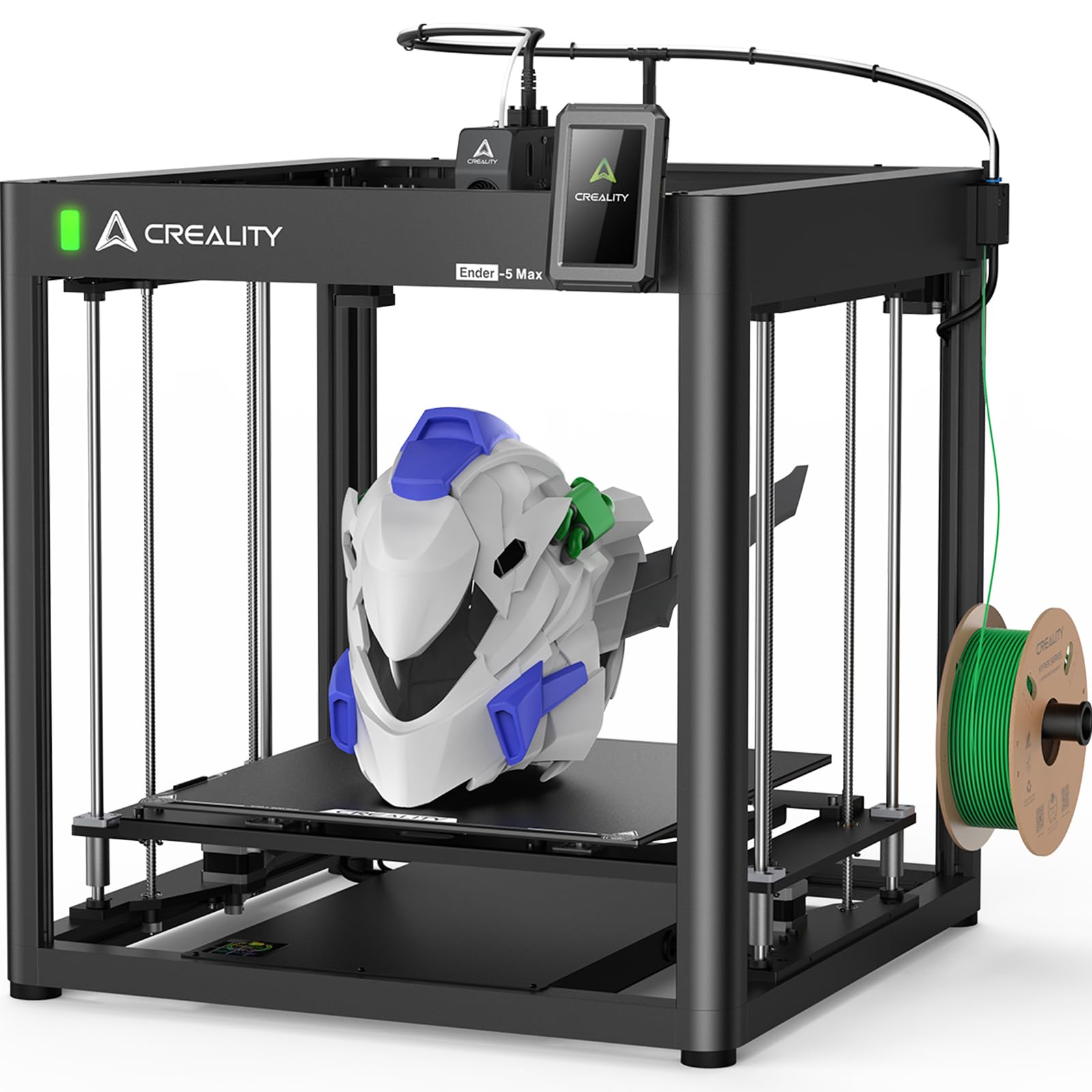
The Creality Ender 5 Max is built from the ground up for throughput. Its 400x400x400mm build volume and CoreXY motion system hit 700mm/s, making it one of the fastest large-format machines available. The 1000W rapid-heating bed and epoxy-coated build plate are engineered for efficiency, getting you from setup to production quickly and maintaining strong adhesion for large prints.
This printer targets print farms and studios that need to manage multiple units. WLAN multi-printer control allows a single operator to monitor and manage a bank of Ender 5 Max machines, and the tri-color status LEDs provide quick visual feedback from across a room. The fully automatic 64-point leveling system reduces the maintenance overhead that typically plagues large beds.
User sentiment is polarized. Many are thrilled with the speed and build volume, calling it “perfect to start your small business.” However, a vocal minority report severe issues with bed adhesion, violent shaking during prints, and failing components within the first few hours. Creality’s quality control remains inconsistent, making this a high-risk, high-reward proposition for those who need big, fast production.
Why it’s great
- Excellent 700mm/s speed for large production runs.
- WLAN multi-printer management for scaled operations.
- Fast 1000W heated bed reduces wait times significantly.
Good to know
- Inconsistent QC with some units experiencing early failures.
- Fixtures like enclosures and risers may be needed for best results.
- Hybrid vibration and adhesion issues reported by some users.
5. Original Prusa CORE One
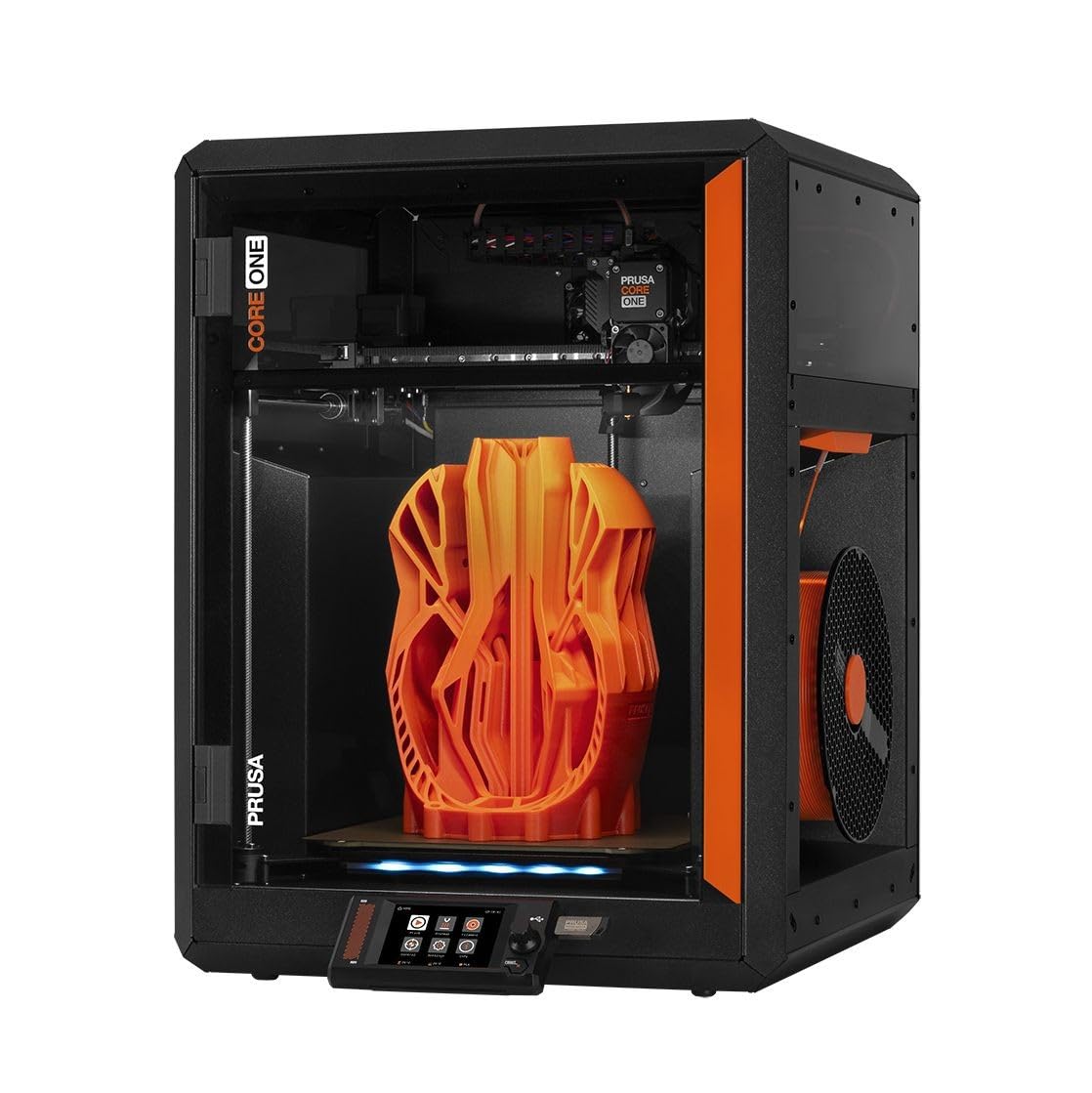
The Prusa CORE One is smaller than the other machines here, but it earns its place by offering the most refined, reliable, and repairable CoreXY experience. Its enclosed chamber with active temperature control up to 55°C allows it to print PLA, PETG, ASA, and polycarbonate with the door closed. The all-steel exoskeleton frame provides immense rigidity, eliminating vibration artifacts that plague cheaper frames.
Prusa’s philosophy of ‘made to last’ is evident in every component. The machine comes fully assembled and tested, with a 1kg spool of Prusament included to start printing immediately. Its open-source nature and modular design mean replacement parts and upgrades will be available for years, making it a true long-term investment rather than a disposable purchase.
Users praise its build quality, consistency, and the exceptional support from Prusa. The 250x220x270mm volume is sufficient for many functional parts, but it is not for those needing to print full helmets or large architectural models in one piece. The main complaint is the high price and slow speed relative to the newer, cheaper competition, but for reliability, it is the undisputed champion here.
Why it’s great
- Unmatched build quality and long-term reliability.
- Active 55°C heated chamber for advanced materials.
- Fully open-source and built for easy repair and upgrades.
Good to know
- Highest cost and smallest build volume in this comparison.
- Slow compared to modern high-speed printers.
- Multi-color add-on is delayed and expensive.
6. Creality K2 Combo
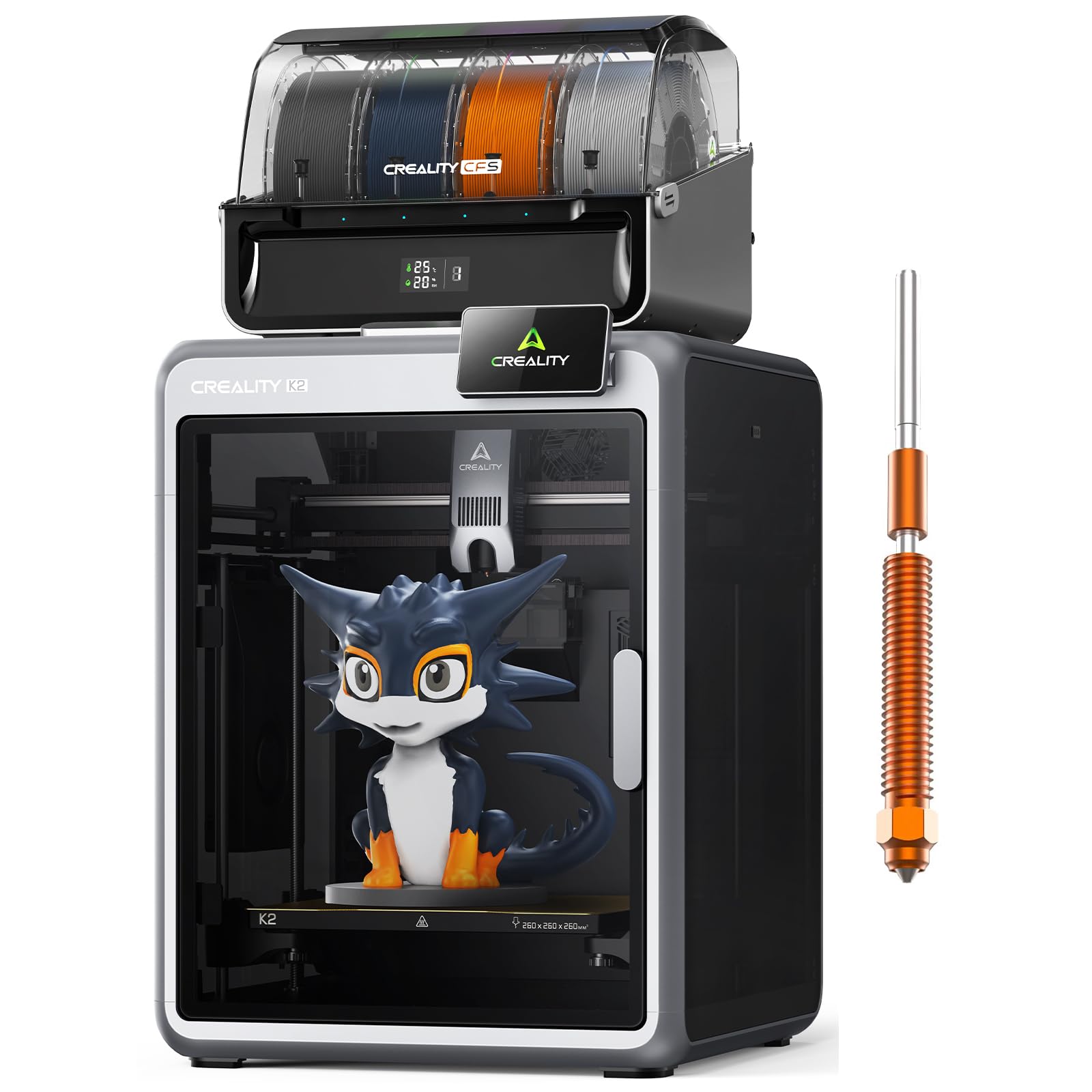
The Creality K2 Combo (A) is a premium, enclosed machine designed around its Color Filament System (CFS). With a build volume of 260mm³, it is not the largest printer, but its ability to handle up to 16 colors via four CFS units makes it a powerful tool for creating multi-material prototypes and vibrant display models without post-processing. The RFID system automatically reads filament presets, simplifying color management.
Its step-servo motors and all-aluminum alloy frame provide a rigid foundation for fast 600mm/s printing. The smart auto-leveling system only probes the relevant area for your print, speeding up the calibration process. The included AI camera monitors for failures and can capture time-lapses, adding a layer of polish to the user experience.
Early adopters report excellent print quality and a setup that is much easier than older Creality machines, though not quite as smooth as competitors like Bambu Lab. The main headaches include a lack of 5GHz Wi-Fi support, some CFS slot errors, and the fact that it runs significantly cheaper on Creality’s own store. For those who value multicolor functionality and a solid enclosure, the K2 Combo is a compelling, fast, and quiet machine.
Why it’s great
- Seamless 16-color multi-material printing via CFS.
- Quiet operation and solid all-metal frame.
- Smart RFID filament and auto-leveling systems.
Good to know
- No 5GHz Wi-Fi support for app/camera use.
- Some reports of CFS feeding and extruder clog issues.
- Often cheaper to buy directly from Creality’s website.
7. QIDI Q2
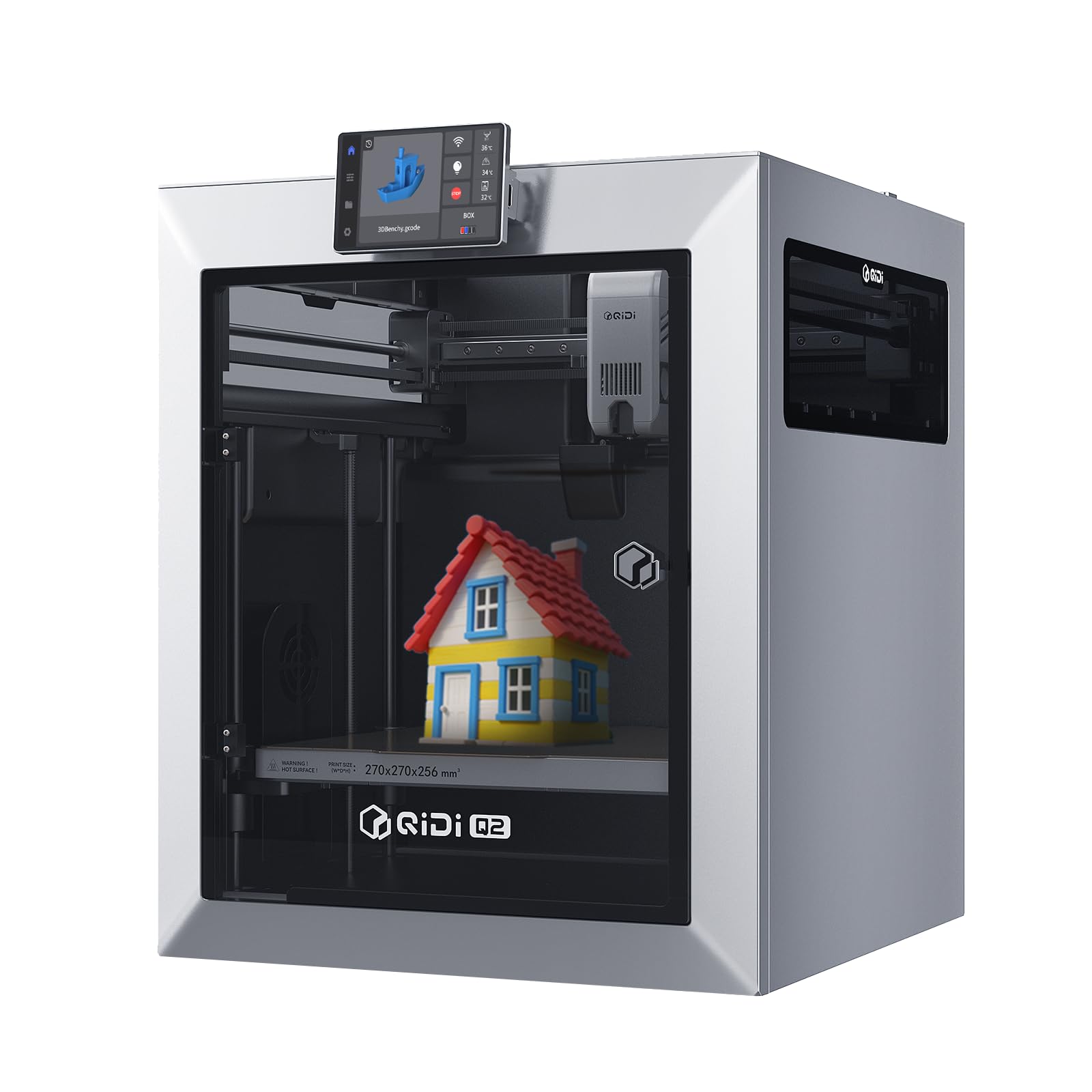
The QIDI Q2 is a powerful enclosed printer that bridges the gap between entry-level and professional equipment. Its 65°C actively heated chamber and a 370°C hotend allow it to handle demanding materials like PPA and carbon-fiber composites that would defeat most mid-range machines. The build volume of 270x270x256mm is ample for most functional prototypes and hobbyist projects.
QIDI’s use of the nozzle itself as the leveling sensor is a clever design choice that ensures perfect first layers regardless of bed surface variations. The upgraded 1.5GT synchronous belt reduces vibration artifacts, leading to smooth surface finishes. The triple filtration system (G3 pre-filter, H12 HEPA, carbon) makes it safer for indoor use than many other enclosed printers.
Most users are blown away by the value and capability of the Q2, calling it “the best bang for the buck.” However, a minority report frustrating experiences with the half-baked firmware, unreliable network connectivity, and a confusing user interface that mixes English and Mandarin. The AI detection is also unreliable. When it works, it is a fantastic machine for engineering materials; when it doesn’t, the troubleshooting is painful.
Why it’s great
- Active 65°C chamber and 370°C nozzle for exotic filaments.
- Excellent triple filtration system for safer indoor use.
- Clever nozzle-based auto-leveling for perfect first layers.
Good to know
- Firmware and UI are buggy and not user-friendly.
- Network connectivity is unreliable for some users.
- AI spaghetti detection is prone to false positives.
8. FLASHFORGE Adventurer 5M Pro

The FLASHFORGE Adventurer 5M Pro is a compact, enclosed CoreXY machine that prioritizes speed and ease of use. Its 220mm³ build volume is the smallest in this guide, but the 600mm/s travel speed and rapid 35-second nozzle heat time make it an exceptional choice for rapid prototyping. The all-metal frame and CoreXY structure maintain stability at these high velocities, delivering impressive detail.
Its key differentiator is the auto-printing system: the pressure-sensing auto-leveling eliminates the need for manual Z-axis calibration or print rafts. The dual-sided PEI platform allows for tool-less model removal, which is a significant time saver. It also includes a HEPA and carbon filter for reduced fumes, supporting materials like PLA, ABS, PETG, and TPU.
User feedback is mixed but leans positive for beginners. The machine is praised for its fast setup, intuitive app (Flash Maker), and good print quality. However, reliability is a concern, with reports of first units arriving damaged or failing after a few prints. FlashForge’s customer service is generally responsive, offering refunds or replacements, but the inconsistency is a drawback for a machine that markets itself as “out-of-box” perfect.
Why it’s great
- Fast 600mm/s printing with a 35-second heat-up time.
- Tool-less model removal and no-raft auto-leveling.
- Compact, enclosed design with HEPA/carbon filtration.
Good to know
- Small build volume limits large-scale projects.
- Some units experience early failures and calibration errors.
- Software compatibility issues with newer macOS versions.
9. ELEGOO Neptune 4 Plus

The ELEGOO Neptune 4 Plus is a focused speed machine, leveraging Klipper firmware to achieve a default 250mm/s (up to 500mm/s) printing speed with 12,000mm/s² acceleration. Its 320x320x385mm build volume provides a large canvas without the massive footprint of some alternatives. The dual-gear direct drive extruder with a 5.2:1 reduction ratio provides powerful extrusion for a wide range of materials.
ELEGOO includes input shaping and pressure advance, along with acceleration sensors on the X and Y axes, to maintain accuracy at high speeds. The 300°C hotend, 60W ceramic heater, and PID auto-calibration ensure efficient melting for filaments like PLA, PETG, ABS, TPU, and nylon. Multiple connectivity options (WiFi, USB, LAN) make it easy to fit into a modern workflow.
Reviews are polarized. Many users report excellent performance, easy assembly, and fantastic print accuracy right out of the box. Others describe it as a nightmare, with units failing shortly after purchase and miserable support from China. The manual bed leveling process is more involved than some competitors, and it is definitely not a machine for beginners seeking a completely hands-off experience. For a tinkerer seeking value and speed, it is a great deal.
Why it’s great
- Excellent speed via Klipper firmware with input shaping.
- Solid 320x320x385mm build volume for large projects.
- Powerful direct drive extruder with a 5.2:1 reduction ratio.
Good to know
- Not beginner-friendly; requires tuning for a good first layer.
- Customer support is based in China with long response times.
- Bed leveling and Z-offset can be a frequent chore.
10. Longer LK5 Pro 3

The Longer LK5 Pro 3 is a budget-friendly workhouse with a 300x300x400mm build volume and a unique triangular frame designed to minimize resonance and maintain precision. It is 90% pre-assembled, making it a great entry point for beginners looking for a large printer without a huge price tag. The open-source motherboard and TMC2209 drivers ensure quiet operation and the potential for customization.
It supports filament depletion detection and power-resume printing, features typically reserved for more expensive machines. The silicon carbide lattice glass bed provides strong adhesion and uniform heating. The 180mm/s printing speed is modest compared to modern CoreXY machines, but its reliability with materials like PLA, PETG, ABS, and TPU is praised by many users who have put hundreds of hours on the machine.
User reviews highlight its sturdy construction and excellent print quality for functional parts. However, the manual bed leveling system is universally described as archaic. Many suggest upgrading to an automatic leveling sensor, but this requires a complex firmware modification that can be risky. The included software can also be problematic, with some users reporting incompatible or buggy initial prints. It is an excellent foundation for a hobbyist who enjoys the building and tuning aspect of 3D printing.
Why it’s great
- Very stable triangular frame for large, tall prints.
- Open-source firmware and TMC2209 drivers for quiet, customizable operation.
- Filament runout and power-resume features included.
Good to know
- Manual bed leveling is tedious and imprecise.
- Slower 180mm/s speed compared to modern rivals.
- Software quality control issues reported with some units.
11. Bambu Lab P1S

The Bambu Lab P1S is the current king of out-of-box reliability and ease of use. Its fully enclosed CoreXY design and 256mm³ build volume provide a spacious, controlled environment for consistent prints. The 500mm/s speed and 20,000mm/s² acceleration mean it is not just reliable but also very fast, burying older, more expensive printers in both speed and print quality.
Its automatic bed leveling and 15-minute setup time make it a joy for beginners, while experienced users will appreciate its ability to handle PLA, PETG, ABS, ASA, and even flexible TPU with minimal tweaking. The option to connect an AMS enables multi-color printing, expanding its versatility. The user experience is streamlined to the point that many users report producing high-quality prints in under 5 minutes from unboxing.
Reviews overwhelmingly praise its build quality, speed, and the polished Bambu Studio software. It is the undisputed champion for those who want a machine that “just works.” The downsides are its smaller build volume compared to others on this list, the cost of the AMS for multi-color, and a closed ecosystem that has caused some concerns about future support and repairability. For most people, this is the perfect big 3D printer.
Why it’s great
- Unmatched out-of-box reliability and ease of use.
- Fast 500mm/s printing with excellent consistency.
- Excellent print quality across a wide range of materials.
Good to know
- Build volume (256mm³) is not the largest.
- Proprietary ecosystem may raise future repairability concerns.
- Multi-color AMS is a significant additional expense.
FAQ
Do I always need a heated chamber for a big 3D printer?
What is the best kinematic system for a large-format printer?
Can a big 3D printer use a standard wall outlet?
Is auto bed leveling necessary on a large printer?
Final Thoughts: The Verdict
For most users, the big 3d printer winner is the Bambu Lab P1S because it delivers a perfect balance of build volume, speed, and out-of-box reliability that no other machine in this list can match. If you need the absolute largest single-piece prints and are comfortable with some tuning, the Anycubic Kobra 3 Max offers the most area for your investment. And for professionals who need to print with engineering-grade materials and value long-term repairability, the Original Prusa CORE One is the most trustworthy choice.