
Our readers keep the lights on and the weekend projects moving. As an Amazon Associate, I earn from qualifying purchases.
Finding a bike that fits a seven-year-old without wobbles or hand fatigue is harder than it looks. Most models either skimp on brake leverage for small hands or use heavy steel that makes cornering a chore. The right bike for this age balances 20-inch wheels with a low standover height so the rider can plant both feet confidently at stops.
I’m Rikta — the co-founder and writer behind FitlyFast. For this guide I analyzed dozens of detailed spec sheets, cross-referenced inseam recommendations with real customer feedback on assembly ease, and compared drivetrain types, brake styles, and frame geometry to find the options that actually match a growing child’s proportions.
The goal is to deliver a clear, spec‑driven answer for the best bike for 7 year old without repeating what a department‑store tag already tells you.
How To Choose The Best Bike For 7 Year Old
A seven‑year‑old sits at a transition point — their legs are long enough for 20‑inch wheels but their hands are still too small for adult‑sized brake levers. Picking the right bike means matching three variables: wheel size, standover height, and brake reach. Ignore the age tag on the box and start with inseam.
Inseam Over Age — The Only Reliable Fit Check
A child who is 48 inches tall but has a 21‑inch inseam needs a different saddle height than another child of the same height with a 19‑inch inseam. Measure from the floor to the crotch while the child stands barefoot in flat‑soled shoes. A 20‑inch bike works best when the inseam is between 20 and 26 inches and the child can sit on the saddle with both feet flat on the ground.
Brake Style — Coaster, Hand, or Both
Coaster brakes (pedal backward to stop) are intuitive for beginners but teach a braking reflex that does not transfer to adult bikes. Hand brakes are the better long‑term skill, but the lever must have a short reach — otherwise the child cannot squeeze hard enough to stop. A bike with both a coaster brake and a front hand brake gives parents the option to let the child start with the coaster and slowly transition to the hand lever.
Frame Material and Weight
High‑tensile steel frames are durable and inexpensive but add several pounds that a seven‑year‑old must accelerate and steer. Carbon steel is slightly lighter and absorbs road vibration better, making longer rides less fatiguing. For a child who will carry their own bike up porch steps or over curbs, every pound matters.
Quick Comparison
On smaller screens, swipe sideways to see the full table.
| Model | Category | Best For | Key Spec | Amazon |
|---|---|---|---|---|
| Schwinn Firehawk | Multi-Brake | Building hand‑brake confidence | 20″ wheel, coaster + caliper brakes | Amazon |
| Glerc Mountain Bike | 21‑Speed | Off‑road and varied terrain | 20″ wheel, disc brakes, suspension fork | Amazon |
| JOYSTAR NEO | Training Wheels | First‑time riders needing stability | 20″ wheel, coaster + front caliper | Amazon |
| 67i Boys BMX | BMX Stunt | Learning tricks and flatland riding | 20″ wheel, U‑brakes, 4 pegs | Amazon |
| AVASTA Bilbo | Retro Steel | Neighborhood cruising with style | 18″ wheel, V‑brakes, quick‑release seat | Amazon |
| KORIMEFA BMX | Freestyle | Entry‑level park and street tricks | 18″ / 20″ wheel, rear caliper brake | Amazon |
| ONLYGU 18/20 Inch | Disc Brake | Transition from beginner to intermediate | 18″ / 20″ wheel, mechanical disc brakes | Amazon |
| WEIZE Kids Bike | Coaster Brake | Budget‑friendly beginner rides | 20″ wheel, coaster brake, training wheels | Amazon |
| Glerc Beach Cruiser | City Cruiser | Stylish paved‑path and hill cruising | 24″ wheel, 6‑speed, wicker basket | Amazon |
In‑Depth Reviews
1. Schwinn Firehawk
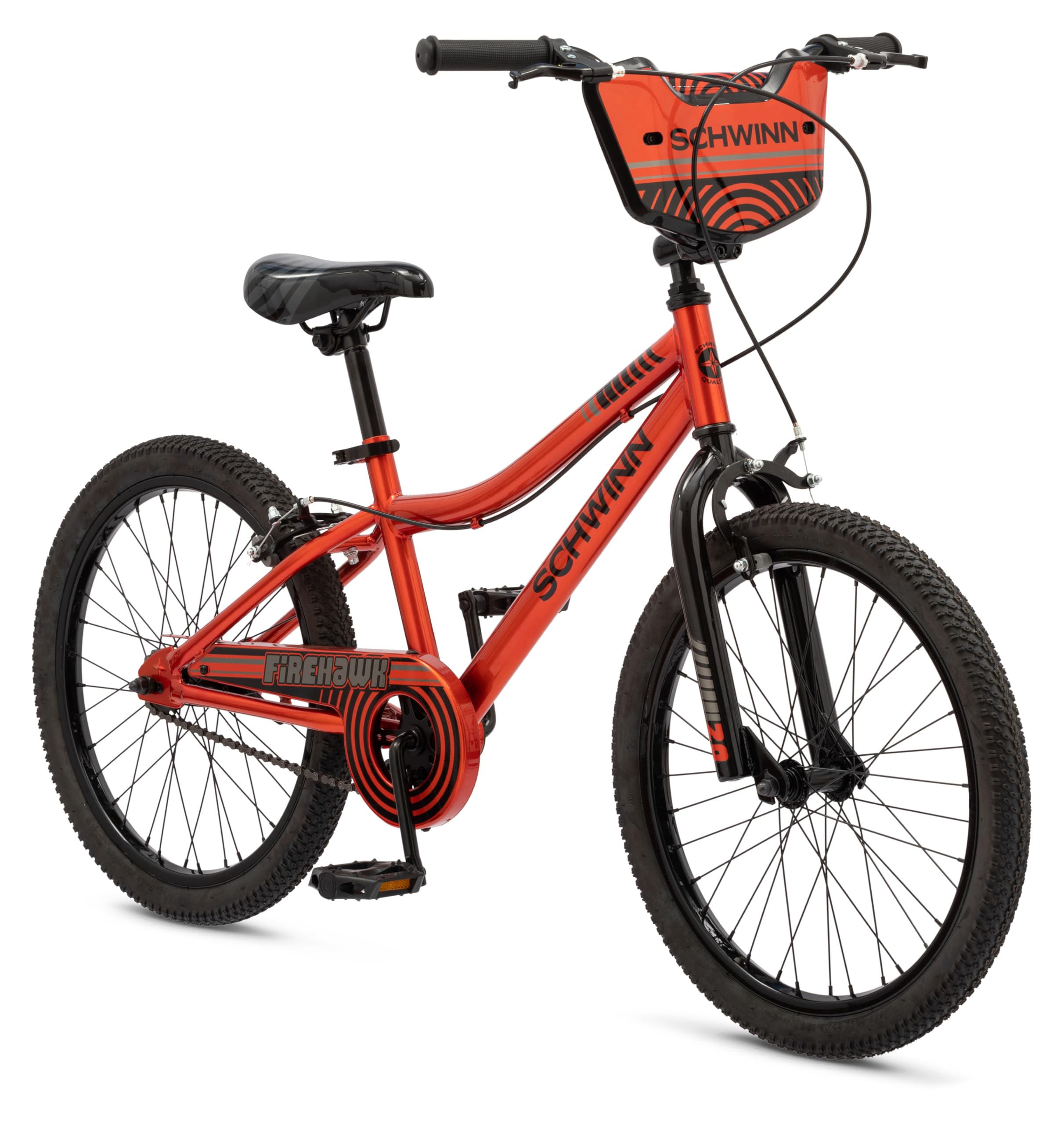
The Schwinn Firehawk uses a SmartStart geometry designed specifically for children’s proportions — forward‑positioned pedals and a low standover height make it easier for a seven‑year‑old to mount, dismount, and stop without tipping. The 20‑inch wheels pair with a single‑speed drivetrain so there is no gear confusion, and the combination of a rear coaster brake plus front and rear caliper brakes lets kids learn hand‑braking at their own pace.
Customer feedback highlights the tool‑free adjustable seat as a standout: parents can raise the saddle quickly as the child grows without hunting for an Allen key. The alloy steel frame keeps weight manageable, and the BMX‑style appearance appeals to children who want a bike that looks like what older siblings ride. Assembly takes about 30 minutes and the included manual is clearly illustrated.
The caliper brakes require occasional tension adjustments after heavy use, but the stopping power is reliable once dialed in. For a seven‑year‑old who is ready to move beyond training wheels but still needs the safety net of a coaster brake, this is the most cohesive package available.
Why it’s great
- SmartStart geometry matches children’s body proportions
- Tool‑free seat adjustment simplifies growth adaptation
- Dual brake system (coaster + caliper) teaches hand‑brake skills
Good to know
- Caliper brakes need periodic cable tension tightening
- Some users report screws loosening after the first few rides
2. Glerc 20 Inch Kids Mountain Bike
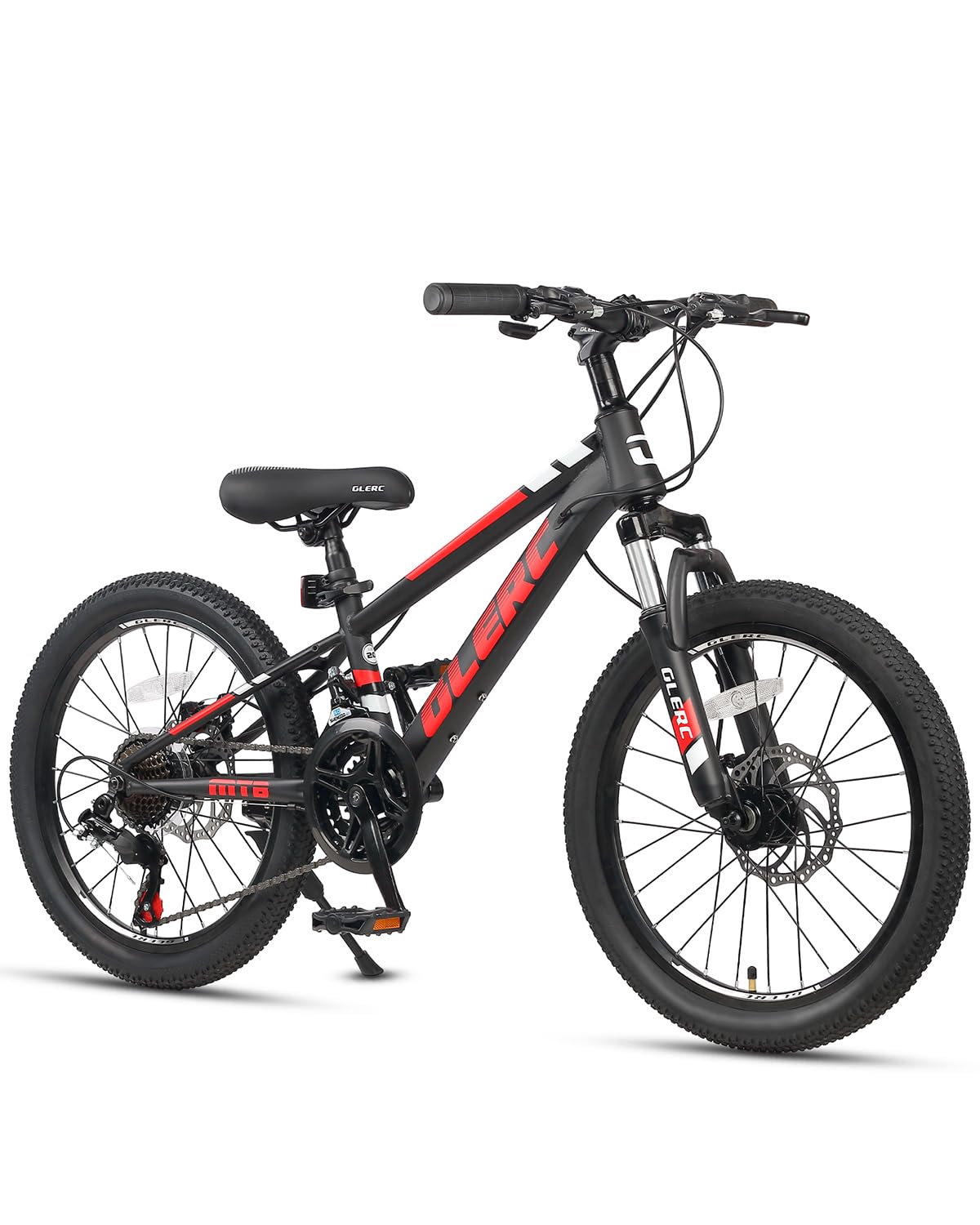
For a seven‑year‑old who wants to follow older siblings onto gravel paths and packed dirt, the Glerc mountain bike delivers a genuine 21‑speed drivetrain with trigger shifters that small hands can operate without stretching. The high‑carbon steel frame provides a solid platform, and the front suspension fork absorbs enough vibration to keep the ride comfortable on uneven surfaces.
The disc brakes are a meaningful upgrade over rim brakes for this category. They maintain stopping power in wet conditions and require less hand force than a typical caliper setup, which matters when a child’s grip strength is still developing. The 20‑inch version fits riders 45 to 55 inches tall with an inseam of 21 to 25 inches, covering the upper end of the seven‑year‑old range.
Parents should note that this bike weighs 30 pounds — heavier than single‑speed alternatives. The weight is noticeable when carrying it up stairs, but on the trail the stability inspires confidence. Assembly is straightforward, though tuning the derailleur out of the box may require a quick adjustment for clean shifting.
Why it’s great
- 21‑speed drivetrain with child‑friendly trigger shifters
- Disc brakes offer reliable stopping with less hand effort
- Front suspension fork smooths out bumpy terrain
Good to know
- 30‑lb weight is heavy for a 7‑year‑old to carry
- Derailleur may need minor tuning post‑assembly
3. JOYSTAR NEO 20 Inch

The JOYSTAR NEO is built for the parent who wants training wheels included — but also wants a bike that rides well after the stabilizers come off. The 2.4‑inch wide tires provide exceptional grip on grass and loose gravel, and the high‑tensile steel frame has held up well in customer reports over a full year of daily use. The rear coaster brake combined with a front caliper hand brake mirrors the dual‑brake approach that works best for beginners.
Customers consistently praise the easy assembly and the stable feel of the training wheels, which are wider than many aftermarket stabilizers. The adjustable saddle can be raised with a tool, allowing the bike to adapt as the child grows. The 20‑inch wheel size fits riders 44 to 52 inches tall, which covers the average seven‑year‑old with room to spare.
At 26 pounds the NEO is lighter than the Glerc mountain bike but still on the heavier side for a single‑speed. Parents who have dealt with stuck coaster brakes on cheaper bikes will appreciate that the NEO’s coaster mechanism engages smoothly without grabbing.
Why it’s great
- Includes sturdy training wheels ideal for learning balance
- Wide 2.4‑inch tires provide stable grip on loose surfaces
- Coaster + front caliper brakes give beginner‑friendly stopping
Good to know
- 26‑lb weight is noticeable for smaller riders
- Some customers report front wheel slight warping during shipping
4. 67i Boys BMX Bike
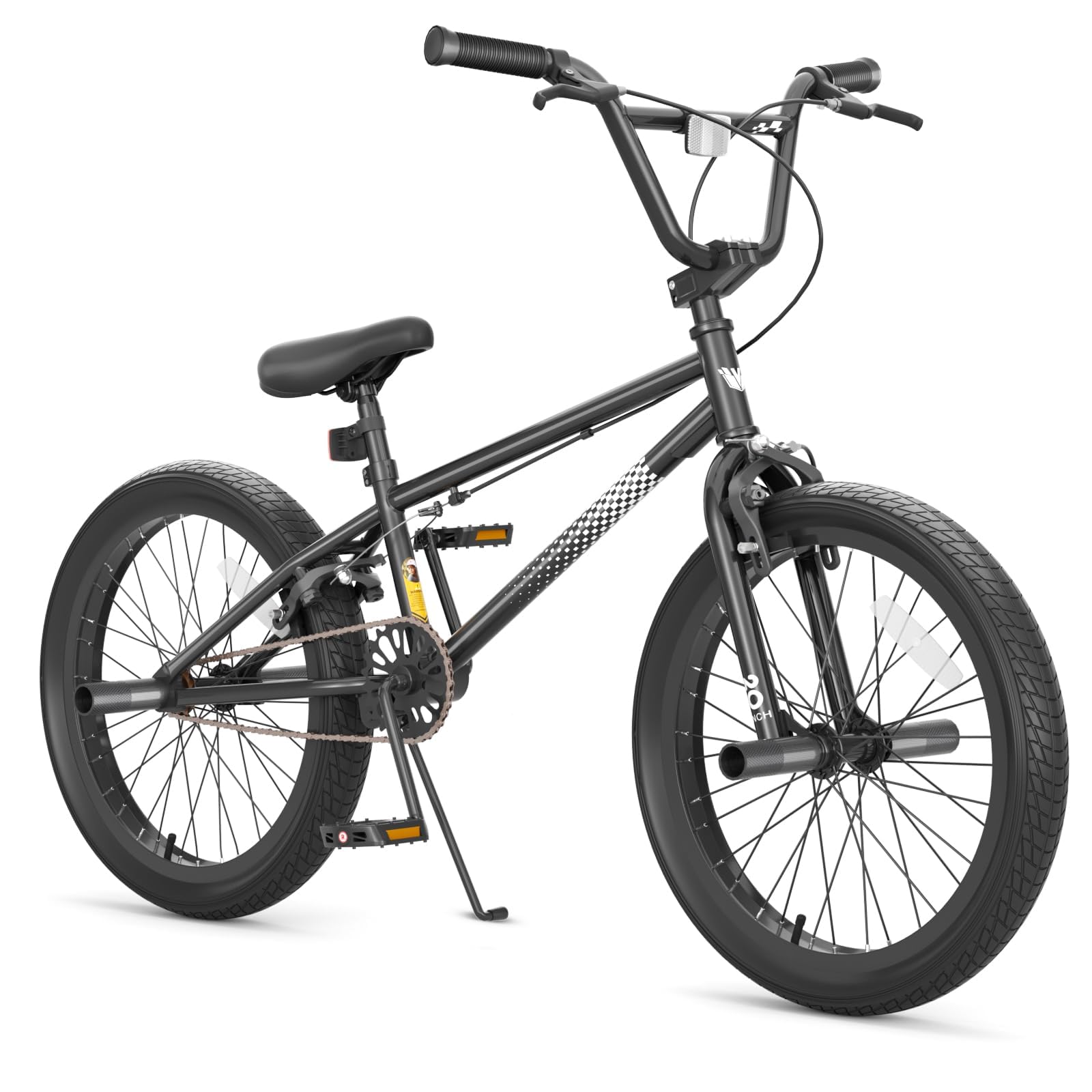
The 67i BMX Bike is one of the few options in this category that includes four pegs out of the box, making it a genuine introduction to freestyle riding for a seven‑year‑old. The front and rear U‑brakes provide strong, predictable stopping power without the complexity of disc rotors, and the 2.09‑inch tires are wide enough for park and street use. The iron frame is robust enough to handle small drops and curb hops.
Customer reviews consistently mention that the bike fits a seven‑year‑old well — the compact frame geometry keeps the top tube low, and the single‑speed drivetrain with a 36‑tooth chainring delivers smooth acceleration. The absence of a coaster brake is actually a plus for this model because it forces the rider to rely on hand brakes from day one, which builds the correct reflex for larger BMX bikes later.
The iron frame adds heft, so the 67i is not the best choice for a child who is still wobbly on two wheels. But for a confident seven‑year‑old who wants to learn bunny hops and flatland tricks, this bike offers the most stunt‑ready spec sheet at its price point.
Why it’s great
- Includes four BMX pegs for stunt progression
- U‑brakes deliver strong, simple stopping power
- Compact frame with low top tube fits 7‑year‑olds well
Good to know
- Iron frame adds noticeable weight
- No coaster brake — hand‑brake skill required
5. AVASTA Bilbo 18 Inch
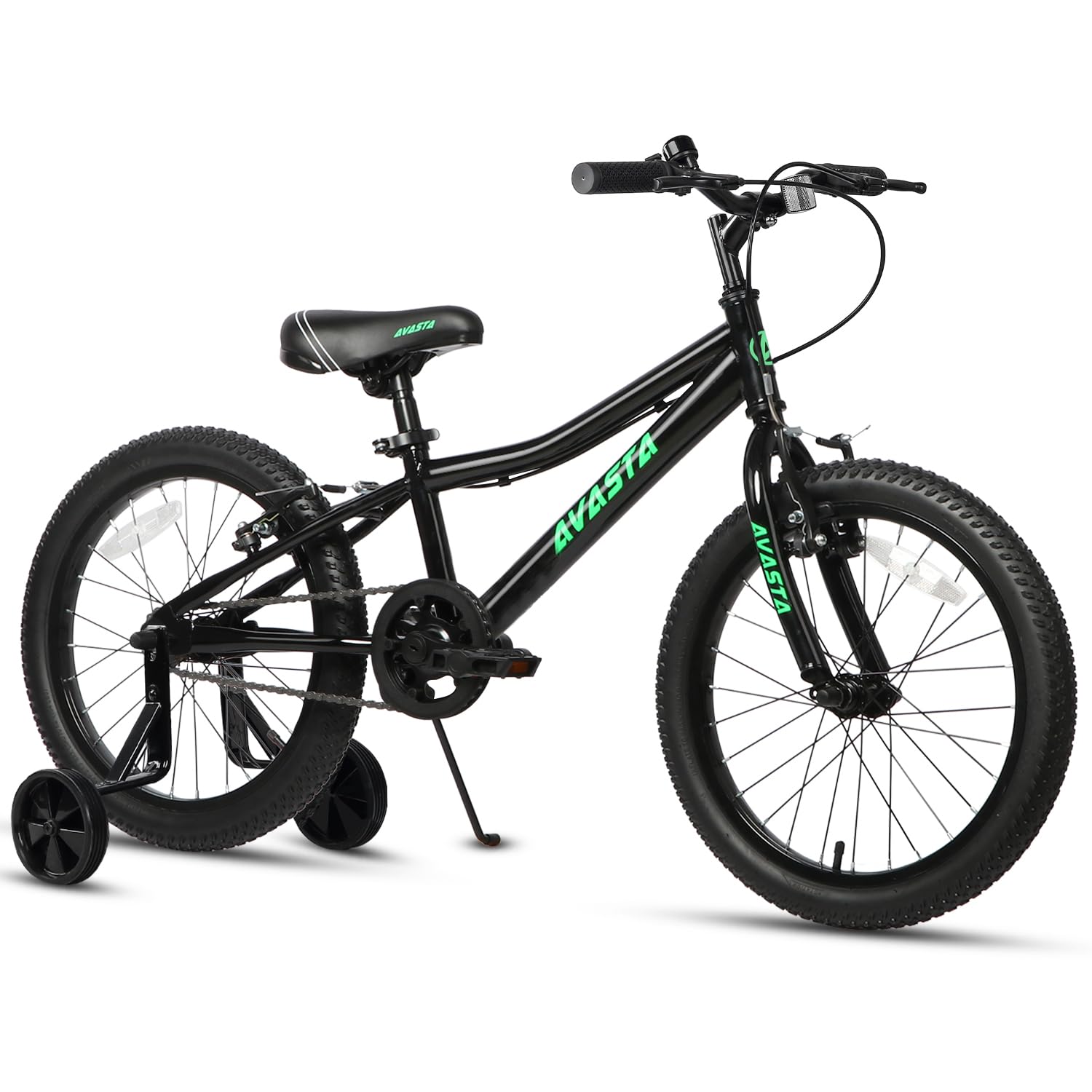
The AVASTA Bilbo stands out for its retro step‑over steel frame and dual V‑brakes, which provide smooth, modulated stopping power for smaller hands. The 18‑inch wheel size fits children on the shorter side of the seven‑year‑old range — riders with an inseam of approximately 18 to 22 inches will be able to sit comfortably with both feet planted. The quick‑release seat makes height adjustments fast.
Packaging has been praised by multiple customers as the best they have seen, with the bike arriving free of dents or scratches even after long shipping. The rigid fork keeps the ride simple, and the 1.95‑inch tires handle paved paths and packed dirt without issue. The included bell and reflectors add convenience for neighborhood cruising.
The 18‑inch wheel size means this bike will be outgrown faster than a 20‑inch model. For a tall seven‑year‑old or one who rides frequently, the fit window may be only one to two years. The retro styling is genuine, though the lack of a coaster brake means the child must be ready to use V‑brakes exclusively.
Why it’s great
- Excellent packaging reduces shipping damage risk
- Dual V‑brakes provide progressive stopping power
- Quick‑release seat allows rapid height adjustments
Good to know
- 18‑inch wheels limit usable lifespan for growing children
- No coaster brake — child must use hand brakes only
6. KORIMEFA Freestyle BMX
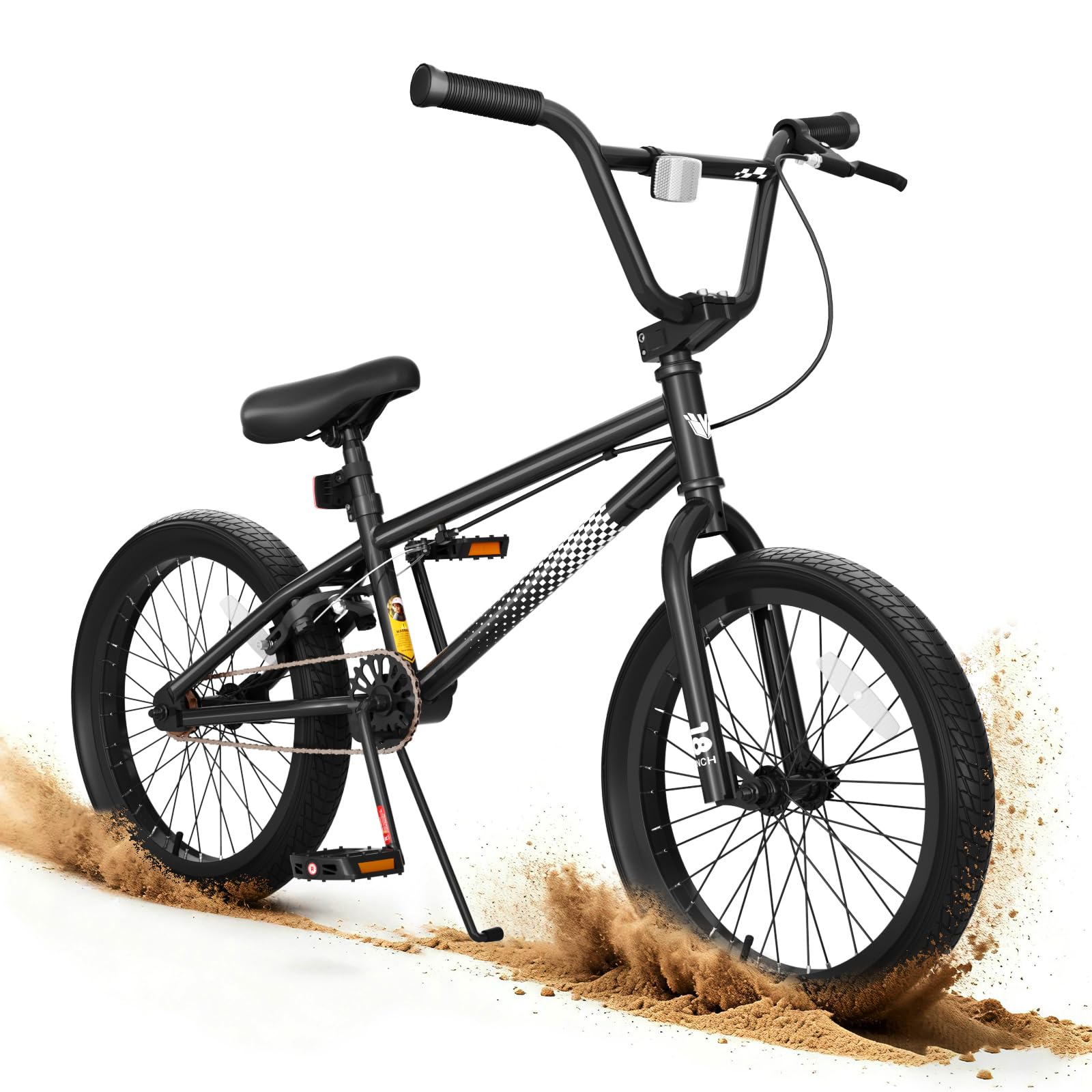
The KORIMEFA BMX is built specifically for children who want to start learning basic freestyle tricks — flatland manuals, bunny hops, and small park rollers. The high‑carbon steel frame handles the impact of repeated small drops, and the single‑speed drivetrain eliminates gear complexity so the rider can focus on body position. The 152‑millimeter crank arms on the 18‑inch version and 165‑millimeter arms on the 20‑inch version are proportioned for children’s leg lengths.
Customers report that the bike arrives 90 percent pre‑assembled, with the remaining work limited to attaching the handlebars, seat, and pedals. The rear caliper brake is simple to adjust and provides enough stopping force for flatland riding. The 20‑inch version is appropriate for seven‑year‑olds on the taller side (approximately 50 inches and up), while the 18‑inch version suits smaller riders who are still growing into the bike.
The lack of a front brake limits stopping power at higher speeds, and riders who push hard on pump tracks will eventually want a brake upgrade. The BMX geometry also means a shorter wheelbase, which feels twitchy to a beginner who is used to a longer cruiser frame.
Why it’s great
- Child‑proportioned crank arms improve pedaling efficiency
- High‑carbon steel frame withstands trick‑related impacts
- Single‑speed drivetrain keeps focus on technique
Good to know
- Rear‑only caliper brake limits high‑speed stopping power
- Short BMX wheelbase may feel twitchy for absolute beginners
7. ONLYGU 18/20 Inch
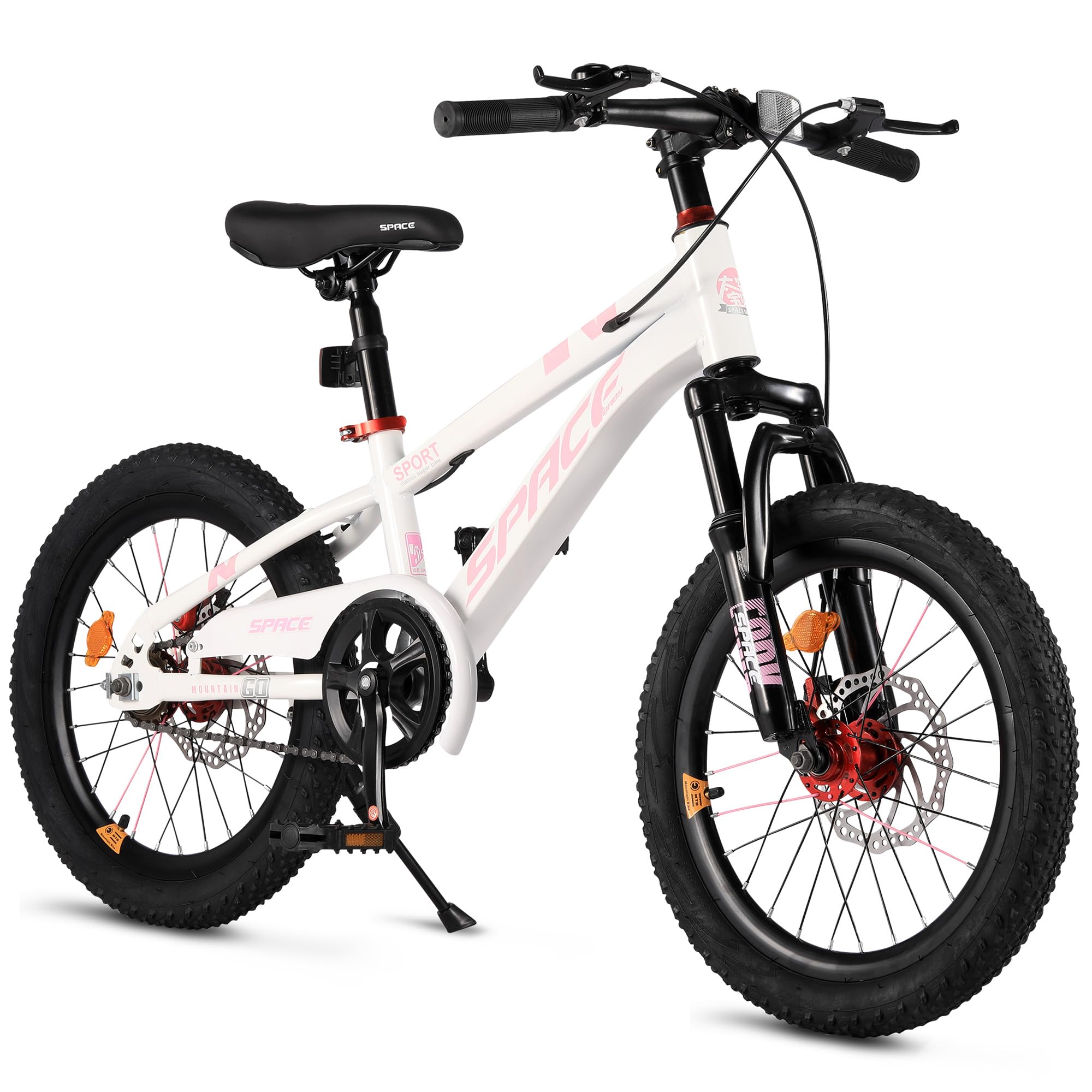
The ONLYGU bike is a solid mid‑range option that bridges the gap between budget department‑store bikes and premium specialized models. The mechanical disc brakes are a notable upgrade at this price tier — they provide consistent stopping power even when the rims are wet, and the lever reach is short enough for a seven‑year‑old to actuate. The alloy steel frame is reinforced at the welds, and the included training wheels are detachable.
Customer reviews highlight the easy assembly and the fact that the bike looks significantly more expensive than it is. The padded saddle supports longer rides without discomfort, and the adjustable handlebars accommodate growth. The 20‑inch version fits riders 48 to 56 inches tall, covering the seven‑year‑old range with room to grow into the next size up.
Some units have arrived with a front disc rotor that rubs against the caliper, requiring a centering adjustment. A few buyers reported that the kickstand weld broke after a few months, though the bike itself remained rideable. The white/pink color option is well‑loved but shows dirt faster than darker colors.
Why it’s great
- Mechanical disc brakes outperform rim brakes in wet conditions
- Padded saddle and adjustable handlebars improve comfort
- Appearance and build quality exceed expectations at this tier
Good to know
- Front disc rotor may need centering after assembly
- Kickstand weld has been reported as fragile
8. WEIZE Kids Bike 20 Inch
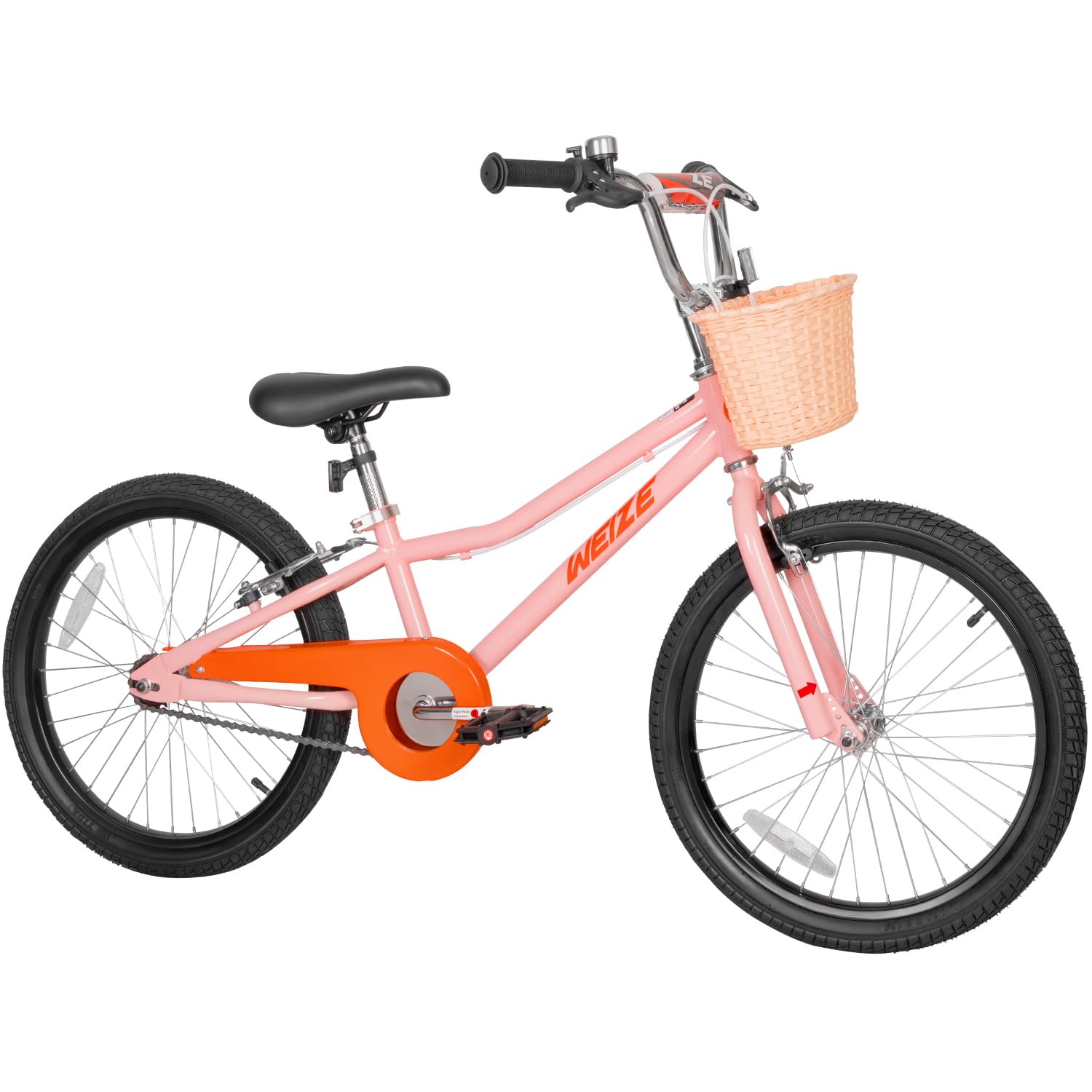
The WEIZE Kids Bike is the most budget‑friendly entry in this lineup, and it delivers exactly what a price‑conscious parent needs: a 20‑inch wheel, a rear coaster brake, and detachable training wheels. The high‑carbon steel frame is sturdy enough to survive the falls that come with learning, and the 2.125‑inch wide tires roll smoothly over sidewalks and park paths. The pink color option has been a hit with customers.
Feedback from parents confirms that the bike fits a seven‑year‑old well — several reviews mention a child who is 52 inches tall riding comfortably with the seat at the lowest setting. Assembly takes about 30 minutes, and the included tools are sufficient. The coaster brake engages with a positive feel, and the two hand brakes (front and rear) provide a backup option once the child is ready to try them.
The assembly instructions are not the clearest, and the included kickstand is functional but feels light. The lack of a front suspension means bumps are transmitted directly through the rigid fork, which can be jarring on rough asphalt. For purely paved, low‑speed riding, this bike offers dependable value.
Why it’s great
- Three‑brake system (coaster + front/rear hand brake) for progression
- Wide 2.125‑inch tires provide stable, smooth rolling
- Budget‑friendly price without sacrificing frame durability
Good to know
- Assembly instructions are sparse and unclear in places
- Rigid fork transmits road bumps directly to the rider
9. Glerc 24 Inch Beach Cruiser

The Glerc Beach Cruiser targets a slightly older or taller seven‑year‑old — the 24‑inch wheels fit riders with an inseam of 22 to 30 inches, which typically starts around eight years old but works for a tall seven‑year‑old. The Shimano 6‑speed drivetrain with twist‑grip shifters makes hill climbing manageable, and the dual V‑brakes provide reliable stopping. The wicker basket and retro saddle give it a distinctly different look from the other bikes in this guide.
Customers consistently remark on the high‑quality paint and the derailleur being tuned correctly out of the box — a rarity at this price point. The 29.8‑pound weight is heavy for a cruiser but acceptable given the steel frame and included accessories. Assembly is straightforward, and the step‑by‑step video helps with the gear cable routing.
The bike is intended for paved paths, not dirt or gravel, and the V‑brakes lose effectiveness in heavy rain. The kickstand requires the rider to dismount and manually close it, which is a minor annoyance. For a child who wants a stylish, gear‑equipped bike for neighborhood cruising, this is the most visually distinctive option.
Why it’s great
- Shimano 6‑speed drivetrain with smooth twist‑grip shifting
- Wicker basket and retro saddle create a unique look
- Derailleur typically arrives calibrated and ready to ride
Good to know
- 24‑inch wheels may be too large for shorter 7‑year‑olds
- V‑brakes lose stopping power when rims are wet
FAQ
Should I buy a 20‑inch or 18‑inch bike for my 7‑year‑old?
Are hand brakes too hard for a 7‑year‑old to use?
Do training wheels delay learning to balance?
How heavy is too heavy for a 7‑year‑old’s bike?
Should I buy a single‑speed or a bike with gears?
Final Thoughts: The Verdict
For most users, the best bike for 7 year old winner is the Schwinn Firehawk because its SmartStart geometry, dual brake system, and tool‑free seat adjustment solve the two biggest pain points — poor fit and awkward brake reach — that plague most kids’ bikes at this age. If you want disc brakes and a 21‑speed drivetrain for off‑road adventures, grab the Glerc Mountain Bike. And for a child who wants to learn BMX tricks, nothing beats the 67i BMX with its four pegs and U‑brakes for park sessions.