
Balancing the joy of riding with the safety of your smallest passenger requires more than just strapping a seat to the frame; it demands a carrier designed specifically for an infant’s underdeveloped neck muscles and lightweight frame. The difference between a good day out and a risky one often comes down to the harness system and mounting stability of your chosen equipment.
I’m Rikta — the co-founder and writer behind FitlyFast. I analyze market trends and safety data to help parents find the most reliable gear for active family life.
After analyzing dozens of models, I’ve broken down the most important features and real-world performance of the best bike infant seat options to save you hours of research and give you the confidence to ride.
How To Choose The Best Bike Infant Seat
Selecting an infant seat is less about aesthetics and more about matching hardware to your bike’s frame geometry and your child’s physical needs. A bad fit compromises handling and nullifies safety features, turning a simple ride into a balancing act.
Front vs. Rear Mount: The Core Trade-Off
Front-mounted seats, like the WeeRide Kangaroo, place the child between you and the handlebars. This setup lets you keep a close eye on your infant and allows them to see forward, but it can make pedaling feel cramped for taller riders. Rear-mounted seats, like the Thule Yepp 2, offer more legroom for the pedaling parent and often carry a slightly higher weight limit, but they shift the bike’s center of gravity backwards, making the steering feel heavier and reducing awareness of your child’s movements.
Harness System: 5-Point vs. 3-Point Security
For an infant whose torso strength is minimal, a 5-point harness—with straps over both shoulders, both hips, and between the legs—is the gold standard. It prevents a sleeping child from slumping forward dangerously. A 3-point harness, which only clips at the waist, provides less upper-body restraint and is generally considered safer only for older, more stable toddlers who don’t need the extra capture points.
Frame and Weight Compatibility
Check your bike’s frame material and geometry. A carbon or heavily curved frame may not accept the clamp of a universal front-mounted seat. For rack-mounted seats, verify that your bike has eyelets for a rack, and that the rack’s build can handle the seat’s static and dynamic load. The seat’s weight limit—typically around 33 to 40 pounds—tells you roughly how many years of use you can expect before the child outgrows it.
Quick Comparison
On smaller screens, swipe sideways to see the full table.
| Model | Category | Best For | Key Spec | Amazon |
|---|---|---|---|---|
| Thule Yepp 2 | Rear Rack | Daily commutes & long rides | 9 months–33 lbs, aluminum frame | Amazon |
| Kids Ride Shotgun | Front Mount | Mountain biking & trails | 2–5 years, 48 lbs max | Amazon |
| WeeRide Kangaroo | Front Center | A front view for the child | 33 lbs max, steel frame | Amazon |
| Schwinn Deluxe | Rear Rack | Versatile family rides | 40 lbs max, quick-release | Amazon |
| Bell Mini Shell | Front Frame | Short infant rides | Ages 1+, 3-point harness | Amazon |
| Peg Perego Orion | Front Frame | Quick detach convenience | 12 mo–33 lbs, 4.85 lbs | Amazon |
| Topeak BabySeat II | Rear Rack | Topeak rack system owners | 26″–29″ wheels, disc brake | Amazon |
In‑Depth Reviews
1. Thule Yepp 2
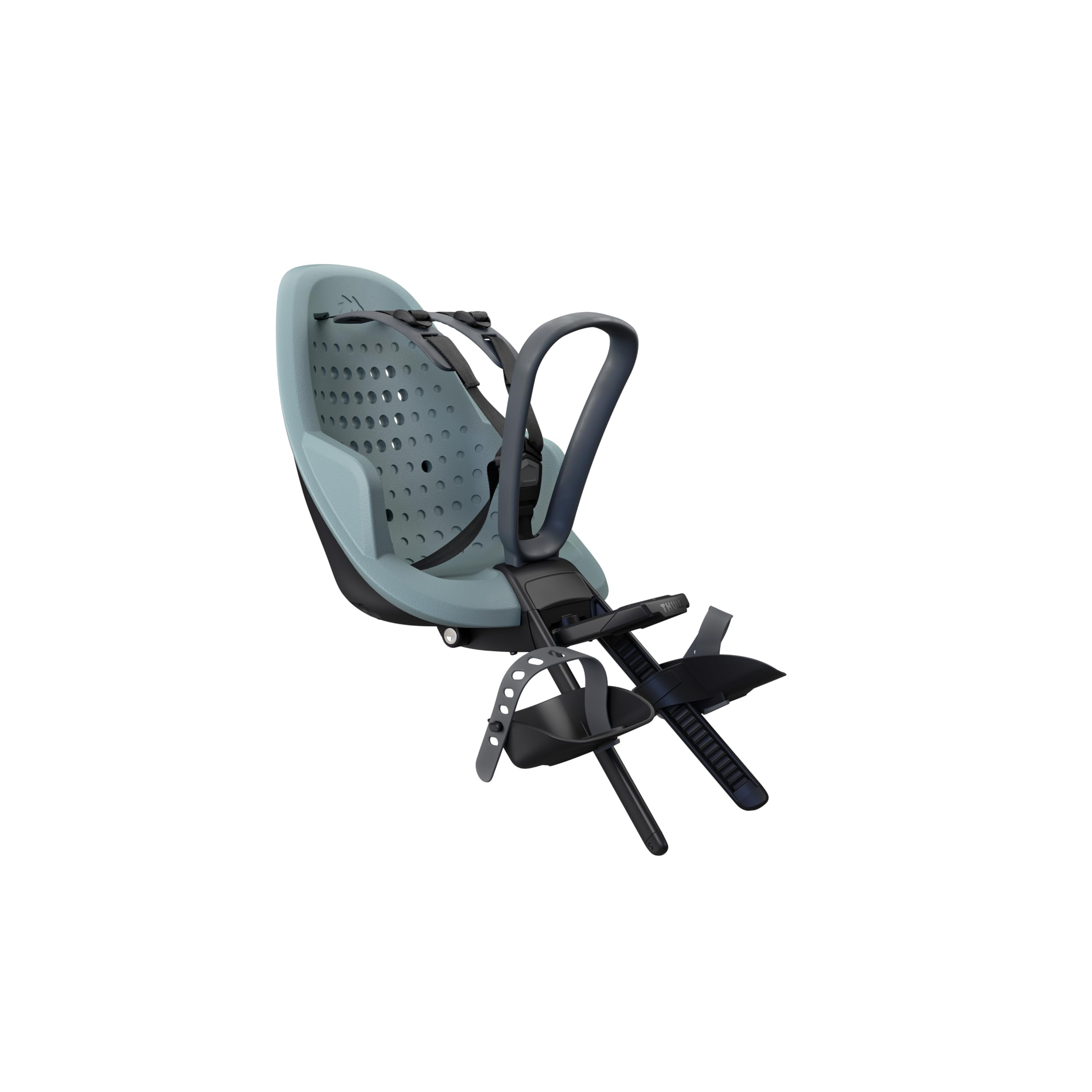
The Thule Yepp 2 is an exercise in refined design. Its aluminum construction keeps the overall weight low, which matters when you’re mounting a seat on a rack that already adds heft. The padded 5-point harness and shock-absorbing foam seat are specifically tailored for infants from 9 months, making it one of the few options that genuinely account for a baby’s lower core strength.
Parents consistently note how easy it is to get the child in and out, partly because the seat shell is sculpted for clear access to the buckles. The integrated lock is a smart touch for city riders who leave the seat attached to a parked bike. The waterproof materials mean you can ride through a light mist without needing to towel-dry the seat before the next trip.
The key limitation is its packaging: it is a rack-mount seat, so you need a compatible rear rack and the correct mounting hardware for your specific bike. Some users found the footrest adjustment stiff due to plastic components, but the overall build quality and safety record make this a top-tier investment for frequent riders.
Why it’s great
- Lightweight aluminum frame is easy to handle
- Water-repellent materials hold up to weather
- Integrated lock deters theft
Good to know
- Requires a compatible rear rack
- Footrest adjustment can be stiff
2. Kids Ride Shotgun
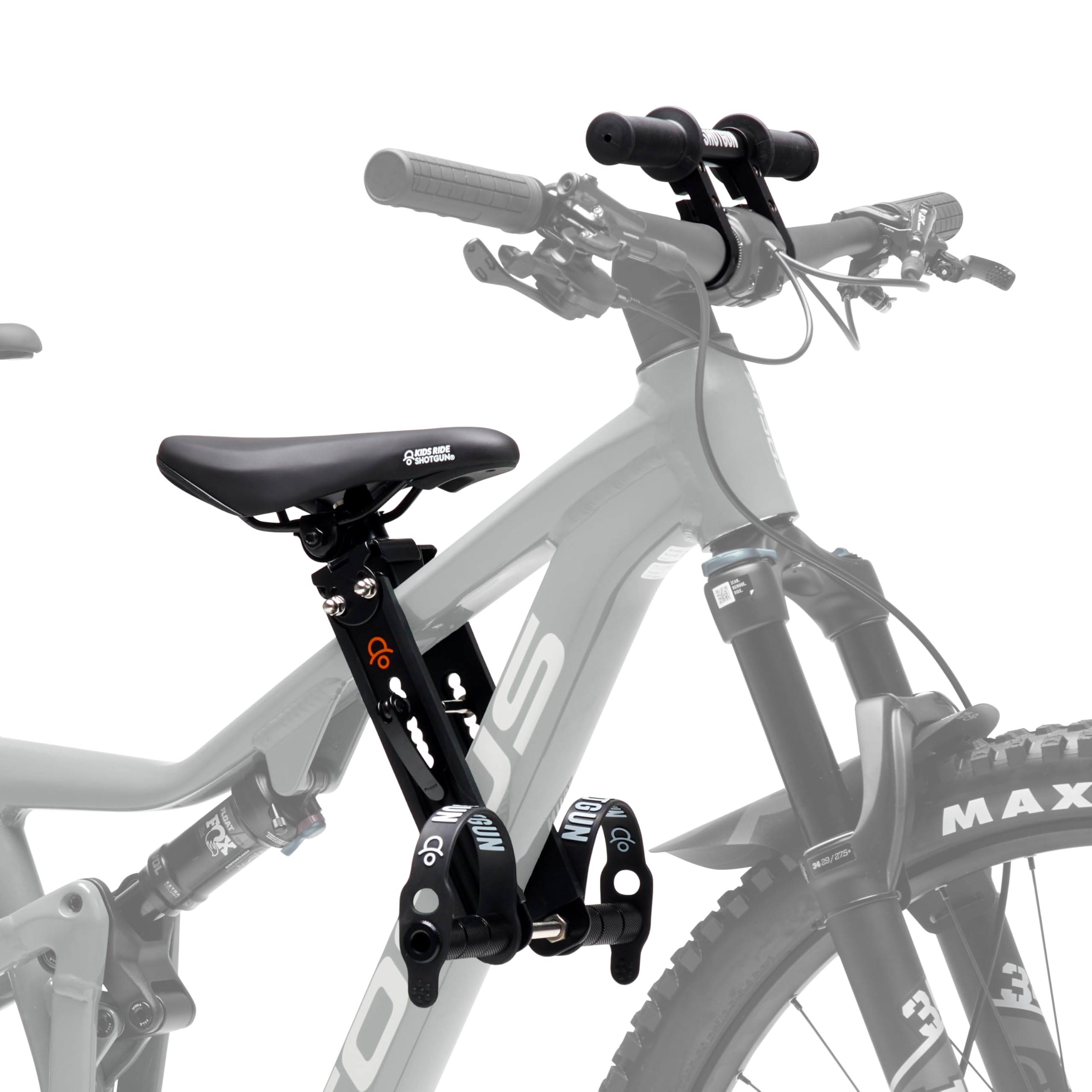
The Kids Ride Shotgun is built for parents who don’t want to stop riding trails just because they have a toddler. The key differentiator here is the integrated handlebar, which gives the child a secure handhold position that mimics holding onto the top tube, but with proper grips. The footrests include rubber straps to keep little feet away from the spinning front wheel—a standard safety feature that this model executes well.
The mounting system clamps directly to the frame’s top tube and down tube, and it comes with rubber shim inserts to protect the paint. At 2 to 5 years and up to 48 pounds, it has the highest weight and age range in this category, meaning you can use it longer before upgrading to a trail-a-bike. Reviewers consistently describe it as “stable” and “fun,” with children loving the forward-facing view.
The trade-off is the age floor: it’s designed for children aged 2 years and older, not for younger infants who lack the neck control to handle bumpy trails. The setup time is also notable—switching the seat between multiple bikes requires loosening and retightening the clamps, which is not as quick as a dedicated quick-release system.
Why it’s great
- Integrated mini handlebars keep hands safe
- Highest weight limit (48 lbs) for longevity
- Excellent stability on uneven terrain
Good to know
- Not suitable for infants under 2 years
- Transfer between bikes is time-consuming
3. WeeRide Kangaroo

For parents who want the closest possible proximity to their child, the WeeRide Kangaroo mounts directly to the bike’s top tube and handlebars, placing the seat between the rider’s arms. This center-mount design means the child’s weight sits low and centralized, which prevents the top-heavy wobble you sometimes feel with a rear-mounted seat when the child leans to one side.
The steel frame and padded front bumper create a protective cocoon, and the 5-point safety harness keeps the infant secure. The height-adjustable foot cups are good for accommodating growth, and the seat shell includes enough headroom that a tired baby can nap without their helmet being pressed too far forward. Riders as short as 5’5” have used it comfortably, though taller riders may find their knees brushing the seat on sharp pedal strokes.
Installation requires attaching a separate support bar that runs from the seatpost to the stem, which adds rigidity but also means you have to reroute any front brake cables carefully. The 33-pound weight limit is average, so most children outgrow this seat before their third birthday. If you primarily do paved paths and want to talk to your child during the ride, this is a strong option.
Why it’s great
- Low center of gravity improves stability
- Padded bumper provides crash protection
- Adjustable foot cups fit growing legs
Good to know
- Support bar may interfere with cable routing
- Tight for riders above 5’5″
4. Schwinn Deluxe Child Bike Carrier

The Schwinn Deluxe is the consummate entry-level rear carrier, offering a high 40-pound weight limit and a quick-release system that functions as a standalone rack when the seat is removed. The 3-point harness is adequate for toddlers who can sit up well, and the adjustable footwells and removable headrest provide a custom fit without requiring specialty tools.
Assembly is straightforward—several users reported it took under 20 minutes straight out of the box. The seat shell is molded from polypropylene, which is rigid yet lightweight at just 0.12 pounds. The foam pad and padded cross bar are comfortable for the child, and the leg restraints with safety straps help keep wiggly feet away from the spokes.
The main complaints center on fitment: the bracket may barely clear the seat stays on bikes with fenders, and the seat can rattle when empty unless you add foam tape. The 3-point harness, while easy to buckle, does not offer the same upper-body capture as a 5-point system. For occasional rides on bike paths, this is a cost-effective solution that doesn’t skimp on the critical safety checks.
Why it’s great
- 40 lb limit offers generous use window
- Quick-release converts seat to rear rack
- Easy assembly and installation
Good to know
- 3-point harness offers less upper body support
- May rattle when empty; requires foam tape fix
5. Bell Mini Shell Front Carrier
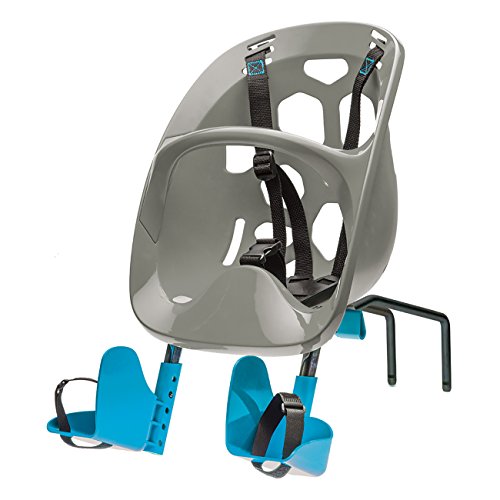
The Bell Mini Shell is a budget-oriented front carrier that prioritizes simplicity. The shell is ventilated to reduce back sweating on warm days, and the foam seat pad provides basic cushioning for short trips. The 3-point harness is straightforward, though the straps are less adjustable than on premium models—fine for a child who sits upright, but less ideal for a tired infant who might slump.
Installation is fast and secure thanks to an integrated clamp that fits most bike frames. The front mounting position allows you to put a small toy or snack on the bar in front of the child, which helps keep them happy on longer rides. The foot beds are adjustable in height, and the whole seat can be detached with a quick release, making it possible to swap between bikes without tools.
The biggest downsides are the relatively low weight limit and the fact that the harness adjustment is more limited than competing models. Taller parents (over 5’8”) may find the seat interferes with knee clearance during pedaling. For very short, predictable trips around the neighborhood, this seat is functional and well-built for the price, but it won’t grow with your child the way a higher-end option might.
Why it’s great
- Ventilated shell keeps child comfortable
- Quick-release detach for bike swaps
- Front bar holds toys for distraction
Good to know
- 3-point harness limits upper body capture
- Tall riders may have knee interference
6. Peg Perego Orion

The Peg Perego Orion is a front-mounted seat that emphasizes convenience with its “One-Click” installation system. The metal clamp stays fixed to the frame, and the seat clicks on and off in about ten seconds—useful if you need to carry it into a store or store the bike in a tight space. The build quality is noticeably denser than the budget alternatives, with thick plastic that doesn’t flex under load.
The 3-point harness is adjustable in length, and the footrests offer three positions to match the child’s growth. The gel pad included in the seat is thicker than the foam pads found in competitors, providing better shock absorption on rough pavement. The seat accepts frames between 32mm and 52mm, covering most adult bikes, but it will not fit very small foldable city bikes or those with heavily curved top tubes.
Parents report that the seat is comfortable for a 1-year-old, but that taller toddlers may soon bump their knees into the handlebars. The footrest latch can be small and difficult for gloved hands to operate. At 4.85 pounds, it’s lighter than some front seats, and the Italian engineering shows in the overall fit and finish. This is a refined short-distance solution for parents who want to quickly switch between riding with and without the seat.
Why it’s great
- 10-second click-on/off attachment
- Thick gel pad absorbs vibrations
- Sturdy Italian build quality
Good to know
- Small footrest latches can be finicky
- Toddler knees may hit handlebars
7. Topeak BabySeat II

The Topeak BabySeat II is not a seat itself, but rather the dedicated rack that makes the Topeak BabySeat system work. It’s built around Topeak’s MTX QuickTrack system, which lets you slide the seat (sold separately) on and off with a single lever. The rack is built from lightweight alloy and is compatible with 26”, 27.5”, and 29” wheels, covering disc and non-disc brake bikes.
The main selling point is reliability: the rack uses adjustable mounting brackets to fit a wide range of frames, and the QuickTrack interface is robust enough that you can use the same rack to carry MTX trunk bags when the seat is not attached. Users have reported that the rack is sturdy even after many uses, and that the seat sits close to the rider’s seatpost, which improves weight distribution and bike handling.
The downsides come from fitment edge cases. Some bikes lack the required eyelets, forcing users to get creative with seatpost clamps and drilling, which voids the warranty. The included instructions are not detailed, and the longer brackets needed for certain oversized chainstays are sold separately. If you already own a Topeak BabySeat or plan to buy one, this rack delivers the seamless integration the system promises, but it’s a specialized solution that demands careful frame checking.
Why it’s great
- MTX QuickTrack enables one-lever seat removal
- Compatible with MTX bags for dual use
- Sturdy, lightweight alloy construction
Good to know
- Requires specific bike eyelets; not universal
- Long brackets sold separately for some frames
FAQ
Can I use a front-mounted infant seat with a carbon fork or frame?
At what age can an infant ride in a bike seat?
Does a bike infant seat affect my bike’s handling?
Final Thoughts: The Verdict
For most users, the best bike infant seat winner is the Thule Yepp 2 because it combines a lightweight aluminum frame, a secure 5-point harness, and waterproof materials that handle daily commuting from 9 months to 3 years. If you want trail-focused durability with the highest weight limit, grab the Kids Ride Shotgun. And for a budget-friendly rear carrier that doubles as a rack, nothing beats the Schwinn Deluxe Child Bike Carrier.