
Our readers keep the lights on and the weekend projects moving. As an Amazon Associate, I earn from qualifying purchases.
Teaching a child to ride is one of those milestones where the wrong bike turns a fun afternoon into a frustrating struggle. A frame that’s too heavy, training wheels that sit at the wrong angle, or brakes a small hand can’t reach — each detail can decide whether your kid begs for “one more ride” or walks away after five minutes. The best bikes in this category solve for a single variable above all others: low-stress stability paired with a frame geometry that keeps the rider centered and confident.
I’m Rikta — the co-founder and writer behind FitlyFast. After analyzing hundreds of hours of parent feedback, spec sheets, and real-world assembly reports across seven models, I’ve mapped exactly which features separate a bike that collects dust from one that gets ridden daily.
This guide breaks down every element that matters when choosing a bike with training wheels — from frame material and brake type to seat adjustability and the often-overlooked angle of the training wheel bracket.
How To Choose The Best Bike With Training Wheels
A kid’s bike with training wheels seems straightforward, but small design differences create dramatically different experiences. Focus on these four factors to avoid the most common purchase regrets.
Frame Material and Weight
Carbon steel frames dominate this category because they absorb impact better than alloy steel without adding excessive weight. A frame that weighs under 20 pounds is ideal for a 3-to-5-year-old — anything heavier makes it hard for small legs to get the bike moving from a stop, which leads to frustration. The frame’s geometry also matters: a lower standover height lets the child place both feet flat on the ground, which builds confidence.
Brake Type for Beginners
Coaster brakes — where pedaling backward stops the bike — are the safest choice for children under five. Small hands lack the grip strength and coordination to use hand brakes effectively, and an unused hand brake is a safety hazard. Some bikes include both hand and coaster brakes, which works well only if the hand lever is designed for small hands with a shorter reach distance. A full chain guard is non-negotiable: it prevents pant legs and shoelaces from getting caught.
Training Wheel Design and Adjustability
Not all training wheels are created equal. The bracket that attaches the training wheel to the frame should be adjustable in height — this lets you set the wheels slightly higher than the rear tire so the bike has a natural lean when turning, teaching the child proper balance rather than riding flat. Cheap fixed brackets force the bike to stay perfectly upright, which delays the transition to two wheels. Wide rubber training wheels also provide better traction on pavement than narrow plastic ones.
Assembly Quality and Adjustable Components
Bikes that arrive 85 to 95 percent pre-assembled save significant setup time. The two most important adjustable components are the seat post and handlebar stem — both should have quick-release levers or hex-bolt clamps that let you raise them as your child grows. A seat that adjusts from about 15 to 20 inches off the ground covers the range most children need between ages three and seven. Avoid bikes where the seat requires tools to adjust, because you will need to raise it multiple times during the first year of ownership.
Quick Comparison
On smaller screens, swipe sideways to see the full table.
| Model | Category | Best For | Key Spec | Amazon |
|---|---|---|---|---|
| BABY JOY 12-20 Inch | Mid-Range | Growing kids needing a basket | Dual brakes, 23 lb frame | Amazon |
| BABY JOY Sporty 12-20 Inch | Mid-Range | Style and dual-brake control | 19 lb carbon steel frame | Amazon |
| Glerc Maggie Girls | Mid-Range | Princess-themed play rides | Doll seat, 24 lb weight | Amazon |
| WEIZE 14-16 Inch Girls | Premium | Accessory-packed daily rider | Wicker basket, streamers | Amazon |
| Nickelodeon Blue’s Clues | Budget | Young toddlers 2-4 years | Mailbox storage, 17.4 lb | Amazon |
| cubsala BMX Style | Premium | Rough-surface durability | Rear V-brake, wide tires | Amazon |
| Huffy Disney/Marvel | Premium | Character-themed confidence | EZ Build, 17 lb frame | Amazon |
In‑Depth Reviews
1. BABY JOY Kids Bike (12-20 Inch)
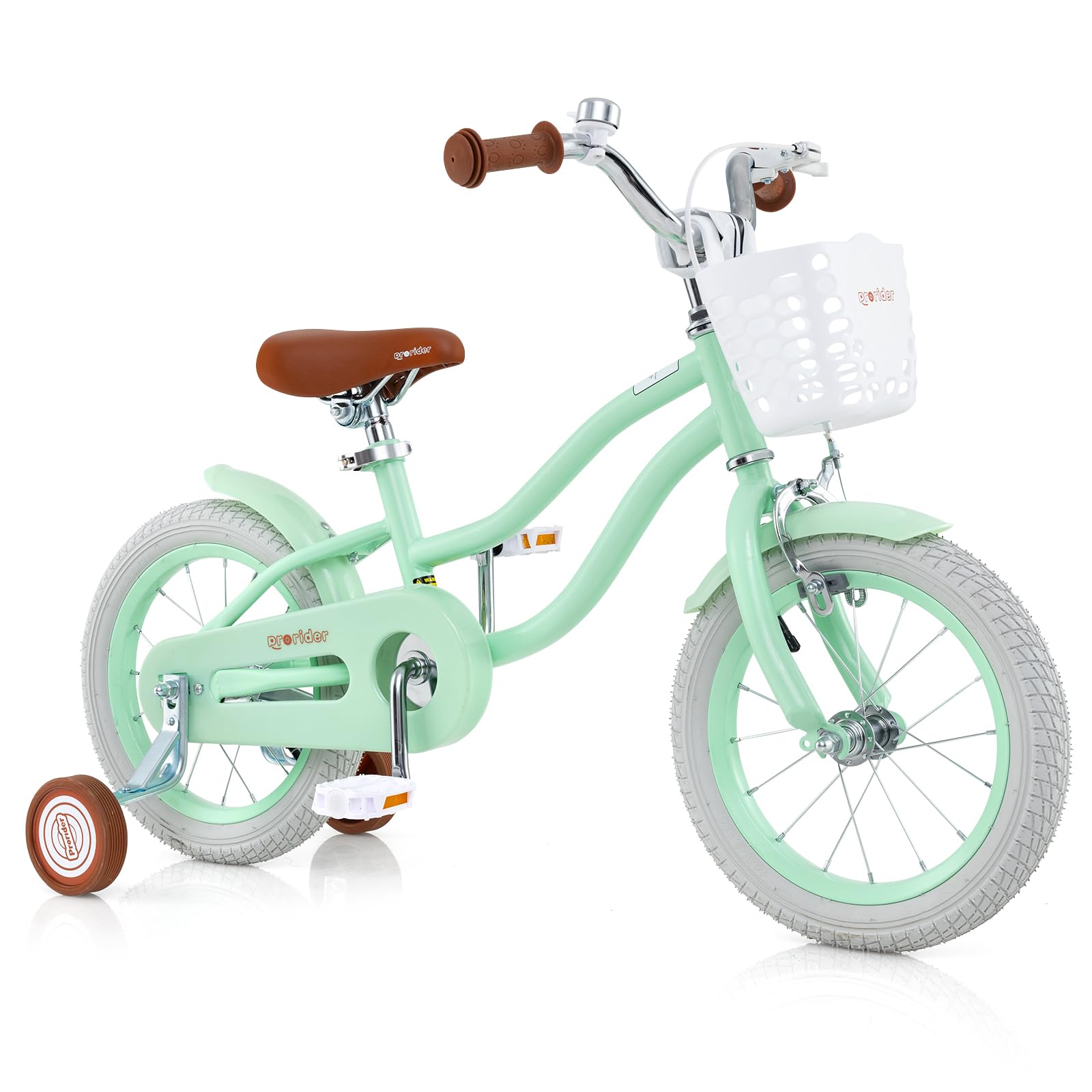
The BABY JOY stands out because it solves the two biggest pain points parents report: assembly complexity and brake usability. At 95 percent pre-assembled, you’ll have it ready in under 15 minutes — significantly faster than the 85-percent standard most competitors use. The hand brake lever is specifically designed with a shorter reach distance, making it actually usable for a four-year-old’s hands rather than just decorative.
The dual-brake system pairs that small-hand-friendly hand brake with a reliable coaster brake, meaning your child has a backup stopping method as they build coordination. The carbon steel frame weighs 23 pounds, which is on the heavier side but translates to real durability when the bike tips over on pavement. The included basket is a genuine hit with kids — it fits stuffed animals and snacks without wobbling off the handlebars.
One parent noted the basket arrived damaged, and the training wheels may need retightening after the first few rides as the bolts settle. But the 14-inch wheel size accommodates inseams from 17 to 20 inches, covering ages three to five without feeling oversized. The multi-color options — especially the Bluey-inspired green — get high marks from kids who want a recognizable character bike without the upcharge.
Why it’s great
- 95% pre-assembled — fastest setup in this comparison
- Hand brake reach designed for small hands
- Coaster brake backup adds safety redundancy
Good to know
- Basket attachment can be fragile during shipping
- Training wheel bolts require retightening after break-in
2. BABY JOY Sporty Kids Bike (12-20 Inch)
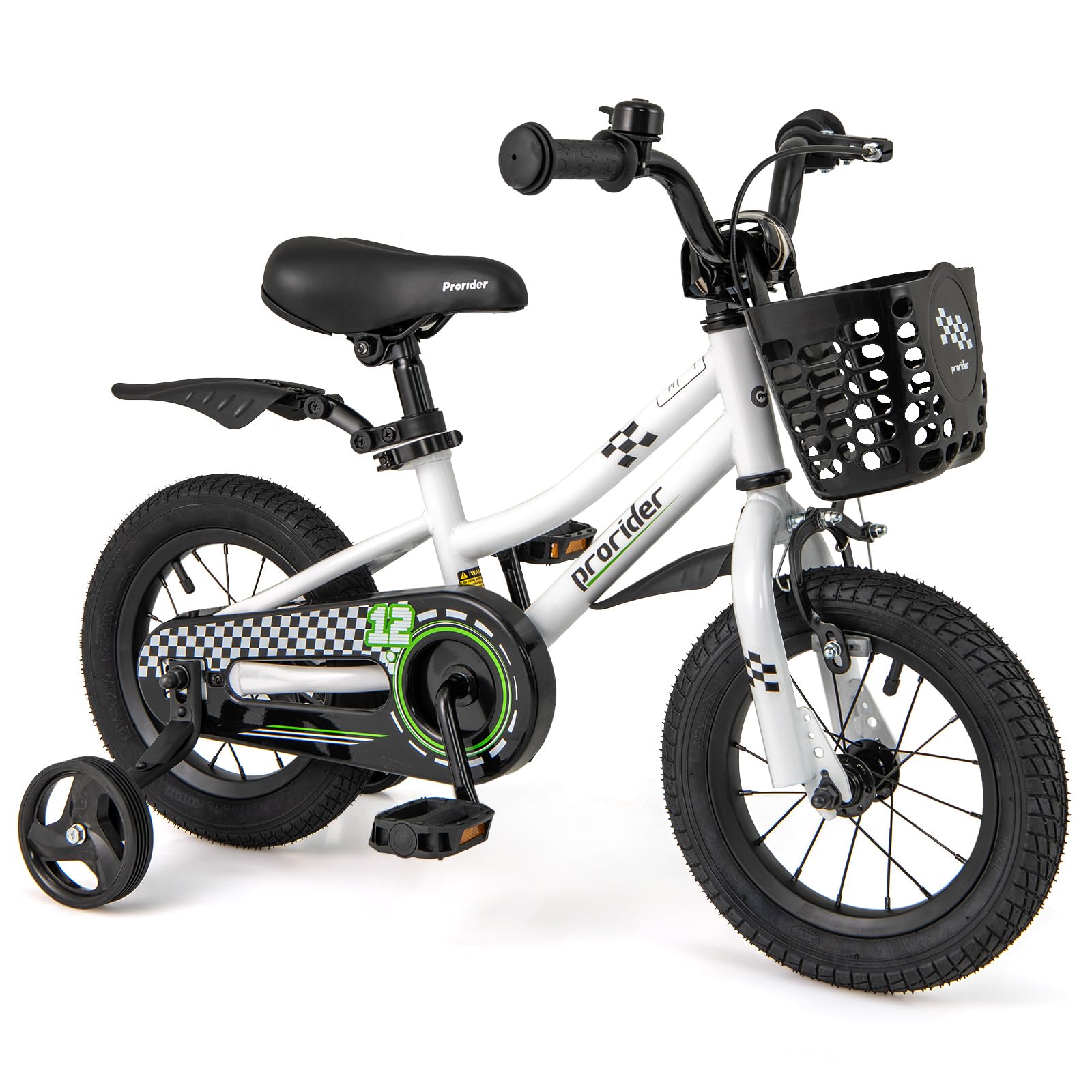
This Sporty version from BABY JOY shaves four pounds off the standard model — 19 pounds versus 23 — making it noticeably easier for a four-year-old to push off from a stop. The white checkerboard pattern with pastel accents gives it a retro BMX look that appeals to kids who want something cooler than a princess or cartoon theme. The frame geometry is slightly more upright, which puts less weight on the handlebars and helps with steering control.
It includes fenders front and rear, a detail that matters more than most parents expect. After a rain shower, those fenders prevent mud stripes up the child’s back — and reflectors on the pedals add visibility during evening rides. The training wheels feel stable out of the box, and the bracket design allows for height adjustment so you can tilt the bike slightly as the child gains balance.
Parents consistently mention that assembly took under 10 minutes, and the included tools are adequate for the job. The only real trade-off is the seat padding — it’s firm, which is fine for short rides but may feel hard after 30 minutes. For the price, this bike delivers the best balance of low weight, useful accessories, and solid braking between the hand lever and coaster brake.
Why it’s great
- 19-pound frame is light enough for small riders to manage
- Fenders keep mud off clothes during damp rides
- Reflectors on pedals improve low-light visibility
Good to know
- Seat padding is firm for longer rides
- No quick-release on the front wheel
3. Glerc Maggie Girls Bike (12-20 Inch)
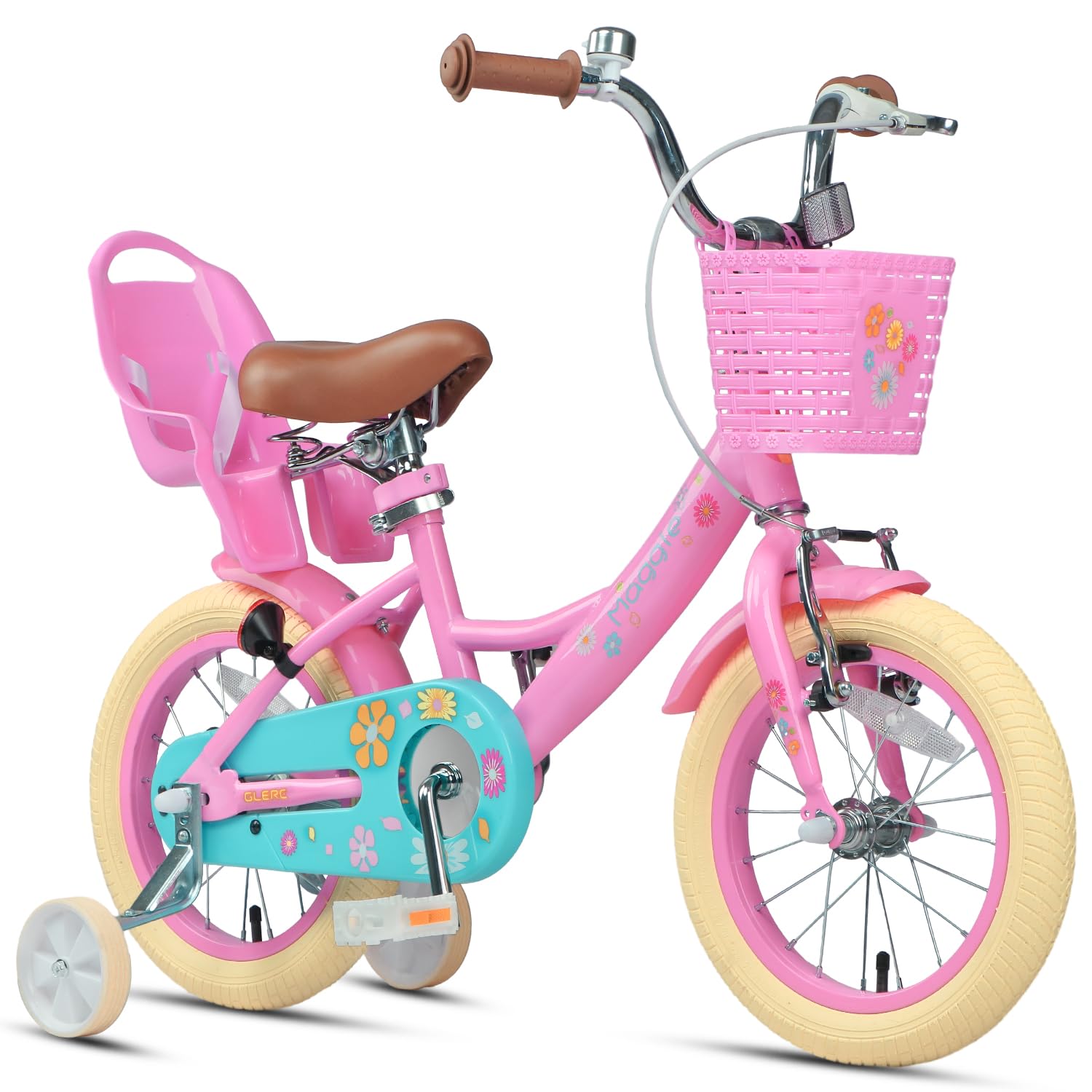
The Glerc Maggie targets the parent who wants a bike that doubles as an experience. The doll-style seat — a small seat behind the main saddle where a favorite stuffed animal rides — is the defining feature, and it genuinely extends playtime because kids spend as much time “driving” their doll as they do pedaling. The pink color scheme with butterfly detailing is print-accurate, not a faded version of what’s pictured.
The frame is carbon steel with a 24-pound weight that feels substantial. That heft hurts acceleration but helps stability at low speeds — the bike doesn’t tip as easily during slow turns. The coaster brake is the primary stopping mechanism, and it engages predictably. Some parents report that the front basket attachment feels wobbly if packed too full, but it holds a water bottle or small toy without issue.
Measurement matters here: parents of three-year-olds should size down rather than up. The 14-inch model requires a minimum inseam of 17 inches, which many three-year-olds don’t reach. Several reviews note that the bike works better for five- and six-year-olds than the listed three-to-five range. The training wheels are adjustable, which is a plus, but the bracket uses smaller bolts than standard, so keep the hex key handy for tightening after the first week.
Why it’s great
- Doll seat is a unique feature that extends play value
- Stable low-speed handling for wobbly beginners
- Color matches listing photos exactly
Good to know
- Better suited for ages 4-6 despite listing 3-5
- Front basket attachment uses small bolts that loosen
4. WEIZE Kids Bike (14-16 Inch)

WEIZE leans hard into the “complete package” approach. This bike ships with a wicker front basket, handlebar streamers, a bell, and a doll seat — everything a child might want without buying accessories separately. The streamers and doll seat are securely attached, not flimsy add-ons that fall off after one ride. The wicker basket is stiffer than the woven plastic baskets on cheaper bikes, holding shape even with a heavy snack pouch inside.
The bike uses a coaster brake only, which simplifies the learning curve but limits control on hills — something to consider if your neighborhood has any slope. The carbon steel frame is paired with anti-slip tires that handle paved roads and packed dirt equally well. The adjustable seat and handlebars use hex-bolt clamps rather than quick-release, which means you need an Allen key to raise them, but the range is generous: the seat adjusts from about 16 to 21 inches.
Assembly consistency is a minor issue — some buyers report 20-minute setups while others struggle with aligning the chain guard. The bike ships 85 percent assembled. The 14-inch wheel size fits children with 17-inch inseams and up, so measure carefully. If your child is on the taller side for their age, the 16-inch version extends the usable life by an extra year or two.
Why it’s great
- Includes wicker basket, streamers, bell, and doll seat
- Anti-slip tires work on pavement and dirt
- Generous seat adjustment range (16-21 inches)
Good to know
- Coaster brake only — not ideal for hilly terrain
- Assembly instructions could be clearer
5. Nickelodeon Blue’s Clues & You Kids Bike (12-Inch)

The Blue’s Clues bike is built specifically for the two-to-four age range, with 12-inch wheels and a 17.4-pound frame that even a small toddler can manage. The standout feature is the handlebar mailbox — it opens and closes, giving kids a reason to stop, collect leaves or rocks, and keep riding. This small interaction reinforces the stop-and-go rhythm of riding without the parent having to intervene.
The coaster brake is the only braking system, and for this age group that’s the right call. Two-year-olds cannot operate hand brakes. The single-speed drivetrain keeps things simple, and the removable training wheels sit wide enough to prevent tipping during sharp turns. Assembly is straightforward, though some parents note that the included instructions don’t perfectly match the bike components — specifically the handlebar plate attachment, which may require zip ties.
Frame flimsiness is the main concern at this price point. The alloy steel frame flexes more than carbon steel alternatives, and the decorative stickers peel off quickly during falls. The 12-inch wheel size limits the bike’s usable life to about 18 months for the average child. Consider this a starter bike for the youngest riders — it gets them rolling cheaply, but you’ll likely upgrade to a 16-inch model by age four.
Why it’s great
- Handlebar mailbox encourages interactive play
- Lightweight 17.4-pound frame fits very young riders
- Coaster brake is ideal for ages 2-3
Good to know
- Alloy steel frame is less durable than carbon steel
- Decorative stickers peel off easily during falls
6. cubsala BMX Style Kids Bike (12-18 Inch)
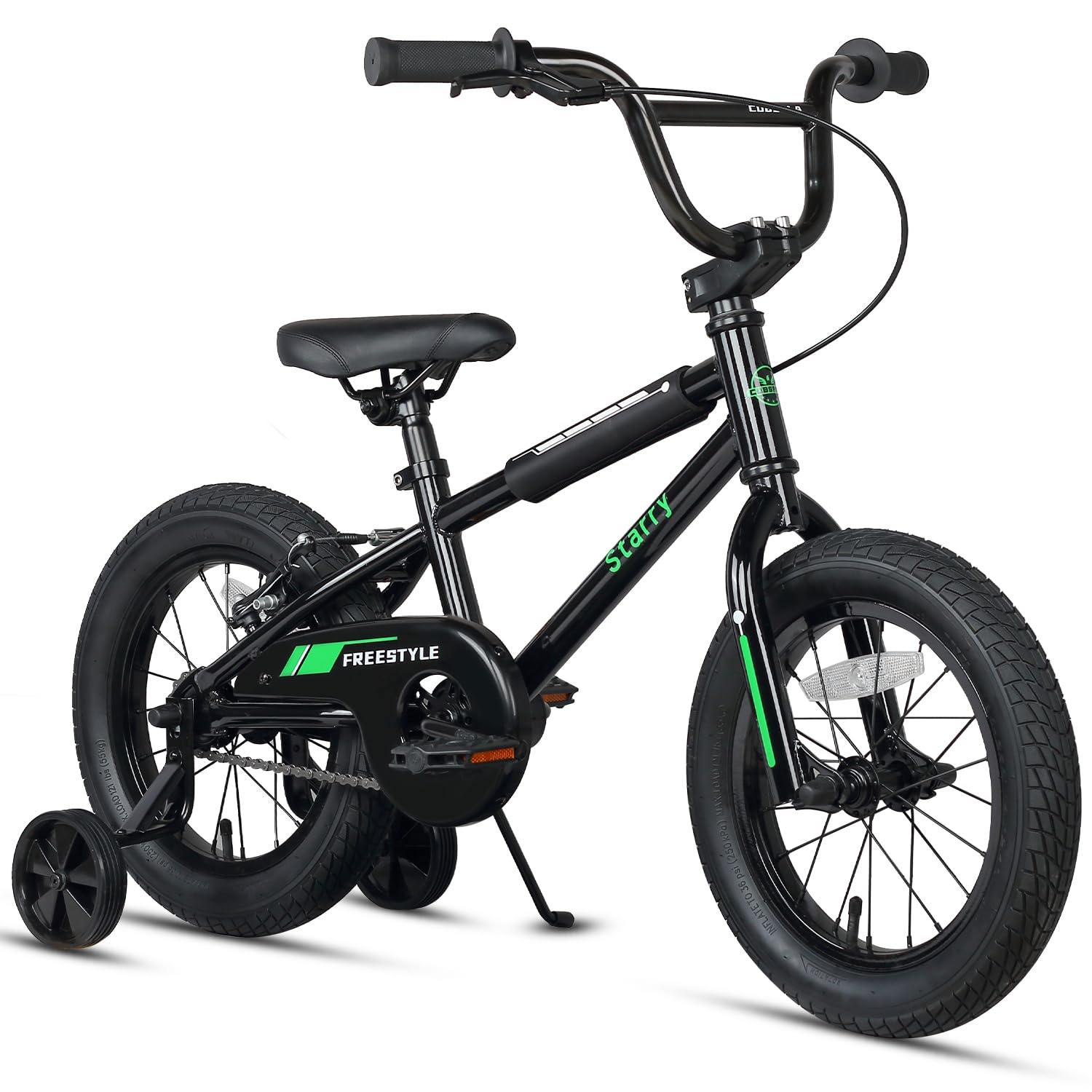
cubsala takes a different approach by building a BMX-style bike scaled down for kids. The frame is carbon steel with a reinforced down tube that passes what experienced parent reviewers call the “adult bounce test” — jumping on the frame produces no creaks or flex. The rear V-brake adds stopping power that coaster brakes alone can’t match, especially when riding on loose gravel or wet pavement.
The 18-inch wheel option (ages 5-10) is rare in this category and extends the bike’s useful life well past what most training-wheel bikes offer. The wide tires provide better traction than standard slick tires, and the BMX-style handlebars give the rider a more aggressive, controlled posture that helps with steering precision. The training wheel bracket is reinforced with an extra gusset, which prevents the bracket from bending when the bike tips sideways.
One shipping issue appears in reviews: missing hardware. A small percentage of buyers report missing nuts or bolts for the front wheel. The company’s support response is inconsistent — some get replacements quickly, others are told to source their own hardware. The coaster brake also limits skatepark use if your child progresses to tricks. For neighborhood riding and dirt paths, this is the most durable option in the lineup.
Why it’s great
- Reinforced frame passes the adult bounce test for durability
- Wide tires provide excellent traction on loose surfaces
- 18-inch wheel option fits older kids up to age 10
Good to know
- Missing hardware reported in some shipments
- Coaster brake limits advanced trick riding
7. Huffy Disney/Marvel 12/16 Inch Kids Bike

Huffy’s EZ Build system is the star here — the bike arrives mostly assembled, and finishing the setup requires just inserting the handlebar and snapping the pedals into place. No tools needed for those final steps, which is rare in this category. The Spider-Man graphics are applied as durable decals rather than stickers, so they survive garage bumps and tip-overs without peeling.
The 17-pound alloy steel frame keeps weight low, and the wide training wheels provide a stable base that helps the child feel secure from the first ride. The coaster brake is simple and effective, and the full chain guard prevents clothing snags. The padded saddle is noticeably more comfortable than the firm seats on several competitors, which encourages longer ride sessions.
The seat post locking mechanism has a reported issue — some units don’t hold the seat securely in place, requiring a replacement bolt. The 12-inch model fits children ages 3 to 5 with heights from 37 to 42 inches, but taller kids will outgrow it within a year. The 16-inch version extends that range but costs more. If your child is a Spider-Man fanatic, the graphics and Web Wing handlebar shield provide genuine motivation to practice riding.
Why it’s great
- EZ Build system requires no tools for final assembly
- Durable decals that don’t peel off easily
- Padded saddle is comfortable for longer rides
Good to know
- Seat locking mechanism can be unreliable
- 12-inch model is outgrown quickly by tall kids
FAQ
What inseam measurement does my child need for a 14-inch bike with training wheels?
Should I remove the training wheels as soon as my child can ride straight?
Why does the bike wobble even with training wheels attached?
Final Thoughts: The Verdict
For most users, the bike with training wheels winner is the BABY JOY 12-20 Inch because it combines 95 percent pre-assembly with a genuinely usable hand brake and reliable coaster brake, all on a carbon steel frame that survives the learning curve. If you want the lightest bike that fenders and retro style, choose the BABY JOY Sporty 12-20 Inch. And for maximum long-term durability and the widest wheel size range, nothing beats the cubsala BMX Style 12-18 Inch.