
Our readers keep the lights on and the weekend projects moving. As an Amazon Associate, I earn from qualifying purchases.
Finding binoculars that work seamlessly with prescription eyewear means dealing with three separate specs at once: eye relief, exit pupil, and adjustable eyecups. Most standard binoculars force you to hold them away from your face to see the full field, which introduces shake and ruins the viewing experience. The right pair lets you keep your glasses on and still enjoy a crisp, full image.
I’m Rikta — the founder and writer behind FitlyFast. I’ve spent years analyzing optical hardware specifications, comparing multi-coated lens systems, and evaluating build quality so you don’t have to decode the jargon yourself.
This guide breaks down the core specs—eye relief, exit pupil, coating layers—that separate a frustrating experience from a truly clear one, so you can pick the best binocular glasses for your next outing.
How To Choose The Best Binocular Glasses
Glasses-friendly binoculars live and die by three interlocking measurements: eye relief, exit pupil, and eyecup adjustability. Ignore any one and you will end up holding the unit at arm’s length, fighting shadows and jitter. Focus on these specific specs and you will get a full, steady image the moment you lift them to your eyes.
Eye Relief — The Clearance Measurement
Specs should list eye relief in millimeters. 15–17 mm is the usable floor for glasses wearers; anyone in thicker frames should target 18–20 mm. Below that threshold you lose peripheral field of view and create a dark crescent shadow at the edge of the frame. The Nikon Monarch M5 8×42 offers 19.5 mm, which is why glasses users consistently report a full, unobstructed view.
Exit Pupil — The Brightness Gate
Divide the objective lens diameter by the magnification to get the exit pupil. A 42 mm objective at 8x yields a 5.25 mm exit pupil — ideal for low-light dawn or dusk birding. A 10×25 configuration gives only 2.5 mm, which works for bright-day stadium use but will feel dim in overcast woods. Match the exit pupil to your typical lighting conditions.
Prism Type & Coating Layers
BaK-4 glass prisms and fully multi-coated lenses are the standard for premium-tier and mid-range models. BaK-4 transmits more light and produces a rounder exit pupil than BK-7. “Fully multi-coated” means every air-to-glass surface has multiple anti-reflective layers, which boosts light transmission and eliminates the gray haze cheaper single-coated optics suffer from.
Eyecup Design & Diopter Lock
Twist-up click-stop eyecups let you fine-tune the distance between your eye and the lens, crucial for glasses users. A locking diopter ring — like the one on the Nikon PROSTAFF P7 — prevents your right-eye adjustment from drifting when the binocular is bounced around in your pack. Without that lock, you will have to re-adjust midway through every trip.
Quick Comparison
On smaller screens, swipe sideways to see the full table.
| Model | Category | Best For | Key Spec | Amazon |
|---|---|---|---|---|
| Nikon Monarch M5 8×42 | Premium | Low-light wildlife & birding | 19.5 mm eye relief | Amazon |
| ZEISS Terra ED 10×42 | Premium | High-contrast all-weather viewing | ED glass, 88% transmission | Amazon |
| Vortex Diamondback HD 10×42 | Mid-Range | Hunting & rugged outdoor trips | Argon purged, armored | Amazon |
| Nikon PROSTAFF P7 10×42 | Mid-Range | Daytime birding & general nature | Locking diopter ring | Amazon |
| Vortex Diamondback HD 8×28 | Mid-Range | Compact carry & daytime use | 332 ft field of view | Amazon |
| Bushnell H2O Xtreme 10×42 | Value | Marine & wet-weather use | IPX7 waterproof | Amazon |
| Nocs Provisions Standard Issue 10×25 | Budget | Ultra-light packing & pocket carry | 11.85 oz weight | Amazon |
In‑Depth Reviews
1. Nikon Monarch M5 8×42
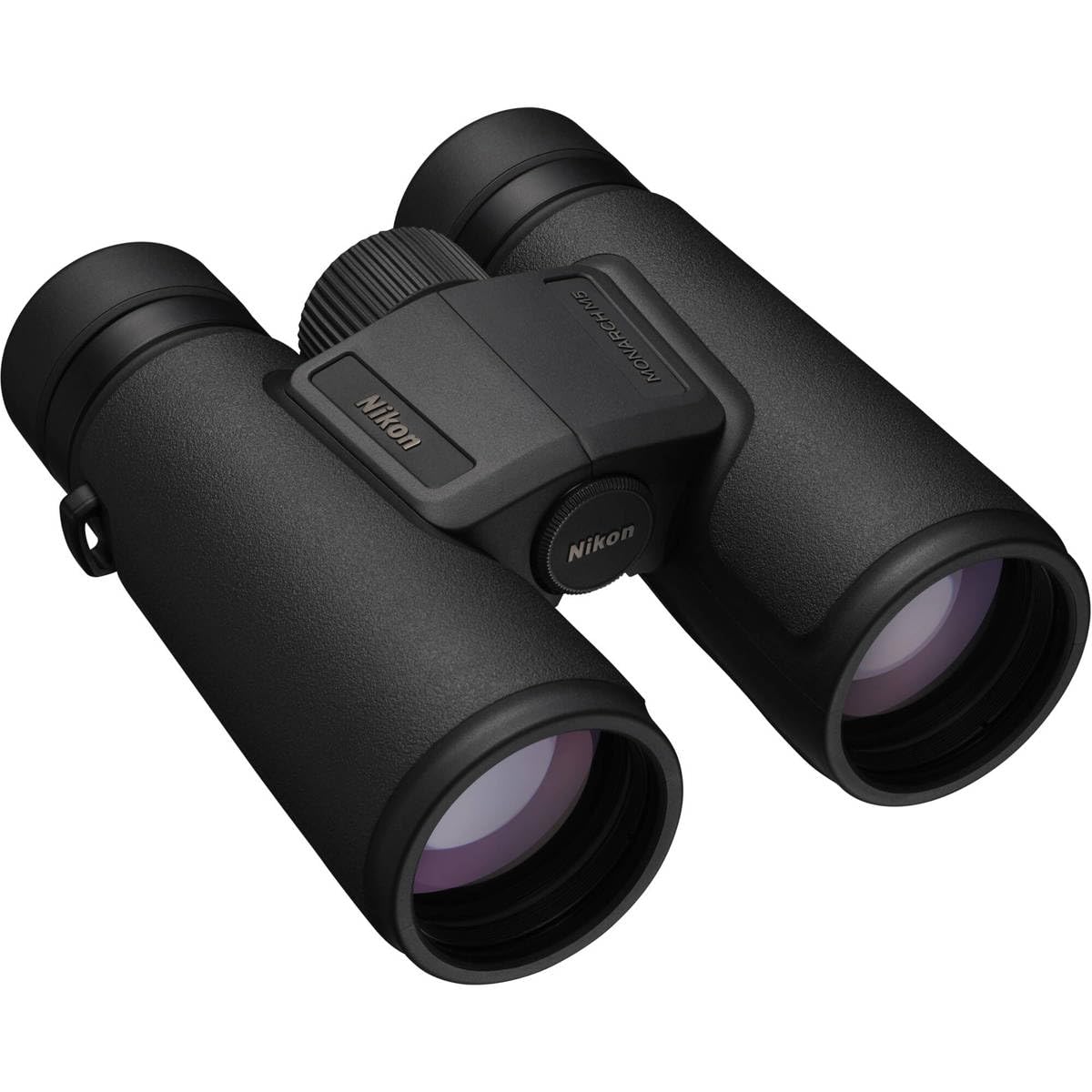
The Monarch M5 is the strongest all-rounder in this lineup because it nails every spec that matters for glasses wearers. The 19.5 mm eye relief is the highest in the group — you can keep your frames on and still see the entire 335-foot field of view without any black ring creeping in. The ED glass eliminates chromatic aberration around high-contrast edges, so tree branches against a bright sky stay razor sharp rather than turning cyan.
At 8×42 the exit pupil sits at 5.3 mm, which makes this unit perform exceptionally well in the low-light margins of dawn and dusk. The phase-corrected, dielectric-coated prisms push light transmission high enough that colors remain saturated even in deep forest shade. The closed-bridge design and large center focus knob make one-handed re-adjustment natural, even with gloves on.
Users consistently call out the same strengths: sharp edge-to-edge clarity, smooth focus, and a build that feels solid without being punishingly heavy. The main critique is the field of view — 335 feet at 1,000 yards is narrower than some competitors. But for the money, the optical quality punches well above its tier, and the long eye relief alone justifies the pick for anyone who wears glasses.
Why it’s great
- Excellent ED glass eliminates color fringing in high-contrast scenes
- 19.5 mm eye relief is best-in-class for full-frame viewing with glasses
- Dielectric prism coating delivers bright, natural color in low light
Good to know
- Field of view is narrower than some rivals at the same magnification
- Slightly heavier and bulkier than compact travel alternatives
2. ZEISS Terra ED 10×42
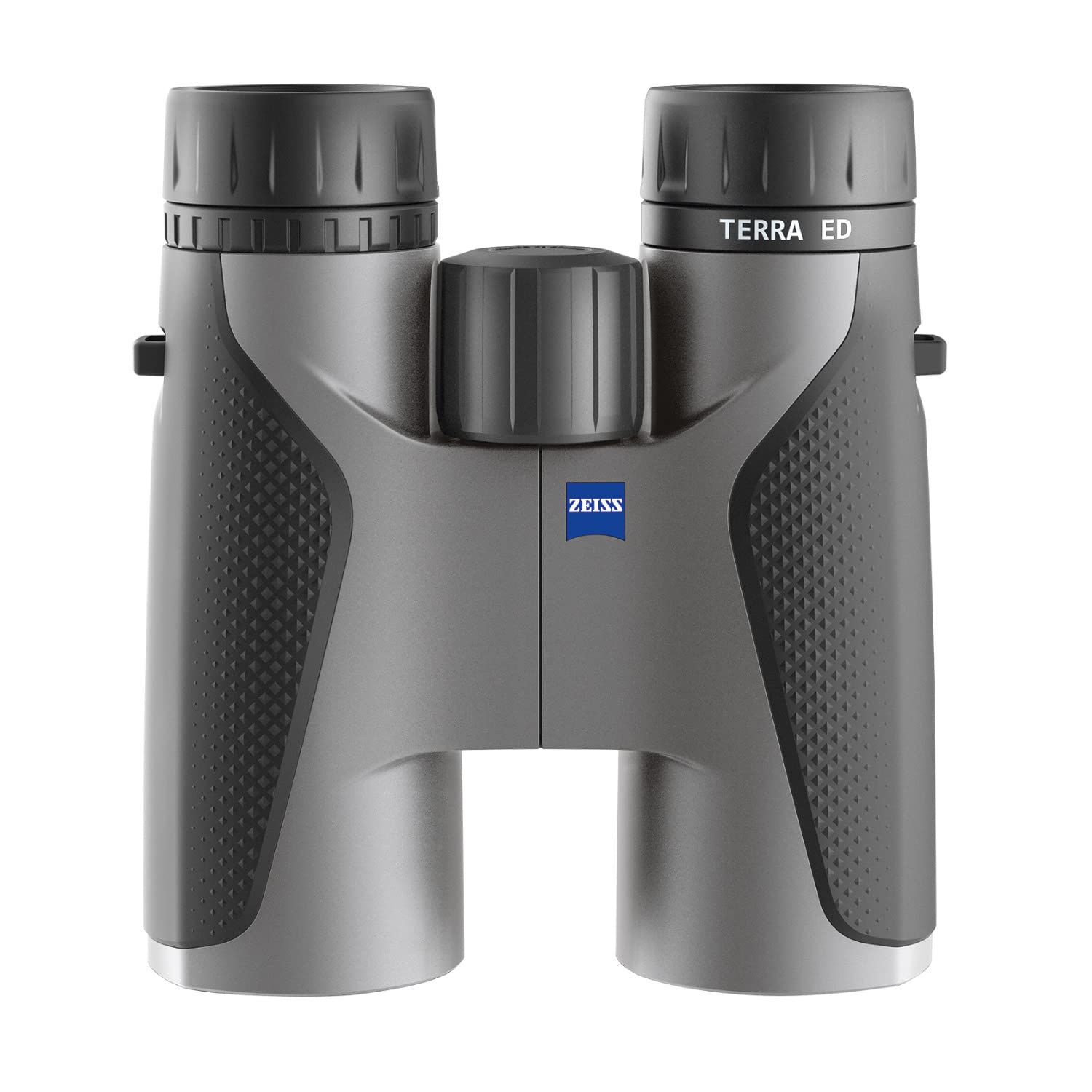
The Terra ED is the entry point into Zeiss optical engineering, and it shows in the glass. The 88% light transmission figure comes from a hydrophobic multi-coating that does double duty — boosting brightness while shedding rain droplets so your view doesn’t turn into a blurry watercolor in wet conditions. The Schmidt-Pechan ED glass cuts chromatic aberration aggressively, giving you clean, sharp edges on everything from distant treelines to fast-moving birds.
The 18 mm eye relief is comfortable for glasses users, and the large center focus wheel is placed so your index finger lands on it naturally. The fiberglass-reinforced casing is genuinely tough — it shrugs off knocks against rocks and tree branches without transferring vibration into the optics. At 10×42 the exit pupil is 4.2 mm, which is adequate for mid-light conditions but not as strong as the Monarch M5 in truly dim environments.
Owners frequently note that the Terra ED out-resolves other binoculars in the same tier, especially when viewing fine detail like feather texture or far-off license plates. The biggest complaint is the price — it is the most expensive unit here by a clear margin. But for buyers who value maximum contrast and weather resilience above all else, the Terra ED delivers optical fidelity that justifies the stretch.
Why it’s great
- ED glass and hydrophobic coating produce high contrast in rain or fog
- Fast focus wheel is positioned for immediate, intuitive reach
- Rugged fiberglass-reinforced body handles heavy field use
Good to know
- Premium price point puts it out of reach for budget-conscious shoppers
- Exit pupil is adequate but not outstanding for deep low-light use
3. Vortex Optics Diamondback HD 10×42

The Diamondback HD 10×42 is built for the person who needs their optics to survive abuse. The argon purging and O-ring seals mean this unit can go from a dusty trail straight into a rainstorm without internal fogging — that matters more than any coating spec when you are miles from cover. The rubber armor is thick enough to absorb small knocks and provides a non-slip grip even when your hands are wet.
The 15 mm eye relief is the tightest among the premium and mid-range picks here. Glasses wearers with thin frames will be fine, but anyone wearing bulky sunglasses or progressive lenses may lose a sliver of the edge view. The fully multi-coated lenses and dielectric coating produce a bright, color-accurate image, and the Armortek coating on the exterior lenses resists scratches from dirt and careless storage.
Customers highlight the VIP warranty as the deciding factor — Vortex will repair or replace the binocular no questions asked, which removes the anxiety of a pricey field tool. The included GlassPak harness distributes weight comfortably during all-day wear. The main trade-off is the shorter eye relief, so buyers who wear glasses should confirm the fit before committing.
Why it’s great
- Argon purged and O-ring sealed for reliable fog-proof performance
- VIP unconditional lifetime warranty covers damage in the field
- Thick rubber armor provides excellent grip in wet or cold conditions
Good to know
- 15 mm eye relief may feel short for glasses with thick frames
- Heavier than compact alternatives for ultralight packing
4. Nikon PROSTAFF P7 10×42

The PROSTAFF P7 takes the bright, vivid optical signature Nikon is known for and wraps it in a user-friendly package that prioritizes consistent comfort. The locking diopter ring is a small detail that has an outsized impact — once you set the right-eye compensation, it stays put even when the binocular gets jostled in a daypack or slung across a shoulder. That means zero squinting to re-acquire sharp focus after every pause.
The 15.7 mm eye relief is respectable for daytime use, and the turn-and-slide click-stop eyecups let you dial in precise standoff distance from your glasses. The phase-correction coated roof prisms and dielectric high-reflective multilayer coating push brightness high enough for twilight sessions. The oil- and water-repellent lens coating makes cleaning smudges off the objective lenses effortless after a day in the field.
Reviewers consistently describe the view as “bright and crisp” and mention the excellent fit and finish for the money. The fiberglass-reinforced polycarbonate body keeps weight manageable without feeling flimsy. A few users note that the supplied neck strap is basic for the price, but the optical performance — especially the wide 367-foot field of view — makes the P7 a strong daytime companion.
Why it’s great
- Locking diopter ring prevents accidental focus drift in the field
- Wide 367-foot field of view makes tracking moving subjects easier
- Oil- and water-repellent coatings simplify cleaning outdoors
Good to know
- 15.7 mm eye relief is adequate but not generous for thick glasses
- Included accessories are serviceable but not premium
5. Vortex Optics Diamondback HD 8×28

The 8×28 Diamondback HD is the pack-light specialist of this group. The 18 mm eye relief punches well above the weight class of a 28 mm objective — most compact binoculars skimp on this spec, leaving glasses wearers with a frustrating tunnel view. Vortex kept the eyecup twist action smooth and precise, so you can find your optimal standoff distance quickly.
At 8×28 the exit pupil measures 3.5 mm, which is fine for bright-day birding, stadium events, or hiking in open terrain. It will feel noticeably dimmer at dusk than the 42 mm models, so this is not the tool for pre-dawn wildlife watches. The fully multi-coated lenses and dielectric coating still produce a clean, color-accurate image, and the Armortek exterior coating protects the smaller lens surfaces from scratches during pocket carry.
Customers appreciate the lightweight aluminum body and non-slip rubber armor, which together make this an easy grab-and-go companion. The unlimited VIP warranty covers the unit even if you drop it off a cliff, which adds confidence for a compact unit that will bounce around in a bag. The trade-off is limited low-light capability — buyers who primarily glass in shaded woods should step up to a 42 mm model.
Why it’s great
- Compact form fits easily into a jacket pocket or daypack
- Unlimited lifetime warranty covers accidental damage
- Non-slip rubber armor stays secure even in wet hands
Good to know
- 3.5 mm exit pupil struggles in low-light or overcast conditions
- Does not include a harness-style carrying system
6. Bushnell H2O Xtreme 10×42

The H2O Xtreme is purpose-designed for environments where other binoculars would leak or fog. The IPX7 rating means it can be submerged in three feet of water for 30 minutes without damage — that is a genuine spec for boating, kayaking, or heavy-rain birding, not a marketing number. The O-ring sealed, nitrogen-purged construction keeps the internal lenses clear across rapid temperature changes.
The 17 mm eye relief is comfortable for most glasses wearers, and the rubberized grip prevents slipping even after hours of wet handling. BaK-4 prisms and fully multi-coated glass surfaces provide good light transmission for a value-tier build, though the image is not quite as crisp or color-accurate as the premium options. The 10×42 configuration gives a 4.2 mm exit pupil, which performs adequately in twilight.
Users consistently mention the excellent durability-to-price ratio, noting that these hold up to rough marine use without complaint. The main downsides reported are the lack of a tripod adapter socket and the attached front lens caps, which some find fiddly. For the price, this is the most weather-resistant option available, making it a strong pick for any wet-weather enthusiast.
Why it’s great
- IPX7 waterproof rating guarantees performance in heavy rain or submersion
- Nitrogen purging prevents internal fogging in rapid temperature shifts
- BaK-4 prisms provide solid light transmission for the price
Good to know
- No tripod adapter socket limits steady long-range viewing
- Attached front lens caps can be awkward to manage during quick use
7. Nocs Provisions Standard Issue 10×25

The Nocs Standard Issue is the lightest and most packable unit in the lineup at just 11.85 ounces. The 10×25 configuration makes it a bright-light-only tool — the 2.5 mm exit pupil delivers a dim view in low light, but in full sun at a ballgame or on a coastal hike, the fully multi-coated BaK-4 prism optics produce a surprisingly clear and crisp image for the size. The 10 mm eye relief is the shortest here, so glasses wearers will need to press their frames close to the eyecups or remove their glasses entirely.
The multi-stop twist-up eyecups give three distinct positions, which helps users without glasses find a comfortable eye placement. The IPX7 waterproofing means this unit can survive a dunk, and the rugged wave-grip rubber casing provides a secure hold despite the small form factor. The included soft case and neck strap (noting the strap attachment slots can be tight) make it easy to grab on the way out the door.
Customer feedback focuses overwhelmingly on the portability and aesthetic appeal as the primary reasons to buy. This is not a tool for serious birders or low-light tracking — it is a supplemental set for casual, on-the-go use. The big selling points are the lifetime warranty and the fact that it fits in a purse or cargo pocket, making it the most accessible option for spontaneous use.
Why it’s great
- Ultra-light 11.85-ounce design fits in a pocket or small purse
- IPX7 waterproof rating for worry-free outdoor carry
- Multistep twist-up eyecups offer good adjustment for non-glasses users
Good to know
- 2.5 mm exit pupil is not usable in low-light or overcast conditions
- Strap attachment slots are very tight and difficult to install
FAQ
What eye relief measurement do I need if I wear glasses?
Is a larger objective lens always better for glasses wearers?
Why do some binoculars show a dark ring around the edge when I wear glasses?
Can I use these binoculars with a tripod or monopod?
What does fully multi-coated glass actually do for my view?
Final Thoughts: The Verdict
For most users, the binocular glasses winner is the Nikon Monarch M5 8×42 because it combines the longest eye relief in the lineup (19.5 mm) with ED glass optics and a 5.3 mm exit pupil that handles low light better than anything else at this price. If you need maximum contrast and weather resilience for all-day field use, grab the ZEISS Terra ED 10×42. And for a rugged, worry-free trail companion backed by a lifetime warranty, nothing beats the Vortex Diamondback HD 10×42.