
Our readers keep the lights on and the weekend projects moving. As an Amazon Associate, I earn from qualifying purchases.
The deck of an Alaska cruise ship is a moving platform. From the bridge view to a distant orca pod breaking the surface, your binoculars must counter the constant roll of the ship and the low coastal light of the Inside Passage. A pair that fails on image stabilization, water resistance, or low-light performance will turn a once-in-a-lifetime humpback breach into a frustrating blur.
I’m Rikta — the co-founder and writer behind FitlyFast. My research process for this guide involved analyzing over 300 user reviews across seven specific models, parsing marine-grade build specs against Alaska’s unique combination of rain, sea spray, and twilight viewing hours.
Whether you are scanning tidewater glaciers for calving ice or tracking bald eagles along the shoreline, the right optic makes the difference. This guide cuts through the noise to find the best binoculars for alaska cruise conditions directly from real-world feedback.
How To Choose The Best Binoculars For Alaska Cruise
Choosing the right binoculars for Alaska isn’t the same as buying a general-purpose pair for a ballgame or a hike. The specific conditions — mist, cold, ship motion, and distant wildlife — demand a focused set of priorities. Here is what matters most.
Magnification: Stick to 7x or 8x, Avoid 12x
Higher magnification amplifies every shake from the ship’s vibration and your own pulse. On a moving cruise ship, a 10x or 12x zoom will produce a shaky, useless image unless it includes image stabilization. For most passengers, a steady 8x or 7x pair will deliver a crisp, full field of view that you can use all day without a tripod.
Objective Lens: 42mm or 50mm for Twilight Viewing
Alaska’s sunrise and sunset hours are long and the light can be thin, especially in June when the sun barely dips below the horizon. A larger objective lens, typically 42mm or 50mm, gathers more light and produces a brighter image. A 50mm provides an exit pupil of 7.1mm at 7x — near the maximum the human eye can dilate — making it ideal for dawn and dusk whale-watching sessions.
Waterproofing and Fogproofing
Sea spray, rain, and high humidity are guaranteed in Southeast Alaska. Look for binoculars with O-ring seals and nitrogen purging to prevent internal fogging and moisture damage. An IPX7 rating means the unit can be submerged in three feet of water for 30 minutes — overkill for deck use, but a reliable indicator that the seals are trustworthy in a downpour.
Image Stabilization: The True Game-Changer on a Boat
Image stabilization uses gyroscopic sensors to cancel out hand and ship movement. For a cruise-goer, this is the single most impactful feature. Models with built-in IS allow you to hold a 10x magnification rock-steady while standing on a moving deck. If the budget allows, prioritize stabilization over higher magnification or wider lenses.
Quick Comparison
On smaller screens, swipe sideways to see the full table.
| Model | Category | Best For | Key Spec | Amazon |
|---|---|---|---|---|
| Canon 10×30 Image Stabilization II | Stabilized | Handheld Steady Viewing from Deck | 10x mag with Vari-Angle Prism IS | Amazon |
| Nikon Monarch M5 8×42 | Premium HD | Crisp Color and Low-Light Visibility | ED Glass & Dielectric Prism Coating | Amazon |
| Steiner Marine 7×50 | Marine Rugged | Wet Conditions and Long Twilight | 7.1mm Exit Pupil for Bright Image | Amazon |
| Vortex Copperhead HD 10×42 | Mid-Range HD | Versatile All-Weather Wildlife Viewing | Fully Multi-Coated HD Optics | Amazon |
| Bushnell H2O Xtreme 10×42 | Weatherproof Value | Boaters on a Mid-Range Budget | IPX7 Waterproof & Nitrogen Purged | Amazon |
| Sogries 10-30×50 Zoom | Zoom Versatile | Distant Landmarks & Port Scenery | Variable 10-30x with BAK4 Prisms | Amazon |
| Nocs Provisions Standard Issue 10×25 | Ultra-Compact | Ultralight Daytime Carry | Fully Multi-Coated in a 10×25 Package | Amazon |
In‑Depth Reviews
1. Canon 10×30 Image Stabilization II Binoculars
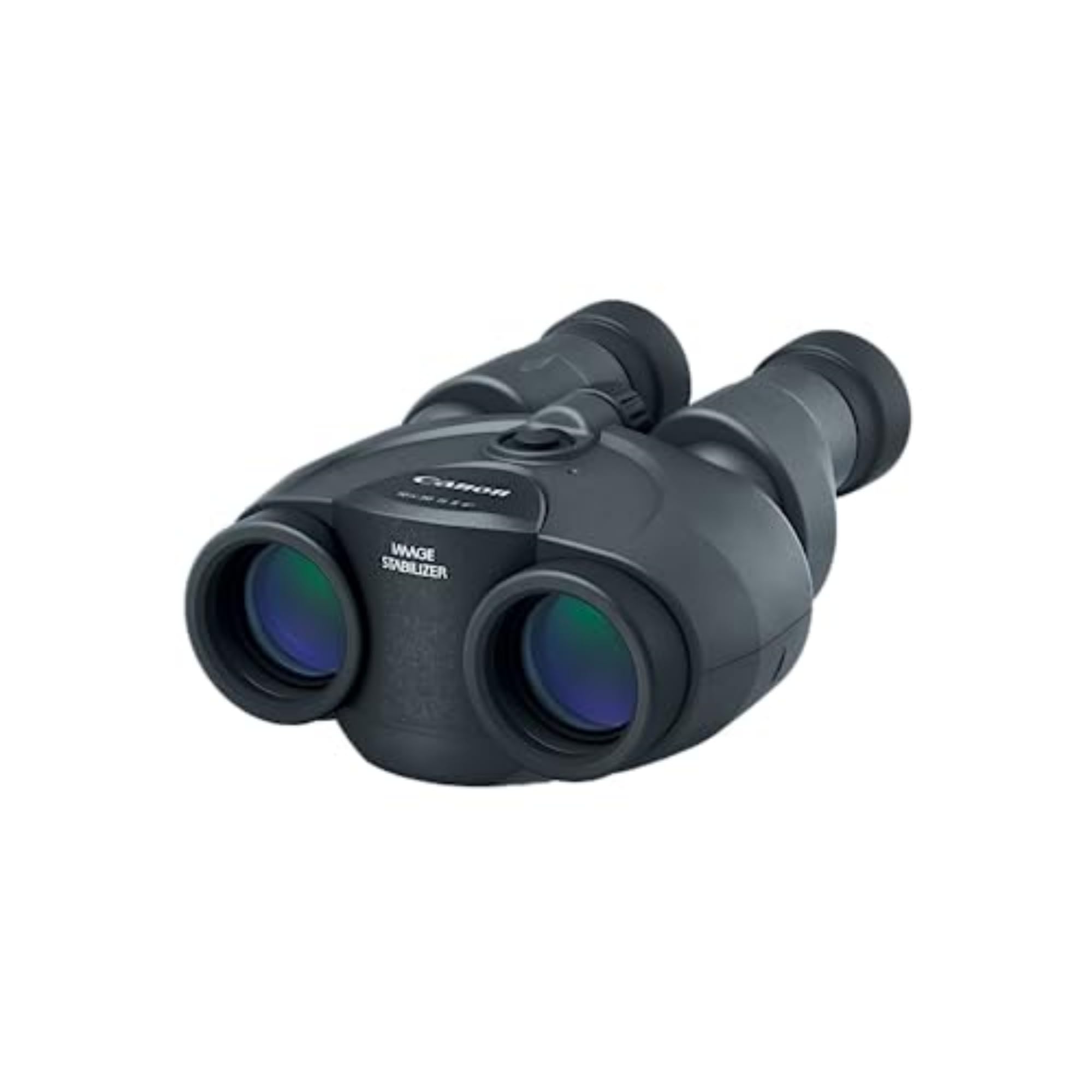
The Canon 10×30 IS II is the specialist tool for the Alaska cruise deck. Its Vari-Angle Prism Image Stabilization system effectively cancels out the ship’s low-frequency roll and your own pulse, rendering a rock-solid image at 10x magnification. Without a tripod, this is the only way to handhold high magnification on a moving vessel.
The optics are sharp with Super Spectra multi-coating, and the doublet field-flattener lenses keep the image distortion-free to the edges. At 30mm, the objective lens is smaller than the 42mm or 50mm alternatives, meaning it performs best in good daylight — typical for Alaska’s extended summer twilight. It is also remarkably lightweight at just over 20 ounces.
Users consistently praise the stabilization for revealing fine detail, such as the lettering on distant ships. The main trade-off is the lack of included objective lens caps and the somewhat tedious neck strap attachment, but those are minor compared to the functional advantage of steady images from a rocking deck. For serious wildlife viewing, this is the premium choice.
Why it’s great
- Electronic stabilization eliminates hand-shake and ship motion
- Sharp, edge-to-edge field-flattener optics
- Lightweight and highly portable for cruise packing
Good to know
- Smaller 30mm objective limits low-light performance at dawn/dusk
- No objective lens caps included with the unit
- Battery powered; requires occasional battery changes
2. Nikon Monarch M5 8×42 Binoculars
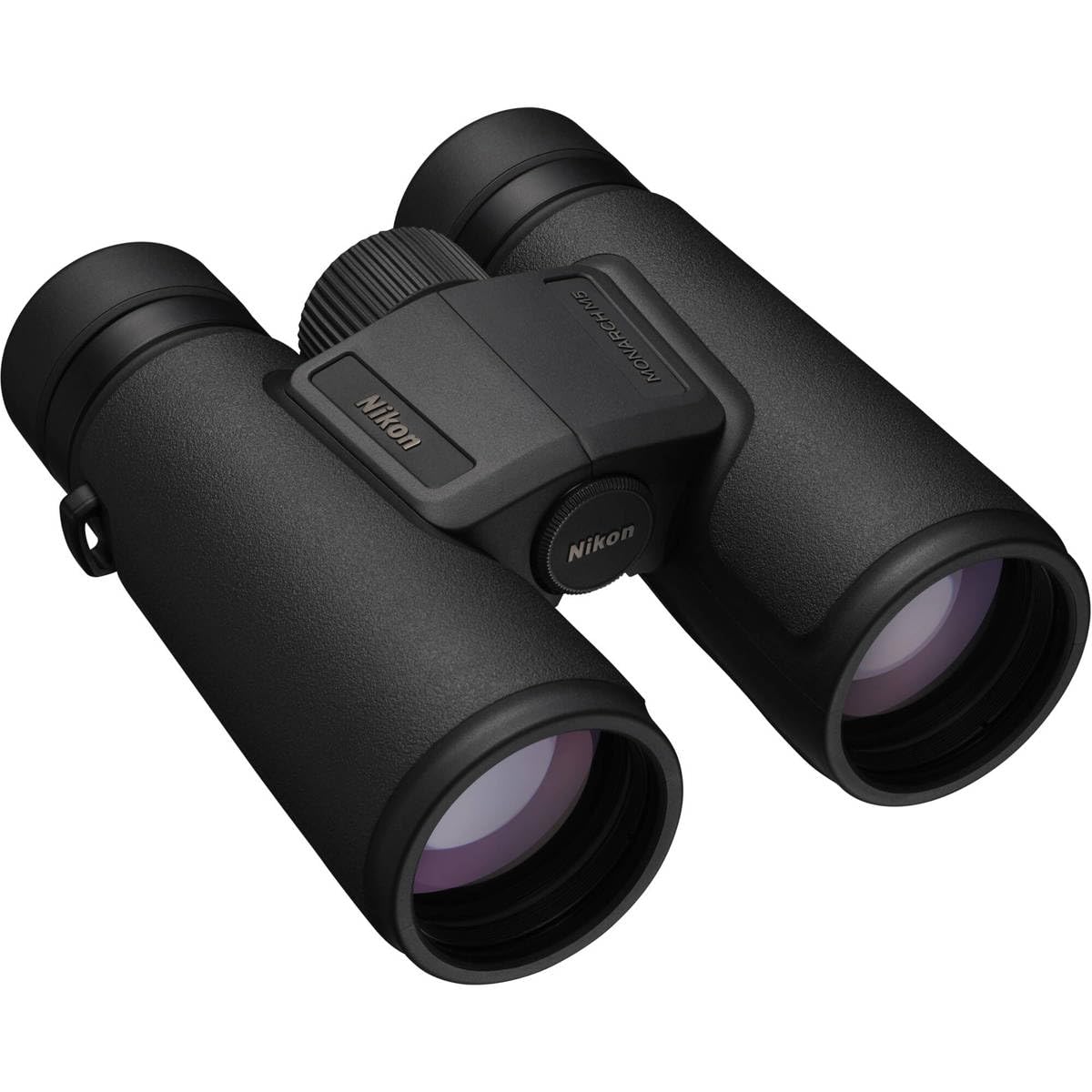
The Nikon Monarch M5 8×42 is the benchmark for pure optical clarity in this list. The Extra-low Dispersion (ED) glass virtually eliminates color fringing, while the dielectric-coated prisms boost light transmission for bright, true-to-life colors. For an Alaska cruise, this translates to vivid teal icebergs and accurate brown-black grizzly fur in all but the lowest light.
At 8x magnification, it strikes a perfect balance between reach and stability on the water. The 42mm objective provides excellent low-light gathering, and the field of view at 335 feet per 1000 yards is wide enough to track fast-moving dolphins breaking the surface. The build is nitrogen-purged and waterproof, ready for a sudden rain squall in Glacier Bay.
Customer reviews consistently rate this as the best under , noting its sharpness edge-to-edge compared to other mid-range models. The only real drawback reported is that the field of view is not the widest in its class, but for the combination of clarity, build quality, and Nikon’s reliability, it is a top contender for your cruise cabin.
Why it’s great
- ED glass delivers exceptional color fidelity and sharpness
- Dielectric-coated prisms for bright, natural low-light images
- Waterproof and fogproof with comfortable long eye relief
Good to know
- Field of view is good but not the widest in its category
- Heavier construction than some compact competitors
- Central focus wheel is close to the face for some users
3. Steiner Marine 7×50 Binoculars

The Steiner Marine 7×50 is built from the ground up for wet, rough conditions. Its 50mm objective paired with 7x magnification produces a massive 7.14mm exit pupil — larger than the average human pupil in low-light — making it the brightest image in this selection for Alaska’s long twilights and overcast fjords. The “Sports Auto-Focus” system keeps objects sharp from 20 yards to infinity without refocusing.
The Floating Prism System uses flexible silicone mounts to absorb the shock of being dropped on a deck or banging against a rail. The rubber armor is thick and provides a secure grip even with wet hands. At 7x, the image is naturally steady, and the combination of a huge, bright view with bulletproof build makes it ideal for the dedicated cruiser who prioritizes function over portability.
Real-world reviews highlight the extraordinary low-light performance and the sharp, high-contrast image. The primary cost is weight and bulk — this is a heavy, robust instrument. The strap is also noted as thin, and the narrow field of view compared to some 8x alternatives is a trade-off of the 7×50 format.
Why it’s great
- Exceptional low-light performance with 7.1mm exit pupil
- Sports-Auto Focus eliminates manual refocusing at distance
- Extremely durable with Floating Prism shock absorption
Good to know
- Significantly heavier and bulkier than compact models
- Narrower field of view than some 8×42 counterparts
- Individual focus type — not a center-focus design
4. Vortex Copperhead HD 10×42 Binoculars

The Vortex Copperhead HD 10×42 delivers impressive HD optical performance at a mid-range price point. The HD optical system with fully multi-coated lenses provides outstanding color fidelity and light transmission — essential for distinguishing the subtle blue shades of glacial ice from the surrounding water. The 10x magnification is great for detail but does require a steady hand on the rail.
The build is waterproof, fogproof, and shockproof, with a slip-resistant rubber armor that feels secure even in sea spray. It includes a GlassPak binocular harness, which is a major practical bonus for keeping the binoculars secure and accessible while moving around the ship. The 17mm eye relief is generous for eyeglass wearers, and the tripod adaptability is useful for long-range spotting.
Customer feedback notes that the image is clear and bright, though some users find the edges slightly less sharp compared to premium models. The unlimited, unconditional VIP warranty from Vortex is a standout feature — repair or replacement for any damage. For the price, this is a rugged, high-value companion for an active cruise.
Why it’s great
- HD optics for excellent color and sharpness
- Unconditional lifetime VIP warranty for peace of mind
- Includes premium GlassPak harness for carrying
Good to know
- 10x magnification can be shaky without a steady rest
- Edge sharpness lags behind pricier models
- Heavier than some compact mid-range options
5. Bushnell H2O Xtreme 10×42 Binoculars

The Bushnell H2O Xtreme 10×42 is purpose-built for the marine environment. The fully multi-coated glass and BaK-4 prisms ensure a bright, clear image that is a significant step up from entry-level optics.
The rugged rubber design includes soft grips that remain tactile and non-slip when wet, a critical feature when leaning over a rail in misty conditions. At 10×42, it offers a standard configuration that balances reach and brightness. Users upgrading from older 7×35 models report a notable improvement in low-light visibility and compactness.
Real-world reviews highlight the excellent clarity and brightness for the price. The main criticisms are the lack of a tripod adapter socket on some versions and a neck strap that some find uncomfortable. For the budget-conscious cruiser who needs reliable waterproofing above all else, the H2O Xtreme is a solid mid-range workhorse.
Why it’s great
- IPX7 waterproof rating ensures no moisture damage
- Fully multi-coated lenses and BaK-4 prisms for clarity
- Affordable entry into marine-grade optics
Good to know
- Some models lack a tripod adapter socket
- Neck strap reported as uncomfortable by some users
- Optical performance is good but not premium HD level
6. Sogries 10-30×50 Zoom Binoculars
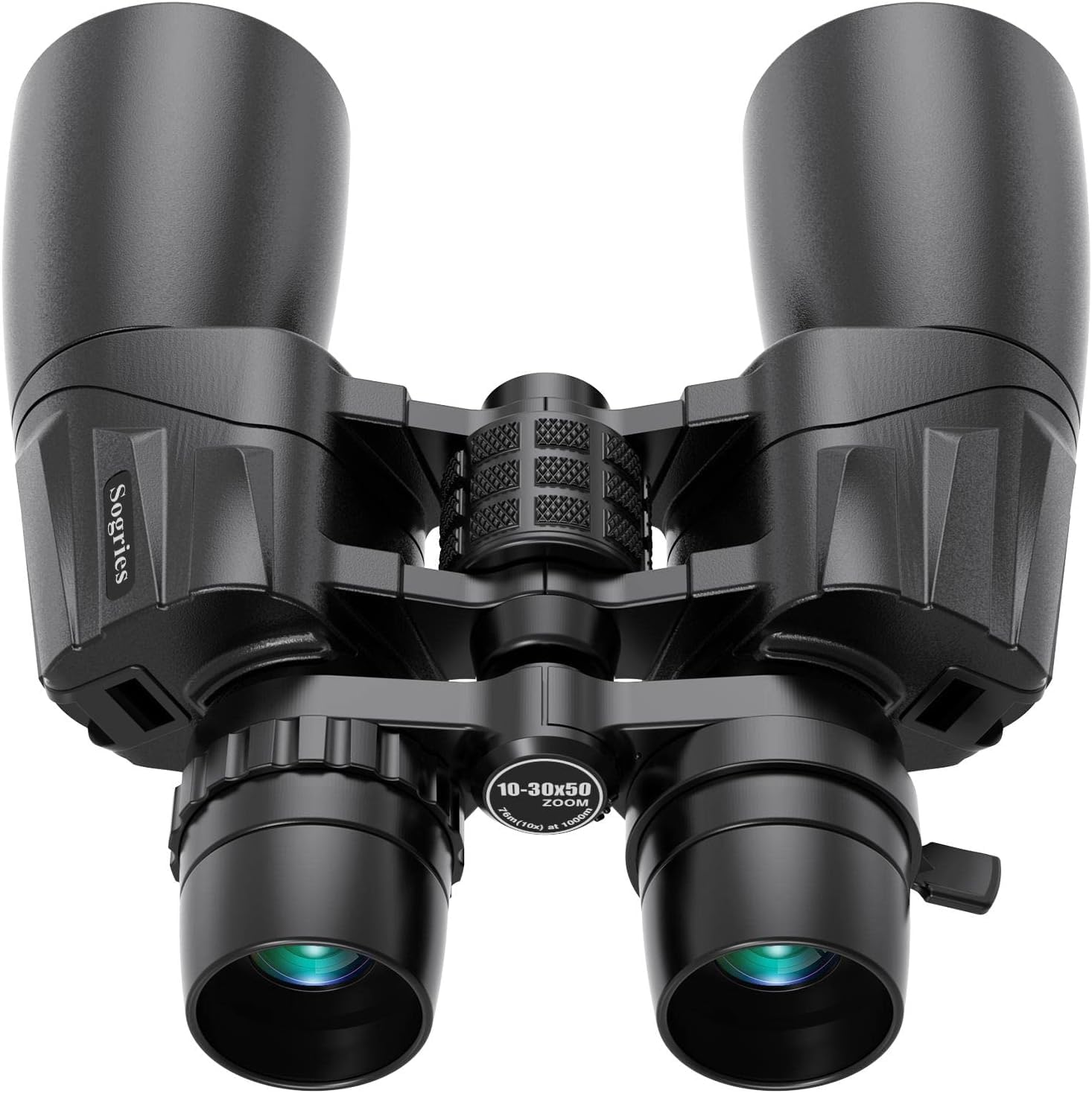
The Sogries 10-30×50 Zoom binoculars are the wild card for the Alaska cruiser who wants to read distant ship lettering or examine a specific tidewater glacier calving face. The variable zoom from 10x to 30x, combined with a large 50mm objective, provides flexibility that fixed-magnification binoculars cannot match.
At 10x, the image is reasonably bright and stable, but using the full 30x zoom requires a steady tripod — the manufacturer notes this clearly. The BAK-4 prisms and FMC multi-coated green film deliver bright, high-contrast images with good low-light performance at the lower end of the zoom range. The rubber-armored body is waterproof and shock-resistant.
Customer reviews are positive for the build quality and optical clarity at 10x. The key limitation is that the 30x setting is impractical for handheld use on a moving ship, making this best for port days when you can brace the binoculars or for dedicated wildlife fans who will bring a small tripod. It is a niche but powerful tool for the detail-oriented observer.
Why it’s great
- Variable 10-30x zoom for flexible viewing distance
- Large 50mm objective for bright image at lower zoom
- Solid waterproof build with BAK4/FMC optics
Good to know
- 30x zoom requires a tripod for stable use
- Heavy metal barrel design supports stability at cost of weight
- Zoom mechanism can be stiff to adjust smoothly
7. Nocs Provisions Standard Issue 10×25 Waterproof Binoculars

The Nocs Provisions Standard Issue 10×25 is designed for the minimalist traveler who prioritizes weight and portability above all else. At just 11.85 ounces, these compact binoculars slip into a purse or small daypack without a second thought. The fully multi-coated optics and BaK4 prism produce a surprisingly crisp image for such a small package.
The IPX7 waterproof rating is impressive for a unit this size — it can survive being dropped in a puddle or caught in a sudden rainstorm. The Rugged Wave Grip design provides a non-slip hold. The multi-stop twist-up eyecups accommodate eyeglass wearers, and the “No-Matter-What” lifetime warranty supports worry-free use in rough conditions.
Customer feedback confirms it is a great secondary or backup pair to a larger, more capable primary set. The 10×25 format inherently limits light gathering, so it performs best in full daylight. For the Alaska cruise passenger who wants a powerful, tiny companion for quick looks without the burden of a full-size bino, the Nocs Provisions is the perfect compact choice.
Why it’s great
- Extremely lightweight and pocketable for easy carry
- IPX7 waterproof in a compact form factor
- Lifetime warranty and eco-friendly build
Good to know
- Small 25mm objective captures limited light in twilight
- 10x magnification is shaky on a moving deck
- Not ideal as a primary optic for serious wildlife viewing
FAQ
Is 10x or 8x better for wildlife viewing from a cruise ship?
Why is a 50mm objective lens recommended for Alaska cruises?
Do I need image stabilization for my cruise binoculars?
Can I use a zoom binocular like a 10-30x on a boat?
What does IPX7 waterproof rating mean for cruise binoculars?
Final Thoughts: The Verdict
For most users, the best binoculars for alaska cruise winner is the Canon 10×30 Image Stabilization II because its electronic stabilization completely solves the problem of ship motion, giving you rock-steady images at 10x magnification. If you want unbeatable low-light clarity and a rugged marine build, grab the Steiner Marine 7×50. And for the best balance of optical quality, weather sealing, and a reasonable price, nothing beats the Nikon Monarch M5 8×42.