
Our readers keep the lights on and the weekend projects moving. As an Amazon Associate, I earn from qualifying purchases.
Packing for a multi-day trek means every ounce in your pack is scrutinized. Standard full-size binoculars, with their heavy chassis and bulky objective lenses, are often the first item left behind, forcing you to miss distant wildlife, route-finding landmarks, or the sheer joy of a close-up view of a granite peak. The real challenge is finding a pair that delivers crisp, bright images without adding significant weight or taking up valuable pack space.
I’m Rikta — the co-founder and writer behind FitlyFast. I’ve spent years analyzing the optical engineering, build materials, and field performance of compact optics to separate the truly trail-worthy from the glorified paperweights.
Whether you prioritize a sub-12-ounce frame or a fully waterproof seal, this guide breaks down the essential specs to help you choose the right binoculars for backpacking that won’t slow you down.
How To Choose The Best Binoculars For Backpacking
Backpacking binoculars live or die by one rule: you will not carry them if they are uncomfortable. This forces a careful trade-off between magnification power, objective lens size, and overall weight. A pair that stays home is useless, so prioritize portability without sacrificing the optical clarity needed to make a sighting worthwhile.
Magnification and Objective Lens: The 10×25 and 8×25 Sweet Spot
The most common backpacking format is 10×25—10x magnification with a 25mm objective lens. This keeps the binoculars compact and light (often under 12 ounces) while still providing enough reach for spotting birds, route markers, or landscape details. An 8×25 offers a slightly wider field of view and a brighter image in low light because the exit pupil is larger, but the trade-off is less reach. A 42mm objective lens gathers significantly more light, making it superior for dawn/dusk viewing, but adds substantial bulk and weight. For most multi-day trips, 25mm to 28mm objectives strike the best balance.
Lens and Prism Coatings: Where the Brightness Lives
All good binoculars are “multi-coated” these days, but the difference between “multi-coated” and “fully multi-coated” is significant. Fully multi-coated optics apply anti-reflective layers to every air-to-glass surface, maximizing light transmission and reducing glare. The prism material matters too: BaK-4 (Barium Crown) glass produces a round exit pupil and brighter image compared to BK-7 (Borosilicate) glass, which often produces a clipped exit pupil. Dielectric coatings on the prisms further boost reflectivity, delivering sharper, color-accurate images. For backpacking, where you might be viewing in harsh midday light or deep shade, these coatings directly determine whether you see detail or just a blob.
Weather Sealing: IPX7 and Nitrogen Purging
A trail binocular will encounter rain, dust, humidity, and the occasional dunk in a stream. An IPX7 rating means the unit can be submerged in up to 1 meter of water for 30 minutes, which provides robust protection. Nitrogen or argon purging prevents internal fogging when you move between temperature zones—like stepping out of a warm tent into a cold morning. Standard waterproofing is not enough; you need fogproofing to ensure the lenses don’t cloud up just when you need them most. Rubber armoring protects against drops on rocks and provides a secure grip with sweaty or wet hands.
Eye Relief and Eyecup Design: Comfort for Glasses Wearers
If you wear glasses, eye relief is a critical spec. Eye relief of 14mm or more is generally recommended for comfortable use with glasses. Twist-up eyecups with multiple stops let you adjust the distance to your eye for the widest possible field of view, whether you wear glasses or not. A short eye relief forces you to press your glasses against the lens, which can be uncomfortable and causes the image to vignette. The best backpacking binoculars offer at least 16mm of eye relief and smooth, click-stop eyecups.
Quick Comparison
On smaller screens, swipe sideways to see the full table.
| Model | Category | Best For | Key Spec | Amazon |
|---|---|---|---|---|
| Nocs Provisions Standard Issue 10×25 | Compact | Everyday trail carry | 315 ft field of view, 11.85 oz | Amazon |
| Nikon TRAVELITE EX 10×25 | Compact | Reliable all‑weather travel | Multilayer‑coated optics, 14 mm eye relief | Amazon |
| Vortex Diamondback HD 10×28 | Mid‑Range | High clarity in a compact frame | HD optical system, 273 ft field of view | Amazon |
| Celestron Nature DX ED 8×42 | Premium | Low‑light wildlife viewing | ED glass, 5.25 mm exit pupil | Amazon |
| Celestron Nature DX ED 10×42 | Premium | Distant detail at dawn/dusk | ED glass, 4.1 mm exit pupil | Amazon |
| ZEISS Terra ED Pocket 8×25 | Premium | Ultra‑compact premium clarity | Schott ED glass, 315 ft field of view | Amazon |
| ZEISS Terra ED 8×42 | Premium | Top‑tier low‑light performance | Schott ED glass, 5.3 mm exit pupil | Amazon |
In‑Depth Reviews
1. Nocs Provisions Standard Issue 10×25

The Nocs Provisions Standard Issue 10×25 strikes an exceptional balance between weight, durability, and optical clarity for the trail. At just 11.85 ounces, these binoculars are genuinely pocketable, yet they pack fully multi-coated optics and a Bak4 prism that deliver a bright 315-foot field of view. The patented Rugged Wave Grip design provides a secure hold even with wet hands, while the IPX7 waterproof rating and nitrogen purging make them impervious to rain, dust, and even a brief submersion. The Swiss-designed Bak4p prism and anti-reflective lens coatings keep images crisp and color-true in the variable light of forest canopy or open ridgelines.
The multi-stop twist-up eyecups are a standout feature for eyeglass wearers, offering three distinct positions to dial in the perfect eye relief. The carrying case is included, but a few users note that the neck strap slots can be tight to work with, though this does not affect the binoculars’ rugged performance. The “No-Matter-What” Lifetime Warranty adds serious peace of mind for long-term trail use.
Compared to the Nikon Travelite EX, the Nocs offers a slightly wider field of view and a more modern, ergonomic grip that feels less like a traditional instrument and more like a natural extension of your hand. For backpackers who want a go-anywhere, worry-free companion that does not compromise on image quality, this is the pair to beat.
Why it’s great
- Lightweight and genuinely pocketable at 11.85 oz
- IPX7 waterproof and nitrogen-purged for all-weather reliability
- Multi-stop twist-up eyecups work well with glasses
- Lifetime warranty encourages rough trail use
Good to know
- Neck strap slots can be tricky to install
- 10x magnification may amplify hand shake for some users
2. Nikon TRAVELITE EX 10×25

Nikon’s Travelite EX has long been a benchmark for compact travel binoculars, and it remains a strong contender for backpackers. The 10×25 configuration keeps the overall weight and bulk in check, while the multilayer-coated optics and aspherical eyepiece lenses deliver sharp, true-color images with minimal distortion. The die-cast aluminum body is wrapped in protective rubber armoring, providing a solid, shock-resistant feel that inspires confidence on rocky trails. The nitrogen-purged, O-ring sealed build is waterproof up to 2 meters and completely fogproof, making it reliable through rain, humidity, and temperature swings.
The high-eyepoint design and turn-and-slide rubber eyecups offer comfortable viewing for eyeglass wearers, with 14mm of eye relief that many users find adequate. The click-type diopter adjustment allows precise correction. With a field of view of 4.2 degrees, the Travelite EX provides a slightly narrower vista than the Nocs Provisions, but the trade-off is a proven, rugged construction that has been field-tested by thousands of hikers worldwide. Some users report that the 10×25 model can be more prone to image shake than an 8×25, but for those used to steady hands, it is a fantastic travel companion.
The Travelite EX is a workhorse. It may lack the latest premium coatings of the Vortex Diamondback HD, but it offers dependable performance at a price that makes it an easy choice for the budget-conscious backpacker who still wants a waterproof, fogproof optic.
Why it’s great
- Proven, durable build with rubber armoring and aluminum chassis
- Waterproof to 2 meters and fully fogproof
- Comfortable high-eyepoint design for glasses users
Good to know
- Field of view is narrower than some competitors
- Some users prefer the 8×25 version for steadier images
3. Vortex Diamondback HD 10×28

The Vortex Diamondback HD 10×28 is a mid-range powerhouse that brings premium HD (High Definition) optical system performance into a compact 28mm objective format. The HD glass elements significantly reduce chromatic aberration, producing a sharp, high-contrast image with excellent color fidelity. The fully multi-coated lenses and dielectric-coated prisms maximize light transmission, delivering a bright image that rivals larger 32mm binoculars in good light. The argon purging and O-ring seals provide waterproof and fogproof performance that exceeds the nitrogen-purging standard.
Build quality is exceptional for the price. The rubber armor provides a secure, non-slip grip, while the adjustable twist-up eyecups with 16mm of eye relief accommodate glasses wearers easily. The center focus wheel is smooth and precise, allowing one-handed adjustment. The tripod adaptability is a bonus for extended viewing sessions, though the included harness is absent—a minor criticism for a product otherwise ready for the field. The unlimited, unconditional Vortex VIP Warranty is legendary; it is a fully transferable promise to repair or replace the binoculars if they are damaged.
The 28mm objective lenses gather more light than the 25mm competitors while still keeping the package remarkably compact. For the backpacker who demands superior optical clarity and is willing to invest a bit more, the Diamondback HD is a superb choice that steps up the image quality noticeably.
Why it’s great
- HD glass delivers exceptional resolution and color clarity
- Argon purged for superior fogproof performance
- Unlimited, unconditional VIP warranty
- Smooth, precise focus wheel
Good to know
- Harness not included
- Slightly heavier than 10×25 options
4. Celestron Nature DX ED 8×42

The Celestron Nature DX ED 8×42 is the premier choice for backpackers who prioritize low-light performance above all else. The 42mm objective lenses, paired with Extra-Low Dispersion (ED) glass, virtually eliminate chromatic aberration, producing razor-sharp, color-accurate images even in the dim light of dawn, dusk, or dense forest understory. The 5.25mm exit pupil is generous enough to keep your eyes adapted to low light, making it easier to spot wildlife during crepuscular hours. The fully multi-coated optics and phase-coated BaK-4 prisms ensure maximum light transmission, delivering a bright, immersive view.
The trade-off for this light-gathering ability is size and weight. At the heavier end of the backpacking spectrum, these binoculars are best suited for hikes where the primary goal is wildlife observation rather than ultralight travel. The rubber-armored polycarbonate housing is rugged and weather-resistant, while the nitrogen purging keeps the lenses fog-free. The twist-up eyecups offer generous eye relief, and the tripod adaptability is a welcome feature for extended glassing sessions.
For the hiker who carries a day pack or a slightly heavier load, the Celestron Nature DX ED 8×42 offers an optical experience that outshines any compact 25mm binocular. The sharpness and brightness at dawn are transformative, making this a specialized but deeply satisfying tool for the dedicated naturalist.
Why it’s great
- Exceptional low-light performance with ED glass and large exit pupil
- Razor-sharp, true-color images with minimal chromatic aberration
- Rugged, waterproof, and fogproof build
Good to know
- Heavier and bulkier than 25mm backpacking options
- Focus wheel can feel slow for quick adjustments
5. Celestron Nature DX ED 10×42
The Celestron Nature DX ED 10×42 shares the same ED objective lens technology as its 8×42 sibling, but trades a wider field of view for greater magnification. The 10x power is excellent for observing distant birds, mountain goats, or route details across a valley. The ED glass again delivers superior color fidelity and sharpness, virtually eliminating the color fringing that can plague binoculars in this price range. The 4.1mm exit pupil still provides a reasonably bright image in moderate low light, though it is less forgiving than the 8×42 version when light levels drop.
Weighing and feeling similar to the 8×42, this model also demands a dedicated space in your pack. The rubber-armored polycarbonate build is tough, and the nitrogen-purged, waterproof sealing ensures it can handle any weather. The 10x magnification requires a steadier hand or a support point; the tripod-adaptable design helps for extended viewing. The eye relief is slightly shorter at 14.3mm, which may be a consideration for some glasses wearers.
For the backpacker who wants maximum reach for spotting distant wildlife, the 10×42 is a capable and affordable alternative to premium alpha brands. It provides a significant step up in detail compared to a 10×25, but only if you are willing to carry the extra weight.
Why it’s great
- Powerful 10x magnification with superb ED glass clarity
- Waterproof and nitrogen-purged for all-condition use
- Great value for a 42mm ED binocular
Good to know
- Shorter eye relief may not suit all glasses users
- Heavy for ultralight backpacking
6. ZEISS Terra ED Pocket 8×25

The ZEISS Terra ED Pocket 8×25 is a masterclass in packing premium optics into a tiny, trail-ready package. Weighing roughly the same as a granola bar, these binoculars slip into a hip belt pocket or stuff sack without a thought. The key differentiator is the Schott ED glass, which delivers remarkable color accuracy, contrast, and light transmission for a 25mm objective—achieving 88% light transmission. The hydrophobic LotuTec coating on the outer lenses beads off rain and debris, maintaining a clear view in foul weather. The magnesium-reinforced fiberglass casing is near-indestructible and waterproof.
The 8×25 format provides a wide field of view that is surprisingly immersive for such a compact unit, and the large, smooth focus wheel makes acquiring targets very fast. With 16mm of eye relief and adjustable twist-up eyecups, it is very comfortable for glasses wearers. The image is sharp and contrast-rich, though the smaller exit pupil limits its low-light performance compared to a 42mm model. Some users note the lack of included lens caps, which is a minor oversight for a premium product.
For the ultralight backpacker or fast-packer who wants the best possible optical quality without sacrificing pack weight, the ZEISS Terra ED Pocket is the top-tier choice. It proves that premium glass does not have to come in a bulky body.
Why it’s great
- Superb Schott ED glass in a pocketable, ultralight chassis
- Hydrophobic LotuTec coating for clear viewing in rain
- Fast, smooth focus wheel with large surface area
- Excellent image contrast and color accuracy
Good to know
- Low-light performance limited by small exit pupil
- Lens caps not included
7. ZEISS Terra ED 8×42
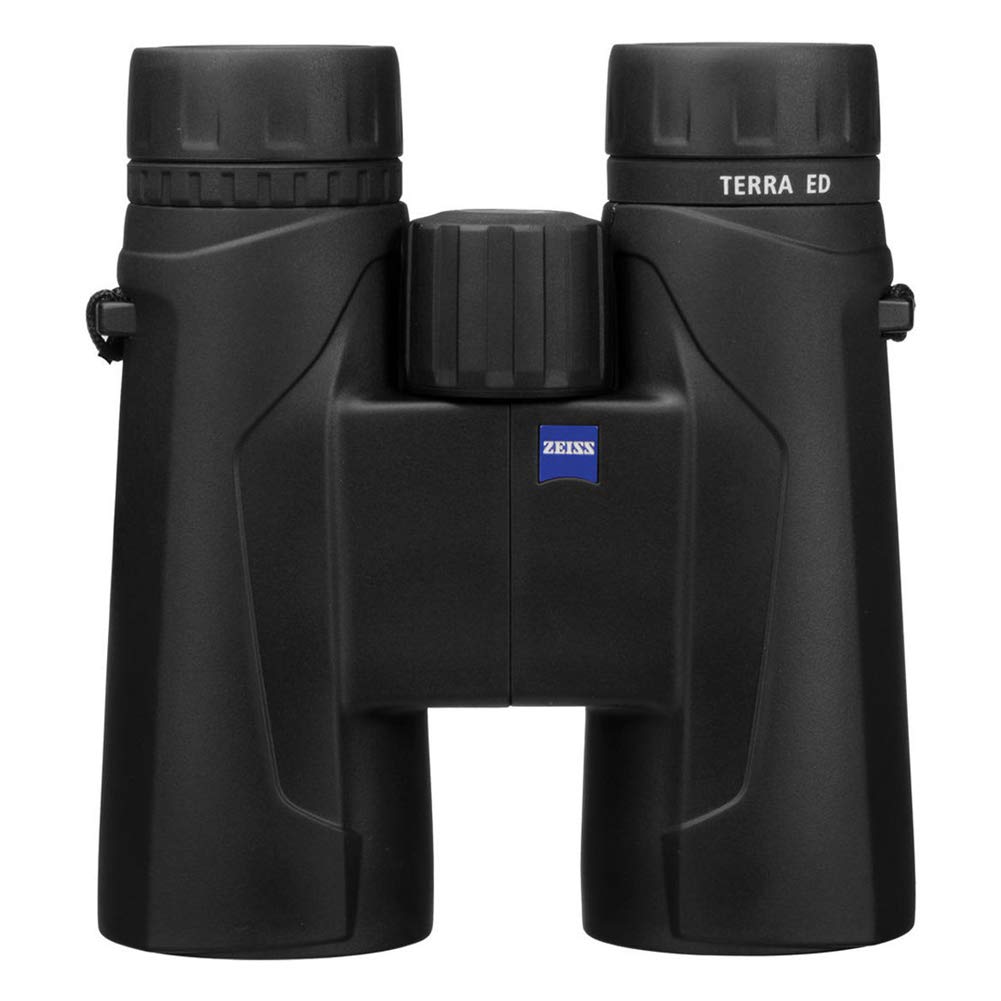
The ZEISS Terra ED 8×42 represents the entry point into true premium binocular performance for the serious outdoor enthusiast. The 42mm objectives, combined with Schott ED glass, deliver an astonishingly bright, sharp, and color-true image across all lighting conditions, from harsh midday to deep twilight. The 5.3mm exit pupil is generous enough to keep your eye fully dilated even in dim light, making this an exceptional tool for dawn and dusk wildlife observation. The 88% light transmission and hydrophobic multi-layer anti-reflective coatings ensure excellent contrast and clarity even in wet conditions.
The build quality is typical ZEISS: a robust, fiberglass-reinforced polycarbonate chassis with a comfortable grip and a large, intuitive focus wheel. It is water and fogproof, designed to withstand the rigors of the trail. With 18mm of eye relief, it is exceptionally comfortable for prolonged use with glasses. The wide field of view makes it easy to track birds in flight. The primary consideration for backpackers is simply the size and weight, as these are full-sized binoculars that demand real pack space.
This is the binocular to buy if your primary goal is the absolute best optical quality and you are willing to carry a bit more weight for a transformative viewing experience. It is a significant investment, but the clarity and brightness are in a different league from the compact options.
Why it’s great
- Exceptional optical performance with Schott ED glass
- Generous 5.3mm exit pupil for superior low-light viewing
- Wide field of view and long 18mm eye relief
- Robust, weather-resistant build
Good to know
- Larger and heavier, not for ultralight packing
- Price is a significant jump from mid-range options
FAQ
Is 10x magnification too shaky for a backpacking binocular?
What is the ideal weight for backpacking binoculars?
Do I need ED glass for trail use?
Final Thoughts: The Verdict
For most users, the binoculars for backpacking winner is the Nocs Provisions Standard Issue 10×25 because it delivers the best overall blend of light weight, durability, optical quality, and a lifetime warranty at a mid-range price. If you want superior clarity and a slightly larger objective lens for better low-light performance without sacrificing too much pack space, grab the Vortex Diamondback HD 10×28. And for the ultralight backpacker who demands the absolute best glass in the smallest package, nothing beats the ZEISS Terra ED Pocket 8×25.