
Our readers keep the lights on and the weekend projects moving. As an Amazon Associate, I earn from qualifying purchases.
Standard binoculars force eyeglass wearers into a frustrating trade-off: either jam the eyecups against your frames and hope the image doesn’t black out, or hover uncomfortably and lose half the field of view. The wrong pair leaves you with pressure marks on your temples and a faint, ringed shadow around everything you’re trying to see. What you actually need is a binocular designed with enough eye relief to let your lenses breathe — a spec that determines whether a pair feels like a pair the moment you lift them to your eyes.
I’m Rikta — the co-founder and writer behind FitlyFast. I’ve spent hundreds of hours comparing optical specs, analyzing customer feedback on dimensional fit, and cross-referencing eye relief measurements to build a guide that actually helps spectacle wearers buy with confidence, not guesswork.
This guide cuts through the marketing noise to help you find the binoculars for eyeglass wearers that deliver a full, unobstructed view without sacrificing optical quality or durability.
How To Choose The Best Binoculars For Eyeglass Wearers
Choosing a binocular when you wear glasses is less about magnification power and more about how the optical system interfaces with your corrective lenses. If the eye relief is too short, you’ll see a black ring around the image or have to press your glasses into the eyecups, which scratches the lenses and causes eye strain. Focus on these three factors first, and the rest of the decision becomes much simpler.
Prioritize Eye Relief of 17mm or More
Eye relief is the distance from the ocular lens to where your eye needs to be to see the full field of view. For glasses wearers, a minimum of 17mm is the rule of thumb — but that’s the bare floor. Models offering 18mm or more, like the Nikon Monarch M5 (19.5mm) or the Oberwerk Explore (18mm), give you comfortable room to keep your frames on without losing image area. Beware of marketing that lists “long eye relief” without a millimeter number; you want the exact spec, printed and verified by real user reports.
Look for Twist-Up Eyecups with Intermediate Click-Stops
Eyecups that twist up and lock at multiple positions allow you to dial in the exact distance your glasses need. Basic roll-down rubber eyecups are too imprecise — they either sit too close, causing the dreaded blackout shadow, or too far, introducing stray light that washes out contrast. The Nikon PROSTAFF P7 and the Monarch M5 both use turn-and-slide click-stop eyecups that let you find a repeatable setting, while the Athlon Neos G2 includes intermediate stops specifically marketed for eyeglass compatibility.
Balance Light Transmission with Durability
Fully multi-coated (FMC) lenses dramatically improve light transmission, which matters more for glasses wearers because your own lenses already reduce incoming light slightly. FMC coatings compensate for that loss. Pair this with nitrogen-purged waterproofing and you get a binocular that stays clear in morning dew, coastal fog, or sudden drizzle — conditions where moisture on your glasses is already a problem. The Bushnell H2O Xtreme and Sogries ED both use O-ring sealed, nitrogen-filled bodies to prevent internal fogging.
Quick Comparison
On smaller screens, swipe sideways to see the full table.
| Model | Category | Best For | Key Spec | Amazon |
|---|---|---|---|---|
| Nikon Monarch M5 8×42 | Premium Roof Prism | All-day wildlife, low-light clarity | 19.5mm Eye Relief | Amazon |
| Nikon PROSTAFF P7 10×42 | Mid-Range Roof Prism | Birding, sports, general nature | 15.7mm Eye Relief | Amazon |
| Sogries 12×50 ED | High-Power ED | Long-range stargazing, hunting | 18mm Eye Relief | Amazon |
| Oberwerk Explore 10×50 | Astronomy/Outdoor | Astronomy, landscape observation | 18mm Eye Relief | Amazon |
| Vortex Copperhead HD 10×42 | Value Roof Prism | Hunting, all-weather field use | 17mm Eye Relief | Amazon |
| Athlon Neos G2 8×42 | Budget HD | Entry-level birding, travel | 17mm Eye Relief | Amazon |
| Bushnell H2O Xtreme 10×42 | Weatherproof Value | Boating, wet-weather viewing | 17mm Eye Relief | Amazon |
In‑Depth Reviews
1. Nikon Monarch M5 8×42
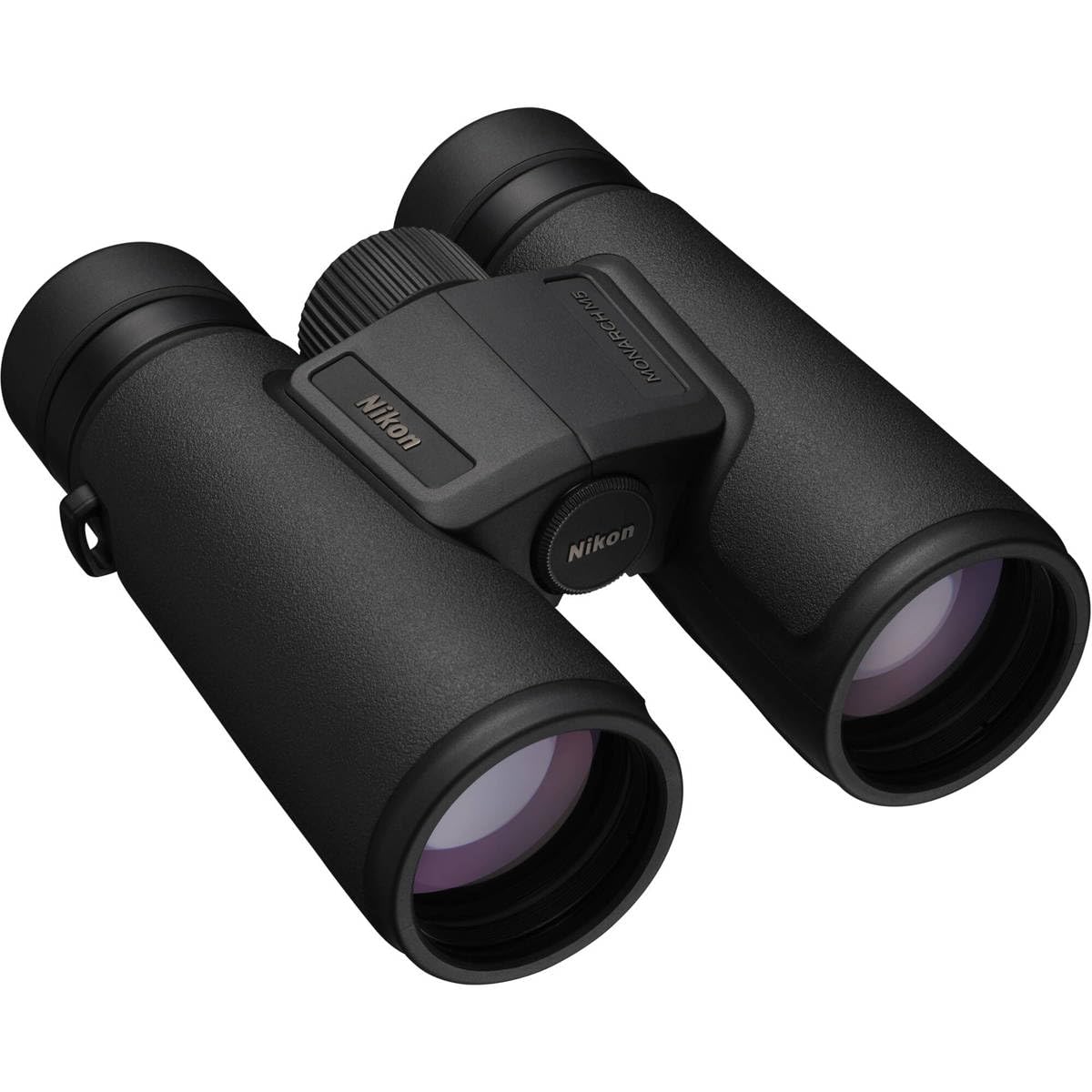
The Monarch M5 is the benchmark for glasses-friendly binoculars under any realistic budget. Its 19.5mm eye relief is the longest on this list, giving spectacle wearers a full, unobstructed 335-foot field of view at 1,000 yards with zero black-ring shadowing. The turn-and-slide click-stop eyecups lock securely at multiple positions, which means you can set the exact gap your frames need once and never re-adjust.
Optically, this is where Nikon’s ED glass earns its reputation. The extra-low dispersion elements kill chromatic aberration — no purple or green fringing along high-contrast edges like branches against a bright sky. Dielectric high-reflective prism coatings push light transmission high enough that the 8×42 configuration stays bright well into twilight, which matters when your own glasses already cut a small percentage of incoming light.
The body is nitrogen-purged and O-ring sealed for waterproof and fogproof performance, and the rubber armor provides a secure grip even in wet conditions. Some users note the field of view is narrower than the premium M7 model, but at less than half the cost, you get 90% of the optical performance with a glasses-friendly build that competitors at this price point simply don’t match.
Why it’s great
- Industry-leading 19.5mm eye relief provides a full field of view with glasses on
- ED glass eliminates chromatic aberration for crisp, color-accurate images
- Dielectric-coated prisms deliver excellent brightness in low-light conditions
Good to know
- Narrower apparent field of view compared to premium Monarch M7
- Not the lightest option for long treks, though still manageable
2. Nikon PROSTAFF P7 10×42

The PROSTAFF P7 sits one tier below the Monarch M5, but its 10×42 configuration and sophisticated optical coatings make it a serious contender for eyeglass wearers who want higher magnification without jumping to a premium price. The turn-and-slide eyecups are the same user-adjustable design found on Nikon’s pricier models, and they hold their position firmly even after repeated adjustments in the field.
Nikon’s multilayer anti-reflection coatings and phase-correction coated roof prisms work together to produce a notably bright, crisp image. At 15.7mm of eye relief, it falls just short of the ideal 17mm minimum some glasses wearers need, but the adjustable eyecups help compensate by letting you fine-tune the standoff distance. Users with thicker frames or high-index lenses may want to confirm the fit before buying, while those with slim metal frames will likely find the view complete and comfortable.
The body is a fiberglass-reinforced polycarbonate with a shock-resistant rubber armor, keeping the weight low enough for extended handheld use. The locking diopter ring is a thoughtful touch that prevents accidental focus drift. For birders and sports enthusiasts who prioritize a wide, 367-foot field of view and don’t need the ultimate low-light edge of ED glass, the PROSTAFF P7 delivers outstanding performance at a mid-range price.
Why it’s great
- Excellent image brightness and color fidelity from advanced multilayer coatings
- Lightweight fiberglass-reinforced body reduces fatigue during long sessions
- Turn-and-slide eyecups offer precise, lockable adjustment
Good to know
- 15.7mm eye relief may not suit everyone with thicker eyeglass frames
- Lacks ED glass found in the more expensive Monarch series
3. Sogries 12×50 ED

The Sogries ED binocular is a high-power option that doesn’t forget about glasses wearers. Its 18mm eye relief is generous for a 12×50 design — many long-range binoculars sacrifice this spec to maximize the apparent field of view, leaving spectacle users with a cramped, shadowed image. The twist-up eyecups here allow you to find a comfortable working distance, and the 5.8-degree viewing angle gives you a usable 335-foot field at 1,000 yards despite the higher magnification.
The extra-low dispersion glass is the headline feature at this price point. ED glass is usually reserved for optics costing much more, and here it effectively suppresses chromatic aberration during astronomy sessions or when scanning for wildlife against a bright horizon. The fully multi-coated anti-reflective purple film maximizes light throughput, which is a real advantage when your glasses already reduce available light. The 50mm objective lenses gather enough light for stargazing and pre-dawn hunting.
Build quality is solid: a magnesium alloy chassis wrapped in matte-textured rubber armor provides a non-slip grip, and the nitrogen-filled IPX7 waterproof rating means it can handle accidental submersion. At 750 grams, it’s on the heavier side, so a tripod adapter is useful for extended glassing sessions. Some users have reported collimation issues out of the box, which warrants checking your unit immediately upon arrival.
Why it’s great
- ED glass significantly reduces color fringing at high magnification
- 18mm eye relief supports comfortable viewing with most eyeglass styles
- IPX7 waterproof rating provides reliable performance in wet environments
Good to know
- Heavier than lower-magnification options at 750 grams
- Occasional quality control issues with alignment reported by some buyers
4. Oberwerk Explore 10×50
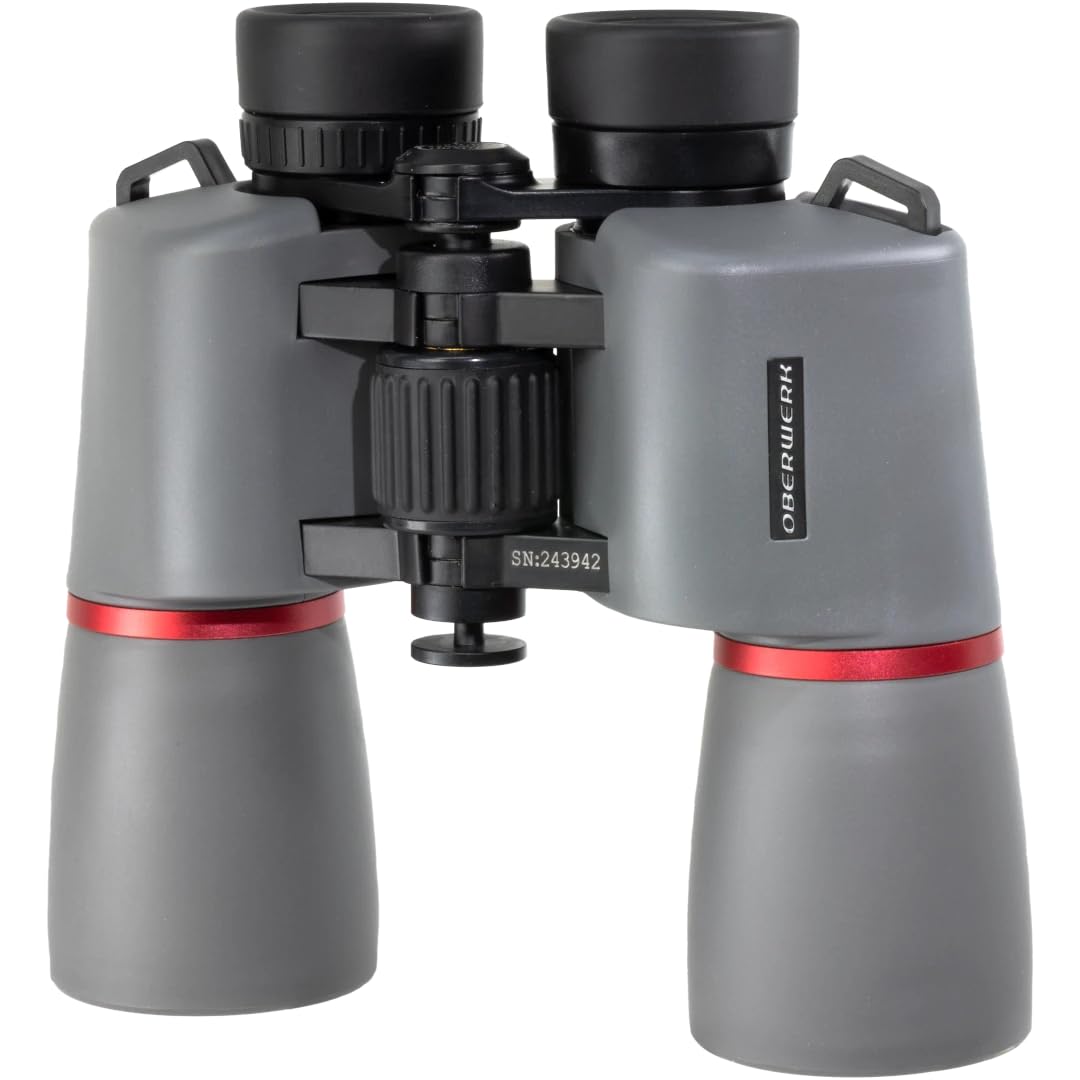
Oberwerk has built a loyal following among astronomy and nature enthusiasts who wear glasses, and the Explore 10×50 shows exactly why. The 18mm eye relief is matched with twist-up eyecups that give you enough standoff to keep your frames comfortable while maintaining the full 6-degree field of view. For a 50mm objective binocular, that’s a respectable 315-foot field at 1,000 yards — wide enough for panning across a star field or scanning a mountain ridge.
The fully multi-coated optics and BaK-4 prisms produce a bright, neutral image that holds up well in the critical twilight hours. The 5mm exit pupil is ideal for low-light conditions, lining up nicely with the average dilated pupil of an adult eye. The nitrogen-charged waterproofing ensures no internal fogging when moving between warm indoors and cool night air, a common issue for astronomy use that wrecks the viewing experience for glasses wearers who can’t afford any contrast loss.
Build quality exceeds expectations at this price. The aluminum chassis feels substantial without being overly heavy, and the included soft-sided case offers solid protection. Some initial units had collimation issues that required returns, but Oberwerk’s customer support is frequently praised for fast replacements. If you’re using these primarily for astronomy or landscape observation from a tripod, the combination of generous eye relief and large objective lenses makes the Explore a compelling choice.
Why it’s great
- 18mm eye relief delivers true glasses-friendly performance with a full field
- Large 5mm exit pupil excels in low-light and astronomy applications
- Solid aluminum build with excellent customer support behind the product
Good to know
- Heavier than compact roof-prism designs at over 2 pounds
- Some units may require factory collimation verification upon arrival
5. Vortex Copperhead HD 10×42

The Vortex Copperhead HD hits the sweet spot for glasses wearers who hunt or birdwatch in variable weather. With 17mm of eye relief, it meets the minimum standard most opticians recommend for comfortable spectacle use, and the adjustable eyecups allow you to find a position that fits your particular frame thickness. The HD optical system uses extra-low dispersion glass elements to improve color fidelity and edge sharpness compared to standard Vortex models at a similar price.
Fully multi-coated lenses maximize light transmission through the 42mm objectives, delivering a bright image even as daylight fades. The 10x magnification provides serious reach, and the center focus wheel is smooth enough for one-handed operation. At 334 feet per 1,000 yards, the field of view is adequate for scanning but not exceptionally wide — trade-offs you’d expect for an HD system at this tier.
This binocular is built to survive abuse: rubber armor, O-ring sealed waterproofing, and nitrogen purging for fogproof performance. Included accessories like the Glasspak binocular harness and padded neck strap add real value. The star feature is Vortex’s VIP warranty — unlimited, unconditional, and fully transferable. If the binocular fails for any reason, Vortex repairs or replaces it for free. That kind of lifetime backing makes the Copperhead HD a low-risk investment for anyone who needs reliable glasses-friendly optics in the field.
Why it’s great
- HD glass delivers noticeably better color and edge sharpness than standard glass
- Unconditional lifetime VIP warranty removes worry about damage or defects
- 17mm eye relief combined with adjustable eyecups fits most eyeglass frames
Good to know
- Field of view is narrower than some competitors in the same price bracket
- Slightly heavier than some pure birding-focused models
6. Athlon Neos G2 8×42

The Athlon Neos G2 is one of the few budget binoculars that explicitly markets its long eye relief to eyeglass wearers — and it backs that claim with real usability. At 17mm of eye relief, it matches the spec of many binoculars costing twice as much, and the twist-up eyecups with intermediate stops give you four distinct positions to dial in the perfect fit. For a sub-120-dollar binocular, this level of glasses-friendly engineering is rare.
The BaK-4 glass prisms and multi-coated optics produce an image that is surprisingly bright and sharp at the center, though the field of view is narrower than some competitors at just over 300 feet. Close-focus capability of around 15 feet makes it functional for butterfly or dragonfly observation. The composite body keeps weight low at 650 grams, making it a solid travel companion for day hikes or safari when you can’t afford heavy gear.
Waterproof and fogproof protection means it won’t let you down in damp conditions, and the included neck strap, lens caps, and cleaning cloth cover the basics. Some users report the plastic focusing knob feels less refined than metal alternatives, especially in cold weather. Still, for an entry-level price, the Neos G2 delivers the most critical feature for spectacle users — adequate eye relief — without forcing you to compromise on basic optical quality.
Why it’s great
- 17mm eye relief with adjustable click-stop eyecups is ideal for glasses wearers
- Lightweight composite body reduces fatigue during extended use
- Excellent value proposition for entry-level birding and nature observation
Good to know
- Field of view is on the narrower side compared to pricier models
- Plastic focusing components feel less durable in cold conditions
7. Bushnell H2O Xtreme 10×42

Bushnell’s H2O Xtreme line is built for wet environments, and the 10×42 model brings that weatherproofing to a glasses-friendly package. With 17mm of eye relief, it lands on the acceptable side of the minimum spec, and the twist-up eyecups provide enough flexibility for most standard frame sizes. The fully multi-coated optics and BaK-4 prisms produce a brighter and sharper image than the older H2O series, which relied on simpler coatings that left low-light performance lacking.
The standout feature here is the IPX7 waterproof rating — O-ring sealed and nitrogen-purged to prevent internal fogging even if the binocular is submerged in up to one meter of water for 30 minutes. For boating, kayaking, coastal birding, or any environment where spray and rain are constant threats, this specification provides real peace of mind. The rubberized armor adds a non-slip grip that works well with wet hands or when wearing gloves.
Image quality is good for the price: sharp in the center with acceptable edge clarity, though some chromatic aberration appears on high-contrast subjects. The 6.8-degree field of view (about 357 feet at 1,000 yards) is wider than many competitors in this price tier, making it easier to track fast-moving birds or boats. One notable omission is the lack of a tripod adapter socket on this specific model, so steadying for long sessions requires a solid handheld hold or a monopod adapter.
Why it’s great
- IPX7 waterproof construction handles submersion and heavy rain without issues
- Wide 6.8-degree field of view helps track moving subjects easily
- 17mm eye relief works well for most eyeglass wearers in wet conditions
Good to know
- No built-in tripod adapter socket limits steady long-range use
- Some chromatic aberration visible on high-contrast edges in bright sunlight
FAQ
What is the minimum eye relief I need if I wear glasses?
Can I use binoculars with twist-up eyecups if I have a strong prescription?
Final Thoughts: The Verdict
For most users, the binoculars for eyeglass wearers winner is the Nikon Monarch M5 8×42 because it combines a class-leading 19.5mm of eye relief with ED glass optics, durable waterproof construction, and click-stop eyecups that work perfectly with any frame thickness. If you want higher magnification for stargazing or long-range observation without losing glasses-friendly fit, grab the Sogries 12×50 ED. And for wet-weather use where IPX7 waterproofing is a non-negotiable requirement, nothing beats the Bushnell H2O Xtreme 10×42 on this list.