
Our readers keep the lights on and the weekend projects moving. As an Amazon Associate, I earn from qualifying purchases.
Long-distance viewing demands binoculars that resolve crisp detail at extreme ranges, not shaky blurs that punish your eyes. The divide between a versatile mid-power optic and a dedicated tripod-mounted giant determines whether you actually see the object or just a magnified smudge.
I’m Rikta — the co-founder and writer behind FitlyFast. My approach to this guide involved cross-referencing customer field reports with objective optical specifications like exit pupil size, prism type, and lens coating quality to separate genuine long-range performance from marketing claims.
After evaluating seven distinct models spanning from compact roof prisms to giant astronomy binoculars, this guide delivers a clear, spec-driven breakdown of the best binoculars for long distance viewing available today, matched to your actual use case.
How To Choose The Best Binoculars For Long Distance Viewing
Selecting long-distance binoculars isn’t just about grabbing the highest magnification number. A 20x model on a shaky tripod delivers worse results than a stable 10x on a solid mount. Focus on the intersection of magnification, objective lens size, prism quality, and your intended environment.
Magnification vs. Objective Lens Diameter
The first number indicates magnification, the second is the objective lens diameter in millimeters. A 10×42 provides moderate power in a portable package, while a 20×80 or 25×100 delivers extreme reach but demands a robust tripod. The exit pupil (objective lens divided by magnification) should be at least 4mm for comfortable daytime use and over 5mm for low-light conditions. A 10×42 yields a 4.2mm exit pupil; a 20×80 yields 4.0mm.
Prism Type and Lens Coatings
BaK-4 prisms produce sharper, brighter images than BK-7 prisms because they transmit more light without internal cutoff. Fully multi-coated (FMC) lenses apply anti-reflective layers to every air-to-glass surface, boosting light transmission past 95% and reducing glare. Premium coatings like Celestron’s XLT or Vortex’s XR Plus add further improvements in color fidelity and low-light performance.
Physical Stability and Tripod Necessity
At magnifications above 12x, hand tremors become magnified to the point where a tripod is no longer optional. Binoculars in the 20×80 and 25×100 class are heavy instruments that require a sturdy photo or video tripod. Check for a built-in tripod adapter (usually a ¼”-20 threaded socket) before purchasing. For marine or vehicle use, a car window mount can provide stability without a full tripod.
Quick Comparison
On smaller screens, swipe sideways to see the full table.
| Model | Category | Best For | Key Spec | Amazon |
|---|---|---|---|---|
| Vortex Razor UHD 18×56 | Premium | Ultra-HD long-range spotting | Abbe Koenig prisms, 56mm | Amazon |
| Celestron SkyMaster 25×100 | Giant Aperture | Deep-sky astronomy | 100mm objective, 25x | Amazon |
| Celestron SkyMaster Pro 20×80 | Pro Tripod | Astronomy & long-range land | XLT coatings, 80mm | Amazon |
| Bushnell H2O Xtreme 10×42 | Waterproof | Marine & wet conditions | IPX7 waterproof, 10×42 | Amazon |
| Vortex Copperhead HD 10×42 | HD Mid-Range | Hunting & general use | HD optics, 10×42 | Amazon |
| Aurosports 20×80 | Large Aperture | Budget stargazing & wildlife | 20×80, BaK-4 prisms | Amazon |
| Sogries 10-30×50 Zoom | Variable Zoom | Versatile entry-level use | 10-30x variable, 50mm | Amazon |
In‑Depth Reviews
1. Vortex Razor UHD 18×56

This is the pinnacle of portable long-range glass. The 18x magnification paired with a 56mm objective delivers a 3.1mm exit pupil that remains usable in all but the deepest twilight, while the Abbe Koenig prism design eliminates the need for mirror coatings, producing an extraordinarily bright and contrasty image. The 18mm of eye relief and twist-up eyecups provide comfortable viewing even for eyeglass wearers.
The magnesium chassis keeps weight manageable at roughly 42 ounces, and the open hinge design improves ergonomics for extended glassing sessions. Argon purging and O-ring seals ensure waterproof and fogproof performance for life, backed by Vortex’s unlimited VIP warranty. The included GlassPak Pro harness distributes the weight across your shoulders, making this setup field-ready for serious long-range observation.
At this price point, you are paying for optical refinement that rivals European alpha brands at a fraction of the cost. The slow focus wheel is a trade-off for precision but may frustrate fast-moving birders. For stationary long-range observation of landscapes, wildlife, or distant targets, the Razor UHD is the best overall performer in this list.
Why it’s great
- Exceptional resolution and color fidelity with Abbe Koenig prisms.
- Argon purged and fully waterproof with lifetime VIP warranty.
- Includes premium GlassPak Pro harness for comfortable carry.
Good to know
- Premium price point reflects true alpha-level optics.
- Focus wheel is deliberate and slow, not ideal for fast-moving subjects.
2. Celestron SkyMaster 25×100
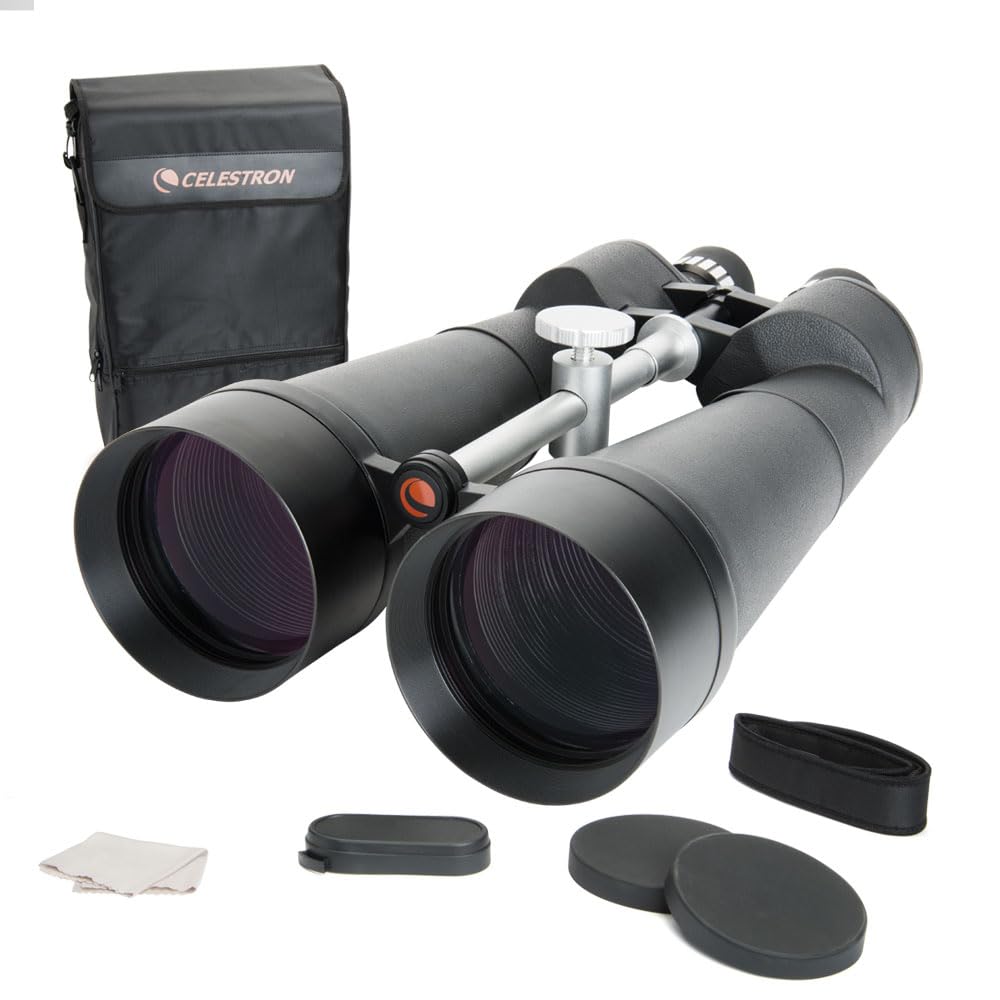
This is Celestron’s largest tripod-mounted binocular, and it is a dedicated deep-sky instrument. With 100mm objective lenses gathering over three times the light of a 50mm binocular, the 25×100 reveals nebulae, star clusters, and even the moons of Jupiter with startling clarity. The BaK-4 prisms and multi-coated optics produce a 4mm exit pupil that works well under dark skies.
Weighing over 5 pounds, these binoculars absolutely demand a heavy-duty tripod — a lightweight photo tripod will wobble at 25x. A ¼”-20 adapter is built in, and a carrying case is included, though the bag offers minimal padding. The individual-eye focus system requires adjusting each eyepiece separately, which is standard for large astronomy binoculars but slower than a center-focus wheel.
The water-resistant rubber armor protects against dew and light rain, but these are not intended for submersion. Chromatic aberration is visible on bright objects like the moon, but the sheer light-gathering ability at this price is unmatched. For astronomy enthusiasts who want a step up from a telescope’s narrow field of view, the SkyMaster 25×100 delivers a sweeping, immersive experience.
Why it’s great
- Massive 100mm aperture for exceptional low-light and deep-sky viewing.
- BaK-4 prisms and multi-coated lenses provide bright, sharp images.
- Lower cost than telescopes with similar light-gathering ability.
Good to know
- Very heavy; requires a heavy-duty tripod for stable use.
- Individual-eye focus is slower than center-focus models.
- Some chromatic aberration visible on high-contrast targets.
3. Celestron SkyMaster Pro 20×80

The SkyMaster Pro 20×80 is a step up from standard 20x80s thanks to Celestron’s proprietary XLT fully multi-coated optics, which enhance color fidelity and contrast across the visual spectrum. With a 4mm exit pupil and 3.2-degree field of view, this binocular excels at both astronomical observation — resolving the Orion Nebula and Jupiter’s moons — and long-range terrestrial viewing at 1000 yards.
A unique feature is the detachable RSR (Reflex Sight Ready) rail, which allows you to mount a red dot finder for easy aiming at celestial targets. The rubber-armored polycarbonate body is fully waterproof and nitrogen purged to prevent internal fogging. At 20x, a tripod is mandatory, and the included tripod adapter makes mounting straightforward.
Interchangeable flared eyecups improve comfort during extended sessions, and the lifetime warranty from Celestron adds peace of mind. The main trade-off is weight and size — this is not a grab-and-go binocular. For users who want a dedicated tripod binocular that handles astronomy and long-distance land viewing with equal competence, the SkyMaster Pro is the balanced choice.
Why it’s great
- Proprietary XLT multi-coated optics for superior light transmission.
- Detachable RSR rail for reflex sight aiming.
- Waterproof, nitrogen-purged, and backed by lifetime warranty.
Good to know
- 80mm objective requires a sturdy tripod for steady viewing.
- Heavier than standard 20x80s, less portable for hiking.
4. Bushnell H2O Xtreme 10×42

The Bushnell H2O Xtreme is built for the harshest conditions. The IPX7 rating means it can be submerged in up to one meter of water for 30 minutes, making it ideal for marine use, rainy hunting trips, or desert dust storms. The fully multi-coated lenses and BaK-4 prisms deliver bright, crisp images with a 4.2mm exit pupil, and the 10x magnification provides effective reach for spotting wildlife or landmarks at 200 yards.
The compact roof-prism design makes this binocular genuinely portable, fitting easily into a dry bag or glove box. The rubber armor provides a secure grip even when wet, and the O-ring sealed, nitrogen-purged construction prevents internal fogging. Eye relief is 17mm, accommodating eyeglass wearers with twist-up eyecups.
A notable limitation is the lack of a tripod adapter socket in this model variant, which some users find disappointing. The neck strap is also basic and may be uncomfortable for all-day wear. However, for a tough, reliable 10×42 that can handle submersion and rough handling, the Bushnell H2O Xtreme is the best choice in its class.
Why it’s great
- IPX7 waterproof rating for full submersion protection.
- BaK-4 prisms and fully multi-coated optics for bright images.
- Compact roof-prism design for easy portability.
Good to know
- No built-in tripod adapter socket for stable mounting.
- Neck strap is basic and may not be comfortable for extended wear.
5. Vortex Copperhead HD 10×42

The Copperhead HD brings Vortex’s HD optical system to a mid-range price, delivering noticeable improvements in color fidelity and edge-to-edge sharpness compared to standard 10x42s. The fully multi-coated lenses maximize light transmission through the 4.2mm exit pupil, providing bright images in dawn and dusk conditions critical for hunting. The 17mm eye relief is generous for glasses users.
Rubber armor provides a secure grip in wet or cold conditions, and the binocular is waterproof, fogproof, and shockproof. The included GlassPak harness and comfort neck strap offer flexible carrying options, and the tripod-adaptable design allows mounting on a car window mount for extended observation. The unlimited VIP warranty covers any damage or defect for life.
At 10×42, the field of view is 334 feet at 1000 yards, which is adequate for scanning but not expansive. Compared to higher-end Vortex models like the Razor, the Copperhead shows slightly less edge sharpness and a bit more color fringing in high-contrast situations. For hunters and outdoor enthusiasts who want reliable, clear optics with a rock-solid warranty at a reasonable cost, the Copperhead HD delivers genuine value.
Why it’s great
- HD optical system for improved resolution and color accuracy.
- Fully multi-coated lenses for excellent low-light performance.
- Unlimited lifetime VIP warranty from Vortex.
Good to know
- Edge sharpness and chromatic aberration not as refined as premium models.
- Field of view is slightly narrower than some competitors in its class.
6. Aurosports 20×80

The Aurosports 20×80 offers an enormous 80mm objective lens that gathers 2.5 times more light than a standard 50mm binocular, making it a compelling entry-level option for stargazing and long-range wildlife observation. The BaK-4 prisms and fully multi-coated lenses deliver over 95% light transmission, producing bright images even in twilight conditions. The 4mm exit pupil is adequate for most low-light scenarios.
Weighing approximately 3.5 pounds, these binoculars are heavy and require a tripod for steady use at 20x. The rubber armor provides a non-slip grip and offers shock absorption, and the included carrying bag and cleaning cloth add convenience. Eye relief is 15mm, which is standard for this class but may be tight for eyeglass wearers.
Optical quality is good for the price, but users should expect some edge distortion and chromatic aberration typical of budget large-aperture binoculars. The field of view is a narrow 168 feet at 1000 yards, requiring precise aiming. For beginners exploring amateur astronomy or budget-conscious observers wanting a giant binocular experience, the Aurosports 20×80 is a functional starting point.
Why it’s great
- Massive 80mm objective lens for excellent light gathering on a budget.
- BaK-4 prisms and FMC coatings for bright, sharp images.
- Rubber-armored construction for durability and grip.
Good to know
- Heavy; requires a tripod for stable, comfortable viewing.
- Narrow field of view and some edge softness expected at this price.
7. Sogries 10-30×50 Zoom
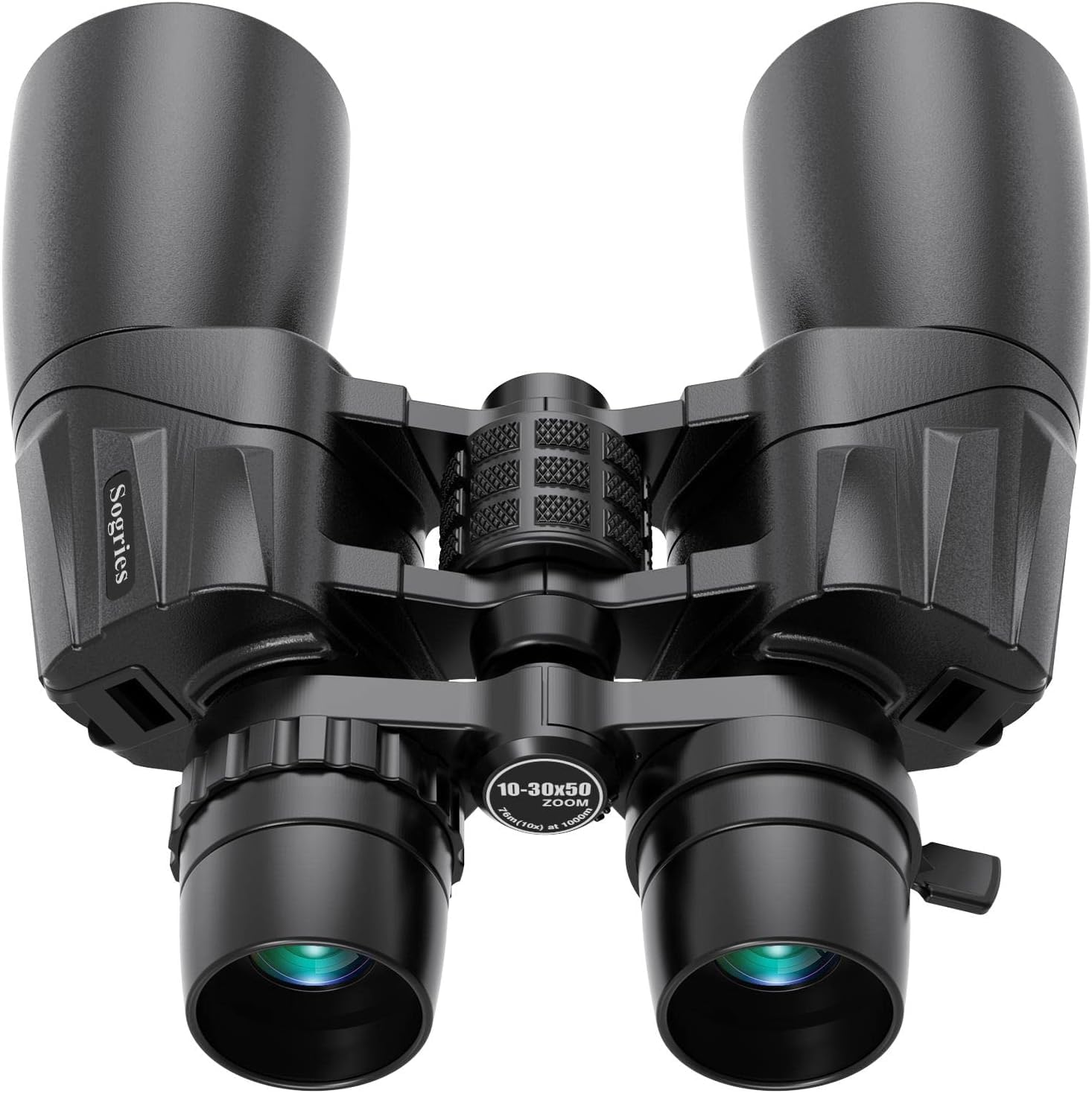
The Sogries 10-30×50 Zoom binocular offers a unique variable magnification system that lets you scan at 10x and zoom in to 30x for closer inspection. The 50mm objective lens and 22mm of eye relief provide a comfortable viewing experience, even with glasses. The BaK-4 prisms and FMC multi-coated lenses produce sharp, vibrant images with up to 99.5% light transmission, and the low-light performance is respectable for a zoom model.
At 30x, the effective exit pupil drops to approximately 1.67mm, meaning the image becomes dim and hand shake is extreme — a tripod is strongly recommended at the higher end of the zoom range. The O-ring sealed, nitrogen-purged body is waterproof and fogproof, and the rubber armor provides a secure grip. The zoom joystick is smooth and allows easy one-handed adjustment between powers.
The trade-off for variable zoom is optical complexity; image quality at 30x is not as sharp as a fixed 30x binocular, and field of view narrows significantly at higher magnifications. However, for a user who wants flexibility to switch between wide-area scanning and close-up detail without changing optics, the Sogries is a practical all-in-one solution for concerts, sports, and general outdoor observation.
Why it’s great
- Variable 10-30x magnification for flexible viewing from wide to detailed.
- Waterproof, fogproof, and shock-resistant construction.
- Smooth zoom joystick and comfortable 22mm eye relief.
Good to know
- Image brightness drops significantly at 30x due to small exit pupil.
- Tripod required for steady viewing at higher magnifications.
FAQ
Can I use 25×100 binoculars without a tripod?
What does fully multi-coated mean for a binocular?
Is a 10×42 binocular enough for long-distance viewing?
Why do my high-power binoculars show color fringing around objects?
Final Thoughts: The Verdict
For most users, the binoculars for long distance viewing winner is the Vortex Razor UHD 18×56 because it combines true alpha-level optical performance with a portable magnesium chassis and an industry-leading warranty, making it the ultimate long-range terrestrial glass. If you want a dedicated deep-sky instrument capable of revealing galaxies and nebulae, grab the Celestron SkyMaster 25×100. And for a rugged, waterproof 10×42 that handles marine and harsh conditions without breaking the bank, nothing beats the Bushnell H2O Xtreme 10×42.