
Our readers keep the lights on and the weekend projects moving. As an Amazon Associate, I earn from qualifying purchases.
The moment the sun dips below the horizon, most binoculars turn into expensive paperweights. The hunt, the hike, the stargazing session—everything grinds to a halt as the image dissolves into a muddy, grainy mess. You are left guessing at shapes in the twilight, not observing them. The frustration of a great moment lost to poor visibility is the real enemy here, and the only fix is optics engineered to capture every photon of ambient light.
I’m Rikta — the co-founder and writer behind FitlyFast. I’ve spent hundreds of hours dissecting spec sheets, cross-referencing customer field reports, and stress-testing optical formulas to identify exactly which prism types, objective lens sizes, and coating technologies separate a twilight tool from a daytime toy.
This guide is built for the buyer who needs crisp, bright images when the light is gone, and it ranks only the models that deliver real usable performance after dark. Whether you are glassing a ridgeline at dusk or scanning the Milky Way, these are the binoculars for low light that will not let you down.
How To Choose The Best Binoculars For Low Light
Selecting a pair that performs in dim conditions is a battle of physics: gathering enough light to create a bright, usable image. You cannot rely on marketing buzzwords like “night vision” or “low-light” alone. The choice comes down to three measurable components: the objective lens diameter, the prism material, and the quality of the multi-coating on every glass surface.
Exit Pupil: The True Measure of Darkness
Divide the objective lens diameter by the magnification to get the exit pupil—the size of the beam of light hitting your eye. For low-light use, you need an exit pupil of at least 5mm to match the human pupil dilated in twilight. A 10×50 model gives you a 5mm exit pupil; an 8×42 gives you 5.25mm. Anything smaller than 4mm will leave you straining.
Prism Glass: Bak-4 vs. BK-7
Bak-4 (Barium Crown) glass transmits more light and produces a round, full exit pupil. BK-7 produces a clipped, square exit pupil that wastes photons. Every low-light candidate in this comparison uses Bak-4 prisms. If a binocular lists BK-7, it is not a serious contender for dusk or dawn use.
Coatings: Fully Multi-Coated is the Floor
A “Fully Multi-Coated” (FMC) designation means every air-to-glass surface has multiple layers of anti-reflective coating. This maximizes light transmission, reduces glare, and boosts contrast. Partially coated or single-coated optics lose 10–20% of the available light, which is the difference between seeing eye color and seeing a silhouette at 100 yards in fading light.
Quick Comparison
On smaller screens, swipe sideways to see the full table.
| Model | Category | Best For | Key Spec | Amazon |
|---|---|---|---|---|
| Leupold BX-4 Pro Guide HD | Premium | Heavy twilight viewing | 10×50, 5mm exit pupil | Amazon |
| ZEISS Terra ED 10×42 | Premium | All-weather clarity | 88% light transmission | Amazon |
| Nikon Monarch M5 8×42 | Mid-Range | Wide-field tracking | 8×42, 5.3mm exit pupil | Amazon |
| Nikon Monarch M5 10×42 | Mid-Range | Detailed wildlife ID | 10×42, ED glass | Amazon |
| Sogries 20×80 Astronomy | Expert | Stargazing / tripod | 20×80, 4mm exit pupil | Amazon |
| GOYOJO Night Vision Goggles | Specialty | Total darkness | Digital IR, 1000ft range | Amazon |
| Bushnell H2O Xtreme 10×42 | Value | Wet-weather use | 10×42, IPX7 waterproof | Amazon |
| Sogries 18×70 Astronomy | Expert | Deep-sky viewing | 18×70, 3.9mm exit pupil | Amazon |
| Sogries 10-30×50 Zoom | Budget | Versatile daytime zoom | 10-30×50, zoom joystick | Amazon |
In‑Depth Reviews
1. Leupold BX-4 Pro Guide HD 10x50mm Gen 2

The Leupold BX-4 Pro Guide HD is a direct answer to the question of premium low-light performance. Its 10×50 configuration delivers a full 5mm exit pupil, which matches your eye’s dilation in severe twilight. The open-bridge design keeps the weight manageable at 1.75 pounds, making it feasible for a long hunting sit without a tripod.
The Elite Optical System, combined with Leupold’s Guard-ion lens coating, provides exceptional light transmission while repelling water and fingerprints. Users report clear, bright details at distances exceeding 2 miles in fading light, and the 65.2-degree apparent field of view offers a spacious viewing window that reduces the need for constant panning.
This is a true do-it-all low-light binocular built for hunters and serious wildlife observers. The 100% waterproof and fogproof construction means it holds up in rain, fog, and humidity without internal fogging. If you want one binocular that excels from dusk through night, this is the benchmark.
Why it’s great
- 5mm exit pupil is perfect for twilight hunting
- Guard-ion coating keeps lenses clear in rain
- Lightweight open-bridge design reduces fatigue
Good to know
- Premium price reflects the optical quality
- Individual focus may feel slower for some
2. ZEISS Terra ED 10×42 Binoculars

ZEISS brings its legendary optical engineering to a mid-market price point with the Terra ED. The advertised 88% light transmission is not a marketing figure—it is the direct result of Schmidt-Pechan ED glass and a hydrophobic multi-layer coating that reduces reflection and repels water. In low-light conditions, this translates to crisp, color-true images that maintain contrast even in wet weather.
The 10×42 configuration yields a 4.2mm exit pupil, which is adequate for dawn and dusk use but not optimal for deep twilight. However, the superior coating quality and ED glass compensate significantly by maximizing the transmission of available light. The large focus wheel is fast and intuitive, essential for tracking moving subjects in fading light.
The fiberglass-reinforced polycarbonate body is robust yet lightweight, and the ergonomics are excellent for extended glassing sessions. Customers upgrading from budget models consistently describe the difference as “stunning.” For the price, this is the best entry point into ZEISS-class optics for low-light conditions.
Why it’s great
- 88% light transmission outperforms many in its class
- Hydrophobic coating ensures clear view in rain
- Lightweight and robust fiberglass casing
Good to know
- 4.2mm exit pupil is smaller than 10×50 options
- Premium brand name carries a higher price
3. Nikon Monarch M5 8×42 Binocular
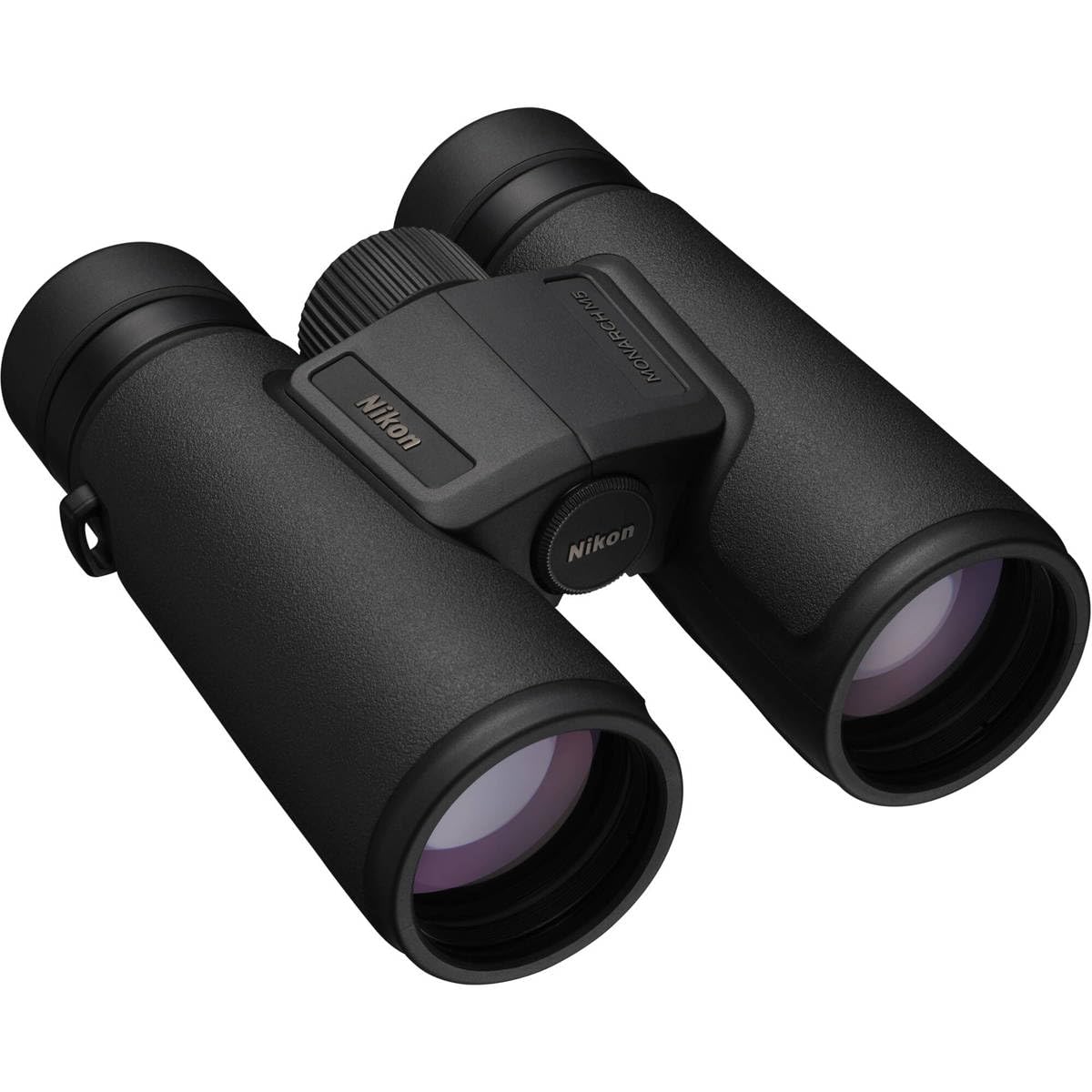
Nikon’s Monarch M5 in 8×42 is arguably the most versatile low-light binocular in this lineup. The 8x magnification keeps the image steady enough for handheld use, while the 5.3mm exit pupil provides a generous beam of light that excels in twilight and shaded forests. The Extra-low Dispersion (ED) glass virtually eliminates color fringing, giving you high-contrast images even in tricky backlit conditions.
The dielectric high-reflective prism coatings boost light transmission for natural color rendition, and the 335-foot field of view at 1000 yards makes tracking birds or moving wildlife easy. The 19.5mm eye relief is among the best for eyeglass wearers, and the twist-up click-stop eyecups lock in two positions for comfortable use all day.
Users consistently praise the Monarch M5 for its edge-to-edge sharpness and bright image at dawn and dusk. It strikes a near-perfect balance between portability and light-gathering ability. If you need one binocular that handles everything from noon to nightfall without a tripod, this is the choice.
Why it’s great
- Widest exit pupil (5.3mm) among the 42mm models
- ED glass eliminates chromatic aberration
- Excellent eye relief for glasses users
Good to know
- 8x magnification limits long-distance detail
- No tripod adapter socket included
4. Nikon Monarch M5 10×42 Binocular
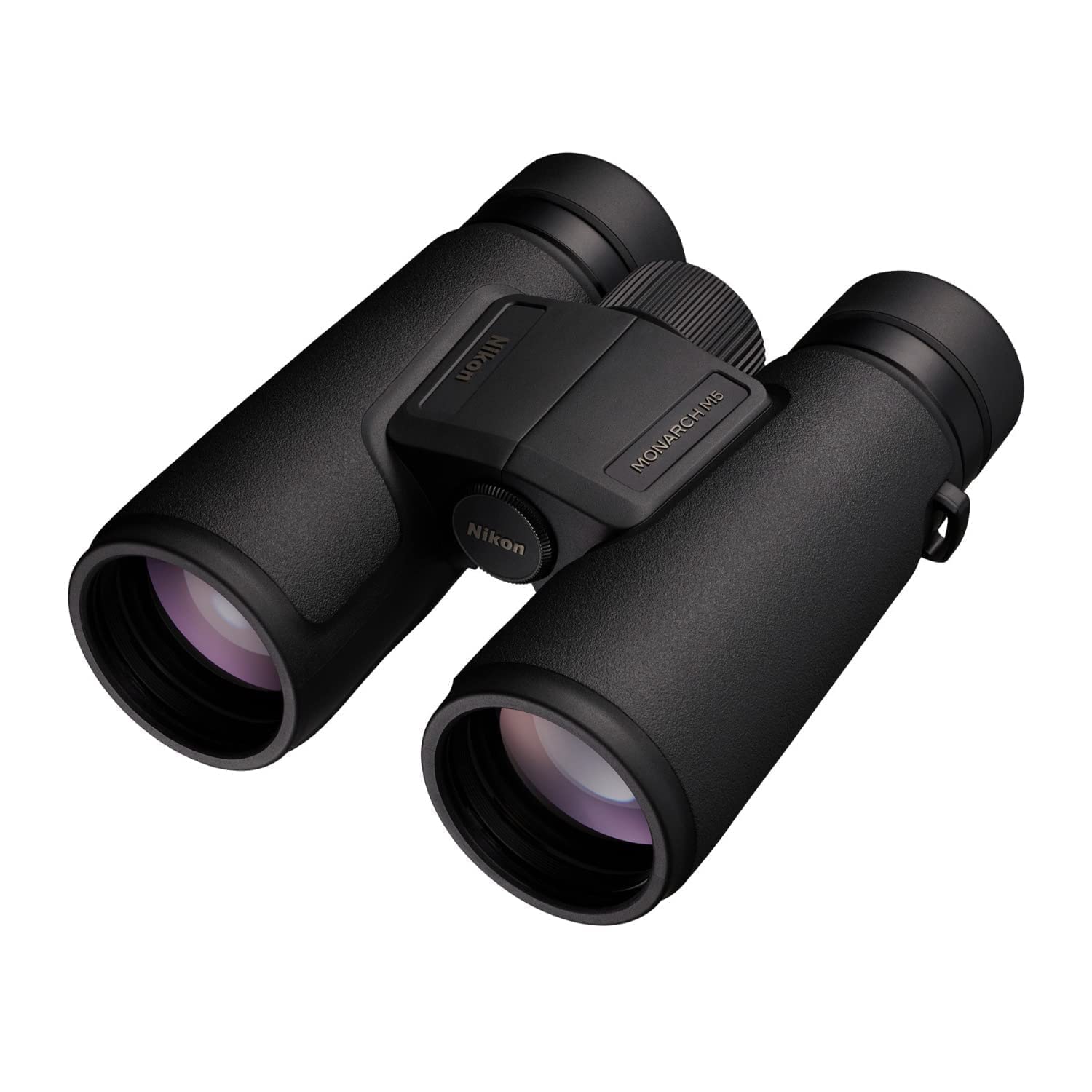
The 10×42 version of the Monarch M5 trades a slightly smaller exit pupil (4.2mm) for more magnification power, making it the pick for identifying specific birds or reading animal ear tags from a distance. The ED glass and dielectric-coated prisms remain the stars, delivering bright, high-resolution images in low light that rival more expensive competitors.
The closed-bridge design provides a solid, rigid platform, and the large center focus knob allows for micro-adjustments even with gloves on. At 293 feet field of view, it is narrower than the 8×42 variant, but the extra magnification is invaluable for detailed observation of distant subjects in the dim hours.
Users highlight the crisp image quality, calling it a “professional-grade” optic for the mid-range price. The lack of a tripod mount is a minor omission, but the ergonomics and optical clarity make it an excellent choice for wildlife observers who need to push the magnification envelope without sacrificing low-light performance.
Why it’s great
- High magnification for detailed low-light ID
- ED glass delivers true-to-life colors
- Large, smooth central focus knob
Good to know
- 4.2mm exit pupil is less forgiving in deep twilight
- Loose eyepiece cap noted by some users
5. Sogries 20×80 Astronomy Binoculars
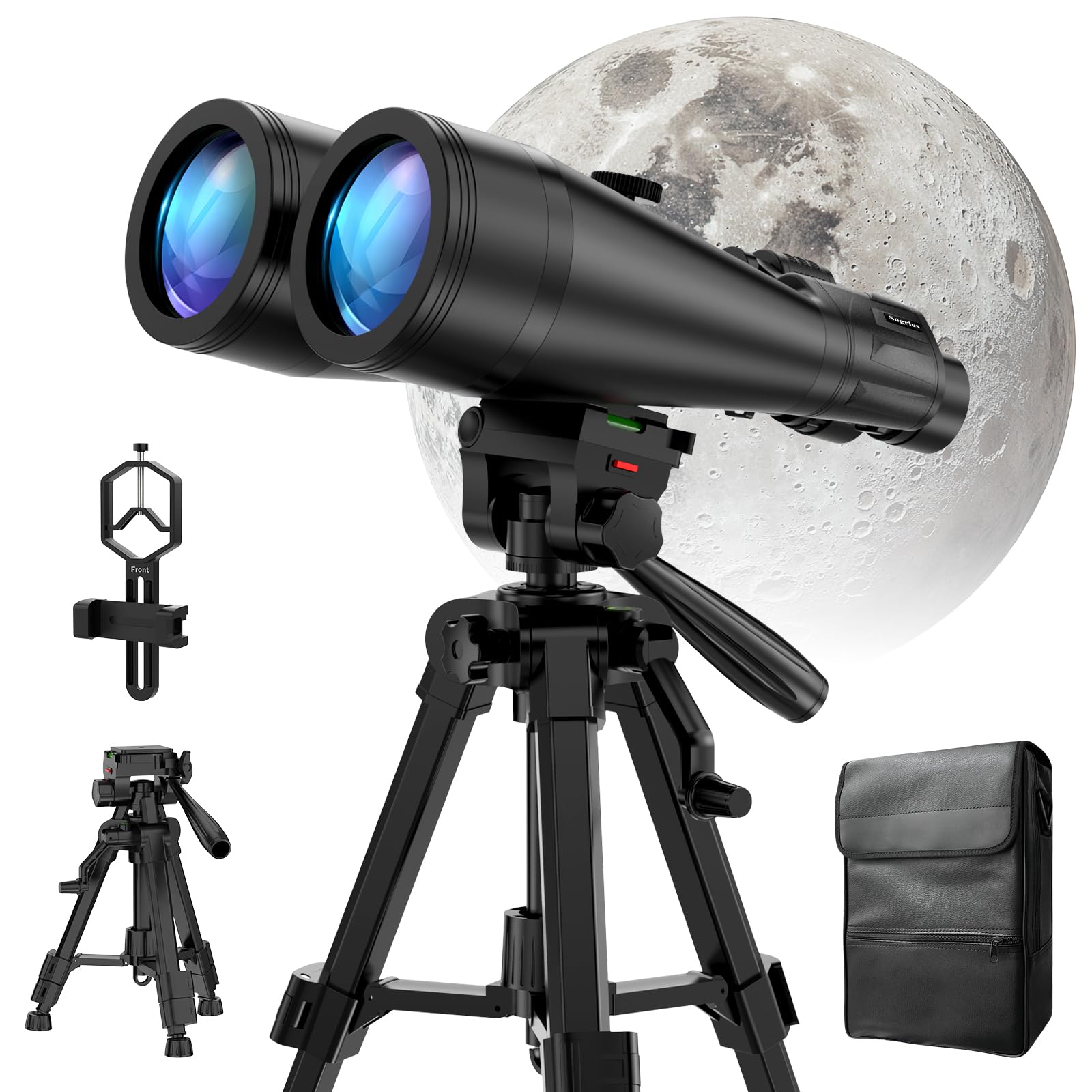
The Sogries 20×80 is a specialized tool for the astronomy enthusiast. The massive 80mm objective lenses gather an enormous amount of light, enabling clear views of the moon’s craters, Jupiter’s moons, and deep-sky objects like star clusters. This is not a binocular for hiking—the 4.66-pound weight demands a tripod, which is included in the box.
The Bak-4 prisms and multi-coated optics produce sharp, bright images at 20x magnification. The 4mm exit pupil is adequate for astronomical observation where the pupil is fully dark-adapted, but the real magic is the sheer light-gathering power of the 80mm lenses. Users report seeing detail at half a mile and beyond with stunning clarity.
This set is ideal for backyard astronomy, moon observation, and long-distance terrestrial viewing from a fixed position. The included tripod and carrying case add value, though the tripod is best used as a handle for stabilization. If your primary goal is stargazing, this delivers the most aperture for the money.
Why it’s great
- 80mm lenses capture maximum light for astronomy
- Included tripod and adapter for stable viewing
- Crisp, detailed moon and deep-sky views
Good to know
- Too heavy for handheld or hiking use
- Included tripod is minimal
6. GOYOJO 4K Head-Mounted Night Vision Goggles

The GOYOJO represents a different category entirely: digital night vision with an active infrared illuminator. Unlike traditional optical binoculars that rely on ambient light, this unit projects its own IR beam to see in complete darkness. The 4K video and 36MP photo capture capability make it a versatile tool for night patrol, camping, and security use.
The dual-screen design with adjustable interpupillary distance (60–72mm) reduces eye strain during extended sessions, and the 3W 850nm IR illuminator provides clear viewing up to 1000 feet in pitch-black conditions. The 8x digital zoom and 7 brightness levels allow fine-tuning for different environments, and the headband or helmet mount keeps hands free.
This is an excellent choice for anyone who needs to see in zero light—ranch security, overnight hikes, or nighttime wildlife observation. The digital sensor cannot match the resolution of optical binoculars in daylight, but in total darkness, it does something no traditional binocular can: it sees without any light at all.
Why it’s great
- Active IR provides vision in total darkness
- Captures 4K video and 36MP photos
- Multiple mounting options: handheld, headband, helmet
Good to know
- Digital image quality is not optical-level
- Battery life requires management during long sessions
7. Bushnell H2O Xtreme 10×42 Binocular

Bushnell’s H2O Xtreme is built for one primary enemy: water. The IPX7-rated O-ring sealed construction means it can be submerged without damage, and nitrogen purging prevents internal fogging in cold, wet conditions. For boaters, kayakers, or rainforest birders, this is a critical feature that many mid-range optics lack.
The Fully Multi-Coated glass and Bak-4 prisms provide a bright, clear image that punches above its price point. The 10×42 configuration delivers a 4.2mm exit pupil, which is serviceable for low-light situations like early morning on the water or cloudy forest understory. The rubber armor provides a non-slip grip even when wet.
Users upgrading from older 7×35 models consistently note the “brighter, cleaner” image and the compact form factor. The lack of a tripod socket is a limitation for long-range observation, but for handheld use in wet environments, the H2O Xtreme offers the best value for its water protection and optical quality.
Why it’s great
- IPX7 waterproof rating for total submersion
- Fully Multi-Coated Bak-4 optics for bright views
- Reliable Bushnell build quality
Good to know
- No tripod adapter socket
- Neck strap is basic and could be upgraded
8. Sogries 18×70 Astronomy Binoculars

The Sogries 18×70 is a serious tool for the dedicated stargazer. With an 18x magnification and 70mm objectives, it offers a 3.9mm exit pupil that is perfectly suited for dark-adapted astronomical viewing. The Bak-4 prisms and Fully Multi-Coated lenses deliver bright, high-contrast views of star clusters and nebulae that smaller binoculars simply cannot resolve.
The IPX7 waterproof rating ensures the optics stay fog-free during cold nights, and the included smartphone adapter makes digiscoping straightforward. This is a heavy unit at roughly 3 pounds, so a tripod is mandatory for steady observation. The tripod adapter is built-in with a 1/4″-20 thread, and the kit includes a quality adapter.
Users praise the clarity at long distances, noting the ability to read license plates and signs from over a mile away. The value proposition is strong for anyone wanting to step into serious astronomy without spending thousands. It is tripod-dependent, but for the price, the optical reward is remarkable.
Why it’s great
- 70mm objectives gather plenty of light for astronomy
- Included smartphone adapter for easy digiscoping
- Excellent value for high-power optical performance
Good to know
- Heavy build requires a tripod for comfort
- Individual focus system is slower to adjust
9. Sogries 10-30×50 Zoom Binoculars
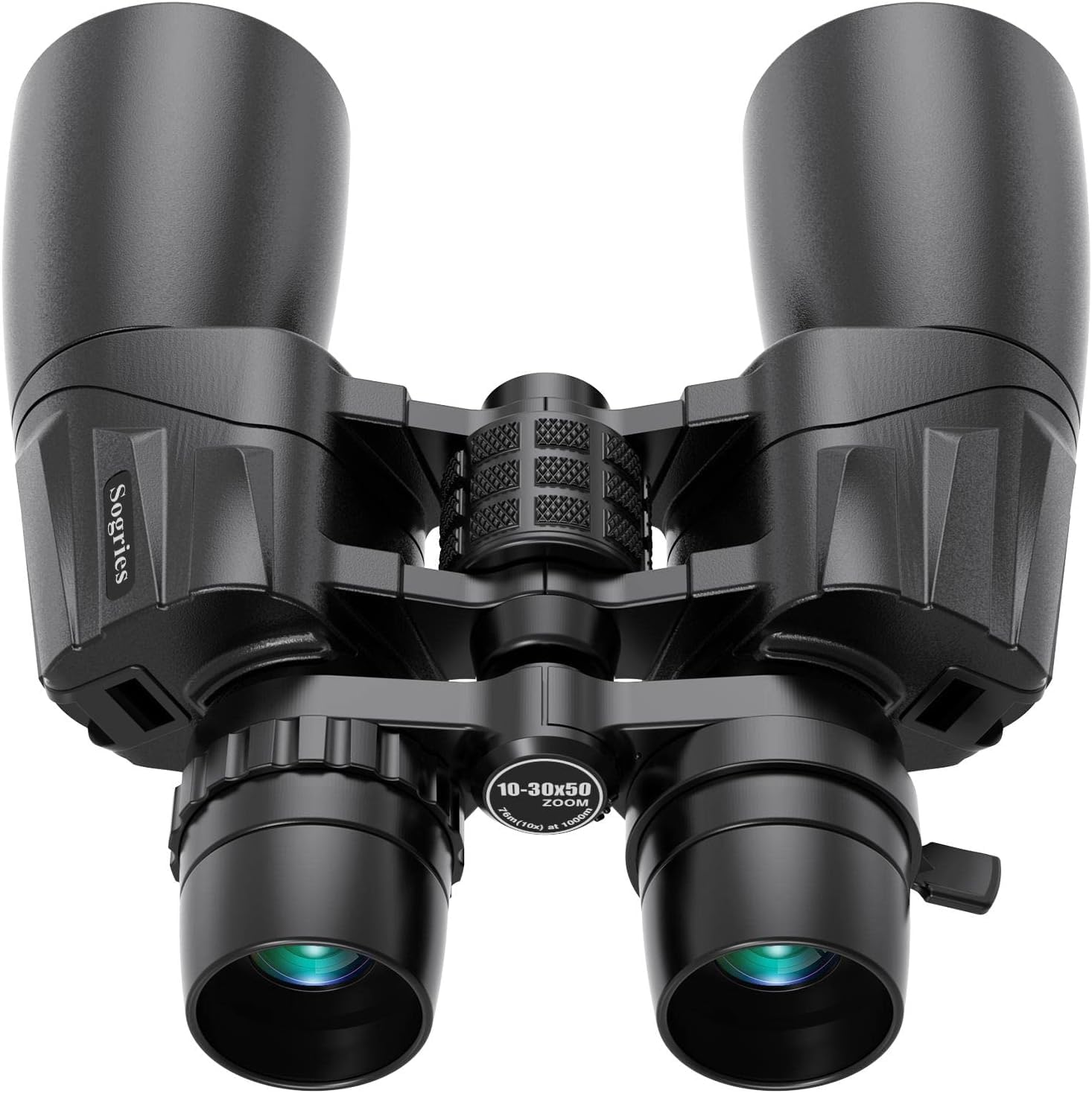
The Sogries 10-30×50 Zoom binoculars offer a unique feature set for the budget-conscious user: variable magnification from 10x to 30x in a single unit. The 50mm objective lenses provide a 5mm exit pupil at the lowest 10x setting, making it competent for twilight use at that power. The zoom function is controlled via a smooth joystick on the bridge.
The Bak-4 prisms and FMC green film coatings deliver up to 99.5% light transmission, resulting in bright images with good color reproduction. The field of view at 235 feet per 1000 yards is narrow, but the variable magnification allows the user to dial in the perfect power for the situation. The rubber armor and O-ring sealed construction provide basic water resistance.
This is a good entry-level option for someone who wants to experiment with different magnifications for concerts, sports, or casual low-light viewing. It is not suitable for serious astronomy or professional wildlife observation due to the zoom’s optical compromises at the high end, but the convenience and price make it a solid choice for the generalist.
Why it’s great
- Variable 10-30x zoom covers multiple use cases
- 99.5% light transmission for bright images
- Budget-friendly price point
Good to know
- Heavy build; tripod recommended at higher zoom
- Image quality degrades at maximum 30x range
FAQ
What magnification is best for low-light binoculars?
Why does objective lens size matter for dim conditions?
Can I use a tripod with any binocular for stable low-light viewing?
Final Thoughts: The Verdict
For most users, the binoculars for low light winner is the Leupold BX-4 Pro Guide HD because it combines a true 5mm exit pupil, premium ED glass, and rugged waterproof construction in a package that works equally well for dawn hunting and dusk wildlife observation. If you want the widest field of view and best handheld low-light experience, grab the Nikon Monarch M5 8×42. And for dedicated astronomy without breaking the bank, nothing beats the Sogries 20×80 with its massive light-gathering 80mm objectives.