
Our readers keep the lights on and the weekend projects moving. As an Amazon Associate, I earn from qualifying purchases.
Planet viewing with binoculars is a battle against low light and unsteady hands. The right pair pulls Jupiter’s moons, Saturn’s rings, and lunar craters into sharp relief, while the wrong one leaves you frustrated with wobble and dim, blurry discs. The choice comes down to aperture, magnification, and a stable tripod.
I’m Rikta — the co-founder and writer behind FitlyFast. I’ve spent countless hours analyzing optical specs, customer field reports, and build quality to identify the binoculars that actually deliver when you aim them at the night sky.
For anyone serious about stargazing, finding the right set of binoculars for planet viewing means balancing magnification against usable field of view and choosing between a portable mid-range pair and a giant-aperture model that demands a solid mount.
How To Choose The Best Binoculars For Planet Viewing
Astronomical binoculars are fundamentally different from birding or hunting optics. Planet viewing demands high magnification to resolve details like the phases of Venus or the bands of Jupiter, but that magnification also magnifies every hand tremor. You need a specific combination of aperture, prism quality, and mounting capability to make the stars—and planets—visible.
Aperture: The Light-Gathering Engine
The objective lens diameter, measured in millimeters, determines how much light enters the binoculars. For planet viewing, 80mm is the baseline for respectable moon and planetary detail. Jumping to 100mm brings in roughly 56% more light, which reveals fainter stars and turns a hazy Jupiter disc into a crisp, banded orb. Larger apertures also increase weight and tripod dependency.
Magnification vs. Stability
Magnification of 15x to 25x is ideal for planets. Below 15x, Jupiter remains a tiny dot; above 25x, the image becomes dimmer and shakes become unmanageable without a tripod. Most high-power astronomical binoculars are simply too heavy to hold steady—plan for a tripod if you choose anything above 15x.
Prism Material: BaK-4 vs. BK-7
BaK-4 glass prisms have a higher refractive index than standard BK-7 prisms. This translates to a rounder exit pupil and brighter, sharper images, especially at the edges. For night-time use, BaK-4 is a must. Do not settle for BK-7 if your goal is serious planetary observation.
Quick Comparison
On smaller screens, swipe sideways to see the full table.
| Model | Category | Best For | Key Spec | Amazon |
|---|---|---|---|---|
| Celestron SkyMaster 25×100 | Giant Aperture | Deep-sky & planetary detail | 100mm objective, BaK-4 | Amazon |
| Celestron SkyMaster Pro 20×80 | Mid-Range Pro | Best all-around planet viewing | 80mm, XLT coatings, waterproof | Amazon |
| Nikon 10×42 PROSTAFF P7 | Compact General | Bright, wide-field scanning | 42mm, dielectric coating | Amazon |
| Aurosports 20×80 | Value Aperture | Budget-friendly 80mm start | 80mm, BaK-4, FMC | Amazon |
| Tenjin 30×80 | High Magnification | Max planetary zoom | 80mm, 30x, BaK-4 | Amazon |
| Bushnell Match Pro ED 15×56 | Reticle Spotting | Precision long-range use | 56mm, ED Prime glass | Amazon |
| Vortex Razor UHD 18×56 | Premium Ultra-HD | Top-tier low-light clarity | 56mm, Abbe Koenig prism | Amazon |
| Sogries 25×100 | Giant Beginner | Entry-level 100mm views | 100mm, BaK-4, waterproof | Amazon |
| DWARFLAB Dwarf 3 Smart Telescope | Smart Telescope | Automated astrophotography | Dual camera, 4K tracking | Amazon |
In‑Depth Reviews
1. Celestron SkyMaster Pro 20×80

The Celestron SkyMaster Pro 20×80 hits the perfect balance of aperture, magnification, and optical refinement for serious planet viewing. Its 80mm objectives with proprietary XLT fully multi-coated optics deliver bright, high-contrast images that resolve Jupiter’s moons and the crescent phases of Venus with ease. The BaK-4 prisms ensure a round exit pupil, maximizing light transmission in the dim conditions of twilight and early nightfall.
The unique RSR (Reflex Sight Ready) rail is a game-changer for aiming at faint planets—attach a red dot finder and you can point directly at Saturn or Jupiter without scanning the sky. The body is rubber-armored, waterproof, and nitrogen purged, so internal fogging is not a concern during humid night sessions. The included tripod adapter and carrying case add convenience, though a sturdy tripod is a must for steady viewing at 20x.
Customer reports consistently mention sharp lunar craters, visible Jovian cloud bands, and good control of chromatic aberration for this price tier. The center focus knob is smooth and allows quick adjustments between near and far targets. For the enthusiast who wants a dedicated planet-viewing binocular that does not demand telescope-level complexity, this is the standard.
Why it’s great
- XLT anti-reflective coatings deliver exceptional clarity
- RSR rail enables precise aiming with a reflex sight
- Fully waterproof and nitrogen-purged for fog-free viewing
Good to know
- Requires a tripod due to 20x magnification
- Edge sharpness can show slight softness
2. Celestron SkyMaster 25×100
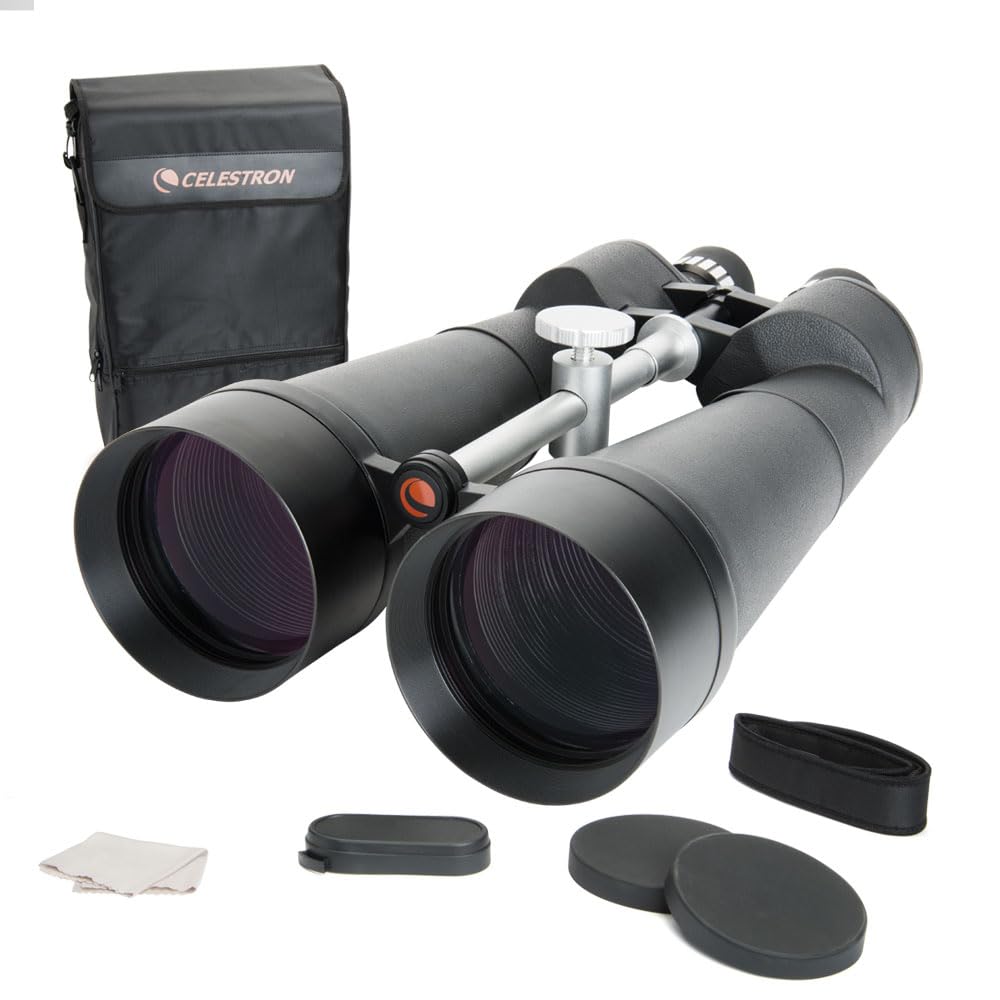
The Celestron SkyMaster 25×100 is the natural upgrade for those who found 80mm not enough. With a full 100mm of objective lens, it collects significantly more light, turning faint deep-sky objects like the Orion Nebula and the Andromeda Galaxy into detailed, bright targets. Jupiter’s bands become more distinct, and the four Galilean moons are pin-sharp against the dark sky.
These binoculars use BaK-4 prisms and multi-coated optics, delivering solid contrast for the price. The individual focus system on each eyepiece means you set your diopter correction once and then only use the center wheel for fine-tuning. This is a common design for giant binoculars and works well once calibrated, but it is not as quick for multi-user sessions.
At nearly 10 pounds, the SkyMaster 25×100 demands a heavy-duty tripod with a fluid pan head. Customer reviews note that a cheap tripod will wobble, so budget for a proper mount. The included carrying case is functional but not premium. For pure planetary and deep-sky performance without jumping to a full telescope, this is a formidable tool.
Why it’s great
- Massive 100mm aperture for superior light collection
- BaK-4 prisms ensure bright edge-to-edge views
- Excellent value for giant astronomy binoculars
Good to know
- Very heavy; a sturdy tripod is mandatory
- Individual focus is slower to adjust between users
3. Tenjin 30×80

The Tenjin 30×80 pushes magnification to the extreme for a hand-held class binocular. At 30x, the moon fills the field of view, revealing intricate detail in craters and rilles. Jupiter’s disc is large enough to see the equatorial bands clearly, and under good seeing conditions, Saturn’s rings begin to separate from the planet’s body. The BaK-4 prisms maintain brightness surprisingly well for such high magnification.
The aluminum alloy body is more rigid than plastic alternatives, and the included tripod adapter makes mounting straightforward. The exit pupil of 2.67mm is small, meaning precise alignment is critical—your eye must be perfectly centered to see the full field. The individual focus system is standard for this design and works well once set.
Customer feedback highlights the sharp lunar views and overall solid build, but notes that chromatic aberration (purple fringing on bright edges) is noticeable on high-contrast targets. These binoculars are best suited for dedicated planet and moon observers who plan to use a tripod every time and prioritize magnification over convenience.
Why it’s great
- 30x magnification provides detailed planetary views
- Rigid aluminum alloy construction
- BaK-4 prisms for good light transmission
Good to know
- Slight chromatic aberration on bright edges
- Small exit pupil demands careful eye alignment
4. Nikon 10×42 PROSTAFF P7

The Nikon PROSTAFF P7 10×42 is not a dedicated planet binocular, but it earns its place as a versatile companion for any astronomer. Its 10x magnification and 42mm objectives deliver bright, wide-field views that are perfect for scanning the Milky Way, identifying star patterns, and locating targets before switching to a higher-power instrument. The dielectric high-reflective prism coating produces stunning color fidelity and edge-to-edge sharpness.
At just over a pound, it is one of the lightest binoculars on this list, making it ideal for handheld use during casual stargazing sessions. The locking diopter ring prevents unwanted focus drift, and the turn-and-slide eyecups accommodate eyeglass wearers comfortably. The nitrogen-filled body is both waterproof and fogproof, so it can handle sudden changes in temperature or damp night air without issue.
Customer reviews consistently praise the crisp image quality and low chromatic aberration. While 10x will not resolve Jupiter’s bands like a 20×80, the PROSTAFF P7 is the binocular you grab for quick looks at the moon, bright star clusters, and terrestrial viewing during the day. It is the perfect companion to a giant-aperture binocular.
Why it’s great
- Dielectric prism coating for bright, accurate colors
- Lightweight and fully portable for scanning
- Locking diopter and excellent eye relief
Good to know
- Limited magnification for detailed planetary views
- Field of view is narrower than some 8x models
5. Vortex Razor UHD 18×56

The Vortex Razor UHD 18×56 represents the absolute top-tier in optical performance for portable astronomy. The Abbe Koenig prism design delivers unparalleled light transmission—around 95%—resulting in images that are exceptionally bright, with zero chromatic aberration and outstanding resolution. Index-matched lenses ensure color accuracy across the entire spectrum, making star colors pop and planetary surfaces look natural.
The magnesium chassis keeps the weight manageable for a 56mm binocular, and the open hinge design improves ergonomics for long sessions. The 18x magnification is high enough to reveal Jupiter’s moons and Saturn’s ring gap, while the large exit pupil (3.11mm) provides a comfortable, forgiving eye position. Argon purging and O-ring seals guarantee a lifetime of fog-proof performance.
Customer feedback from birders and hunters confirms that the optics rival European alpha brands like Swarovski and Zeiss at a lower price point. The focus wheel is precise but somewhat slow, which is a trade-off for the fine control needed at high magnification. For the astronomer who wants a single premium binocular that excels in daytime and night-time use, the Razor UHD 18×56 is the ultimate choice.
Why it’s great
- Abbe Koenig prisms provide unmatched light transmission
- Zero chromatic aberration and true-to-life colors
- Argon purged for lifetime fog-proof performance
Good to know
- Slow focus wheel may frustrate fast-moving targets
- Premium price reflects top-tier glass quality
6. Aurosports 20×80

The Aurosports 20×80 brings 80mm aperture to a budget-friendly price point without cutting corners on key optical components. The BaK-4 prisms and fully multi-coated lenses produce images that are noticeably brighter and sharper than entry-level alternatives, with field of view wide enough to frame the Pleiades or the core of the Orion Nebula. Jupiter’s four moons are clearly resolved, and the moon’s surface shows detailed cratering.
The rubber-armored body provides a secure grip and decent impact protection, though the ABS plastic enclosure feels less premium than aluminum. The included carrying bag, neck strap, and lens covers are functional but basic. A tripod is strongly recommended—at 20x, hand tremors will blur even the brightest planet.
Customer reviews highlight the exceptional value and robust build for the price. Some users note that the focus wheel can be slightly stiff at first, but it loosens with use. For a beginner on a budget who wants to see the rings of Saturn and the Galilean moons without spending a fortune, the Aurosports 20×80 is a smart entry point.
Why it’s great
- Affordable entry to 80mm aperture astronomy
- BaK-4 prisms with FMC deliver good contrast
- Clear views of moon craters and Jupiter’s moons
Good to know
- ABS plastic body may feel less durable
- Focus wheel can be stiff when new
7. Sogries 25×100
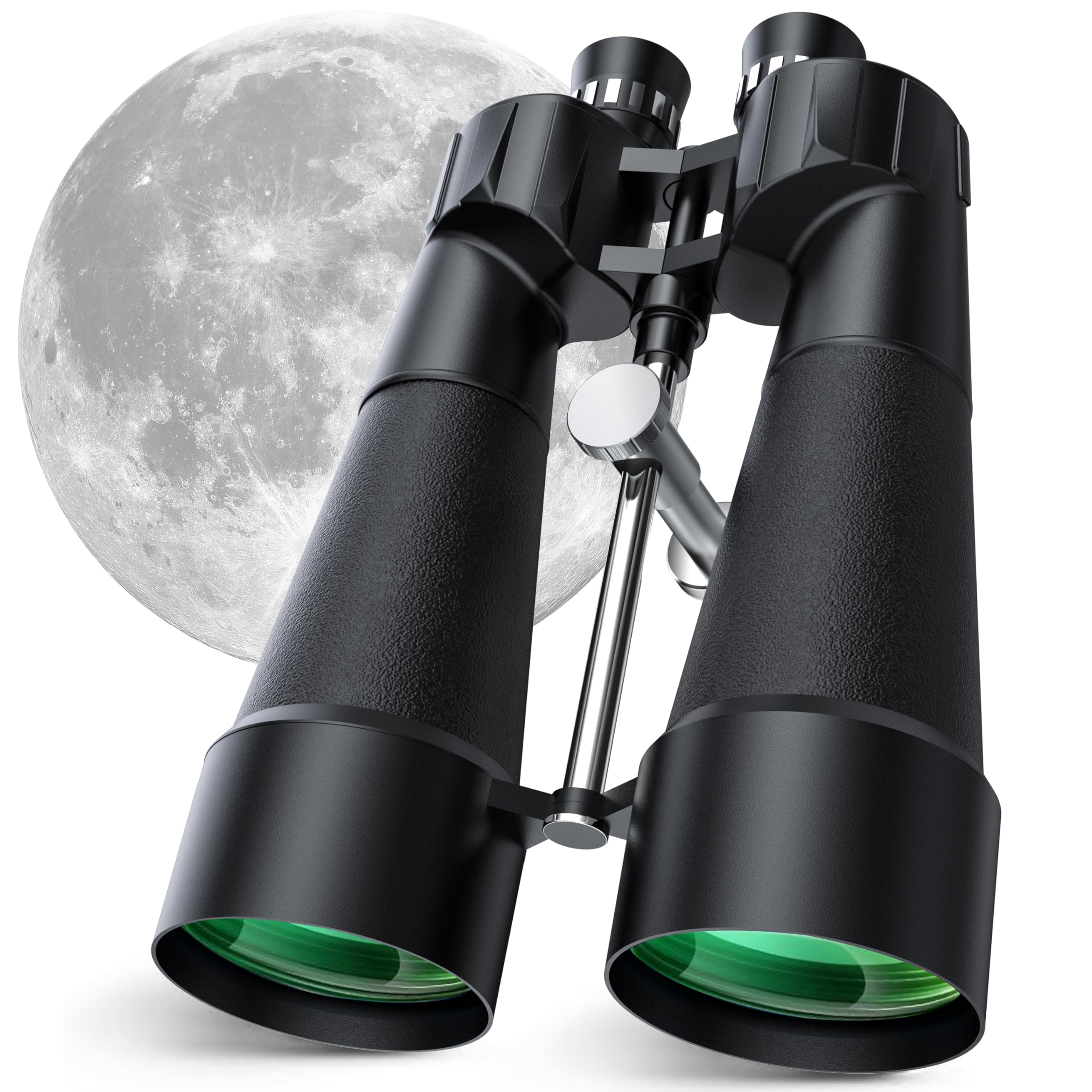
The Sogries 25×100 offers the largest aperture in this review at a price that undercuts established brands significantly. With 100mm objectives and BaK-4 prisms, it brings in enough light to make dim deep-space objects like the Dumbbell Nebula visible, while Jupiter’s bands and Saturn’s rings become crisp details rather than fuzzy blurs. The fully multi-coated optics minimize ghosting and flare.
The rubber-armored metal housing is nitrogen-filled for waterproof performance, making it a reliable companion for marine or humid environments. The individual focus eyepieces are precise, and the built-in ¼-inch tripod adapter is compatible with most standard tripods. The included leather backpack is a premium touch for transport.
Customer reviews note excellent build quality for the price, with sharp optics that rival more expensive models. Some users report that the objective lens caps are untethered and can be easily misplaced, and the small exit pupil (4mm) means eye placement must be exact. For a budget-minded enthusiast who wants 100mm views without paying premium-tier prices, this is a compelling option.
Why it’s great
- Large 100mm aperture at a moderate price
- Waterproof nitrogen-filled construction
- Comes with a high-quality leather backpack
Good to know
- Individual focus not ideal for quick changes
- Objective lens caps are not tethered
8. Bushnell Match Pro ED 15×56

The Bushnell Match Pro ED 15×56 is purpose-built for long-range precision, but its ED Prime glass and fully multi-coated optics make it an excellent planetary binocular for the dedicated observer. The 15x magnification is high enough to show Jupiter’s moons and the crescent phases of Venus, while the 56mm objective provides ample light for evening viewing. The ED Prime glass virtually eliminates chromatic aberration, delivering color-pure views of bright planets.
The unique Shot-Call MRAD reticle is embedded in the right barrel and can be rotated to align with the horizon. While designed for target ranging and holdover, it can be used to measure angular separation between planets or track lunar features. The BridgeSet IPD Stabilizer locks the barrels at your exact interpupillary distance, eliminating accidental adjustments during use.
The magnesium chassis is lightweight and robust, and the IPX5 water resistance handles humid night air without concern. Customer feedback favors the optical clarity and durable build, though left-eye-dominant users may find the right-eye reticle placement less natural. This is a niche pick for the optics enthusiast who wants a dual-purpose instrument for both daytime target work and night-time astronomy.
Why it’s great
- ED Prime glass eliminates chromatic aberration
- Integrated MRAD reticle for angular measurements
- Lightweight magnesium body with IPX5 rating
Good to know
- Reticle in right barrel only, not left-eye friendly
- Not a dedicated astronomy design
9. DWARFLAB Dwarf 3 Smart Telescope
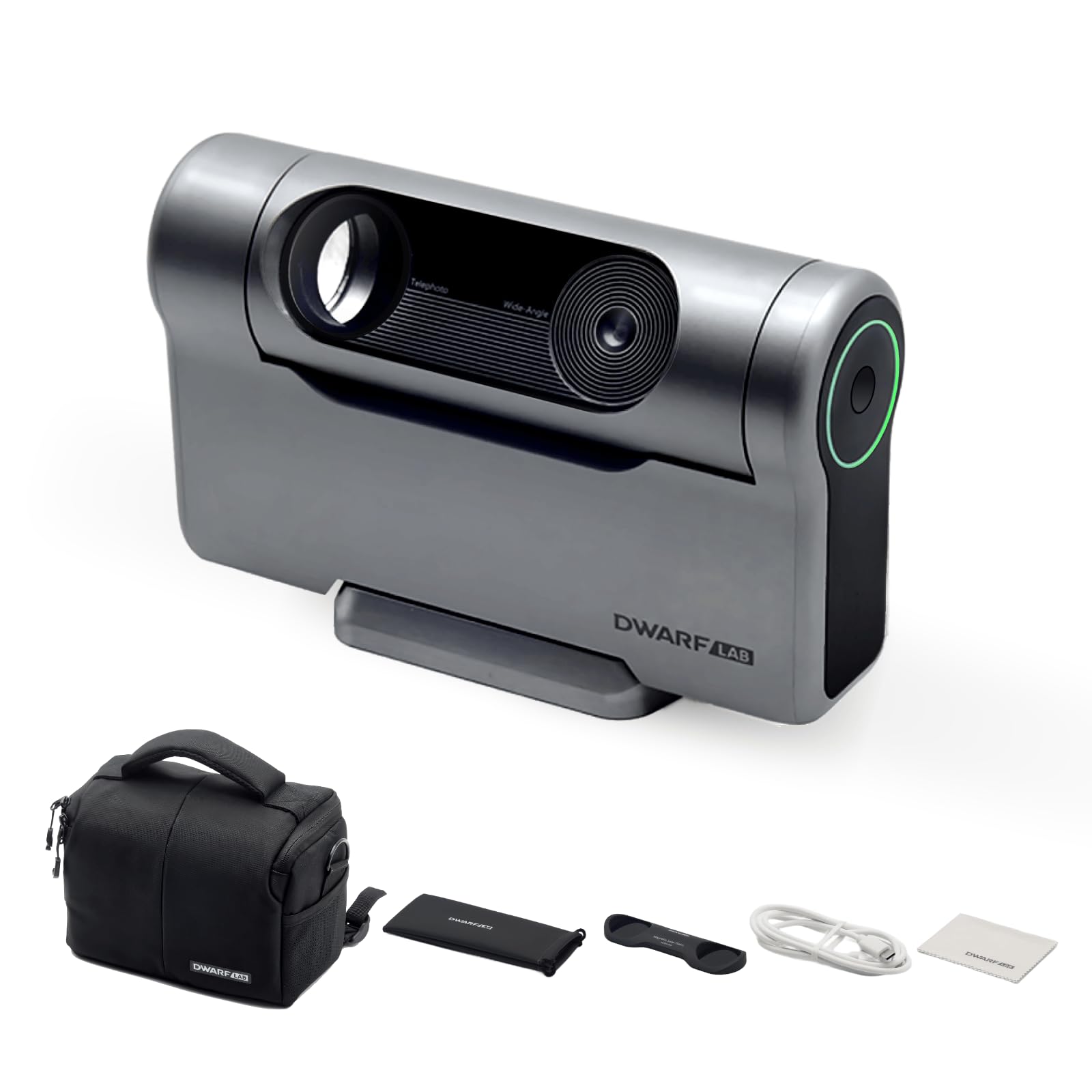
The DWARFLAB Dwarf 3 is not a traditional binocular, but it is an increasingly popular alternative for planet viewing. As a smart telescope, it uses a dual-camera imaging system (telephoto for deep-space objects and wide-angle for the Milky Way) and automated 4K auto-tracking to capture images of planets, star clusters, and galaxies without manual guidance. The built-in cloud-based processing produces finished astrophotos in minutes.
Weighing just 3 pounds, it fits in a standard backpack and sets up in two minutes through the DWARFLAB app. The Altazimuth mount provides stable tracking, while the EQ mode handles long-exposure deep-sky photography. The included magnetic filters (dual-band narrowband for nebulae, solar for the sun) expand its versatility. The USB-C connection handles power and data transfer.
Customer reviews are overwhelmingly positive for beginners and experienced astrophotographers alike, citing ease of use and impressive image quality for the price. The app can sometimes have connection quirks, and the lack of an eyepiece means you cannot look through it directly—you view the image on a phone or tablet. For those who prefer digital captures over eyepiece observation, the Dwarf 3 is a revolutionary tool.
Why it’s great
- Ultra-portable with automated 4K tracking
- Cloud processing turns raw data into finished images
- Works well even under light pollution
Good to know
- No eyepiece—viewing is screen-only
- App can experience occasional connection issues
FAQ
Can I use 10×42 binoculars to see Jupiter’s moons?
Do I really need a tripod for 20×80 binoculars?
What is the best magnification for viewing Saturn’s rings?
Are smart telescopes like the DWARFLAB Dwarf 3 better than binoculars for planets?
Final Thoughts: The Verdict
For most users, the binoculars for planet viewing winner is the Celestron SkyMaster Pro 20×80 because it combines a generous 80mm aperture with proprietary XLT coatings and a unique RSR rail for easy aiming, all at a mid-range price. If you want massive 100mm light collection for deep-sky and planetary detail, grab the Celestron SkyMaster 25×100. And for a portable, everyday companion that excels at scanning and daytime use, nothing beats the Nikon 10×42 PROSTAFF P7.