
Our readers keep the lights on and the weekend projects moving. As an Amazon Associate, I earn from qualifying purchases.
Spotting a leopard lounging in a distant acacia tree or a herd of elephants kicking up dust at the waterhole demands optics that resolve fine detail in harsh, shifting light. The wrong binoculars turn a once-in-a-lifetime safari into a frustrating blur of shimmery heat haze and shaky hands.
I’m Rikta — the co-founder and writer behind FitlyFast. For this guide I spent hours comparing exit-pupil diameters, phase-coating technologies, and field-of-view specs across nine safari-ready binoculars, matching each to the real conditions you’ll face on game drives and bush walks.
Whether you need lightweight glass for long treks or maximum light-gathering for dawn patrols, this breakdown of the binoculars for safari market will keep your view crisp when it matters most.
How To Choose The Best Binoculars For Safari
Safari environments punish optical gear with dust, intense sunlight, and sudden low-light conditions at twilight. Your buying decisions should center on three pillars: light transmission, build toughness, and ergonomic fit for extended glassing sessions.
Magnification and Objective Lens Size
An 8×42 or 10×42 configuration is the sweet spot for safari. The 8x magnification provides a wider field of view, making it easier to track moving animals, while 10x pulls distant subjects closer at the cost of some shake. The 42mm objective lens gathers enough light for dawn and dusk without making the binoculars too heavy to hold steady.
Optical Coatings and Prism Glass
Fully multi-coated lenses and BaK-4 prisms are non-negotiable for safari. They maximize light transmission and eliminate internal reflections that wash out color fidelity in harsh sunlight. Dielectric or phase-corrected coatings on roof-prism models further boost contrast and resolution, critical for distinguishing a cheetah from tall grass.
Durability and Weather Sealing
Game vehicles produce constant vibration and dust. O-ring sealed, nitrogen-purged binoculars prevent internal fogging when moving between air-conditioned lodges and humid open air. Rubber armor protects against accidental drops onto rocks or metal seat frames.
Quick Comparison
On smaller screens, swipe sideways to see the full table.
| Model | Category | Best For | Key Spec | Amazon |
|---|---|---|---|---|
| Nikon Monarch M5 8×42 | Premium Roof Prism | Safari low-light clarity | ED Glass + Dielectric Coating | Amazon |
| ZEISS Terra ED 10×42 | Premium Build | Fast-focus glassing | Hydrophobic Multi-Coating | Amazon |
| Vortex Diamondback HD 8×42 | Mid-Range Performer | Versatile all-weather safari | HD Optical + Dielectric | Amazon |
| Celestron Nature DX ED 8×42 | ED Entry Level | Budget ED glass experience | ED Objective Lenses | Amazon |
| Nocs Provisions Field Issue 10×32 | Compact Mid-Range | Lightweight day hikes | BaK-4 + Wide FOV | Amazon |
| Bushnell H2O 10×42 | Mid-Range | Wet-weather durability | Fully Multi-Coated + IPX7 | Amazon |
| Bushnell Trophy Xtreme 10x | Mid-Range | High-value light gathering | 7mm Exit Pupil | Amazon |
| Sogries 10-30×50 Zoom | Budget Zoom | Variable magnification work | 10-30x Zoom + 50mm | Amazon |
| Vortex Fury HD 5000 | Premium Rangefinder | Hunting with distance data | Laser Rangefinder + HD | Amazon |
In‑Depth Reviews
1. Nikon Monarch M5 8×42
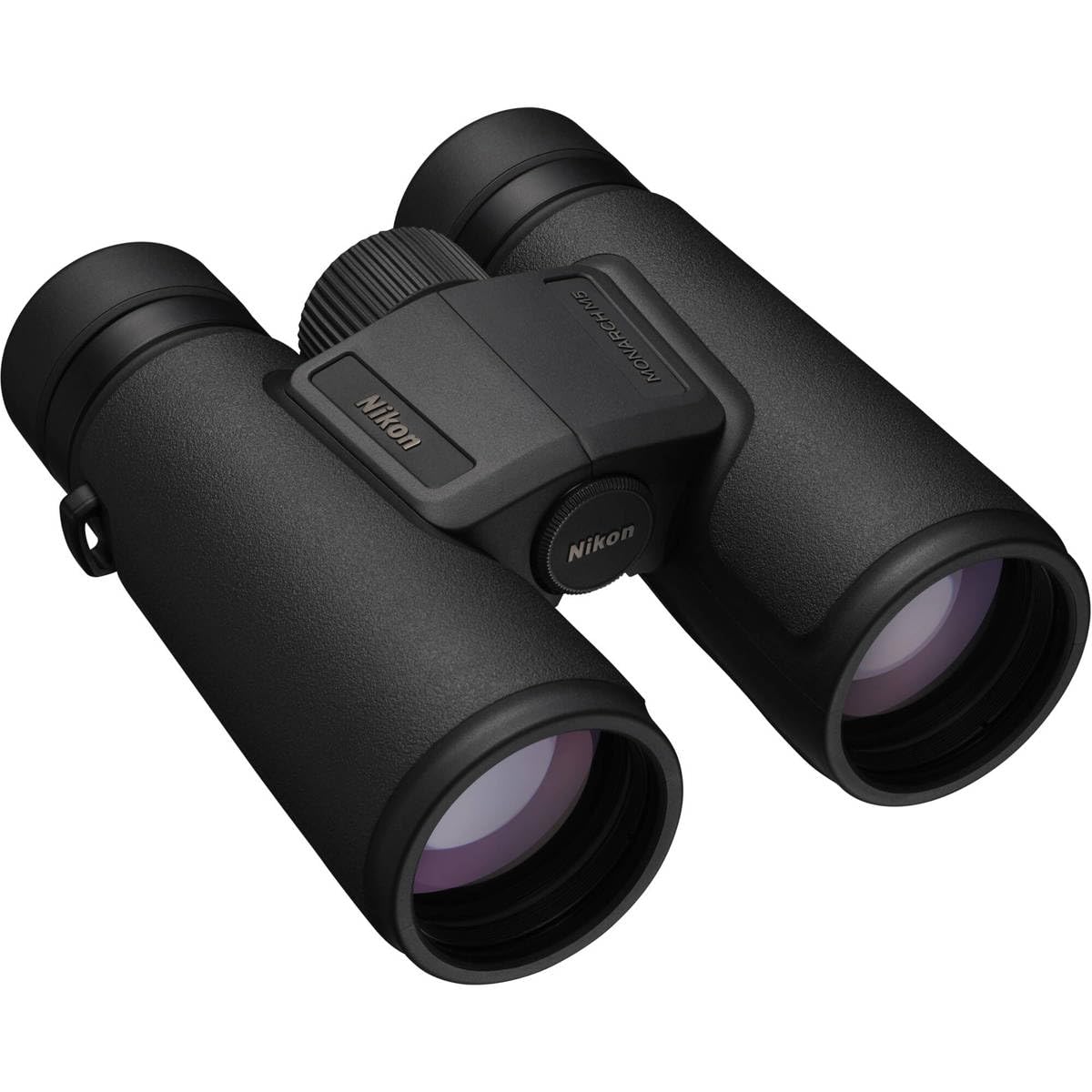
The Nikon Monarch M5 delivers the optical refinement that safari-goers need at a price that sits squarely in the premium-buyer sweet spot. Extra-low Dispersion (ED) glass virtually eliminates chromatic aberration, so the edge of a buffalo horn against a bright sky stays sharp and free of purple fringing. The 8×42 format gives you a generous 335-foot field of view at 1000 yards, making it easier to track a lioness striding through tall grass than a narrower 10x model would allow.
Dielectric high-reflective multilayer prism coatings push light transmission well above what standard silver-coated prisms achieve, and that matters when you are scanning a riverbank at dusk. Buyers who used these on African safaris consistently report the same result: crisp, true-color images that reveal detail even in deep shade under a forest canopy. The close-focus capability of 8.2 feet also lets you examine tracks or small reptiles without switching to a second pair of glasses.
The rubber-armored body shrugs off the dust and vibration of a game vehicle, while the nitrogen-purged O-ring seals keep internal fogging at bay during rapid humidity shifts. Turn-and-slide eyecups offer a full 19.5 mm of eye relief, comfortable even for eyeglass wearers who need to keep their prescription lenses on for spotting distant subjects. This is the binocular most likely to make you forget you are holding it — and that is exactly what you want on a long safari day.
Why it’s great
- ED glass yields near-zero chromatic aberration in harsh midday sun
- Dielectric coatings maximize brightness at dawn and dusk
- Generous eye relief works with eyeglasses
Good to know
- Field of view is narrower than some 8x competitors
- Central focus wheel sits close to the bridge, may feel tight for large hands
2. ZEISS Terra ED 10×42
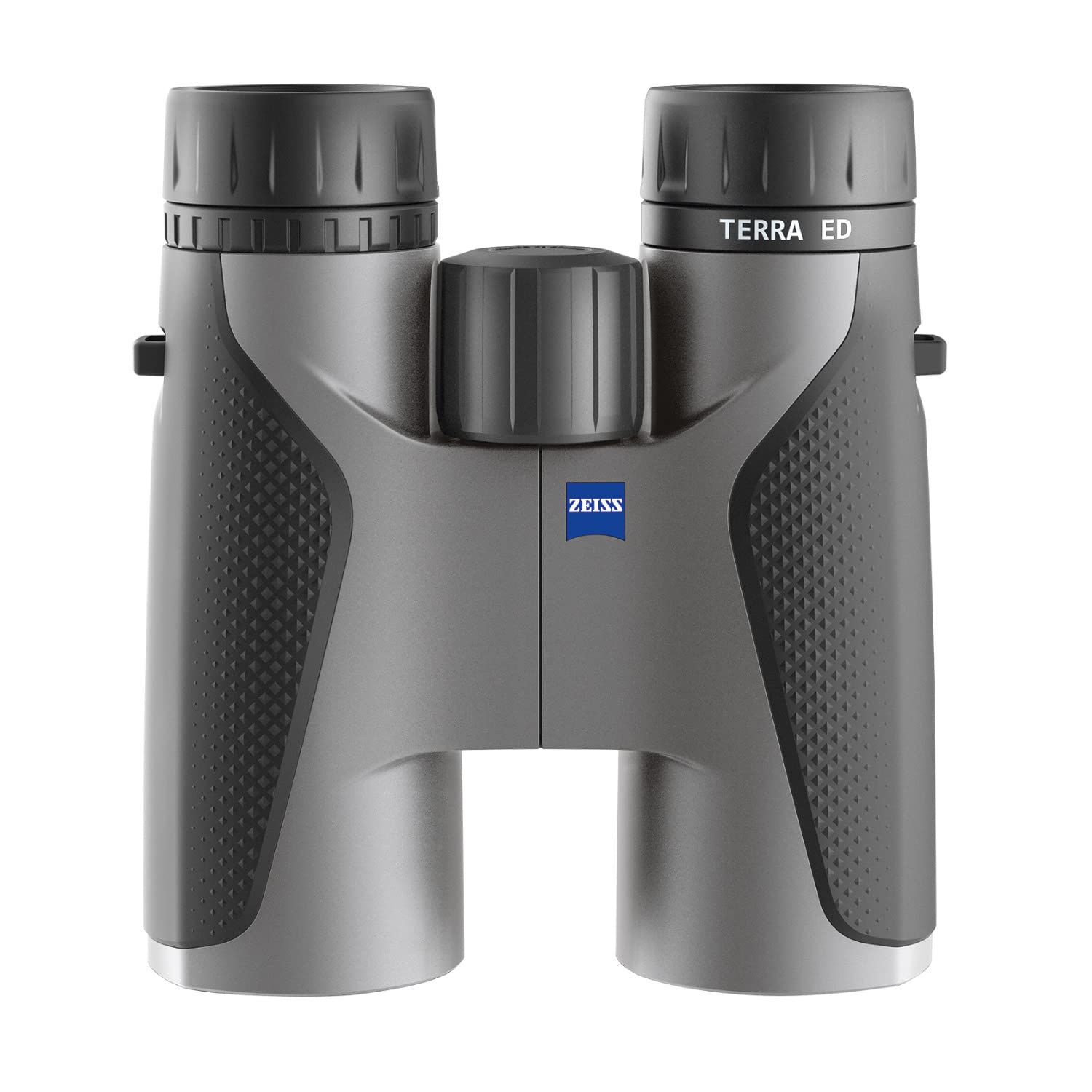
Optical heritage flows through every ZEISS Terra ED, and the 10×42 configuration gives safari viewers enough reach to inspect a perched raptor at 300 yards without sacrificing field-of-view stability. The Schmidt-Pechan prism system built with ED glass delivers 88 percent light transmission, a figure that makes low-light performance a genuine advantage rather than a marketing tagline. That extra clarity matters when you are trying to confirm whether that dark shape under a bush is a resting warthog or a rock.
The large focus wheel is deliberately engineered for speed. Your index finger lands on it naturally, and a quarter turn snaps a herd of zebra into sharp focus from near to infinity. Hydrophobic multi-layer coatings repel the light rain or morning dew that often appears on early game drives, keeping the image clear without constant lens wiping. The grey fiberglass-reinforced casing is lightweight but feels nearly indestructible in hand, and the included hard case and neoprene strap protect the investment during travel.
Buyers who own both ZEISS Terra and competitors in the sub- tier consistently point to the Terra’s superior color fidelity and wider apparent field of view as the deciding factors. The 60-degree apparent angle of view makes the image feel immersive rather than tunnel-like, a quality that helps you scan sweeping savanna landscapes without moving the binoculars excessively. For the safari-goer who values fast target acquisition and Zeiss-level glass, the Terra ED is a high-end choice that earns its reputation.
Why it’s great
- Hydrophobic coatings keep lenses clear in damp conditions
- Lightweight fiberglass-reinforced body reduces neck fatigue
- 88% light transmission for superior twilight viewing
Good to know
- Diopter adjustment is stiff out of the box
- 10x magnification amplifies hand shake without a rest
3. Vortex Optics Diamondback HD 8×42

Vortex has built a loyal following among outdoor enthusiasts by combining strong optical performance with a warranty that is genuinely unlimited and unconditional. The Diamondback HD 8×42 uses select HD glass elements that reduce chromatic aberration to the point where tree branches against a bright sky look natural rather than outlined in false color. Dielectric coatings on the prisms push brightness and color accuracy well above what the price point would suggest, making this binocular a serious contender for safari use.
Argon purging and O-ring seals provide water and fogproof performance in environments that shift rapidly from hot and dusty to cool and humid. The rubber armor delivers a non-slip grip even when your hands are sweaty from the heat, and the included GlassPak harness distributes the weight across your shoulders instead of your neck. That harness is a small but meaningful detail when you are hanging glass for four hours straight on a morning drive.
A 393-foot field of view at 1000 yards is wide enough to follow fast-moving animals like impalas in flight, and the 17 mm of eye relief remain comfortable for extended periods. The center focus wheel is smooth and precise, allowing one-handed adjustments while bracing against a vehicle roll bar. Considering the lifetime warranty and the HD optical performance, the Diamondback delivers a compelling mix of durability and clarity for the mid-range budget.
Why it’s great
- Unconditional lifetime warranty covers any defect
- Argon purging prevents fogging in all conditions
- Wide 393-foot FOV for tracking moving animals
Good to know
- GlassPak harness is good but neck strap is basic
- Eyecups have limited click stops compared to premium models
4. Celestron Nature DX ED 8×42

The Celestron Nature DX ED brings Extra-low Dispersion glass to a price point that is typically reserved for standard optics, making it one of the best entry-level choices for safari enthusiasts who want true chromatic aberration correction without the premium markup. ED objective lenses virtually eliminate the color fringing that plagues cheaper binoculars, especially when scanning the bright rim of a watering hole at midday. The phase-corrected BaK-4 prisms further enhance contrast, helping you separate a spotted hyena from the dappled shade of a termite mound.
At 8×42, this binocular strikes a balanced compromise between reach and stability. Users report crisp, true-to-life colors with excellent brightness even in the dim light of a forested riverine. The rubber-armored polycarbonate housing is lightweight enough to carry on long walks, and the nitrogen-purged waterproofing ensures you can keep glassing through an unexpected tropical downpour without internal fogging. Built-in tripod adapter threads are a welcome addition for those who want to mount the binoculars on a vehicle window clamp during extended observation.
The center focus wheel provides precise adjustments, and the 17.8 mm of eye relief accommodate most eyeglass wearers. While the ergonomics are not as refined as pricier models — the grip can feel slightly shallow for larger hands — the optical performance punches well above its weight. For the safari buyer who prioritizes image quality over luxury fit and finish, the Nature DX ED delivers exceptional value.
Why it’s great
- ED glass at a price that undercuts most premium competitors
- Phase-coated BaK-4 prisms deliver high contrast
- Tripod-adaptable for stable vehicle mounting
Good to know
- Ergonomics feel less refined than Vortex or Nikon
- Eye relief may feel tight for glasses with thick frames
5. Nocs Provisions Field Issue 10×32
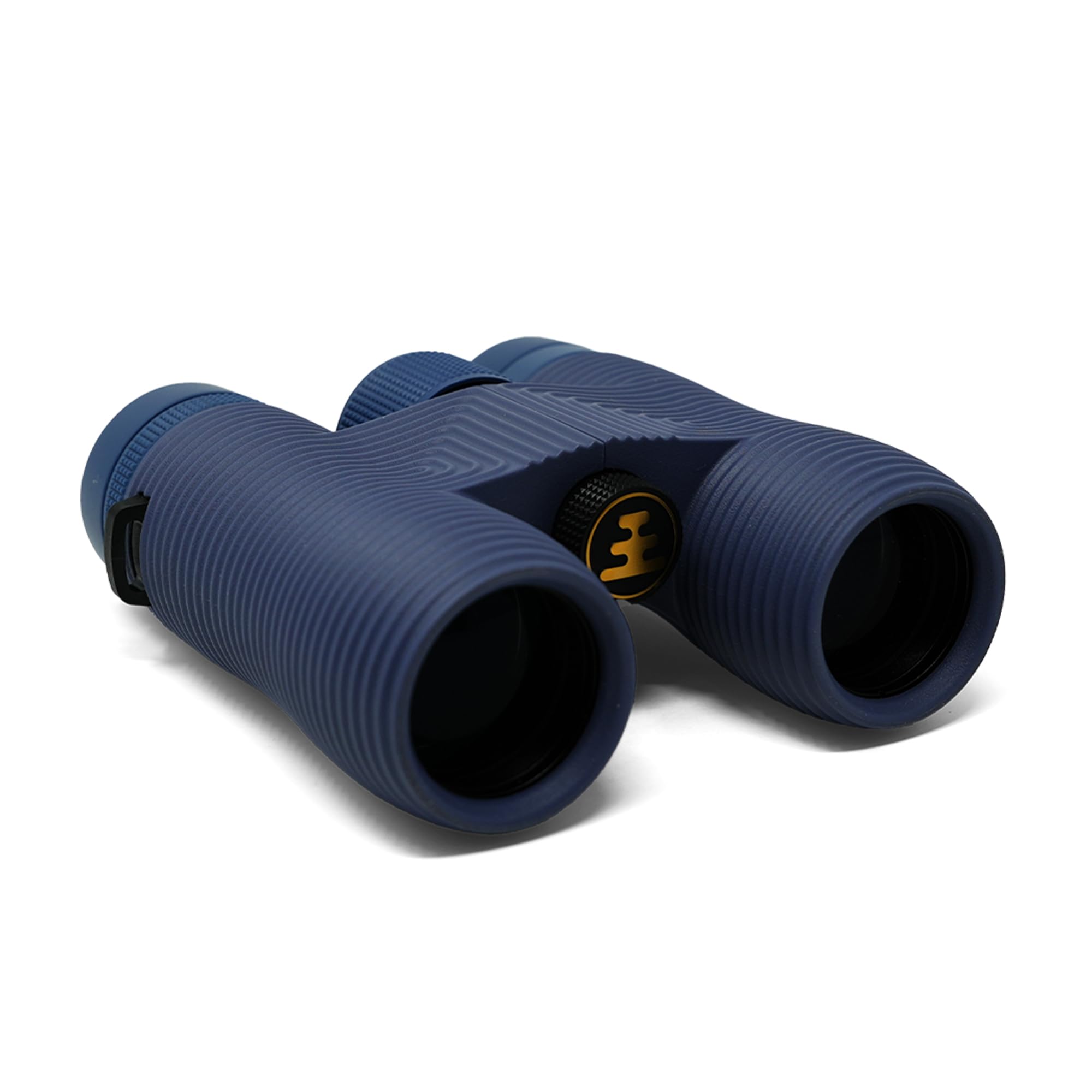
When every ounce counts toward airline baggage limits, the Nocs Provisions Field Issue 10×32 offers a rugged, compact package that still delivers genuine optical quality. Weighing just 16.7 ounces, it disappears into a daypack or carry-on without the bulk that larger 42mm objectives demand. The Swiss-designed BaK-4 prism and fully multi-coated optics produce a bright, sharp image that serves well for daytime game viewing, especially in open savanna where light is abundant.
The 10x magnification gives you solid reach for identifying birds or distant animals, and the oversized focus wheel allows precise adjustments down to a 9.3-foot close focus. IPX7 waterproofing means the binoculars can survive a dunk in a puddle or a sudden rain shower without compromise, and the nitrogen-sealed construction prevents internal fogging. The patented Rugged Wave Grip texture on the housing ensures your hold remains secure even when your hands are damp from humidity.
Buyers who used these in the Pantanal and on African trips praise the compact form and clarity, noting that the binoculars fit easily in a backpack pocket while still providing enough magnification for serious wildlife observation. The three-position twist-up eyecups accommodate both eyeglass wearers and those with naked eyes. The lifetime warranty and the brand’s environmental commitment are bonuses, but the primary value here is portability without cheap optics.
Why it’s great
- Ultra-light 16.7 oz for easy packing and long carry
- IPX7 waterproof with impact-resistant housing
- Wide field of view for a compact 10×32
Good to know
- 32mm objectives limit low-light performance at dawn
- Case and strap quality are basic compared to optics
6. Bushnell H2O 10×42

Bushnell’s H2O series has been a reliable workhorse for wet conditions, and the 10×42 version is no exception. Fully multi-coated glass surfaces and BaK-4 prisms combine to produce images that are bright and clear enough for most daytime safari scenarios, from scanning a river for hippos to watching vultures circle a carcass. The compact roof-prism design is noticeably slimmer than traditional porro prism binoculars, making it easier to pack tight in a camera bag or glove compartment.
O-ring sealed optical construction with nitrogen purging delivers genuine waterproof and fogproof performance. The rugged rubber design includes soft grip inserts that stay secure in wet hands, a real advantage during boat-based game viewing on rivers like the Chobe. Close focus is adequate for examining tracks or small reptiles, and the center focus knob is responsive enough for quick adjustments.
Buyers consistently rate the H2O above its pricing tier, noting that the optical quality rivals binoculars costing significantly more. The one notable limitation is the lack of a tripod adapter socket in certain production runs, which may frustrate photographers who want to align binoculars with a camera setup. For the safari-goer who expects rain or operates around water frequently, the H2O provides waterproof reliability at a budget-conscious mid-range price.
Why it’s great
- IPX7 waterproof rating exceeds typical dust-proof specs
- Fully multi-coated BaK-4 optics for bright images
- Compact roof-prism design saves pack space
Good to know
- Some units lack a tripod adapter socket
- Neck strap is mediocre and should be upgraded
7. Bushnell Trophy Xtreme 10x

The Bushnell Trophy Xtreme delivers a 10×50 configuration that prioritizes light gathering above all else, making it a strong choice for safari-goers who plan to spend significant time glassing during the golden hours of dawn and dusk. The 50mm objective lenses produce a 7mm exit pupil that matches the fully dilated pupil of a young adult, flooding the eye with light even as the sun dips below the horizon. Fully multi-coated lenses and BaK-4 prisms ensure that the captured light translates into a bright, crisp image with good color accuracy.
Heavy-duty waterproof and fogproof construction with O-ring sealing protects the internals from dust and moisture, while the textured rubber armor absorbs shocks and provides a non-slip grip. The large center focus knob is easy to operate with gloved hands, and the 3-step twist-up eyecups allow fine adjustments for different users. Buyers consistently praise the light-gathering ability, noting that these binoculars allow comfortable viewing well after sunset when lesser models go dark.
A 315-foot field of view at 1000 yards is typical for a 10×50 design, and the 10-foot close focus is adequate for nearby subjects. The main trade-off is weight: at 31.8 ounces, these binoculars are heavy enough that a car window mount or tripod is welcome for extended glassing sessions. For the safari enthusiast who prioritizes low-light performance and is willing to carry a few extra ounces, the Trophy Xtreme punches far above its price class.
Why it’s great
- 7mm exit pupil delivers exceptional twilight brightness
- Bushnell warranty covers drops and defects
- 100% waterproof with O-ring seals
Good to know
- Heavy at 31.8 oz, benefits from tripod or window mount
- Objective lens covers limit minimum IPD for some users
8. Sogries 10-30×50 Zoom
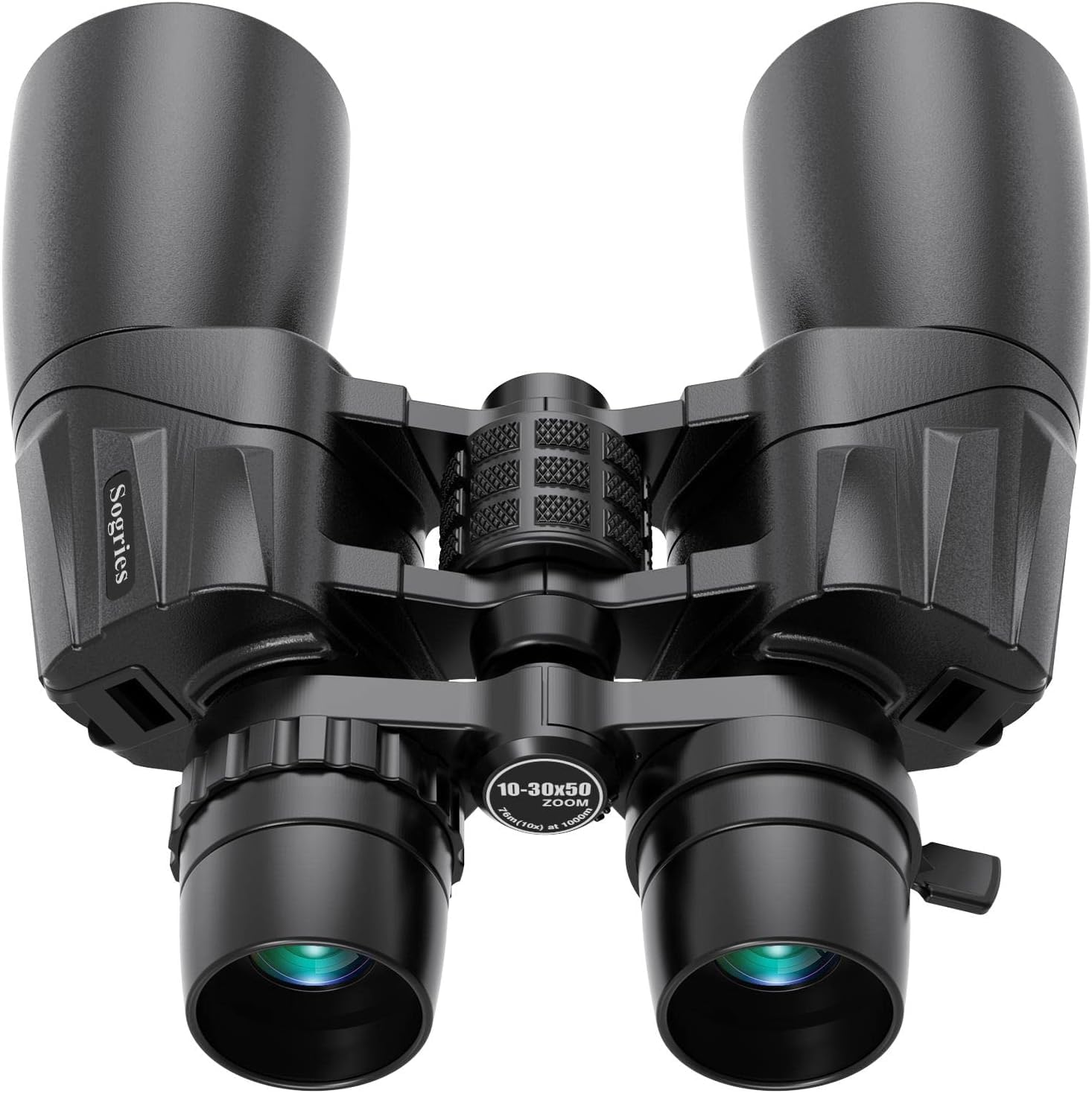
The Sogries 10-30×50 zoom binoculars offer a variable magnification range that lets you swap from a wide 10x scan to a detailed 30x close-up without changing instruments. That flexibility is appealing on safari when a distant elephant herd shifts from a wide landscape element to a subject you want to examine closely. The 50mm objective lenses gather enough light to keep the image bright across the zoom range, and the BaK-4 prisms with fully multi-coated green film achieve a claimed 99.5 percent light transmittance for improved low-light performance.
The smooth zoom joystick allows one-handed transition between powers, and the O-ring sealed construction with anti-fog coating keeps moisture and dust out of the barrel. The unscented rubber armor with non-slip fingerprint texture provides a secure grip even in humid conditions. Buyers report clear images at high power, with many noting that the binoculars reveal details on distant shorelines and port structures that fixed-power binoculars cannot resolve.
That said, zoom binoculars require more stability than fixed-power models, and at 30x the image shake becomes significant without a tripod. The manufacturer explicitly recommends using a tripod at higher magnifications, which adds gear to your packing list. For the budget-conscious safari-goer who values versatility and is willing to manage the tripod requirement, the Sogries zoom delivers respectable optical quality at a low entry price.
Why it’s great
- Variable 10-30x zoom covers wide and close-range needs
- 50mm objectives deliver solid light gathering
- Smooth zoom joystick for quick power changes
Good to know
- High power requires a tripod for steady viewing
- Heavier build due to metal barrel construction
9. Vortex Optics Fury HD 5000 10×42

The Vortex Fury HD 5000 is a specialized instrument that combines high-definition 10×42 binoculars with a laser rangefinder capable of measuring distances up to 5000 yards. While safari purists rarely need a rangefinder, hunters and photographers who need precise distance data for shot placement or lens focus will find this tool invaluable. The HD optical system delivers crisp, clear images with good color accuracy, and the XR fully multi-coated lenses with dielectric phase-corrected prisms ensure high light transmission from dawn through dusk.
Two target modes — Best Mode and Last Mode — allow you to range targets through brush or past foreground obstacles, a practical feature when trying to isolate an animal partially hidden behind vegetation. The angle-compensated HCD mode provides a corrected distance that accounts for elevation changes, useful in hilly or mountainous terrain. The nitrogen-purged, rubber-armored housing is shockproof and weather-sealed, built to survive the abuse of a hunting jeep or a backpack dropped onto rocky ground.
The user experience is defined by the seamless integration of ranging and viewing. You acquire a target with the wide field of view, push a button to get the distance displayed in the ocular view, and maintain visual contact without moving the binoculars from your face. Buyers applaud the clarity and the accuracy of the rangefinder, noting that it simplifies course setup for shooting sports and eliminates the need for a separate ranging device. For the serious safari hunter or guide who needs both optics and data, the Fury HD 5000 is a purpose-built premium solution.
Why it’s great
- Integrated laser rangefinder with 5000-yard capability
- HD optics with dielectric coatings for bright images
- Angle-compensated modes for precise distance data
Good to know
- Significant price jump over non-rangefinding binoculars
- Not necessary for general wildlife viewing
FAQ
What magnification is best for a safari?
Is a 50mm objective lens too heavy for game drives?
Do I need ED glass for safari?
What does waterproof and fogproof mean for binoculars?
Can I use a tripod with these binoculars on safari?
Final Thoughts: The Verdict
For most users, the binoculars for safari winner is the Nikon Monarch M5 8×42 because it combines ED glass and dielectric coatings in a compact, weather-sealed package that handles the full range of safari lighting conditions without straining your neck. If you want a wider field of view for tracking fast-moving animals, grab the Vortex Diamondback HD 8×42. And for low-light specialists who plan to glass at dawn and dusk, nothing beats the Bushnell Trophy Xtreme 10×50.