
Our readers keep the lights on and the weekend projects moving. As an Amazon Associate, I earn from qualifying purchases.
A pair of binoculars can reveal more of the night sky than most beginners expect. Where a telescope often frustrates with setup time and narrow views, a good set of stargazing binoculars gives you wide, bright sweeps of the Milky Way, resolves the Andromeda Galaxy, and frames the Pleiades beautifully — all without a tripod, mount, or power supply.
I’m Rikta — the co-founder and writer behind FitlyFast. After analyzing dozens of optical specifications, comparing prism types, lens coatings, and exit pupil diameters, this guide is built from hundreds of hours of research into what separates a crisp night-sky view from a blurry disappointment.
Whether you are a backyard observer or a seasoned amateur, finding the right pair requires understanding aperture and magnification trade-offs. This article breaks down the best binoculars for stargazing so you know exactly what you are buying.
How To Choose The Best Binoculars For Stargazing
Choosing optics for the night sky is different from choosing birding or sports binoculars. You are chasing faint light, not fast movement. Aperture — the diameter of the objective lenses — is the single most important spec. Larger apertures collect more light, which translates directly to seeing dimmer stars and more detail in nebulae.
Aperture and Magnification Balance
A common beginner mistake is chasing high magnification. A 30x pair with a 25mm objective gathers very little light, rendering faint stars invisible. A better rule: keep magnification at or below 12x for handheld use, and pair it with at least a 50mm aperture. If you are mounting on a tripod, 15x to 25x with 70mm or 80mm objectives becomes practical and reveals deep-sky objects.
Prism Quality and Lens Coatings
BaK-4 glass prisms deliver brighter, sharper edge-to-edge images compared to BK-7 prisms, which can produce cut-off shadows. Fully multi-coated (FMC) lenses — where every air-to-glass surface receives an anti-reflective coating — maximize light transmission. Green or purple coatings often indicate quality multi-coating; avoid single-coated or uncoated lenses for astronomy.
Exit Pupil and Eye Relief
Exit pupil is the aperture divided by magnification. A 10×50 yields a 5mm exit pupil, which matches a dark-adapted human eye perfectly. Larger exit pupils (6-7mm) benefit younger observers or very dark skies. Eye relief above 15mm is essential if you wear glasses, allowing you to see the full field without your eyelashes touching the eyepiece.
Quick Comparison
On smaller screens, swipe sideways to see the full table.
| Model | Category | Best For | Key Spec | Amazon |
|---|---|---|---|---|
| Celestron SkyMaster 12×60 | Mid-Range | Handheld stargazing with wide field | 12×60, BaK-4 prism, 5mm exit pupil | Amazon |
| Celestron SkyMaster 25×100 | Premium | Deep-sky tripod observation | 25×100, BaK-4 prism, 4mm exit pupil | Amazon |
| Sogries 25×100 | Premium | All-weather rugged astronomy | 25×100, BaK-4 FMC, nitrogen-filled | Amazon |
| Pentax Jupiter 12×50 | Mid-Range | Compact moon and cluster viewing | 12×50, multi-coated, 4.2mm exit pupil | Amazon |
| ESSLNB 15-30×80 Zoom | Mid-Range | Zoom versatility with tripod | 15-30×80, BaK-4 FMC, built-in mount | Amazon |
| Tenjin 30×80 | Mid-Range | High-magnification moon study | 30×80, BaK-4, aluminum body | Amazon |
| HIOPIACO 30-260×80 | Premium | Extreme zoom with included tripod | 30-260×80, BaK-4 FMC, includes tripod | Amazon |
| Sogries 18×70 | Mid-Range | Low-light performance with phone adapter | 18×70, BaK-4 FMC, IPX7 waterproof | Amazon |
| Sogries 10-30×50 Zoom | Entry-Level | Budget-friendly versatile zoom | 10-30×50, BaK-4 FMC, 22mm eye relief | Amazon |
In‑Depth Reviews
1. Celestron SkyMaster 12×60

The Celestron SkyMaster 12×60 strikes a near-perfect balance for new and intermediate stargazers. Its 12x magnification is high enough to resolve Jupiter’s Galilean moons and Saturn’s disc, yet its 60mm aperture — paired with a 5mm exit pupil — delivers bright, wide-field sweeps of the Milky Way. BaK-4 prisms and multi-coated optics ensure edge-to-edge sharpness with minimal color fringing.
At roughly 2.4 pounds, many users find it comfortable to handhold for short sessions, though the rubber-armored body and water-resistant build allow you to mount it on a standard tripod for extended observation. The lack of a tripod adapter in the box is the only accessory gap, but the included carry case and lens caps protect it well.
Reviews consistently praise its clarity on the Andromeda Galaxy and open clusters like the Pleiades. For the aperture and build quality, it undercuts competitors by a wide margin, making it the starting point for anyone serious about binocular astronomy.
Why it’s great
- BaK-4 prisms deliver bright, detailed low-light views
- Manageable weight for grab-and-go handheld use
- Celestron limited lifetime warranty from a trusted brand
Good to know
- No tripod adapter included
- Stock neck strap is thin; recommend upgrading
2. Celestron SkyMaster 25×100
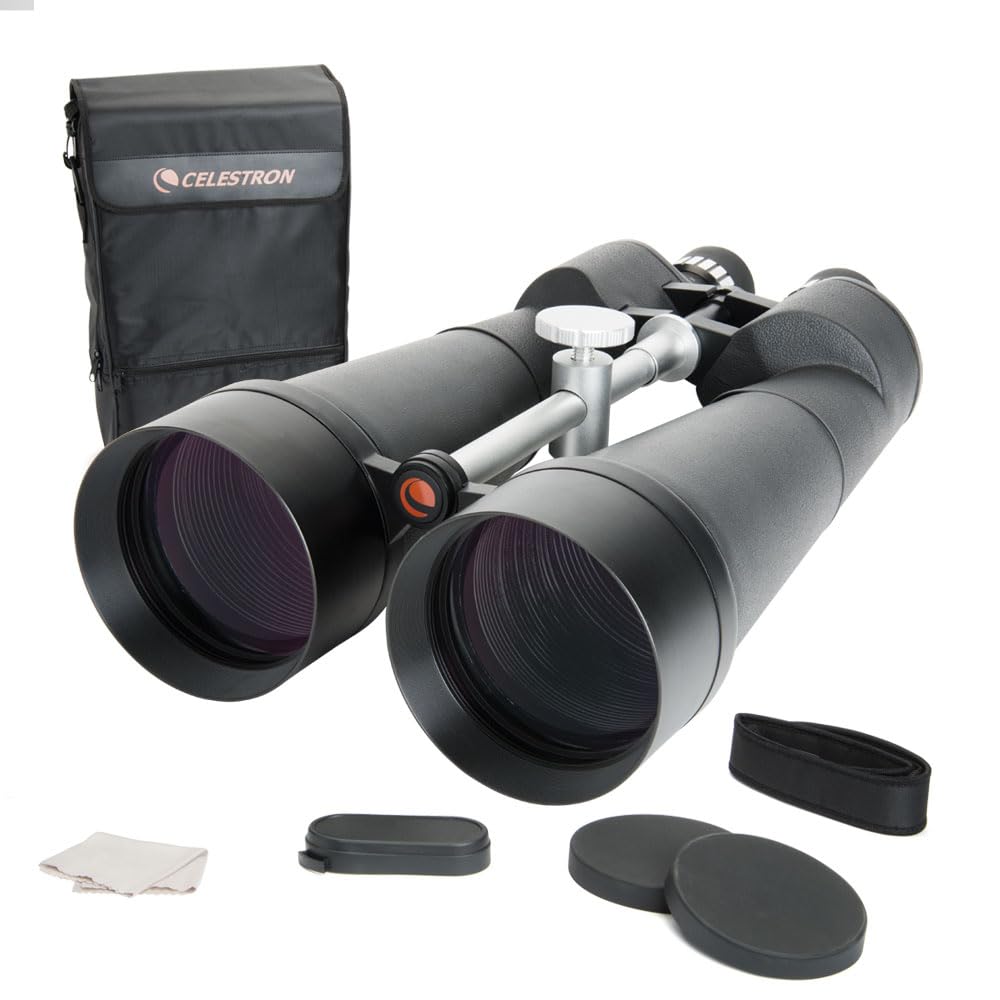
When aperture takes precedence over portability, the Celestron SkyMaster 25×100 is the definitive choice. Its 100mm objective lenses capture enough light to resolve dozens of faint globular clusters, trace the dust lanes of the Andromeda Galaxy, and even split certain double stars. The 25x magnification makes it a dedicated tripod instrument — handholding is physically impractical at over 10 pounds.
BaK-4 prisms maximize the already massive light intake, providing views that often surpass entry-level telescopes in the same price bracket. Individual eyepiece focus keeps the optical path simple and robust, and the built-in ¼-inch adapter mounts to any standard photo tripod in seconds. The rubber-armored shell and water-resistant seals protect against dew and light rain.
Users note that a heavy-duty tripod is essential — a lightweight tripod will wobble at 25x. The included carry case is functional but snug, and the fixed 25x power may frustrate those wanting variable magnification. However, for deep-sky richness at an approachable price, this Celestron is a proven classic.
Why it’s great
- Giant 100mm aperture reveals faint deep-sky objects
- Bright, sharp BaK-4 optics outperform entry telescopes
- Built-in tripod adapter for quick mounting
Good to know
- Heavy — requires a very sturdy tripod
- Individual focus can be tedious at high power
3. Sogries 25×100
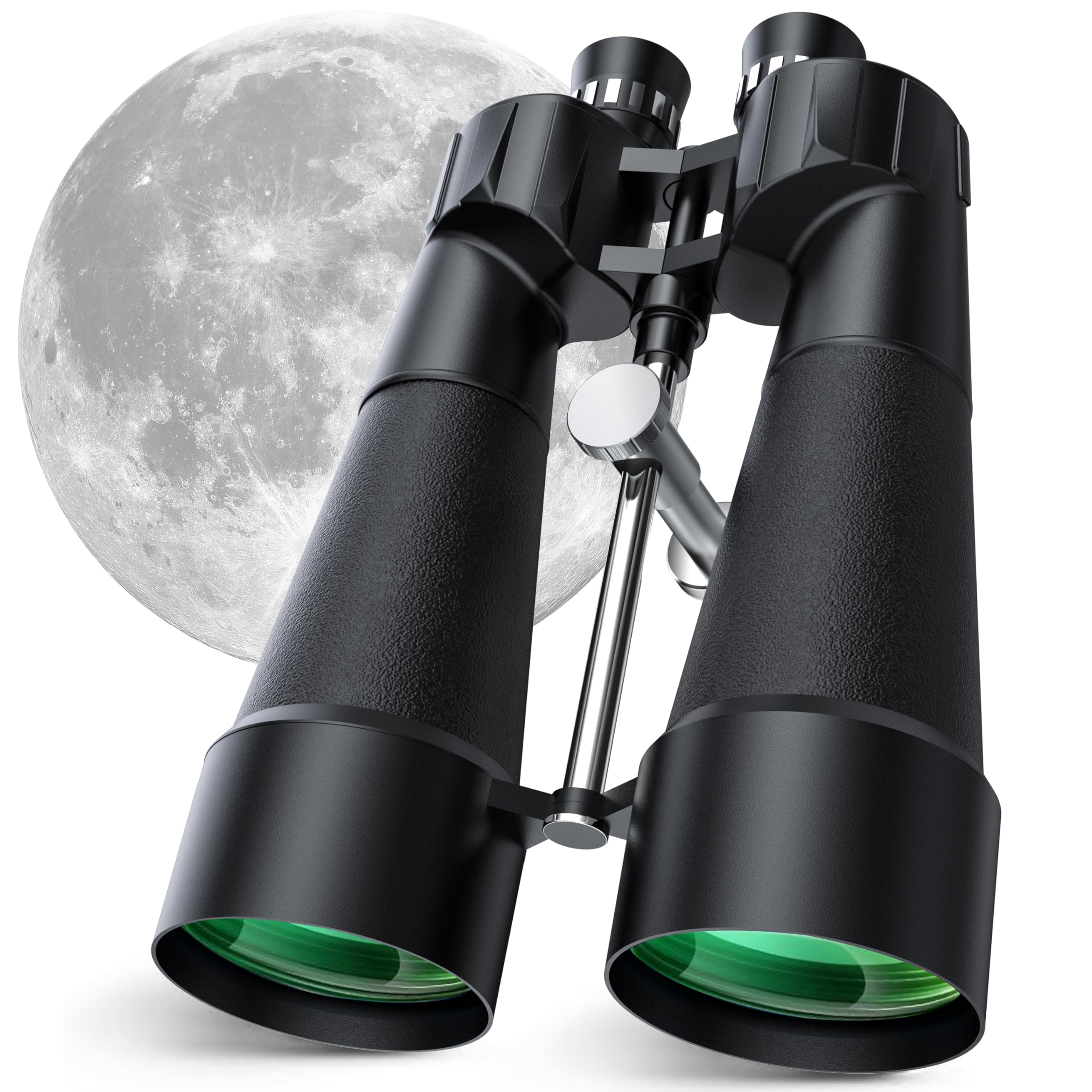
The Sogries 25×100 challenges Celestron’s dominance with nitrogen-filled waterproofing and fully multi-coated optics. The 100mm porro prisms use BaK-4 glass, and the FMC anti-reflective coatings deliver a light transmission rating that keeps the image bright even under moonlit skies. The result is crisp, high-contrast views of star clusters, nebulae, and lunar craters.
Its aluminum alloy chassis with thick rubber armor feels exceptionally durable, and the nitrogen seal prevents internal fogging in humid or cold conditions — a real advantage for all-night sessions. At 8.8 pounds, a sturdy tripod is mandatory, and the built-in ¼-inch adapter works with most photo heads. A premium leather-backpack carrying case elevates the unboxing experience.
Owner feedback highlights the sharpness at 20x magnification (usable lower than the advertised 25x) and the impressive low-light performance. The thin, untethered objective lens caps and loose ocular covers are minor complaints, but the overall build and optical quality rival models costing significantly more. It is a top-tier option for the dedicated observer.
Why it’s great
- Nitrogen-filled waterproofing prevents internal fogging
- Fully multi-coated BaK-4 optics for maximum brightness
- Premium leather backpack case included
Good to know
- Heavy; tripod required for steady viewing
- Untethered lens caps can be easily lost
4. Pentax Jupiter 12×50

The Pentax Jupiter 12×50 delivers the famous brand’s build quality in a portable, user-friendly package. Its 50mm aperture collects enough light for crisp views of the moon, the Pleiades, and the Orion Nebula, while the 11mm eye relief accommodates most eyeglass wearers. The multi-coated optics suppress internal reflections and maintain good contrast even near city lights.
The porro prism design provides a satisfying 3D depth to terrestrial and astronomical scenes. The rubber coating ensures a secure grip, and the focus ring is smooth with precise tension. It is light enough for long handheld sessions, though a tripod adapter (sold separately) can improve stability for prolonged gazing.
Users consistently note the sharpness on the moon and the solid, balanced feel. The 12x magnification is the practical ceiling for handheld astronomy, making this a straightforward pick for beginners who want a reliable, no-nonsense instrument without the bulk of larger apertures. It simply works.
Why it’s great
- Pentax optical quality at a very reasonable price
- Lightweight and comfortable for handheld use
- Sharp, high-contrast moon and cluster views
Good to know
- 11mm eye relief may be tight for some glasses
- Tripod adapter sold separately
5. ESSLNB 15-30×80 Zoom

The ESSLNB 15-30×80 zoom binoculars offer a unique advantage: variable magnification within a single instrument. At 15x, the 80mm aperture provides a wide, bright field for locating nebulae and star fields; cranking to 30x pulls in details on the moon’s terminator or resolves Jupiter’s cloud bands. BaK-4 prisms and fully multi-coated green-film lenses maintain strong light transmission across the zoom range.
Its metal construction includes a built-in tripod mount, making it ready for heavy-duty tripods out of the box. The included smartphone adapter and carrying case add instant digiscoping capability. At 5.1 pounds, this is strictly a tripod instrument — handheld use is nearly impossible at 30x.
Reviewers highlight sharp, clear images at lower magnifications but note some softness at the 30x extreme. The plastic phone adapter can feel flimsy, and the minimum focus distance of 50 feet limits close terrestrial use. For the price, however, the zoom versatility and 80mm light grasp are unmatched.
Why it’s great
- 15-30x zoom range adapts to target and conditions
- 80mm aperture and BaK-4 FMC for bright images
- Built-in tripod mount with smartphone adapter included
Good to know
- Image softens noticeably at 30x
- Plastic phone adapter lacks stability
6. Tenjin 30×80

The Tenjin 30×80 offers fixed 30x power that makes the moon’s surface appear almost three-dimensional. With the 80mm aperture gathering ample light, craters, rilles, and mare details snap into focus with striking depth. The BaK-4 prisms and basic anti-reflective coatings produce competent daytime and twilight views, though the optical system shows some chromatic aberration around high-contrast edges.
The aluminum alloy body with thick rubber armor feels extremely solid. The included integrated tripod adapter and a sturdy EVA carry case add convenience. At roughly 6.4 pounds, a stable tripod is absolutely required — even the slightest breeze will shake the view at 30x.
User feedback praises the crisp moon views and the robust build. Several observers note that the 2.5-degree apparent field is narrow, making it hard to frame larger objects like the Andromeda Galaxy. The individual focus system is reliable but slow. For dedicated lunar observers who want maximum detail without entering telescope territory, this Tenjin delivers.
Why it’s great
- 30x magnification reveals incredible lunar detail
- Solid aluminum build with protective rubber armor
- EVA carry case and tripod adapter included
Good to know
- Narrow 2.5-degree field of view
- Noticeable chromatic aberration on bright edges
7. HIOPIACO 30-260×80
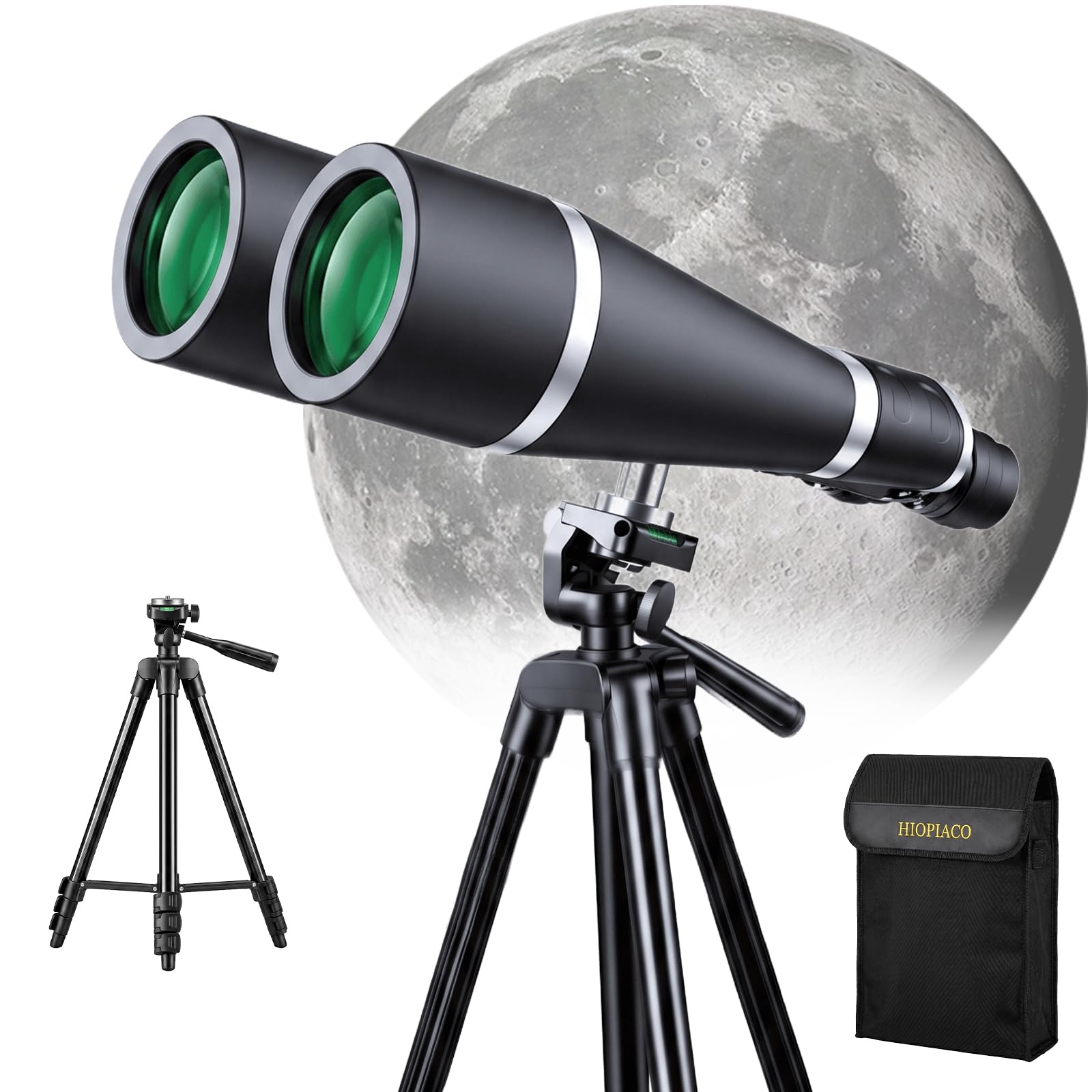
The HIOPIACO 30-260×80 pushes the boundaries of binocular magnification. With BaK-4 prisms and FMC broadband green-film coatings, the optical path delivers usable clarity across the zoom range, though atmospheric turbulence becomes the dominant limiting factor past 100x. The included tripod is a welcome addition, eliminating the need for a separate purchase.
The aluminum and plastic body keeps weight manageable at 8 pounds, and the center focus wheel operates smoothly. The 80mm aperture provides decent light gathering for bright deep-sky targets, but at 260x, the exit pupil shrinks drastically, making low-light performance fade. It shines best on the moon, planets, and terrestrial targets.
Users appreciate the included tripod for immediate setup, though some note the tripod is lightweight and may wobble at extreme zoom settings. The zoom mechanism is surprisingly consistent, with clear images at lower powers. This is a specialty tool for observers who want to push magnification limits without buying a telescope.
Why it’s great
- Extreme 260x maximum magnification for planetary detail
- Full kit includes tripod, case, and cleaning cloth
- BaK-4 FMC optics maintain clarity across zoom range
Good to know
- Included tripod is too light for stable high-power use
- Exit pupil at 260x is very small, dimming the image
8. Sogries 18×70

The Sogries 18×70 combines high magnification with a generous 70mm aperture and an IPX7 waterproof rating, making it a rugged companion for dawn, dusk, and late-night sessions. The BaK-4 prism and FMC coatings produce bright images with excellent contrast, showing lunar craters, Jupiter’s moons, and the Orion Nebula with clarity. The 18x magnification is high enough for deep work while remaining somewhat usable with a monopod.
The metal barrel and rubber armor feel robust, and the included smartphone adapter with tripod mount adds digiscoping capability out of the box. The 4.7mm exit pupil still allows comfortable viewing in moderately dark skies. At roughly 3 pounds, it is easier to transport than 80mm or 100mm giants, though a tripod is strongly recommended for steady viewing.
Owner reviews emphasize the crisp long-distance views and the excellent value. The main drawback is the weight for handheld use — it fatigues the arms quickly. The individual focus system is precise but slower than center focus. It is a strong mid-range contender for those wanting 18x power and weather protection.
Why it’s great
- IPX7 waterproof and fogproof for all-weather use
- Bright BaK-4 FMC optics with strong contrast
- Smartphone and tripod adapters included
Good to know
- Heavy for extended handheld sessions
- Individual focus is slower than center focus systems
9. Sogries 10-30×50 Zoom
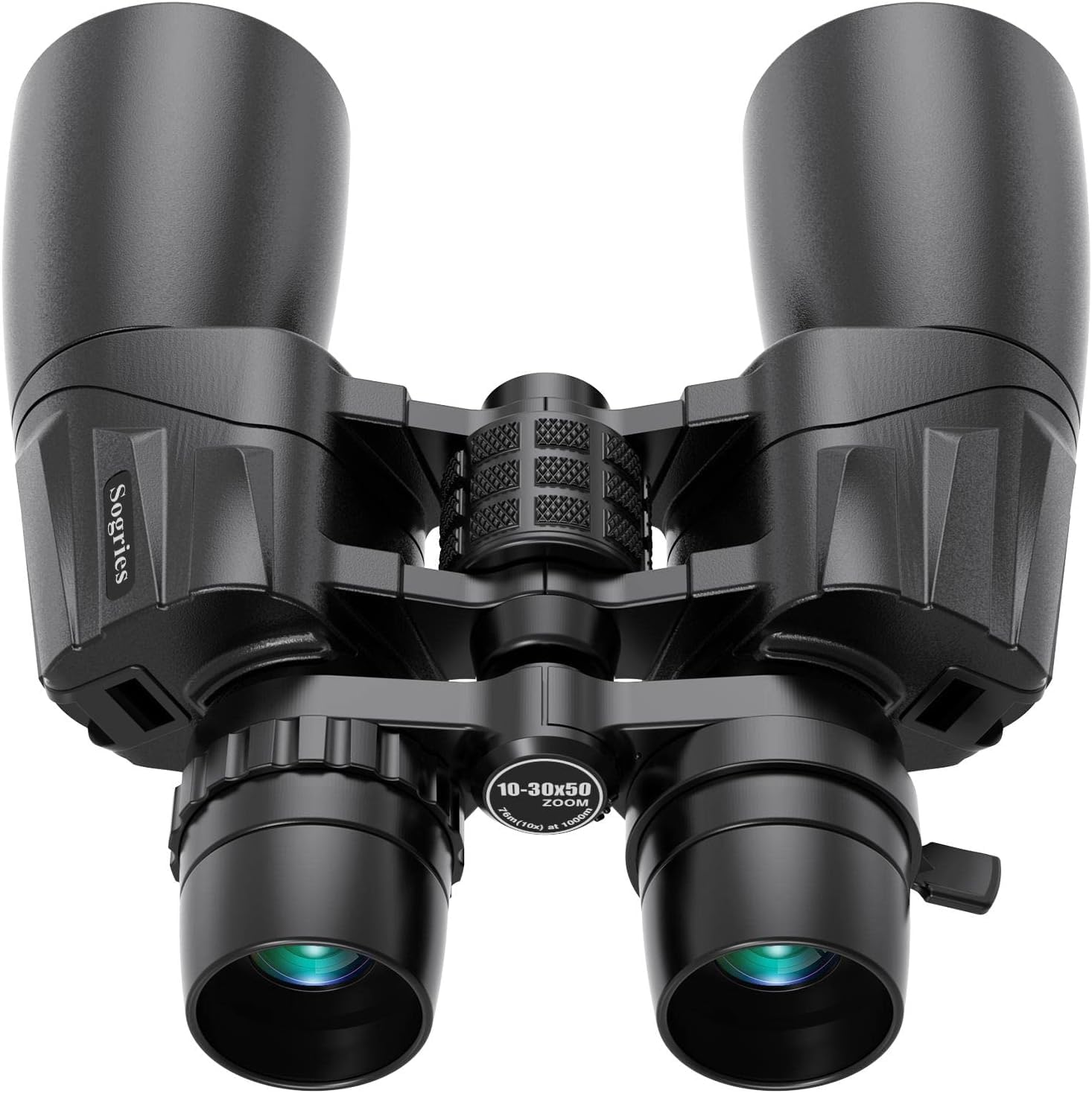
The Sogries 10-30×50 Zoom is an accessible entry point for casual stargazing and multi-purpose terrestrial use. Its 50mm aperture and BaK-4 prism with FMC coatings deliver usable brightness on the moon and brighter planets, while the zoom range allows you to sweep at 10x for constellations and zoom to 30x for a closer look at craters. The 22mm eye relief is generous for eyeglass users.
The rubber-armored body includes O-ring sealing for basic water resistance, and the zoom joystick is smooth and intuitive. It is light enough for widespread day use — birding, sports, concerts — making it a versatile first instrument. The recommendation to use a tripod for steady high-power viewing is practical, though not strictly required.
Reviews note clear, sharp images with good low-light performance for the price. Some chromatic aberration appears at the highest zoom, and the 50mm aperture limits faint-object visibility compared to larger models. It is a solid choice for beginners who want one binocular for both day and night without a large investment.
Why it’s great
- Versatile 10-30x zoom covers day and night use
- 22mm long eye relief ideal for eyeglass wearers
- Very affordable entry into zoom binoculars
Good to know
- 50mm aperture limits visibility of faint deep-sky objects
- Chromatic aberration visible at highest power
FAQ
What is the best magnification for stargazing binoculars?
Are 10×50 binoculars good for stargazing?
Can I use a tripod with any binocular?
What does BaK-4 prism mean for stargazing?
Is higher magnification always better for astronomy?
Final Thoughts: The Verdict
For most users, the binoculars for stargazing winner is the Celestron SkyMaster 12×60 because it offers the best balance between aperture, magnification, and weight for both handheld and tripod observation. If you want extreme 100mm light gathering for deep-sky objects, grab the Celestron SkyMaster 25×100. And for budget-conscious versatility that works during the day and night, nothing beats the Sogries 10-30×50 Zoom.