
Our readers keep the lights on and the weekend projects moving. As an Amazon Associate, I earn from qualifying purchases.
True travel binoculars solve a specific conflict: you want the magnification to spot a distant mountain goat or read a stadium scoreboard, but you refuse to carry a brick in your daypack. The winning pair disappears into a jacket pocket, weighs less than your water bottle, and still delivers an image sharp enough that you forget you’re looking through a lens.
I’m Rikta — the co-founder and writer behind FitlyFast. I’ve spent countless hours sifting through customer feedback and optical performance data for compact binoculars, identifying which specs actually matter when you’re trading full-size light gathering for portability.
Whether you are catching a seabird during a coastal hike or following the action from the upper deck, the right binoculars for travel must balance exit pupil, field of view, and waterproof sealing without weighing down your bag.
How To Choose The Best Binoculars For Travel
Travel binoculars live in a tighter design box than their full-size cousins. Every millimeter of lens and gram of housing trades off against packability. Here are the three specs that separate a genuinely useful travel companion from a regrettable impulse buy.
Magnification vs. Objective Lens: The 8×25 Rule
An 8×25 binocular magnifies 8 times through 25mm objective lenses. That combination delivers a 3.1mm exit pupil — enough light for daytime and twilight use without fattening the barrel. A 10×25 pair shrinks the exit pupil to 2.5mm, making the image noticeably dimmer in overcast conditions and amplifying hand shake. Stick with 8x unless you absolutely need the extra reach for open landscapes and are willing to brace against a tree or railing.
Coatings, Prisms, and Light Transmission
Fully multi-coated (FMC) optics apply anti-reflective layers to every glass surface, boosting brightness and contrast versus basic multi-coated or single-coated alternatives. The prism material matters too: Bak-4 glass yields a round exit pupil and sharper edges, whereas BK-7 produces a clipped square that wastes light. For travel bins under 200 dollars, FMC plus Bak-4 is the benchmark to look for.
Weather Sealing and Build
Waterproofing (usually via O-ring seals) and fogproofing (nitrogen purging) are not luxuries for travel bins — they are necessities. A sudden rain shower, humid coastal air, or temperature swing from air-conditioned lobby to outdoor heat will fog up an unsealed pair instantly. Rubber armoring adds grip and drop protection. Aim for IPX7 or a minimum of nitrogen-purged construction.
Quick Comparison
On smaller screens, swipe sideways to see the full table.
| Model | Category | Best For | Key Spec | Amazon |
|---|---|---|---|---|
| Nikon TRAVELITE EX 8×25 | Mid-Range | All-round durability | 11.1mm eye relief | Amazon |
| Pentax AD 8×25 WP | Premium | Eyeglass wearers | 21mm eye relief | Amazon |
| ZEISS Terra ED 8×25 | Premium | Optical fidelity | SCHOTT ED glass | Amazon |
| Nikon Sportstar EX 8×25 DCF | Premium | True pocket fit | Fold-up design | Amazon |
| Nocs Provisions 10×25 | Mid-Range | Style plus waterproofing | IPX7 waterproof | Amazon |
| Celestron Outland X 8×25 | Budget-Friendly | Entry-level value | 8.2° wide FOV | Amazon |
| Tanaview 10×50 Compact | Budget-Friendly | High magnification | 50mm objective lens | Amazon |
In-Depth Reviews
1. Nikon TRAVELITE EX 8×25

Nikon’s TRAVELITE EX hits the exact balance travelers need: compact enough to slip into a jacket pocket yet rugged enough to survive a drop onto a rocky trail. The die-cast aluminum chassis wrapped in rubber armoring provides genuine shock resistance, while the nitrogen-purged, O-ring sealed body keeps moisture and fog out across humid mornings and sudden downpours. Multilayer-coated optics and aspherical eyepiece lenses deliver edge-to-edge sharpness that minimizes distortion, even when scanning moving subjects like birds in flight or athletes on a field.
The 8×25 format produces a 3.1mm exit pupil that stays bright enough for twilight conditions, and the 11.1mm of eye relief accommodates most eyeglass wearers without vignetting. Turn-and-slide eyecups click into position quickly, and the click-type diopter adjustment holds firm once set. Owners consistently note that the focus wheel is smooth with just the right tension, and the wide field of view makes tracking fast action feel natural rather than restrictive.
Several long-term users mention carrying this pair through multiple countries over extended periods without any optical degradation or mechanical looseness. The included case and strap are functional, though some swap the strap for a wider aftermarket version for better weight distribution on long hikes. If you want a single travel binocular that does not compromise on durability or clarity, this is the benchmark.
Why it’s great
- Rugged metal frame with rubber armor protects against drops
- Nitrogen-purged waterproofing prevents fogging in all weather
- Smooth, precise focus mechanism with minimal play
Good to know
- Included strap feels flimsy for extended walking days
- Not ideal for extreme low-light situations (dusk/night)
2. Pentax AD 8×25 WP

Pentax’s AD 8×25 WP addresses one of the most overlooked pain points for spectacle wearers: insufficient eye relief. With 21mm of usable eye relief, this pair lets you see the full field of view without pressing your glasses against the eyecups or dealing with black rings around the image. The premium multi-layer coatings maximize light transmission through the glass, resulting in a bright, color-true view that rivals larger porro prism designs in clarity.
The fiber-reinforced polycarbonate chassis keeps weight down while maintaining rigidity, and the JIS Class 6 waterproof rating means it can handle full submersion to 1 meter for up to 30 minutes — more than enough for a torrential rainstorm or accidental splash overboard during a cruise. The center focus wheel has a slightly spongy feel compared to fully metal competitors, but it functions reliably and never develops play over time. Owners frequently compare the optical performance favorably against Zeiss models costing twice as much.
Some users note that the included case fits tightly, making quick deployment a bit fiddly, and the strap attachment loops cause the binoculars to hang at an awkward angle when worn around the neck. For sheer optical value relative to build quality, especially for those who wear glasses, the Pentax AD 8×25 WP remains a strong contender that punches above its price tier.
Why it’s great
- Generous 21mm eye relief works perfectly with glasses
- Multi-coated optics deliver brightness comparable to premium glass
- Fully waterproof and nitrogen-filled for harsh weather
Good to know
- Focus wheel feels slightly soft in its travel
- Carrying case is snug and strap attachment can be awkward
3. ZEISS Terra ED 8×25

Zeiss brings its SCHOTT ED (extra-low dispersion) glass to a compact travel form factor with the Terra ED 8×25, achieving 88% light transmission and nearly zero chromatic aberration — colors remain pure and fringing is virtually absent even when viewing high-contrast edges like tree branches against a bright sky. The proprietary LotuTec coating on the outer lenses beads water instantly, so a sudden drizzle does not blur your view; one quick shake clears the lenses. At 16mm of eye relief, it accommodates glasses wearers better than most compact designs.
The magnesium housing reinforced with glass fiber makes this pair impressively rigid for its weight, and the large focus wheel sits exactly where your index finger naturally lands, allowing fast one-handed adjustment without fumbling. Zeiss T-star multi-coating is tuned individually to each lens surface, which explains why the image stays bright and high-contrast even in twilight conditions where cheaper bins go dark. The 8×25 configuration keeps the exit pupil at 3.1mm, so you do not sacrifice as much low-light performance as with a 10×25.
Some buyers note the lack of included lens caps — a surprising omission at this price point — and the close focus distance is not as tight as some competitors, making butterfly or flower viewing slightly less convenient. For the traveler who prioritizes absolute optical clarity and build quality above all else, the ZEISS Terra ED is a lifelong investment that will outlast multiple cheaper pairs.
Why it’s great
- SCHOTT ED glass eliminates color fringing and boosts contrast
- LotuTec coating sheds water instantly for all-weather use
- Ultra-smooth, intuitive focus wheel for fast adjustments
Good to know
- No lens caps included; you will need to buy aftermarket covers
- Close focus distance is longer than some compact competitors
4. Nikon Sportstar EX 8×25 DCF

The Sportstar EX is Nikon’s answer to the traveler who needs binoculars that truly disappear into a pocket. Its fold-up design collapses the hinge to a remarkably small package, and at just over 10 ounces, you will forget it is there until you need it. The multilayer-coated optics provide bright, contrast-rich images given the small objective size, and the 8.2-degree field of view is generous for a compact — you can scan landscapes without feeling like you are looking through a straw.
Waterproof and nitrogen-purged construction means it handles rain and humidity without internal fogging, and the turn-and-slide rubber eyecups provide decent comfort for both eyeglass and non-eyeglass users. The 10mm eye relief is adequate but not generous; users with thick prescription frames may need to press their glasses slightly into the eyecups to see the full field. The center focus wheel is smooth and remains free of slack even after months of daily carry.
A few owners report that eyepieces can fog externally in very humid conditions due to the lack of airtight sealing, and the retractable eyecups feel slightly loose in their travel. For a true pocketable companion that delivers Nikon’s reliable optical quality, the Sportstar EX performs admirably as a secondary or ultra-portable primary binocular for day hikes and city exploration.
Why it’s great
- Folds down to one of the smallest carry sizes available
- Waterproof and fogproof for all-weather reliability
- Wide 8.2-degree field of view for its class
Good to know
- Eye relief is tight for heavy prescription eyewear
- Eyecups can feel loose and retract unintentionally
5. Nocs Provisions Standard Issue 10×25

Nocs Provisions designed the Standard Issue 10×25 with a modern aesthetic that stands out from traditional black rubber bins, but the specs back up the looks. Fully multi-coated optics combined with Swiss-designed Bak-4 prisms deliver a crisp, color-accurate image, and the 10x magnification offers extra reach for open coastal or mountain views. The IPX7 waterproof rating goes beyond basic splash resistance — these can be fully submerged in three feet of water for 30 minutes without damage, making them a solid choice for kayaking or rainy-season travel.
The patented Rugged Wave Grip silicone housing provides a secure hold even with wet hands, and the three-position twist-up eyecups accommodate various face shapes and eyeglass use. At 11.85 ounces, they are slightly heavier than some 8×25 competitors, but the extra weight comes from the thicker rubber armor and sealed housing. Owners consistently praise the image vividness and the durability of the casing, noting that they survive being tossed into a backpack without a case.
Strap installation is a persistent complaint — the narrow slots and thick burn-sealed strap ends require cutting and retaping to fit. The 10x magnification also demands a steady hand; those prone to hand shake will prefer an 8x model. For travelers who prioritize water resistance and contemporary design, the Nocs Provisions 10×25 is a fun, functional choice with a lifetime warranty backing it.
Why it’s great
- IPX7 waterproofing exceeds standard splash resistance
- Fully multi-coated optics with Bak-4 prisms for clarity
- Lifetime warranty encourages rugged outdoor use
Good to know
- Strap installation is notoriously difficult out of the box
- 10x magnification magnifies hand shake; not ideal for trekkers without steady arms
6. Celestron Outland X 8×25
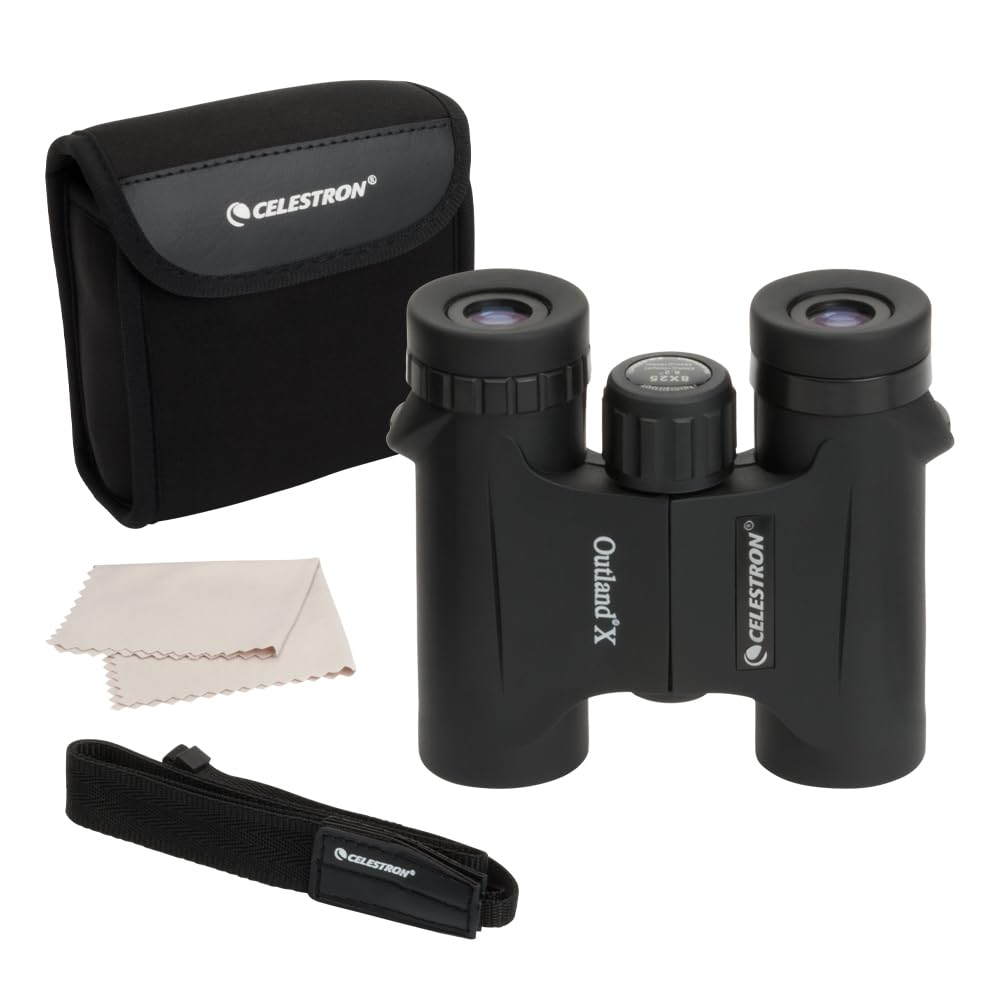
Celestron’s Outland X 8×25 proves that a tight budget does not have to mean blurry views. The multi-coated optics and BaK-4 prisms produce a bright, color-accurate image that punches well above the price point, and the wide 8.2-degree apparent field of view makes scanning landscapes feel open rather than restrictive. The rubber-armored polycarbonate housing is lightweight at just over 10 ounces and offers genuine drop protection, while the O-ring sealed and nitrogen-purged construction keeps fog and moisture out reliably across weather changes.
At 9.3mm, the eye relief is on the short side — those who wear thick prescription glasses may see some loss of the peripheral field. However, the twist-up eyecups provide good isolation for non-eyeglass users, and the center focus wheel operates with a smooth, damped motion that inspires confidence. Multiple verified buyers describe the image sharpness as “impressive for the money” and note that the compact body fits easily into a jacket pocket or hip pack.
Low-light performance is limited, as expected from a 25mm objective, and the 3.1mm exit pupil means the image dims noticeably during dusk or heavily overcast skies. For sunny day hikes, sporting events, and general sightseeing, the Celestron Outland X delivers an exceptional experience without straining the travel budget.
Why it’s great
- Wide 8.2° field of view for easy scanning
- BaK-4 prisms and multi-coated optics rival pricier models
- Lightweight, waterproof, and fogproof at a budget-friendly price
Good to know
- 9.3mm eye relief is tight for thick prescription glasses
- Image dims noticeably in low-light or overcast conditions
7. Tanaview 10×50 Compact
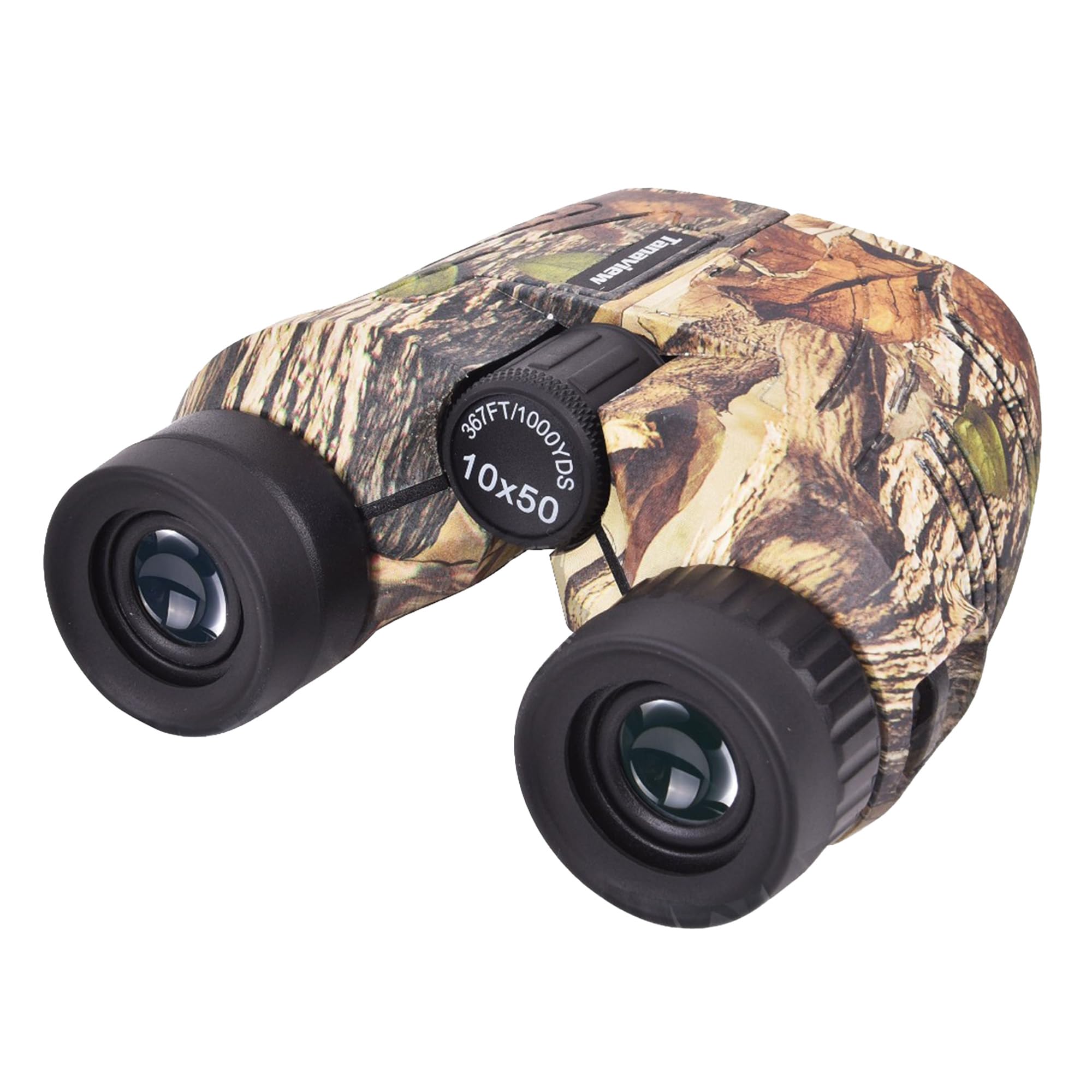
The Tanaview 10×50 compact occupies a unique space: it offers the magnification and light-gathering of a full-size binocular in a body that claims compactness. The 50mm objective lenses and fully multi-coated FMC broadband green film deliver bright, crisp images with excellent detail at distances over 1000 yards, making it a strong choice for wide-open landscapes, wildlife spotting, and low-light dawn/dusk viewing. The BAK4 prisms produce a round exit pupil that maximizes light transmission to your eye.
The rubber armor ergonomic design provides a secure, shock-resistant grip, and the diopter adjustment ring holds its position reliably. The 18mm of eye relief is generous enough for most glasses wearers to see the full field without vignetting. Owners frequently note the “excellent clarity” and “powerful magnification” in their reviews, with several commenting that the binoculars punch above their price point in terms of optical performance.
Given the 50mm lenses, the frame is still larger than true pocket designs — it will not slip into a shirt pocket but fits well in a daypack side pocket. Some users report that the included strap feels inadequate for the binoculars’ weight, recommending an aftermarket upgrade. For the traveler who values raw reach and brightness over minimum size, the Tanaview 10×50 compact offers impressive specs at an entry-level investment.
Why it’s great
- 10×50 configuration delivers excellent brightness and long-distance detail
- Fully multi-coated optics and BAK4 prisms maximize clarity
- Large eyepiece and 18mm eye relief work well with glasses
Good to know
- Larger than true pocket binoculars; better for a daypack
- Stock strap feels flimsy for the weight of the unit
FAQ
Is 8×25 magnification enough for wildlife viewing while traveling?
What does fogproof mean in binocular specs?
Can I use travel binoculars for stargazing?
How do I clean the lenses without scratching them?
What is the difference between BK-7 and Bak-4 prisms?
Final Thoughts: The Verdict
For most users, the binoculars for travel winner is the Nikon TRAVELITE EX 8×25 because it combines rugged die-cast construction, reliable waterproofing, and sharp multilayer-coated optics in a size that truly fits a jacket pocket. If you wear glasses and struggle with insufficient eye relief, grab the Pentax AD 8×25 WP with its outstanding 21mm eye relief. And for the traveler who wants uncompromised optical fidelity, nothing beats the ZEISS Terra ED 8×25 with its SCHOTT ED glass and LotuTec water-shedding coating.