
Our readers keep the lights on and the weekend projects moving. As an Amazon Associate, I earn from qualifying purchases.
You spot a rare bird through the lens, and by the time you fumble for your phone to snap a picture, it’s gone. That moment of frustration is exactly why binoculars with a built-in camera exist—they merge the viewing and recording into one seamless motion, so you never have to choose between seeing clearly and capturing the shot.
I’m Rikta — the co-founder and writer behind FitlyFast. I’ve spent countless hours dissecting the optical specs, battery life claims, and camera sensor quality across dozens of hybrid binoculars to find the models that actually deliver on their promises for real-world outdoor use.
Whether you are birding, hunting, or sitting in the stands, this guide breaks down the top-performing binoculars with built-in camera so you can find the right balance of magnification, video resolution, and battery endurance for your adventures.
How To Choose The Best Binoculars With Built-In Camera
Buying a hybrid optic-device means juggling two sets of priorities. You need clear, bright glass for comfortable viewing, but also a camera sensor and screen that produce usable photos and video. The devil is in the details: a cheap CMOS sensor paired with marketing-speak like “48MP” often yields grainy results. Here is what actually matters.
Optical Magnification and Prism Quality
The first number in “12×32” is the magnification power. A 12x view is strong enough for bird watching and wildlife at medium distances, but anything above that requires a solid tripod because hand shake becomes very noticeable on the built-in camera. The second number (32mm) is the objective lens diameter—larger diameters let in more light, producing brighter images at dawn and dusk. Pair this with BAK-4 prisms, which offer superior light transmission compared to BK-7, for sharper, distortion-free edges. Models that list “FMC” (fully multi-coated) lenses add another layer of brightness and contrast.
Camera Resolution and Video Quality
Do not be fooled by interpolated photo resolutions. A sensor that takes true 5MP or 8MP photos will look clean on a computer screen, while claimed 48MP images from a tiny 1/3-inch sensor will appear noisy and soft when examined closely. For video, aim for 2.5K or 4K UHD—anything below 1080p looks dated on modern televisions and monitors. The screen on the device (typically 2.4-inches) is useful for quick framing and playback, but it often under-represents the actual file quality, so always review the footage on a larger display before judging the camera’s performance.
Battery Life and Storage Capacity
A dual-purpose device draws power for both the LCD screen and the camera processor. Batteries in the 1000mAh range typically yield around 2–3 hours of active recording, while larger cells (1800mAh or 4500mAh) can extend that to a full day of mixed use. Most models include a 32GB microSD card in the box, but upgrading to a 128GB or 256GB card eliminates the worry of running out of space mid-trip. Also check whether the battery recharges via standard USB-C—proprietary chargers add unnecessary hassle in the field.
Quick Comparison
On smaller screens, swipe sideways to see the full table.
| Model | Category | Best For | Key Spec | Amazon |
|---|---|---|---|---|
| Minolta 12×32 Digital | Premium | Crisp 4K video capture | 4K UHD / 48MP photo | Amazon |
| PGDLOF 12×42 Night Vision | Premium | Low-light and night use | 7 IR modes / 200-300m range | Amazon |
| ZZSTAR 12×32 | Mid-Range | Budget-friendly starter unit | 1800mAh battery / 5MP | Amazon |
| Ansee 12×32 | Mid-Range | Lightweight everyday use | 48MP photo / 2.5K video | Amazon |
| Camonity 12×32 (Silver) | Mid-Range | Compact travel companion | 2.4″ LCD / 12x optical | Amazon |
| Camonity 12×32 (Silver/ABS) | Mid-Range | Quick pocket deploy | 1.3 lb / 2.4″ display | Amazon |
| GOYOJO Night Vision | Premium | Head-mounted night ops | 4500mAh / 300m IR range | Amazon |
In‑Depth Reviews
1. Minolta 12×32 Digital Binoculars
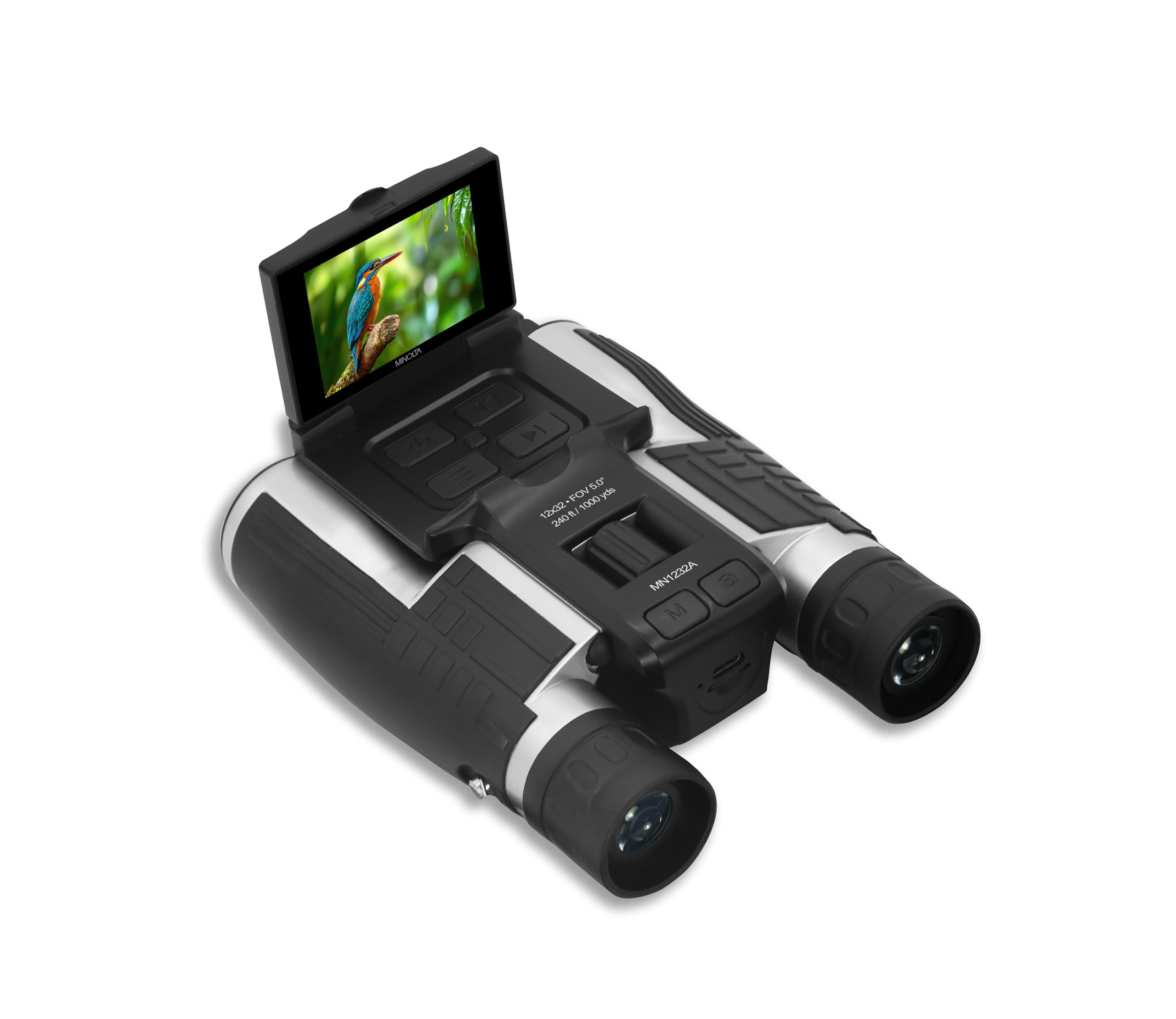
Minolta brings a trusted optics name into the hybrid space with 12×32 magnification and a genuine 4K UHD video recorder. The 2.4-inch IPS anti-glare screen makes framing shots under direct sun far easier than the standard LCD panels found on budget rivals. Photo resolution is rated at 48MP, but the real advantage here is the fog-resistant coating and rubber-armored metal body—this unit feels built for serious field use rather than casual tinkering.
The 8x digital zoom extends reach, but as with all digital zooms, image quality takes a hit beyond 4x. The included 32GB memory card and USB-C charging cable make it ready out of the box. Binocular-wise, the BAK4 prism delivers bright, contrast-rich views, though some users note the interpupillary adjustment can feel tight for wider facial structures.
Critiques center on the camera output not matching the on-screen preview—a common issue across this category. The video files look noticeably better when transferred to a computer, so treat the LCD as a framing tool rather than a final-quality monitor. For birders and travelers who want a single device for both glassing and recording, this is the most polished option available.
Why it’s great
- Fog-resistant, rubber-armored metal housing
- 4K UHD video with anti-glare IPS screen
Good to know
- Digital zoom degrades detail quickly
- Camera preview doesn’t fully represent final image quality
2. PGDLOF 12×42 Digital Binoculars with Night Vision
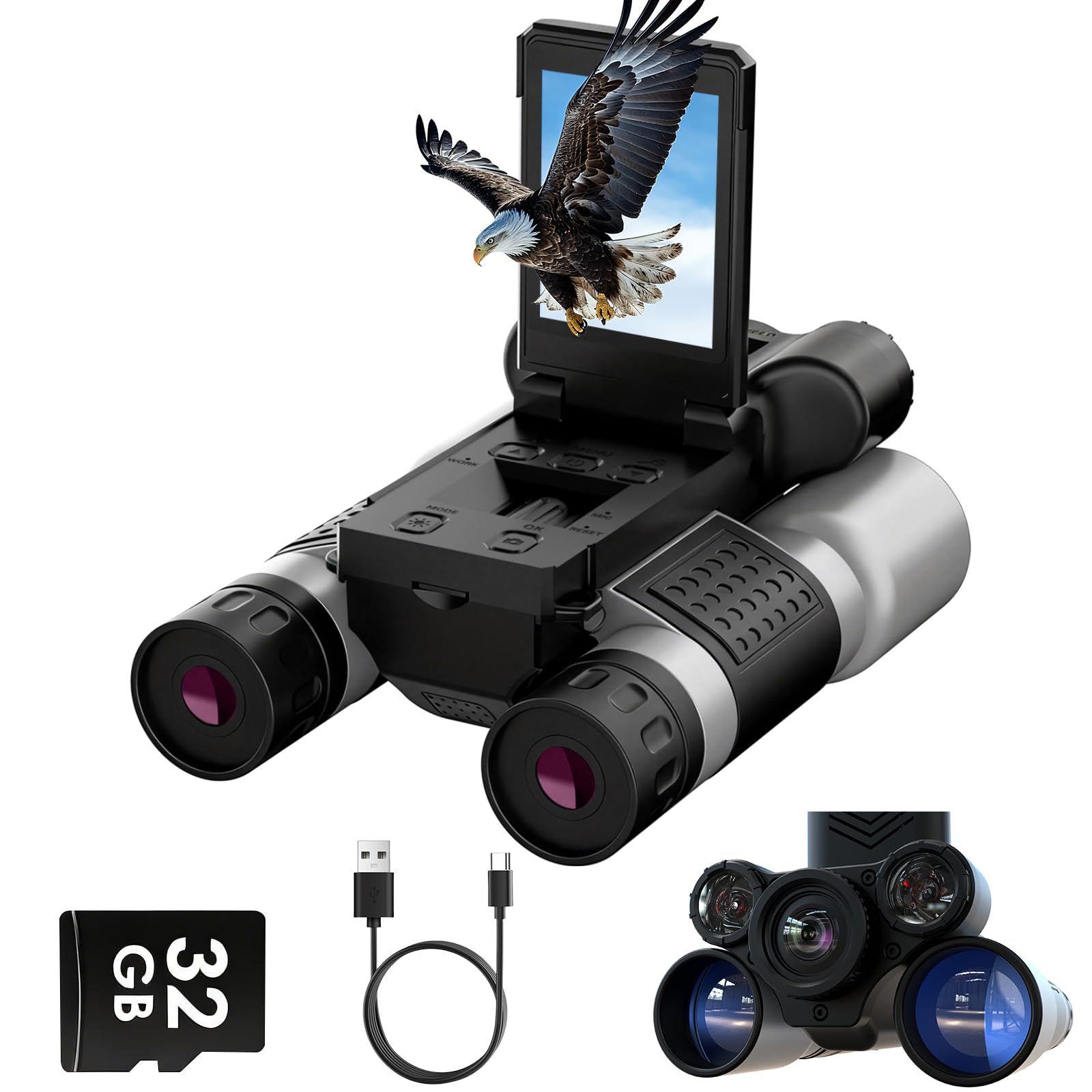
The PGDLOF stands apart with its 12×42 configuration and 850nm infrared system that provides seven adjustable IR modes for total darkness visibility up to 300 meters. The 2.4-inch IPS HD screen is notably bright and responsive, making it simple to toggle between photo, video, and live viewing without needing to connect to a phone. The BAK4 prism and 42mm objective lenses gather significantly more light than the standard 32mm models, giving you a real advantage at dusk and dawn.
Camera resolution is 8MP for stills, and while 8MP is modest compared to the 48MP claims of competitors, the actual sensor output is cleaner and less noisy in low-light conditions. The 8x digital zoom is usable for daytime scouting. The entire kit includes a 32GB TF card and Type-C charging interface, keeping the setup simple.
One important distinction: the night vision IR works only through the camera sensor, not the optical binocular path. The view through the eyepieces is not enhanced in darkness—you must use the LCD screen for night viewing. Some buyers find this misleading, but as a dedicated night-recording device, it performs admirably. Battery life is solid for a full evening outing.
Why it’s great
- Seven-level IR for viewing in total darkness
- 42mm objective lenses deliver brighter low-light views
Good to know
- IR illuminates the camera sensor, not the eyepieces
- 8MP photos won’t blow up to large prints
3. GOYOJO 4K Head-Mounted Night Vision Goggles
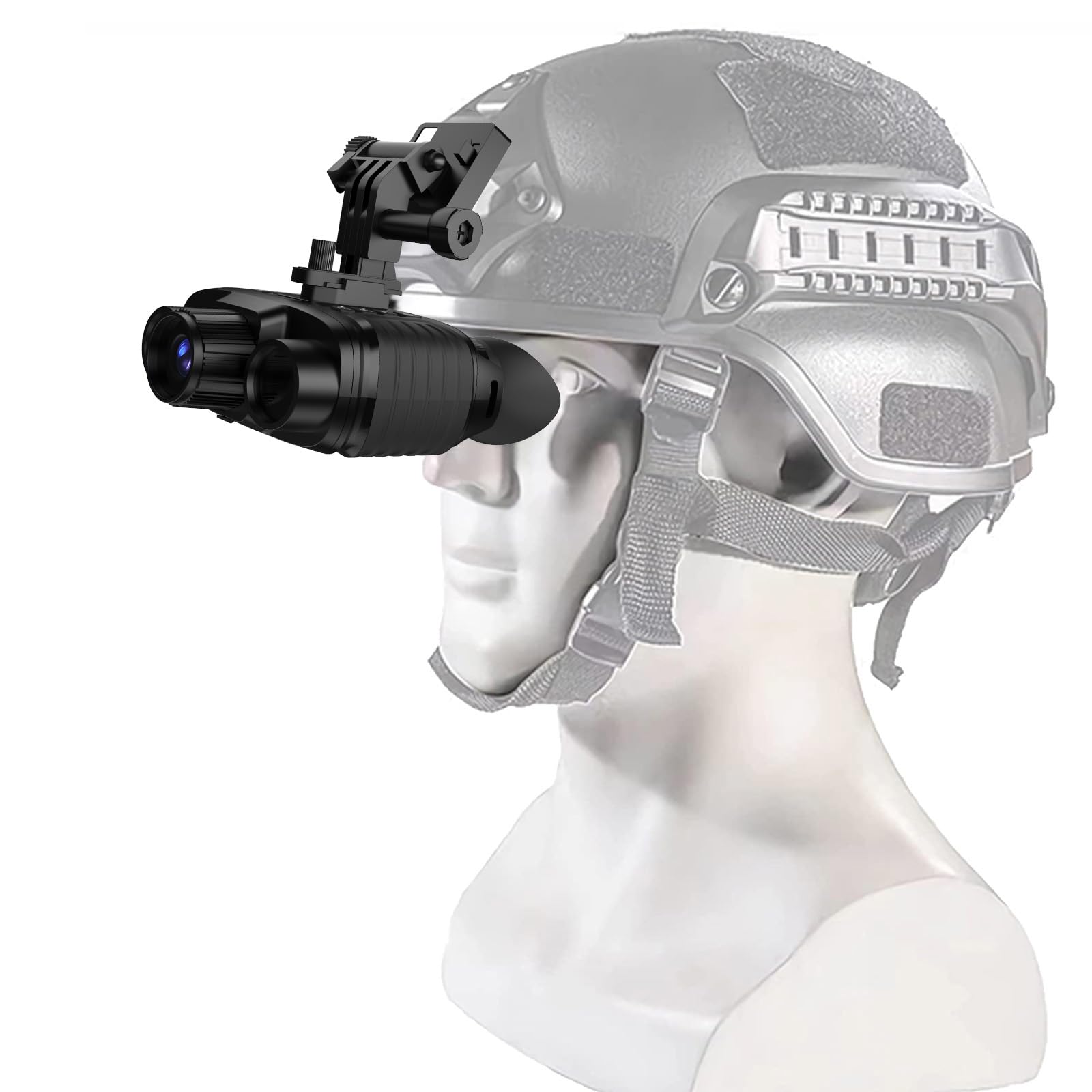
The GOYOJO takes a different approach by offering a head-mounted, helmet-compatible design that frees your hands for navigating trails or operating gear. The 4K video recording and 32MP photo capture are competitive, but the standout feature is the massive 4500mAh rechargeable battery—enough power for multiple nights of observation without scrambling for a charger. The 7-level IR illumination reaches 300 meters in total darkness, matching the PGDLOF in range.
Both eyepieces share a single large internal screen, which creates an immersive view but also means the device functions more like a monocular feed to both eyes. This design eliminates the bulk of traditional binocular barrels but sacrifices the natural depth perception you get from separate optical channels. Adjustable diopter rings compensate for nearsightedness up to -8.0, so glasses wearers can use it without corrective lenses.
It is not designed for close-up work or walking while wearing—the 8x fixed zoom starts at 3x rather than 1x, which limits peripheral awareness. The included head strap, mounting bracket, and storage case make it a complete system for hunters and campers who prioritize endurance and hands-free operation over traditional binocular ergonomics.
Why it’s great
- 4500mAh battery supports all-night sessions
- Head/helmet mount frees both hands
Good to know
- No 1x zoom option—minimal zoom is 3x
- Shared screen reduces natural stereo depth perception
4. ZZSTAR 12×32 Binoculars with Camera
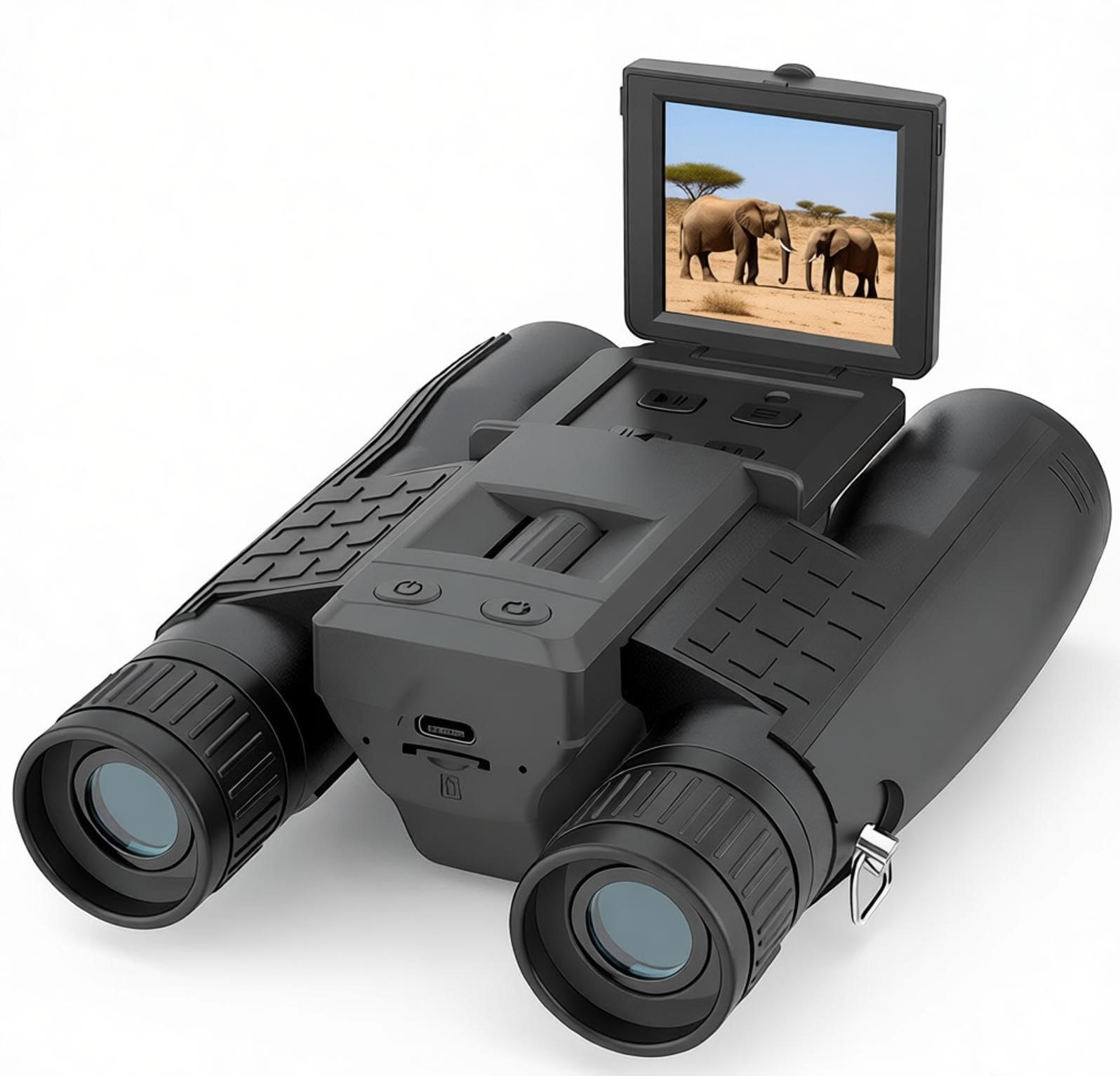
The ZZSTAR hits an accessible entry point without cutting corners on the core optics. The 12×32 configuration uses fully multi-coated (FMC) lenses and BAK-4 prisms, achieving a claimed 99.68% light transmission that translates to bright, sharp daytime viewing. The 2.0-inch LCD screen is smaller than the modern 2.4-inch displays, but it still allows for quick shot composition and playback. At 470 grams, it feels substantial without being burdensome on a neck strap.
Camera output is 5MP stills and 1080p video—modest by today’s standards, but perfectly adequate for social media sharing and casual documentation. The 1800mAh battery outlasts many similarly priced competitors, giving you hours of combined viewing and recording. The inclusion of a 32GB SD card, Type-C cable, and carabiner means you can start using it immediately without extra purchases.
Early users report that the included manual has translation quirks and some units ship with a non-functional memory card. Swapping in a fresh card solves the issue quickly. The overall build quality and optical clarity punch well above the price point, making this a solid starter unit for bird watching beginners and families.
Why it’s great
- High light transmission (99.68%) for bright daytime views
- Large 1800mAh battery for extended outings
Good to know
- Supplied SD card may need replacement
- Instruction manual lacks detail and has typos
5. Ansee 12×32 Digital Binoculars
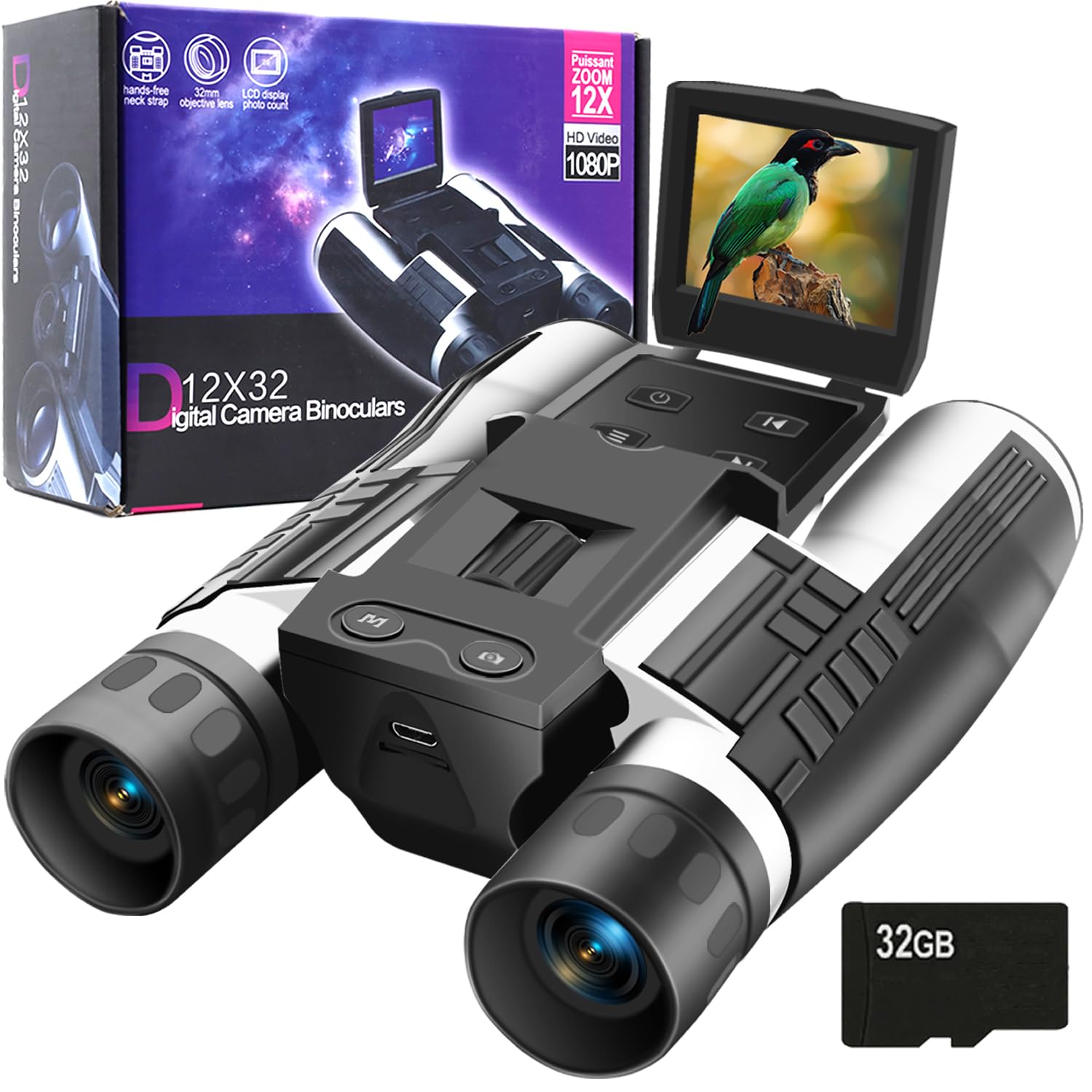
Ansee positions its 12×32 model as the lightweight middle-ground contender, tipping the scales at 0.6 kilograms. The silver plastic body keeps weight down, and the 2.4-inch display screen offers a generous viewing area for reviewing captures in the field. The BAK4 prism and anti-reflective coating deliver solid daytime clarity, and the camera records 48MP photos and 2.5K video—a step up from the 1080p baseline without jumping to the higher 4K tier.
The 8x digital zoom is useful for distant subjects, but the manual focus ring requires patience to dial in precisely. The included 32GB TF card is functional, but upgrading to a faster Class 10 card improves the camera’s write speed and reduces shutter lag. Several users praise the intuitive button layout and the tripod mount thread at the base, which stabilizes both viewing and recording.
A notable downside is the narrow interpupillary distance adjustment, which can make the view uncomfortable for adults with wider-set eyes. Some reports mention that the screen’s color saturation does not perfectly match the final computer image, so expect a slight shift in hue and contrast when transferring files. For the weight-conscious hiker who wants 2.5K video without the bulk, this is a compelling carry.
Why it’s great
- Lightweight 0.6 kg build for easy packing
- 2.5K video captures more detail than standard 1080p
Good to know
- Eyepiece spacing may feel narrow for wider faces
- Screen colors differ slightly from final exported files
6. Camonity 12×32 2-in-1 (Black & Silver)
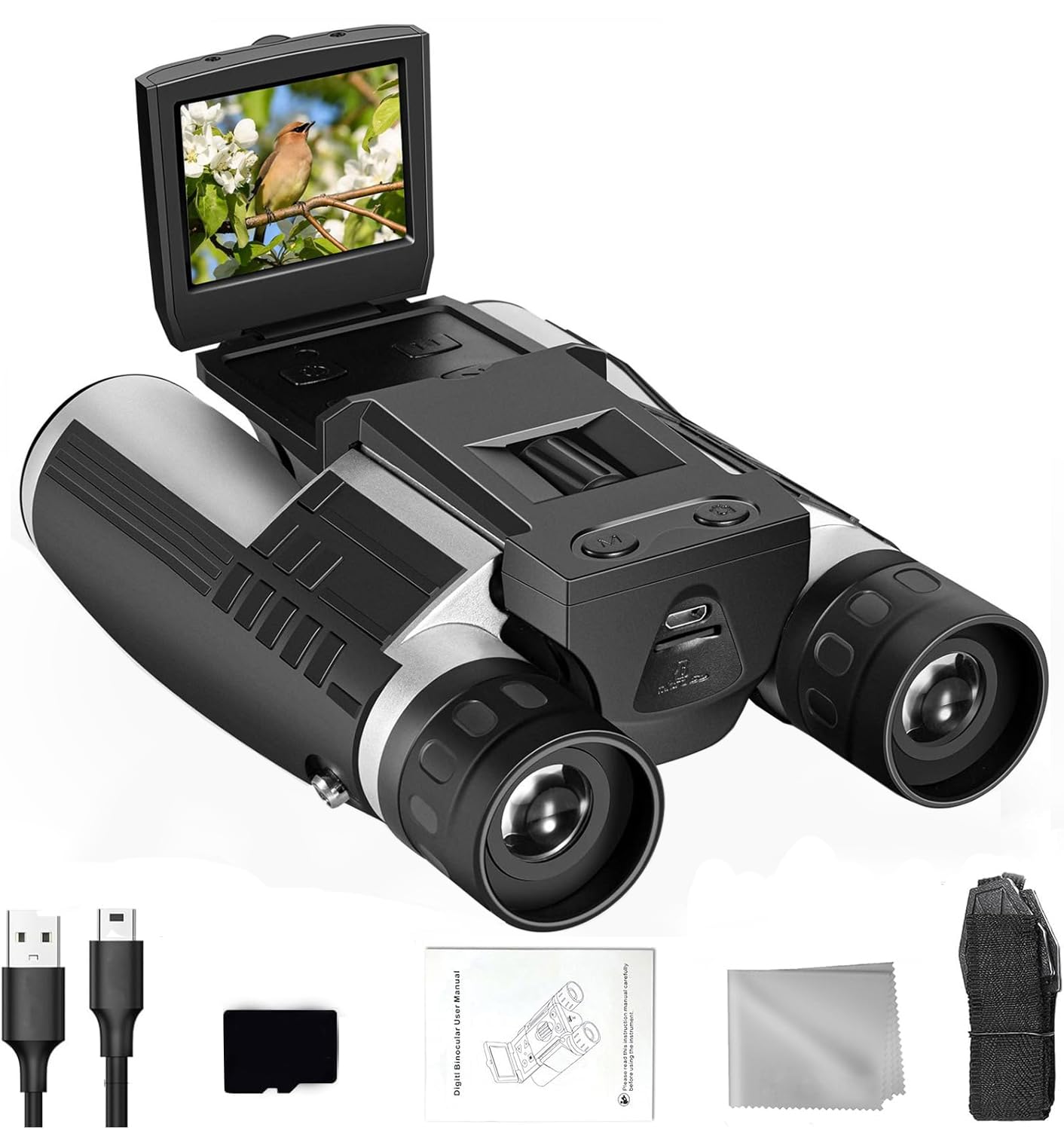
Camonity’s 12×32 model weighs just 17 ounces (about 1.1 pounds) and uses an ABS plastic enclosure that keeps it travel-friendly without feeling flimsy. The 2.4-inch LCD display is paired with 12x optical and 8x digital zoom, and the camera captures 2.5K video and 5MP photos. The 25mm eye relief is generous, making it a comfortable option for eyeglass wearers—a feature not always prioritized in this price segment.
The 1000mAh battery is smaller than the ZZSTAR’s, delivering roughly 3 hours of continuous video recording. That is enough for a morning hike or an afternoon at the stadium. The tripod-compatible base accepts any standard mount, which helps reduce the shakiness that plagues handheld digital zoom shots. The black-and-silver finish is understated and professional-looking.
The trade-off for the low weight is a plasticky feel around the focus wheel, and the camera’s low-light performance drops off sharply after sunset. Several reviews note that the included manual is sparse, but the device is intuitive enough to figure out without it. For a budget-conscious hiker or concert-goer who prioritizes portability above all else, this fits the bill.
Why it’s great
- Lightweight 17 oz design ideal for long treks
- 25mm eye relief accommodates glasses comfortably
Good to know
- 1000mAh battery limits recording to ~3 hours
- Low-light camera performance is weak
7. Camonity 12×32 2-in-1 (Silver/ABS)
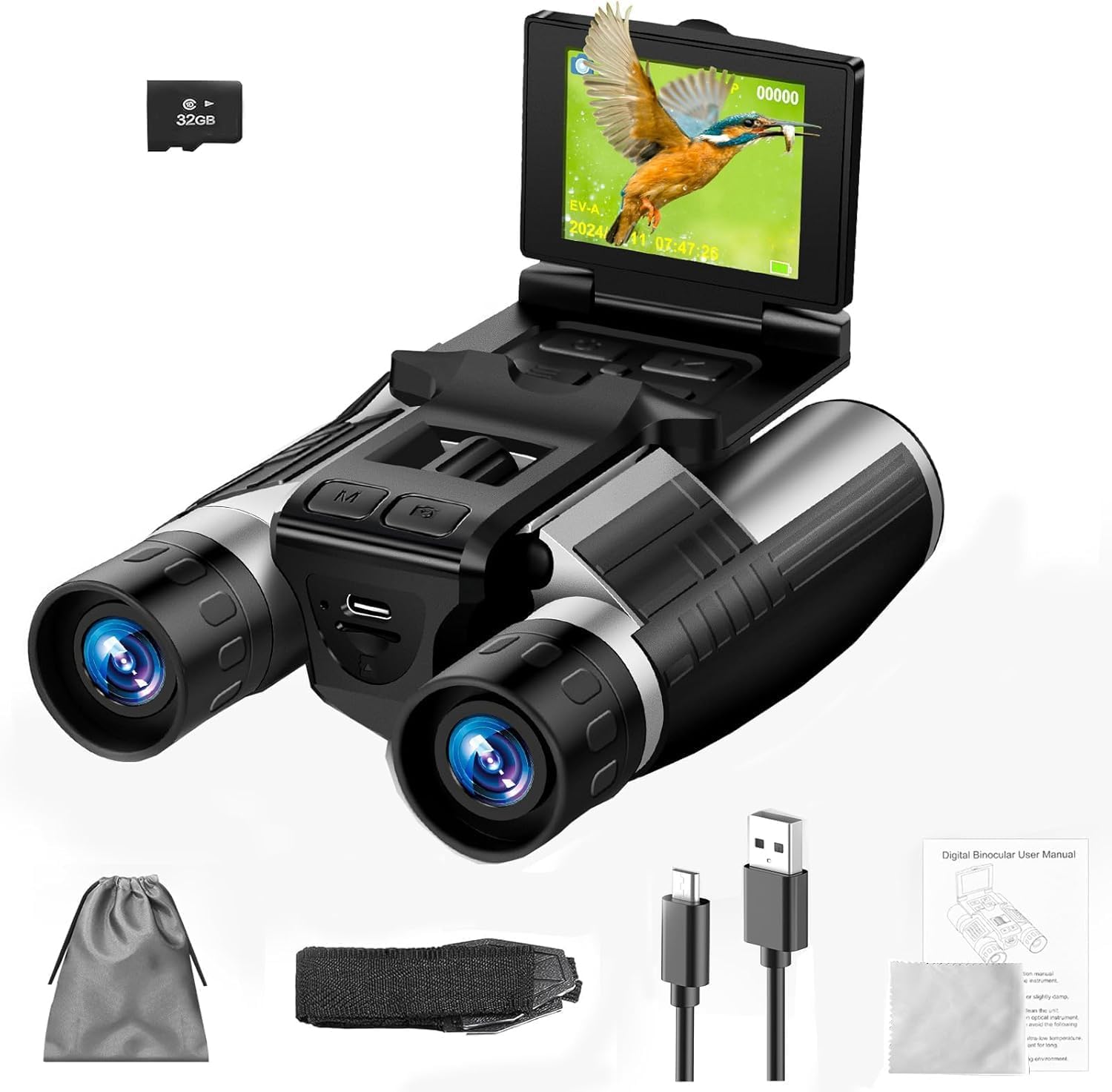
This second Camonity variant shares the same 12×32 optical core and 2.4-inch display, but the silver plastic body brings a slightly different aesthetic and a lighter overall feel. The camera records 2.5K video and 5MP stills, and the device comes with a 32GB SD card, cleaning cloth, and carrying case. The individual focus system lets you dial in each eyepiece separately, which is helpful for people with different vision in each eye.
The compact dimensions (5.66 by 3.81 inches) mean it slides easily into a daypack pocket. The 1000mAh battery lasts around 2–3 hours of mixed use, and the Type-C charging port is standard, so you can top up from a power bank in the field. Several users report excellent sharpness for daytime bird watching, with clear details on feathers and foliage visible through both the eyepieces and the recorded images.
Critiques focus on the narrow field of view—some find it like looking through two dime-sized apertures—which makes tracking fast-moving objects like sports play or flying birds more challenging. The camera also struggles with fine-textured details at distances beyond 50 feet, producing a slightly grainy result. For casual backyard wildlife observation and short-distance trips, it works well, but serious birders may want a wider field.
Why it’s great
- Palm-friendly size for quick deployment
- Individual eyepiece focus suits differing vision
Good to know
- Narrow apparent field of view limits subject tracking
- Image grain increases beyond 50 feet
FAQ
Can I use binoculars with a built-in camera as my primary camera?
Why does my digital binocular photo look grainy on the computer?
Is night vision on these binoculars effective through the eyepieces?
Final Thoughts: The Verdict
For most users, the best binoculars with built-in camera winner is the Minolta 12×32 Digital because it pairs trusted optical heritage with genuine 4K video recording and a durable, fog-resistant build. If you need night vision capability, grab the PGDLOF 12×42 for its effective IR system and 42mm light-gathering lenses. And for hands-free extended observation, nothing beats the GOYOJO head-mounted goggles with their massive 4500mAh battery and helmet compatibility.