
Our readers keep the lights on and the weekend projects moving. As an Amazon Associate, I earn from qualifying purchases.
A handheld 12x or 16x binocular without stabilization is practically unusable. The natural tremor in your hands at those magnifications turns distant wildlife, a concert stage, or a celestial object into a blurry, bouncing mess. Image stabilization (IS) binoculars solve this by using powered gyros or vari-angle prisms to cancel out your movements, delivering a rock-solid image that feels like you are looking through a tripod-mounted optic. This is not a luxury feature for serious observers—it is a fundamental necessity for unlocking the full potential of any magnification over 8x.
I’m Rikta — the co-founder and writer behind FitlyFast. My deep-dive research into this category involved analyzing the stabilization mechanisms, battery life figures, glass coatings, and ergonomic designs of the leading IS binoculars on the market to separate genuine optical performance from marketing hype.
Whether you are a birder tracking fast-moving warblers, a boater scanning choppy seas, or a stargazer wanting to see more craters on the moon, choosing the right binoculars with stabilization depends on getting the balance of magnification, objective lens size, and stabilization angle exactly right for your specific activity.
How To Choose The Best Binoculars With Stabilization
Selecting your first pair of image-stabilized binoculars involves more than just picking the highest magnification. The interaction between the stabilization system’s correction power, the glass quality, and the ergonomics of the unit will define your real-world experience. Beginners often overlook battery type and the continuous-hold vs. latch-on button design, which are critical for long observation sessions.
Stabilization Angle and Modes
The stabilization angle, measured in degrees (e.g., ±3°, ±6°), defines how much hand shake or vehicle vibration the system can counteract. A ±3° range is sufficient for general hand-holding at moderate magnifications. For use on a rocking boat, a moving vehicle, or in strong wind, look for ±5° or ±6° of correction. Some premium models offer multiple modes, like a Scan Mode for sweeping terrain and a Target Mode for locking onto a stationary object with up to 50% more stability.
Magnification vs. Objective Lens Size
The first number is magnification (e.g., 10x, 12x, 16x); the second is the diameter of the objective lens in millimeters (e.g., 25, 30, 42). Higher magnification requires better stabilization. The objective lens determines light gathering. A 25mm lens is compact and adequate for daylight use, while a 42mm lens provides a much brighter image at dawn and dusk. The tradeoff is size and weight: a 16×42 will be significantly larger than a 10×25, impacting portability for hikers.
Battery Type and Power Management
All active stabilization systems require power. Most models run on standard AA batteries, which are convenient for travel as replacements are easy to find. Others use proprietary rechargeable batteries. Check for auto-shutoff features that preserve battery life if you forget to turn the unit off. The placement of the power button matters—some require you to hold the button down continuously to engage stabilization, which can cause fatigue; others have a latching on/off switch.
Quick Comparison
On smaller screens, swipe sideways to see the full table.
| Model | Category | Best For | Key Spec | Amazon |
|---|---|---|---|---|
| SIG SAUER Zulu6 HDX 16×42 | Premium IS | Long-range wildlife observation | OIS Scan & Target Modes | Amazon |
| Canon 12×36 IS III | Mid-Range IS | All-purpose use with portability | Vari-Angle Prism IS | Amazon |
| Nikon STABILIZED 10×25 | Compact IS | Travel and daytime events | 12-hour battery (AA) | Amazon |
| Kite Optics APC 16×42 | Premium IS | Military-grade stability | ±3° Stabilization Angle | Amazon |
| Canon 10×30 IS II | Mid-Range IS | Birdwatching and sports | Doublet Field-Flattener | Amazon |
| Nikon STABILIZED 12×25 | Compact IS | Higher zoom in a pocket size | 12x in 25mm objective | Amazon |
| Fujinon Techno-Stabi TS-X 14×40 | Premium Marine | Boat and rough sea viewing | ±6° Gyro Stabilization | Amazon |
| Fujinon Techno Stabi TS1440 14×40 | Premium Marine | Long-distance sea spotting | ±5° Stabilization | Amazon |
| Leupold BX-4 Range HD 10×42 | Laser Rangefinder | Hunting distance measurement | TBR/W Ballistic Tech | Amazon |
In‑Depth Reviews
1. SIG SAUER Zulu6 HDX OIS 16×42

The SIG SAUER Zulu6 HDX 16×42 is a benchmark in the premium stabilized binocular category, offering the most versatile stabilization system on the market. Its proprietary OIS (Optical Image Stabilization) features two distinct modes: Scan Mode for sweeping hillsides and Target Mode that increases stability by up to 50% for locking onto a single subject. The HDX glass lenses deliver exceptional light transmission and resolution, making this a top contender for serious wildlife observers and hunters who demand tripod-like steadiness from a handheld unit.
Despite its 16x magnification, the Zulu6 is surprisingly compact and lightweight, roughly the size of a standard 8×42 binocular. The IPX-7 waterproof rating ensures it can be used confidently in heavy rain or around water. The 16mm eye relief is generous for eyeglass wearers, and the two-button stabilization system (one for each mode) is intuitive once you are familiar with it. The included throw lever for tripod mounting is a thoughtful touch for long-duration glassing sessions.
Some users note the field of view is naturally narrower at 16x, and the light-gathering is less than what a naked eye sees in deep twilight—a tradeoff with the high magnification. A few reports mention receiving units that appeared lightly used, but the optical performance and stabilization quality consistently earn high marks. If you want the best balance of stabilization technology, glass quality, and portability in a single package, this is the unit to beat.
Why it’s great
- Dual stabilization modes (Scan and Target) offer unmatched versatility
- HDX glass provides exceptional clarity and color rendition
- Compact form factor for a 16x power unit
Good to know
- Narrower field of view expected with high magnification
- Not the brightest option in very low light compared to larger objective lenses
- Premium price point reflects the advanced technology
2. Canon 12×36 IS III

The Canon 12×36 IS III is a classic, lightweight, and highly portable solution for anyone wanting to step into the world of image-stabilized binoculars without paying the highest premium. Its Vari-Angle Prism system is proven technology borrowed from Canon’s EF camera lenses, effectively canceling hand shake and allowing you to focus on the details. The 12x magnification paired with a 36mm objective strikes a smart balance: enough reach to see far-off details but with an objective lens that keeps the unit compact enough for day hikes and travel.
The doublet field-flattener lenses deliver sharp, virtually distortion-free images from the center to the edge of the field of view, a feature typically found in much more expensive optics. The Porro II prism design helps maintain excellent image resolution and light throughput. At 14.5mm, the eye relief is comfortable for most users, including those who wear glasses. The low-reflective exterior and lead-free glass construction show a thoughtful design for both birdwatching and environmental responsibility.
The primary downside is the stabilization activation—you must hold the IS button down continuously to keep the stabilization active. This can lead to thumb fatigue during prolonged use. The unit also lacks objective lens caps, a common complaint among Canon IS users. Despite these quirks, its combination of sharp optics, proven stabilization, and lightweight build makes it a perennial favorite for general-purpose use.
Why it’s great
- Excellent edge-to-edge sharpness thanks to field-flattener lenses
- Lightweight and portable for its magnification class
- Proven Canon IS technology at a mid-range price
Good to know
- Requires continuous button-hold to engage stabilization
- No included objective lens caps
- Strap attachment system can be tedious
3. Nikon STABILIZED 10×25
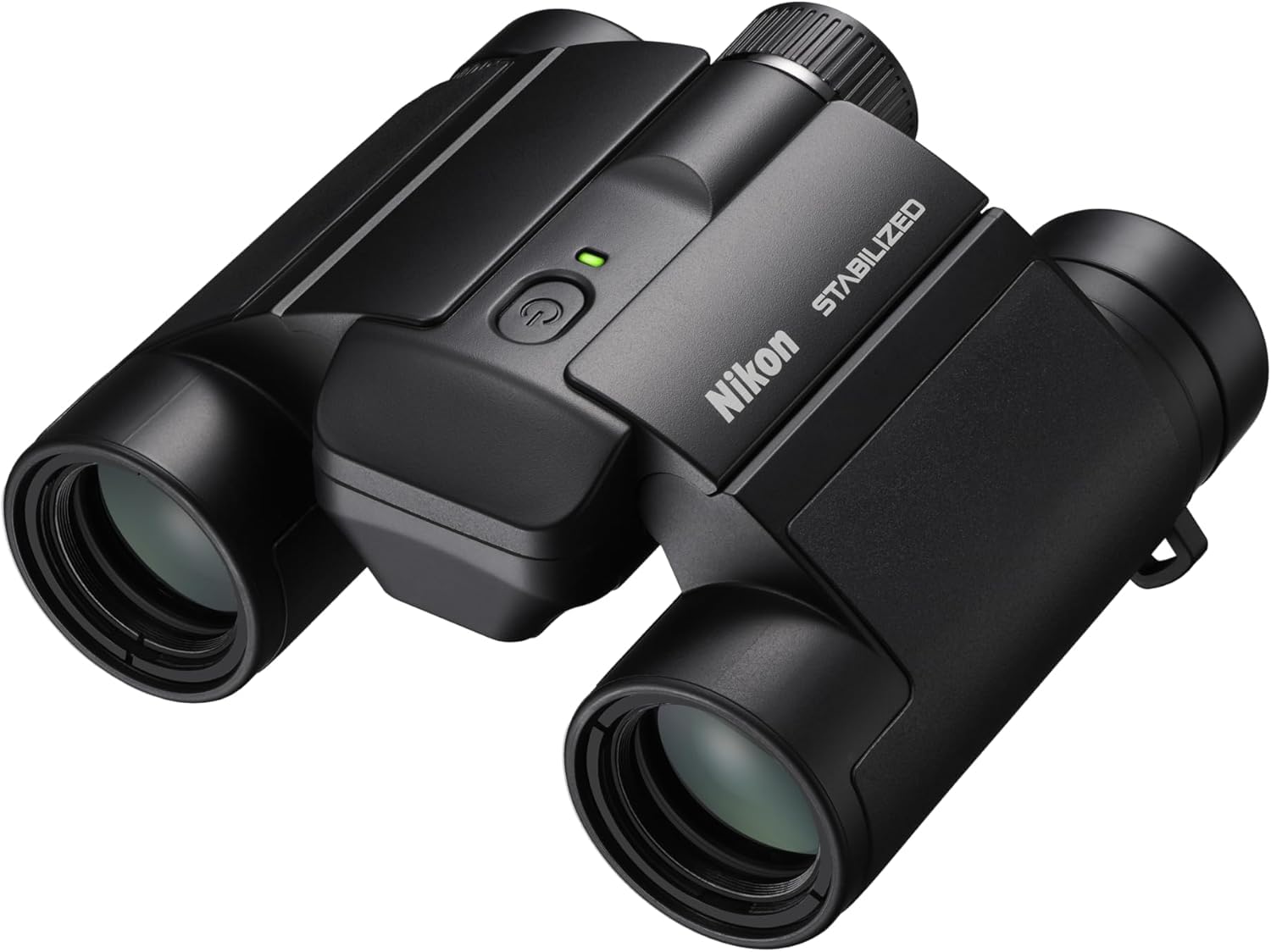
Nikon’s STABILIZED 10×25 binocular is the ultimate pocket companion, proving that image stabilization can come in a genuinely compact, travel-friendly package. The 10x magnification with a 25mm objective lens makes it ideal for concerts, sports events, daytime birding, and sightseeing where you want impressive stability without the bulk of larger optics. The slim roof prism design and lightweight alloy construction mean it can slip into an jacket pocket or day bag without adding noticeable weight.
The electronic stabilization system is simple to operate with a single on/off switch that latches—no need to hold a button down continuously. This is a huge ergonomic advantage over competitor models that require constant thumb pressure. The multicoated lenses with silver alloy prism coatings deliver bright, true-to-life colors and good contrast for an optic of this size. An impressive 12-hour battery life on standard AA batteries ensures it lasts through long days at festivals or on safari.
Reviews consistently praise the effectiveness of the stabilization but are critical of the included accessories. The carrying pouch and lens caps are considered subpar, often prompting users to purchase third-party replacements. The 14mm eye relief is adequate but may be slightly tight for users with thick eyewear. If portability is your top priority and you are willing to upgrade the accessories, this compact Nikon is a superb performer.
Why it’s great
- Exceptionally compact and lightweight for a stabilized unit
- Latching on/off switch for stabilization—no button-hold fatigue
- Excellent 12-hour battery life from standard AA batteries
Good to know
- Included carrying pouch and lens caps are low quality
- 25mm objective limits low-light performance
- Eye relief may be slightly short for some eyeglass wearers
4. Kite Optics APC Stabilized 16×42
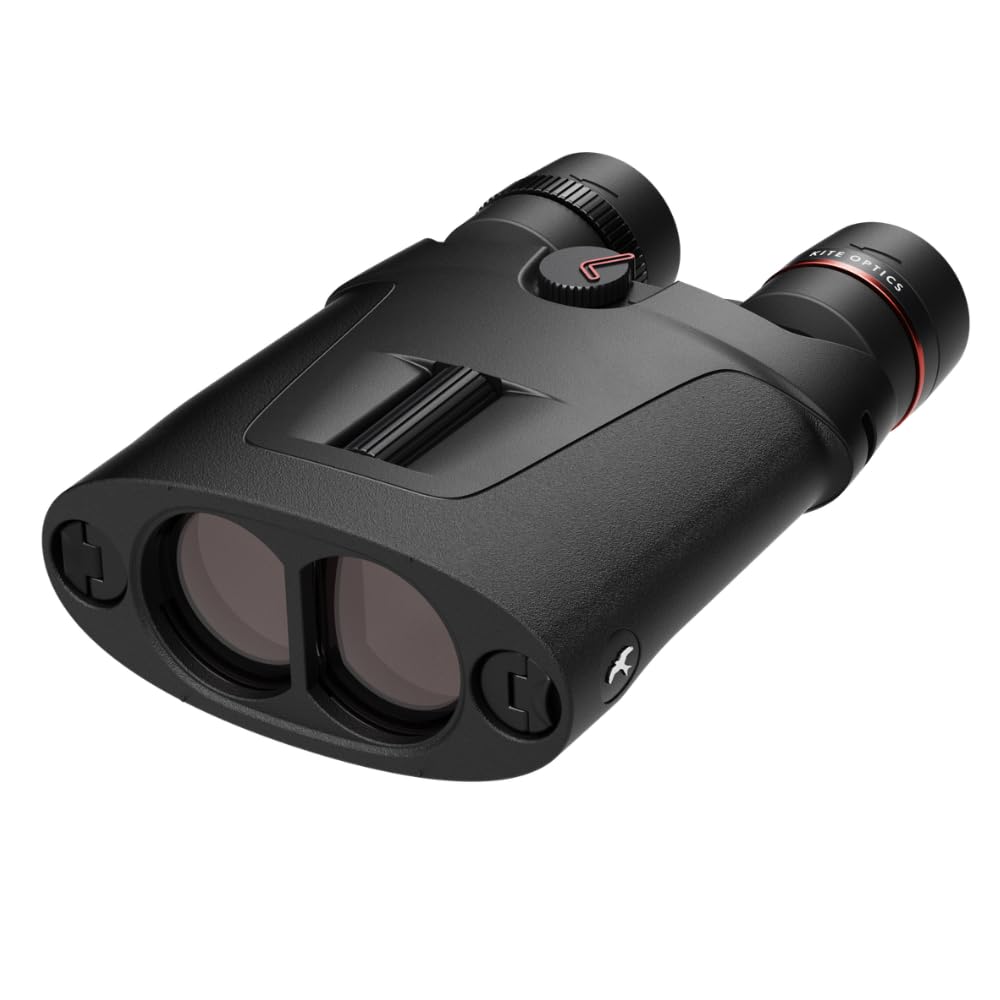
The Kite Optics APC Stabilized 16×42 binocular brings military-grade stabilization to the civilian market, offering degrees of correction (up to ±3°) that keep the image rock-steady even on boats, vehicles, or in high winds. Its 16x magnification with a 42mm objective provides a great balance between long-range reach and light-gathering capability, making it suitable for hunting, nature observation, and even some astronomical viewing. The IPX7 waterproof rating means it can survive submersion in up to a meter of water for 30 minutes—true all-weather gear.
Users consistently report that the stabilization is best-in-class, often surpassing the performance of equivalent Canon models. The unit runs on standard AA batteries and features an auto shut-off mechanism when pointed downward, a clever design element that conserves power. The metal construction feels robust and premium, and the nitrogen gas filling prevents internal fogging in cold or humid conditions.
The ergonomics receive mixed feedback. While the grip is comfortable for medium to large hands, users with smaller hands find the interpupillary adjustment stiff and the focus dial awkward to reach. The stabilization standby mode also times out relatively quickly, requiring a power cycle. These ergonomic quirks mean it is best suited for a single primary user rather than shared use. The build quality and the sheer stability of the image, however, make it a standout performer.
Why it’s great
- Best-in-class image stabilization with high correction angles
- Rugged IPX7 waterproof and fog-proof construction
- Made in Austria with premium materials
Good to know
- Ergonomics can be challenging for smaller hands
- Stabilization standby timer is short, requiring frequent power cycles
- Premium price tag fits the high-end category
5. Canon 10×30 IS II
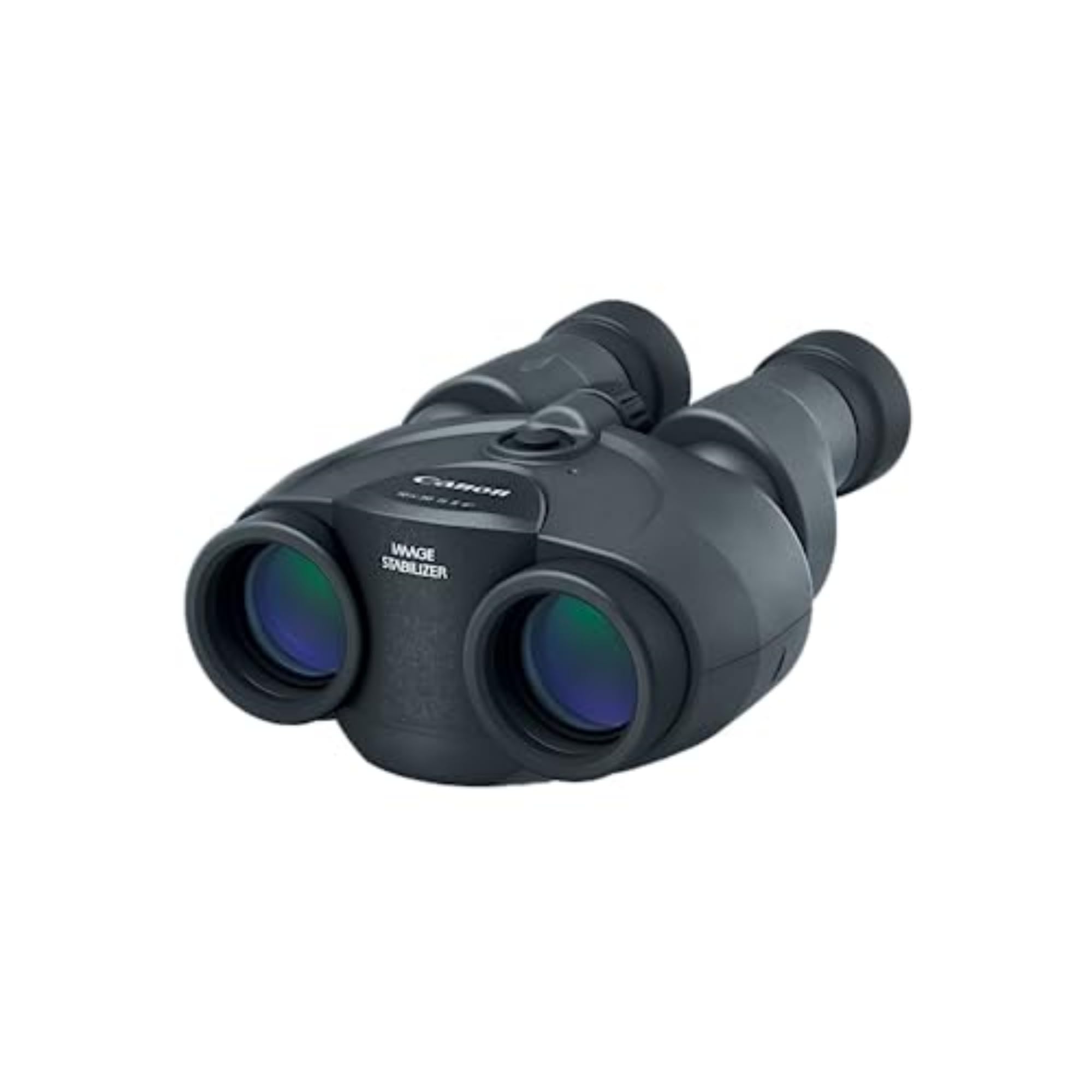
The Canon 10×30 IS II is a refined evolution of a proven design, delivering the same superb Vari-Angle Prism image stabilization in a lighter, more power-efficient package than its predecessor. The 10x magnification is a versatile sweet spot, while the 30mm objective provides a good balance of light gathering and portability. The Porro II prism design is a key advantage here, providing outstanding image resolution and minimizing light loss compared to simpler prism designs.
Optical quality is excellent, with Canon’s Super Spectra multicoating minimizing flare and ghosting while maximizing brightness and color fidelity. The doublet field-flattener lenses ensure sharp focus across the entire view, which is a significant advantage when scanning for birds or details in a landscape. The improved power efficiency means longer battery life on a single set of batteries, and the 14.5mm eye relief provides comfortable viewing for eyeglass wearers.
Like the larger Canon IS III, the primary ergonomic drawback is the need to hold the stabilization button down continuously. This design choice, along with the lack of included objective lens caps, are the most frequently cited complaints. The battery door mechanism has also been noted to have components that can detach over time. Despite these issues, the combination of proven stabilization, excellent optics, and a lightweight chassis makes this a top-tier choice for dedicated birdwatchers and travelers.
Why it’s great
- Exceptional optical quality with edge-to-edge sharpness
- Lightweight and well-balanced for extended use
- Vari-Angle Prism IS provides reliable shake cancellation
Good to know
- Stabilization requires continuous button pressure
- No objective lens caps included
- Battery door design may have long-term durability concerns
6. Nikon STABILIZED 12×25
For those who want maximum reach in a truly pocketable format, the Nikon STABILIZED 12×25 is a standout. It packs a 12x magnification into the same compact chassis as its 10x sibling, making it one of the smallest stabilized binoculars available at this power. The electronic stabilization system is identical to the 10×25 model, providing a latching on/off switch and the same 12-hour battery life from AA cells. This makes it an ideal tool for theater-goers, plane spotters, and hikers who prioritize weight above all else.
The optics benefit from Nikon’s multicoated lenses with silver alloy prism coatings, delivering good contrast and color accuracy for a compact instrument. The closed-bridge design adds structural stability and feels balanced in the hand. The automatic shutoff after 60 minutes of inactivity is a smart feature for preserving battery life during all-day excursions.
The 12x magnification in a 25mm objective lens comes with the predictable tradeoff of dimmer images in low light compared to larger objectives. The 2.1mm exit pupil is quite small, which can make eye placement less forgiving. The same accessory complaints apply here as with the 10×25 model: the included pouch and lens caps are not up to standard and will likely need to be replaced. Despite these points, the sheer novelty and utility of a stabilized 12x binocular that fits in a coat pocket cannot be overstated.
Why it’s great
- Highest magnification-to-size ratio on the market
- Latching stabilization switch—no fatigue from holding a button
- Excellent 12-hour battery life with auto shutoff
Good to know
- Small 2.1mm exit pupil requires precise eye placement
- Low-light performance is significantly limited
- Accessories (pouch, lens caps) are subpar and need upgrading
7. Fujinon Techno-Stabi TS-X 14×40

The Fujinon Techno-Stabi TS-X 14×40 is engineered for the most demanding stabilization environments, using a gyro sensor to detect the smallest vibrations and a prism system that provides a massive ±6° of correction—the widest stabilization angle in this lineup. This makes it the definitive choice for use on boats, helicopters, or any platform where excessive motion is a concern. The 14x magnification and 40mm objective provide excellent reach and decent light gathering, even in the dim conditions of dawn or dusk on the water.
Optically, the TS-X uses Fujinon’s proprietary EBC (Electron Beam Coating) multi-coating to control flare and ghosting while maximizing light transmittance. The lens configuration utilizes four objective elements in three groups and six ocular elements in four groups to control chromatic aberration and deliver edge-to-edge sharpness. The body is rubber-armored for a firm grip and is nitrogen-purged for waterproof and fog-proof performance.
The downsides are mostly related to its size and weight. At nearly 1.3 kg, it is heavy and not suitable for long hikes. It requires four AA batteries, which adds to the weight. Some users have reported reliability issues, with the stabilization failing after short periods of use, and the warranty process can be difficult. The fixed focus design also means it is best for a single distance range. For dedicated marine use where stabilization is the absolute priority, however, the TS-X is unmatched.
Why it’s great
- Widest stabilization angle (±6°) for extreme motion environments
- Excellent EBC multi-coating for bright, high-contrast images
- Waterproof and fog-proof with rubber armor for a secure grip
Good to know
- Heavy and bulky—unsuitable for hiking or backpacking
- Requires 4 AA batteries, increasing operational cost and weight
- Some reports of reliability issues and difficult warranty claims
8. Fujinon Techno Stabi TS1440 14×40
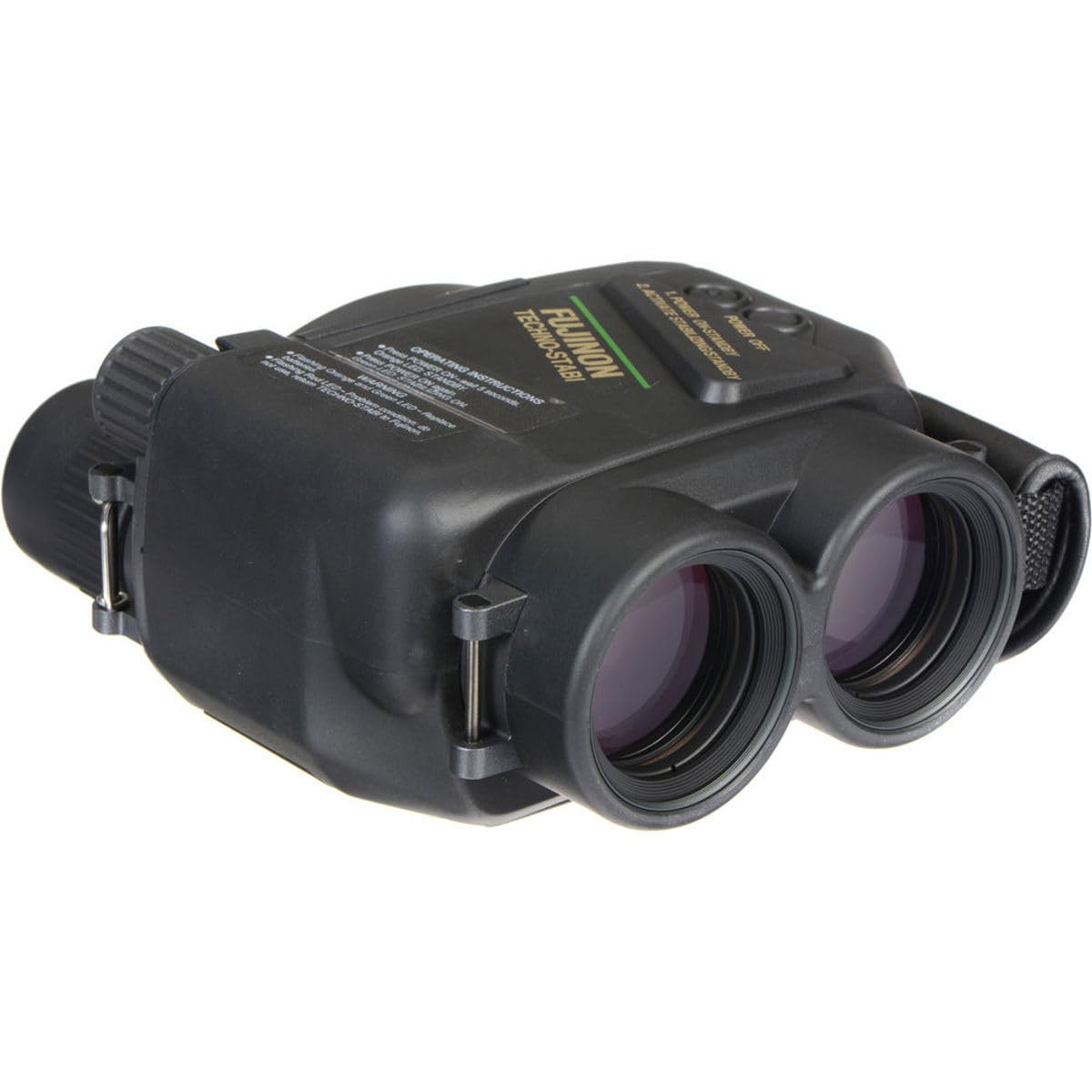
The earlier Fujinon Techno Stabi TS1440 (model TS1440-14×40) is a legendary workhorse in the marine observation world, offering ±5° of gyro-assisted stabilization that has made it a favorite among sailors and offshore fishermen for decades. Its 14×40 configuration provides the reach needed to spot navigation markers, distant boats, or diving birds long before they are visible to the naked eye. The stabilization system is aggressive enough to turn a rough sea viewing session into a steady, usable experience.
The fiberglass-reinforced, high-durability plastic body is surprisingly tough despite being lighter than the newer TS-X model. The rubber armor provides a solid grip even with wet hands. The unit is fog-proof and waterproof, and it runs on four AA batteries. Users consistently report that the image stabilization is superior to equivalent Canon models, describing it as “rock-steady” and “magical” for long-distance viewing. The included Pelican-style case offers excellent protection for transport.
The weight is a significant factor for land-based use—at just over 1.2 kg, it is too heavy for most hiking. The unit also lacks objective lens caps, a curious omission for a premium marine optic. The price, while high, is consistent with its professional-grade performance and legendary longevity. Many users report owning the previous version for 18+ years. For dedicated marine use where stability is non-negotiable, this remains a top-tier choice.
Why it’s great
- Excellent ±5° gyro stabilization for rough sea conditions
- Durable fiberglass-reinforced body with waterproof/fog-proof sealing
- Legendary long-term reliability—many users report decades of service
Good to know
- Heavy (over 1.2 kg) and not suitable for hiking
- No objective lens caps included
- Runs on 4 AA batteries, adding to weight
9. Leupold BX-4 Range HD TBR/W 10×42

The Leupold BX-4 Range HD TBR/W 10×42 is a specialized entry in this category, merging high-quality optics with a laser rangefinder. It is not a stabilized binocular in the traditional sense, but it fits the buyer’s need for a premium long-range observation tool. Its key feature is the True Ballistic Range/Wind (TBR/W) technology, which calculates the exact holdover for uphill, downhill, and wind-affected shots—a critical tool for ethical hunters requiring accurate distance measurement.
The Leupold Elite Optical System delivers exceptional light transmission, glare reduction, and resolution, meeting the demands of serious hunters and shooters. The Guard-ion lens coating repels water, dirt, and fingerprints, keeping the view clear in harsh field conditions. The 10×42 format provides a generous field of view and excellent low-light performance for dawn and dusk glassing sessions. The unit is 100% waterproof and fogproof, and it is backed by Leupold’s lifetime guarantee.
The BX-4 Range HD is heavier than a standard binocular due to the integrated electronics, and its primary function is as a rangefinding tool for hunting rather than a general-purpose observation optic. It does not offer electronic image stabilization, so you will need a steady hand or a tripod for extended high-magnification use. For its target audience of hunters who need precise ballistic data in one rugged package, however, it is a powerful and reliable instrument.
Why it’s great
- Integrated TBR/W ballistic rangefinder for precise shot placement
- Elite Optical System with excellent light transmission and resolution
- Durable, waterproof construction with a lifetime guarantee
Good to know
- No electronic image stabilization—requires a steady hold
- Heavier than standard binoculars due to laser components
- Specialized for hunting; less versatile for general observation
FAQ
Do I need to hold the stabilization button down continuously on all models?
Can I use image-stabilized binoculars for astronomy?
Final Thoughts: The Verdict
For most users, the binoculars with stabilization winner is the SIG SAUER Zulu6 HDX 16×42 because it combines industry-leading dual-mode stabilization with premium HDX glass and a compact form factor, making it the most versatile high-performance option. If you want a lightweight, reliable travel companion, grab the Nikon STABILIZED 10×25. And for the specific demands of a hunter needing ballistic data in the field, nothing beats the Leupold BX-4 Range HD 10×42.