
Our readers keep the lights on and the weekend projects moving. As an Amazon Associate, I earn from qualifying purchases.
Most baby wipes are essentially plastic sponges soaked in water, designed to sit in a landfill for centuries after a single diaper change. The biodegradable category exists to solve this, but finding wipes that actually break down without also breaking out your baby’s skin requires looking past the green packaging and into the fiber base and ingredient list.
I’m Rikta — the co-founder and writer behind FitlyFast. I’ve spent dozens of hours analyzing the material composition, third-party certifications, and real-world breakdown data behind plant-based wipes to separate genuine compostable options from marketing claims.
This guide evaluates the most thoroughly tested options based on fiber source, ingredient transparency, and verified biodegradability standards to help you choose the best biodegradable baby wipes that your baby and the planet can both live with.
How To Choose The Best Biodegradable Baby Wipes
Not every wipe sold as “natural” or “plant-based” will actually decompose in a reasonable timeframe. Many use a blend of polyester or polypropylene fibers that are technically renewable but functionally permanent in a landfill. To buy genuinely biodegradable wipes, you need to look at three layers: the fiber base, the liquid solution, and the certifications that back both up.
Fiber Source: Viscose, Bamboo, or Wood Pulp
The substrate fabric determines whether a wipe breaks down at all. Wipes made from 100% viscose (derived from wood or bamboo cellulose), lyocell, or cotton will biodegrade in weeks under the right conditions. Wipes labeled “fabric” or “cloth-like” without specifying the fiber are often polyester blends that never decompose. Look for FSC-certified viscose or bamboo rayon. Avoid generic “plant-based” claims without a fiber breakdown percentage.
Ingredient Integrity and Preservatives
A biodegradable wipe is useless if the ingredients irritate your baby’s skin or depend on harsh preservatives. The cleanest wipes use minimal ingredients: purified water, a mild preservative system (sodium benzoate, citric acid, potassium sorbate), and optionally skin-soothing agents like aloe or glycerin. Avoid wipes with methylisothiazolinone, phenoxyethanol, or undisclosed “fragrance” blends that can mask allergens while offering zero biodegradability benefit.
Certifications That Mean Something
Not all eco-labels are equal. EWG Verified tells you every ingredient has been screened for health hazards. FSC certification confirms the cellulose pulp came from responsibly managed forests. The National Eczema Association Seal means the wipe is safe for compromised skin barriers. A “biodegradable in 21 days” claim backed by third-party testing is the gold standard — without documentation, the claim is marketing fluff.
Quick Comparison
On smaller screens, swipe sideways to see the full table.
| Model | Category | Best For | Key Spec | Amazon |
|---|---|---|---|---|
| Aleva Naturals Bamboo Baby | Premium Bamboo | Eco-conscious parents wanting certified biodegradation | Biodegrades in 21 days | Amazon |
| WaterWipes Plastic-Free | Premium Water-Based | Ultra-sensitive skin and minimal ingredient lists | 99% purified water, 4 total ingredients | Amazon |
| Coterie Baby Wipes | Luxury Plant-Fiber | Parents who want the thickest wipe with zero plastic | 100% plant-based, plastic-free fibers | Amazon |
| JOONYA Unscented Baby Wipes | Non-Toxic Mid-Range | Rash-prone newborns needing EWG-rated ingredients | FSC 100% viscose, low EWG ingredients | Amazon |
| Pampers Sensitive Baby Wipes | Everyday Household | Hospital-trusted brand for daily changes | Clinically proven, Skin Health Alliance approved | Amazon |
| Huggies Natural Care Sensitive | Plant-Based Household | Eczema-approved wipes with plant-based credentials | 70%+ plant-based materials by weight | Amazon |
| Amazon Elements Baby Wipes | Value Unscented | Budget shoppers wanting unscented, alcohol-free wipes | 810 count, packaging from 25% PCR | Amazon |
In‑Depth Reviews
1. Aleva Naturals Bamboo Baby Sensitive Wipes

The Aleva Naturals wipes are made from rayon derived from bamboo and are explicitly tested to biodegrade in just 21 days — not the usual multi-decade timeline of conventional wipes. The cross-carded fiber construction gives them significantly more tear resistance than most plant-based wipes, so you don’t have to choose between eco-friendliness and durability. Each wipe measures 6.7 x 7.87 inches, slightly larger than standard wipes, which means you use fewer per change.
The ingredient list includes organic shea butter, organic olive oil, aloe vera, and chamomile — all added after 100% purified water. There is no fragrance, alcohol, parabens, or phenoxyethanol. The formula is designed specifically for eczema-prone skin, and reviewers with highly reactive children report zero irritation after a full year of use. The wipes leave no sticky residue, which is a common complaint with other natural wipes that use glycerin-heavy formulas.
The packaging is the main trade-off: the 432-count box comes as six individually wrapped 72-count packs, which creates more plastic waste than a single bulk re-up. That said, the individual packs keep moisture locked in, and the wipes come out one at a time without sticking together. For the combination of verified biodegradation speed, strong sensory performance, and organic ingredients, this is the most complete option in the category.
Why it’s great
- Third-party tested to biodegrade in 21 days
- Cross-carded bamboo fibers resist tearing during use
- Organic shea butter and chamomile soothe sensitive skin
- No sticky residue left after cleaning
Good to know
- Individually wrapped packs create extra plastic waste
- Wipes are thinner than conventional cloth-like brands
- Manufactured in China, not USA
2. WaterWipes Plastic-Free Soothing Clean Wipes
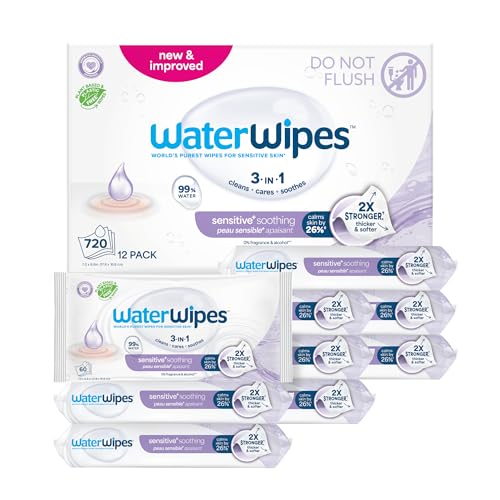
WaterWipes reformulated their classic line into a plastic-free version that uses plant-based fibers instead of traditional non-woven synthetics. The wipe substrate is made from lyocell and viscose — both derived from sustainably sourced wood pulp — and contains zero polyester or polypropylene binders. This makes them fully compostable in industrial facilities, unlike the original WaterWipes that used plastic fibers for strength.
The liquid ingredient list is staggeringly short: over 99% purified water processed through a seven-stage filtration system, plus two botanical extracts (chamomile and grapefruit seed) for soothing and preservation. There is no fragrance, alcohol, parabens, or phenoxyethanol. The formula carries a neutral pH range designed to protect the skin barrier, and it’s OEKO-TEX Standard 100 certified, meaning every component has been tested against a list of over 1,000 restricted substances.
The main practical drawback is tearing — the plant-based fiber structure is not as strong as the plastic-reinforced original, and some reviewers note the wipes can rip when pulling from the pack or during heavy-duty cleanup. The price is also among the highest per wipe in this lineup, though the 720-count case brings the cost down significantly compared to smaller packs. For a truly skin-negative wipe with legitimate plastic-free credentials, WaterWipes is the benchmark.
Why it’s great
- Only four ingredients total, over 99% purified water
- Plastic-free lyocell and viscose fibers
- OEKO-TEX Standard 100 certified for safety
- Neutral pH protects the skin microbiome
Good to know
- Prone to tearing during dispensing or heavy use
- Higher per-wipe cost than most competitors
- Botanical extracts may still be too much for extremely reactive skin
3. Coterie Baby Wipes for Sensitive Skin
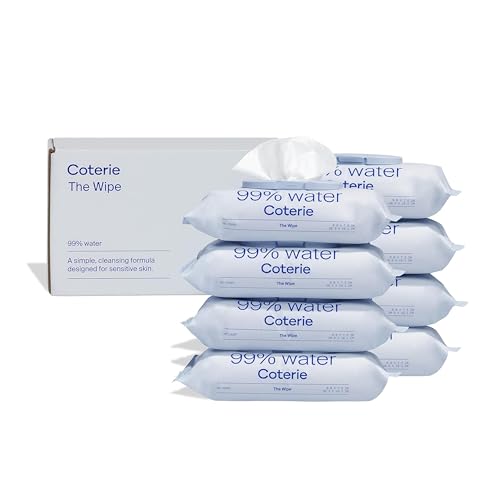
Coterie wipes are built around a 100% plant-based, plastic-free fiber that’s FSC Certified, meaning the wood pulp comes from sustainably managed forests rather than clear-cut sources. The real differentiator is the size: each wipe is up to 30% larger than standard brands, which translates directly into fewer wipes per diaper change and less package waste overall. The fiber blend uses lyocell, a closed-loop cellulose fiber that requires less water and solvent than traditional viscose production.
The ingredient formula is exceptionally clean by any standard: 99% purified water plus five gentle ingredients — sodium benzoate for preservation, caprylyl glycol as a skin conditioner, citric acid for pH balance, glycerin as a natural humectant, and decyl glucoside as a plant-derived cleanser. The wipes carry EWG Certification and the National Eczema Association Seal of Acceptance, which means every ingredient has been individually screened and the final product is safe for compromised skin barriers.
The downsides are price-driven. Coterie wipes are the most expensive in this guide, and heavy users will burn through a case quickly despite the larger size. The wipes are also noticeably thick and absorbent, which is good for cleanup but can feel excessive for quick face-and-hand refreshes. For parents who prioritize ingredient purity and want verified plastic-free, FSC-certified fibers, Coterie sets the bar that other premium brands struggle to reach.
Why it’s great
- 30% larger than standard wipes reduces per-change usage
- EWG Certified and National Eczema Association approved
- 100% plant-based, plastic-free FSC fibers
- Ultra-thick and absorbent without tearing
Good to know
- Highest per-wipe price in the category
- May feel too thick for quick refreshes
- Lyocell production is premium but not universally available
4. JOONYA Unscented Baby Wipes
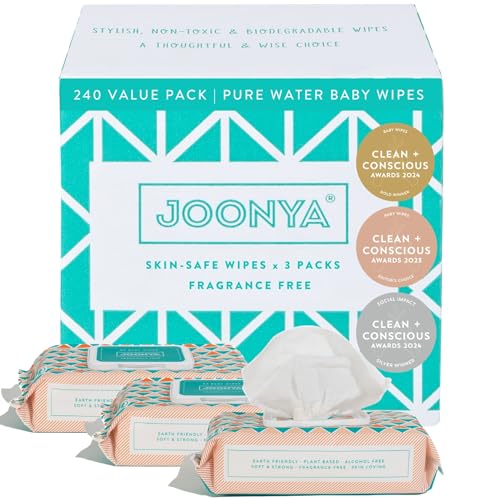
JOONYA wipes use FSC 100% certified viscose pulp as their fiber base, which means every strand of cellulose comes from a certified sustainably managed forest. The fabric is both biodegradable and compostable, though JOONYA doesn’t publish a specific breakdown timeline like Aleva does. The wipes measure 7.9 x 7.1 inches, which is on the larger end of the mid-range, and the pop-up lid on each 80-count pack seals moisture effectively without drying out between uses.
The wetting solution is 99.7% water plus organic aloe vera, chamomile, and jojoba oil. Every ingredient carries a low EWG Skin Deep rating, meaning none of them have been flagged for toxicity or allergen potential. There is no alcohol, chlorine, petrochemicals, formaldehyde, parabens, or phenols. The wipes are also DERMATEST-approved for all skin types, including newborns. Parents of children with severe eczema report no rashes after months of exclusive use, which is a strong indicator of real-world gentleness.
The texture uses a subtle ridge pattern that grips messes effectively without being abrasive, and reviewers consistently note that these wipes clean better than most plant-based options because of that surface design. The price sits at the lower end of mid-range, making JOONYA one of the more accessible certified-non-toxic choices. The only real complaint is availability — JOONYA stock fluctuates on Amazon, so buying in bulk when available is the smart play.
Why it’s great
- FSC 100% certified viscose pulp fibers
- Ridged texture grips messes better than flat wipes
- 99.7% water with low EWG-rated organic additives
- DERMATEST-approved for newborn skin
Good to know
- No published biodegradation timeline
- Stock availability can be inconsistent
- Slightly thicker than some parents prefer for quick changes
5. Pampers Sensitive Baby Wipes
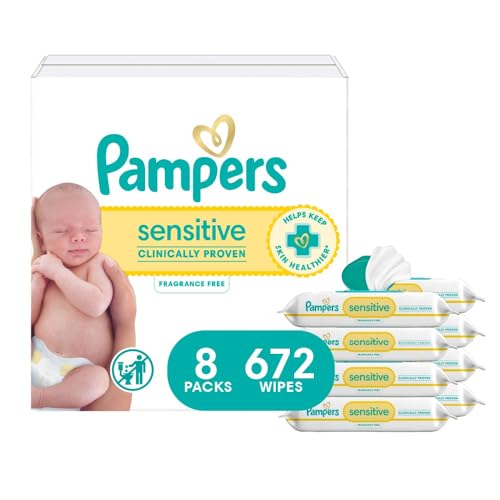
Pampers Sensitive wipes are not made from biodegradable fibers — they use a traditional non-woven fabric that includes synthetic materials. They earn a spot here because they are the most widely available alternative for parents who want a gentle, hospital-trusted wipe while they evaluate fully biodegradable options. The wipes are clinically proven to be gentler on skin than WaterWipes, and they carry the Skin Health Alliance Dermatologist Approved seal. They are hypoallergenic, fragrance-free, and free of alcohol, parabens, and latex.
The formula is water-based with skin-natural pH-restoring ingredients designed to improve skin barrier health over time rather than just cleaning without irritation. Each wipe is thick and soft, almost cloth-like, and tear-resistant during normal use. The 672-count case (12 flip-top packs) provides a very low per-wipe cost, making it easy to stock up without budget stress. Pampers is also the number one choice of hospitals in the US, which adds a layer of clinical trust that smaller brands cannot match.
The environmental gap is significant. These wipes do not biodegrade quickly and contain synthetic fibers that contribute to microplastic pollution. If your primary purchase driver is landfill impact, Pampers Sensitive is a stopgap, not a solution. But if you need a high-volume, affordable, irritation-free wipe that’s available everywhere and trusted by pediatricians, it works extremely well in that specific role. Pair it with a biodegradable option for at-home major changes to balance cost with long-term waste reduction.
Why it’s great
- Clinically proven gentler than WaterWipes
- Skin Health Alliance approved for sensitive skin
- Thick, cloth-like feel with excellent tear resistance
- Unmatched availability and hospital trust
Good to know
- Not biodegradable; contains synthetic fibers
- Packaging varies and is not from recycled content
- Higher per-wipe cost than some bulk economy brands
6. Huggies Natural Care Sensitive Baby Wipes
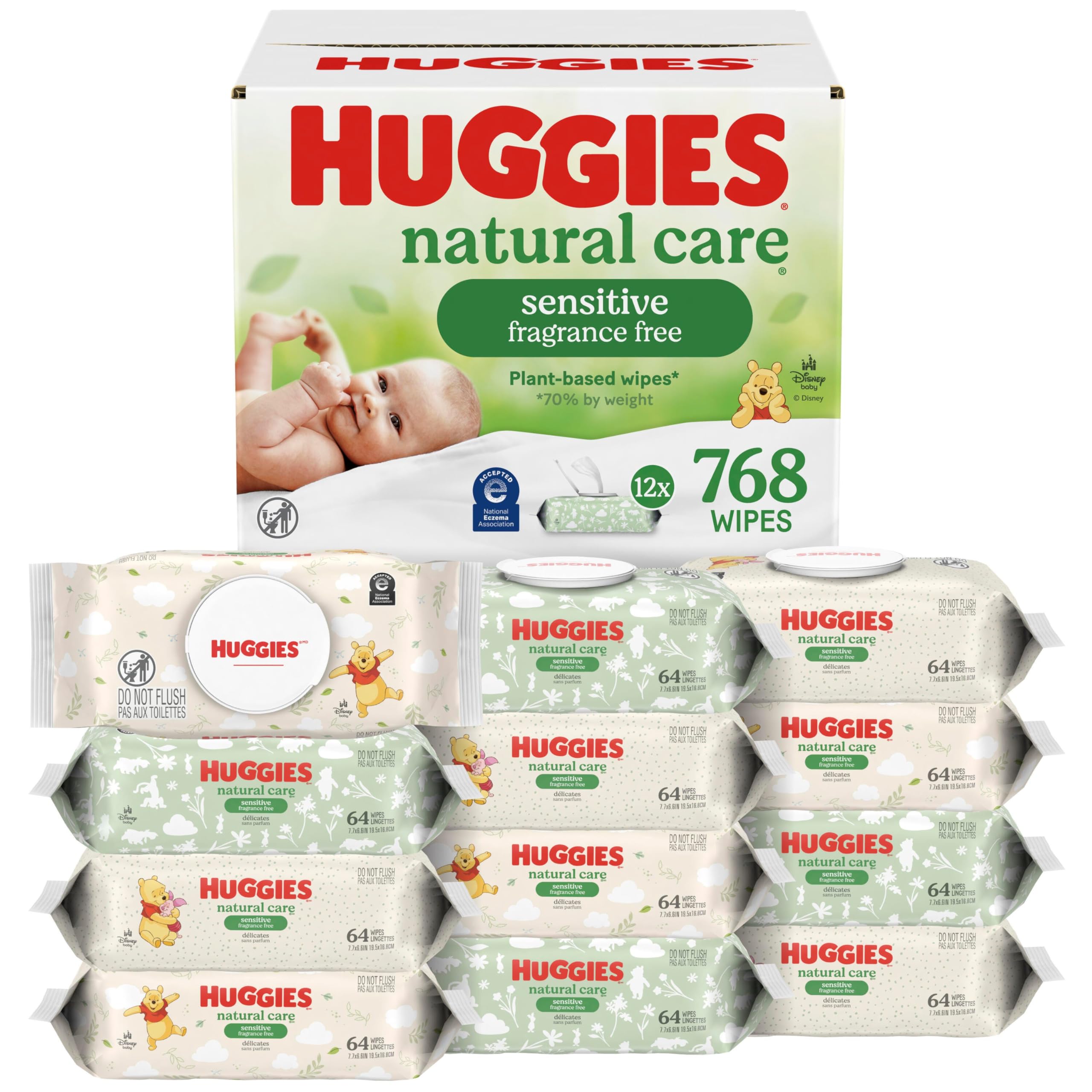
Huggies Natural Care wipes are composed of 70% or more plant-based materials by weight, making them a significant step toward biodegradability compared to conventional all-synthetic wipes. They are dermatologist-tested, hypoallergenic, and have received the National Eczema Association Seal of Approval, which is one of the higher bars in the category. The liquid formula uses 99% purified water and is pH-balanced to maintain healthy skin. There is no fragrance, parabens, phenoxyethanol, or alcohol.
The wipe texture is soft and strong without feeling cloth-like, and the flip-top packs maintain moisture well over weeks of use. Reviewers with eczema-prone children consistently report zero irritation and no rash, which tracks with the Eczema Association endorsement. The dispensing mechanism is also notably reliable — the wipes separate cleanly without the stuck-together clumping that plagues many natural wipes. The 768-count (12 packs) quantity delivers strong value at the mid-range price point.
The 30% non-plant portion is the catch. Huggies does not disclose exactly what the remaining material is, but it likely includes binders or strengthening agents that are not biodegradable. These wipes will not break down as quickly or cleanly as 100% plant-based alternatives, and they are not compostable. For parents who want a mainstream brand with solid eczema credentials and a majority plant-based construction, Huggies Natural Care is the pick — just don’t confuse “plant-based” with “fully biodegradable.”
Why it’s great
- National Eczema Association Seal of Approval
- 70%+ plant-based materials by weight
- 99% purified water with balanced pH
- Reliable one-at-a-time dispensing
Good to know
- 30% of material is non-plant and not biodegradable
- Not compostable in any home or industrial system
- Packaging uses limited recycled content
7. Amazon Elements Baby Wipes

Amazon Elements wipes are not biodegradable — they use a conventional non-woven fabric blend — but they are the most budget-friendly option in this guide and include a few environmental nods worth noting. The packaging is made with at least 25% post-consumer recycled material, which is more than most mainstream brands offer. The wipes are pediatrician-tested, unscented, alcohol-free, and free of bronopol, dyes, parabens, and phthalates. Each box contains nine 90-count packs for a total of 810 wipes.
The liquid formula includes aloe and vitamin E, both added after purified water. Reviewers consistently praise the moisture level — the seal prevents drying out over time, and the wipes are soft enough for daily use without feeling oversaturated. The texture is described as cloth-like, which helps prevent the smearing effect that thin wipes create. Some long-term users have noted a recent change in thickness, with newer batches feeling thinner and less moist than in previous years, which suggests some cost-cutting in production.
These wipes serve a specific role: they are the lowest-cost option that still avoids the worst chemical additives. They are not a solution for plastic waste or landfill impact, but they are a reasonable starting point for parents transitioning away from heavily fragranced or chemically loaded brands. If you need ultra-high volume at the lowest possible price with basic safety guarantees and recycled packaging, Amazon Elements fills that slot without pretense.
Why it’s great
- Lowest per-wipe cost in the guide
- Packaging uses 25% post-consumer recycled material
- Pediatrician-tested and free of major irritants
- Aloe and vitamin E added for skin conditioning
Good to know
- Not biodegradable; made from synthetic fibers
- Recent batches reportedly thinner and less moist
- Do not flush — must go in household trash
FAQ
How long does it take for biodegradable baby wipes to actually decompose?
Can I flush biodegradable baby wipes down the toilet?
What does FSC certification mean for baby wipes?
Are plant-based baby wipes always hypoallergenic?
Final Thoughts: The Verdict
For most users, the best biodegradable baby wipes winner is the Aleva Naturals Bamboo Baby Wipes because they deliver verified 21-day biodegradation without sacrificing tear strength or skin gentleness. If you want the most minimal ingredient list and plastic-free fiber construction, grab the WaterWipes Plastic-Free. And for a truly luxurious wipe that eliminates plastic fibers entirely and comes in a 30% larger sheet, nothing beats the Coterie Baby Wipes.