
Our readers keep the lights on and the weekend projects moving. As an Amazon Associate, I earn from qualifying purchases.
The promise of 24/7 health data without the bulk of a wrist computer draws more people to finger-worn sensors each month. Biometric rings have quietly become the preferred wearable for those who want sleep stage breakdowns, heart rate variability trends, and recovery scores without the glowing screen or constant buzz of a smartwatch. The challenge is that the market now spans lightweight titanium trackers under two hundred dollars alongside clinical-grade devices carrying membership fees and premium price tags.
I’m Rikta — the co-founder and writer behind FitlyFast. I’ve spent dozens of hours across multiple research cycles dissecting the sensor configurations, battery chemistries, app ecosystems, and real-world accuracy claims of the current biometric ring landscape to build this guide around what actually matters for daily wear and meaningful health insights.
Whether you want to track sleep apnea overnight or simply monitor your daily stress load, finding the right device comes down to understanding sensor quality, battery endurance, and subscription costs — which is exactly what this guide to the best biometric ring delivers in clear, no-fluff detail.
How To Choose The Best Biometric Ring
Every ring in this category packs an optical heart rate sensor, an accelerometer, and a temperature sensor into a tiny titanium shell. The differences that separate a daily-driver from a return are found in the sensor architecture, battery management, sizing approach, and whether the company demands a recurring fee to see your own data. Below are the four filters that will narrow your decision fast.
Sensor Quality and Inner Design
The optical sensors that measure heart rate, SpO2, and HRV sit on the inside of the ring and press against your finger. Some rings use a flat interior with recessed LEDs, while others use a raised dome that pushes into the skin to block ambient light. The raised-sensor design tends to produce more stable night-time readings, but it changes how the ring feels on your finger. A ring that twists during the night because the sensor housing is too smooth will give you gaps in your sleep data. Look for models that combine a small sensor protrusion with a curved interior that follows the natural shape of your finger.
Battery Life and Real-World Endurance
Manufacturers quote battery life based on ideal conditions with the smallest ring size and all advanced features turned off. Once you activate sleep apnea monitoring, vibration alerts, or continuous stress tracking, that number can drop by forty percent or more. Rings with larger battery capacities, typically over 20 milliamp hours, handle feature-heavy use better. The charging case design also matters — a case that requires a cable to be plugged in each time you recharge the ring is less convenient than one with a built-in battery that can top up the ring on the go. Check whether the ring uses contact pins or wireless charging, because pins can corrode over time with sweat exposure.
Subscription or One-Time Purchase
The biometric ring market is split cleanly down the middle. Some brands charge a monthly subscription, typically around six dollars, to access detailed sleep scores, readiness metrics, and trend analysis. Others give you the full app and all data for the purchase price alone. A subscription might be worth it if the brand reinvests in frequent algorithm updates and clinical validation studies, but many mid-range rings now offer dashboards that rival the subscription-based apps without the recurring bill. If you want a ring that you buy once and forget about, prioritize models that explicitly say no subscription required across all features.
Fit, Sizing, and Finger Swelling
Biometric rings use their own sizing systems that rarely match your standard jewelry size. A ring that is too loose will let in light and produce erratic heart rate readings. A ring that is too tight will cause discomfort during sleep and leave marks on your finger. The best approach is to buy from a brand that offers a dedicated sizing kit before you commit to the ring itself. Consider that your fingers swell during exercise, in warm weather, and often overnight — a fit that feels perfect in the morning may be uncomfortably tight after a run. Some brands recommend sizing up if you are between two sizes, especially when the sensor housing takes up internal volume that a standard band would not.
Quick Comparison
On smaller screens, swipe sideways to see the full table.
| Model | Category | Best For | Key Spec | Amazon |
|---|---|---|---|---|
| RingConn Gen 2 | Premium | Sleep Apnea Tracking | 12-day battery, apnea monitoring | Amazon |
| RingConn Gen 3 | Premium | Vascular Trends & Vibration Alerts | 14-day battery, haptic alerts | Amazon |
| Oura Ring 5 | Premium | Largest App Ecosystem | 50+ health metrics tracked | Amazon |
| WHOOP 5.0 | Premium | Strain & Recovery Coaching | 14+ day battery, ECG on-demand | Amazon |
| CUDIS AI Smart Ring | Premium | AI Coach & Biological Age | 10-day battery, AI wellness coach | Amazon |
| opove O Ring | Mid-Range | Stress Management | 3 grams, 24h HRV stress tracking | Amazon |
| RENPHO Lynx | Mid-Range | Battery Life & Value | 7-day battery, charging case | Amazon |
| POBOVi Gen 2 | Budget-Friendly | Breathing Rate Monitoring | IP68, 6-day battery | Amazon |
| QALO Smart Ring | Budget-Friendly | No Subscription Simplicity | 7-day battery, titanium alloy | Amazon |
In‑Depth Reviews
1. RingConn Gen 2

The RingConn Gen 2 is the first smart ring to offer clinical-grade sleep apnea monitoring in a form factor that weighs just two grams. Its AI-powered algorithm tracks apnea-hypopnea index in real time, providing overnight SpO2 dips and breathing irregularity data that competitors only approximate. The sensor housing uses a subtle inner protrusion that blocks ambient light effectively during sleep, which explains why users report heart rate and HRV readings that closely match dedicated chest straps and medical pulse oximeters. The 12-day battery life claim holds up under normal use, though enabling continuous apnea monitoring every night drops endurance to roughly seven days — still class-leading for a ring with this feature set.
The companion app presents sleep stage breakdowns, daily readiness scores, and stress trends without requiring a subscription. Every feature, including the apnea module, is available from the moment you pair the ring. The ring itself is made from lightweight titanium with a matte black or silver finish, and the charging case doubles as an external battery that can extend total runtime beyond 150 days. The sizing kit is essential here — the ring uses a unique sizing standard that differs from both US jewelry sizes and other brands, so the trial set is not optional if you want accurate sensor contact.
Where the Gen 2 falls short is cosmetic durability. The black finish scratches noticeably under normal daily wear, especially during manual tasks like typing or carrying groceries. Users who want the ring to stay pristine after months of use should opt for the silver variant. The sleep apnea feature, while groundbreaking, is still algorithm-based and flagged a few false positives in early firmware versions, though regular OTA updates have improved specificity. For anyone who wants the deepest health insights available from a finger-worn device at a one-time price, this is the benchmark.
Why it’s great
- First ring with built-in sleep apnea AHI tracking
- No subscription for any feature
- Ultra-thin at 2 grams, comfortable for all-night wear
- Excellent HRV and SpO2 accuracy
Good to know
- Black finish scratches easily
- Apnea monitoring reduces battery to ~7 days
- Sizing differs from US standards — kit is a must
2. RingConn Gen 3
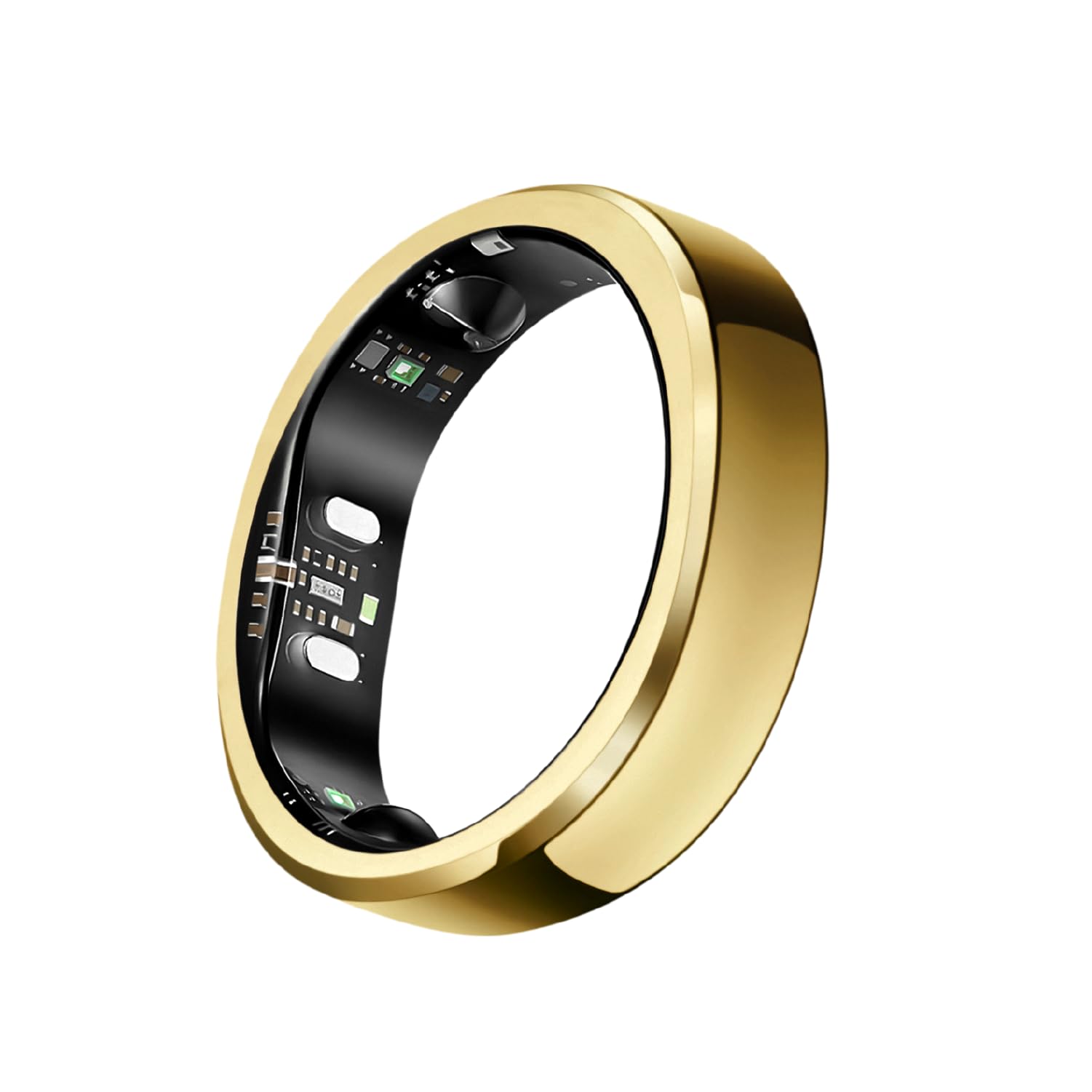
The RingConn Gen 3 builds on the foundation of its predecessor by adding two features that no other ring currently offers: vascular load trend analysis and haptic vibration alerts. The vascular insights come from a one-time calibration that analyzes multiple physiological signals — heart rate, HRV, blood oxygen, and pulse wave velocity — to track how your blood vessels respond to sleep quality, stress, and exercise over weeks. This is not a blood pressure cuff replacement, but it provides a longitudinal view of vascular stiffness trends that athletes and biohackers will find genuinely useful. The haptic motor inside the ring delivers discreet taps for inactivity reminders, low battery warnings, and health alerts, making it the only ring on the market that can communicate without you looking at a phone.
The EcoPower Tech 2.0 battery management system pushes rated endurance to 14 days, the longest of any ring in this lineup. Real-world testing shows 12 to 13 days with sleep tracking and haptics enabled, dropping to around 9 days if you also run continuous overnight SpO2 monitoring. The charging case is compact and charges via USB-C, and the ring itself uses contact pins that are recessed enough to avoid sweat corrosion during workouts. The IP68 rating means it is safe for swimming up to 100 meters, though the haptic motor adds a slight internal thickness that makes the ring feel marginally bulkier than the Gen 2.
Accuracy across sleep staging, step counting, and heart rate is excellent — one user reported step counts within 5 percent of manual counting and heart rate within 1 to 2 beats per minute of a dedicated sports watch. The app interface is clean and presents data without the gamification clutter found on some competitors. The main downside is the price point, which sits firmly in premium territory, and the fact that the vibration alert feature is still relatively new, meaning you may encounter occasional firmware quirks that subsequent updates will resolve. For those who want the most feature-dense ring available without a monthly bill, the Gen 3 is a compelling upgrade.
Why it’s great
- Unique vascular trend analysis
- Discreet haptic alerts for health and notifications
- 14-day battery life is class-leading
- No subscription for any feature
Good to know
- Premium price compared to previous generation
- Haptic motor adds slight internal bulk
- Vibration feature may need firmware updates to mature
3. Oura Ring 5
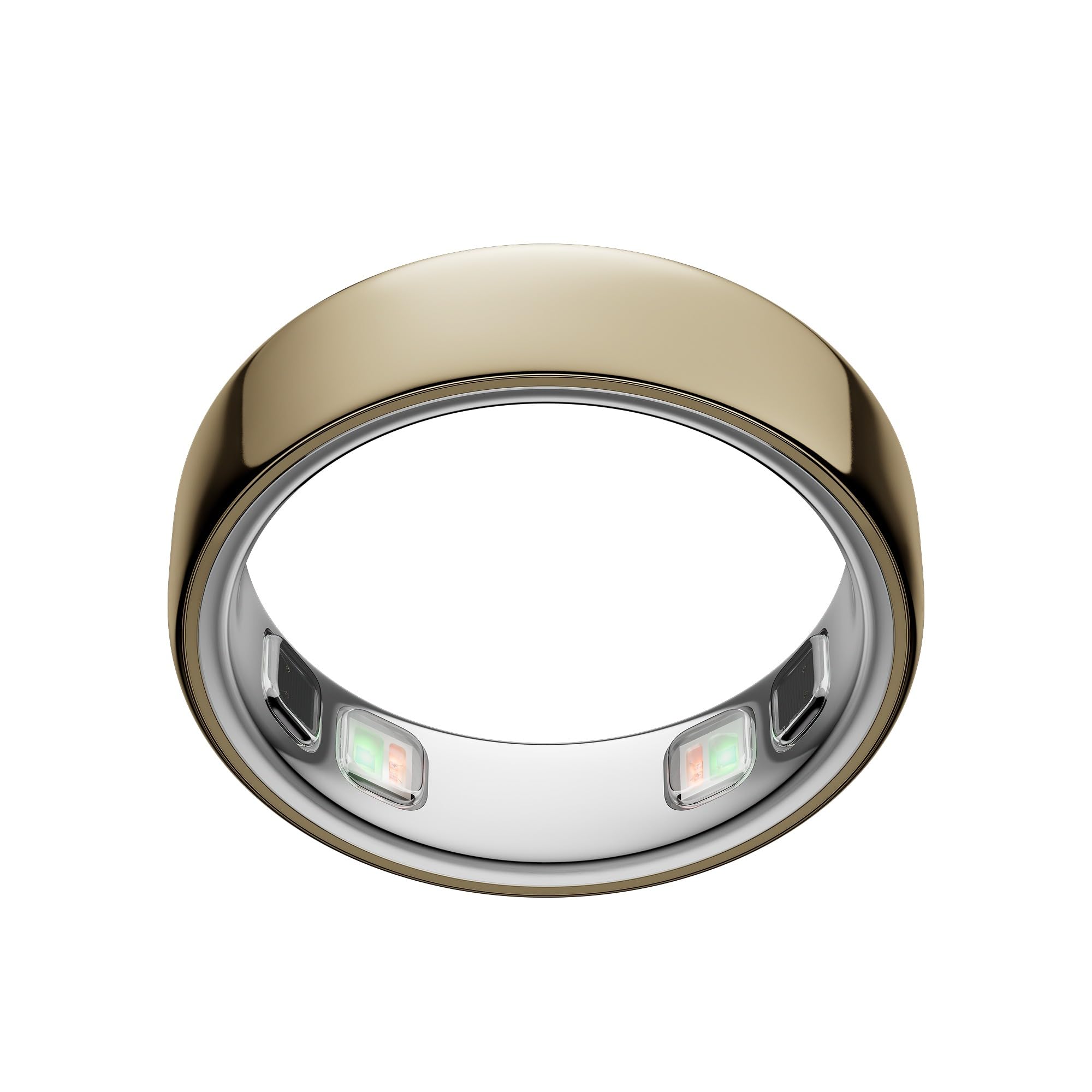
The Oura Ring 5 is the most refined iteration of the category pioneer, now forty percent smaller than the previous generation with an all-titanium build that finally looks like a piece of jewelry rather than a fitness gadget. The gold finish in particular has been reformulated to resemble actual yellow gold instead of the brassy orange tint of earlier models. Oura’s strength has always been its app ecosystem — the ring integrates with over forty third-party apps including Natural Cycles, Strava, Apple Health, and Google Health Connect, giving it the largest software ecosystem of any biometric ring. The sensor suite tracks over 50 metrics covering sleep stages, heart rate, HRV, body temperature, activity, and stress, all presented through the Oura Advisor AI coach that offers contextual suggestions based on your data trends.
The trade-off for that ecosystem is the membership. Only the first month is free; after that, it costs a recurring fee to access detailed sleep scores, readiness assessments, and long-term trend analysis. Without the subscription, the ring still tracks basic metrics, but the actionable insights that make Oura compelling are locked behind the paywall. Battery life of six to nine days is adequate but trails the RingConn Gen 2 and Gen 3 by a significant margin. The ring uses a proprietary charger with contact pins, and the charging cradle sits flat on a table, which is less portable than the case-based chargers offered by competitors.
Sizing is critical with the Gen 5 — the ring uses its own sizing system that differs from both standard jewelry rings and previous Oura generations. Users who sized correctly for the Gen 4 may find the same size too loose or too tight on the Gen 5 due to the redesigned interior curvature. The ring is thinner and more comfortable for all-day wear than any previous Oura, and the sensor accuracy has improved noticeably, particularly for sleep stage detection and nighttime HRV. If you value the deepest app integrations and a proven track record of algorithm development, and you are willing to pay a monthly fee for the full experience, the Oura Ring 5 remains the gold standard in ecosystem depth.
Why it’s great
- Unmatched third-party app integrations
- 40% smaller and more comfortable than Gen 4
- Research-grade sensor accuracy
- Beautiful jewelry-grade titanium design
Good to know
- Subscription required for full insights after first month
- Battery life shorter than top competitors
- Proprietary charger, not a portable case
- Sizing changed from previous gens — must re-size
4. WHOOP 5.0
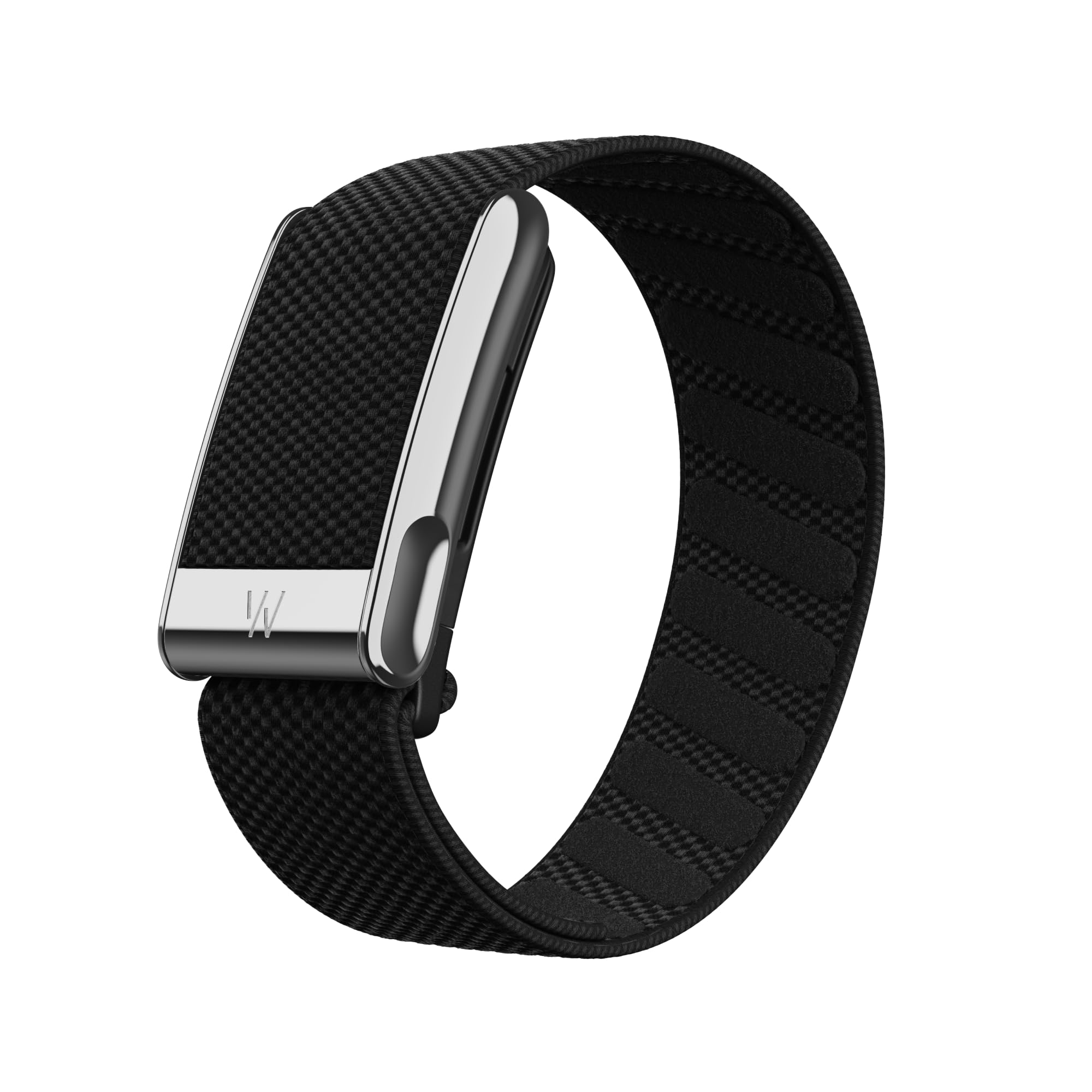
The WHOOP 5.0 takes a fundamentally different approach from every other ring on this list — it is not a ring at all, but a screenless wristband that functions as a medical-grade recovery and strain coach. The device itself is the MG tracker, worn on the wrist with a SuperKnit Luxe band, and it continuously monitors heart rate at one-second intervals to calculate daily strain, sleep recovery, and readiness scores. The on-demand ECG feature sets it apart from any ring, providing a medical-grade reading from the wrist in seconds to check for atrial fibrillation. WHOOP also delivers daily blood pressure estimates using overnight analysis of pulse wave data, a feature no ring currently offers with the same level of validation.
The battery life of over 14 days is the best in the wrist-worn category, and the Wireless PowerPack allows charging without removing the device, enabling true continuous monitoring. The WHOOP AI analyzes over 140 metrics to provide personalized coaching on sleep targets and strain goals, and the algorithm adapts as your fitness level changes. The device is worn by elite athletes from the NFL and UFC, and the company runs its own performance science lab dedicated to validating sensor accuracy. The downside is the membership model — the purchase price includes a 12-month membership, but after that you pay an annual or monthly fee to keep the device active. Without the subscription, the WHOOP becomes a basic step counter.
Accuracy during high-intensity workouts has drawn some criticism, with reports of heart rate readings drifting 20 or more beats per minute compared to chest straps and Apple Watch during interval training. Users who prioritize gym accuracy over everyday wellness may want to cross-reference with a dedicated HR monitor. The device is also bulkier than a ring and more visible on the wrist, which defeats the purpose for people who want a discreet wearable. For serious athletes who want daily recovery metrics, strain guidance, and ECG capability, WHOOP justifies its premium price, but the subscription lock-in is a genuine long-term cost.
Why it’s great
- On-demand ECG for atrial fibrillation detection
- Daily blood pressure estimates from overnight data
- Over 14 days of battery life
- World-class recovery and strain algorithms
Good to know
- Subscription required after first year
- Wrist form factor not discreet like a ring
- Heart rate accuracy drops during high-intensity intervals
5. CUDIS AI Smart Ring

The CUDIS AI Smart Ring enters the premium tier with a feature set that targets the quantified-self enthusiast: biological age tracking, an AI wellness coach, and full data ownership that lets you monetize your health information through the CUDIS Store. The biological age metric analyzes your heart rate variability, sleep patterns, and activity trends to estimate how your body is aging relative to your chronological age, updating the number as your habits change. The AI coach provides real-time personalized feedback, from suggesting ideal bedtimes based on your sleep debt to recommending stress-management breaks when HRV dips. The ring is built from aerospace-grade titanium, weighs just three grams, and carries a 5ATM waterproof rating that handles swimming and showering without concern.
Battery life reaches up to 10 days on a single charge, and the included USB-C charging pod can recharge the ring in about 80 minutes. The sensor suite covers sleep staging, heart rate, HRV, SpO2, stress, steps, and women’s health cycle tracking. The app interface is clean but leans heavily into gamification, awarding health points that can be redeemed through the brand’s store. Some users find the app busy compared to more minimalist competitors, though the data depth is comparable to rings costing significantly more. The ring connects to both iOS and Android and syncs automatically with Apple Health and Google Health Connect.
The main issues are sizing and hardware refinement. Several users report that the ring runs small — a size 11 fits like a 9.5 in standard rings — making the sizing kit absolutely critical. The charging case hinge feels flimsy, and the case must be plugged into power to charge the ring, unlike portable battery cases from competitors. The sensor leaks a faint green LED light visible in complete darkness, which may be distracting in a pitch-black room. For data-driven users who want biological age insights, AI coaching, and the option to monetize their health data, the CUDIS ring is a unique proposition, but the first-gen feel of the charging hardware gives the current iteration a beta-quality aura.
Why it’s great
- Unique biological age estimation metric
- AI wellness coach offers personalized feedback
- Full data ownership with monetization options
- Lightweight titanium at 3 grams
Good to know
- Sizing runs small — trial kit is essential
- Charging case has a flimsy hinge and must be plugged in
- Green sensor light visible in darkness
- App interface feels busy and gamified
6. opove O Ring
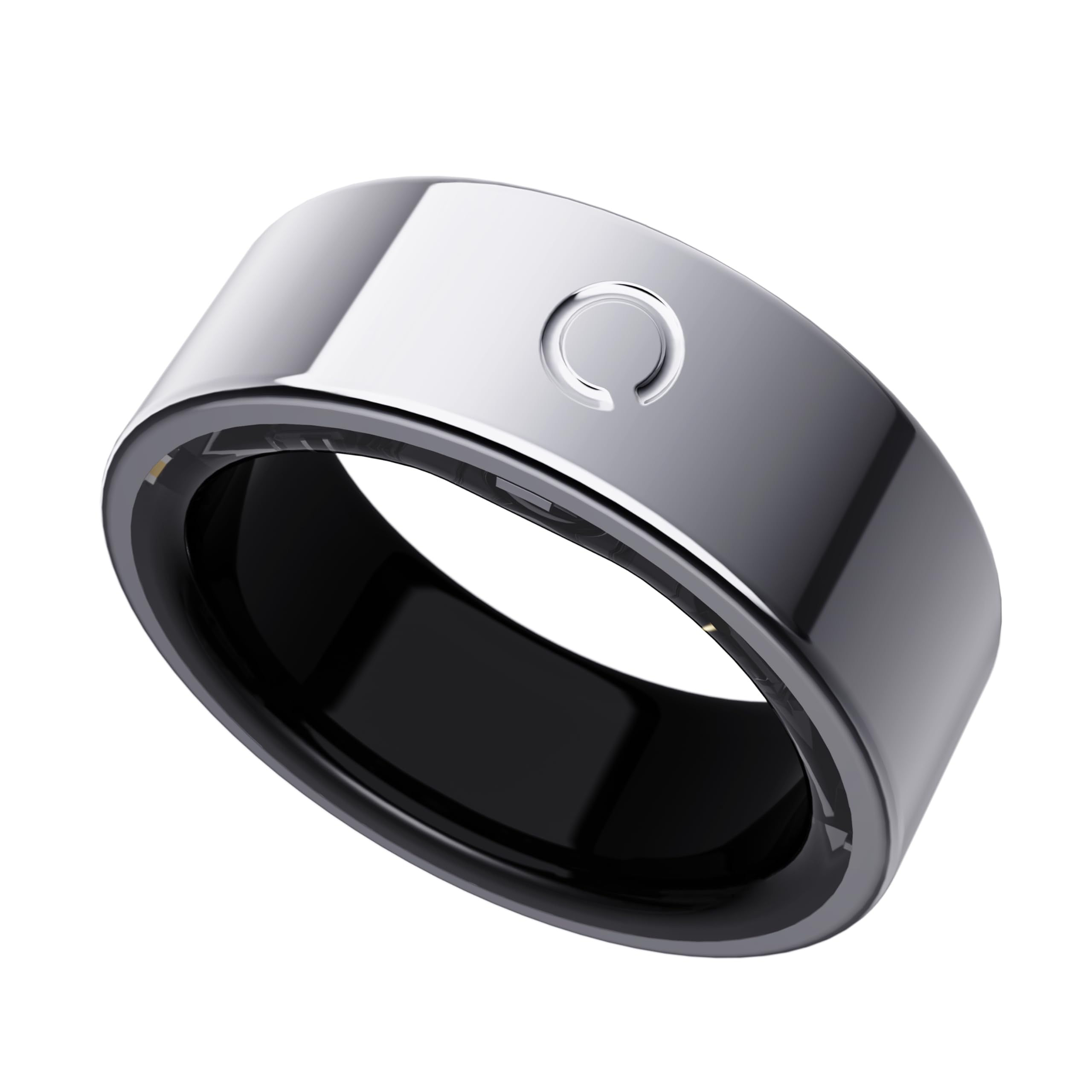
The opove O Ring positions itself as a stress-management specialist, using 24-hour background HRV monitoring to quantify stress levels and provide personalized insights on when to push and when to rest. The ring tracks HRV without requiring you to perform a morning readiness test — it simply logs your autonomic nervous system state throughout the day and presents stress trends in an easy-to-read app dashboard. Beyond stress, the O Ring records sleep stages, heart rate, blood oxygen, steps, calories, menstrual cycle phases, and basal body temperature. The ring body weighs only three grams and uses a titanium shell with a 5ATM waterproof rating, making it suitable for all-day and all-night wear without removal.
The companion app, simply called opove, offers every feature without a subscription. The interface is straightforward with none of the gamification clutter found on some competitors, though it lacks the trend depth and AI coaching of premium apps. Activity tracking covers walking and running with distance data pulled from your phone’s GPS, but it does not have built-in GPS. The ring uses Bluetooth to sync with both iOS and Android, and the connection stays reliable as long as the ring is within about 30 feet of the phone. Battery life averages five to six days with all sensors active, which is average for this price tier.
The sizing kit has received mixed reviews — the plastic tester rings were not secured in their slots during shipping in some cases, and the lack of size markings on the testers made it difficult to confirm fit. The ring’s raised sensor housing is slightly more pronounced than on premium models, which some users find noticeable during typing or weightlifting. For those who prioritize stress tracking and want a no-subscription ring that covers the core health metrics competently, the opove O Ring delivers strong mid-range performance at a reasonable price, but the fit verification process needs improvement.
Why it’s great
- 24-hour background HRV stress tracking
- Extremely lightweight at 3 grams
- No subscription required
- 5ATM waterproof for all-day wear
Good to know
- Sizing tester rings are loosely packed and unmarked
- No built-in GPS — relies on phone for distance
- Sensor protrusion may feel bulky during weight training
7. RENPHO Lynx Smart Ring

The RENPHO Lynx challenges the notion that you need to spend over two hundred dollars for reliable health tracking. This ring packs sleep staging, heart rate, SpO2, stress, steps, and multiple activity modes into a titanium and PC resin shell that looks every bit as premium as rings twice its price. The standout feature is the included charging case — not a charging cradle or puck, but an actual case with a built-in battery that can recharge the ring on the go. This makes the Lynx the most travel-friendly option in the mid-range tier, since you can toss the case in a bag and top up the ring without hunting for a cable. Battery life hits a full seven days in normal use, and with the case you effectively have weeks of autonomy.
The Renpho Health app tracks sleep stages (deep, light, REM), heart rate, HRV, stress levels, steps, distance, and calories burned. It supports walking and running modes, and one user reported that the treadmill tracking matched their machine’s readout closely. The app connects to Apple Health and Google Health Connect, so your data flows into your broader health ecosystem. There is no subscription fee — all features are available from the moment you pair the ring. The ring is 5ATM waterproof, safe for swimming, and the titanium exterior holds up well against daily bumps and scratches.
The trade-off is that the Lynx runs its own sizing system, which is not the same as standard rings or even other health rings. Users who normally wear a size 8 ring have needed a size 10 in the Lynx due to the sensor housing taking up internal volume. The ring profile is slightly thicker than premium options like the Oura 5 or RingConn Gen 3, which may cause discomfort during heavy weightlifting or when wearing rings on adjacent fingers. A small number of units have developed battery drain issues after a few weeks, and the 30-day return window can be tight if problems surface late. For the price, the feature set and the included charging case make the Lynx one of the strongest value propositions in the current smart ring market.
Why it’s great
- Includes a portable charging case for on-the-go recharging
- No subscription fee for any feature
- 7-day battery life with accurate sleep tracking
- 5ATM waterproof and durable titanium build
Good to know
- Sizing is significantly different from standard rings
- Slightly thicker profile than ultra-slim competitors
- Limited 30-day return window for defect issues
8. POBOVi Gen 2 Titanium Smart Ring
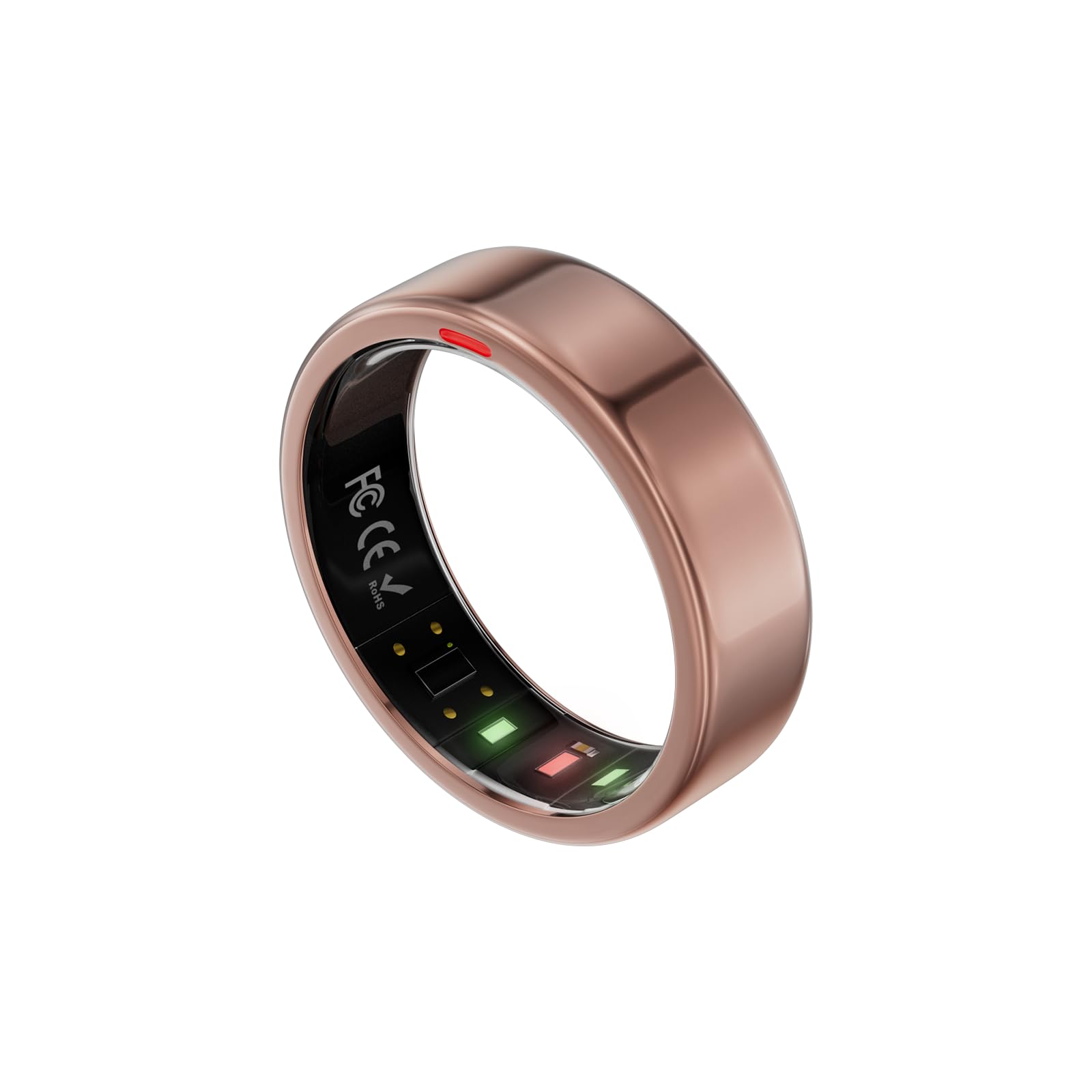
The POBOVi Gen 2 is a strong entry-level biometric ring that covers the essential health metrics without a subscription. Its unique differentiator is sleep breathing rate monitoring — the ring tracks your respiratory rate throughout the night and flags irregularities that could indicate poor sleep quality. The sensor suite also covers heart rate, HRV, blood oxygen, stress levels, steps, and menstrual cycle tracking. The ring body uses a titanium shell and carries an IP68 waterproof rating that allows swimming up to 100 meters. Battery life averages five to seven days depending on ring size, with larger sizes lasting longer due to the bigger battery cell.
The companion app is free and provides sleep stage breakdowns, daily trend charts, and weekly summaries. The interface is not as polished as premium apps, but the data is presented clearly without unnecessary gamification. The ring is compatible with both iOS and Android, and it syncs automatically in the background. One notable advantage is HSA/FSA eligibility, making it easier to purchase with pre-tax health savings funds. The ring comes in multiple color options, with the rose gold variant offering a genuinely attractive finish that looks like a fashion ring rather than a fitness tracker.
The main drawback is that the POBOVi uses its own sizing system, which differs from both standard jewelry sizes and other smart ring brands. The sizing kit is essential, and the brand recommends using only the official POBOVi kit for accurate fit. The ring does not track sleep apnea specifically — it monitors breathing rate but lacks the AHI-based apnea detection found on the RingConn Gen 2. The step counting and calorie estimates are reasonably accurate for casual use but may not match the precision of premium rings during structured workouts. For users who want a reliable, subscription-free ring at an accessible price point, the POBOVi Gen 2 delivers solid value and covers the essentials well.
Why it’s great
- Sleep breathing rate monitoring at a budget price
- No subscription fee for any feature
- IP68 waterproof to 100 meters
- HSA/FSA eligible
Good to know
- Uses proprietary sizing — kit required for proper fit
- No sleep apnea AHI detection
- App interface less polished than premium options
9. QALO Smart Ring
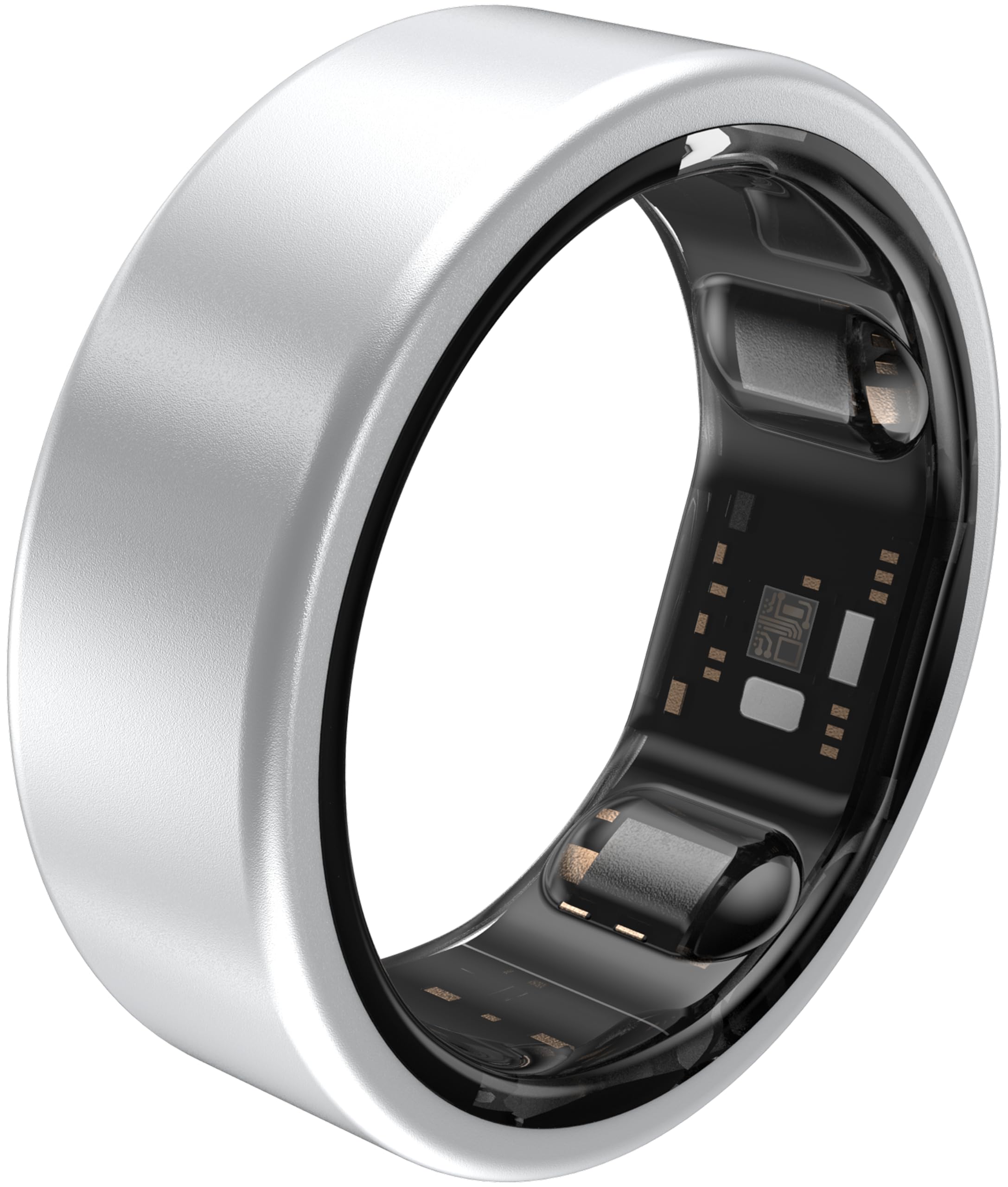
The QALO Smart Ring is the most straightforward entry in this lineup — a no-subscription titanium ring that tracks sleep, heart rate, HRV, SpO2, stress, temperature trends, steps, and active calories without any hidden fees. QALO is best known for its silicone wedding bands, and the smart ring leverages that same material expertise by including two silicone cover bands in the box. These covers slide over the titanium ring to protect it during workouts or manual labor, a thoughtful addition that no other ring offers. The ring uses a polycarbonate body with a titanium alloy outer shell, keeping weight low and durability high.
The free app provides sleep stage breakdowns (awake, light, deep, REM), a daily Sleep Score, heart rate trends, HRV, stress levels, temperature changes, and activity tracking with multiple exercise modes. Women’s health tracking covers all four cycle phases. The app syncs easily with both iOS and Android and connects to Apple Health. Battery life is rated at seven days with a two-hour charge time using the included wireless charging case. The ring is water-resistant for handwashing and sweat but is not rated for swimming — the IP rating is not specified, so it is best treated as splash-proof rather than waterproof.
The raised sensor housing is designed for a snug fit, and QALO recommends sizing up to compensate for the internal sensor bumps. Users report that the ring fits more securely than flat-sensor designs, with fewer dropped readings during sleep. The main concern is charger reliability — several users reported the charging case failing after four to six weeks, requiring replacements. Customer support response times have been inconsistent, with some users waiting over a week for a resolution. For the price and the no-subscription promise, the QALO is a decent entry point for someone who wants to try a smart ring without a big financial commitment, but the charging hardware and support responsiveness leave room for improvement.
Why it’s great
- Includes two silicone covers for protection during activities
- No subscription fee for full app access
- Snug sensor fit reduces data dropouts
- HSA/FSA eligible
Good to know
- Charging case has reliability issues for some users
- Customer support response times are slow
- Not fully waterproof — splash resistant only
FAQ
Can a biometric ring replace a medical sleep study?
Why does my biometric ring measure HRV differently than my smartwatch?
What ring size should I choose if I am between sizes?
How often should I clean the sensors on my biometric ring?
Final Thoughts: The Verdict
For most users, the best biometric ring winner is the RingConn Gen 2 because it delivers sleep apnea tracking, accurate HRV and SpO2 monitoring, and a 12-day battery in a 2-gram package with no subscription — all at a price that undercuts premium rivals. If you want the most advanced features available including vascular trend analysis and haptic alerts, grab the RingConn Gen 3. And for the deepest app ecosystem with integrations into over forty platforms and the polished experience of a decade-old wearable company, nothing beats the Oura Ring 5, provided you are comfortable with the monthly membership fee.