
Our readers keep the lights on and the weekend projects moving. As an Amazon Associate, I earn from qualifying purchases.
Specs are compiled from manufacturer listings and verified buyer reviews and can change over time — please confirm the key details on the product page before buying.
Your bird spends most of its life inside its cage, and the difference between a cramped box and a proper aviary shows up in everything from feather health to how much they chirp. The real question is which one gives you enough room without turning your living room into a warehouse.
I’m Rikta — the founder and writer behind FitlyFast. This guide is built by comparing the manufacturers’ published specifications and the patterns across verified customer reviews, so you get each pick’s real strengths and trade-offs instead of marketing spin.
To give your bird a cage that feels like a home instead of a confinement, focus on three things in a bird aviary: bar spacing that prevents escapes, a weight you can still move, and a layout your bird can actually fly across.
Quick Picks
- VEVOR Bird Cage, 32.7 x 31.1 x 82.7 inch — Best Overall
- BOINN 82 Inch Bird Cage — Flight King
- Topeakmart Wrought Iron Large Flight Parrot Cage — Best Value
- PawHut 55″ Large Bird Cage — Split-Level
- Yaheetech 63-Inch Wrought Iron Large Bird Cage — Parrot Ready
- VIVOHOME 54 Inch Large Bird Flight Cage — Compact Flight
- Yaheetech 59-inch Dome Open Top Bird Cage — Dome Value
- Mcage 64″ Extra Large Double Flight Bird Cage — Double Duty
- PawHut 65″ Double Rolling Metal Bird Cage — Premium Double
How To Choose The Best Bird Aviary
An aviary is not just a bigger box — it is a cage designed to let your bird stretch its wings, climb, and exercise. The wrong choice means a bird that cannot fully extend its wings or a cage that is impossible to keep clean. Here is what separates the good ones from the frustrating ones.
Bar Spacing Is The Safety Gate
The gap between bars is the single most critical spec. A 10-millimeter gap works for small birds like budgies, finches, and canaries — anything wider than 15 millimeters and a small bird can squeeze through or get its head stuck. For medium parrots like cockatiels and conures, 15 millimeters is the balance. Never guess: measure your bird’s head width against the gap.
Width Over Height For Real Flight
Birds fly horizontally, not vertically. A tall skinny cage looks impressive but gives your bird nothing but a climb. Look for an aviary with at least 24 inches of width — more is better — so your bird can actually flap from perch to perch. The internal width dimension on the spec sheet tells you the real flight path.
Cleaning Ease Saves Your Sanity
A pull-out tray that slides out fully without tilting is non-negotiable. Removable grates and large front doors make the difference between a five-minute cleanup and a half-hour struggle. Cages with multiple small doors let you reach food bowls without opening the whole front, which matters for nervous birds.
Quick Comparison
| Model | Best For | Bar Spacing | Overall Height | Weight | Amazon |
|---|---|---|---|---|---|
| VEVOR 82.7″ Bird Cage | Large parrots needing flight space | 15 mm | 82.7″ | 42 lbs | Amazon |
| BOINN 82″ Flight Cage | Multiple cockatiels in one cage | 15 mm | 82.7″ | 47.8 lbs | Amazon |
| PawHut 65″ Double Cage | Two separate bird households | 12.7 mm | 64.25″ | 56.1 lbs | Amazon |
| Mcage 64″ Double Flight Cage | Breeding or separating birds | 12.7 mm | 64″ | — | Amazon |
| Topeakmart 52″ Flight Cage | Multiple small birds on a budget | 15 mm | 52″ | 37.5 lbs | Amazon |
| Yaheetech 63″ Cage | Medium parrots like African Greys | 10 mm | 63″ | 36.4 lbs | Amazon |
| Yaheetech 59″ Dome Cage | One medium parrot on a stand | 15 mm | 59″ | 22.9 lbs | Amazon |
| PawHut 55″ Aviary | Separating or combining small flocks | 10 mm | 55″ | 27.5 lbs | Amazon |
| VIVOHOME 54″ Cage | Small birds in a compact footprint | 10 mm | 54″ | 25.8 lbs | Amazon |
In-Depth Reviews
1. VEVOR Bird Cage, 32.7 x 31.1 x 82.7 inch
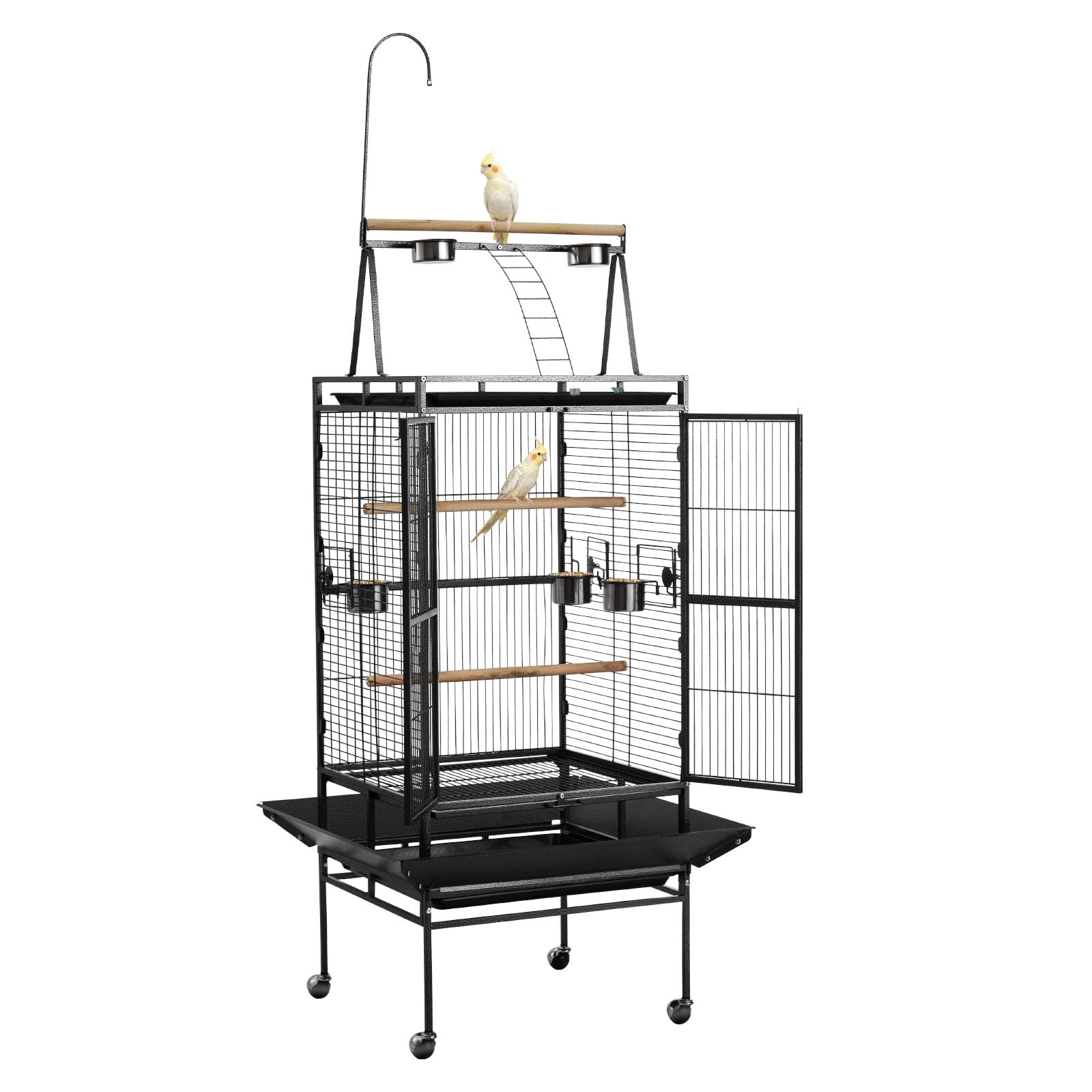
The aviary that gives an African Grey enough horizontal runway to actually fly.
At 82.7 inches tall and 32.7 inches wide, this cage towers over most competitors — but the real win is the 31.1-inch depth, which creates a flight path your bird can use. The wrought iron frame with a powder-coated finish resists rust and water damage, and buyers report the whole thing feels rock-solid once assembled. Owners mention their parakeets and ringnecks love the open flat top, which doubles as a play area and makes changing toys easier.
The 0.6-inch bar spacing (about 15 Millimeters) works for medium to large parrots like Amazons and African Greys, though small finches could squeeze through. The slide-out tray and seed guard keep the mess contained, and the four 360-degree swivel casters let you roll it from room to room without lifting. One reviewer noted it took about a month to ship, but called it “worth it” once it arrived.
Room to stretch: The horizontal space at the top gives birds room to fly across — not just climb up and down.
Watch the gap: At 15 mm bar spacing, this is not for tiny birds like finches or budgies.
Reach for this if: you have a medium to large parrot like an African Grey or Amazon and want a cage that doubles as a play gym.
Look elsewhere if: you need a cage for small birds like budgies or canaries — the bars are too wide.
2. BOINN 82 Inch Bird Cage

The heavy-duty giant that fits two cockatiels without crowding.
This is the heaviest cage in the lineup at 47.8 pounds, and that weight comes from the premium welded steel frame and non-toxic hammer paint that resists rust. The internal flight space measures 24 inches by 22 inches by 37.4 inches, giving two small to medium birds room to flap. Customers note it fits “two cockatiels in the cage” comfortably and that the seed guard keeps the floor cleaner than most.
Unlike the Yaheetech 59-inch at 22.9 pounds, the BOINN weighs 47.8 pounds and does not wobble when your bird moves across perches. The 15 mm bar spacing works for cockatiels and ringnecks, but the same gap means budgies can slip out. The plastic pull-out tray slides out for hose-down cleaning, and the 360-degree casters make rolling it across a room easy despite the weight.
Built to stay put: At 47.8 lbs, this cage does not shift or tip when birds jump around.
Assembly needs patience: Reviewers point out the instructions lack hole diagrams, but the build quality makes up for it.
Grab this for: a pair of cockatiels or a single African Grey in a mobile home where stability matters.
skip it if: you need to move the cage frequently on carpet — the weight makes it a two-person job.
3. Topeakmart Wrought Iron Large Flight Parrot Cage

The three-level flight cage that packs seven doors for under a hundred bucks.
For the price, you get a 31.1-inch wide cage with three separate levels and seven access doors, which makes cleaning and feeding far easier than single-door designs. The powder-coated steel frame with hammered paint finish resists scratches and water, and the 15 mm bar spacing suits cockatiels, conures, and lovebirds. Shoppers say the cage is “sturdy, easy-to-clean with rolling stand” and say their lovebirds are “SO HAPPY” with the extra flying space.
It is 37.5 pounds versus the VIVOHOME 54-inch at 25.8 pounds, which gives it more stability on the rolling casters. The main trade-off, echoed by multiple reviewers, is the assembly instructions: picture-only diagrams that many found frustrating. The included four double dishes and three perches are a nice bonus for a cage at this level.
What you get for the money
- Three separate levels give multiple birds their own vertical space
- Seven doors make reaching every corner easy
- Included dishes and perches save an extra purchase
The assembly wall
- Picture-only instructions are hard to follow alone
- Some panels arrived slightly bowed (but fixable)
- Door lock can be finicky to close
Perfect pick for: someone with two lovebirds or a cockatiel who wants a roomy cage without spending premium money.
Not ideal if: you hate complicated assembly or need a cage for large parrots — the 15 mm bars are not enough for strong beaks.
4. PawHut 55″ Large Bird Cage
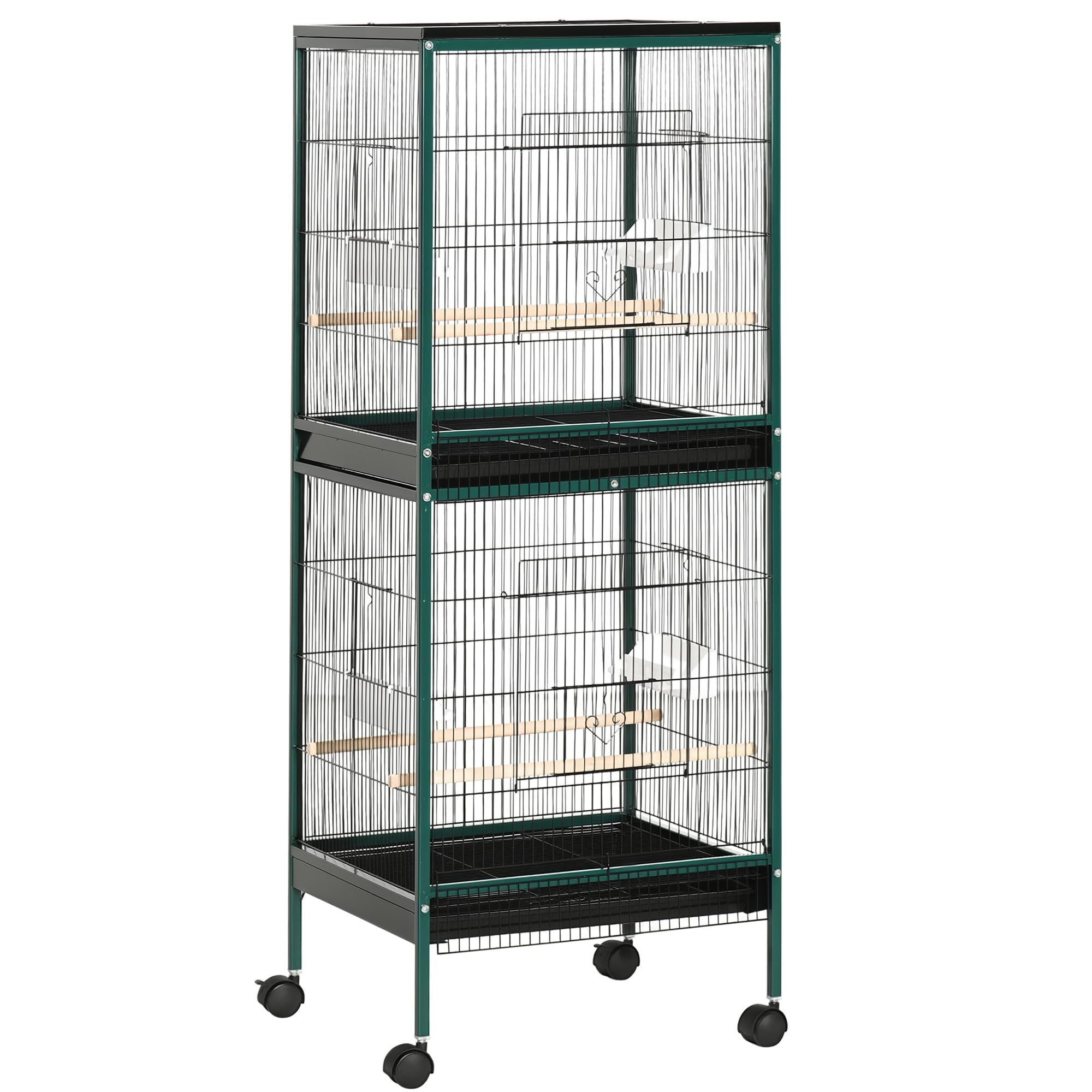
The 20-inch wide aviary with a 10 mm gap that keeps finches safely inside.
At 20.25 inches wide and 55 inches tall, this cage prioritizes vertical space — but the 1.7-foot width is specifically designed to let small birds fully extend their wings. The 10 Millimeter bar spacing is tight enough for finches, canaries, and budgies, something the wider 15 mm cages cannot offer. Buyers report it is “good for 4 parakeets” and that the two-section design lets you keep birds separated or combine them into one tall cage by pulling out the upper tray.
At 27.5 pounds versus the BOINN 82-inch at 47.8 pounds, this cage is far easier to roll around on its casters. The four doors — one large front, one small front, and two side doors — give you quick access from any direction. The catch, according to reviewers, is that the bars bend easily, so this cage is only suitable for small birds, not any parrot with a strong beak.
Small bird specialist: The 10 mm gap is a genuine safety feature for finches and budgies that wider cages lack.
Not for chewers: Thin steel bars mean a conure or cockatiel could bend them over time.
Best for: someone keeping a small flock of finches or budgies who wants both separation and combined-flight options.
Avoid it if: you have any medium parrot — the bars are too thin and the gap too small for their beaks and feet.
5. Yaheetech 63-Inch Wrought Iron Large Bird Cage
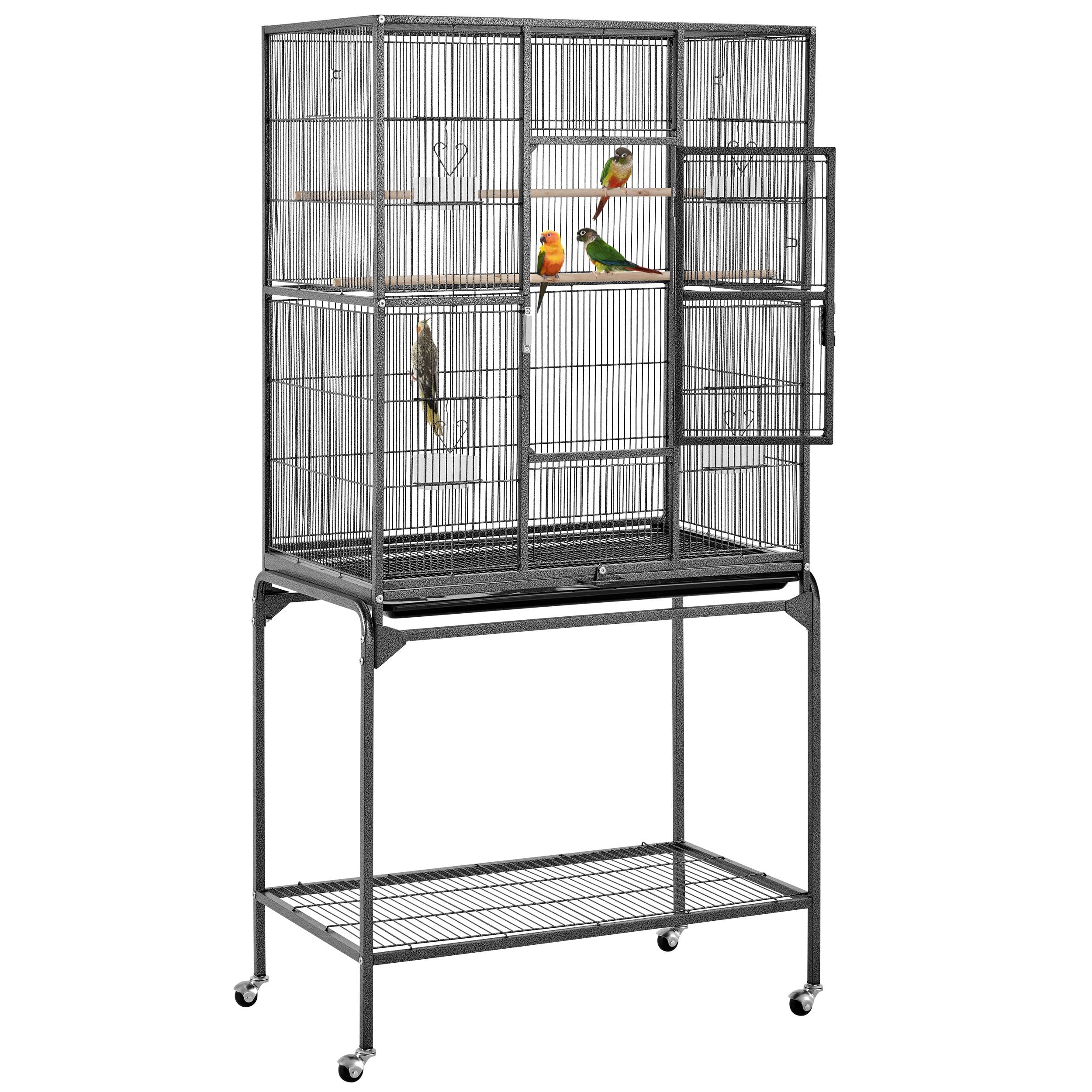
The 63-inch cage that one reviewer called “top of the list” for their African Grey.
With a 30.3-inch by 18.3-inch by 36.4-inch interior and 10 Millimeter bar spacing, this cage bridges the gap between small-bird safety and medium-parrot durability. The 3/8-inch bar spacing is specifically called out for preventing budgies and parakeets from slipping through, while the wrought iron frame handles stronger birds. One long-time African Grey owner who has bought several cages over 25 years rated this one “at the top of the list for quality, price, appearance, features and sturdiness.”
At 36.4 pounds, it is lighter than the Topeakmart but heavier than the VIVOHOME, and the four 360-degree swivel casters make it easy to reposition. The design includes a main door with a secure latch, a small inset door for quick interaction, and six additional side doors for feeders and breeding boxes. The slide-out tray removes without disturbing the birds, though some reviewers found the drawer hard to pull and the main door lock prone to sticking.
What stands out
- 10 mm gap works for both budgies and small parrots
- Lots of door options reduce stress during feeding
- Detachable stand makes transport or deep cleaning easier
Minor frustrations
- Drawer can stick and shift liners during removal
- Main door lock sometimes needs force to open
- Lacks horizontal bars for climbing cockatiels
Solid choice for: owners of African Greys, Amazon parrots, or a small flock of budgies who want a cage that ages well.
Think twice if: your bird loves horizontal climbing — the vertical bars limit that natural movement.
6. VIVOHOME 54 Inch Large Bird Flight Cage
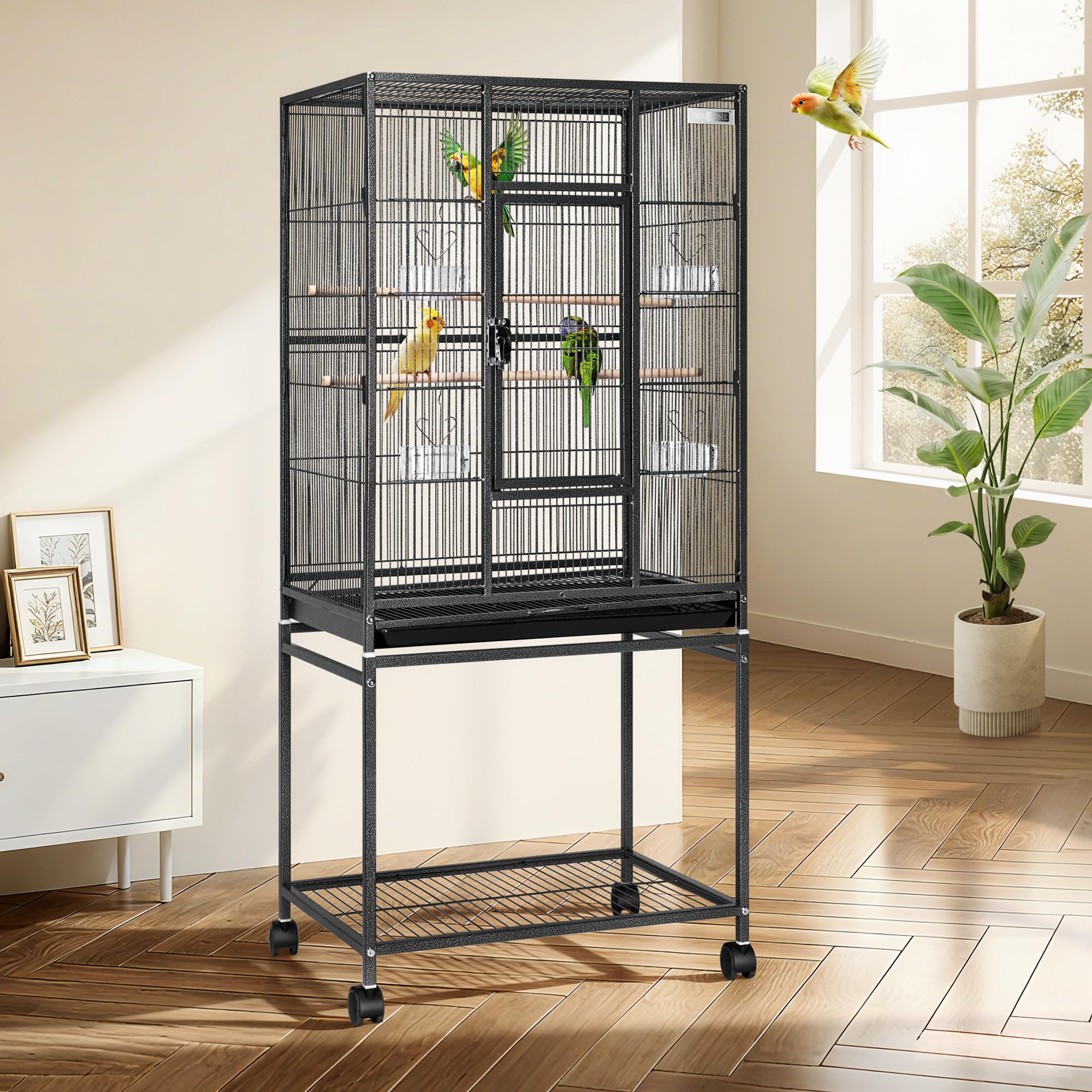
The lightweight floor model that rolls easily and keeps small birds secure.
At 54 inches tall and 25.8 pounds, this cage is one of the lightest full-size options here; the BOINN 82-inch weighs 47.8 pounds, which makes this one easier to roll across hardwood or low-pile carpet. The 10 Millimeter bar spacing is tight enough for finches and budgies, and the flat top design gives you space to hang toys or set plants. Owners mention their cockatiels and green-cheeked conures are “very happy” and that the deep pull-out tray makes cleaning fast.
The alloy steel frame uses a non-toxic hammer-pattern paint that resists corrosion, and the latch design prevents birds from learning to open the door. The included accessories — four plastic food boxes, two wooden perches, and a tray — cover the basics. The trade-off, noted by reviewers, is that the plastic catch pan feels flimsy and there are gap areas that could trap a small bird’s foot if not monitored.
Ease of movement: At 25.8 lbs, you can roll this from room to room without strain.
Materials limit: Lighter construction means this cage is for small birds only — a cockatiel is the upper limit.
Reach for this if: you have finches, canaries, or a single conure and want a cage that does not dominate the room.
Pass on it if: you have a larger parrot or need something that withstands heavy chewing.
7. Yaheetech 59-inch Dome Open Top Bird Cage

The lightweight dome cage that one reviewer called “sturdy, heavy-gauge wire with hard enamel paint.”
At 22.9 pounds versus the Topeakmart at 37.5 pounds, this is the lightest cage in this lineup and the easiest to lift onto a stand or reposition on its own. The 59-inch height and 23.5-inch square footprint give a medium parrot like an Indian Ringneck or green-cheeked conure enough room without overwhelming a small apartment. Customers note the cage is “sturdy, heavy-gauge wire cage with hard enamel paint” and that the domed top discourages perching while opening for a top perch that reduces mess.
The 15 mm bar spacing suits medium parrots, but reviewers caution that the cage lacks horizontal bars, which cockatiels prefer for climbing. The feeder doors let you refill food from outside the cage — a real plus for nervous birds. Some units arrived with bent parts, so inspect the packaging carefully on delivery.
What works
- Feeder doors mean no hands inside the cage during refills
- Rolling stand with storage shelf keeps supplies organized
- Light enough to move solo
Watch out for
- No horizontal bars for climbing birds
- Hood hooks can be flimsy
- Some arrived with bent parts
Good match for: someone with a single medium parrot who values easy mobility and clean feeding access.
Not for: cockatiels that love to climb horizontally or anyone who wants a cage for multiple birds.
8. Mcage 64″ Extra Large Double Flight Bird Cage

The double-width aviary that turns into one giant cage when you slide out the center divider.
At 63 inches long by 19 inches deep by 64 inches tall, this cage gives you two separate compartments or one enormous flight space when you remove the center panel. The 12.7 Millimeter bar spacing (half an inch) sits between the 10 mm and 15 mm options — tight enough for lovebirds but still safe for small conures. The wrought iron frame with non-toxic powder-coated finish and the heavy-duty stand with lockable casters make this feel like a permanent fixture.
Reviewers point out the cage is “great for separating fighting parakeets” and works well for Quakers and Green Cheek Conures. The downsides are real: the instructions are famously bad (no written directions, just a drawing), the perches are a single cheap diameter, and the food dishes are placed where droppings can contaminate them. The divider leaves a 1-inch gap when removed, which small birds can squeeze through, so you need to block it.
Versatility win: Two cages in one footprint — separate aggressive birds or let them mingle.
Assembly nightmare: Plan on 2-4 hours and expect to figure out some steps on your own.
Ideal for: owners of multiple small birds who need separation sometimes and combined flight space other times.
Not for: anyone who wants a quick unbox-and-assemble experience or keeps large parrots with strong beaks.
9. PawHut 65″ Double Rolling Metal Bird Cage
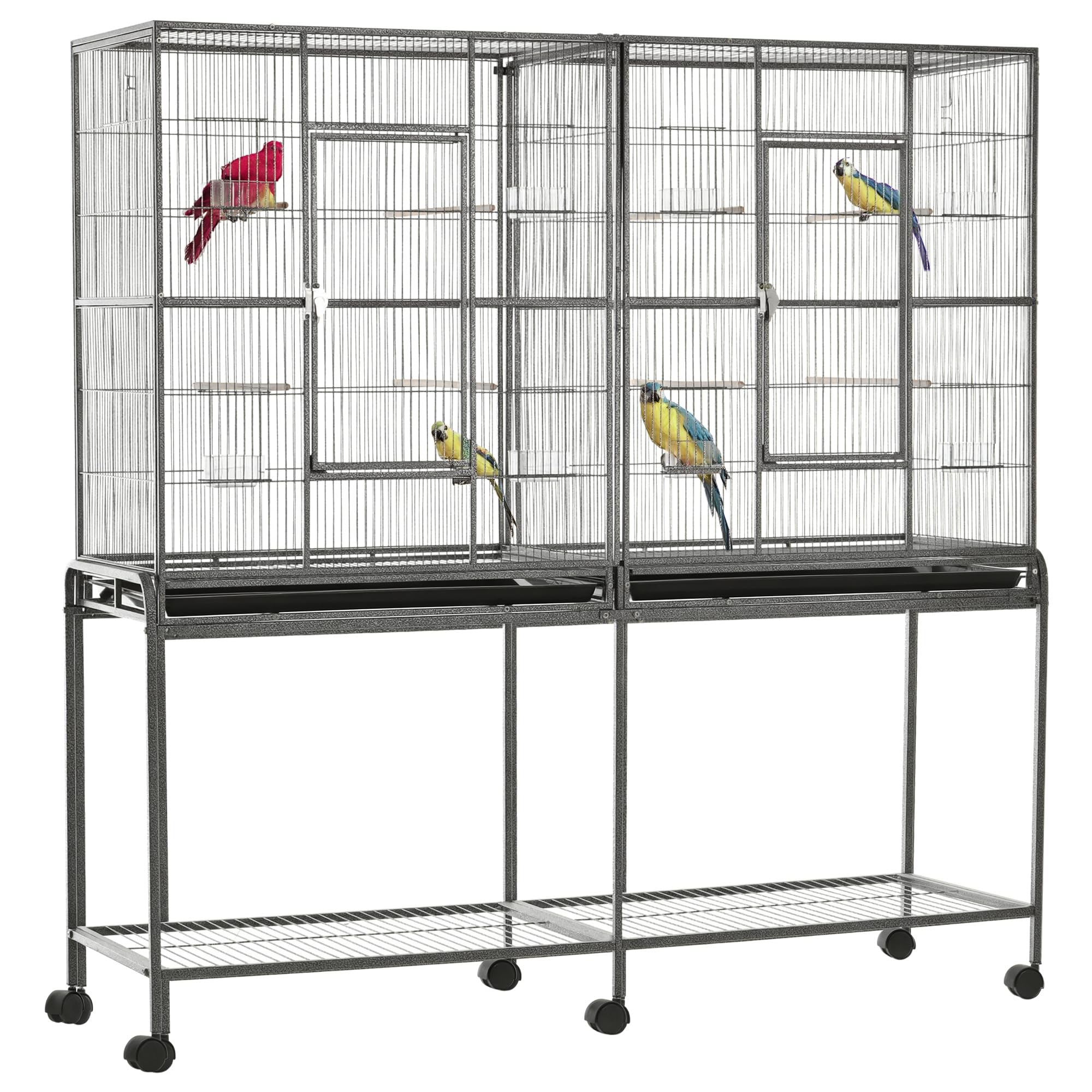
The heaviest double cage here at 56.1 pounds, built to separate or combine flocks.
The removable center divider lets you keep two groups separate or pull it for one big flight space. The alloy steel, metal, and plastic construction feels substantial, and buyers who compared it to other brands say it has “better quality than YAHEETECH” with smoother wheels and sturdier construction.
The 12.7 mm bar spacing works for budgies, cockatiels, and conures, but is not tight enough for finches. The large front doors plus multiple sliding food doors and side doors give you access from four sides. Assembly is manageable — one 72-year-old reviewer put it together solo — but some units arrive with misaligned screw holes or stripped screws. The main body detaches from the stand, which helps with deep cleaning or moving between rooms.
Why it earns its spot
- Detachable stand and removable divider make it the most flexible double cage here
- Improved tray support over similar models reduces sag
- Good for zebra finches, society finches, and parakeets in mixed flocks
Assembly quirks
- Misaligned screw holes reported on some units
- Gaps at the center need zip ties to secure
- Bars are unevenly sturdy — some sections bend easier than others
Best for: owners of multiple birds who want the option to separate and combine spaces in one cage.
Consider carefully if: you need a cage for large parrots — the bars are not strong enough for heavy chewers.
Understanding the Specs
Bar Spacing
The gap between vertical wires determines what birds can safely live in the cage. 10 Millimeters keeps finches, budgies, and canaries inside without risk of head entrapment. 15 Millimeters works for cockatiels, conures, and small parrots. Anything over 15 Millimeters is for large parrots only. Measure your bird’s head — if the gap is wider than the head, the bird can squeeze through or get stuck.
Internal Flight Dimensions
Birds fly horizontally, so the width and depth of a cage matter far more than its height. Look for the internal dimensions listed in the specs — not just the overall height. A cage that is 24 inches wide gives a small bird room to flap. The 30-inch-plus width on larger models is what turns a cage into a real flight aviary.
FAQ
What size bird aviary do I need for a cockatiel?
Can I keep two different bird species in one aviary?
Is a tall cage better than a wide cage for birds?
How do I clean a bird aviary with a pull-out tray?
What bar spacing prevents budgies from escaping?
Can a bird aviary go outside on a patio?
How long does it take to assemble a large bird cage?
What is the difference between a bird cage and a bird aviary?
Do I need a cage with a play top for my parrot?
Can a large bird aviary fit through a standard door?
Final Thoughts: The Verdict
If you want one dependable pick, the bird aviary winner is the VEVOR 82.7-inch because it gives large parrots real flight space with an open play top and a stable wrought iron frame. If you want a double cage for separating or combining flocks, grab the PawHut 65-inch. And for a budget-friendly flight cage that still gives your birds room to move, the Topeakmart 52-inch is a solid pick.
How We Picked
We do not accept paid placement. Every pick is matched to a real buyer and a real use-case; we do not hands-on test units.
Sources & Methodology
Specifications: manufacturer listings and product documentation. Review insights: verified customer reviews, as of July 2026. Pricing: not shown on this page (it changes often); check the current price via the retailer link.
As an Amazon Associate, FitlyFast earns from qualifying purchases. This does not affect which products we feature.