
Our readers keep the lights on and the weekend projects moving. As an Amazon Associate, I earn from qualifying purchases.
A uniform, sanded dowel might look clean, but it forces your bird’s feet into a single, unyielding grip point with every step. Hours per day on that same diameter can lead to pressure sores, arthritis, and a condition called bumblefoot, a painful infection that’s common in birds kept on smooth, uniform perches. The real job of a perch is to exercise the foot through varied textures and diameters, mimicking the branches a bird would grip in the wild to maintain healthy joints and nails.
I’m Rikta — the co-founder and writer behind FitlyFast. I’ve spent countless hours analyzing bird perch materials, diameters, and mounting systems across dozens of brands to identify which designs actually protect foot health while holding up to a bird’s beak.
This guide cuts through the marketing noise to help you choose the right perch material, size, and shape for your specific bird species, enclosure, and budget. You’ll find a clear breakdown of seven distinctly different perch options — from natural wood branches and textured sand perches to flexible cotton rope boings — so you can confidently select the best bird perches for a healthier, happier companion.
How To Choose The Best Bird Perches
The right perch does more than give your bird a place to stand — it actively shapes foot health, mental engagement, and physical activity. The wrong perch, no matter how attractive, can lead to chronic pain and expensive vet visits. Focus on three key factors before buying.
Diameter Variation: One Size Does Not Fit All Feet
A bird’s foot should wrap roughly two-thirds of the way around the perch — that means the ideal diameter changes with the species. For a budgie, a 0.5 to 0.75 inch perch is adequate, while an African Grey needs a 1 to 1.5 inch diameter to keep nails worn naturally and prevent the toes from overlapping. The absolute best approach is to offer perches of multiple diameters within the same cage, forcing the bird to shift its grip throughout the day and exercise different muscle groups in the feet.
Material Matters: Wood vs. Rope vs. Sand vs. Grapevine
Natural wood branches with bark intact provide the most variable texture and diameter, which is ideal for foot health. Cotton rope perches offer a soft, flexible surface that’s easy on the feet and great for birds who spend hours on a single perch, but they must be checked for fraying threads that can entangle toes or be ingested. Sand or quartz-coated perches are useful for nail and beak maintenance, but they should never be the only perch in the cage — overuse can abrade the bottom of the feet and cause sores. Grapevine perches provide a harder, knobby surface perfect for birds who love to chew and shred, offering both foot exercise and enrichment.
Mounting & Cage Fit: Security Without Injury
Hardware matters more than most buyers realize. A poorly secured perch can spin, drop, or tilt unexpectedly, startling the bird and potentially causing injury. Look for perches with built-in bolts and metal wing nuts that clamp securely to cage bars. Ensure the perch length fits within your cage dimensions without pressing against the sides, which can trap tail feathers. For rope perches, verify the internal wire is bendable enough to hold a custom shape but stiff enough to resist collapsing under the bird’s weight.
Quick Comparison
On smaller screens, swipe sideways to see the full table.
| Model | Category | Best For | Key Spec | Amazon |
|---|---|---|---|---|
| Rypet U-Shaped Wood Perch | Natural Wood | Small Parrots & Conures | 9.8″L x 5.9″W, 1″ dia. | Amazon |
| OSWINMART 94.4″ Rope Perch | Cotton Rope | Large Parrots & Macaws | 94.4″L, 1.14″ dia. | Amazon |
| Allazone 5 PCS Grapevine Perch | Grapevine Wood | Shredding & Foot Exercise | 9-11.8″L, 0.6-1.18″ dia. | Amazon |
| KINTOR 83″ Rope Bungee | Cotton Rope | Medium/Large Parrots | 83″L, 1″ dia. | Amazon |
| Filhome Natural Wood Branch | Natural Wood | Multi-Bird Play Areas | 10″L with 4 side branches | Amazon |
| OSWINMART 2×63″ Rope Perch | Cotton Rope | Small to Medium Birds | 63″L, 0.75″ dia. | Amazon |
| kathson 3PCS Sand Perch | Sand-Coated Wood | Nail & Beak Maintenance | 7.87″L, 0.78″ dia. | Amazon |
In‑Depth Reviews
1. Rypet Natural Wood Bird Perch, U-Shaped

The Rypet perch hits the sweet spot for small parrots, offering a 1-inch diameter in the Large version that gives cockatiels, lovebirds, and small conures a comfortable two-thirds wrap without forcing toe overlap. The U-shape design naturally mimics a forked branch, encouraging the bird to perch at slightly different angles throughout the day. That subtle variation in foot position is exactly what prevents the repetitive stress that leads to bumblefoot on standard dowels.
Built from solid natural wood with a rough textured surface, this perch provides enough grip for nail maintenance without the abrasive harshness of sand-coated products. The integrated bolts and wing nuts install tool-free in seconds, and the U-shape distributes the bird’s weight evenly across two attachment points, preventing the spinning or tilting that plagues single-mount perches. Some users reported minor splitting near the screw hole during installation, but careful hand-tightening avoids cracking.
At roughly 1.76 ounces, this is a lightweight option that works well in standard wire cages. The smooth wood surface wipes clean easily, though prolonged exposure to droppings may require a light sanding to restore the texture. For keepers of cockatiels, parakeets, and green cheek conures looking for a stable, natural perch that prioritizes foot health, this is the single most versatile option available.
Why it’s great
- Stable U-shape mounting prevents spinning and tilting
- Natural rough texture supports nail wear without foot abrasion
- Tool-free installation with built-in bolts and wing nuts
Good to know
- Some units show minor splitting at the screw hole if over-tightened
- Large size may overwhelm smaller cages under 18 inches wide
2. OSWINMART 94.4″ Colorful Cotton Bendable Rope Perch

This heavy-duty rope perch is purpose-built for large parrots, with a full 1.14-inch diameter that gives African Greys, Amazons, and small macaws a thick, stable footing. The 94.4-inch length provides enough material to create multiple spirals, bridges, or a figure-eight shape inside a large cage or play stand. The internal steel wire holds whatever shape you bend it into, even under the weight of a bird that tests every joint with its beak.
The cotton rope is dyed with food-grade coloring, so there’s no chemical smell or risk of toxicity from chewing. At 2.2 pounds, this is a substantial piece of equipment; the weight itself adds stability when shaped into tight coils. The included metal bell provides auditory enrichment, though its tone is moderate enough not to become a nuisance in a quiet room. One reported drawback is that the black-and-pink color combination may show dirt more readily than earth tones.
Long-term durability is this perch’s standout feature — owners with blue and gold macaws report the same piece lasting over a decade with minimal fraying. The key to longevity is occasional inspection for loose threads that could wrap around toes, which is standard care for any rope product. For large parrot owners who want a single perch that functions as a toy, a swing, and a comfortable resting spot, this is the clear choice.
Why it’s great
- Extra-thick 1.14-inch diameter suits large parrots comfortably
- Holds custom shapes reliably thanks to sturdy internal wire
- Durable cotton resists unraveling even with heavy chewing
Good to know
- Light-colored rope shows staining from droppings quickly
- Single-piece format limits cage placement if you need multiple perches
3. Allazone 5 PCS Natural Grape Stick Perch

The Allazone set delivers five natural grapevine perches in one package, offering a combination of one bifurcated Y-branch and four straight lengths. The diameter varies naturally from 0.6 inches at the narrow ends to over 1.18 inches on thicker sections, providing the kind of uneven, irregular gripping surface that most effectively exercises a bird’s feet. Cockatiels, sun conures, and green cheek conures benefit most from the knobby texture, which challenges toes to grip differently with each step.
Grapevine is harder than standard pine or manzanita, which means it resists chewing longer but also requires slightly more effort to install if the mounting bolts don’t line up perfectly with the natural curve. The included hardware (metal wing nuts and bolts) works well on wire cages up to 14-gauge bar thickness. One important maintenance note: grapevine should be cleaned by dry scrubbing and rinsing rather than soaking, as prolonged moisture can cause the bark to loosen and peel.
The value proposition here is strong — you get enough perches to fully equip a medium-sized cage with varied diameters, which is precisely what avian veterinarians recommend. Several owners noted the set helped ease their bird’s transition to a larger cage by providing familiar natural textures. If you’re outfitting a new cage or expanding an existing one, this set simplifies the process considerably.
Why it’s great
- Multiple perches provide instant diameter variety for foot health
- Hard grapevine resists shredding longer than softwoods
- Bifurcated branch offers a natural Y-shaped resting spot
Good to know
- Bark may loosen if the perches are soaked during cleaning
- Straight pieces have limited curve variation compared to the Y-branch
4. KINTOR 83″ Rope Bungee Perch

KINTOR’s rope bungee is a direct competitor to the OSWINMART boing but in a slightly shorter 83-inch length with a 1-inch diameter that fits medium-to-large parrots like Quakers, Goffin’s cockatoos, and Amazons. The cotton rope is thick enough to provide a soft, comfortable surface for birds that spend long hours on a single perch, reducing pressure on the feet compared to hard wood. The internal steel wire bends easily into spirals or zigzag patterns that encourage climbing and coordination exercise.
The included bell is notably quieter than average — it rings without being piercing, which is a welcome feature for owners who work from home or keep the cage in a living space. The stainless steel hook at the top attaches securely to most cage tops or play gyms. What sets this perch apart is the consistent diameter across the entire length: every section is a true 1 inch, which matters for owners who need a predictable surface for birds with existing foot sensitivity.
Durability tests from owners of aggressive chewers show this perch holding up for several months before visible fraying appears, which is strong performance for a cotton product. The primary trade-off is that the 1-inch diameter is too small for large macaws, who need a 1.25-inch or larger surface for proper foot wrap. For medium parrots, this is a reliable, well-constructed boing that balances comfort and longevity effectively.
Why it’s great
- True 1-inch diameter throughout for consistent foot support
- Quiet bell provides enrichment without noise complaints
- Resists fraying longer than thinner rope perches
Good to know
- Too narrow for macaws and very large parrots
- Single hook limits placement options in complex cage setups
5. Filhome Natural Wood Bird Perch Stand Toy

The Filhome perch takes a different approach, using a 10-inch main branch with four smaller offshoots to create a multi-bird resting area. The natural prickly ash wood provides a rough, bark-heavy surface that gives small parakeets and cockatiels excellent grip without the uniform texture of a sanded perch. The side branches are approximately 4 inches each, making this an effective option for cages housing two to four small birds who enjoy clustering together at night.
The main drawback is inconsistency in diameter between units — some reviewers received 2-inch main branches while others got 1-inch versions from the same listing. This variability is inherent to natural wood products, but it means you may need to measure the perch upon arrival to ensure it matches your cage dimensions. The metal wing nut system installs easily, though the included hardware may feel slightly undersized for cages with bars thicker than 12 gauge.
Birds seem to appreciate the “real tree” feel — multiple owners reported their parakeets sleeping on the perch nightly and showing less bar-clinging behavior. The wood is untreated and safe for chewing, though heavier chewers may strip the bark within a few weeks. This perch works best as a supplementary resting spot rather than a primary perch, especially given the variable diameter that might not suit every foot size.
Why it’s great
- Natural branch shape with multiple perching spots for several birds
- Rough bark texture provides excellent grip for small species
- Untreated wood is safe for birds that like to chew bark
Good to know
- Main branch diameter varies significantly between units
- Takes up considerable space in smaller cages
6. OSWINMART 2×63″ Bird Rope Perch Set
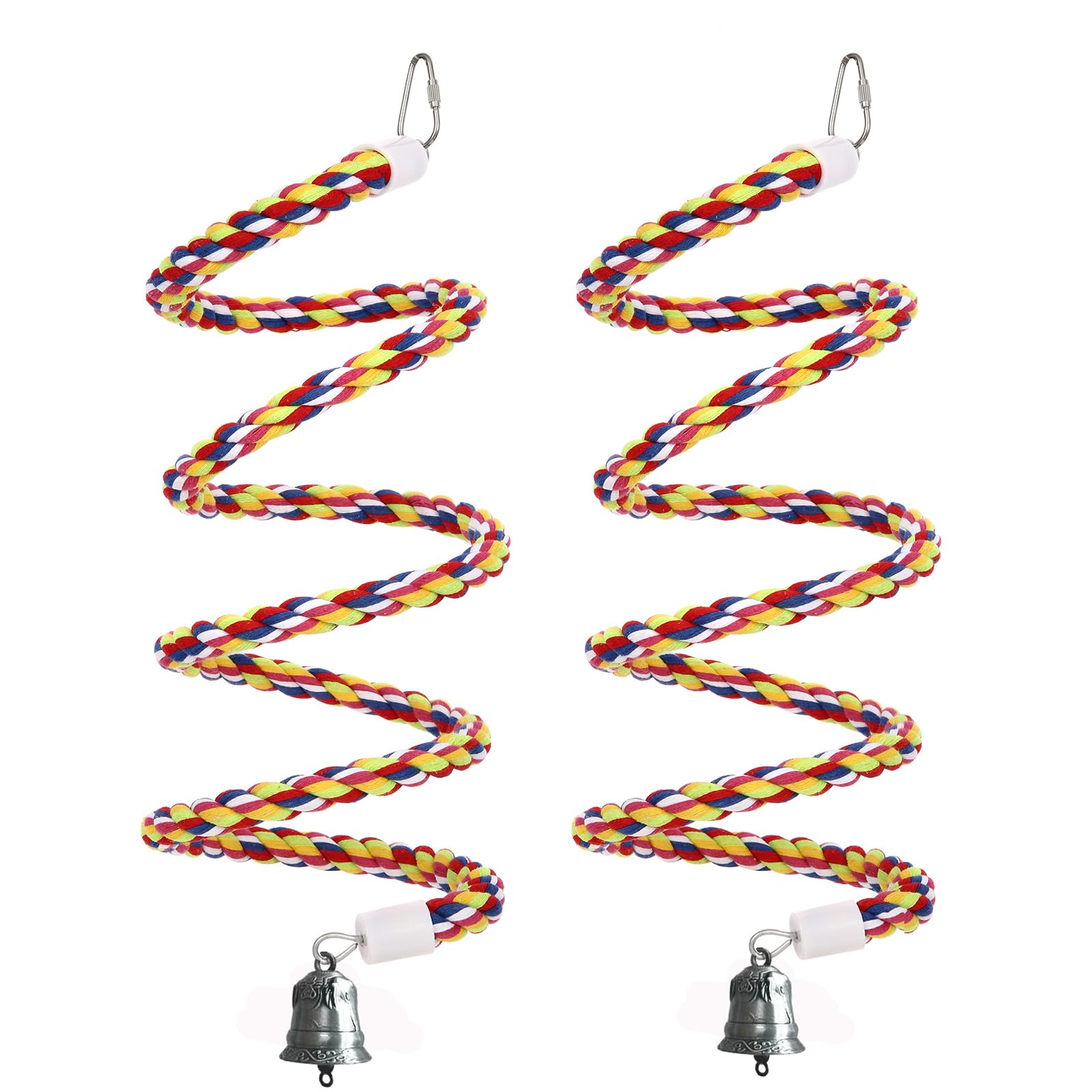
This two-pack of 63-inch rope perches is built for small-to-medium birds, with a 0.75-inch diameter that’s ideal for sun conures, Senegal parrots, and cockatiels. The thinner rope diameter means it can be coiled into tighter spirals for cage-top play areas or let hang vertically for climbing exercise. Each perch includes a metal bell, and the set provides enough material to outfit both a cage and a separate play stand simultaneously.
The cotton material is softer than wood, which makes this a good option for birds with existing foot irritation or those recovering from injury. The internal steel wire holds shapes firmly enough for an active bird to swing and bounce without collapsing. One caveat: the 0.75-inch diameter is too narrow for larger parrots, as their toes will wrap almost fully around the rope, failing to provide the correct gripping angle for foot health.
Long-term owners report these perches lasting for years with occasional spot cleaning, though heavy chewers may fray the cotton faster than the thicker 1-inch ropes. The bright colors fade slightly after a few washes but remain visually stimulating for the bird. If you have multiple small birds or a single bird with an elaborate cage setup, this two-pack delivers excellent material-per-dollar efficiency.
Why it’s great
- Two perches in one pack for multi-cage setups
- Soft cotton surface is gentle on sensitive feet
- Thin diameter allows tight coiling and creative shapes
Good to know
- 0.75-inch diameter is too small for medium and large parrots
- Cotton frays faster than thicker rope options under heavy chewing
7. kathson 3PCS Bird Perch, Natural Wood Sand-Coated
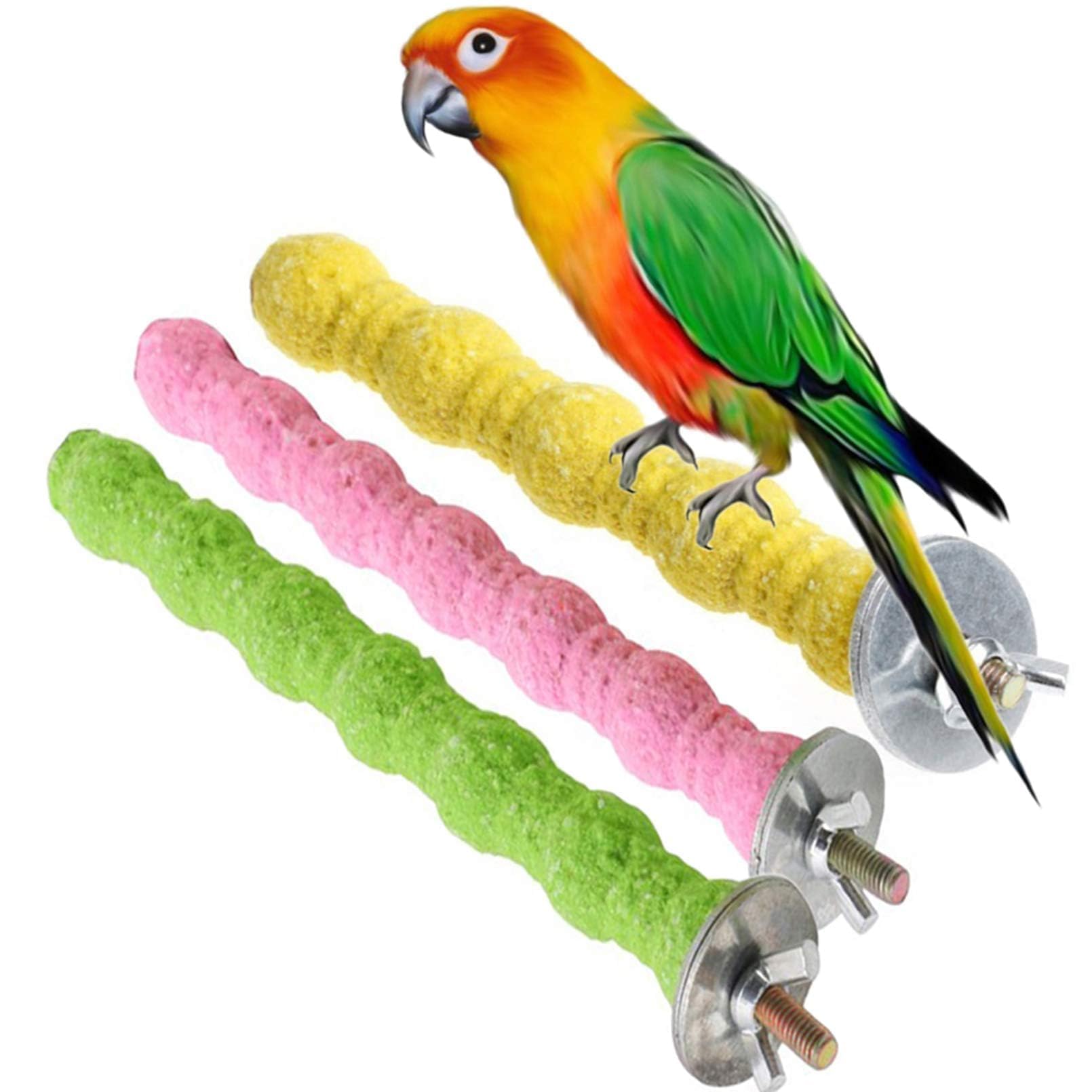
The kathson set offers three sand-coated wooden perches at an entry-level price point, each 7.87 inches long with a 0.78-inch diameter suited for budgies, parakeets, and cockatiels. The quartz sand surface is bonded with food-grade coloring, which provides a noticeably rough texture that effectively trims nails and beaks during normal perching. For owners who struggle with overgrown nails, placing one of these at the highest point in the cage (where the bird naturally spends the most time) can reduce the need for manual nail trims.
The main concern with any sand-coated perch is the risk of foot abrasion if left as the primary perch. The rough surface wears down the soft tissue on the bottom of the feet over time, potentially causing pododermatitis. The kathson perches are best used as supplementary options — one per cage placed at a feeding station or near a favorite toy — rather than as the bird’s main sleeping or resting perch. The metal screw tops are easy to install and hold securely in most standard wire cages.
Color selection is random, which frustrated some buyers who wanted specific cage aesthetics. The perches themselves are functional and well-constructed for the price bracket, with several owners noting that their cockatiels “really wear them out” over months of use. If you need a cost-effective nail-maintenance solution and already have comfortable natural wood perches as the primary setup, the kathson set fills that role without overspending.
Why it’s great
- Rough quartz surface effectively files nails and beaks during use
- Three perches included for less than the cost of one premium option
- Food-grade coloring is safe for birds that chew the coating
Good to know
- Sand coating can cause foot sores if used as the only perch type
- Random color selection may not match cage decor preferences
FAQ
How many different perch diameters should I put in my bird’s cage?
Can a sand perch safely replace regular nail trims?
How often should I replace cotton rope perches?
What is the best way to clean natural wood perches?
Can I install a rope boing outside the cage?
Final Thoughts: The Verdict
For most owners, the best bird perches choice is the Rypet U-Shaped Natural Wood Perch because its stable design, rough natural texture, and proper 1-inch diameter create the ideal foot-health foundation for the widest range of small parrots. If you need a heavy-duty play option for a larger parrot, grab the OSWINMART 94.4-inch Rope Perch for its custom-shape versatility and decade-long durability. And for budget-conscious owners outfitting a multi-bird cage, nothing beats the value of the Allazone 5-piece Grapevine Set, which provides the diameter variety that foot health demands.