
Our readers keep the lights on and the weekend projects moving. As an Amazon Associate, I earn from qualifying purchases.
Blue Jays are demanding guests. They want a high-protein, high-energy meal that matches their bold size and assertive feeding style — and they will abandon a feeder that offers only millet and filler seeds. The right bird seed for blue jays must center around the ingredients these corvids instinctively target: large nuts, sunflower hearts, and real peanuts without the shell debris that creates a mess under the feeder.
I’m Rikta — the co-founder and writer behind FitlyFast. I’ve researched backyard bird nutrition extensively, analyzing ingredient lists, waste profiles, and feeder compatibility to separate blends that genuinely appeal to jays from those that merely claim to.
After comparing dozens of formulations, I’ve identified the blends and straight peanut options that blue jays actually clean out daily. These seven products represent the strongest, most bird seed for blue jays options available for anyone who wants consistent visits from these striking, intelligent birds.
How To Choose The Best Bird Seed For Blue Jays
Blue jays are not sparrows. They will push aside white millet, red milo, and cracked corn to get to the high-value morsels. A seed blend designed for jays must prioritize whole or shelled peanuts, black oil sunflower seeds, and sunflower hearts — ingredients that deliver the fat and protein these birds need, especially during colder months.
Prioritize Peanut Content Above All Else
Peanuts are the single strongest attractant for blue jays. Whole peanuts in the shell provide a challenge that engages their intelligence, while shelled peanuts offer a quick, high-energy meal. Any blend or straight peanut product that lists peanuts as a primary ingredient will hold a jay’s attention far longer than a generic songbird mix.
Watch the Waste Factor
Blends filled with red milo, wheat, and white millet generate hulls that accumulate under the feeder and attract rodents. Blue jays will actually throw these inedible seeds aside to reach the nuts and sunflower. A no-mess or low-waste blend eliminates this problem entirely, giving you cleaner feeding with better bird satisfaction.
Consider Bag Size Against Consumption Rate
Blue jays eat aggressively, especially in winter. A 2-pound bag of shelled peanuts may last only a few days if you have a flock of jays visiting daily. Bulk options — 40- or 45-pound bags — offer better long-term value and ensure you never run out mid-week when the birds are most dependent on your feeder.
Quick Comparison
On smaller screens, swipe sideways to see the full table.
| Model | Category | Best For | Key Spec | Amazon |
|---|---|---|---|---|
| Wakefield Virginia Peanuts 45LB | Bulk Shelled Peanuts | Heavy jay traffic | 45 lbs raw unsalted | Amazon |
| Fresh Shelled Peanuts (prdseed) 40lbs | Bulk Shelled Peanuts | Minimal mess feeding | 40 lbs additive-free | Amazon |
| Armstrong All Season Blend 40lbs | Multi-Ingredient Blend | Year-round variety | 40 lbs with cut corn | Amazon |
| Audubon Park Waste Free 12lb | No Mess Blend | Patio / deck feeding | 12 lbs shell-free | Amazon |
| Cool Birds Classic Blend 10lb | All-Round Blend | Songbird diversity | 10 lbs with peanuts | Amazon |
| Kaytee No Mess Berry 10lb | No Mess Suet Blend | Small space / balcony | 10 lbs blueberry flavor | Amazon |
| Desert Valley Shelled Peanuts 2lb | Single Ingredient Peanuts | Trial / smaller feeders | 2 lbs raw shelled | Amazon |
In‑Depth Reviews
1. Wakefield Virginia Peanuts 45LB Bulk Bag
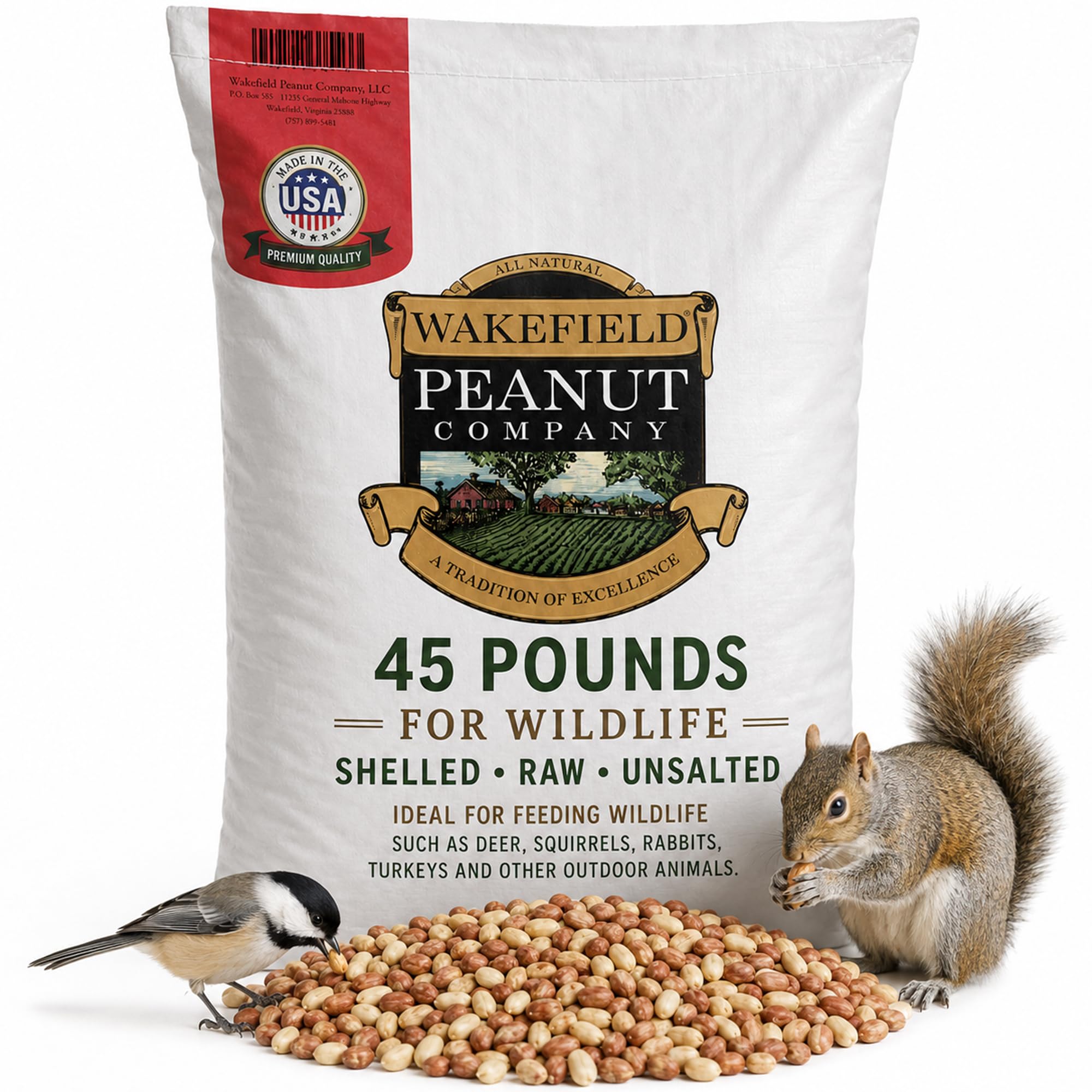
This is the volume play for anyone serious about hosting a regular blue jay flock. A full 45 pounds of Virginia-grown shelled peanuts means you are not reordering every week — jays, scrub jays, cardinals, and woodpeckers all flock to it. The raw, unsalted format is safe for wildlife and lacks the shell fragments that create mess under the feeder.
Customer reviews note that the peanuts arrive clean with minimal crop debris or broken pieces, which is a key advantage over cheaper bulk alternatives that often contain sticks, shells, and dust. The resealable bag design helps maintain freshness between refills, though you will likely go through it fast if you have a busy feeder station.
One experienced reviewer roasted them lightly (300-350°F for 20 minutes) to address raw peanut concerns for wildlife, but most users simply pour straight into a mesh or platform feeder and watch the jays empty it daily. The only real drawback is the upfront commitment — this bag demands storage space and a high consumption rate.
Why it’s great
- Exceptional per-pound value for heavy bird traffic
- Low shell debris and dust compared to other bulk brands
- Attracts jays, cardinals, woodpeckers, and squirrels reliably
Good to know
- Requires significant storage space
- May need roasting to reduce raw peanut risks for wildlife
2. Fresh Shelled Peanuts for Birds & Squirrels (prdseed) 40lbs
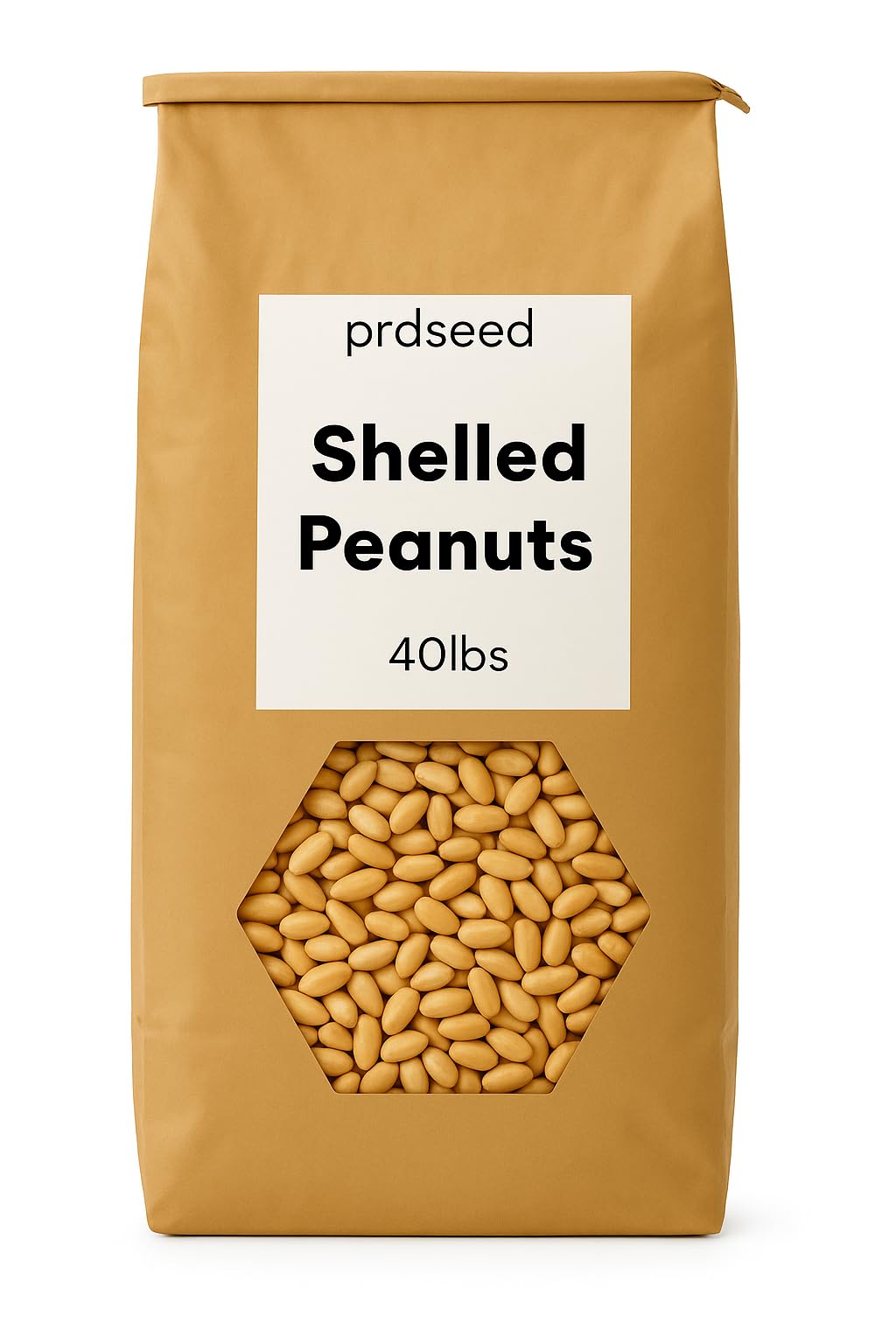
This bulk shelled peanut option from prdseed specifically markets itself as a no-mess bird seed, and it delivers on that promise. Without hulls, there is nothing for jays to throw aside — every single piece is edible. That eliminates the litter of broken shells and husks that typically accumulates under a feeder, making it ideal for patios, decks, or tidy backyard setups.
Long-term buyers report ordering this product repeatedly over years, citing consistently fresh product and reliable delivery. The peanuts arrive in a lined paper bag designed for easy opening, though some users note that the bag’s construction can tear during handling. A few customers also mention that the peanuts occasionally contain small sticks or debris, which is common for raw agricultural products.
Blue jays will clean out a feeder of these within a day or two if you have a regular flock. The high protein and fat content provide essential energy during winter months, and the absence of sharp shell fragments makes this a safer option for smaller birds like chickadees and nuthatches that may also visit the feeder.
Why it’s great
- Completely edible — zero waste under the feeder
- Consistent freshness even in bulk packaging
- Attracts jays, cardinals, and woodpeckers equally well
Good to know
- Some batches may contain small sticks or crop debris
- Bag can tear if not handled carefully
3. Armstrong Wild Bird Food All Season Bird Seed Blend 40 Pounds
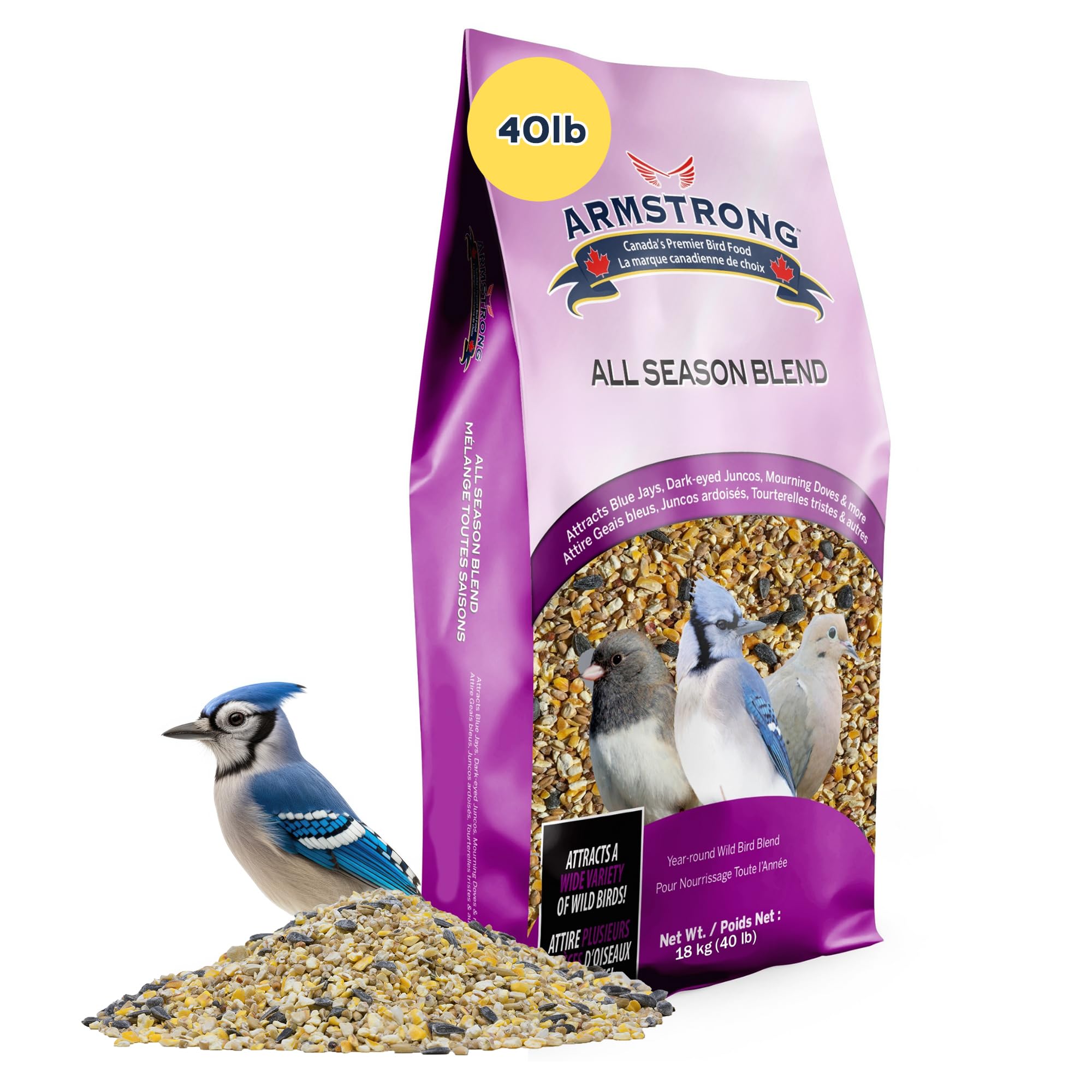
This 40-pound all-season blend is formulated specifically to attract blue jays, dark-eyed juncos, mourning doves, and cardinals — and it names those species directly on the label. The mix includes cut corn, wheat, red milo, white millet, black oil sunflower seeds, and red millet. That variety appeals to ground feeders like doves while still delivering the black oil sunflower seeds that jays zero in on.
Packaging is a standout feature here: the barrier bag is CO2-flushed and sealed airtight to preserve freshness even through humid months. That matters for a 40-pound bag that might take weeks to finish. The blend works best in large-port tube feeders, hopper feeders, or platform feeders, making it versatile for different yard setups.
One critical customer review warned that a particular batch contained a high proportion of filler that hardened in a tube feeder during dry weather. That appears to be an outlier, as the majority of reviews praise the freshness and the variety of birds the blend attracts. Still, buyers with tube feeders should monitor how the mix flows through their specific feeder design.
Why it’s great
- Large 40-pound bag with CO2-flushed packaging for freshness
- Specifically formulated for blue jays, juncos, and cardinals
- Works across tube, hopper, and platform feeders
Good to know
- Filler content may vary between batches
- Not a no-mess blend — hulls will accumulate under feeder
4. Audubon Park Waste Free Wild Bird Seed 12 lb
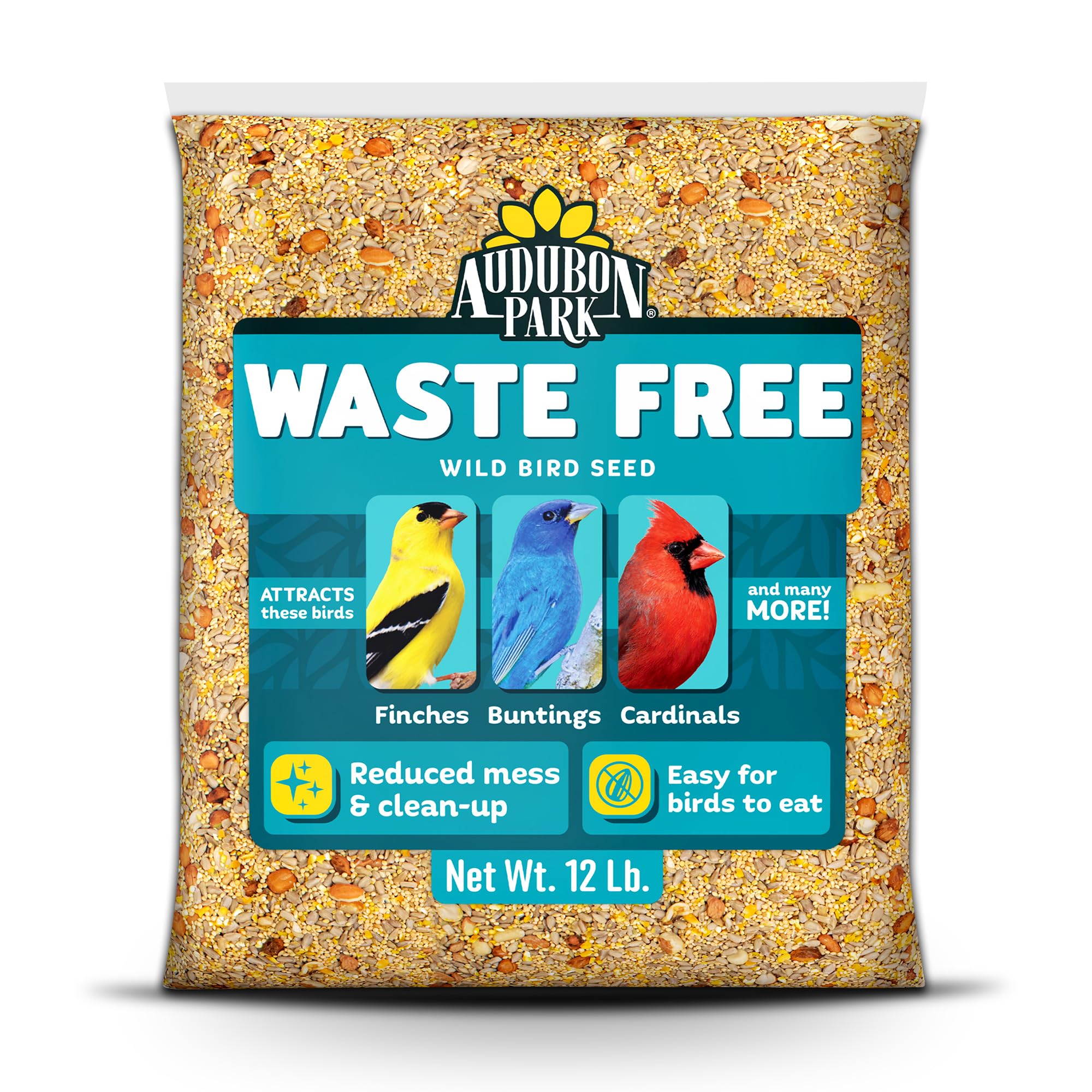
If you feed birds on a deck, patio, or near a clean outdoor space, this Audubon Park waste-free blend solves the mess problem elegantly. It contains sunflower hearts and peanut pieces — both of which are 100% edible with no hulls to discard. Blue jays will happily eat every piece, and the ground beneath your feeder stays free of the shell litter that typically accumulates with traditional blends.
The 12-pound bag is a manageable size for weekly refills without requiring huge storage space. Customers consistently note that finches, cardinals, chickadees, and wrens all visit alongside the jays, making it a broad-appeal blend that still prioritizes high-value ingredients. The shell-free format also eliminates sprouting from discarded seeds, keeping your yard weed-free.
One reviewer observed that birds burned through the smaller seeds quickly to get to the larger pieces, which suggests the ratio of peanut pieces to sunflower hearts could be improved. However, for the price point and the mess-free promise, this blend delivers reliable jay visits while keeping your feeder area presentable.
Why it’s great
- True no-mess formula — no hulls or inedible fillers
- Attracts jays, cardinals, finches, and wrens consistently
- Compact 12-pound bag fits small storage spaces
Good to know
- Birds may pick around smaller seeds for the larger pieces
- Higher per-pound cost than bulk shelled peanut options
5. Cool Birds All Birds Wild Bird Seed 10 lb Classic Blend
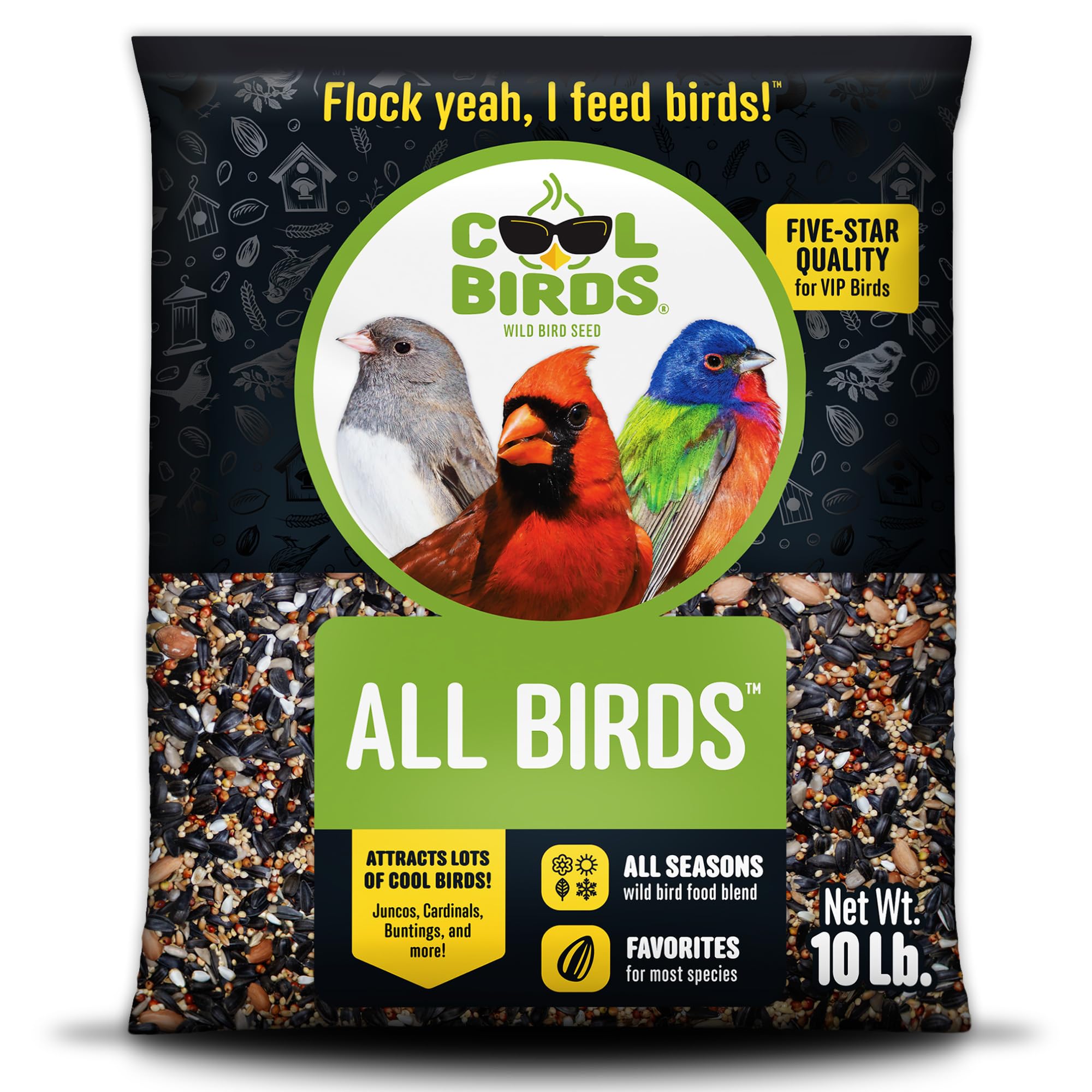
The Cool Birds Classic Blend is a well-balanced mix for anyone who wants blue jays plus a wide variety of other songbirds. It combines black oil sunflower seeds, white millet, safflower, peanuts, and sunflower hearts. The peanut and sunflower heart content is what keeps jays interested, while the millet and safflower attract ground-feeders like doves and sparrows.
Reviewers consistently praise the low filler content — the blend does not rely on red milo or wheat to pad the bag weight. The 10-pound size is a good entry point for someone testing whether their local jay population will engage with a mix before committing to a bulk peanut purchase. Customers report seeing cardinals, bluebirds, chickadees, and woodpeckers alongside the jays.
One minor complaint is that the bag is not resealable, so you will need a separate storage container to keep the seed fresh between refills. The blend also generates some hull waste, which is inevitable with sunflower seeds, but the proportion of edible material is high enough that ground-feeding birds will clean up most of what falls.
Why it’s great
- Low filler content with real peanuts and sunflower hearts
- Attracts blue jays plus a wide variety of other songbirds
- Affordable entry point for testing jay interest
Good to know
- Bag is not resealable — needs separate storage
- Sunflower hulls will accumulate under the feeder
6. Kaytee Seed & Suet No Mess Blend Blueberry Flavor 10 Pounds

Kaytee’s unique Seed & Suet No Mess Blend combines traditional seed with blueberry-flavored suet nuggets, creating a high-energy option that jays find irresistible. The blueberry flavoring is a novel addition that does not seem to deter any birds — reviewers report that jays, cardinals, yellow finches, and woodpeckers all clean out this blend regularly. The “no mess” claim holds up because every piece is edible, leaving no shells or husks behind.
The 10-pound bag is practical for apartment balconies and small yards where mess is a concern. Customers on upper-floor apartments specifically mention using this blend for balcony feeders without complaints about falling debris below. The suet nuggets add a fat boost that is especially valuable during cold months when jays need extra calories for thermoregulation.
A few reviewers note that the blend attracts squirrels as readily as birds, which may be a consideration if you are trying to manage squirrel traffic. The blueberry flavor is not a natural attractant — it is a marketing differentiator — but the suet content is what makes this blend stand out for jays compared to standard seed-only mixes.
Why it’s great
- Suet nuggets provide high fat content for winter energy
- No mess formula — zero waste under the feeder
- Ideal for small spaces and balcony feeders
Good to know
- Blueberry flavor is artificial — birds are attracted to suet, not flavor
- Squirrels are equally attracted to the suet nuggets
7. Desert Valley Shelled Peanuts 2 Pounds
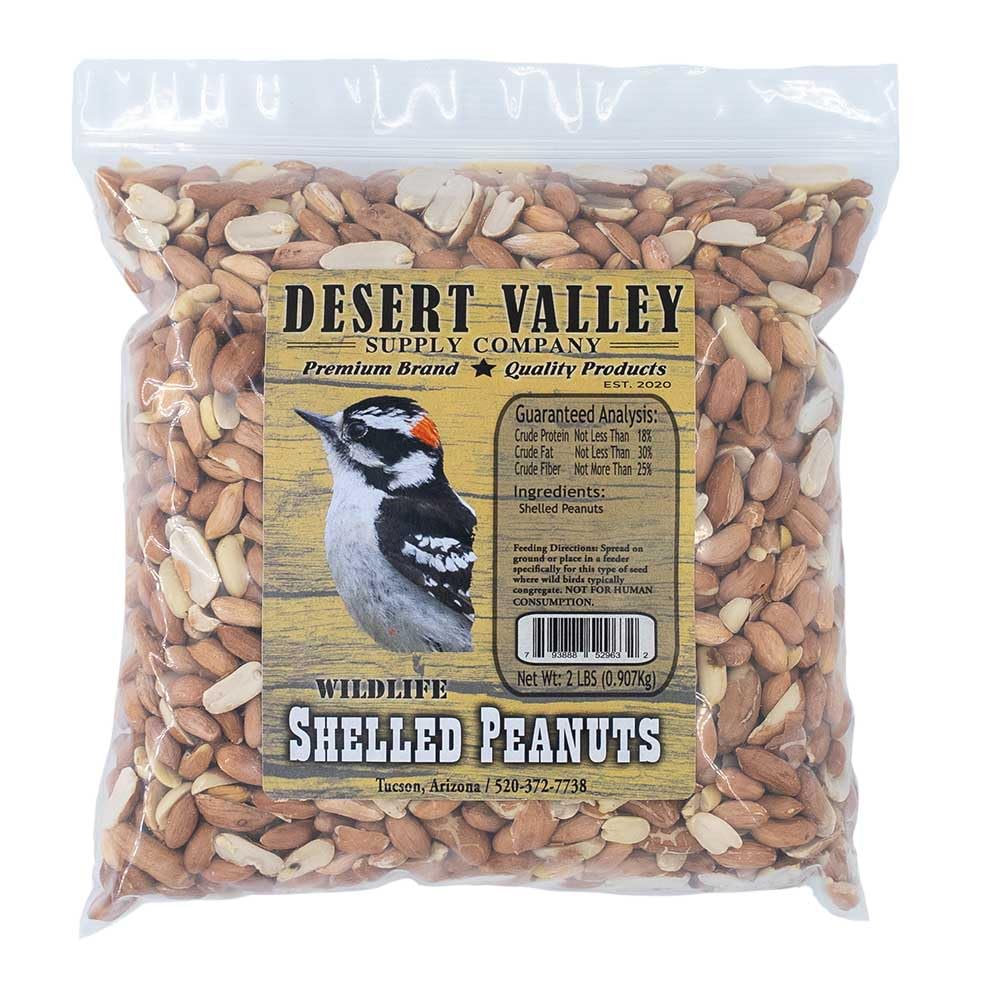
Desert Valley’s shelled peanuts are a straightforward, no-frills option for anyone who wants to test whether blue jays in their area will respond to straight peanuts without committing to a bulk bag. The 2-pound size is perfect for a small mesh feeder or as a supplement to an existing seed blend. The peanuts are raw, unsalted, and all-natural — no additives, non-GMO, and no artificial flavors or colors.
Customer feedback highlights that the peanuts come with minimal chaff, sticks, or debris, which is a common complaint with lower-end peanut products. The resealable bag helps maintain freshness between uses, which is important because shelled peanuts can turn rancid faster than whole seeds if exposed to moisture and heat.
The main limitation is the bag size. Blue jays will burn through 2 pounds quickly if they find the feeder, especially in winter. Buyers who discover their jays love these peanuts will likely need to reorder frequently or step up to the 5-pound or 10-pound options for better continuity. The skin-on peanuts also produce a small amount of red skin debris that some reviewers found messy, though the peanuts themselves leave no shells.
Why it’s great
- Clean product with minimal sticks or debris
- Resealable packaging preserves freshness
- Perfect trial size for new jay feeders
Good to know
- Small bag empties quickly with a regular jay flock
- Red peanut skins can create a minor mess
FAQ
Do blue jays prefer peanuts in the shell or shelled peanuts?
Can I feed blue jays straight peanuts without other seeds?
How often should I clean a feeder used for blue jay seed?
Will blue jays scare away smaller songbirds from the feeder?
Final Thoughts: The Verdict
For most users, the bird seed for blue jays winner is the Wakefield Virginia Peanuts 45LB Bulk Bag because it delivers the pure, high-protein peanut content that jays crave at the best bulk value, with low shell debris and consistent quality. If you want a no-mess blend that keeps your patio clean while still attracting jays, grab the Audubon Park Waste Free 12lb. And for a compact trial that tests your local jay interest without a major commitment, nothing beats the Desert Valley Shelled Peanuts 2lb.