
Our readers keep the lights on and the weekend projects moving. As an Amazon Associate, I earn from qualifying purchases.
A high-altitude climate and intense seasonal swings mean the birds at your Colorado feeder burn through calories differently than their coastal cousins. Choosing a mix that delivers concentrated energy without leaving a carpet of discarded hulls on your patio is the difference between a quiet yard and a bustling aviary.
I’m Rikta — the co-founder and writer behind FitlyFast. My research focuses on how regional ingredients, seed-to-filler ratios, and caloric density affect feeder visitation rates across different elevation zones.
After analyzing dozens of blends through the lens of Colorado’s unique feeder ecology — from Front Range finches to mountain jays — I’ve selected the seven bags that actually perform here. Stick with this guide and you will confidently buy the best bird seed for colorado.
How To Choose The Best Bird Seed For Colorado
Colorado’s feeder birds—from Black-capped Chickadees to Steller’s Jays—need dense, fat-rich calories to survive cold nights and thin air. A bag packed with cheap milo or wheat fillers will get ignored, while a mix heavy on black oil sunflower and tree nuts will keep your feeder busy through a blizzard.
Filler Grain vs. High-Energy Seed
Many budget blends load up with red milo, cracked corn, and wheat because those ingredients are cheap by the pound. Colorado birds, especially in the foothills and mountains, tend to kick these out in search of sunflower hearts, safflower, and peanuts. Look for a bag where sunflower and safflower dominate the ingredient list.
The No-Mess Advantage
Shells left behind can sprout weeds or attract rodents, particularly in denser suburban neighborhoods. Processed blends that remove hulls or bind seeds into suet nuggets eliminate the cleanup entirely. This is especially valuable for apartment dwellers using tray or hopper feeders on balconies.
Bag Size and Freshness
Larger bags offer a better per-pound value, but seed can go rancid if stored through a humid summer. Barrier bags with CO2 flushing (like Armstrong’s 40-pound option) lock in freshness for months. If you buy a 40-pounder, keep it in a cool, dry garage or metal trash can.
Quick Comparison
On smaller screens, swipe sideways to see the full table.
| Model | Category | Best For | Key Spec | Amazon |
|---|---|---|---|---|
| Kaytee No Mess Blend | No-Mess | Balcony & patio feeding | 10 lbs, edible suet nuggets | Amazon |
| Cool Birds Classic Blend | All-Season | Attracting cardinals & blue jays | 10 lbs, protein-packed | Amazon |
| Armstrong All Season | Bulk Value | Large, hungry flocks | 40 lbs, barrier bag | Amazon |
| Kaytee Western Regional | Regional | Desert & Front Range birds | 7 lbs, field-tested blend | Amazon |
| Meadow Ridge Farms Mix | Premium Blends | Mountain species variety | 10 lbs, locally blended | Amazon |
| Wagner’s Deluxe | Entry-Level | Mixed-ground feeding | 10 lbs, resealable bag | Amazon |
| Nature Anywhere Banquet | Boutique | Picky songbirds | 5 lbs, no fillers | Amazon |
In‑Depth Reviews
1. Kaytee Seed & Suet No Mess Blend Blueberry Flavor 10 lb

This is the bag to grab if you feed on a Colorado balcony, deck, or any spot where you cannot let shells pile up. The seeds and suet nuggets are fully edible, meaning every piece that falls stays in the food chain rather than littering your patio. Reviewers confirm that even ground-feeding juncos and towhees clean up the scraps.
The blueberry flavor is a clever twist—suet-bound fruit concentrate adds calories without the mess of dried berries. Customers report attracting cardinals, blue jays, yellow finch, and woodpeckers within days. The 10-pound size is manageable for one or two feeders and stays fresh if you reseal the bag between refills.
Colorado’s dry climate works in this bag’s favor: the suet nuggets do not melt or turn sticky, even during a summer afternoon. If you have ever battled weeds sprouting from discarded hulls, this mix solves the problem completely.
Why it’s great
- Zero hull waste on the ground
- Attracts woodpeckers and finches reliably
- Blueberry suet adds high-calorie energy
Good to know
- Birds may go through it quickly because every piece is eaten
- Not ideal if you specifically want to avoid fruit-flavored feed
2. Kaytee Western Regional Wild Bird Seed, 7 lb

Kaytee’s Western blend is built specifically for birds west of the Mississippi, and it shows in the millet-to-sunflower ratio. Field tests at leading universities confirm this mix attracts more birds than straight black oil sunflower alone. Colorado users specifically report success with desert-adapted species like thrashers, towhees, and juncos that prefer the millet ground layer.
The 7-pound bag is on the smaller side, but that is by design—it encourages you to refill often with fresh seed instead of letting a large bag go stale. One customer noted that the blend worked “a bit too well,” with birds consuming 5 pounds daily during peak migration. That level of activity speaks to the palatability.
The main trade-off is the sunflower seed count: some reviewers felt the kernels were too large for very small birds like finches. If your feeder crowd is mostly chickadees and goldfinches, you might see better engagement with a finer-textured no-mess option.
Why it’s great
- Proven by university field tests for regional appeal
- High palatability for ground-feeding species
- Fresh, high-quality ingredients with no filler odor
Good to know
- Small bag size requires more frequent reordering
- Large sunflower kernels may be challenging for tiny beaked birds
3. Cool Birds All Birds Wild Bird Seed, 10 lb
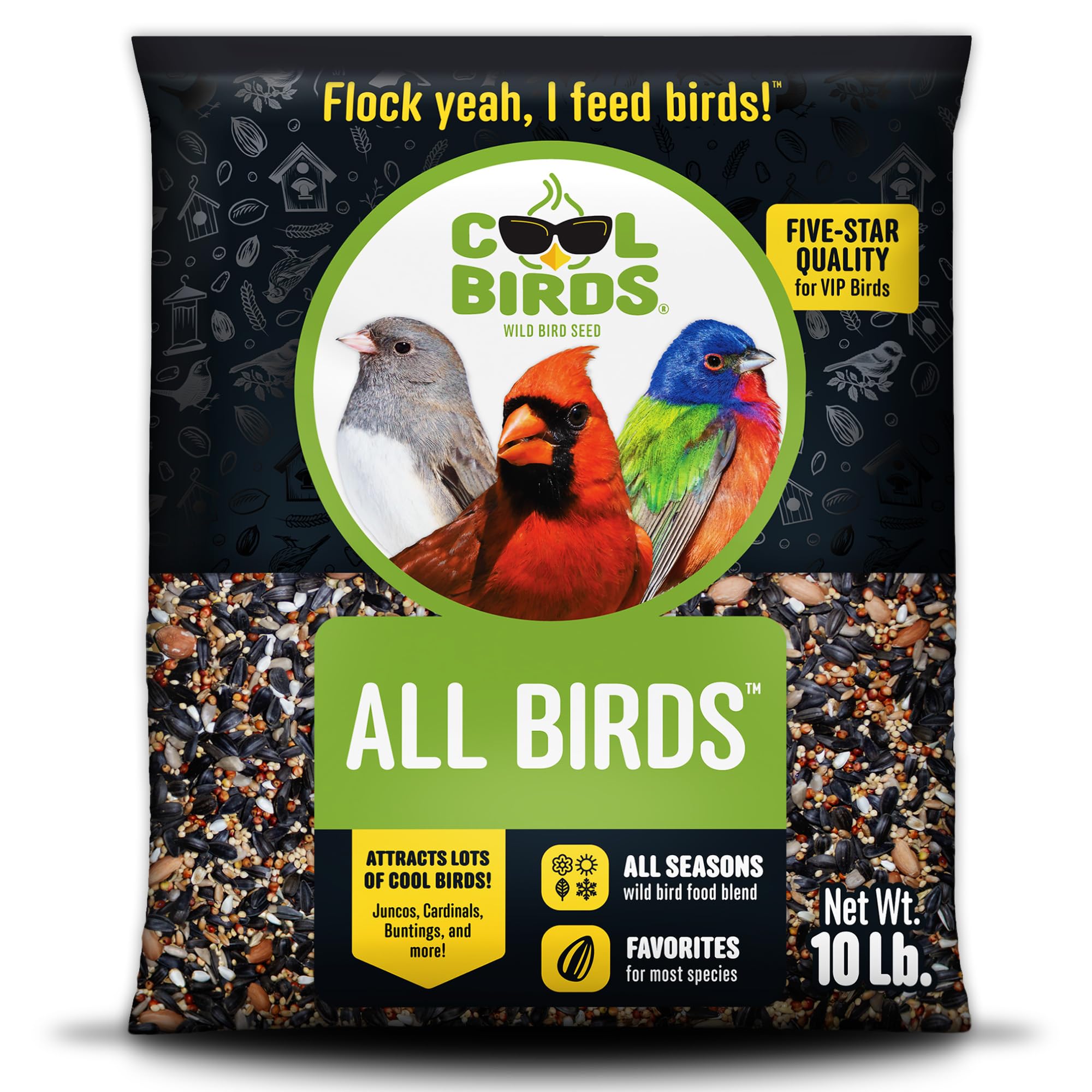
Cool Birds crafts this blend around five core ingredients—black oil sunflower, white millet, safflower, peanuts, and sunflower hearts—which cover nearly every dietary preference among Colorado songbirds. Reviewers consistently mention cardinals, sparrows, and Eastern bluebirds arriving within hours of a fresh fill. The protein and fat content are high enough to sustain birds through a cold snap without relying on cheap starch fillers.
The bag is advertised as “feeder-friendly” for tray, tube, hopper, and platform models. In practice, the seed mix flows well through ports without jamming, and the absence of large sticks or husk debris keeps the feeder clean. Customers note that even their smart camera feeders—which can be finicky with uneven seed sizes—handle this blend without trouble.
One potential downside is the lack of region-specific tweaks. Unlike Kaytee’s Western blend, this is a generalist mix. While it works well across the state, you may see slightly more millet waste than a truly Colorado-targeted formula would produce.
Why it’s great
- Protein-rich formula for high-altitude calorie needs
- Compatible with all common feeder types
- Low filler content minimizes waste
Good to know
- Generalist recipe, not optimized for Colorado species exclusively
- Slightly higher chance of ground waste compared to no-mess blends
4. Armstrong Wild Bird Food All Season 40 lb
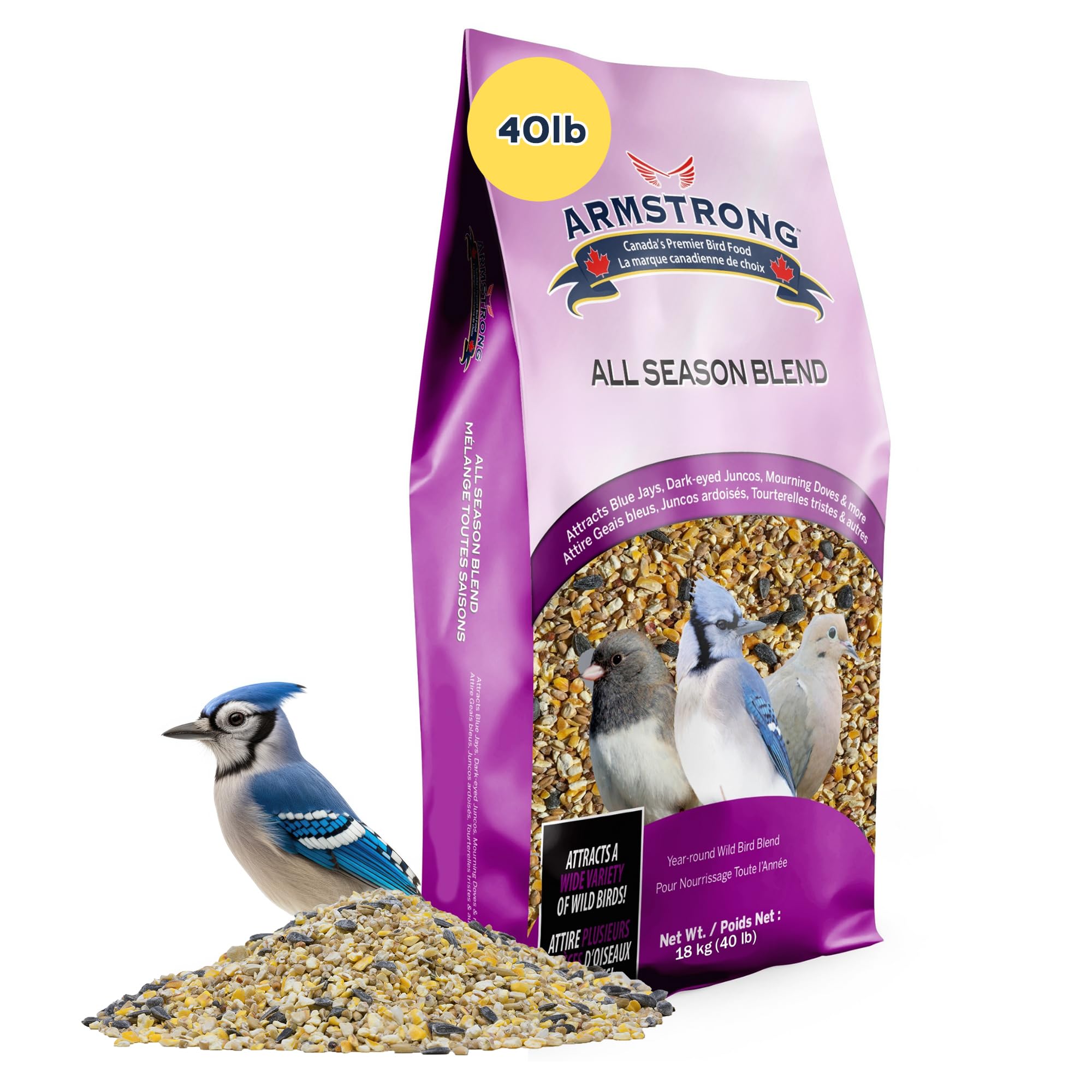
If you maintain multiple feeders or host a large Colorado flock, the 40-pound Armstrong bag offers the lowest cost-per-pound in this lineup. The blend includes black oil sunflower, white and red millet, cut corn, and wheat—a classic general-purpose formula that attracts blue jays, mourning doves, dark-eyed juncos, and Steller’s jays. The barrier bag with CO2 flushing is a legit feature: it keeps the seed fresh for months, even in a warm garage.
The primary concern here is consistency. While the majority of reviews praise the value, one critical report claims the bag contained a high percentage of sawdust-like filler that hardened when wet. This appears to be an outlier, but it is worth noting that bulk bags from any brand can occasionally vary. Inspect the first pour and return any obviously compromised product.
For year-round Colorado feeding, this bag is hard to beat on economics. The cracked corn and wheat content will attract ground-feeders like doves, while the sunflower keeps perching birds engaged. If you can store it dry, the per-refill cost drops dramatically compared to smaller premium bags.
Why it’s great
- Best value for large-volume feeding
- Barrier bag with CO2 flush preserves freshness
- Attracts Steller’s jays, juncos, and doves
Good to know
- Occasional quality variability in bulk bags
- Fillers like cracked corn can sprout if spilled on soil
5. Meadow Ridge Farms Wild Bird Seed Mix, 10 lb
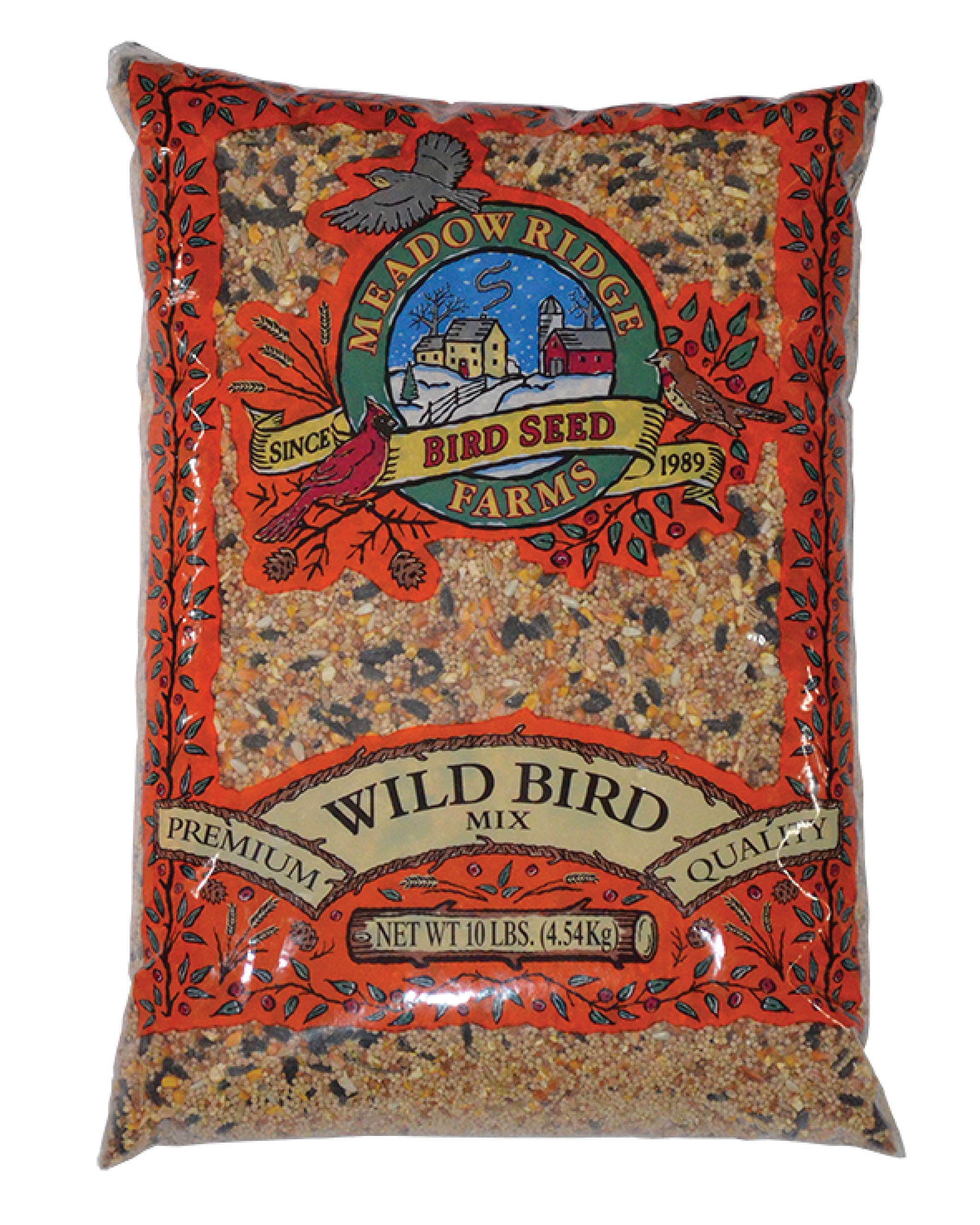
Meadow Ridge Farms blends and bags its seed daily in Delano, Minnesota, and the freshness difference is noticeable. The mixture covers an impressively long species list—over 20 birds from house sparrows to evening grosbeaks—by combining sunflower, cracked corn, safflower, wheat, oats, and millet. Colorado customers report strong visits from pine siskins, red-breasted nuthatches, and even the occasional gray jay (whiskey jack).
The main drawback is the inclusion of wheat and oats, which are less energy-dense than sunflower or peanuts. Birds may consume these less enthusiastically, leading to some ground waste. That said, the overall seed quality is high, and the bag does not produce the barn moths that plague some other national brands.
If you live in the mountain corridor—say, Evergreen to Durango—this blend’s diversity of grains closely mimics the natural seed bank birds encounter in high-elevation forests. It is a solid choice for those who want to see the widest variety of native species without chasing specialty formulas.
Why it’s great
- Fresh daily blending ensures peak quality
- Attracts over 20 species including pine grosbeaks
- No barn moth infestations reported
Good to know
- Wheat and oats may be less popular with some birds
- 10-pound bag is premium-priced per pound
6. Wagner’s 13008 Deluxe Wild Bird Food, 10 lb

Wagner’s Deluxe is the entry-level benchmark for Colorado feeding. It is a clean, sunflower-forward blend with a resealable Velcro top—a small feature that makes a real difference in keeping seed fresh between refills. Birds like chickadees, finches, sparrows, and mourning doves visit regularly; cardinals and blue jays are less consistent, likely because the sunflower kernel size varies.
The bag uses “highest quality grains” per the manufacturer, and in practice, the seed arrives dust-free with no musty smell. One reviewer noted that the blend primarily attracted smaller brown birds and doves, with larger species staying on the ground. This dynamic actually mirrors a natural feeding hierarchy: ground-foraging juncos and towhees clean up what the perching birds scatter.
For a budget-conscious feeder, this blend offers the best balance between price and palatability. It will not produce the same species variety as premium mixes, but if your goal is to keep a basic feeder active through the shoulder seasons, Wagner’s delivers reliably without breaking the bank.
Why it’s great
- Resealable bag keeps seed fresh longer
- Clean, low-dust seed with no fillers
- Economical for daily refills
Good to know
- Less attractive to cardinals and large jays
- Not a “no-mess” formula; hulls will accumulate
7. Nature Anywhere Bird Seed Bird Banquet, 5 lb
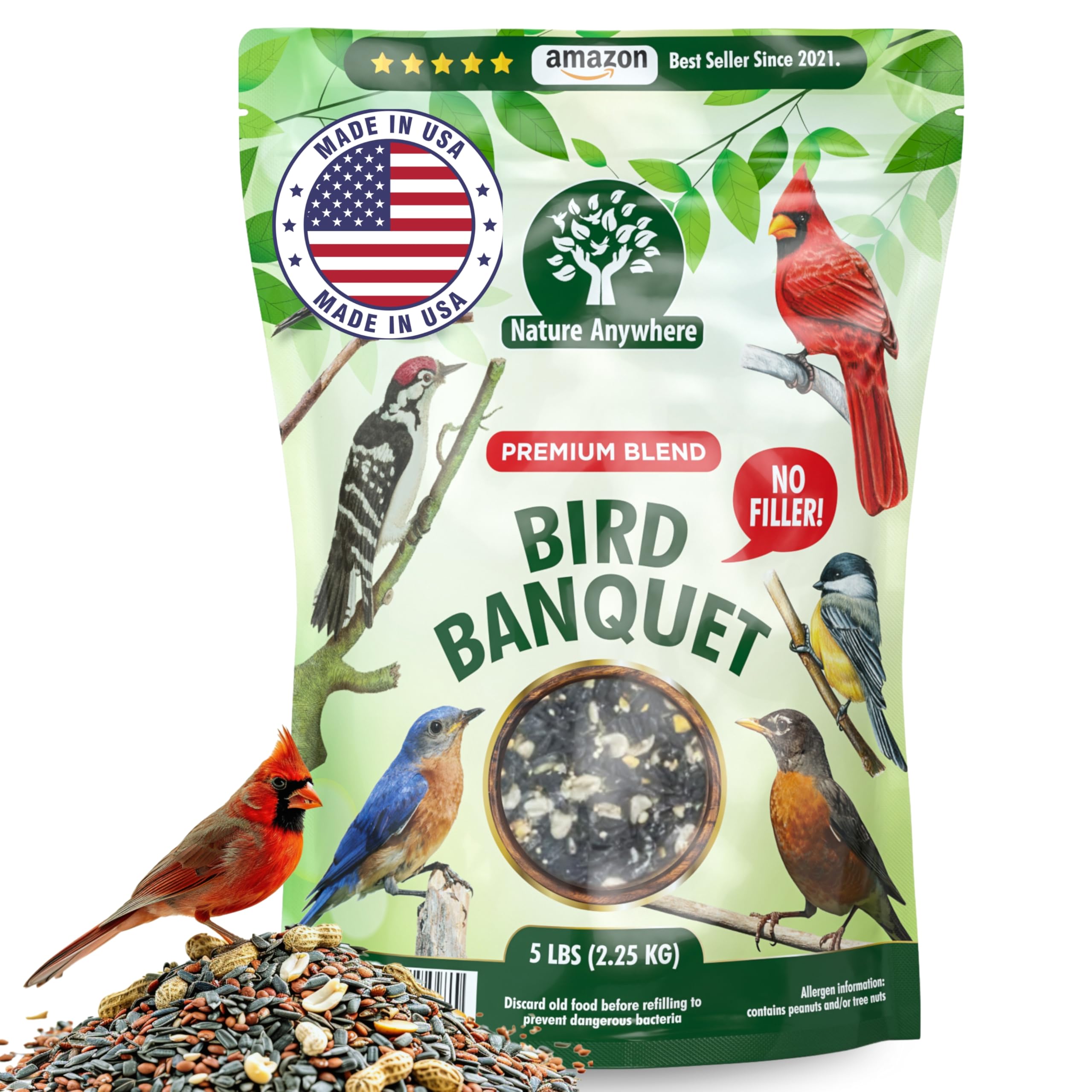
Nature Anywhere’s no-filler promise is the core of this 5-pound bag. Every seed in the blend is edible and palatable—no milo or wheat fillers that birds ignore. Customers consistently report that their feeders empty faster with this bag than with any premium competitor, and the company backs it with a satisfaction guarantee: if your feeder isn’t the busiest on the block, you get a refund.
The high-protein composition makes it ideal for Colorado’s colder months when birds need concentrated energy. Reviewers mention that cardinals and finches become regulars almost immediately, and the “no mess” claim holds up—leftovers under the feeder are minimal because birds consume nearly every kernel.
The clear trade-off is the 5-pound weight. At a higher per-pound cost, this bag is best used as a “booster” for a larger general blend or as a special treat during migration peaks. If you only have one small hopper feeder, the 5-pound size is perfect; if you feed a large flock, you will be reordering frequently.
Why it’s great
- Zero filler grains, every seed is eaten
- High protein content for cold-weather energy
- Satisfaction guarantee takes risk out of trial
Good to know
- Small bag size means higher per-pound cost
- Sold out frequently due to popularity
FAQ
What Colorado birds need the highest fat content in their diet?
Is a “no mess” blend worth it for Colorado patios?
How can I tell if a bag of bird seed is fresh?
Final Thoughts: The Verdict
For most users, the best bird seed for colorado winner is the Kaytee Seed & Suet No Mess Blend because it completely eliminates the hull-waste problem while attracting woodpeckers, finches, and cardinals to any balcony or yard. If you want a high-energy, filler-free boost for picky songbirds, grab the Nature Anywhere Bird Banquet for its no-filler formulation. And for large-volume feeding that keeps a mountain flock happy through winter, nothing beats the Armstrong 40-pound All Season bag.