
Our readers keep the lights on and the weekend projects moving. As an Amazon Associate, I earn from qualifying purchases.
Winter temperatures push backyard birds into a constant calorie deficit. They need dense fat and protein to maintain body heat through freezing nights, and standard summer mixes loaded with milo or cracked corn simply don’t cut it when the mercury drops. A high-lipid, no-waste formula prevents spoilage in wet snow and keeps your feeder busiest on the coldest mornings.
I’m Rikta — the co-founder and writer behind FitlyFast. I have spent countless hours analyzing nutritional profiles, waste ratios, and feeding trial data across dozens of winter-specific wild bird seed blends to identify the formulas that actually deliver energy when birds need it most.
Whether you need a shell-free blend for tidy patios or a spicy formula to outsmart squirrels, this guide breaks down the top contenders for your backyard. Here is the definitive list of the absolute best bird seed for winter to keep your feathered visitors thriving through the cold months.
How To Choose The Best Bird Seed For Winter
Winter feeding requires a different strategy than the rest of the year. Birds burn more calories just to stay warm, so the energy density of every kernel matters. You need blends that minimize waste (uneaten hulls and filler grains that rot under wet feeders) and maximize usable fat and protein per pound.
Fat and Protein Density
Look for blends where sunflower hearts, peanuts, or tree nuts are the first two ingredients. Black oil sunflower seeds contain roughly 50% fat, and shelled peanuts push protein content near 25%. Avoid mixes that list white millet or cracked corn early — those are low-value fillers that birds often kick aside, leaving soggy messes in winter.
No-Waste Versus Whole-Seed Formats
Shelled (kernel-only) blends eliminate hulls piling up on your lawn and reduce moisture buildup in feeders. For cold climates, no-waste formulas also prevent hulls from freezing into clumps inside tube feeders. The tradeoff is cost per pound, but the higher consumption rate and zero cleanup often make it the better winter value.
Squirrel-Resistance Features
Capsaicin-infused seeds deter mammals without affecting birds, who lack the same taste receptors. If squirrels dominate your feeder in winter when natural food is scarce, a hot blend saves you from refilling constantly. Check that the spice coating is heavy enough to discourage repeated tasting — some light sprays only slow them down.
Quick Comparison
On smaller screens, swipe sideways to see the full table.
| Model | Category | Best For | Key Spec | Amazon |
|---|---|---|---|---|
| Audubon Park Sunflower Hearts | No-Waste Kernels | Maximum fat per pound | 15 lbs shelled sunflower hearts | Amazon |
| Cool Birds Hot Seed | Spicy No-Waste | Squirrel resistance | 10 lbs shell-free & chili oil | Amazon |
| Nature Anywhere Bird Banquet | No-Filler Premium | Picky songbird variety | 5 lbs, no filler grains | Amazon |
| Freebird Songbird Blend | All-Natural Mix | Species diversity | 5 lbs, high-oil seeds | Amazon |
| Heath Suet Cakes 10-Pack | All-Season Suet | Cold-weather energy boost | 10 x 11-oz no-melt cakes | Amazon |
| Happy Wings Shelled Peanuts | Single-Source Protein | Blue jay & woodpecker attractant | 5 lbs no-grow peanuts | Amazon |
| Pennington Ultra Double Nut | Nut & Fruit Mix | Year-round balanced feeding | 10 lbs with Bird Kote vitamins | Amazon |
In‑Depth Reviews
1. Audubon Park Sunflower Hearts Wild Bird Seed

This bag delivers 15 pounds of pure sunflower kernels — no hulls, no fillers, just the high-fat heart of the sunflower. With roughly 50% fat content per kernel, it is one of the densest energy sources you can offer winter birds, directly translating into calories that help chickadees, nuthatches, and juncos survive single-digit nights.
Because the hulls have been removed, you get zero shell litter beneath your feeder. This is a major advantage in snowy months when buried hulls rot into the lawn and create soggy patches come thaw. The kernels also flow smoothly through tube feeders, avoiding the clogs that whole-seed blends cause in humid or freezing conditions.
Birds consume these completely — every kernel goes into a beak rather than being kicked aside. The 15-pound bag offers a strong per-pound value for a no-waste product, and the durable packaging prevents tears during storage. Recurring buyers report seeing blue jays, cardinals, and even the occasional woodpecker flocking daily.
Why it’s great
- Highest fat content of any seed form in this guide
- Zero hull waste — keeps snow-covered yards clean
- Strong per-pound value for a 15-pound shell-free bag
Good to know
- Attracts squirrels as readily as birds since there is no spice deterrent
- Bag is not resealable; transfer to an airtight container for freshness
2. Cool Birds No Mess Sad Squirrels Hot Bird Seed
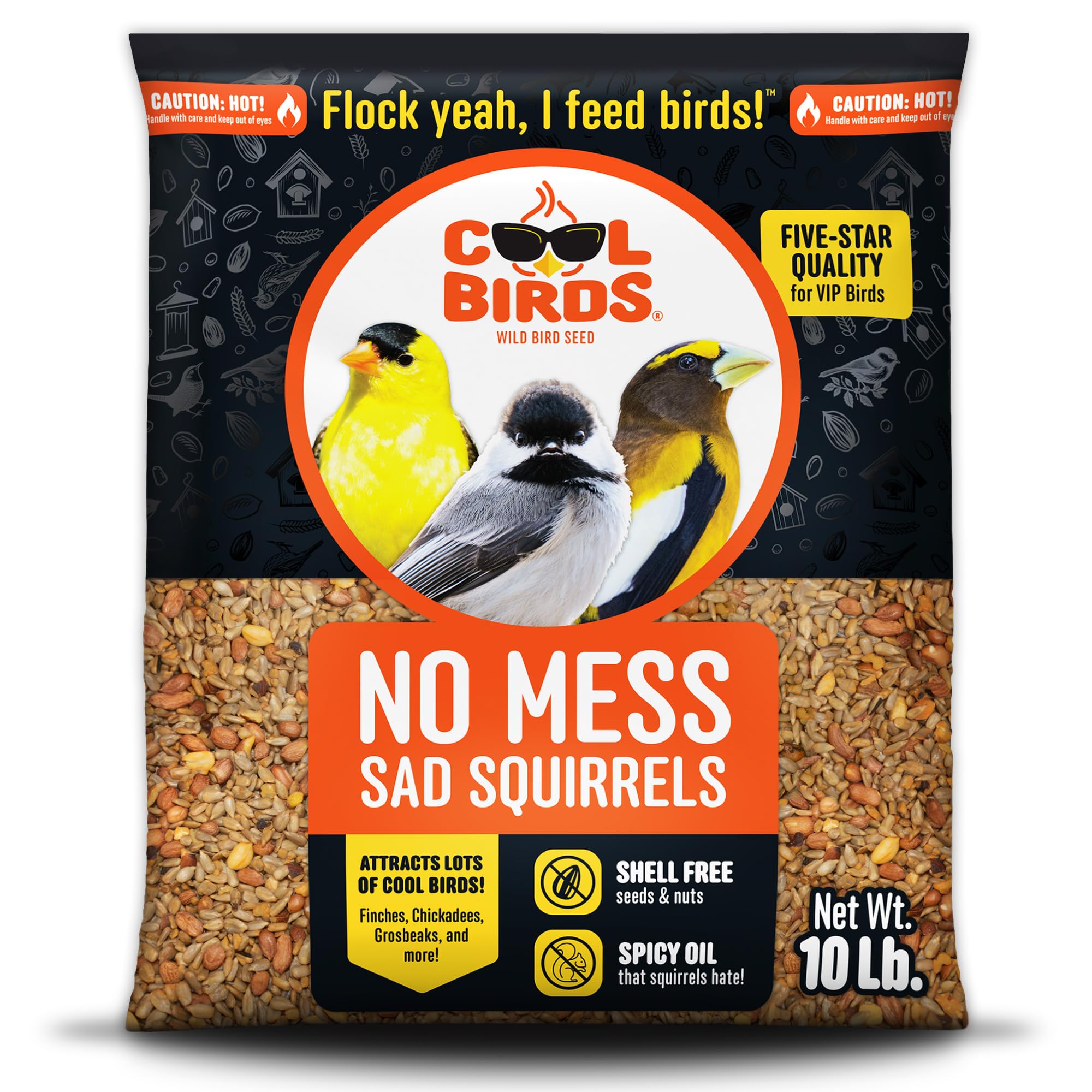
This 10-pound blend combines sunflower hearts, peanuts, and assorted tree nuts with a heavy chili pepper oil infusion designed to make squirrels recoil after a single taste. Birds lack the mammalian receptors for capsaicin, so they feed normally while rodents learn to avoid the feeder entirely after one unpleasant lick.
Every ingredient is 100% edible — no hulls, no shells, nothing that turns into yard debris. This makes it a strong choice for deck or patio feeders where mess is unacceptable. The bag includes enough red pepper coating that users recommend wearing gloves when handling the seed, which signals a genuinely potent dose rather than a token sprinkle.
Reviewers note that the 10-pound bag lasts roughly three to four weeks in a busy feeder, and the absence of shells means no moldy piles accumulating under the feeding area. A small minority report that very determined squirrels still nibble the edges, but the spice level forces most to abandon the feeder quickly.
Why it’s great
- Heavy chili oil coating genuinely deters most squirrels
- Complete no-waste formula — zero shells or filler grains
- Attracts cardinals, chickadees, finches, and nuthatches
Good to know
- Seed can mold faster if exposed to rain or wet snow repeatedly
- Spice residue on hands requires thorough washing after handling
3. Nature Anywhere Bird Banquet
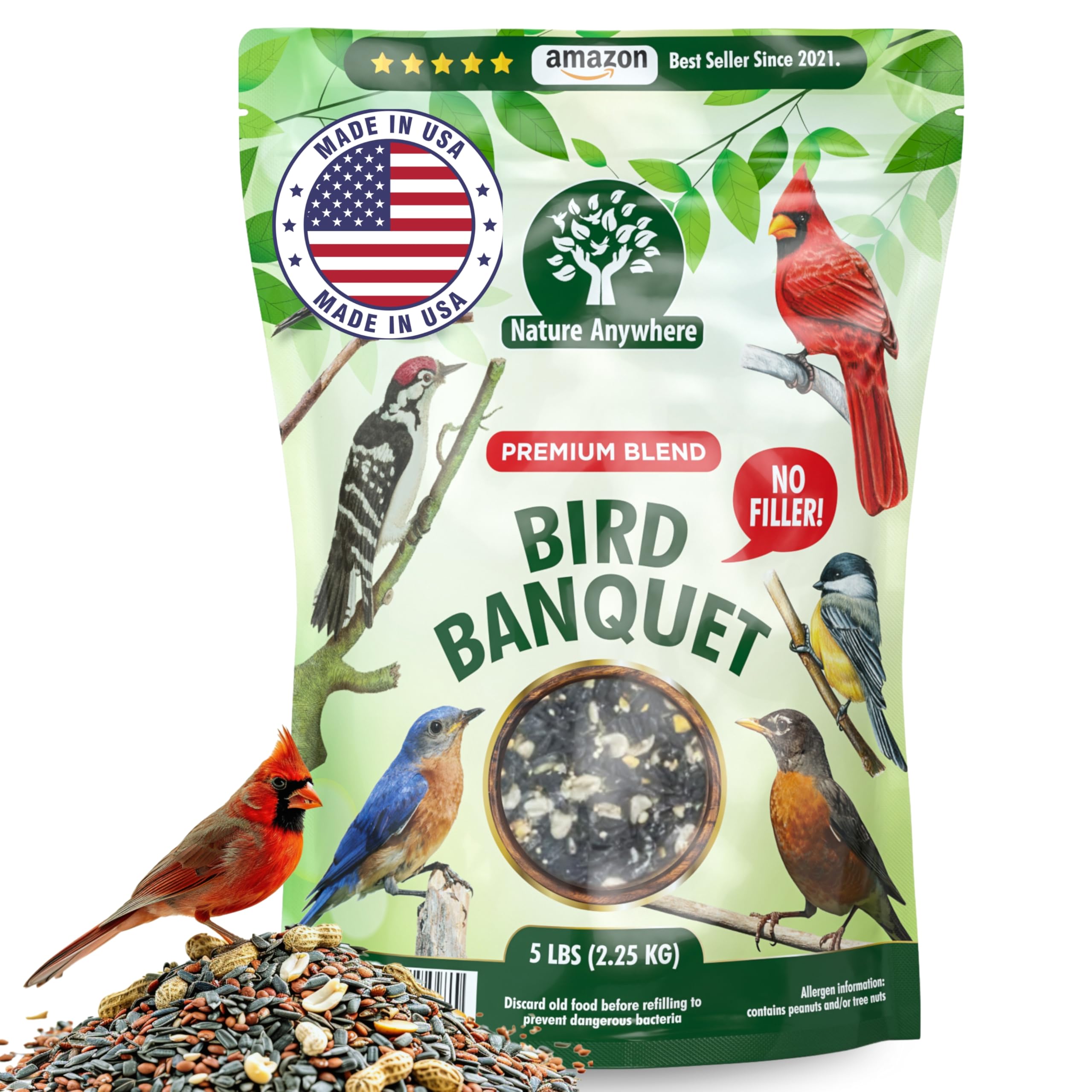
Nature Anywhere markets this 5-pound blend as a “no filler” formula, and customer tests confirm that the bag contains roughly zero cracked corn or red milo — the cheap grains many blends use to bulk weight. Instead, you get a dense mix of sunflower hearts, peanuts, and tree nuts that birds consume completely without picking through unwanted seeds.
Winter-energy density is strong here. The absence of low-value carbs means every gram contributes to thermogenesis. Buyers report a wider species variety at the feeder compared to previous blends, including cardinals, chickadees, blue jays, and finches, and the company backs the product with a money-back promise if the feeder does not become the busiest on the block.
One 5-pound bag goes further than heavier filler-laden alternatives because there is no waste. The resealable bag helps maintain freshness between refills, though some users wish the bag were larger given how quickly hungry winter flocks empty it.
Why it’s great
- No filler grains — every seed is high-value nutrition
- Money-back guarantee on attraction performance
- Domestically grown ingredients with no artificial additives
Good to know
- 5-pound bag depletes quickly with a large winter flock
- Higher per-pound cost reflects the premium ingredient list
4. Freebird Songbird Blend
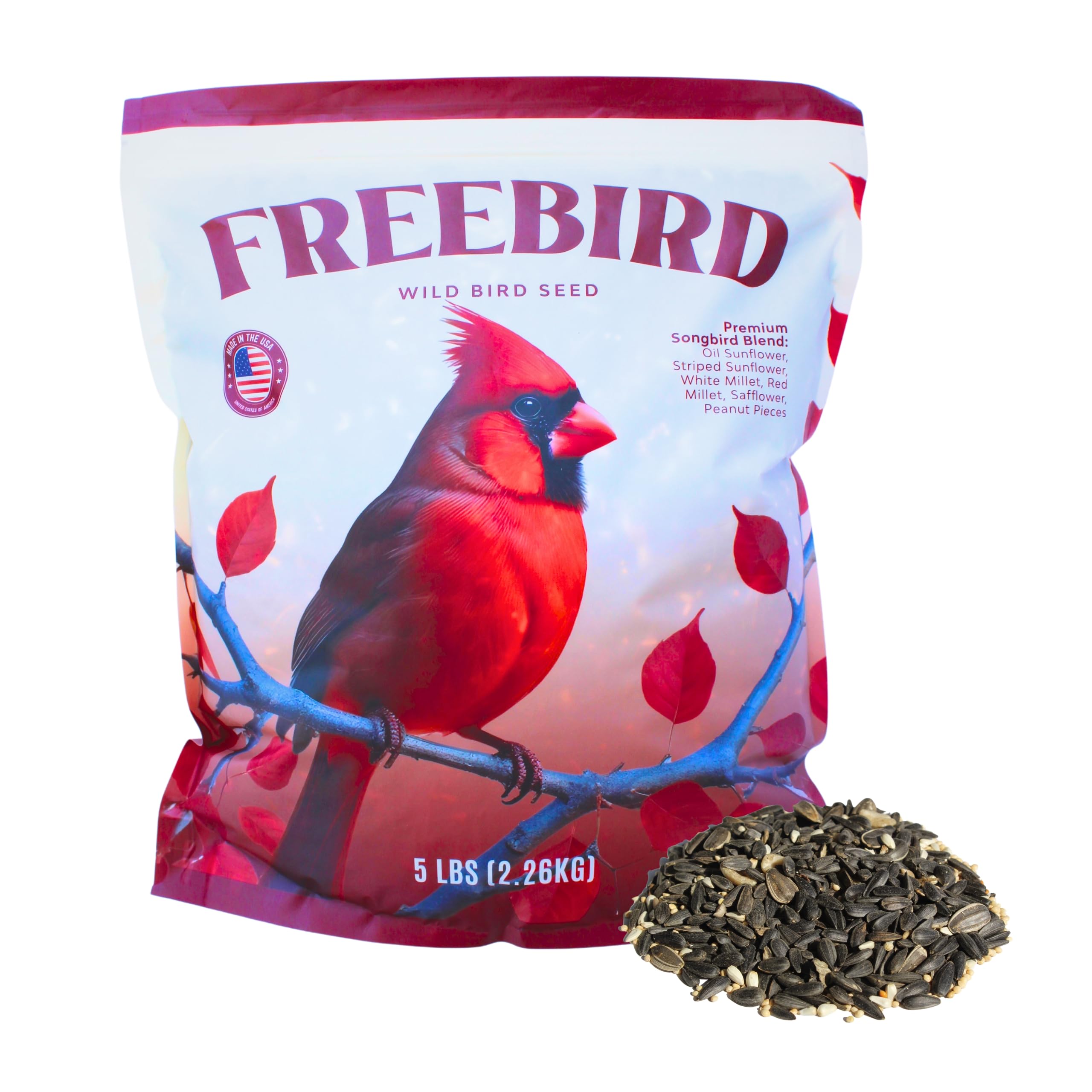
Freebird’s blend contains black oil sunflower seeds, striped sunflower seeds, safflower seeds, peanut pieces, white millet, and red millet — all sourced from US farms. The high oil content in the sunflower seeds delivers the winter fat load that chickadees, nuthatches, and tufted titmice chase, while the safflower and millet appeal to ground-feeding sparrows and juncos.
The resealable heavy-duty bag is a practical touch for winter storage — it holds freshness during snowy weeks when you might not refill daily. The blend works across tube, hopper, platform, and mesh feeders, giving you flexibility if you switch feeder types seasonally. Because the seeds are not shelled, expect some hull accumulation beneath the feeder.
Multiple reviewers report a sharp increase in cardinal visits after switching to this mix, with some noting the number of cardinals tripled compared to their previous brand. Year-round feeding suitability means you can transition into spring without changing blends.
Why it’s great
- Six-seed diversity attracts the widest species range in this guide
- High-oil sunflower seeds provide dense winter energy
- Heavy-duty resealable bag preserves freshness in wet conditions
Good to know
- Whole seeds produce hull waste that accumulates under feeders
- Some birds may kick aside red millet if they prefer sunflower
5. Heath Outdoor Products High Energy Blend Suet Cake 10-Pack

This 10-pack case of 11-ounce suet cakes provides a high-fat supplement that complements any seed blend during extreme cold. The “no melt” formulation holds its shape even in direct summer sun, but the real value for winter users is the dense fat content that woodpeckers, nuthatches, and chickadees tap into when temperatures plummet below freezing.
Each cake fits standard wire suet feeders and lasts roughly a week in heavy winter traffic. The all-season rating means you can buy a case in autumn and feed through spring without worrying about the cakes going rancid or softening in unseasonably warm spells. The product is made in Michigan, and the recipe includes rendered beef fat mixed with seeds and grains for texture.
Customer feedback consistently praises the cake’s durability through rain, snow, and heat — it crumbles less than cheaper suet products and does not drip melted fat onto decks. Woodpeckers are especially drawn to this blend, making it a strong addition if you want to attract downy, hairy, or red-bellied woodpeckers.
Why it’s great
- All-season no-melt formula works in subzero and summer temps
- High-fat density delivers quick energy for cold-weather survival
- Strong woodpecker attraction; lasts 7-10 days per cake
Good to know
- Suet alone does not provide complete nutrition — pair with seed
- Squirrels will target suet; a baffle is recommended for protection
6. Happy Wings Shelled Peanuts
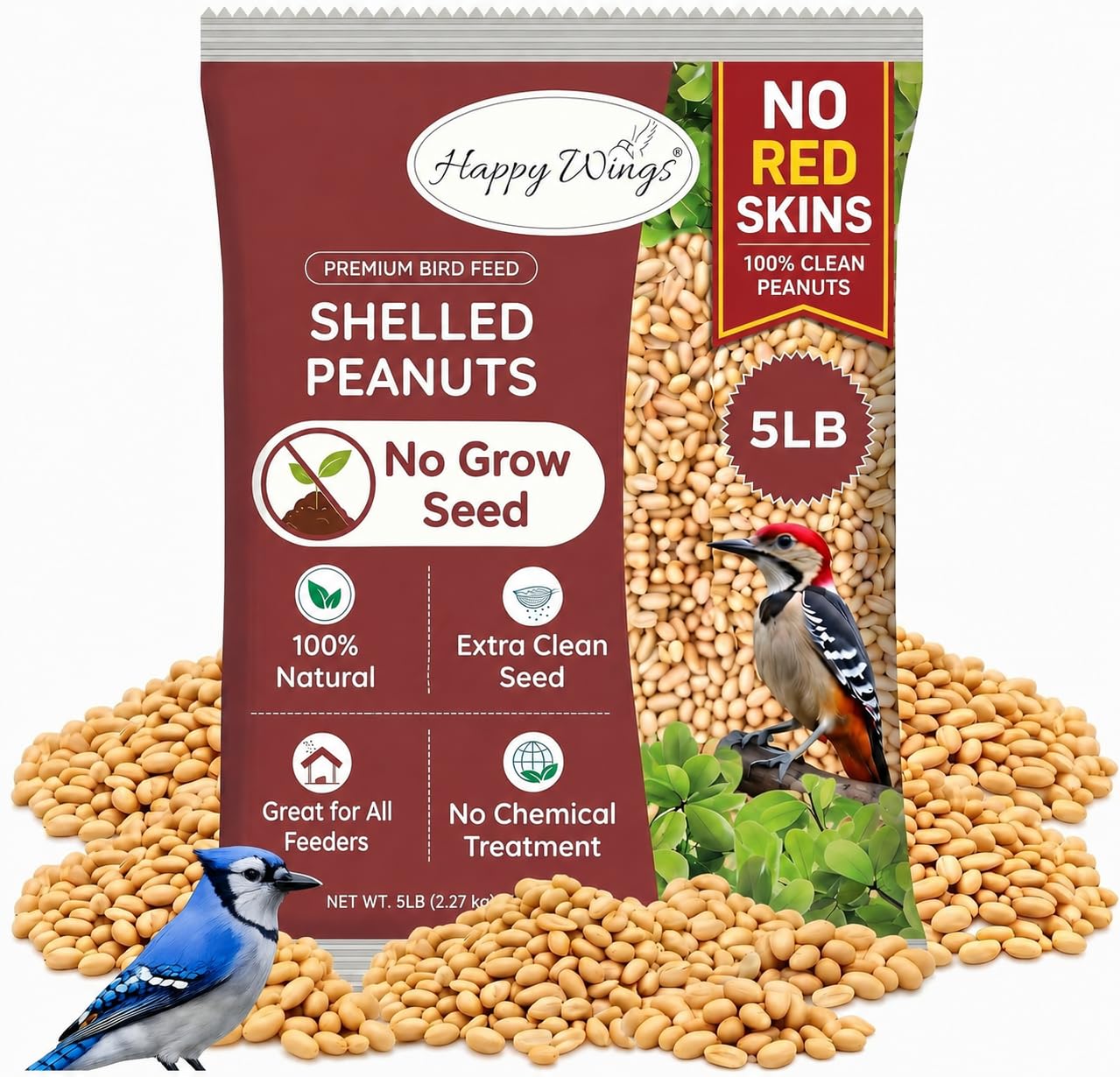
These are straight shelled peanuts — no shells, no filler, no fruit pieces, just human-grade peanut kernels heat-treated to prevent germination. For winter feeding, this is a pure protein and fat delivery system: peanuts contain roughly 25% protein and 50% fat, which blue jays, woodpeckers, and even cardinals will hammer relentlessly on subzero mornings.
The “no grow” treatment means you can scatter peanuts on the ground or tray feeders without worrying about seedlings sprouting in spring. The seeds are processed in a USDA and BRC-GS approved facility, which explains the consistently fresh, plump kernels reported by buyers. No red skins means no waste dust in your feeder.
One potential tradeoff is that single-ingredient peanuts attract a narrower species range than blends — the main visitors will be larger birds and squirrels. If your goal is to support specific species such as blue jays or woodpeckers through winter, this is an efficient choice. For maximum species diversity, combine with a seed blend or suet.
Why it’s great
- Highest protein content of any option in this guide — 25%
- No-grow treatment prevents yard germination after feeding
- Plump, clean peanuts with zero shell dust or red skins
Good to know
- Primarily attracts larger birds like jays and woodpeckers
- Squirrels and chipmunks will also target these heavily
7. Pennington Ultra Double Nut, Nut & Fruit Blend
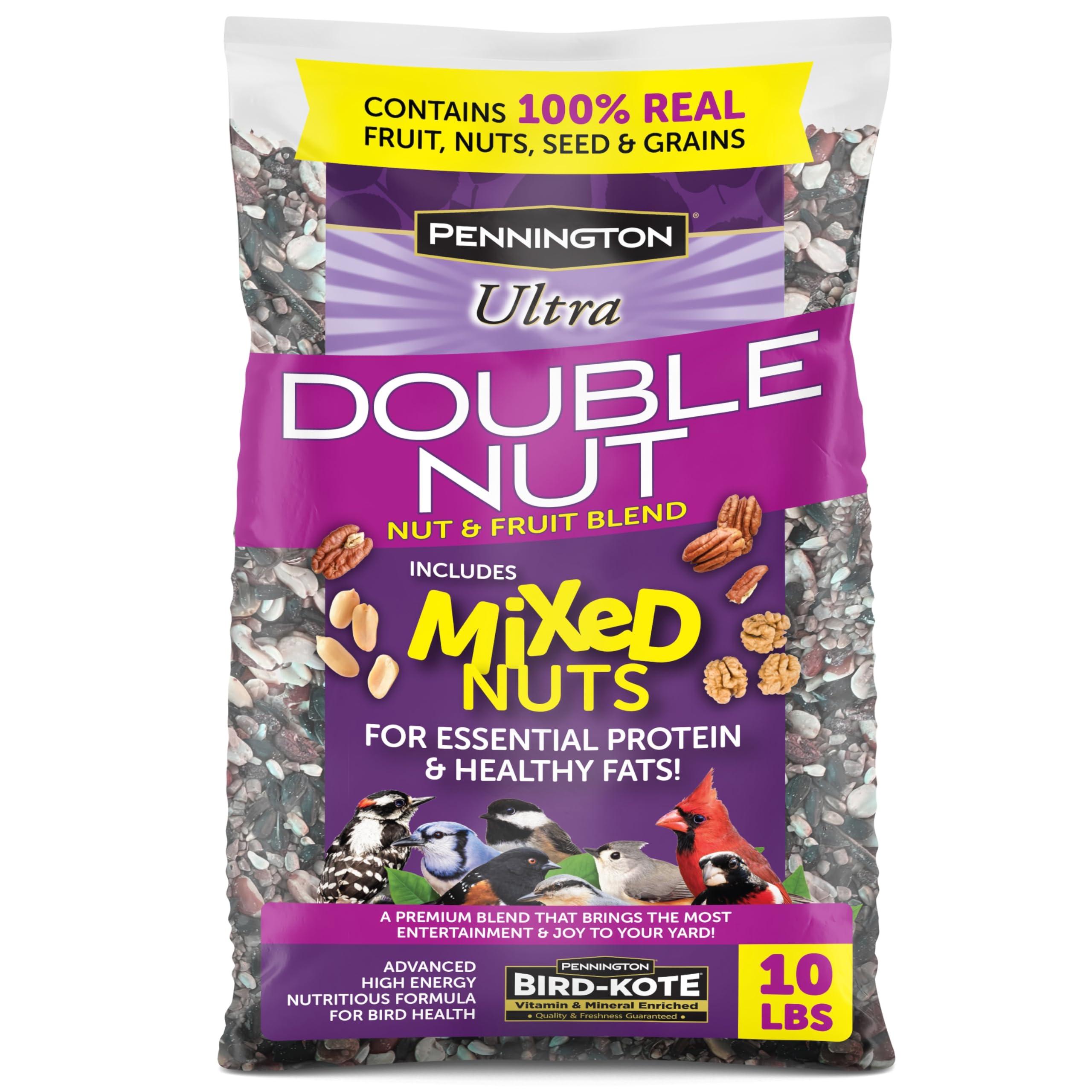
Pennington’s 10-pound blend mixes nuts, real fruit pieces, seeds, and grains with their exclusive Bird Kote technology — a vitamin and mineral coating that adds a nutritional boost beyond plain seed. This is a balanced, year-round formula that works well in winter because the nut content provides sustained fat release while the fruit adds natural sugars for quick energy bursts.
The blend is compatible with gazebo, hopper, platform, and tube-style feeders, giving you flexibility in setup. The ingredient list includes sunflower seeds and peanuts as primary components, with dried fruit chunks that chickadees, titmice, and woodpeckers actively pick out first. The 10-pound bag size offers good volume for frequent winter refills.
Some birders prefer filler-free blends, and the inclusion of cracked corn and millet means a small percentage of the bag may be discarded by selective feeders. That said, the Bird Kote enrichment is a unique differentiator that adds trace minerals missing from standard mixes, supporting feather health and egg production as spring approaches.
Why it’s great
- Bird Kote vitamin coating adds nutritional value absent in basic blends
- Nut and fruit pieces provide dual energy sources — fat and sugar
- Compatible with nearly every feeder type on the market
Good to know
- Filler grains like millet may be kicked aside by picky birds
- Fruit pieces can spoil faster in damp winter weather if not eaten quickly
FAQ
Can birds survive on just seed in winter?
Does chili pepper seed actually keep squirrels away?
Should I switch to no-waste seed only in winter?
Final Thoughts: The Verdict
For most users, the bird seed for winter winner is the Audubon Park Sunflower Hearts because it delivers the highest fat density per pound with zero hull waste — a combination that maximizes energy transfer and minimizes feeder maintenance in freezing conditions. If you want a spicy formula that pushes squirrels off your feeder, grab the Cool Birds Hot Seed. And for attracting the widest species variety while supporting winter nutrition with vitamin enrichment, nothing beats the Pennington Ultra Double Nut.