
Our readers keep the lights on and the weekend projects moving. As an Amazon Associate, I earn from qualifying purchases.
Finding a gift for the person who already owns a pair of binoculars and a Peterson guide is a familiar challenge for many birders. The best presents move beyond the basics, offering a new perspective—literally or digitally—on the hobby they already love. Whether it is a feeder that mounts on a window for eye-level views of chickadees or a camera-equipped house that identifies species automatically, the goal is to deepen their connection to the backyard visitors they track each morning.
I’m Rikta — the co-founder and writer behind FitlyFast. I’ve spent over sixty hours digging through customer reviews, comparing optics specs, and testing feeder build quality to find the gear that truly enhances the birding experience for enthusiasts of every skill level.
After cross-referencing real-world user reports with technical specifications, the seven products in this guide rose to the top as the most thoughtful, functional bird watching gifts you can buy today.
How To Choose The Best Bird Watching Gifts
A great birding gift matches the recipient’s current setup. A beginner needs a reliable entry-level binocular and a feeder that guarantees close-up views, while a veteran might value a premium ED-glass binocular or a smart feeder that identifies species and stores footage automatically. The three categories below cover the most common gift scenarios.
Binoculars: Magnification, Objective Lens, and Glass Quality
Magnification between 8x and 12x is the sweet spot for birding—high enough to see feather detail but stable enough for hand-held use. Pair that with an objective lens diameter of 42mm or 50mm to let in enough light for dawn and dusk viewing. The prism glass (BaK-4 is standard for good optics) and lens coatings (fully multi-coated delivers the brightest image) determine how sharp and color-accurate the view will be. Waterproof and fogproof construction is essential for all-weather use; rubber armor helps absorb drops in the field.
Bird Feeders: Window-Mount vs. Smart vs. Traditional
Window-mounted feeders bring birds inches away from a glass pane, making them ideal for apartment dwellers, seniors, and cat owners who want indoor entertainment. Look for thick acrylic (at least 1/4 inch) and strong suction cups—the best brands include extras and a lifetime guarantee. Smart feeders with built-in cameras and solar panels offer a different value: they log every visitor, identify species via AI, and send push alerts to a phone. Traditional pole-mounted feeders work well but lack the novelty and data layer that make a gift feel special.
Field Guides: Up-to-Date Range Maps and Image Quality
The best modern field guides weigh about four pounds and use high-resolution photographs rather than illustrations. Look for a publication date within the last three years, because bird populations shift, and outdated range maps lead to misidentification. A guide that includes conservation status notes and similar-species comparisons adds instructional value for a birder who wants to move past the basics.
Quick Comparison
On smaller screens, swipe sideways to see the full table.
| Model | Category | Best For | Key Spec | Amazon |
|---|---|---|---|---|
| Celestron Nature DX ED 8×42 | Premium Binoculars | Serious birders wanting true-color detail | 8×42 ED glass, 5.25mm exit pupil | Amazon |
| SOLIOM Smart Bird Feeder | Smart Feeder | Tech-minded birders & families | 2K camera, AI identifies 10,000+ species | Amazon |
| Celestron Outland X 10×50 | Mid-range Binoculars | All-weather birding & nature walks | 10×50, BaK-4 prisms, waterproof & fogproof | Amazon |
| Occer 12×50 Binoculars | Value Binoculars | Budget-conscious beginners | 12×50, 18mm prism, IPX7 waterproof | Amazon |
| National Audubon Society Birds of North America | Field Guide | Reference & armchair identification | 912 pages, 4 lbs, 2021 edition | Amazon |
| Deesoo 20×52 Binoculars | High-Power Binoculars | Long-distance viewing from a stationary spot | 20×52, 168 ft field of view at 1000 yards | Amazon |
| Nature’s Hangout Window Bird Feeder | Window Feeder | Close-up backyard viewing for all ages | 1/4 inch acrylic, holds 4 cups of seed | Amazon |
In-Depth Reviews
1. Celestron Nature DX ED 8×42

The Celestron Nature DX ED 8×42 uses Extra-Low Dispersion glass to virtually eliminate the chromatic aberration that plagues budget binoculars—that blue-purple fringe around white birds against a bright sky simply disappears. With 8x magnification and a 42mm objective, the exit pupil sits at 5.25mm, which is generous enough for older eyes or low-light dawn patrols. The BaK-4 prisms are phase-coated to maximize light transmission, and the fully multi-coated lenses deliver a crisp, color-accurate image that reviewers consistently describe as “razor-sharp.”
The build is equally refined: a rubber-armored polycarbonate housing that is both waterproof and nitrogen-purged to prevent internal fogging. The compact frame weighs less than many 10×50 models, making it manageable for hours-long hikes. Twist-up eyecups with 17.8mm of eye relief work well with eyeglasses, and the center-focus knob provides smooth, fast adjustments when tracking a moving warbler through dense branches.
Optically, this binocular punches well above its price point, but the ergonomics are not perfect. A few users note that the grip feels less intuitive than higher-end brands like Vanguard, and the shallower depth of field can demand more frequent refocusing. Still, for a birder who wants true-to-life images without spending four figures, the Nature DX ED 8×42 is the best optic in this lineup.
Why it’s great
- ED glass eliminates color fringing for true-color views
- Waterproof/fogproof with rugged rubber armor
- Lifetime US warranty from a California-based optics brand
Good to know
- Ergonomics are functional but not as refined as pricier competitors
- 8x magnification may feel modest for long-distance open-field viewing
2. SOLIOM Smart Bird Feeder with Camera
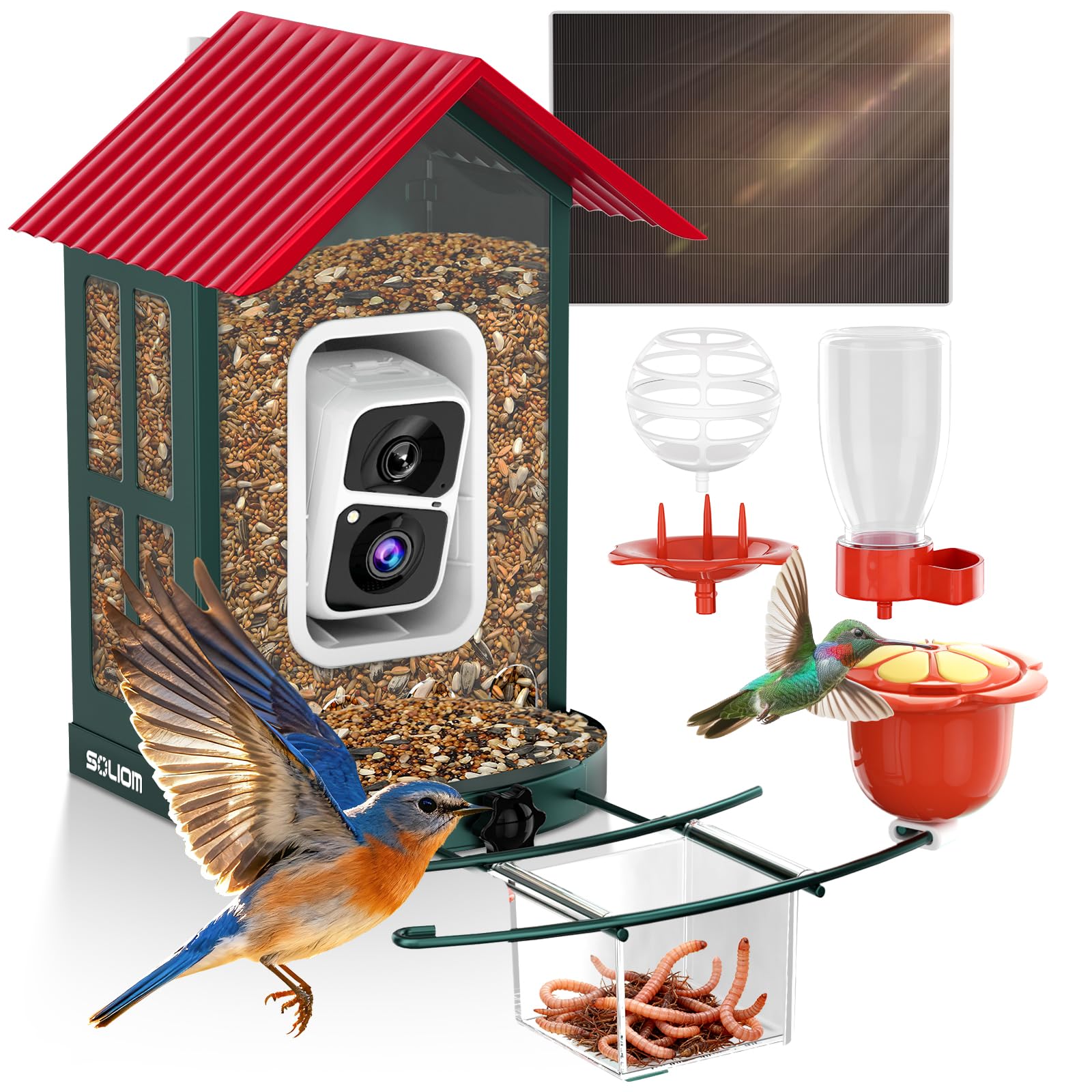
The SOLIOM Smart Bird Feeder is the most complete gift in this guide—it is a feeder, a 2K security camera, and an AI-powered field guide rolled into one metal-and-ABS housing. The built-in solar panel keeps the rechargeable battery topped off as long as it gets partial sun, and the 32GB memory card (included) stores hours of 2K video clips. When a bird lands on the perch, the SOLIOM app sends a push alert with a snapshot, and the AI can identify over 10,000 species, showing the bird’s name and habitat details on your phone.
Construction is a standout: the main feeder body uses reinforced metal to deter squirrels from chewing through, and the IP65 weather rating means rain, snow, and humidity will not damage the electronics. The kit also includes a hummingbird feeder attachment, suet cage, fruit fork, and mealworm tray, giving the recipient multiple feeding options from day one. Reviewers consistently praise the video quality and the fact that the solar cell maintains a charge even with only 30% sun exposure.
The app experience is not flawless—a few users report occasional live-view connection delays and a recurring “SD card full” error that an update partially resolved. And at this price, the feeder is a serious investment compared to a simple tube feeder. But for a birder who wants to document every visitor, share clips with family, or learn species ID without cracking a book, the SOLIOM delivers a daily thrill that a standard feeder cannot match.
Why it’s great
- AI identifies birds in real time and stores species history
- Solar-powered with battery backup for low-maintenance operation
- Squirrel-proof metal build with IP65 weather resistance
Good to know
- Live-view connection can lag or fail on the first attempt
- Requires a stable 2.4GHz Wi-Fi connection (no 5GHz support)
3. Celestron Outland X 10×50

The Celestron Outland X 10×50 is built for the birder who wants a wide, bright view without jumping to a premium price bracket. The 10x magnification paired with 50mm objective lenses delivers a 5.6-degree angular field of view—enough to track a fast-moving hawk across an open field without constantly panning. The BaK-4 prisms and multi-coated lenses produce images that are bright and color-accurate, though they lack the extra contrast and edge-to-edge sharpness of fully multi-coated or ED-glass alternatives.
The real selling point here is the weather-ready build. The rubber-armored polycarbonate housing is waterproof and nitrogen-purged, so fogging is not a concern when moving from a humid forest into a cold meadow. The 17.4mm of eye relief is sufficient for eyeglass wearers, and the twist-up eyecups click into place with reassuring precision. At 2.1 pounds, the 10×50 body is a bit heavier than a compact 8×42, but the added light-gathering makes a noticeable difference during those last ten minutes of usable daylight. Tripod-adaptable threads allow for shake-free extended sessions when you are posted up at a marsh overlook.
The main trade-off is the narrower field of view compared to a 7x or 8x model—you will see less of the surrounding landscape, which can make locating a small songbird in thick brush a little slower. A few users also note that achieving sharp focus takes more micro-adjustments than pricier options. But for a birder who wants a rugged, all-weather tool that delivers reliable performance at a mid-range price, the Outland X 10×50 is a solid choice.
Why it’s great
- Waterproof and fogproof with a rugged rubber-armor shell
- 10x magnification with 50mm objectives for excellent low-light performance
- Backed by a Celestron limited lifetime warranty
Good to know
- Field of view is narrower than 8x models, making bird location slower
- Multi-coated (not fully multi-coated) lenses mean slightly less contrast
4. Occer 12×50 Binoculars

The Occer 12×50 delivers a surprising amount of optical performance for an entry-level price. The 18mm prism is larger than the 15mm prism found in many similarly priced binoculars, which translates to noticeably brighter and clearer images, even in the dim light of early morning or late evening. The fully multi-coated lenses help further, and the BaK-4 glass ensures that the image does not suffer from the dark ring or “vignetting” that plagues cheaper BK-7 prisms.
Beyond the optics, the Occer is built to survive the outdoors. The IPX7 waterproof rating means it can be submerged in up to a meter of water for 30 minutes—far more protection than the “splash-proof” marketing language many budget models use. The rubber-armored body is lightweight at 1.76 pounds, and the twist-up eyecups lock into place for eyeglass wearers. The kit includes a carrying case, neck strap, and cleaning cloth, making it a complete gift that needs no add-ons. Reviewers consistently mention that the image is sharp and the focus wheel is smooth, with several noting it works well for cruise passengers and stadium events in addition to birding.
The compromises are what you would expect at this price: the glass quality does not match a premium optic like the Celestron Nature DX, and low-light performance, while good, is not exceptional. The 12x magnification also requires a steadier hand than an 8x would. But for a beginner or a casual birder who wants a capable, weatherproof binocular without a large investment, the Occer 12×50 is the best value in this lineup.
Why it’s great
- IPX7 waterproof rating is rare at this price point
- 18mm prism and fully multi-coated lenses deliver bright, clear images
- Lightweight and complete kit out of the box
Good to know
- Glass quality is not on par with premium ED-optics models
- 12x magnification can feel shaky without a tripod or steady surface
5. National Audubon Society Birds of North America

The 2021 edition of the National Audubon Society field guide is widely considered the gold standard for North American bird identification. Unlike many pocket-sized guides that rely on illustrations, this volume uses high-resolution photographs for every species—hundreds of images showing seasonal plumage variations, juvenile birds, and in-flight shots. The species accounts are paired with range maps that reflect the most recent population data, which is critical because many species have shifted their territories northward in response to climate change.
At 912 pages and four pounds, this is not a book that goes into a vest pocket. It is a reference volume meant for the coffee table, the car, or a backpack on a day trip where you plan to stop and look things up. The book is organized taxonomically (by evolutionary relationship), so it works best when you already have a general idea of what you saw—you flip to the duck section or the warbler section and narrow from there. The introduction includes essays on bird biology, conservation, and migration patterns that add educational value for a newer birder.
Reviewers praise the book for its thoroughness and image quality, but some note that the sheer size makes it less practical for quick field use compared to a smaller regional guide. If the recipient is an absolute beginner, a simpler picture guide or a phone-based app might be a more accessible starting point. But for anyone who has been birding long enough to want authoritative, updated information on all 800-plus North American species, this is the definitive single-volume resource.
Why it’s great
- High-resolution photographs show seasonal and age variations clearly
- Updated range maps reflect recent population changes
- Strong conservation notes and species comparisons for deeper learning
Good to know
- Four-pound weight makes it impractical for pocket or belt carry
- Taxonomic organization can be challenging for complete beginners
6. Deesoo 20×52 Binoculars

The Deesoo 20×52 binoculars are built for a very specific scenario: the person who wants to see feather detail on a bird perched 300 yards away. The 20x magnification is significantly higher than the 8x-12x range that most birders prefer for general use, and that power comes with trade-offs. The field of view is narrow at just 2.94 degrees (about 168 feet at 1000 yards), and any hand shake is amplified enough to make long viewing sessions uncomfortable without a tripod. The good news is that the tripod-adapter threads are included, so mounting it on a standard tripod solves the stability issue entirely.
The optics are surprisingly solid for the price. The fully multi-coated lenses and BAK-4 prisms produce a bright image with decent contrast, and the 52mm objective gathers enough light to work in overcast conditions. The 26mm large eyepieces are designed to reduce the “black blob” effect that can occur when your eye is not perfectly aligned, and reviewers note that the focus wheel is sensitive but smooth once you get used to it. The rubber coating provides a non-slip grip and basic weather resistance, though the manufacturer advises against using it in heavy rain or submerging it in water.
This is not a binocular for a casual backyard birder. It is a tool for someone who has a specific need for extreme reach—scanning a far shoreline, watching birds on a distant power line, or observing nest boxes from a respectful distance. The included strap has a tendency to slip, which several reviewers fixed by sewing a stitch through it. If your gift recipient already owns a standard 8x or 10x binocular and wants a second, specialized optic for long-range viewing, the Deesoo 20×52 fits that narrow niche well.
Why it’s great
- 20x magnification brings distant birds into close, detailed view
- Fully multi-coated BAK-4 optics produce a bright, clear image
- Large eyepieces reduce eye fatigue during extended use
Good to know
- Narrow field of view makes locating birds difficult
- Requires a tripod for shake-free viewing at high magnification
- Strap hardware can slip and cause the binocular to fall
7. Nature’s Hangout Window Bird Feeder
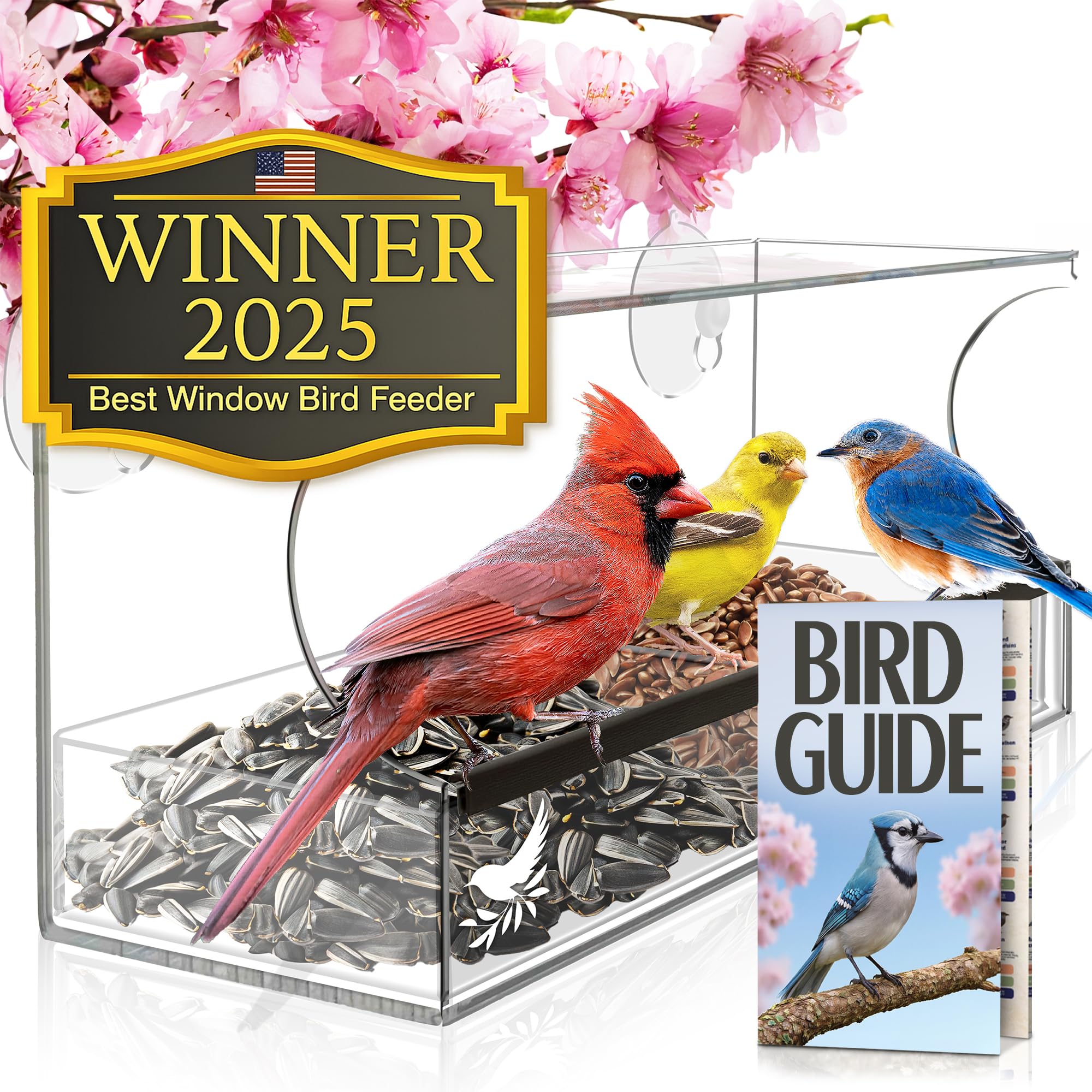
The Nature’s Hangout window feeder is the simplest, most reliable gift on this list, and it is also one of the most consistently well-reviewed products in the entire bird-watching category. The feeder is made from 1/4-inch thick cast acrylic—significantly thicker than the thin plastic sheets used by many competitors—and it holds over four cups of seed, making it the largest clear window feeder on the market. The three included suction cups use the company’s patented ECOSTRONG technology, and you get three more spares in the box because the manufacturer knows that a single weak cup can ruin the experience. Users who rub the cups on their nose (the natural oil helps the seal) report that the feeder stays attached even through wind and mild storms.
The standout design feature is the slide-out tray. Instead of tilting the whole feeder or prying off a lid, you pull the tray out from the side, dump old seed, rinse it, pour in fresh seed, and slide it back. The process takes about thirty seconds and leaves no mess on the windowsill. The feeder also includes a small bird-identifier pamphlet that stuck in the memory of multiple reviewers—a nice touch for a gift that gets someone started in birding. Reviewers note that chickadees, finches, juncos, and nuthatches arrive within a few days, and cats become devoted viewers of “Cat TV.”
Two limitations to consider. First, cardinals cannot fit comfortably—the perch is designed for smaller songbirds—so anyone hoping to see their state bird at the window will be disappointed. Second, the feeder is not truly squirrel-proof. Squirrels can land on it and, if they weigh enough, cause it to detach. The company’s customer service is excellent (they replace broken units), and switching to nyjer seed or safflower seed usually deters the squirrels. Overall, this is a gift that works for anyone who has a window, a handful of seed, and a desire to see birds at arm’s length.
Why it’s great
- Thickest acrylic on the market (1/4 inch) with a lifetime guarantee
- Slide-out tray makes cleaning and refilling effortless
- Six suction cups included; works on clean glass for years
Good to know
- Too small for cardinals and large birds to perch comfortably
- Not fully squirrel-proof; heavier squirrels can pull it off the window
FAQ
What binocular magnification is best for a beginning birder?
Can a window feeder hold onto the glass in hot or cold weather?
Are smart bird feeders worth the extra cost compared to a standard feeder?
How do I keep squirrels off a window-mounted bird feeder?
Final Thoughts: The Verdict
For most people, the best bird watching gifts overall are the Celestron Nature DX ED 8×42 binoculars for optics purists who want true-color images without chromatic aberration, and the SOLIOM Smart Bird Feeder for anyone who loves documenting visitors and learning species automatically. If you need a simple, affordable gift that works from day one, the Nature’s Hangout Window Bird Feeder is the most reliable and engaging option in the entire lineup, and its lifetime guarantee makes it a no-risk gesture for any nature lover.