
Our readers keep the lights on and the weekend projects moving. As an Amazon Associate, I earn from qualifying purchases.
A bird’s wing flickers in the underbrush — the difference between a species ID and a blurry guess comes down to how much chromatic aberration your optics allow. The wrong pair of binoculars turns a morning of warblers into a headache of eye strain and lost detail. Birding demands glass that resolves fine feather patterns at dawn and dusk without color fringing.
I’m Rikta — the co-founder and writer behind FitlyFast. I’ve spent countless hours analyzing optical coatings, prism types, and field-of-view specs from manufacturers like Nikon, ZEISS, and Athlon to cut through the marketing noise and find the glass that actually performs in the field.
After comparing lens coatings, exit-pupil diameters, and low-light performance across nine competitive models, the right choice comes down to your specific use case. This guide breaks down precisely what makes a great pair of birding binoculars.
How To Choose The Best Birding Binoculars
Birding binoculars live in a different world from general-purpose or hunting optics. You need close focus for flitting warblers, wide field of view for scanning treetops, and optical coatings that render subtle color differences between similar species. Four factors separate average glass from great birding glass.
Magnification and Objective Lens: The 8×42 Sweet Spot
8×42 is the birding standard for a reason. The 8x magnification gives a wide, steady field of view that makes tracking moving birds natural, and the 42mm objective delivers a 5.25mm exit pupil — large enough to keep your view bright in the dim light of dawn or a dense canopy. 10×42 narrows the field but pulls distant shorebirds and raptors closer. Stick with 8×42 for forest birding and 10×42 for open water or fields.
Glass Quality and Coatings: ED, BaK-4, and Dielectric
Extra-low dispersion (ED) glass eliminates the purple-green fringing around high-contrast edges — critical when you’re separating a male Blackburnian warbler’s orange throat from a black wing. BaK-4 prisms with phase-correction coatings maximize internal light reflection, and dielectric coatings boost that reflection past 99 percent. Fully multi-coated lenses reduce glare and increase contrast. Skip any model that lacks at least one of these three elements.
Field of View and Close Focus
A wider field of view (measured in feet at 1,000 yards) makes finding and following birds dramatically easier. Look for at least 330 feet at 1,000 yards in an 8×42. Close-focus distance matters too — birds often appear at 10 to 15 feet in dense brush, and binoculars that focus to 6.5 feet let you study foraging behavior without backing up.
Build Quality: Waterproofing and Warranty
Birding happens in all weather. Nitrogen-purged, O-ring-sealed housings rated IPX7 prevent internal fogging and survive full submersions. Rubber armor protects against drops on rocks. A lifetime, no-questions-asked warranty (Vortex, Nikon, Athlon) converts a mid-range purchase into a lifelong tool.
Quick Comparison
On smaller screens, swipe sideways to see the full table.
| Model | Category | Best For | Key Spec | Amazon |
|---|---|---|---|---|
| Nikon Monarch M5 8×42 | Mid-Range | All-around forest birding | 5.3mm exit pupil, 335ft FOV | Amazon |
| ZEISS Terra ED 8×42 | Premium | Bright, edge-to-edge clarity | 88% light transmission, 315ft FOV | Amazon |
| Nikon Monarch M5 10×42 | Mid-Range | Open views and shorebirding | ED glass, 293ft FOV | Amazon |
| ZEISS Terra ED 10×42 | Premium | Distant raptor ID | Hydrophobic coating, 330ft FOV | Amazon |
| Athlon Midas G2 UHD 10×50 | Premium | Low-light and twilight viewing | UHD ED glass, 5mm exit pupil | Amazon |
| Celestron Nature DX ED 8×42 | Mid-Range | Entry-level ED performance | ED objective, 5.25mm exit pupil | Amazon |
| Bushnell Engage X 10×42 | Mid-Range | Weather-resistant everyday carry | EXO Barrier coating, 2 lbs | Amazon |
| Vortex Copperhead HD 10×42 | Value | Budget-friendly durability | HD optics, 334ft FOV | Amazon |
| Nocs Provisions Standard Issue 10×25 | Compact | Ultralight travel and hiking | 11.85oz, 315ft FOV | Amazon |
In‑Depth Reviews
1. Nikon Monarch M5 8×42
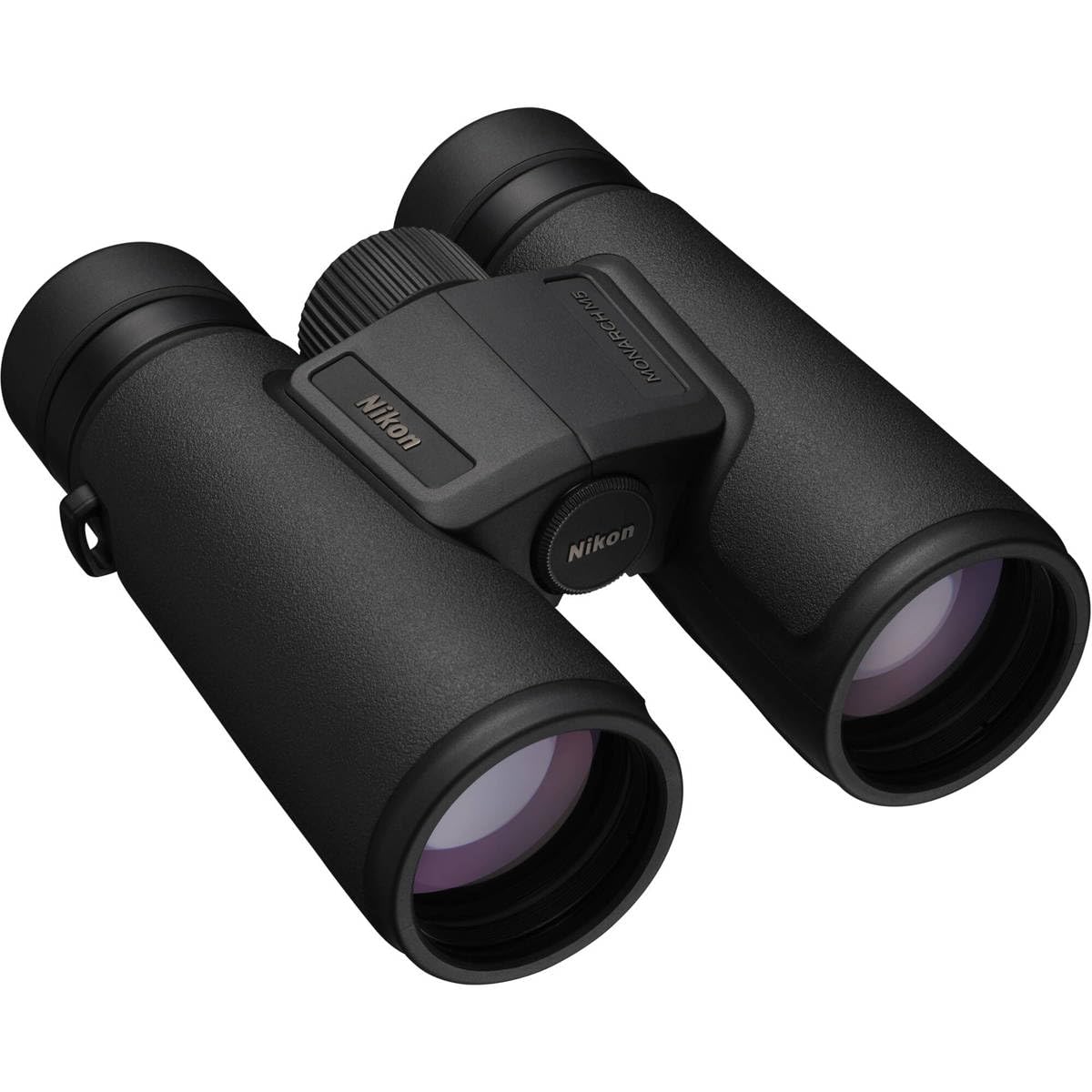
The Nikon Monarch M5 8×42 strikes an ideal balance between optical quality and field performance for dedicated birding. Its extra-low dispersion (ED) glass virtually eliminates chromatic aberration, meaning the sharp boundary between a white-throated sparrow’s chest and a dark branch stays crisp without color fringing. The dielectric high-reflective prism coating pushes light transmission above typical mid-range levels, delivering natural color saturation even under a forest canopy at dusk.
With a 5.3mm exit pupil and 19.5mm of eye relief, this pair accommodates eyeglass wearers comfortably while maintaining a bright, full image. The 335-foot field of view at 1,000 yards is generous enough to track a moving warbler without constant panning. Reviewers consistently noted the optics rival much pricier European glass, making this the default recommendation for birders who want premium clarity without the premium price tag.
The rubber-armored, nitrogen-purged housing is waterproof and fogproof, and the large center focus knob allows precise adjustments even with gloves. The only reported shortcoming is a slightly narrow apparent field of view compared to ultra-wide-angle competitors, but for the vast majority of birding scenarios the Monarch M5 8×42 outperforms everything at its tier.
Why it’s great
- ED glass eliminates chromatic aberration completely
- Dielectric-coated BaK-4 prisms deliver outstanding low-light brightness
- Wide 335ft field of view makes tracking birds easy
Good to know
- Not the lightest option at nearly 24 ounces
- Lacks tripod-mount threads for digiscoping
2. ZEISS Terra ED 8×42
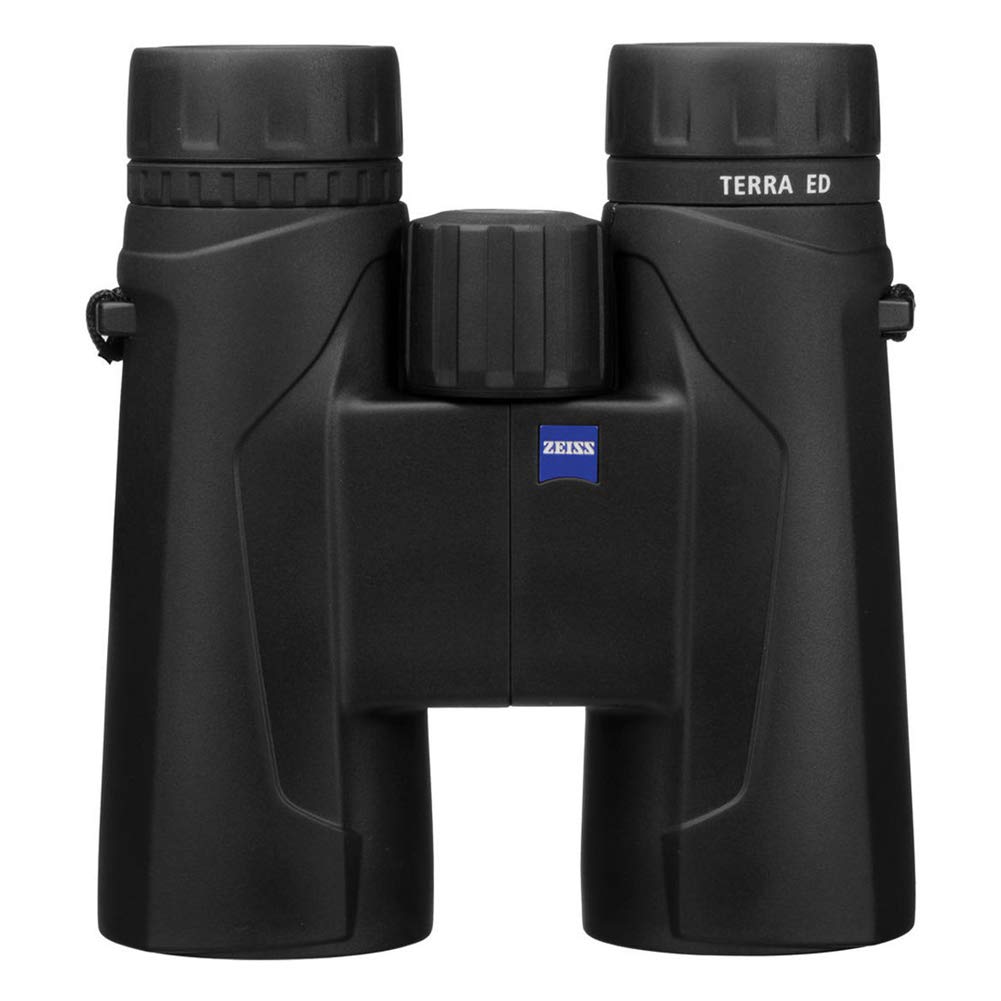
The ZEISS name carries weight in optics, and the Terra ED 8×42 justifies it with 88 percent light transmission from its SCHOTT ED glass elements and hydrophobic multi-coatings. In practical birding terms, this means the view stays bright and contrast-rich when light gets low — exactly when you need to separate a Hermit Thrush from a Swainson’s in twilight undergrowth. The fiberglass-reinforced polycarbonate housing keeps weight down without sacrificing durability.
The large, fast-focus wheel is engineered for quick acquisition: your index finger naturally lands on it, and a half-turn brings a bird 20 feet away into sharp focus. The 62-degree apparent field of view creates an immersive viewing experience, and 18mm of eye relief works well with glasses. Reviewers frequently upgraded from budget-friendly models to the Terra ED and reported seeing feather details and subtle color gradations they previously missed entirely.
One noteworthy detail is the hydrophobic ZEISS LotuTec coating on external lenses, which beads up water and repels dirt — genuinely useful for morning bird walks through dew-heavy grass. The included soft case and neoprene strap are functional, though some users wished for a more rigid case given the price point. Still, for a bird-specific primary optic at this level, the Terra ED delivers ZEISS color science in a carry-everywhere package.
Why it’s great
- SCHOTT ED glass provides exceptional color fidelity and contrast
- Hydrophobic LotuTec coating sheds water and dirt instantly
- Fast-focus wheel designed for quick bird acquisition
Good to know
- Included carrying case is basic for the price tier
- Made in China despite German brand heritage
3. Nikon Monarch M5 10×42
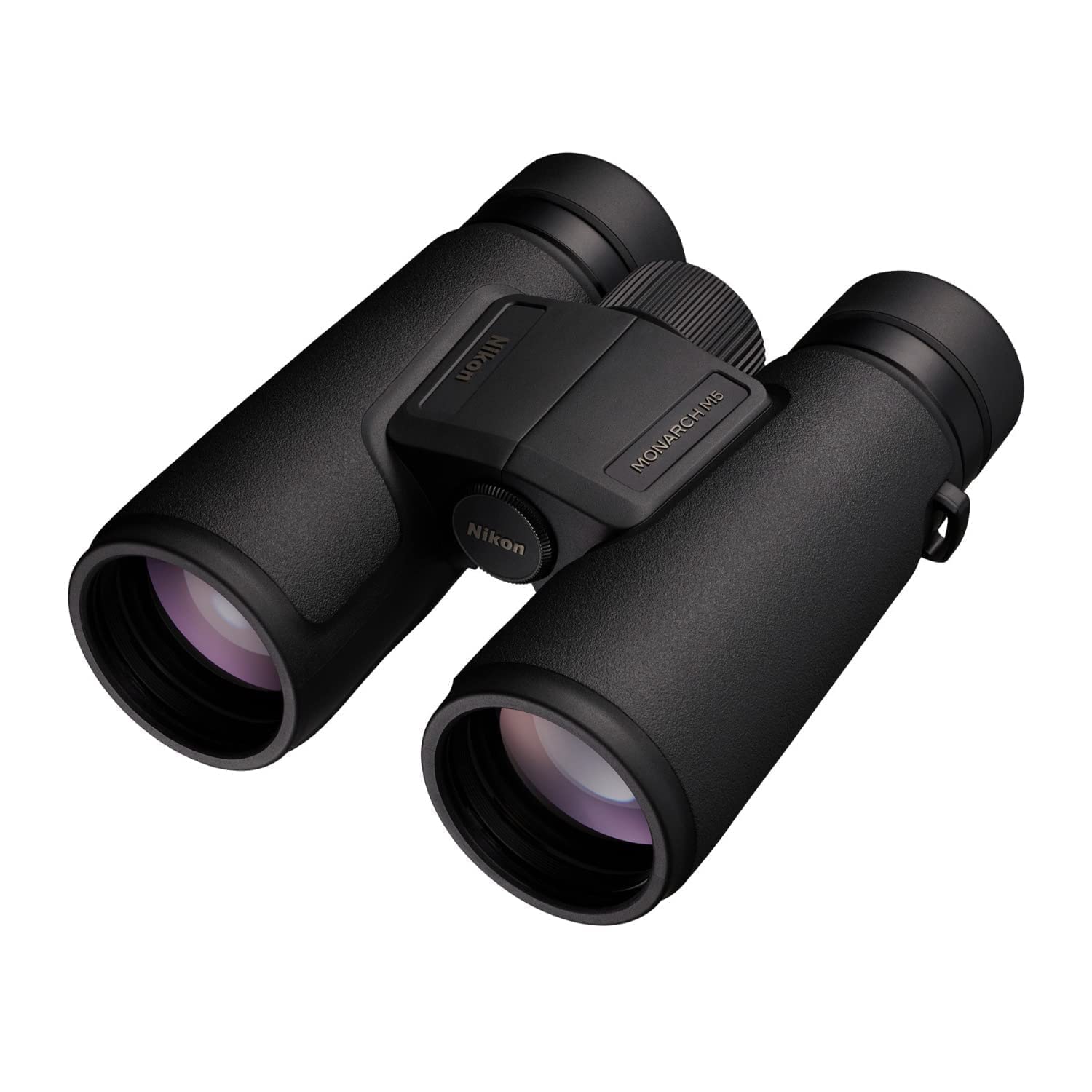
The 10×42 version of the Monarch M5 trades a bit of field width for magnification — exactly the right trade when your birding takes you to open shorelines, marshes, or mountain lookouts where you need to reach out for distant raptors and waterfowl. The ED glass and dielectric-coated prisms are identical to the 8×42 version, so you get the same premium light transmission and color accuracy.
At 293 feet field of view, it is noticeably narrower than the 8×42, but the 10x magnification lets you identify a Cooper’s hawk silhouette from a Red-tailed at half a mile. The 4.2mm exit pupil is adequate in most daylight conditions, though it will feel dimmer than the 8×42 at dawn. The large center focus knob is as smooth and precise as the 8×42 version, making tracking flying birds manageable.
Reviewers who used these for whale watching and Alaskan wildlife tours praised the image quality against much more expensive glass. The loose eyepiece cap problem appears in a small number of units, but the rubber-armored build and nitrogen-purged seals are otherwise flawless. For birders who prioritize reach over field width, this is the strongest mid-range choice.
Why it’s great
- Excellent 10x reach without sacrificing ED glass quality
- Dielectric coatings maintain brightness in varied light
- Smooth, precise focusing suitable for tracking flight
Good to know
- Narrower 293ft field of view requires more panning
- Eyepiece cap is loose and easily lost
4. ZEISS Terra ED 10×42
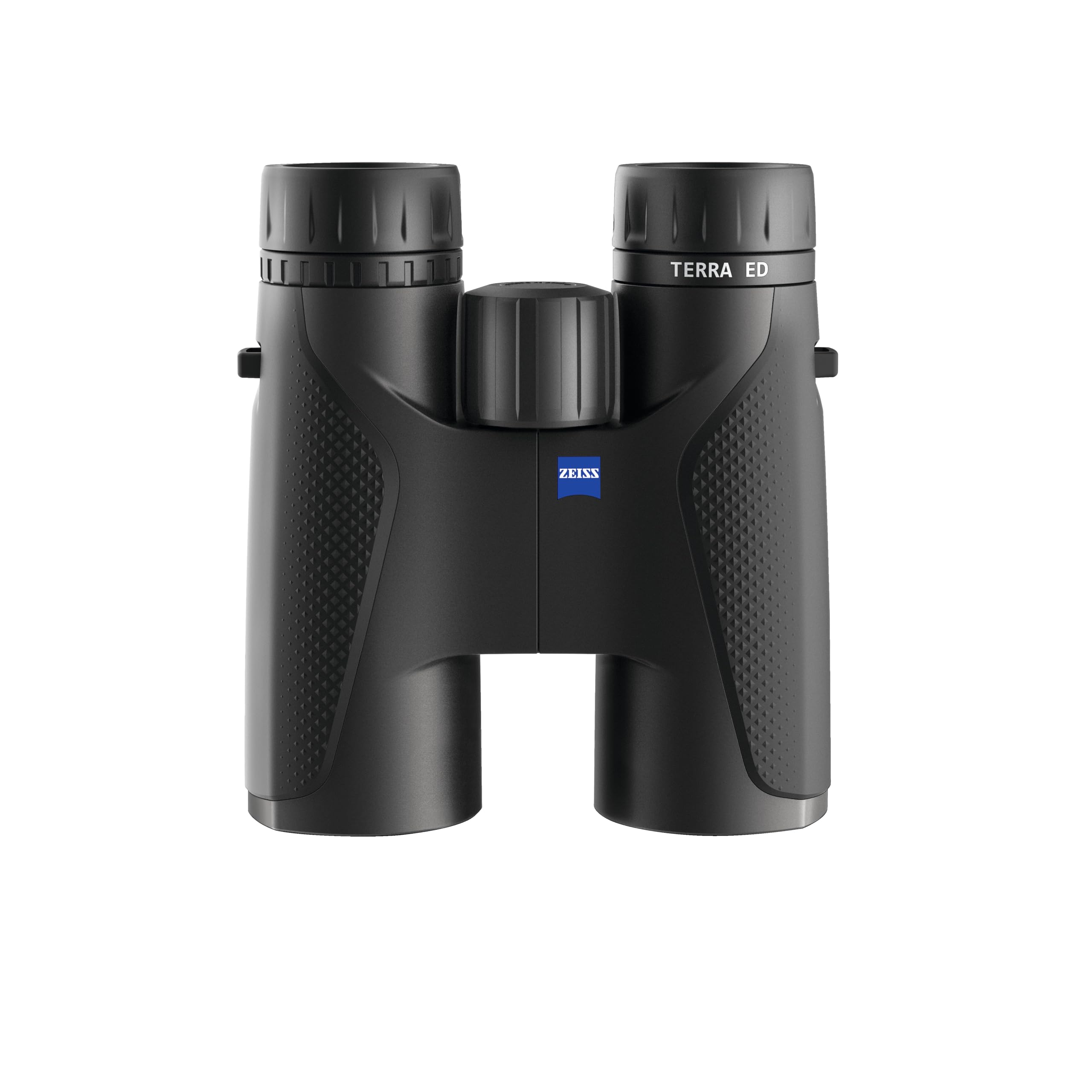
The ZEISS Terra ED 10×42 brings the same 88 percent light transmission and hydrophobic LotuTec coating from the 8×42 version into a higher-magnification format. This model is built for birders who spend time scanning distant treelines or watching shorebirds across mudflats. The 330-foot field of view is surprisingly wide for a 10×42 — wider than many competitors — making it easier to relocate a bird after lowering the binoculars.
The fast-focus mechanism is identical to the 8×42, with the same natural finger placement and quick throw. The SCHOTT ED glass virtually eliminates color fringing at the edges of the field, and the T* multi-coating ensures high contrast even in flat, overcast light. Reviewers who upgraded from sub- binoculars consistently described the Terra ED as a revelation for feather detail and depth perception.
The main downsides are the same as the 8×42: the included case feels cheap for a pair, and some users wish for a more premium strap. The 10x also requires steadier hands — you may want a tripod adapter for extended seawatching sessions. But for pure optical performance at this price point, the ZEISS Terra ED 10×42 competes with binoculars costing twice as much.
Why it’s great
- Wide 330ft FOV for a 10×42 — excellent for scanning
- LotuTec coating repels rain and condensation effectively
- ZEISS T* coating delivers high contrast in flat light
Good to know
- Accessories (case, strap) do not match optical quality
- Requires steady hands at full 10x magnification
5. Athlon Optics Midas G2 UHD 10×50
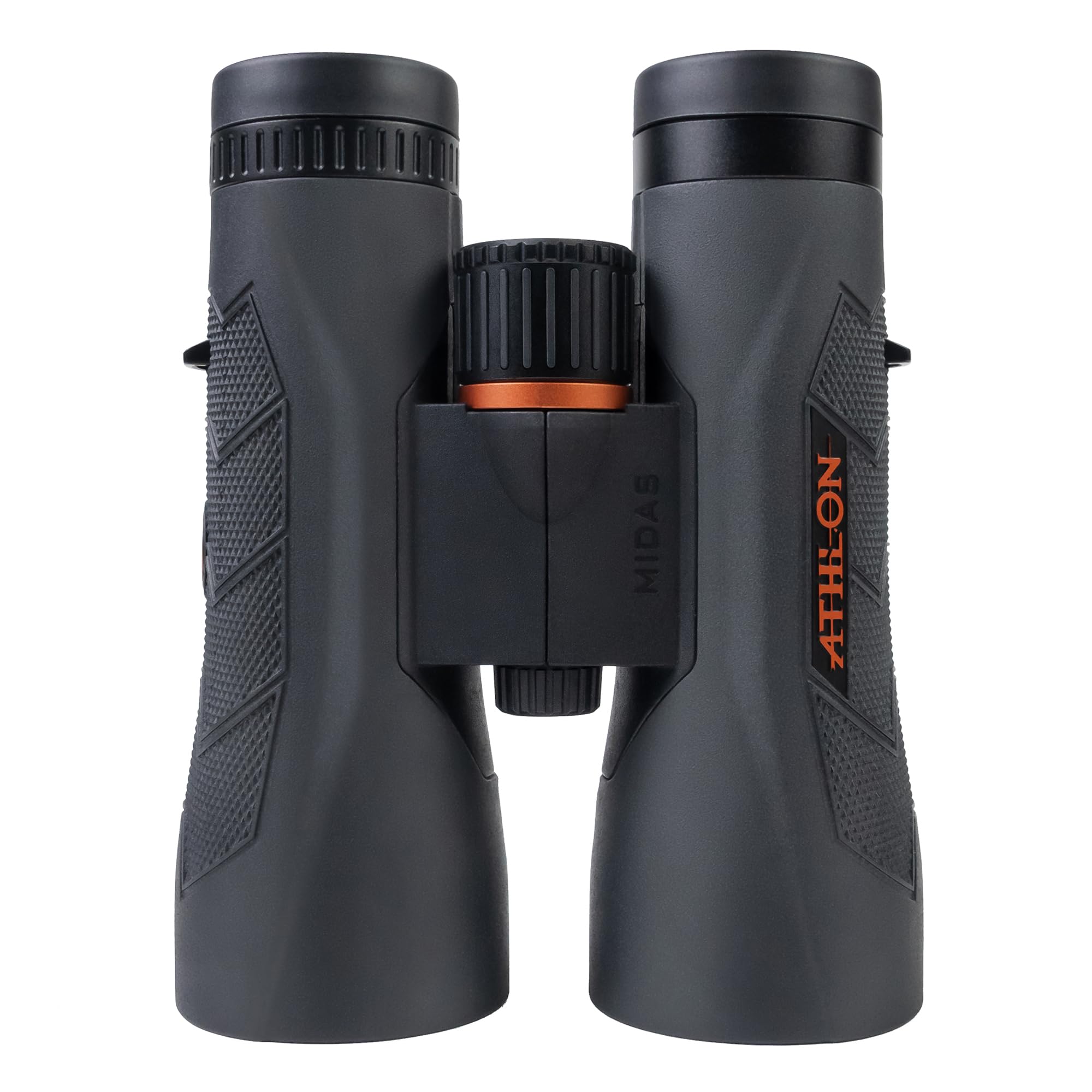
The Athlon Midas G2 UHD 10×50 is built for one specific scenario: seeing birds in the most challenging light. The 50mm objective lenses and 5mm exit pupil gather significantly more light than 42mm models, making this the best choice for dawn patrols, dusk roost surveys, and deep woods where light barely reaches the forest floor. The UHD (ultra-high-definition) ED glass and ESP dielectric coating reflect more than 99 percent of light to your eyes.
The magnesium chassis keeps weight 35 percent lower than comparable aluminum-body binoculars, though at roughly 30 ounces this is still a hefty pair for long days in the field. The 65-degree apparent field of view is genuinely wide and immersive, and the close-focus capability is exceptional for a 10×50 — allowing you to shift from a distant hawk to a nearby vireo without changing glass. Reviewers consistently praised the image quality as rivaling European optics at twice the price.
The XPL lens coating protects exterior surfaces from scratches, oil, and dirt, and the lifetime warranty from Athlon is transferable and no-questions-asked. The only real tradeoff is weight and bulk: this is not a casual carry-around binocular. But for dedicated birders who regularly work the low-light margins of the day, the Midas G2 UHD delivers performance that simply cannot be matched by smaller objective models.
Why it’s great
- 50mm objectives provide superior low-light performance
- UHD ED glass and dielectric coating rival high-end European glass
- Magnesium chassis reduces weight by 35%
Good to know
- Heavier at roughly 30 ounces for all-day carries
- Large objective lenses add bulk for packing
6. Celestron Nature DX ED 8×42

The Celestron Nature DX ED 8×42 is the entry point for birders who want ED glass without crossing into premium price territory. Extra-low dispersion objectives virtually eliminate chromatic aberration, and the phase-coated BaK-4 prisms maximize internal light reflection for a bright, crisp image. The 5.25mm exit pupil is ideal for dawn birding, and the 7.5-degree field of view provides comfortable scanning.
The polycarbonate rubber-armored housing is waterproof and nitrogen-purged, so fogging is not a concern even in humid morning air. The twist-up eyecups with multiple click-stop positions make it easy to dial in the right eye relief for glasses wearers. Reviewers have used these for years of backyard birding and noted the optical quality remains competitive with models costing significantly more.
The focusing mechanism is functional but not as smooth as Nikon or ZEISS offerings — it can be slightly stiff on some units. The included case and strap are adequate but unremarkable. Still, for birders on a tighter budget who refuse to compromise on the single most important feature (ED glass), the Nature DX ED is the right call.
Why it’s great
- ED objective glass at an accessible price point
- Phase-coated BaK-4 prisms for bright, true-color views
- Waterproof and fogproof with nitrogen purging
Good to know
- Focus knob is stiffer than higher-end competitors
- Included accessories are basic
7. Bushnell Engage X 10×42

The Bushnell Engage X 10×42 is built around EXO Barrier technology — a permanent molecular coating that repels water, oil, fog, and dust from external lens surfaces. For birders who regularly glass in coastal fog, rain, or dusty trails, this means the lenses stay clear without constant wiping. The fully multi-coated optics and 10x magnification deliver sharp detail, and the 18mm eye relief accommodates glasses.
At just 2 pounds, the Engage X is notably lighter than many 10×42 competitors, making it a strong choice for long hikes to remote birding spots. The aluminum housing is IPX7 waterproof rated and fog-proof, and the twist-up eyecups allow precise positioning for different users. Reviewers praised the low-light performance for pre-dawn and post-dusk viewing sessions.
The included carrying case and neck strap are functional, and the lifetime Ironclad Warranty provides peace of mind. The field of view is narrower than some competitors at 7 degrees, but for a weather-focused 10×42 that can handle whatever the skies throw at it, the Engage X is a solid mid-range option.
Why it’s great
- EXO Barrier coating repels water, oil, and dust effectively
- Lightweight at 2 pounds for a 10×42
- IPX7 waterproof rating for full weather protection
Good to know
- Narrower field of view than some competitors
- Not ED glass — some chromatic aberration visible at high contrast
8. Vortex Copperhead HD 10×42

The Vortex Copperhead HD 10×42 punches well above its tier by combining an HD optical system with the legendary Vortex VIP warranty. The fully multi-coated lenses and 10x magnification with 42mm objectives produce a clear, bright image for general birding, though the HD glass is not ED glass, so some chromatic aberration appears at high-contrast edges — noticeable when a white bird moves against dark foliage.
The 334-foot field of view is generous for a 10×42, and the 17mm eye relief is sufficient for most glasses wearers. The rubber armor provides a secure grip even in wet conditions, and the waterproof, fog-proof construction means you can bird through rain without concern. The included GlassPak harness is a genuine value-add, distributing weight across your shoulders for all-day comfort.
Reviewers who used these through a full hunting season with exposure to rain, snow, and temperature swings reported zero performance issues. The compromise in edge sharpness versus premium models is real — images are slightly less crisp at the periphery than from ED glass competitors. But the unlimited, unconditional lifetime warranty makes this the safest budget bet on the market.
Why it’s great
- HD optics provide clear, bright images for the price
- Unlimited, unconditional VIP lifetime warranty is best in class
- Included GlassPak harness adds carrying comfort and value
Good to know
- Chromatic aberration visible at high-contrast edges
- Heavier than premium models with similar specs
9. Nocs Provisions Standard Issue 10×25

The Nocs Provisions Standard Issue 10×25 is a compact companion rather than a primary birding optic. At just 11.85 ounces with fully multi-coated optics and BaK-4 prisms, it disappears into a jacket pocket or purse — ideal for spontaneous birding during hikes, travel, or as a backup pair. The small 25mm objective lenses and 2.4mm exit pupil limit low-light performance, so this is strictly a daytime tool.
The IPX7 waterproof rating and nitrogen-purged housing are genuinely impressive for an ultra-compact, ensuring no fogging issues. The rugged wave-grip rubber casing provides a secure hold, and the multi-stop twist-up eyecups accommodate both bare eyes and glasses. Reviewers consistently reported the image quality punched above the size class for daylight birding, with a 315-foot field of view that is competitive for a 10×25.
The neck strap is notoriously difficult to thread through the narrow grooves, and this is not a binocular for low-light conditions — dusk birding will be frustrating. But for its intended role as a grab-and-go, pack-anywhere secondary binocular, the Nocs Standard Issue is well-built and backed by a lifetime warranty.
Why it’s great
- Extremely lightweight at 11.85 oz — disappears in a pocket
- IPX7 waterproof and fogproof in a compact format
- Lifetime warranty for worry-free carry
Good to know
- 2.4mm exit pupil is poor in low light conditions
- Neck strap installation is frustratingly difficult
FAQ
Is 8×42 or 10×42 better for birding?
What does ED glass do for birding binoculars?
Why is the exit pupil important for birding?
Do I need waterproof and fogproof binoculars for birding?
What does the VIP warranty from Vortex cover?
Final Thoughts: The Verdict
For most users, the birding binoculars winner is the Nikon Monarch M5 8×42 because it combines genuine ED glass, dielectric-coated prisms, and a wide field of view at a price that undercuts premium European optics by hundreds. If you want the best low-light reach for dawn and dusk birding, grab the Athlon Midas G2 UHD 10×50. And for pure optical refinement with hydrophobic coatings that shrug off rain and dew, nothing beats the ZEISS Terra ED 8×42.