
Our readers keep the lights on and the weekend projects moving. As an Amazon Associate, I earn from qualifying purchases.
Cutting stainless steel isn’t about raw force—it’s about matching the exact tooth geometry and material hardness to the alloy you’re working with. A mismatched blade will either shatter, dull instantly, or work-harden the metal, making every subsequent pass worse than the last.
I’m Rikta — the co-founder and writer behind FitlyFast. This buying guide is the result of hundreds of hours spent dissecting the metallurgy, tooth counts, and real-world performance data behind the most reliable blades for ferrous and stainless alloys.
Whether you’re shearing through 1/4-inch plate on a bandsaw or trimming EMT conduit with a circular saw, the right blade for cutting stainless steel determines whether you get a clean, burr-free edge or a ruined workpiece and a trip to the ER.
How To Choose The Best Blade For Cutting Stainless Steel
Choosing the wrong blade for stainless steel is expensive. The material’s work-hardening property means a dull blade will generate excessive heat, glazing the edge of the cut and ruining the blade and possibly the workpiece. Your selection must account for three variables: the alloy grade, the material thickness, and the tool platform.
Tooth Geometry and TPI: The Deciding Factor
Stainless steel requires a blade with a positive rake angle and a tooth count that ensures at least three teeth are in contact with the material at all times. For thin-gauge sheet metal (under 1/8 inch), you need a fine tooth pitch of 14 to 24 TPI to avoid tooth snagging. For thick plate (over 1/4 inch), drop to 3 to 10 TPI to allow adequate chip clearance and prevent binding. Variable-tooth blades (like 10/14 TPI) are ideal for structural shapes where the cut crosses different thicknesses.
Blade Material: Bi-Metal vs. Carbide-Tipped vs. Diamond
Standard high-speed steel blades won’t hold an edge against stainless steel. Bi-metal blades combine a flexible steel back with a high-speed steel tooth edge, offering the best value for general fabrication and intermittent use. Carbide-tipped blades—like the Diablo Steel Demon—use a sintered tungsten carbide edge that can outlast bi-metal by 50 times in extreme applications, but they are brittle and expensive. Diamond-abrasive cutoff wheels are the go-to for thin-walled stainless tubing and sheet, where a clean, burr-free cut is critical, but they generate fine metal dust that requires containment.
Quick Comparison
On smaller screens, swipe sideways to see the full table.
| Model | Category | Best For | Key Spec | Amazon |
|---|---|---|---|---|
| Diablo Steel Demon DS0608CF3 | Carbide Reciprocating | Thick metal & automotive hardware | 3/16″–9/16″ capacity, TiCo carbide | Amazon |
| Imachinist S93341014SS | Bi-Metal Bandsaw | Bandsaw cutting 304/316 plate | 93″ x 3/4″ x 0.035″, 10/14 TPI | Amazon |
| Benchmark Abrasives BM-TCM0538030T | TCT Circular Saw | Miter saw cuts on tube & pipe | 5-3/8″, 30T, TCT industrial | Amazon |
| BHA 4.5 x 0.045 Cut Off Wheels | Aluminum Oxide Discs | Angle grinder bulk cutting | 4.5″ x 0.045″, 25-pack, Type 27 | Amazon |
| Revvstark Diamond Cutting Wheel | Diamond Abrasive | Low-dust, long-life cutoff | 4.5″ x 0.047″, 13,300 RPM | Amazon |
| Benchmark Abrasives 5″ Type 1 | Thin Cutoff Wheel | High-volume fab shop cutting | 5″ x 0.045″, 50-pack, Type 1 | Amazon |
| LEILUO 12″ Stainless Steel | Food-Grade Reciprocating | Cutting frozen meat & bone | 12″, 3 TPI, 1/2″ universal shank | Amazon |
In-Depth Reviews
1. Diablo Steel Demon DS0608CF3
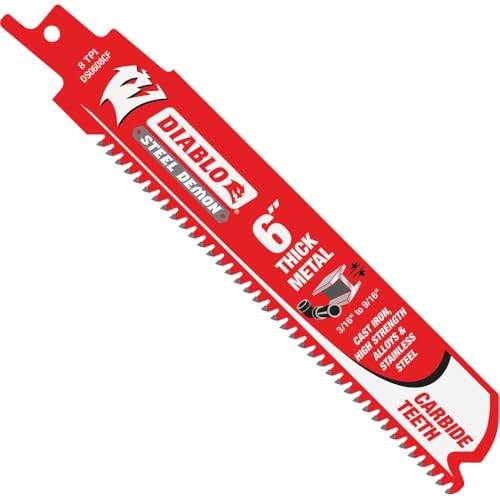
The Diablo Steel Demon is the definitive answer for anyone who needs to cut through heavy stainless, hardened steel sleeves, or cast iron with a reciprocating saw. Its TiCo Hi-Density carbide edge is brazed onto the tooth tips, delivering a service life that customers consistently report as 50 times longer than standard bi-metal blades in extreme applications like cutting seized automotive control arm bolts.
The oversized 1-inch blade body reduces vibration and chatter, producing straighter cuts with less operator fatigue. The Perma-SHIELD non-stick coating resists heat buildup and prevents gumming, which is critical when cutting work-hardening stainless alloys that tend to glaze a standard blade immediately.
One user cut through grade 8 bolts and multiple steel bushing sleeves on two separate control arm projects using a single blade and reported it still had plenty of life left. If you are fabricating or repairing heavy structures, this blade justifies its premium tier with pure survival statistics.
Why it’s great
- Carbide tips outlast bi-metal blades by a wide margin in thick stainless
- Low-vibration body design enables clean, straight cuts through hardware
- Non-stick coating prevents heat-related blade failure
Good to know
- Brittle carbide can chip if side-loaded or twisted in the cut
- Requires patience and steady feed pressure for best results
2. Imachinist S93341014SS
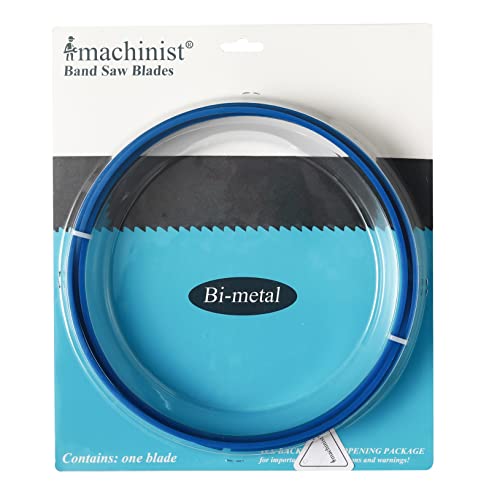
The Imachinist S93341014SS is a 93-inch bi-metal bandsaw blade engineered specifically for cutting austenitic stainless steels like 304, 310, 410, and 316L. The 10/14 variable tooth pitch is the sweet spot for structural stainless shapes—fine enough to prevent snagging on thin walls but aggressive enough to clear chips from thicker cross-sections up to 1/4 inch.
Professional welders and custom fabricators report this blade lasting upwards of a year under heavy use, including cutting through 2-inch DOM .250-wall tubing without coolant. The M42 cobalt high-speed steel tooth edge provides hot hardness that resists softening from the friction generated by stainless steel’s low thermal conductivity.
One user reported making over 400 cuts on thick-walled tubing without coolant and the blade remained accurate and straight. It is not recommended for cutting aluminum or non-ferrous metals, as the aggressive tooth geometry will load up and chip on softer materials.
Why it’s great
- Variable 10/14 TPI optimizes chip clearance across varying thicknesses
- M42 bi-metal edge resists heat-induced dulling on stainless alloys
- Excellent value compared to premium bandsaw blade brands
Good to know
- Some users report inconsistent weld durability on the blade joint
- Not suited for aluminum or non-ferrous metals
3. Benchmark Abrasives BM-TCM0538030T

The Benchmark Abrasives 5-3/8-inch TCT circular saw blade punches well above its tier. With 30 tungsten carbide teeth and a thin 0.07-inch kerf, it is designed to make stable, controlled cuts through cast iron, stainless steel, titanium, and wrought iron on a miter saw. The carbide tips are specially formulated to maintain chip clearance and resist the micro-chipping that destroys standard steel blades on ferrous metals.
Users consistently report that this blade cuts EMT conduit and metal water pipe cleanly, producing well-formed chips rather than fine dust. It fits miter saws from Evolution, Dewalt, Milwaukee, Makita, Bosch, and most other 5-3/8-inch fitment tools, making it a versatile drop-in upgrade for any metal-cutting chopsaw setup.
One reviewer reported cutting through 30 feet of rusty 1/4-inch plate without dulling, noting the blade remained quiet and true. For a sub-20-dollar TCT blade, the value-to-performance ratio is exceptional.
Why it’s great
- Tungsten carbide tips deliver reliable cuts on multiple ferrous alloys
- Thin kerf minimizes material waste and reduces load on the saw
- Broad tool compatibility with major miter saw brands
Good to know
- Cutting generates extremely loud noise and fine metal chips
- Longevity on thick plate may not match premium-tier TCT blades
4. BHA 4.5″ x 0.045″ Cut Off Wheels

The BHA 4.5-inch depressed center cutoff wheels are a bulk solution for anyone who goes through grinding discs quickly on angle grinder-based stainless cutting. Each wheel uses a proprietary aluminum oxide grain bonded in a Type 27 depressed center format, allowing flush cutting on surfaces and corner welds. The ultra-thin 0.045-inch profile reduces material loss and cuts faster than standard 1/8-inch wheels.
A retired machinist reported that these discs cut straighter and thinner than the wheels available at local hardware stores, lasting long enough to cut through 1/4-inch thick channel iron. The 25-pack ensures you have a fresh wheel ready without making a mid-job hardware store run, which is critical when cutting multiple stainless pieces that require consistent kerf quality.
Users note that these wheels hold up to aggressive use without shattering—a key safety concern with bonded abrasive wheels. No reports of explosions or disintegration during normal use.
Why it’s great
- Thin profile cuts faster and wastes less material than standard wheels
- 25-pack provides strong value for high-volume fabrication work
- Depressed center design enables flush grinding on surfaces
Good to know
- Aluminum oxide grains wear faster than diamond or carbide alternatives
- Not designed for plunge cutting or precision slotting
5. Revvstark Diamond Cutting Wheel

The Revvstark diamond cutting wheel brings a different approach to stainless cutting: instead of a bonded abrasive that erodes away, it uses brazed diamond particles permanently attached to a solid steel core. The 1.2-mm ultra-thin substrate reduces cutting resistance and allows for precise, low-burr cuts on rebar, angle iron, stainless sheet, and INOX. The steel body also eliminates the risk of wheel explosion that comes with traditional resin-bonded cutoff wheels.
The manufacturer claims up to 5,000 cuts per wheel, and while real-world results vary by material thickness, users confirm these wheels last substantially longer than standard aluminum oxide discs. One user cut through a hardened lock that had defeated every other tool, demonstrating the diamond edge’s ability to handle extreme hardness without degrading.
Be aware that the 7/8-inch arbor may fit loosely on some grinders, such as DeWalt models, and the diamond construction can drain battery-powered tools faster than conventional wheels due to the increased cutting resistance.
Why it’s great
- Steel core eliminates risk of wheel shattering during use
- Diamond edge delivers exceptional longevity on stainless and hardened steel
- Low dust generation compared to bonded abrasive wheels
Good to know
- May drain battery grinders faster than standard cutoff wheels
- Arbor can fit loosely on certain grinder brands
6. Benchmark Abrasives 5″ Type 1 Cut Off Wheels

The Benchmark Abrasives 5-inch Type 1 cutoff wheels are a fabrication shop’s workhorse. The 5-inch diameter provides an extra half-inch of cutting depth compared to standard 4.5-inch wheels, which makes a noticeable difference when cutting through steel tube, rebar, or threaded rod. The thin 0.045-inch profile with a 50-grit aluminum oxide bond delivers fast, burr-free cuts across stainless steel, aluminum, and mild steel.
Seasoned fabricators report that these wheels outlast more expensive name-brand alternatives, with one user purchasing a second 50-pack after using the first for steel pallet disassembly. The Type 1 flat profile is ideal for straight cutoff operations but cannot perform the flush grinding that a Type 27 depressed center wheel enables.
Some users note a slight imbalance that causes vibration at high RPM, but the overall durability and cost-per-wheel ratio make these a smart choice for any shop that burns through cutoff discs regularly.
Why it’s great
- 5-inch diameter gives extra cutting depth for thicker materials
- 50-pack provides excellent per-wheel value for high-volume use
- Aluminum oxide bond cuts fast with minimal burr formation
Good to know
- Some wheels exhibit slight imbalance causing vibration
- Type 1 flat profile cannot be used for flush or surface grinding
7. LEILUO 12″ Stainless Steel Reciprocating Blades

The LEILUO blades are purpose-built for a very specific application: cutting frozen meat, bone, and large food items with a reciprocating saw. The 12-inch length and 3 TPI aggressive tooth geometry allow rapid cutting through thick sections of frozen turkey or beef bones, while the food-grade stainless steel construction ensures no harmful coatings or residues contact the food.
Users report these blades are exceptionally sharp out of the box, making quick work of breaking down large animals and reducing turkey carcasses for smoking. The included plastic storage case with a hook keeps the blades organized and safe between uses, and the universal 1/2-inch shank fits all major reciprocating saw brands.
While these blades are made from stainless steel, they are not designed for cutting ferrous metals or structural stainless alloys. A small number of users report that the tang (the tail piece that locks into the saw) can break under heavy side-loading, so maintain straight cuts and avoid twisting.
Why it’s great
- Food-grade stainless steel is safe for direct meat contact
- 12-inch length and 3 TPI enable rapid cuts through bone and frozen material
- Storage case keeps blades organized and protected
Good to know
- Not intended for structural metal or stainless steel cutting
- Some reports of tang breakage under heavy side-loading
FAQ
Why does my blade dull so fast when cutting stainless steel?
Can I use a wood-cutting blade on stainless steel?
What is the best blade for cutting 304 stainless steel tubing?
Final Thoughts: The Verdict
For most users, the blade for cutting stainless steel winner is the Diablo Steel Demon DS0608CF3 because its carbide-tipped edge survives the toughest jobs—seized automotive hardware, thick plate, and abrasive alloys—that destroy other blades in minutes. If you want a budget-friendly bandsaw blade for your shop, grab the Imachinist S93341014SS. And for high-volume angle grinder work, nothing beats the per-wheel value of the Benchmark Abrasives 5-inch Type 1 50-pack.