
Our readers keep the lights on and the weekend projects moving. As an Amazon Associate, I earn from qualifying purchases.
Blasting aluminum demands a specific touch: too aggressive and you warp thin panels; too mild and the coating simply laughs it off. The right media cleans, etches, or finishes without compromising the substrate’s structural integrity, making particle shape, hardness, and mesh size the critical variables.
I’m Rikta — the co-founder and writer behind FitlyFast. I’ve analyzed hundreds of abrasive formulations on Amazon to identify which blends deliver consistent results on non-ferrous surfaces without embedding contaminants.
This guide breaks down the seven most effective options so you can confidently choose the correct blasting media for aluminum based on your specific grit requirement and surface preparation goal.
How To Choose The Best Blasting Media For Aluminum
Aluminum is soft, ductile, and prone to warping under high-velocity impact. The wrong abrasive can gouge the surface, embed particles, or create a profile too deep for subsequent coating. Three factors govern the choice: relative hardness of the media to the aluminum substrate, the shape of the particles, and the specific mesh size dictated by the job.
Match Hardness to the Task
Mohs scale is your anchor. Aluminum oxide (Mohs 9) aggressively etches and strips coatings quickly, making it ideal for pre-weld prep or thick paint removal. Walnut shell (Mohs 4.5-5) and glass beads (Mohs 5.5-6) sit below aluminum’s inherent surface resistance, so they clean without undercutting the base metal. Start with a media that is either equal to or slightly softer than the aluminum part you are blasting.
Particle Shape Controls the Profile
Angular particles (crushed glass, aluminum oxide, crushed walnut) cut into the surface and create a mechanical anchor for paint or powder coat. Rounded particles (glass beads) peen the surface rather than cut, resulting in a smooth, satin finish that is ideal for cosmetic restoration or removing light oxidation without dimensional change. For thin-wall castings or machined surfaces, always lean toward rounded or softer media to avoid warping.
Mesh Size Determines Speed and Finish
Coarse grit (18-40 mesh) removes heavy rust, carbon deposits, and thick powder coating quickly but leaves a rough surface that requires secondary finishing. Medium grit (60-80 mesh) is the all-purpose zone for stripping primers and paint while retaining a moderate profile. Fine grit (120 mesh and above) is reserved for light etching, deburring, and cleaning surface contaminants with minimal surface disruption. On aluminum, medium grit is the safest starting point for most general restoration jobs.
Quick Comparison
On smaller screens, swipe sideways to see the full table.
| Model | Category | Best For | Key Spec | Amazon |
|---|---|---|---|---|
| Ground Walnut Shell 18-40 Grit (Product 5) | Organic | Carbon cleaning on intake valves | Loose bulk density ~40-50 lb/ft³ | Amazon |
| #80 Grit Aluminum Oxide (Product 3) | Oxide | Pre-coat surface etching | Mohs hardness 9 | Amazon |
| #8 Spec Glass Beads 70-80 Grit (Product 7) | Glass | Restoring automotive aluminum | Silica-free soda lime glass | Amazon |
| #8 Glass Beads 80-100 Mesh (Product 4) | Glass | Finishing light-grey satin surfaces | 80-100 mesh fine beads | Amazon |
| Crushed Glass #50 Mesh (Product 6) | Crushed | Heavy rust removal on thick sections | 559-254 micron particle range | Amazon |
| #120 Grit Aluminum Oxide (Product 1) | Oxide | Etching glass and aluminum | Mohs 9, 120 grit angular | Amazon |
| Ground Walnut Shell 18-40 Grit (Product 2) | Organic | Tumbling brass and soft metals | 0.42 mm – 1 mm particle size | Amazon |
In‑Depth Reviews
1. Ground Walnut Shell Media 18-40 Grit (8 lbs)
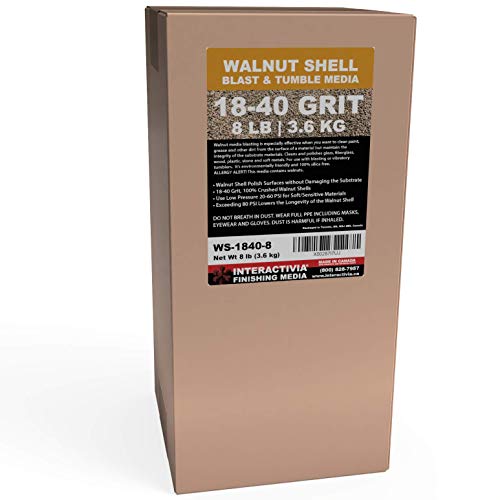
This walnut shell media hits the sweet spot for aluminum engine work. A user on a B7 RS4 confirmed it cleared carbon buildup from intake valves without gouging the soft valve seats — critical when disassembly is not an option. The 18-40 grit range stays fine enough to reach tight geometry but coarse enough to dislodge baked-on deposits.
With a loose bulk density of roughly 40-50 lb/ft³, the 8-pound quantity provides ample volume for a standard vibratory tumbler or a small blast cabinet. The particles are naturally angular, which means they cut rather than peen, yet the organic hardness (Mohs 4.5-5) stops well short of the aluminum’s own resistance, preventing dimensional changes.
Some users noted the media is too aggressive for fine brass polishing or antique coin restoration, confirming its proper role is heavy cleaning on substrates that can tolerate moderate abrasion. For carbon removal or paint stripping on aluminum castings, this is the most forgiving premium option available here.
Why it’s great
- Biodegradable and silica-free for safer shop air
- Removes carbon without etching the base metal
- Uniform 18-40 mesh delivers consistent results
Good to know
- Not suitable for fine finish or delicate restoration work
- Some users found it too coarse for brass tumbling
2. #80 Grit Aluminum Oxide Blast Media (8 lbs)

Brown fused aluminum oxide at #80 grit is the standard-issue abrasive for pre-coat surface preparation on aluminum. With a Mohs hardness of 9 — just one step below diamond — it cuts fast, stripping paint, anodizing, and light rust in a single pass. The angular fracture planes create a mechanical anchor profile that dramatically improves paint and powder-coat adhesion.
Users report the media lasts substantially longer than silica alternatives because the particles fracture slowly, maintaining cutting edges through multiple reuses. The 8-pound bucket is practical: resealable, moisture-resistant, and easy to pour directly into a blast cabinet hopper. One reviewer prepped a set of aluminum rims for cerakoting and achieved a perfect tooth with zero warping.
The primary downside is particle embedment risk on very soft 1000-series alloys. On cast or 6061 aluminum, #80 grit is ideal; on thin sheet or wrought parts, you may want to step down to a finer grit or switch to a glass bead. For 90% of shop-grade aluminum work, this is the most versatile performer.
Why it’s great
- Mohs 9 hardness strips coatings aggressively
- Resealable bucket keeps media dry and contamination-free
- Long cycle life reduces media replacement frequency
Good to know
- Too aggressive for thin sheet aluminum or polished finishes
- Can embed particles in very soft alloys
3. #8 Spec Glass Beads 70-80 Grit (10 lbs)

These glass beads occupy the sweet spot between cleaning power and surface preservation. The spherical particles peen rather than cut, which means they remove oxidation, carbon, and thin coatings without removing base metal. A verified buyer restored aluminum dirt bike parts to a like-new satin finish without dimensional loss — exactly what you want for vintage parts or machined surfaces that can’t tolerate material removal.
The #8 spec designates a medium 70-80 mesh that flows consistently through suction-feed blast guns even with an underpowered compressor, as one reviewer confirmed on a shop gun that struggled with other media. The 10-pound quantity is generous enough to fill a small cabinet’s pickup tube multiple times before needing a top-off.
Some buyers felt the packaging was deceiving because the 10-pound bag occupies less volume than they expected — glass is dense, so volume per pound is low. Also, if the bag arrives with a pinhole, cleanup is messy. Overall, for removing crud from bolts, aluminum intakes, and engine covers, this is the least risky option for the substrate.
Why it’s great
- Leaves a clean satin finish without surface damage
- Works well in siphon-feed guns at lower CFM
- Silica-free and 100% recyclable
Good to know
- Low volume-per-pound due to glass density
- Bag may arrive with small holes; check immediately
4. #8 Glass Beads 80-100 Mesh (8 lbs)

Stepping up to 80-100 mesh gives you a finer glass bead that leaves a light grey, matte finish — ideal for aluminum parts destined for primer or clear coat. Users report the media cleans the surface of oxidation and light scale while leaving a uniform texture that paint adheres to without additional sanding.
The 8-pound container is compact but a few reviewers noted that roughly 10% of the beads were too large to pass through their blast cabinet’s filter screen. That means you may need to sieve the media before use, which adds a step to your workflow. The remaining 90% works perfectly, but the inconsistency is worth noting for precision setups.
One buyer compared the price to local retail and felt the value was lower per pound than what is available off-the-shelf at a certain national tool store. If you prefer the convenience of one-click delivery and a consistent supply chain, the premium is acceptable; otherwise, bulk buyers may want to source locally.
Why it’s great
- Delivers a uniform light-grey satin surface
- Good for parts that will be painted or powder coated
- Fine enough to avoid visible peening marks
Good to know
- About 10% of beads may be too large for cabinet screens
- Higher per-pound cost compared to local bulk suppliers
5. Crushed Glass Abrasive #50 Mesh (19 lbs)

Crushed glass at #50 mesh (559-254 microns) is the most aggressive non-oxide option in this lineup. Users tackling thick rust scale on steel subframes confirmed it strips heavy corrosion efficiently, and the angular geometry provides a sharp cutting action that rivals aluminum oxide at a lower hardness. On aluminum, this media is appropriate only for thick-walled cast parts or pre-weld prep where you want deep anchor profiles.
The 19-pound box is heavy and well-packaged, arriving without spillage even after cross-country shipping. Several buyers noted the media clouds a blast cabinet more quickly than glass beads because the angular edges fracture faster, turning into fine dust. You will need good cabinet ventilation and a respirator rated for crystalline silica byproducts.
A critical lesson from one reviewer: coarse grit does not always equal better performance on paint removal. The #50 bounced off detailed contours and failed to reach recessed areas where #100 grit worked effectively. On aluminum panels with complex geometry, a finer crushed glass is more productive. Save this for heavy structural parts.
Why it’s great
- Strips thick rust and heavy powder coatings fast
- Large 19-pound quantity offers strong per-pound value
- Angular shards create excellent anchor profiles
Good to know
- Creates heavy dust clouds; requires good ventilation
- Too coarse for detailed or contoured aluminum parts
6. #120 Grit Aluminum Oxide (10 lbs)

Fine 120-grit aluminum oxide is the precision tool in this category. Users prepping aluminum dirt bike parts for cerakoting confirm it strips the factory coating cleanly while leaving a microscopic tooth that cerakote bonds to tenaciously. The Mohs 9 hardness ensures it will etch glass too, so this media works across multiple substrates if your shop does mixed-material work.
The 10-pound bottle is practical: a wide-mouth container with a pour spout that makes refilling your blast gun hopper easy without spilling. The media arrived dry and sharp, feeding through a spot blaster without clumping. One reviewer even used it to clean sediment off ancient artifacts, revealing intricate carvings — a testament to its controlled cutting ability.
Because it is so fine and hard, the media can embed in porous aluminum castings if blasting pressure is too high. Keep the nozzle at a consistent distance and use lower PSI (40-60 psi) to avoid peening the media into the surface. For any job that demands a clean, dry anchor profile without dimensional change, this is the finest tool available here.
Why it’s great
- Fine 120 grit creates a micro tooth for coating adhesion
- Mohs 9 hardness cuts glass and aluminum effectively
- Convenient resealable bottle with pour spout
Good to know
- Higher risk of particle embedment at high pressure
- Too aggressive for thin or polished aluminum surfaces
7. Ground Walnut Shell Media 18-40 Grit (5 lbs)
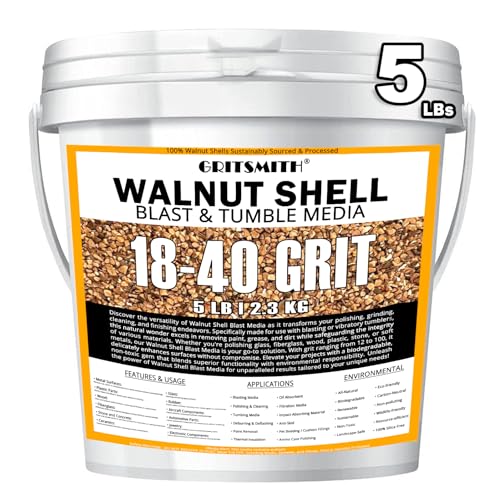
This 5-pound bag of ground walnut shells is a budget-friendly entry point for users testing organic media for the first time. The 18-40 grit range (0.42 mm to 1 mm particles) is suitable for tumbling brass, light paint removal on wood, or cleaning aluminum parts that only have light grease and oxidation rather than thick coatings.
Users in the reloading community confirmed it cleans brass cartridge cases effectively without clogging primer pockets — a common complaint with finer corn cob media. The soft Mohs 4.5-5 hardness means it will not etch aluminum, but it also will not strip heavy paint or anodizing. This media is best suited for maintenance cleaning rather than restoration work.
The 5-pound quantity is sufficient for one full charge in a small vibratory tumbler or a brief session in a blast cabinet. Serious shop users will run through it quickly, making this a trial-sized purchase to assess whether walnut shell media suits your workflow before committing to larger volumes. For light-duty shop maintenance, it does the job without risk to the substrate.
Why it’s great
- Non-toxic and safe for use on soft metals
- Does not clog primer pockets in brass tumbling
- Entry-level price for first-time users
Good to know
- 5 lb quantity is consumed quickly in blasting applications
- Not aggressive enough for thick paint or anodizing removal
FAQ
Can I use sand (silica) on aluminum?
What pressure should I use when blasting aluminum?
Is walnut shell media reusable on aluminum?
Why does my glass bead media leave a dull finish instead of shiny?
How do I prevent warping when blasting thin aluminum sheet?
Final Thoughts: The Verdict
For most users, the blasting media for aluminum winner is the #80 Grit Aluminum Oxide (TITGGI) because its Mohs 9 hardness and #80 mesh provide the fastest coating removal while still creating an ideal anchor profile for paint and cerakote in a single process. If you want a substrate-safe carbon cleaner, grab the Ground Walnut Shell 18-40 Grit. And for restoring aluminum parts to a satin finish without removing material, nothing beats the #8 Spec Glass Beads.