
Our readers keep the lights on and the weekend projects moving. As an Amazon Associate, I earn from qualifying purchases.
Staring at a notebook full of cryptic numbers, wondering if your morning reading was a fluke or a real trend—that is the reality of old-school blood pressure tracking. A monitor that transmits data directly to your phone eliminates the guesswork, creating a clear, shareable record of your cardiovascular health without you lifting a pen.
I’m Rikta — the co-founder and writer behind FitlyFast. I’ve spent weeks analyzing accuracy protocols, app ecosystems, and cuff designs to isolate which connected cuffs actually deliver reliable data for daily use.
After reviewing dozens of models and cross-referencing clinical validation and real-world user feedback, I’ve assembled the definitive guide to the best blood pressure monitor with bluetooth for your home.
How To Choose The Best Blood Pressure Monitor With Bluetooth
Picking a connected cuff isn’t just about the lowest price. The real value lies in how accurately the device reads your blood pressure and how seamlessly it integrates into your daily routine. A poor choice can lead to false alarms or missed warnings.
Clinical Validation is Non-Negotiable
A monitor that hasn’t been tested against a mercury sphygmomanometer is a guessing machine. Look for models explicitly validated against international protocols like ESH (European Society of Hypertension) or ISO standards. These certifications ensure the device’s readings are within an acceptable margin of error—typically 3 mmHg—compared to a clinical measurement.
The Cuff Must Fit Your Arm
The single biggest source of inaccurate home readings is an ill-fitting cuff. A cuff that is too small will artificially inflate your numbers, while one that is too large will underreport them. Most standard cuffs cover 8.7 to 16.5 inches in circumference. If your arm measures outside that range, you must seek a model that offers an XL option or a separately purchasable larger cuff. The device cannot correct for a poor physical fit.
App Ecosystem and Data Management
Not all companion apps are created equal. Some sync automatically in the background, while others require manual uploads. Evaluate whether the app allows unlimited data storage, supports multiple user profiles, and can generate a shareable PDF report for your physician. A clunky app negates the convenience of Bluetooth.
Quick Comparison
On smaller screens, swipe sideways to see the full table.
| Model | Category | Best For | Key Spec | Amazon |
|---|---|---|---|---|
| Checkme BP3-C1 | Premium | Voice-guided tracking | 2 x 250 memory, 8.7-17.7″ cuff | Amazon |
| Greater Goods Balance | Mid-Range | Rechargeable lithium battery | Fast-charging, 2-user support | Amazon |
| Braun ExactFit 2 Connect | Premium | Compact travel companion | Gentle inflation, 2-year warranty | Amazon |
| iHealth Track Pro | Mid-Range | Seniors and large screen | Full-view LED, Type-C power | Amazon |
| iHealth Track Smart | Mid-Range | Value and simplicity | Oversized backlit display | Amazon |
| Glucoracy BP | Budget | Portable travel use | Rechargeable, 2 x 99 memory | Amazon |
In‑Depth Reviews
1. Checkme Blood Pressure Monitor BP3-C1

The Checkme BP3-C1 stands out for its dual-display capability, showing your last seven days of readings and the average on-screen without requiring a phone. This makes trend-spotting immediate, even for those who rarely open the app. The XL cuff accommodates arms up to 17.7 inches, a critical feature for larger users often underserved by standard cuffs.
Voice broadcast reads out your systolic, diastolic, and pulse, which is invaluable for users with visual impairments or those who simply want auditory confirmation. The device stores 250 readings per user across two profiles, plus a guest mode. The build quality feels substantial, with a weight that suggests durable internal components.
It runs on four AA batteries, which are included. While not rechargeable, battery life is long, and the dual power supply option offers flexibility. The learning curve for adjusting settings is slightly steeper than simpler models, but the payoff in data depth and accuracy is worth it for committed trackers.
Why it’s great
- Voice readout for accessible monitoring
- XL cuff fits 8.7 to 17.7 inches
- On-device 7-day trend display
Good to know
- Uses disposable AA batteries, not rechargeable
- Interface can be less intuitive initially
2. Greater Goods Bluetooth Blood Pressure Monitor

Greater Goods sidesteps the battery replacement cycle with a built-in rechargeable lithium-ion battery that delivers hours of use per charge. This is a tangible convenience for anyone who wants to grab the monitor and take it on a trip without packing extra AAs. The all-in-one design means no loose cables except the charging cord.
The companion Balance app is polished and supports two individual user profiles, each storing unlimited measurements. The display is bright and backlit with large digits, making it readable in dim light. The cuff begins reading early in its inflation cycle, which speeds up the process and reduces the uncomfortable sensation of prolonged squeezing.
Some users reported that the device can feel a bit sluggish during the measurement cycle. A few isolated accuracy concerns exist, but the majority of reviews confirm readings within a few points of a manual sphygmomanometer. The customer service team is responsive, offering replacements for any defective cuffs.
Why it’s great
- Rechargeable battery eliminates disposable waste
- Fast inflation for quicker readings
- Polished app with unlimited history
Good to know
- Charging port is not USB-C
- Some units show variance versus clinical readings
3. Braun ExactFit 2 Connect
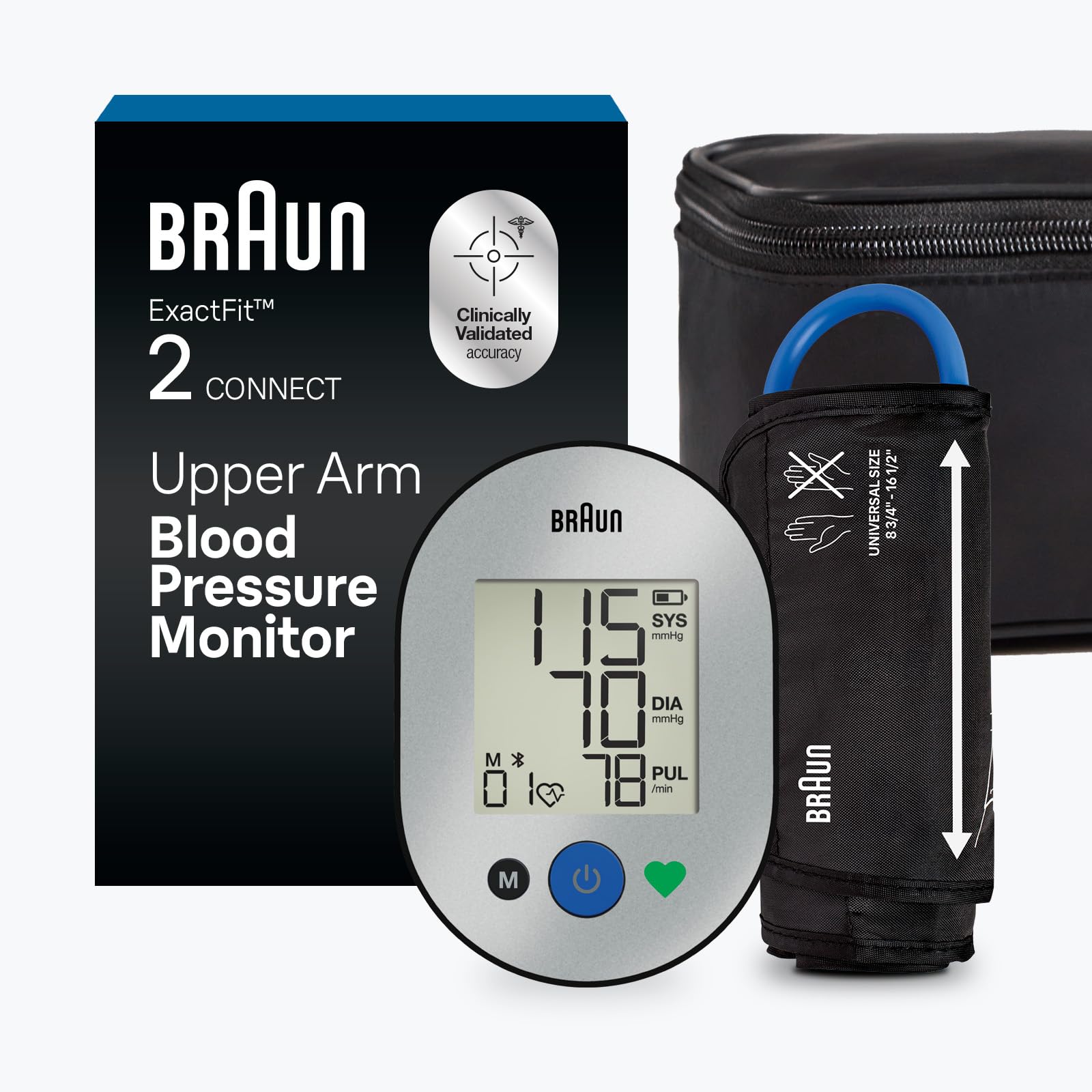
The Braun ExactFit 2 Connect is engineered around a gentle inflation algorithm that minimizes the aggressive tightening many users find unpleasant. This makes it a strong candidate for those with sensitive arms or anxiety about the measurement process. The compact footprint and included storage pouch make it genuinely portable for work or travel.
Its integration with the Braun Healthy Heart app is straightforward, allowing automatic syncing and trend graphing. The device itself features a simple color-coded heart light—green, yellow, or red—for instant interpretation of your reading. Irregular heartbeat detection adds clinical depth without complicating the interface.
The standard cuff is on the smaller side, and users with larger arms may find it tight. No XL option is included in the box. The monitor is not USB rechargeable, relying on included batteries. However, the two-year manufacturer warranty provides solid long-term reassurance for the investment.
Why it’s great
- Gentle inflation for comfortable use
- Very compact and travel-friendly
- Color-coded indicator light for clarity
Good to know
- Cuff size may be insufficient for larger arms
- Not rechargeable; requires AA batteries
4. iHealth Track Pro KN-550LT
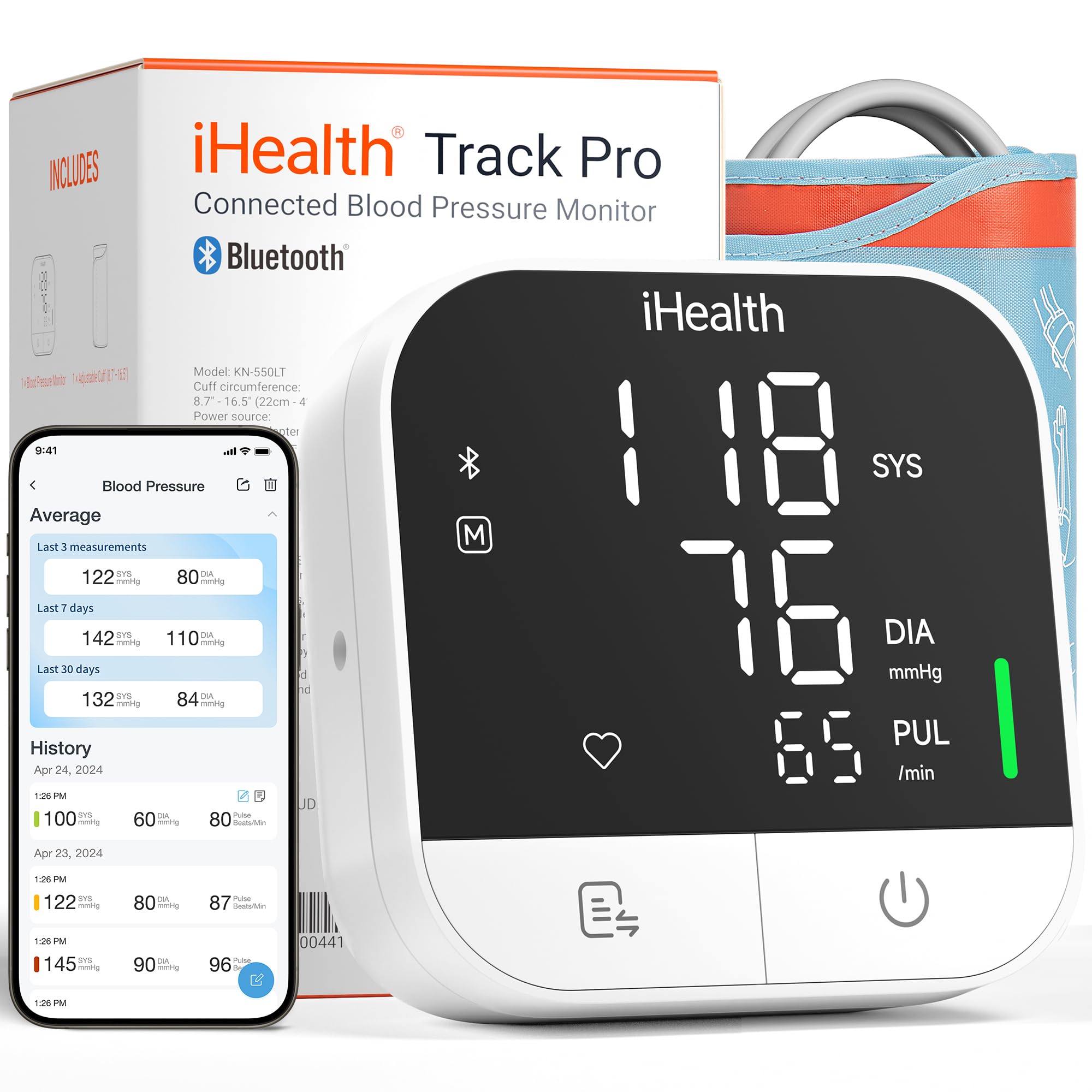
The Track Pro features a wide-angle LED display that remains legible from any position, a real advantage for a household where multiple people may use the device from different angles. The red, yellow, and green indicator lights make the results digestible at a single glance, reducing confusion for elderly users.
It offers dual power options: three AA batteries or a USB Type-C cable. This flexibility means it can live permanently plugged in on a nightstand or run on batteries for travel. On-device memory stores 120 readings, while the MyVitals app holds unlimited data. The cuff fits arms from 8.7 to 16.5 inches.
The one-button operation is genuinely straightforward—press start and wait. However, syncing to the phone app requires a manual upload step each time, which some users find tedious. A small minority reported readings that were consistently higher than their doctor’s, though the majority found it accurate and consistent.
Why it’s great
- Wide-angle LED display for multiple viewers
- Type-C or battery power flexibility
- Simple one-button operation
Good to know
- App requires manual data upload
- Some users report high readings relative to clinic
5. iHealth Track Smart KN-550BT
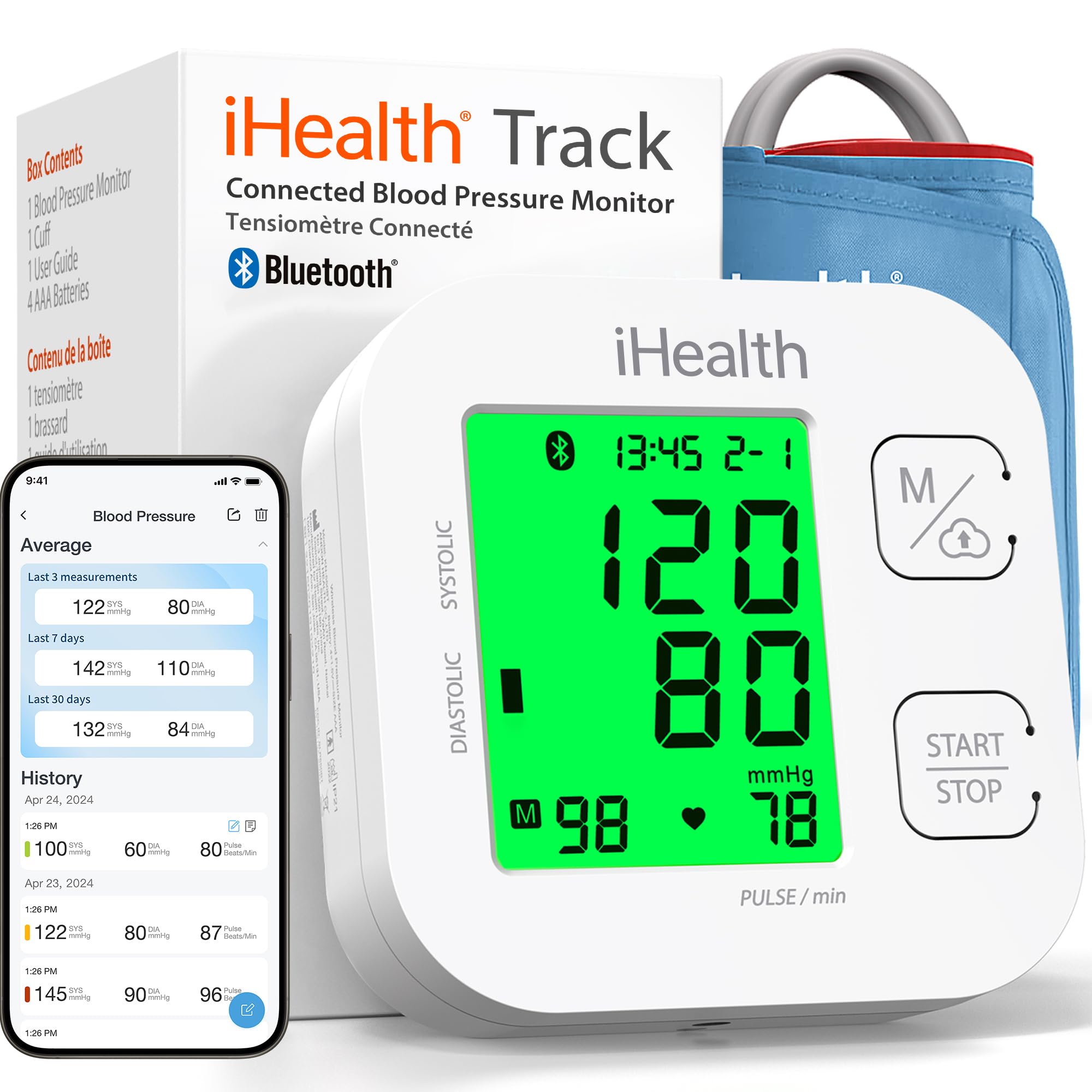
The Track Smart is a no-frills entry point into connected monitoring. The oversized, multi-color backlit display is its standout feature—numbers are large enough to read from across a room, and the coded color indicator instantly flags concerning readings. It meets ESH 2010 performance standards for clinical accuracy.
Setup is fast: insert the four included AAA batteries, wrap the cuff, and press start. The device stores up to 99 readings onboard and syncs to the iHealth app for unlimited tracking. It also detects irregular heart rhythms, displaying a warning symbol on the screen if any are found during a measurement.
The app has been criticized for intrusive ads, which can detract from the experience. If the app’s ad load bothers you, the device works perfectly fine as a standalone monitor—you can log readings manually. No travel case or AC adapter is included, and it uses AAA batteries exclusively with no rechargeable option.
Why it’s great
- Very large, easy-to-read display
- Simple two-button operation
- Irregular heartbeat detection
Good to know
- App contains intrusive advertisements
- Requires AAA batteries only; no rechargeability
6. Glucoracy Upper Arm Blood Pressure Monitor
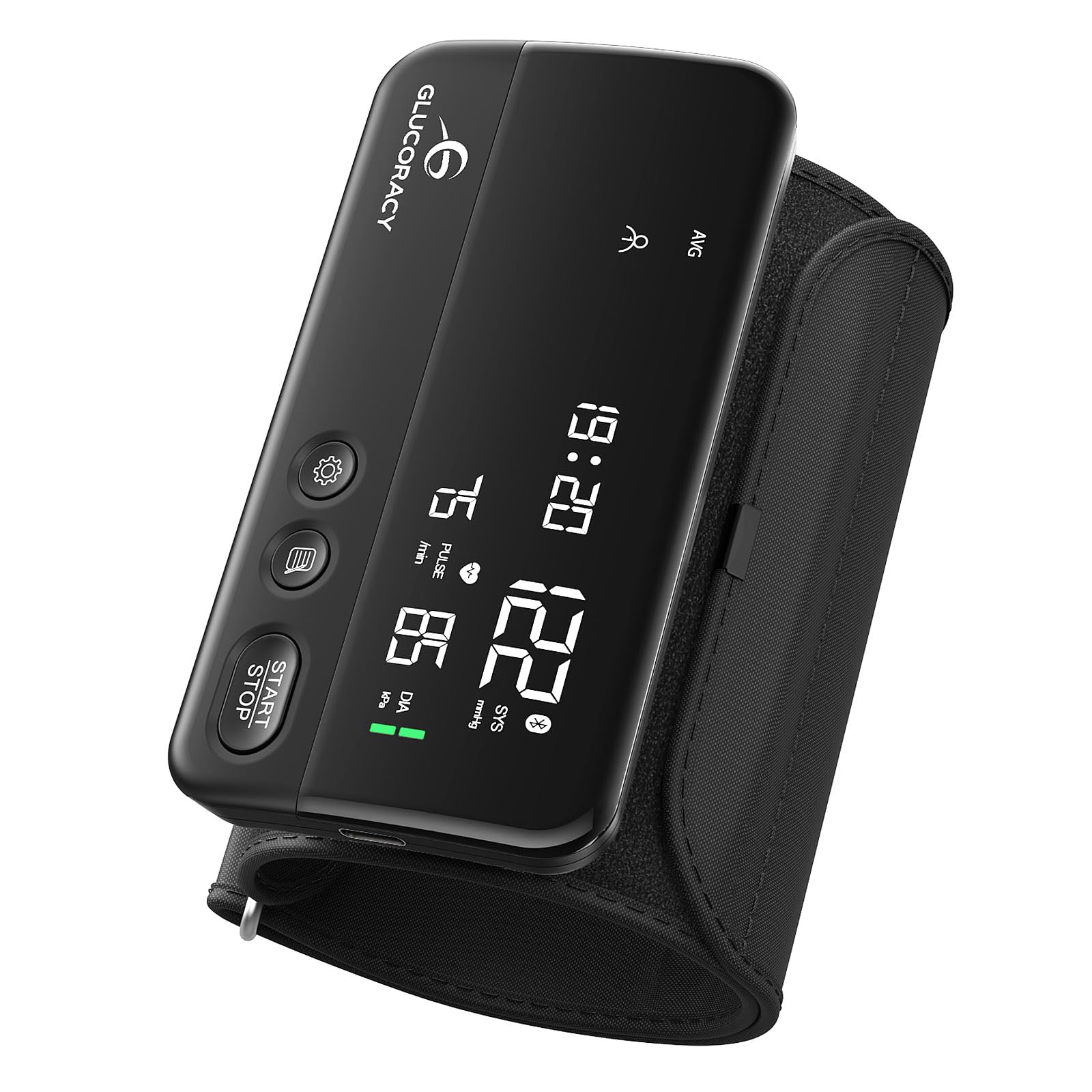
The Glucoracy monitor is built around a compact, one-piece design that prioritizes travel convenience. Its rechargeable battery lasts for over 200 readings on a two-hour charge, and automatic shutoff preserves power. This is one of the lightest units in the lineup, making it ideal for slipping into a weekend bag.
The high-definition LCD backlit display uses a six-level reading indicator, giving more granular feedback than simple three-color systems. It supports two users with separate 99-slot memory banks. The adjustable cuff covers 10.6 to 16.5 inches, which accommodates standard to large arms but may be snug for very muscular builds.
Side-by-side comparisons with an Omron unit showed minor variance in systolic readings, but the device proved accurate enough for routine trend tracking. The package includes a storage bag and charging cable. The lack of Bluetooth connectivity in this guide’s context is notable—this unit relies on onboard memory rather than phone syncing.
Why it’s great
- Lightweight and truly portable one-piece design
- Rechargeable battery with long endurance
- Six-level reading indicator for nuanced feedback
Good to know
- No Bluetooth functionality for app syncing
- Cuff may be tight for larger arms
FAQ
How do I know if a Bluetooth blood pressure monitor is clinically accurate?
Can I use a Bluetooth monitor without the smartphone app?
Why do my home readings differ from the doctor’s office?
Final Thoughts: The Verdict
For most users, the best blood pressure monitor with bluetooth winner is the Checkme BP3-C1 because it combines an XL cuff with voice broadcast and an on-device seven-day trend display—features that support both accessibility and data depth. If you want a rechargeable unit with a polished two-user app, grab the Greater Goods Balance. And for compact travel use where absolute portability matters, nothing beats the Glucoracy.