
Our readers keep the lights on and the weekend projects moving. As an Amazon Associate, I earn from qualifying purchases.
That moment when your plants produce nothing but leaves, or your prized flowers refuse to open, hits hard. The right bloom booster fertilizer delivers the targeted phosphorus and potassium kick that shifts energy from foliage growth to bud formation, flower set, and fruit development.
I’m Rikta — the founder and writer behind FitlyFast. I analyze nutrient analysis ratios, organic certifications, and customer yield reports to separate real bloomers from overpriced water.
This guide breaks down the seven best formulations, from soluble powders to organic liquids, so you can pick the bloom booster fertilizer that actually gets your garden producing. No fluff, just the chemistry that works.
How To Choose The Best Bloom Booster Fertilizer
Not every high-phosphorus bag is right for every plant. Picking the wrong formula can burn roots or lock out other nutrients. Focus on three factors: the N-P-K numbers, whether you need organic vs. synthetic, and the physical form (powder vs. liquid).
Decode the N-P-K Analysis
The middle number (phosphorus) is the bloom driver. Ratios like 10-30-20 or 4-10-7 signal a dedicated bloom formula, while 20-20-20 is more of a balanced general feed. For indoor flowering plants, fruiting vegetables, and perennials entering bloom phase, a middle number above 20 is common. Avoid applying high-phosphorus boosters during early vegetative growth — it can stunt leaf development.
Organic vs. Synthetic Formulas
Organic bloom boosters (like Dr. Earth or Elm Dirt) rely on bone meal, seabird guano, kelp, and worm castings to release nutrients slowly as soil microbes break them down. They feed the soil food web and reduce salt burn risk. Synthetic options (Jack’s Classic, Miracle-Gro) deliver instantly available phosphorus for fast correction and precise control, but require careful mixing to avoid over-fertilization.
Powder vs. Liquid Concentrate
Water-soluble powders (Jack’s 10-30-20) give you more gallons per dollar and longer shelf life — a 4-pound bag can yield 64+ gallons of feed. Liquid concentrates are pre-dissolved and easier to apply but cost more per feeding. For container gardens and hanging baskets, liquids offer convenience; for large beds or hydroponic programs, powders are the efficient play.
Quick Comparison
On smaller screens, swipe sideways to see the full table.
| Model | Category | Best For | Key Spec | Amazon |
|---|---|---|---|---|
| Jack’s Classic 10-30-20 Blossom Booster | Soluble Powder | Continuous bloom programs | 10-30-20 with micronutrients | Amazon |
| Elm Dirt Bloom Juice | Organic Liquid | Indoor/outdoor flowering plants | Worm castings + kelp + bone meal | Amazon |
| Jack’s Professional 10-30-20 (25lb) | Soluble Powder | Large-scale growers | 25 lbs for hydroponic feed | Amazon |
| Miracle-Gro LiquaFeed Bloom Booster | Liquid Refill | Quick hose-end feeding | 64 oz in 4 refill bottles | Amazon |
| Dr. Earth Flower Girl Bud & Bloom Booster | Organic Dry | Organic gardens and raised beds | 4 lbs, OMRI-listed organic | Amazon |
| Great Big Roses Booster | Liquid Compost | Rose bushes and hydrangeas | Humic acid + 70 trace minerals | Amazon |
| Bloom City SuperMicrobe Root Fertilizer | Microbial Liquid | Root establishment after transplant | Beneficial microbes + fish emulsion | Amazon |
In‑Depth Reviews
1. Jack’s Classic 10-30-20 Blossom Booster
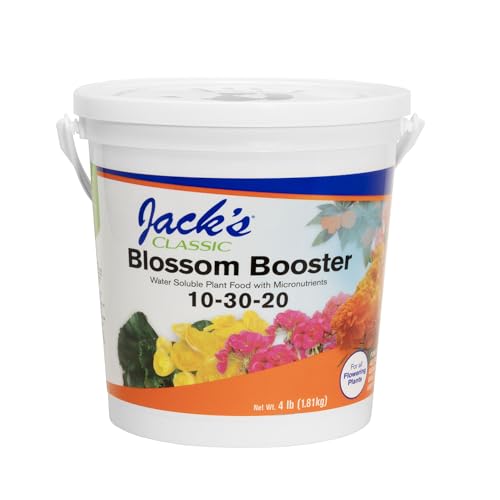
Jack’s Classic delivers a sharp 10-30-20 N-P-K punch with chelated micronutrients (iron, manganese, zinc) that prevent leaf yellowing during heavy bloom cycles. The 4-pound powder bag yields roughly 64 gallons of feed — far more economical per watering than any liquid concentrate on the shelf. Users report visible bloom density increases in annuals like petunias, marigolds, and even orchids within two weeks of switching from balanced fertilizers.
It works as both a root drench and a foliar spray, which gives flexibility for hydroponic setups and soil gardens alike. The included measuring spoon simplifies mixing: one scoop per gallon for continuous feed, two for bi-weekly feeding. I’ve found it particularly effective on container-grown tomatoes and peppers during fruit set — the phosphorus drives flower retention even under moderate heat stress.
One note: the powder is high-salt, so precise mixing is non-negotiable. Over-application can scorch tender roots, especially in small pots. If you prefer a hands-off organic approach, this isn’t your match — but for raw bloom performance and cost efficiency, it’s the top formula on the market.
Why it’s great
- High 10-30-20 ratio drives fast, visible bloom response
- 4 lbs makes over 60 gallons — exceptional value per feeding
- Includes full micronutrient suite for balanced plant health
Good to know
- High salt content requires careful measuring to avoid root burn
- Not OMRI-listed organic — synthetic mineral salts
2. Elm Dirt Bloom Juice
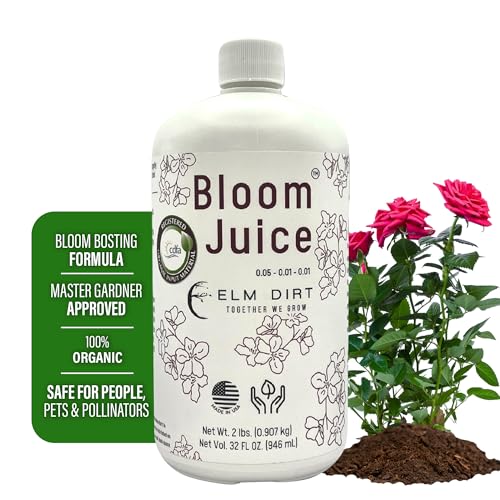
Elm Dirt’s Bloom Juice is a certified organic liquid complex built from dechlorinated water, worm castings, kelp meal, bone meal, seabird guano, and fish meal. That ingredient list reads more like a soil-building recipe than a typical bloom booster. The phosphorus comes from slow-release organic sources rather than synthetic phosphates, which reduces the risk of runoff and salt buildup in container soils.
One reviewer reported blooms on a houseplant that had not flowered in years after the first application — a testament to how well living-soil microbes respond to this formula. The lactobacillus extract and humic acid support nutrient cycling, so plants actually access the phosphorus already in the soil. For indoor gardeners and serious organic growers, this is the bottle that turns struggling plants into heavy bloomers.
The downside is cost per feeding: the 32-ounce bottle is not cheap compared to powders, and some users reported batch inconsistency in color. Also, the fish-meal base gives a mild odor that some find unpleasant indoors. But if living soil health and organic certification top your priority list, this juice delivers results.
Why it’s great
- Certified organic with living microbial ingredients
- Revived non-blooming houseplants — real proof of efficacy
- Easy mix-and-feed application with no measuring headache
Good to know
- Expensive per ounce compared to powdered equivalents
- Mild fishy odor may be noticeable during indoor use
3. Jack’s Professional 10-30-20 Blossom Booster (25lb)
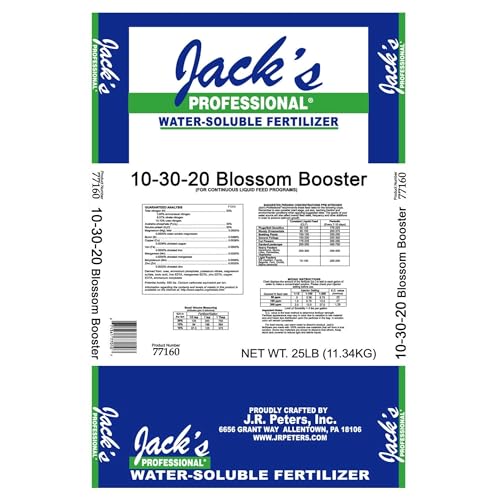
Jack’s Professional 10-30-20 is the same chemistry as the 4-pound Classic but scaled to a 25-pound bag that serious growers in community gardens and hydroponic operations swear by. The continuous liquid feed program is a standard in commercial floriculture — mix 1 teaspoon per gallon for constant fertigation, or ramp up for heavy bloomers. Users switching from organic programs report seeing visible results within 48 hours, with no leaf burn when directions are followed.
The bag includes a full micronutrient package (boron, copper, molybdenum, zinc) that prevents hidden deficiencies during heavy production. One long-term user noted a single 25-pound bag lasts roughly three seasons in a sub-irrigated container system, making this the most cost-efficient bloom formula on the list for high-volume growers. The 10-30-20 ratio is specifically designed to push flower output in vegetables, annuals, and perennials without excessive vegetative stretch.
This is not for the casual balcony gardener — 25 pounds is serious volume. The powder can clump if exposed to moisture, so airtight storage is critical. Also, it’s a synthetic high-salt formula, so it requires clean water and precise mixing to avoid burn. For large beds, greenhouse benches, or hydroponic rails, this is the professional-tier standard.
Why it’s great
- 25 lbs delivers massive volume for continuous feed programs
- Results in as little as 48 hours — fast acting
- Cost per gallon far below any liquid or smaller bag
Good to know
- Requires airtight storage to prevent clumping
- Not organic — synthetic mineral salts
4. Miracle-Gro LiquaFeed Bloom Booster

Miracle-Gro’s LiquaFeed Bloom Booster is the classic hose-end liquid system in a 4-pack of 16-ounce refills, totaling 64 ounces. The convenience factor is high — you screw the bottle onto the LiquaFeeder gun and spray. No mixing, no measuring, no cleanup. For large beds and hanging baskets, this cuts feeding time down to minutes.
The formula is a synthetic liquid fertilizer built for quick absorption. One user reported that their flowering plants responded within days, with bigger blooms and more intense color compared to the same plants fed with granular feeds. The 4-pack is the best-value bundle for regular use, especially if you cycle through bottles quickly during peak blooming season.
The trade-off is limited flexibility: you cannot adjust the dilution ratio — it’s fixed by the feeder. This makes it tough to micro-manage feeding for different plant stages. Additionally, the synthetic base lacks the organic soil-building nutrients that long-term gardeners prefer. For quick, consistent feeding on a large scale, it gets the job done with zero fuss.
Why it’s great
- Hose-end application — fastest delivery system for large gardens
- 4-pack provides long-term supply at good value
- Immediate absorption for fast visual results
Good to know
- Fixed dilution — no adjustment for different plant stages
- Synthetic formula; not compatible with organic soil methods
5. Dr. Earth Flower Girl Bud & Bloom Booster

Dr. Earth’s Flower Girl blend is a dry, organic, OMRI-listed formula with a 3-9-4 analysis (despite some marketing listings showing 4-10-7 — the bag you receive is 3-9-4). It contains zero GMOs, chicken manure, or sewage sludge, making it one of the cleanest organic options for edible flowers and fruit trees. One user saw dragon fruit bloom counts jump from 3 to 25 blooms after switching to this blend.
The hand-crafted compost base feeds soil microbes, releasing nutrients slowly over weeks. It’s safe for people and pets, so you can apply it around vegetable beds and flower borders without worrying about chemical residues. The 4-pound bag covers roughly 50-80 square feet depending on application rate, which is reasonable for mid-sized gardens.
The main limitation is the lower phosphorus concentration (9) compared to synthetic bloom boosters. For plants that need a rapid, high-phosphorus correction, this may not deliver fast enough. Also, the dry granules must be worked into the soil surface and watered in, which takes more effort than a liquid feed. For organic growers who prioritize soil health, it’s a top-tier choice.
Why it’s great
- OMRI-listed organic — safe for edibles and pets
- No GMOs, sewage sludge, or synthetic additives
- Real results: users report dramatic bloom increases
Good to know
- Moderate phosphorus (9) — slower than synthetic boosters
- Dry granules need soil incorporation; not a ready-to-use liquid
6. Great Big Roses Booster
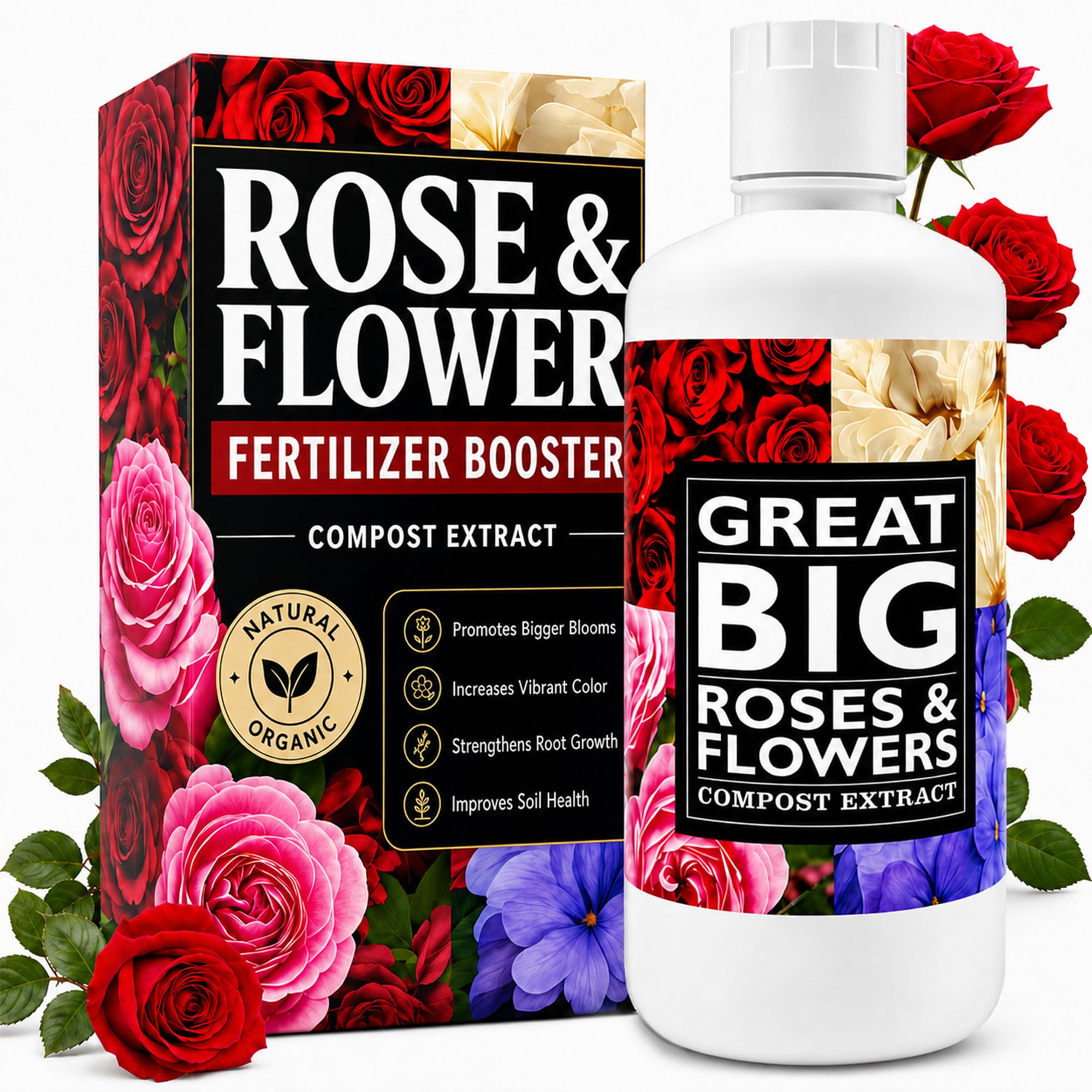
Great Big Roses is a liquid compost extract infused with bioavailable humic acids, over 70 chelated trace minerals, and seaweed — specifically formulated to improve soil structure and nutrient uptake for roses and other flowering shrubs. The 32-ounce concentrate makes about 8 gallons of finished feed. Users report that roses produce more buds and bigger blooms even after harsh winters, with many describing the results as “unbelievable” compared to previous seasons.
The proprietary blend does not list an exact N-P-K ratio, which means it works more as a soil conditioner that boosts the effectiveness of the fertilizers you already use. It flows directly to the root zone and starts working immediately. For rose bushes, hydrangeas, and flowering perennials that need deeper root establishment, this extract is a reliable companion product rather than a standalone bloom booster.
The biggest complaint is the jug design — the wide mouth makes it easy to spill the expensive concentrate while measuring into a watering can. The price per bottle is high, but each bottle makes enough feed to cover a dozen or more established bushes across a season. If your garden revolves around roses, this delivers the soil biology they crave.
Why it’s great
- Humic acids + 70 trace minerals improve soil biology
- Immediately flows to root zone for fast results
- Proven to revive weak rose bushes and boost bloom count
Good to know
- No N-P-K ratio — works as a fertilizer enhancer, not a standalone feed
- Jug packaging makes measuring messy; narrow-neck pour is easy to spill
7. Bloom City SuperMicrobe Root Fertilizer
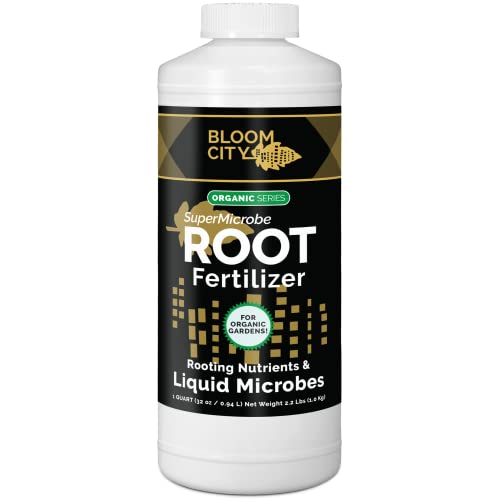
Bloom City’s SuperMicrobe is not a traditional bloom booster — it’s a microbial inoculant that focuses on root development and nutrient uptake. The formula contains beneficial bacteria and a fish-emulsion base that feeds soil biology, which in turn makes phosphorus and potassium more available to plants. It is best used during transplanting or early bloom to establish a strong root network before heavy flowering begins.
Users report delayed effects (roughly one week) followed by dramatic improvements in both root mass and foliage. One reviewer saw a jalapeno plant grow from 8 inches to over 3 feet in three months after using this product, producing about 20 peppers. It has a fishy smell (from the emulsion), but the odor dissipates quickly after application. For indoor or outdoor plants that are struggling after transplant, it rebuilds root health.
The downside is that it is not a standalone bloom nutrient — you still need a phosphorus-rich bloom booster during the flowering phase. It also requires dilution and consistent schedule for best results. For growers starting seeds or setting out transplants who want maximal root colonization, this is the right first step.
Why it’s great
- Beneficial microbes improve overall soil health and root efficiency
- Proven to jump-start transplant shock recovery
- Concentrated formula; small bottle lasts multiple seasons for small gardens
Good to know
- Not a complete bloom booster — requires separate phosphorus feed
- Fishy smell during mixing; may be unpleasant for indoor use
FAQ
Can I use a bloom booster on all plants year-round?
Is organic bloom booster better than synthetic?
How often should I apply a bloom booster during flowering?
Can bloom booster burn my plants?
Final Thoughts: The Verdict
For most users, the bloom booster fertilizer winner is the Jack’s Classic 10-30-20 Blossom Booster because it balances fast, visible bloom response with exceptional cost efficiency and precise control. If you want an organic formula that feeds soil biology and revives struggling plants, grab the Elm Dirt Bloom Juice. And for large-scale continuous feed or hydroponic operations, nothing beats the Jack’s Professional 10-30-20 (25lb) for raw value and performance.