
Our readers keep the lights on and the weekend projects moving. As an Amazon Associate, I earn from qualifying purchases.
Planting a garden that rewards you year after year starts with picking the right perennials. Unlike annuals that die after one season, these flowering plants establish strong root systems and push up fresh growth each spring, often expanding into larger, more impressive clumps. The challenge is selecting varieties that match your sunlight, soil, and climate zone, and that deliver long bloom periods rather than a single fleeting flush of color.
I’m Rikta — the founder and writer behind FitlyFast. I’ve spent years analyzing nursery catalogs, grower ratings, and hardiness zone data to separate the perennials that truly perform from those that flop after year one.
To cut through the confusion, I’ve assembled this guide to the best blooming perennials with detailed reviews, comparison tables, and key growing specs for every gardener.
How To Choose The Best Blooming Perennials
The biggest mistake new gardeners make is buying perennials based solely on flower color without checking hardiness zones, mature size, and sun requirements. A plant that thrives in a Seattle shade garden will scorch in a Texas full-sun bed. Start by mapping your garden’s conditions, then pick from proven performers that match them.
Hardiness Zones and Bloom Timing
Every perennial listing includes a USDA zone range — for example, zones 4 through 9. Choose a plant rated for your zone or colder; a zone 8 plant will not survive a zone 5 winter. Bloom timing also matters: early-spring bloomers like Lenten Rose extend the season, while summer-to-fall varieties like coneflower and butterfly bush keep color going through October.
Sunlight, Soil, and Spacing
Check the required sun exposure — full sun (six-plus hours of direct light), partial shade, or full shade — and match it precisely. Most perennials need well-drained soil; boggy clay will rot roots. Mature spacing is equally critical: a Rose of Sharon shrub that spreads 6 feet wide will overwhelm a 2-foot border. Let the plant’s full size guide your layout, not the starter pot size.
Quick Comparison
On smaller screens, swipe sideways to see the full table.
| Model | Category | Best For | Key Spec | Amazon |
|---|---|---|---|---|
| Purple Blazing Star | Bulb | Pollinator gardens, borders | Grows to 40 inches tall | Amazon |
| 9-Pack Hosta Bare Root | Bare Root | Shade gardens, ground cover | Full shade tolerant | Amazon |
| Pugster Amethyst Buddleia | Shrub | Butterfly attraction, compact spaces | Mature height 24 inches | Amazon |
| Echinacea LAKOTA ‘Santa Fe’ | Container | Low-maintenance borders, cut flowers | Deer and rabbit resistant | Amazon |
| Mixed Lenten Rose Hellebore | Container | Winter-to-early-spring color | Blooms in midwinter | Amazon |
| Complete Flower Bulb Garden | Bulb Mix | Continuous summer color, beginners | 78 bulbs, extended bloom | Amazon |
| Blue Chiffon Rose of Sharon | Shrub | Large accents, containers, landscapes | Mature height 96-144 inches | Amazon |
In‑Depth Reviews
1. Purple Blazing Star – Liatris Spicata

This Liatris Spicata delivers tall velvety purple spikes that reach up to 40 inches, making it a standout in mid-border or cut-flower arrangements. Blooming from May through June, it offers essential late-spring nectar for bees, butterflies, and hummingbirds when many other plants are still leafing out. The corms are hand-packed and temperature-controlled from a California nursery that has been supplying gardeners since 1985.
Hardiness spans zones 3 through 9, and the plants tolerate poor soil and partial shade, which is rare for such a dramatic vertical accent. Deer resistance is a major plus for rural gardens, and the slender grass-like foliage adds texture even before the flower stalks emerge. With proper spacing of about 12 inches, the clumps will naturalize and expand each season.
Customer reports show fast sprouting — some saw shoots within five days of planting — though a small percentage reported rotten corms, likely from moisture trapped in non-porous packaging during transit. For best results, open the bag immediately upon arrival, inspect each corm, and plant in well-drained soil to prevent rot.
Why it’s great
- Dramatic 40-inch purple blooms for weeks
- Deer resistant and pollinator-friendly
- Thrives in poor soil and partial shade
Good to know
- Some corms may arrive with rot in damp packaging
- Blooming period is concentrated in late spring
2. 9-Pack Hosta Bare Root Perennial

Hostas are the backbone of any shady garden, and this nine-pack delivers a broad mix of green, blue, and variegated leaves that fill in bare spots quickly. Each bare-root division arrives with substantial root mass and often visible sprouts, giving you a head start on the growing season. The plants are rated for USDA zone 3 through 9, making them cold-hardy enough for northern climates.
Bare-root planting requires a little more attention than potted perennials — you need to soak the roots for a few hours before planting and keep the soil consistently moist for the first few weeks. But the payoff is a thick ground cover that suppresses weeds and produces elegant white or lavender flower spikes in mid-summer. The mix of colors means you get visual variety without needing to pick individual cultivars.
Customer feedback is overwhelmingly positive, with most buyers reporting all nine roots sprouting within a week. The main limitation is the inability to choose specific colors — you get whatever the nursery packs, which could include several of the same hue. For a uniform look, order a named cultivar instead of a mixed pack.
Why it’s great
- Nine healthy bare-root divisions for wide coverage
- Thrives in full shade where few perennials grow
- Fast growth; many report sprouts within days
Good to know
- Color mix is random — you cannot pick specific hues
- Bare roots need careful watering until established
3. Pugster Amethyst Buddleia Shrub

Butterfly bushes are notorious for growing into giant, unruly shrubs, but the Pugster Amethyst series from Proven Winners changes that. It tops out at just 24 inches tall, making it ideal for small gardens, containers, or the front of a perennial border. The amethyst-purple blooms appear from spring through summer and are a top attractor for butterflies and hummingbirds.
This is a deciduous shrub that loses leaves in winter and goes dormant, so do not panic if it arrives as bare sticks during cold months. It is rated for zones 5 through 10 and requires full sun for dense flowering. Once established, watering can be reduced to once per week, making it a low-maintenance addition to drought-tolerant gardens.
Buyers consistently praise the fast growth and large flower clusters, though a few received plants that arrived wilted or with dead leaves. This is common with shipped shrubs — the stress of transit can cause leaf drop, but the root system is usually healthy. Give it a week or two of consistent watering to bounce back.
Why it’s great
- Compact 24-inch height fits small spaces
- Long bloom season spring through summer
- Attracts butterflies and hummingbirds heavily
Good to know
- May arrive wilted or with dead leaves from transit
- Deciduous — goes dormant and looks bare in winter
4. Proven Winners Echinacea LAKOTA ‘Santa Fe’

Echinacea, or coneflower, is a staple of the summer-to-fall perennial garden, and this LAKOTA ‘Santa Fe’ selection adds striking pink-orange petals that fade to warm coral as they age. It stays compact at 12 to 16 inches tall and 16 to 18 inches wide, making it perfect for grouping in mass plantings or the middle of a sunny border. The flowers have a pleasant fragrance and are excellent for cutting.
This plant arrives in a #1 container with a fully rooted soil ball, so it can be planted immediately as long as weather permits. It is rated for zones 4 through 9 and requires moderate watering in well-drained soil. The cultivar is bred by Proven Winners for superior branching and bloom density, meaning you get more flowers per plant than generic seed-grown echinacea.
Multiple buyers report that the plant thrives in its second year, growing significantly larger and producing dozens of blooms. However, the deer-resistance claim is inconsistent — several customers in deer-heavy areas reported that their plants were eaten to the ground. If deer are a problem in your garden, consider fencing or repellent as a backup.
Why it’s great
- Unique pink-orange flower color with long bloom season
- Compact habit ideal for borders and containers
- Well-rooted container for immediate planting
Good to know
- Deer resistance varies — may need protection
- Some plants arrive smaller than expected for the pot size
5. Mixed Lenten Rose Hellebore
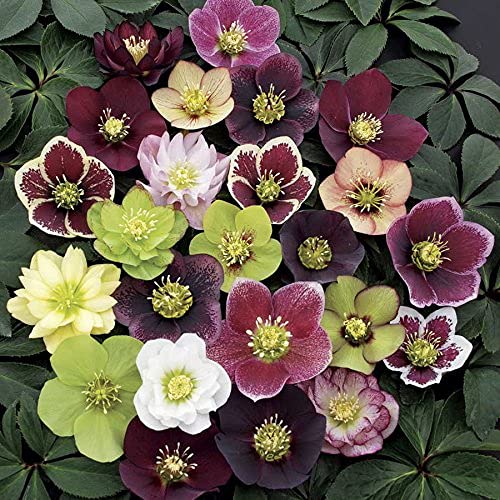
Lenten Rose, or Hellebore, is one of the few perennials that blooms in midwinter, pushing up flowers when snow may still cover the ground. This package includes three 2.5-inch pots of mixed Hellebores in a random color assortment — you could get shades of white, pink, purple, or deep burgundy. The glossy dark green leaves remain attractive year-round, providing structure even when not in flower.
They thrive in full to partial shade and are rated for zones 4 through 9, making them an excellent choice for shade beds that lack winter interest. Mature height reaches 18 to 24 inches with a similar spread. The flowers are nodding and delicate, lasting for weeks, and they self-seed gently over time to form a naturalized colony.
Buyers praise the healthy condition of the plants on arrival and note that they survived winter planting with good results. A few wished the bloom colors were labeled, since you cannot know what you are getting until the flowers open. Also, the plants may need a hardening-off period — gradually acclimate them to outdoor cold rather than planting directly from a warm greenhouse into freezing temperatures.
Why it’s great
- Midwinter blooms when few other plants flower
- Evergreen foliage stays attractive year-round
- Thrives in full shade under trees
Good to know
- Bloom colors are random — no color selection available
- Need gradual hardening off before planting in cold soil
6. Complete Flower Bulb Garden – 75 Bulbs

This collection bundles 78 bulbs across five species — Gladiolus, Harlequin Flowers, Stargazer Lilies, Asiatic Lilies, and Calla Lilies — designed to provide continuous blooms from July through October. The variety spreads the bloom times so that as one species fades, the next takes over, giving you months of cut-flower material from a single planting session. It is explicitly marketed to beginners, with easy-to-follow instructions included.
The bulbs are organic and rated for zones 3 through 9, with full-sun to partial-shade tolerance. Planting happens in summer, which is unusual — most spring-planted bulbs flower earlier, while this mix targets the mid-to-late season window. The Gladiolus alone provide tall, dramatic stems, while the lilies add fragrance and the Callas contribute a tropical look.
Customer results are mixed: many reviewers report strong growth and beautiful blooms, but a notable number say none of the bulbs sprouted at all. This could be due to improper storage before planting (bulbs need cool, dry conditions) or natural variability in bulk bulb quality. For best results, plant immediately upon arrival and avoid overwatering in heavy clay soils.
Why it’s great
- 78 bulbs for extended July-to-October blooms
- Five different species offer diverse colors and shapes
- Great for cut-flower arrangements all season
Good to know
- Some bulbs may not sprout — results vary by batch
- Requires immediate planting and proper storage before use
7. Proven Winners Blue Chiffon Rose of Sharon

The Blue Chiffon Rose of Sharon is a large deciduous shrub that can reach 8 to 12 feet tall and up to 6 feet wide at maturity, producing delicate blue semi-double flowers from spring through fall. The blooms are light and airy, resembling crepe paper, and they attract butterflies and hummingbirds all season. This is a major structural plant — it works as a privacy screen, a specimen accent, or a backdrop for lower perennials.
It ships in a 2-gallon container and is rated for zones 5 through 9, needing full sun to part shade. Proven Winners bred this variety for heavy flowering and sturdy branching, and it requires minimal pruning beyond winter cleanup. The plant is deciduous, so it will go dormant in winter and leaf out in early spring.
Buyers consistently praise the healthy condition, fast growth, and abundant flower buds. However, a few received smaller plants than expected for a 2-gallon pot, and some were disappointed to learn that Rose of Sharon is a Hibiscus syriacus, not a true blue hibiscus. Also, be aware that its mature size is large — do not plant it within 6 feet of a foundation or walkway.
Why it’s great
- Large shrub with months of blue semi-double blooms
- Attracts pollinators heavily throughout summer
- Well-branched, sturdy growth from first season
Good to know
- Matures to 12 feet tall — needs plenty of space
- Some plants arrive smaller than expected for pot size
FAQ
What does bare root mean and how do I plant it?
Why did my bulbs or bare roots not sprout at all?
How should I acclimate a potted perennial before planting it outside?
Final Thoughts: The Verdict
For most gardeners, the best blooming perennials winner is the Purple Blazing Star because it delivers dramatic tall purple spikes, thrives in a wide range of zones, and attracts pollinators while resisting deer. If you need shade-loving ground cover, grab the 9-Pack Hosta for fast-filling color in dark corners. And for a winter surprise, nothing beats the Mixed Lenten Rose Hellebore which pushes up blooms when the rest of the garden is asleep.