
Our readers keep the lights on and the weekend projects moving. As an Amazon Associate, I earn from qualifying purchases.
Standard LED bulbs flood your bedroom with blue wavelengths that trick your brain into thinking it is midday, suppressing melatonin production and making restful sleep harder to achieve. The fix is a bulb that cuts blue light at the source — before it ever reaches your eyes.
I’m Rikta — the co-founder and writer behind FitlyFast. I have spent hundreds of hours analyzing the color temperature output, lumen levels, and spectral purity of sleep-friendly bulbs to separate the ones that genuinely work from those that barely shift the hue.
Whether you need a dim nursery glow or a bright reading lamp that won’t wreck your circadian rhythm, this guide breaks down the best options on the market to help you find the right blue light blocking light bulbs for your evening routine.
How To Choose The Best Blue Light Blocking Light Bulbs
Not every warm-looking bulb is truly low in blue light. Many standard “warm white” bulbs still emit enough blue spectrum to interfere with your sleep cycle. To make the right choice, focus on three core specs: color temperature, spectral purity, and total brightness.
Color Temperature (Kelvin) — The Main Filter
Color temperature measured in Kelvin is the fastest way to gauge blue light content. A typical daylight bulb runs at 5000K and is loaded with blue wavelengths. For sleep-friendly lighting, anything below 2000K is your target. Amber and red bulbs sit at 1800K, 1600K, or even lower — the lower the number, the less blue light escapes the bulb. A 1600K amber bulb emits roughly 99.94% less blue light than a standard 3000K soft white bulb.
Spectral Purity — Amber vs. Red
Amber bulbs (1600K–1800K) work well for general evening activities like reading or nursing because they provide enough visible warm light to see clearly without the harsh blue spike. Red bulbs, particularly those centered at 625nm or 670nm, take it a step further by completely eliminating green and blue wavelengths. Red light is better for the final 20–30 minutes before sleep because it triggers stronger melatonin signaling — but it is also dimmer and more monochromatic, making it less practical for extended reading.
Lumens and Wattage — Matching Light Output
Brightness matters more than you might think. A 3W amber bulb (roughly 300 lumens) is great as a nightlight or nursery lamp, but it will feel too dim for reading a physical book. A 7W to 9W bulb (450–800 lumens) gives enough light for bedside reading while still staying within the low-blue spectrum. If you need the bulb for a ceiling fixture or a larger room, aim for the higher wattage range — but always check that the increased brightness does not push color temperature higher.
Quick Comparison
On smaller screens, swipe sideways to see the full table.
| Model | Category | Best For | Key Spec | Amazon |
|---|---|---|---|---|
| hooga Sleep Light Bulb | Amber | Bedroom reading | 1600K / 595 lumens | Amazon |
| Neporal Amber Sleep Light Bulb | Amber | Pre-sleep wind down | 1800K / UL Listed | Amazon |
| Neporal 625nm Red Light Bulbs | Red | Deep relaxation | 625nm / 800 lumens | Amazon |
| Eastiya Amber Sleep Light Bulb | Amber | Nursery or mood lighting | 1800K / 300 lumens | Amazon |
| Sunco Amber Sleep Light Bulb | Warm White | Whole-home evening use | 3000K / 12-pack value | Amazon |
| Gamma Revive 670nm Red Light Bulb | Red Light Therapy | Science-driven sleep aid | 670nm / 50 lumens | Amazon |
| Wivety Blue Light Bulb | Blue | Decorative / outdoor | Blue LED / 900 lumens | Amazon |
In‑Depth Reviews
1. hooga Sleep Light Bulb

The hooga Sleep Light Bulb sits at an industry-low 1600K color temperature, which means it emits only 0.06% of its light from the blue spectrum — one of the lowest figures available in any consumer bulb. That 595-lumen output is bright enough to read a physical book or scroll through a Kindle without needing to crank the brightness up or resort to blue-blocking glasses.
At 7W with a 45W incandescent equivalent, this bulb balances energy efficiency with real-world visibility. The amber hue is warm without being muddy, and the shatterproof casing adds durability for use in a bedside lamp or even a nursery. With a rated lifespan of 25,000 hours, it is a long-term investment in better sleep hygiene.
Users with Delayed Sleep Phase Disorder have reported genuine improvement in falling asleep after switching to this bulb. The only trade-off is that the amber tonality is quite pronounced — if you are accustomed to bright white light, the transition takes a few evenings to feel normal.
Why it’s great
- Lowest color temperature (1600K) among competing amber bulbs
- Bright enough for comfortable bedtime reading
Good to know
- Very warm amber tint may feel too dim at first for some users
- Single-pack only; buying multiples costs more per bulb
2. Neporal Amber Sleep Light Bulb
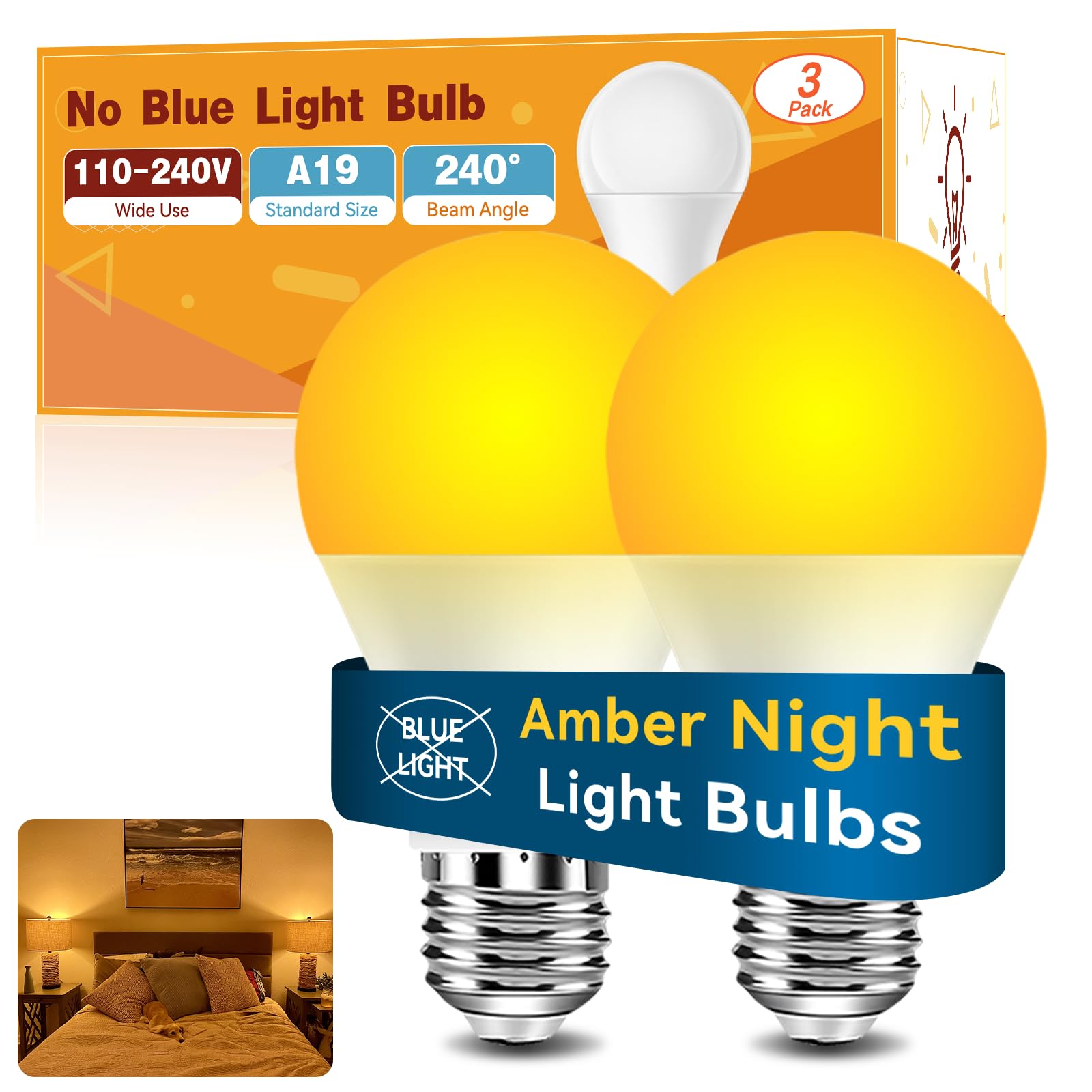
Neporal’s amber bulb matches the 99.94% blue-free claim of the hooga but targets 1800K instead of 1600K, producing a slightly less orange tone that many users find more livable for extended evening use. The 9W power draw delivers enough light for reading, and the UL certification adds peace of mind for safety-conscious buyers.
This bulb is especially effective as a bedside reading light. The non-flickering design ensures no eye strain during extended use, and the warm amber cast creates a cozy atmosphere without triggering the alertness response associated with standard LEDs. It comes in a 2-pack, making it a practical choice for covering both a bedroom lamp and a nursery fixture.
Buyers consistently mention that eyes feel more relaxed after switching from soft white bulbs. The main consideration is that 1800K is still very warm — this is not a bulb for task lighting in a workspace, but it is ideal for winding down in the hour before sleep.
Why it’s great
- 99.94% blue-free with UL safety certification
- 2-pack provides good value for bedroom and nursery use
Good to know
- 1800K still produces a strong orange/amber tint
- Not dimmable despite the warm glow
3. Neporal 625nm Red Light Bulbs
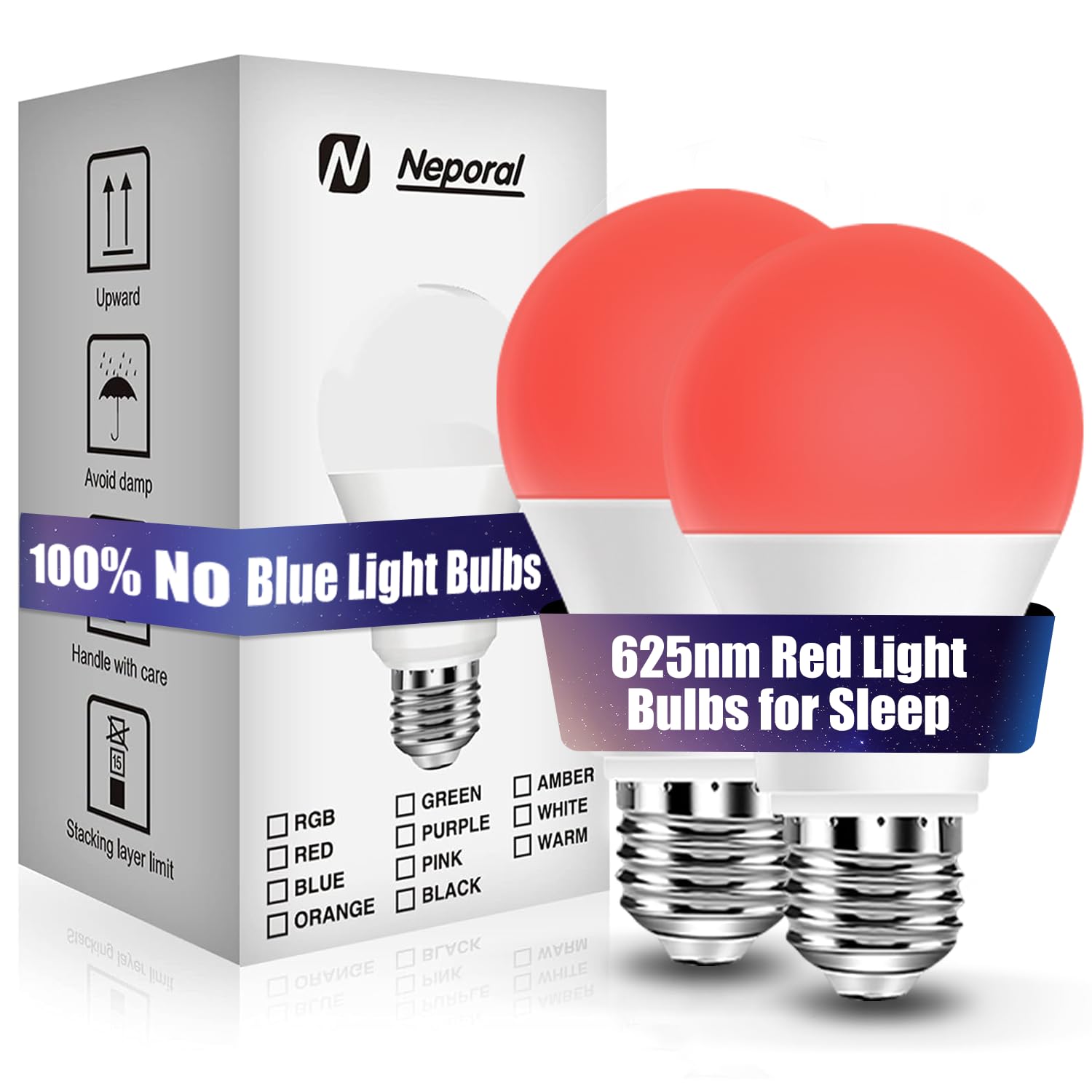
If you want to go beyond amber into pure red light, the Neporal 625nm bulb completely eliminates blue and green wavelengths — not just reducing them, but removing them entirely. The 800-lumen output is notably brighter than most dedicated red bulbs, making it viable for reading or final pre-bedtime tasks like brushing teeth without losing the sleep-signaling effect.
The 625nm wavelength mimics the deep orange-to-red tones of sunset, which directly stimulates melatonin production more aggressively than any amber bulb can. It works well as a 20-minute wind-down light before turning off all lights. Users report falling asleep faster and waking less frequently after switching to this red bulb in their bedside lamp.
The 2-pack format keeps the per-bulb cost reasonable, and the wide 240-degree beam angle ensures even coverage in a standard lamp. The only caveat is that pure red light changes the color perception of everything in the room — it is not a bulb for tasks requiring accurate color distinction.
Why it’s great
- 100% blue and green wavelength elimination
- Highest lumen output among red sleep bulbs tested
Good to know
- Monochrome red light makes color identification difficult
- 9W power draw is on the higher side for a red bulb
4. Eastiya Amber Sleep Light Bulb
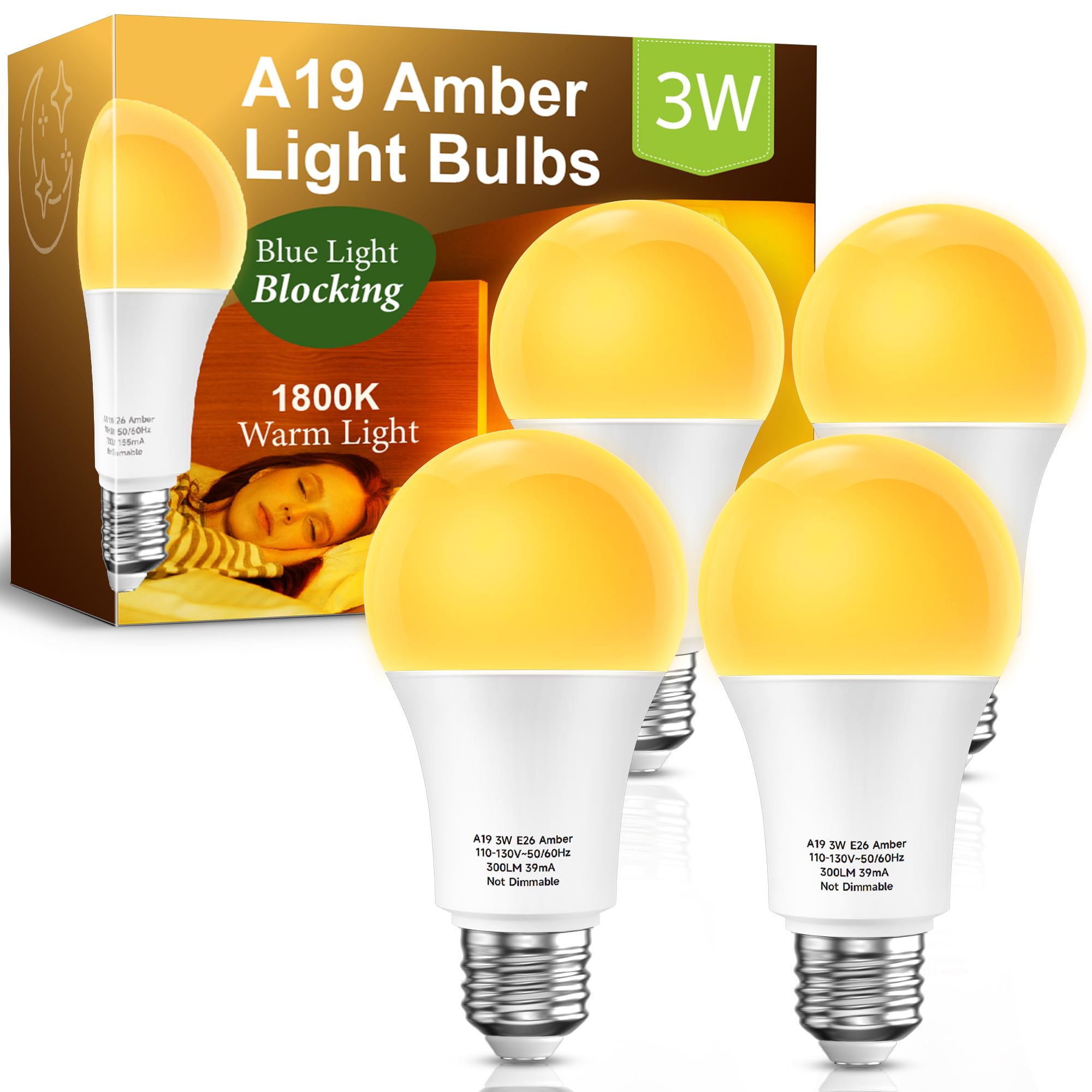
The Eastiya Amber bulb takes a different approach — lower wattage (3W) and lower brightness (300 lumens) to create a true dim-night-light experience. At 1800K with 99.14% blue-free output, it is designed for nurseries, hallways, or any space where you want just enough light to navigate without triggering alertness.
Its compact A19 shape and standard E26 base fit into any fixture, and the 4-pack format makes it the most economical way to outfit multiple rooms with sleep-friendly lighting. Users consistently describe the glow as cozy and warm without being harsh — ideal for small children or for adults who want a subtle bedside glow that will not disturb a sleeping partner.
Where this bulb falls short is reading or any task that demands moderate visibility. At 300 lumens, it is noticeably dimmer than the 9W amber options. If your primary use is navigating a dark room or creating ambient mood lighting, this is a solid pick. If you need to read, go with a higher-lumen amber bulb instead.
Why it’s great
- 4-pack offers the lowest per-bulb cost in this guide
- Ideal dim glow for nurseries and nightlight use
Good to know
- 300 lumens is too dim for comfortable reading
- 99.14% blue-free — slightly less than the 99.94% competitors
5. Sunco Amber Sleep Light Bulbs

Sunco’s 3000K warm white bulb is a different beast from the ultra-low-Kelvin amber bulbs. It is not designed to block blue light aggressively — instead, it offers a noticeably warmer color temperature than standard daylight bulbs (typically 4000–5000K) while still being comfortable for general evening use. The 12-pack is the most cost-effective option if you need to replace every bulb in your living space.
The bulb is UL-certified, offers instant-on with no flicker, and comes with a 5-year warranty — a strong confidence signal from a US-based manufacturer. At 9W (60W equivalent), the brightness is comparable to a standard soft white bulb, making it suitable for lamps, ceiling fixtures, and even kitchen lighting.
This is not a strict blue-blocking solution. If your goal is maximal melatonin protection, stick with the 1600K or 1800K amber bulbs. But if you want a warm, comfortable light for the whole house that is far less disruptive than cool white LEDs, the Sunco 12-pack delivers unmatched value and reliability.
Why it’s great
- 12-pack is the best value for whole-home evening lighting
- 5-year warranty backed by a reputable US brand
Good to know
- 3000K emits more blue than dedicated 1800K amber bulbs
- Not dimmable — fixed output only
6. Gamma Revive 670nm Red Light Bulb

The Gamma Revive bulb targets a specific wavelength — 670nm — which sits in the red light therapy range. Independent buyers have confirmed the wavelength accuracy using spectroscopes, making this one of the few bulbs on Amazon with verifiable spectral integrity. It is designed to mimic the deep red tones of sunset and promote melatonin release through targeted wavelength exposure.
At only 50 lumens and 4W equivalent, this bulb is not meant for reading or general room illumination. It works best as a final-stage sleep aid: install it in a bathroom or bedside lamp and use it for the last 20–30 minutes before closing your eyes. Users report significant reductions in nighttime awakenings from the first night of use, and several reviewers noted deeper sleep quality within a week.
The premium price reflects the precision wavelength control and the brand’s focus on light therapy applications. If you are comfortable paying more for a scientifically targeted tool rather than a general-purpose amber bulb, the Revive is a standout option. For broad room lighting at a lower cost, the Neporal red bulb offers more lumen output for less.
Why it’s great
- Verified 670nm wavelength for targeted melatonin support
- Effective for reducing nighttime awakenings from first use
Good to know
- Very dim (50 lumens) — not practical for reading or room lighting
- Higher price point than amber or standard red bulbs
7. Wivety Blue Light Bulb
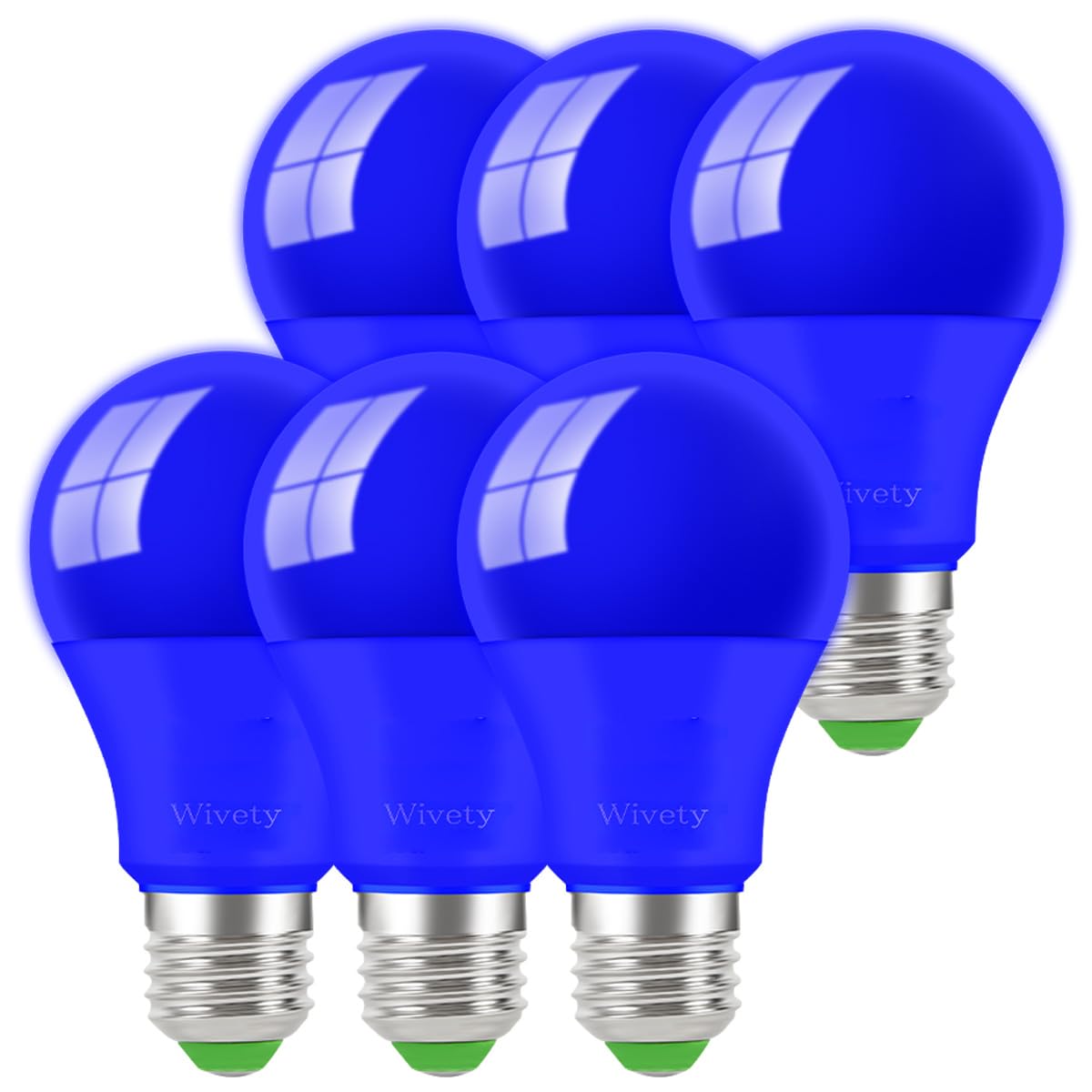
This entry serves a completely different purpose. The Wivety bulb emits pure blue light — the exact spectrum most sleep-friendly bulbs are designed to eliminate. It uses authentic blue LED chips with a custom blue cover, producing consistent 900-lumen blue illumination ideal for Halloween displays, Christmas decorations, party lighting, and outdoor porch ambiance.
The no-strobe design ensures stable light for photography and video, while the 9W power draw (60W equivalent) keeps energy costs low for extended decorative use. It is safe for indoor or outdoor application, and the 6-pack format provides plenty of bulbs for covering a porch or decorating an event space.
If your goal is blue light blocking for sleep, this bulb is the opposite of what you need. But if you specifically want colored accent lighting without the flicker or low quality of cheap decorative bulbs, the Wivety delivers reliable performance at a very low cost per bulb.
Why it’s great
- 6-pack offers outstanding value for colored decorative lighting
- Stable non-flickering output for photo and video use
Good to know
- Emits high levels of blue light — counterproductive for sleep health
- Best suited for seasonal or decorative use only
FAQ
Will a 3000K warm white bulb block enough blue light for sleep?
Can I use a red light bulb for reading at night?
What is the difference between 625nm and 670nm red light bulbs?
Final Thoughts: The Verdict
For most users, the blue light blocking light bulbs winner is the hooga Sleep Light Bulb because its 1600K temperature offers the strongest blue-free output while still providing enough brightness for reading and evening activities. If you want a pure red option for deeper melatonin signaling, grab the Neporal 625nm Red Light Bulb. And for whole-home warm lighting at a budget-friendly price, nothing beats the Sunco 12-Pack.