
Blueberry bushes are notoriously picky about soil, demanding an acidic pH range of 4.0 to 5.5 to unlock essential nutrients. Most garden soils sit closer to neutral, which starves the plant of iron and magnesium, leading to yellow leaves, stunted growth, and a disappointing harvest. The right fertilizer bridges that gap, but the wrong one can scorch roots or fail to lower pH at all.
I’m Rikta — the co-founder and writer behind FitlyFast. I’ve analyzed dozens of fertilizer formulations, from water-soluble synthetics to slow-release organics, focusing on N-P-K ratios, sulfur content, and microbial additives that matter most for acid-loving plants.
Whether you are tending a single potted bush or a full berry patch, this guide cuts through the marketing noise to help you pick the best blueberry fertilizer for your soil type, growing method, and experience level.
How To Choose The Best Blueberry Fertilizer
The perfect blueberry fertilizer keeps the soil acidic, delivers balanced nutrition, and suits your feeding schedule. Here are the three factors that matter most.
N-P-K Ratio and Sulfur Content
Blueberries need a fertilizer with higher nitrogen and lower phosphorus, typically an N-P-K like 4-3-4 or 4-3-6. The nitrogen supports leafy growth, and the potassium boosts fruit size and disease resistance. Sulfur is the critical secondary element — it helps lower and maintain the soil pH that blueberries crave. A product with 5% sulfur or more will keep your bushes productive season after season.
Liquid vs. Granular Formulation
Liquid fertilizers act within days, making them ideal for reviving struggling plants or supporting container-grown blueberries where nutrients leach out faster. Granular slow-release options feed roots over weeks, requiring fewer applications. The tradeoff: liquid needs frequent mixing and measuring, while granules demand thorough watering-in to activate. Choose based on how much time you can commit and whether your blueberries are in ground or in pots.
Organic Certification and Microbial Additives
OMRI-listed organic fertilizers use natural ingredients like cottonseed meal, kelp, and bone meal, which break down slowly and build soil life. Products containing mycorrhizal fungi or beneficial bacteria improve nutrient uptake at the root level, reducing the need for chemical inputs. Synthetic options work faster but may degrade soil structure over time. For edible berries, organic inputs are the safer, longer-lasting choice.
Quick Comparison
On smaller screens, swipe sideways to see the full table.
| Model | Category | Best For | Key Spec | Amazon |
|---|---|---|---|---|
| Espoma Organic Holly-Tone 4-3-4 | Granular | Large beds & long-term feeding | 36 lb bag, 5% sulfur | Amazon |
| Down To Earth Acid Mix 4-3-6 | Granular | Premium organic yield | 25 lb, cottonseed & kelp | Amazon |
| Miracle-Gro Water Soluble Azalea Food | Powder | Quick green-up & convenience | 5 lb, 1:18 mix ratio | Amazon |
| FoxFarm Happy Frog Acid Loving | Granular | Soil microbes & gentle feeding | 4 lb, contains mycorrhizae | Amazon |
| Bloom City Organic Berry Fertilizer | Liquid | Quick container feeding | 32 oz, organic | Amazon |
| TPS Nutrients Blueberry Fertilizer | Liquid | Reviving weak bushes | 32 oz, fast-acting | Amazon |
| Espoma Berry Tone 4-3-4 | Granular | Berry-specific organic feeding | 4 lb, Bio-tone formula | Amazon |
In‑Depth Reviews
1. Espoma Organic Holly-Tone 4-3-4

Espoma’s Holly-Tone is the reference standard for acid-loving plants — a 4-3-4 granular formula with 5% sulfur that actively maintains a low soil pH. The 36 lb bag provides an impressive cost-per-feeding for large blueberry patches, covering spring and fall applications across dozens of bushes. The Bio-tone microbes enhance nutrient cycling at the root zone, which translates to darker foliage and more consistent fruit set.
I particularly like that it is OMRI-listed and made from natural ingredients like feather meal and sulfate of potash, so you avoid the salt buildup that synthetic fertilizers often leave behind. The granules are uniform and easy to broadcast evenly under the drip line. Watering-in dissolves them reliably without clumping, even in cooler weather.
Long-time users report that azaleas and magnolias also thrive on Holly-Tone, making it a versatile asset if you have a mixed acid-loving garden. The only real consideration is the bag size: for a single container bush, you may prefer a smaller option to avoid storage bulk. For anyone serious about sustained blueberry production, this is the workhorse.
Why it’s great
- Massive 36 lb bag keeps costs low per application
- 5% sulfur content actively maintains acidic soil pH
- Bio-tone beneficial microbes improve root efficiency
Good to know
- Requires thorough watering-in after spreading
- Bag is heavy for those with limited storage space
2. Down To Earth Acid Mix 4-3-6
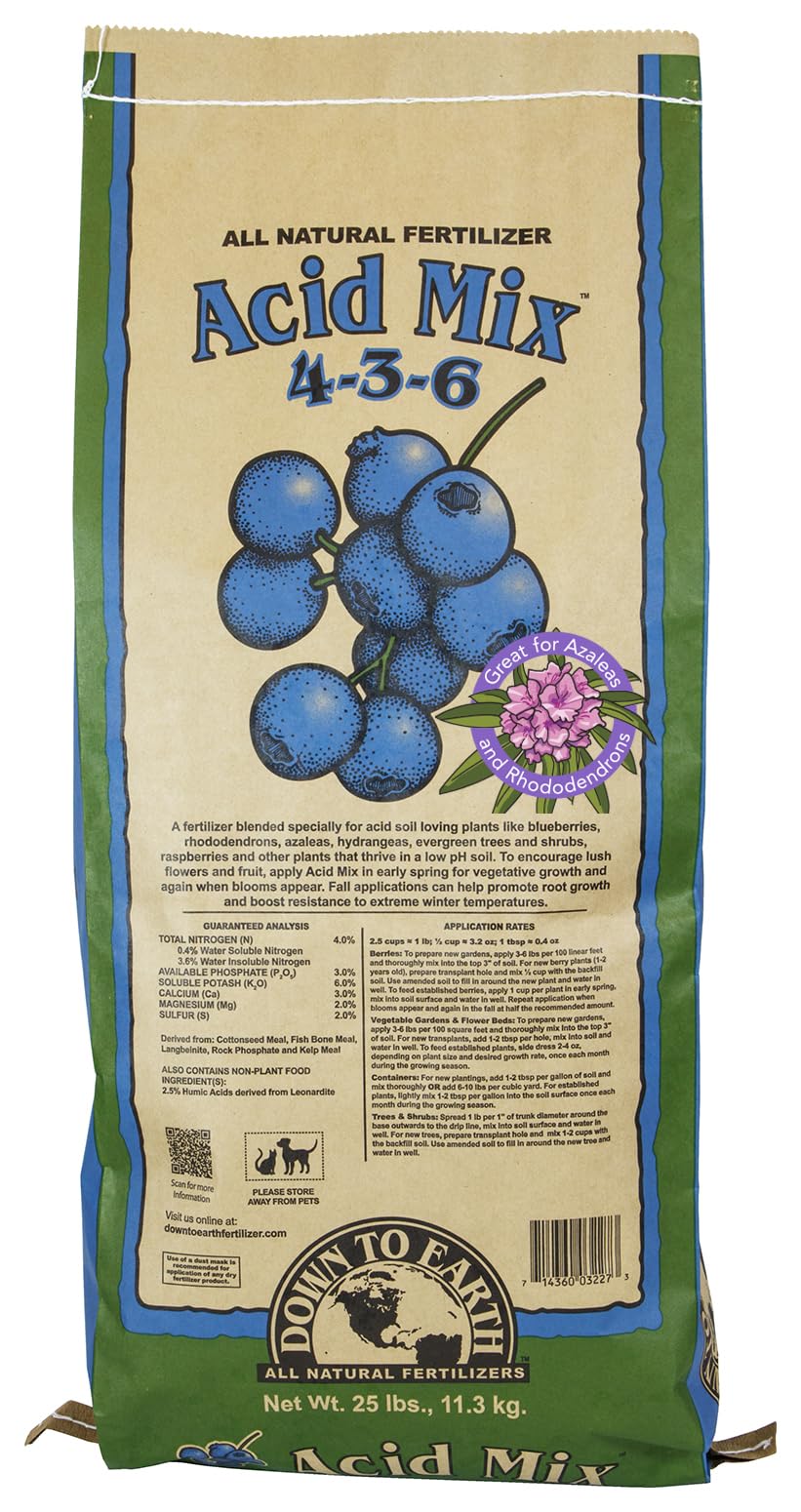
Down To Earth’s Acid Mix stands apart with its 4-3-6 ratio, putting extra potassium in the mix for larger, sweeter berries. The ingredient list reads like a soil-food pantry — cottonseed meal, langbeinite, fish bone meal, rock phosphate, humates, and kelp meal. This diversity feeds both the plant and the soil microorganisms that support long-term fertility. The 25 lb box is well-packaged with a sturdy inner bag to stay fresh.
Customers report that this fertilizer, when paired with an initial soil acidifier to bring pH down to 4.5, keeps blueberries thriving year after year. The slow-release granules break down over weeks, providing a steady supply of nutrients without the boom-and-bust cycle of liquid feeds. It works equally well for raspberries, rhododendrons, and even spuds, so a single purchase covers entire edible and ornamental patches.
The only caveat is the price per pound is higher than some competitors, but the ingredient purity and the absence of filler materials justify the premium for organic growers. If you want a fertilizer that treats the soil as a living system, this is the top contender. Use it in early spring and again when flowers appear for the best results.
Why it’s great
- Higher potassium (6) supports berry size and sweetness
- Multi-source organic ingredients build lasting soil health
- Excellent for maintaining pH around 4.5 when soil was pre-acidified
Good to know
- Premium price per pound compared to synthetic blends
- Fast-acting enough? Slower release requires patience
3. Miracle-Gro Water Soluble Azalea, Camellia, Rhododendron Plant Food

Miracle-Gro’s water-soluble powder is the quickest route to greening up yellowing blueberry leaves. The 1:18 outdoor mixing ratio means a small scoop delivers a full dose of nitrogen and micronutrients that plants absorb within hours. For indoor or container-grown bushes, the weaker 1:144 ratio keeps feeding safe and consistent. The 5 lb bag goes a long way — you can feed a dozen bushes every two weeks for an entire growing season.
The formula is not specifically designed for blueberries, but it targets all acid-loving plants, and real-world results confirm it works well on camellias, gardenias, and hydrangeas too. The downside is the synthetic salts can accumulate over time, potentially raising soil pH if used exclusively. I recommend alternating with an organic granular feed once or twice per season to keep soil biology balanced.
A common complaint is the bag’s zipper closure: it does not seal reliably, so you should transfer the powder to an airtight container. Despite that packaging flaw, the price per feeding is very low, and the convenience of dissolving in a watering can is hard to beat for busy gardeners who need visible results fast.
Why it’s great
- Visible greening within days of application
- Extremely easy to mix and apply with a watering can
- Two mixing ratios allow indoor and outdoor flexibility
Good to know
- Bag zipper does not seal; transfer to another container
- Salt buildup can raise soil pH over time
4. FoxFarm Happy Frog Acid Loving Plants Fertilizer

FoxFarm’s Happy Frog formula is unique because it packs beneficial mycorrhizal fungi and soil microbes directly into the fertilizer. These organisms form symbiotic relationships with blueberry roots, expanding the root’s reach for water and nutrients. The 4 lb bag is a compact size ideal for five to six mature blueberry bushes or a dozen containers. The slow-release action means you feed once at the start of the season and once in midsummer.
Gardeners report explosive results — a user saw gardenia buds within 10 days and strawberry flowers set fruit rapidly. For blueberries specifically, the gentle feeding schedule prevents the leaf burn that aggressive synthetics can cause. The OMRI listing gives peace of mind for organic berry patches, and the price is competitive with other premium granular options.
The main limitation is the smaller bag size: if you have a large in-ground patch, you will need multiple bags to cover the same area as a single Holly-Tone 36 lb bag. Also, the granules are slightly denser, so they require thorough watering to dissolve properly. For container growers and small-space gardeners who value microbial health, this is a top-tier choice.
Why it’s great
- Contains mycorrhizal fungi for enhanced nutrient uptake
- Gentle slow-release formula prevents root burn
- OMRI-listed for organic production
Good to know
- 4 lb size is better for small to medium gardens
- Granules need thorough watering to break down
5. Bloom City Organic Berry Fertilizer

Bloom City’s liquid concentrate targets both blueberries and strawberries with a balanced organic profile that supports fruit development. Users consistently report new growth and berry production within weeks of first application, especially on plants that were previously struggling in containers. The standard mix of 3 tablespoons per gallon of water applied every two weeks keeps nutrient levels steady without risking over-fertilization.
One notable detail: the liquid has a distinct organic smell (fish-based ingredients), so apply it outdoors or with good ventilation. It is designed for both garden beds and containers, making it very flexible. The 32 oz bottle treats a significant number of plants — roughly 20 applications at the recommended rate for a single bush. For those who grow multiple berry types, this one-bottle solution simplifies the feeding routine.
Some users mention they did not see dramatic visible changes, which is common with organic liquids that work subtly on soil biology rather than forcing top growth. For a quicker visual impact, you may want to pair it with a granular slow-release feed. Overall, it is a solid, low-risk organic option for maintaining healthy container berries.
Why it’s great
- Concentrated formula yields many applications per bottle
- Works well on both blueberries and strawberries
- Organic ingredients support soil life without salt buildup
Good to know
- Has a strong organic smell during mixing
- Visible results may be slower than synthetic liquids
6. TPS Nutrients Blueberry Fertilizer
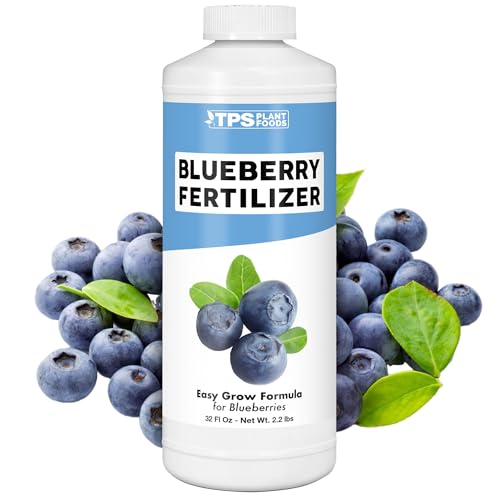
TPS Nutrients formulated this liquid specifically for blueberry bushes, and the reviews highlight its ability to revive dying plants. One customer described a bush that perked up days after the first feeding, growing vigorously again. The fast-acting nature makes it a go-to rescue feed for bushes showing signs of chlorosis or stress. The 32 oz bottle is highly concentrated — just a few tablespoons per gallon of water per week keeps plants in prime condition.
A key point to note: this fertilizer does not lower soil pH on its own. Some users have pointed out that the pH of the mix is not acidic enough to compensate for alkaline soil. If your soil pH is above 6.0, you will need to address that separately with elemental sulfur or peat moss. The fertilizer provides balanced minerals, but it assumes the root zone is already in the correct pH range.
For container blueberries where waterings are frequent and nutrients leach out, this liquid is a dependable maintenance tool. It also works well for starting new plants from cuttings, as one reviewer demonstrated with an Aldi stem that developed into small plants within weeks. For gardeners who already have their soil pH dialed in, this is an effective and easy-to-use supplement.
Why it’s great
- Fast-acting formula revives stressed blueberry bushes
- Concentrated — a little goes a long way
- Ideal for starting new plants from cuttings
Good to know
- Does not actively lower soil pH; requires separate acidifier
- Weekly feeding schedule may be demanding for large patches
7. Espoma Berry Tone 4-3-4
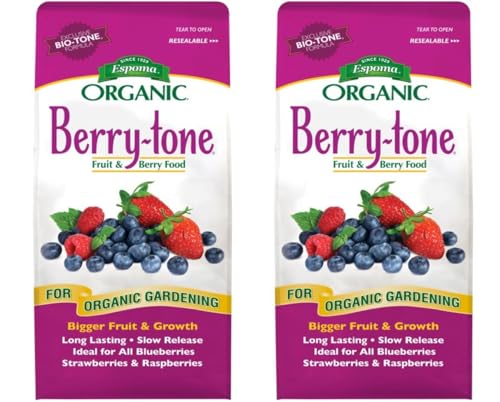
Berry Tone is Espoma’s targeted answer for fruiting plants, formulated specifically for blueberries, raspberries, blackberries, and strawberries. The 4-3-4 analysis with 5% sulfur mirrors the reliable Holly-Tone approach but with a berry-specific biological tweak. It is a granular formula that requires no mixing — just sprinkle around the drip line and water in. Two feedings per year (early and late spring) are enough to sustain heavy cropping.
Users report dramatic increases in yield: one customer forgot to apply Berry Tone one year and saw almost no flowers on their blackberries. The following year, a single feeding brought back the prolific harvest. The 4 lb bag is compact but potent — a reviewer noted that 1.5 tablespoons per 20-inch container is sufficient, making this bag stretch further than expected. It is also OMRI-listed, so organic growers can use it with confidence.
The main consideration is that Berry Tone is among the more expensive options per pound compared to general acid fertilizers. For a small berry patch of three to five bushes, the price is reasonable. For a large area, the larger Holly-Tone bag provides better value and works just as well on blueberries. If you prefer a berry-exclusive feed with a trusted brand, this is a sound investment.
Why it’s great
- Berry-specific formulation boosts fruit yield dramatically
- No mixing required — easy dry application
- OMRI-listed and safe for organic gardens
Good to know
- Higher cost per pound than general acid fertilizers
- Potent concentration; careful measurement needed for containers
FAQ
What is the best N-P-K ratio for blueberry bushes?
How often should I fertilize my blueberry bushes?
Can I use a general acid-loving plant fertilizer on blueberries?
Final Thoughts: The Verdict
For most users, the best blueberry fertilizer winner is the Espoma Organic Holly-Tone because it combines a proven 4-3-4 ratio with 5% sulfur and beneficial microbes in a cost-effective 36 lb bag that feeds an entire patch twice a year. If you want a premium organic option with higher potassium for larger berries, grab the Down To Earth Acid Mix. And for quick rescue of a struggling bush or for container-grown plants, nothing beats the TPS Nutrients Blueberry Fertilizer liquid feed.