
Our readers keep the lights on and the weekend projects moving. As an Amazon Associate, I earn from qualifying purchases.
Blueberry bushes are hungry acid-freaks. Without soil below pH 5.5 and the precise nutrient balance they evolved to crave, your bushes will yellow, refuse to fruit, or simply fade away. Standard garden fertilizers push the pH upward, locking away the iron and magnesium your plants need most—the difference between a handful of berries and a bucketful starts with what you feed them.
I’m Rikta — the co-founder and writer behind FitlyFast. I’ve spent hundreds of hours analyzing fertilizer chemistry, organic certifications, and the real-world results of acid-loving plant foods to identify the formulations that actually lower pH and deliver nitrogen without burning delicate blueberry roots.
After comparing granular slow-release blends, liquid concentrates, and pre-mixed acid soils, these are the most effective formulas to buy when you are looking for the best blueberry plant food that keeps your soil chemistry right and your harvests heavy.
How To Choose The Best Blueberry Plant Food
Feeding blueberries is a pH game. Most plant foods raise soil alkalinity, but blueberry roots are designed to absorb nutrients only in acidic conditions. Choosing the wrong fertilizer can stunt growth for an entire season or even kill mature bushes.
Understand the NPK Ratio Requirement
Blueberries perform best with a low-nitrogen, moderate-phosphorus, and balanced-potassium ratio—something close to 4-3-4 or 6-2-1. High-nitrogen formulas (like 21-0-0 ammonium sulfate) work when you need to acidify and green up foliage fast, but for long-term fruiting and root depth, a balanced acid-lover’s blend prevents soft growth that invites pests.
Granular vs. Liquid Delivery
Granular slow-release foods like cottonseed meal or Holly-Tone feed the soil biology over weeks, making them ideal for spring and fall maintenance. Liquid blueberry plant food—such as TPS Nutrients—gives an immediate boost during active growth and fruit set, but requires more frequent application. Choose granular for “set and forget” and liquid for precise correction of yellowing leaves.
Organic Certifications and Sulfur Content
OMRI-listed organic blueberry foods prevent chemical runoff and feed beneficial mycorrhizae around the root zone. Sulfur is a critical secondary ingredient: a minimum of 4-5% sulfur content actively drives pH down over time. Without added sulfur, even a correct NPK ratio may fail if your tap water or native soil is alkaline.
Quick Comparison
On smaller screens, swipe sideways to see the full table.
| Model | Category | Best For | Key Spec | Amazon |
|---|---|---|---|---|
| Espoma Organic Holly-Tone 36 lb | Granular Organic | Long-term soil health | 4-3-4 NPK + 5% sulfur | Amazon |
| TPS Nutrients Blueberry Fertilizer 32 oz | Liquid Concentrate | Quick leaf greening | Balanced liquid NPK | Amazon |
| Down To Earth Cottonseed Meal 5 lb | Granular Organic | Slow-release root feeding | 6-2-1 NPK | Amazon |
| Coast of Maine Acid-Loving Soil 20 Qt | Pre-Mixed Soil | New plantings & repotting | Low pH compost blend | Amazon |
| Nelson NutriStar 9-13-11 2 lb | Granular Synthetic | Heavy blooming support | 4 acidifying sources | Amazon |
| Cz Garden Ammonium Sulfate 4 lb | Synthetic Granular | pH correction & green-up | 21-0-0 + 24% sulfur | Amazon |
| Coast of Maine Acid-Loving Soil 2-Pack | Pre-Mixed Soil | Large beds & multiple bushes | OMRI listed 20 Qt x2 | Amazon |
In‑Depth Reviews
1. Espoma Organic Holly-Tone 4-3-4 (36 lb.)

Espoma’s Holly-Tone is the original acid-lover’s formula for good reason. With a 4-3-4 NPK ratio and 5% sulfur, it actively maintains low soil pH while feeding the root zone with organic matter that breaks down over months. The 36-pound bag covers extensive blueberry patches through multiple seasonal applications.
This formula relies on feather meal, bone meal, and sulfate of potash—ingredients that build soil structure rather than just dumping salts. Gardeners report bush recovery from chlorosis within weeks of spring application, with noticeably greener foliage and higher fruit set by midsummer.
The Bio-tone microorganisms included enhance nutrient uptake at the root level. It is OMRI-listed and safe for organic production, making it suitable for edible gardens where you want to avoid synthetic buildup.
Why it’s great
- Large bag provides season-long feeding for multiple bushes
- Bio-tone microbes improve root absorption of iron
- 5% sulfur content effectively lowers alkaline soil pH
Good to know
- Granular form requires watering in after application
- Not a quick fix for acute nitrogen deficiency
2. TPS Nutrients Blueberry Fertilizer (32 oz)
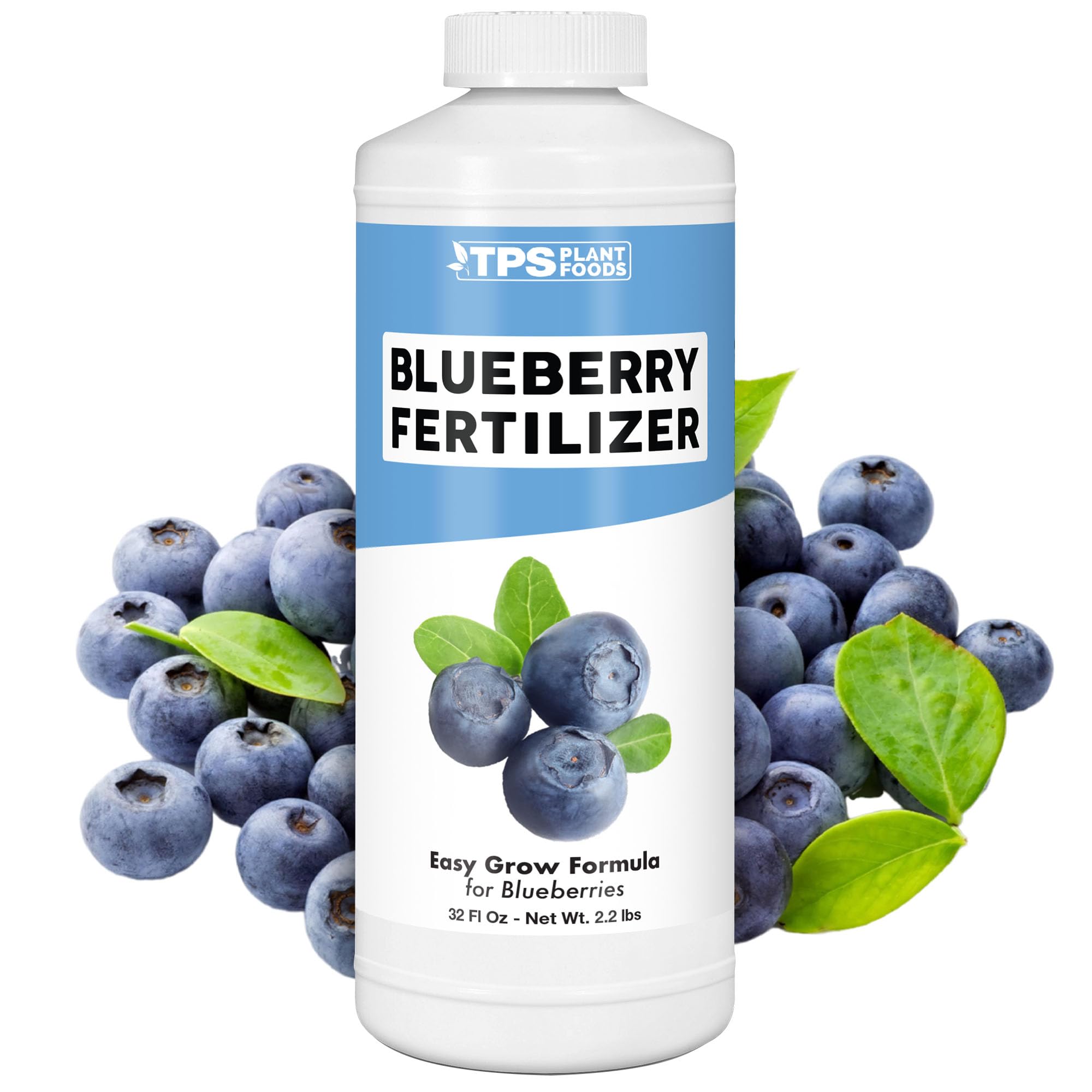
TPS Nutrients formulated this liquid concentrate specifically for blueberry bushes, not for general acid-loving ornamentals. The liquid delivery means nutrients are available to roots immediately after watering, making it a strong choice when leaves show signs of nitrogen or iron deficiency.
Users report that dying or struggling blueberry bushes perked up within days of the first application. The balanced liquid NPK supports flowering, fruit set, and root vigor without the delayed release timing of granular fertilizers.
This product is best for gardeners who water frequently and want to incorporate feeding into their weekly routine. It comes ready-to-mix and is manufactured in the USA, but note that it does not contain added sulfur or acidifiers—relying instead on the nutrient balance to avoid raising pH.
Why it’s great
- Immediate nutrient uptake corrects chlorosis quickly
- Specifically formulated for blueberries, not generic acid plants
- Easy to dose for container-grown bushes
Good to know
- Frequent application needed for continuous feeding
- Does not actively lower soil pH
3. Down To Earth Cottonseed Meal (5 lb)
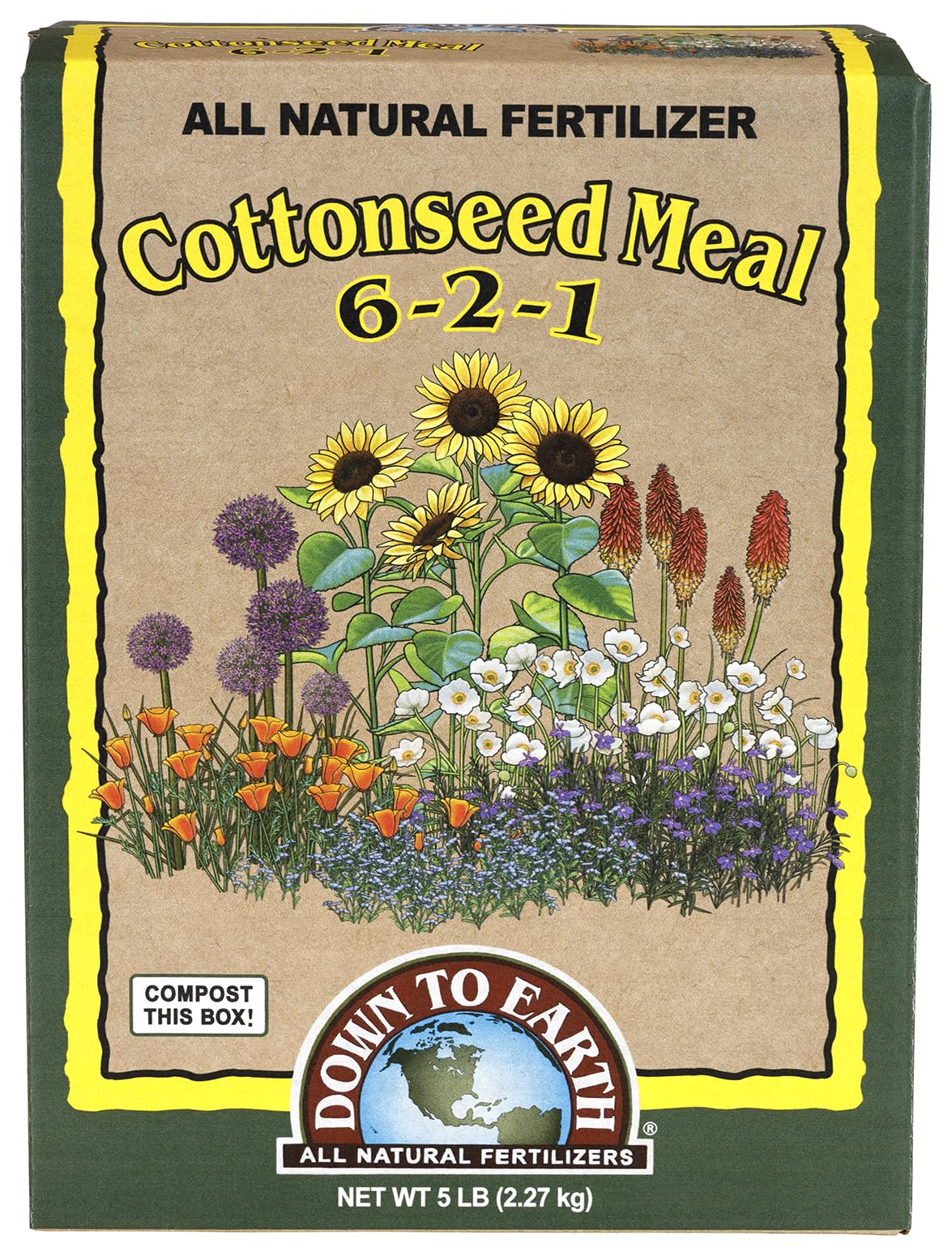
Cottonseed meal is a classic organic blueberry food that releases slowly as soil microbes break it down. Down To Earth’s 6-2-1 formulation is lower in phosphorus but provides steady nitrogen that supports leafy growth and root expansion without the risk of fertilizer burn that synthetic salts carry.
Gardeners who use this as their primary blueberry fertilizer report consistent flowering on highbush varieties and no need for additional pH-lowering products because the cottonseed itself is naturally acidic. The 5-pound bag is manageable for small to medium patches of 3–6 bushes.
This product is OMRI-listed and completely natural. It also improves soil texture over time by adding organic matter. Apply in early spring and again after fruit set for best results, lightly scratching into the top inch of soil.
Why it’s great
- Naturally acidic—supports low pH without extra sulfur
- Risk of burn is nearly zero with proper application
- Improves soil tilth and microbial activity
Good to know
- Slow-acting; takes weeks to show visible results
- Attracts wildlife if not worked into the soil
4. Coast of Maine Acid-Loving Planting Soil (20 Qt)

Coast of Maine’s planting soil is not a fertilizer in the traditional sense—it is a complete low-pH growing medium blended with composted manure, sphagnum peat moss, and aged bark. For new blueberry plantings or when refreshing tired soil in containers, this delivers the acidic foundation your bushes need from day one.
The 20-quart bag is lightweight, easy to handle, and holds moisture well without becoming waterlogged. Gardeners using this as a top-dressing or planting mix report that existing bushes show greener leaves within a single growing season because the peat moss and compost lower pH on contact.
OMRI-listed and made with sustainable ingredients, this soil is ideal for organic gardeners who want to avoid synthetic amendments. Use it as a complete potting mix for container blueberries or mix with existing garden soil at a 1:1 ratio.
Why it’s great
- Immediately low pH—no waiting for sulfur to break down
- Peat moss and compost improve moisture retention
- Certified organic ingredients
Good to know
- Not a concentrated fertilizer; requires supplemental feeding later
- One bag covers only a small planting area
5. Nelson NutriStar Acid Loving Plant Food (2 lb)

Nelson’s NutriStar formula is built for heavy-flowering acid lovers, using four different acidifying sources to aggressively lower pH and three separate nitrogen sources to prevent root burn. With a 9-13-11 ratio, it is phosphorus-heavy, which directly supports bloom development and fruit set in mature blueberry bushes.
The inclusion of 3.2% iron in three forms ensures leaves stay deep green even in alkaline soils where iron lockup is common. Gardeners in the southern U.S. who deal with naturally high-pH clay soils report this formula turned around yellowing azaleas and blueberries within two weeks.
At 2 pounds, this bag is best for small gardens or spot-treating bushes that need extra bloom support. Apply at the start of spring and again every other month during the growing season for consistent results.
Why it’s great
- Four acidifying sources work fast on alkaline soils
- Triple iron content prevents leaf chlorosis
- High phosphorus supports heavy fruit production
Good to know
- Synthetic formula; not suitable for organic gardens
- Granules need thorough watering to avoid salt buildup
6. Cz Garden Ammonium Sulfate 21-0-0 (4 lb)

Ammonium sulfate is the nuclear option for dropping soil pH quickly. Cz Garden’s 21-0-0 formulation delivers high nitrogen combined with 24% sulfur—the highest sulfur content in this lineup—making it a first-choice product when your blueberry leaves are yellow and your soil pH is above 6.5.
This product is best used as a corrective tool rather than a maintenance food. Apply sparingly in early spring to green up foliage and acidify the root zone, then switch to a balanced organic formula for the fruiting season. Users report rapid greening and vigorous new growth within a week.
The 4-pound resealable pouch is practical for small gardens. It is a synthetic product, not suitable for certified organic use, but it provides the fastest pH correction available in a dry granular form.
Why it’s great
- Highest sulfur content drives pH down rapidly
- Water-soluble granules work quickly
- Excellent for correcting severe iron chlorosis
Good to know
- High nitrogen can burn roots if over-applied
- Not organic; synthetic salt-based fertilizer
7. Coast of Maine Acid-Loving Soil 2-Pack (20 Qt x2)

This 2-pack of Coast of Maine’s acid-loving soil gives you 40 quarts total—enough to establish a new blueberry bed or heavily amend an existing row. The same low-pH compost blend of sphagnum peat moss, composted manure, and aged bark delivers immediate acidity while feeding soil microbes over the long term.
Gardeners using this for raised beds consistently report that blueberries planted directly into this soil require less supplemental feeding in their first year. The moisture retention from the peat moss reduces watering frequency, and the perlite ensures drainage stays adequate even in heavy rain.
The 2-pack is an excellent value for anyone expanding their blueberry patch or maintaining multiple containers. Like the single bag, it is OMRI-listed and sustainably sourced from Coast of Maine’s Maine-based operation.
Why it’s great
- 40 quarts of low-pH soil for large planting projects
- Moisture-retentive yet well-draining blend
- Certified organic for edible gardens
Good to know
- Heavy bag set—requires comfortable lifting
- Still requires periodic fertilizer for heavy fruiting
FAQ
Can I use tomato fertilizer on my blueberry bushes?
How often should I apply granular blueberry plant food?
Do I need to test my soil before buying blueberry fertilizer?
Final Thoughts: The Verdict
For most users, the best blueberry plant food winner is the Espoma Organic Holly-Tone 36 lb because its balanced 4-3-4 NPK, 5% sulfur, and Bio-tone microbes provide everything blueberry bushes need for long-term soil health and heavy fruiting. If you want a fast liquid boost for struggling plants, grab the TPS Nutrients Blueberry Fertilizer. And for establishing new beds or refreshing container soil, nothing beats the Coast of Maine Acid-Loving Soil as a ready-to-use acidic foundation.