
Our readers keep the lights on and the weekend projects moving. As an Amazon Associate, I earn from qualifying purchases.
Adding wireless audio to a wired speaker system shouldn’t mean accepting audio delays, compressed sound, or constant pairing drops. The right Bluetooth adapter bridges the gap between your phone or TV and your speakers, preserving hi-res codecs like LDAC and aptX HD while offering the low-latency performance needed for watching movies and gaming.
I’m Rikta — the co-founder and writer behind FitlyFast. I’ve analyzed dozens of Bluetooth receivers and transmitters, digging into the chipset specifications, codec support, output options, and real-world user data to separate the high-fidelity performers from the noisy dongles.
Whether you’re connecting to an old stereo, a powered PA system, or a home theater setup, finding the right bluetooth adapter for speakers is about matching the right codec and output connection to your specific gear.
How To Choose The Best Bluetooth Adapter For Speakers
Not all Bluetooth adapters are designed for speakers. Some are built for headphones, others for transmitting audio from a TV, and a few are made specifically to stream high-resolution music to a stereo or PA system. Start by identifying if you need a receiver (input audio to your speakers) or a transmitter (send audio from your TV or turntable to Bluetooth headphones). For speaker systems, you almost always want a receiver with audio outputs that match your gear.
Codec Support: LDAC vs. aptX HD vs. aptX Low Latency
The codec determines what quality of audio your adapter can transmit wirelessly. LDAC (up to 990 kbps) and aptX HD (up to 576 kbps) deliver near-lossless, high-definition sound — ideal for critical music listening on a quality stereo. aptX Low Latency (aptX-LL) keeps audio-video sync tight below 40ms, crucial for watching TV or gaming. If your speaker system is a vintage receiver, aptX HD is the sweet spot; if you’re pairing with a modern soundbar for movies, prioritize aptX-LL.
Output Connections: RCA, XLR, Optical, and 3.5mm
The adapter’s output connection must physically match an available input on your speakers, amplifier, or mixer. RCA (red/white) is the standard for most home stereos and powered speakers. XLR balanced outputs are essential for professional audio gear, PA systems, and high-end studio monitors — they reject interference over long cable runs. Optical (TOSLINK) outputs pass a purely digital signal to an external DAC or soundbar, bypassing the adapter’s internal conversion. Check your gear before buying.
Quick Comparison
On smaller screens, swipe sideways to see the full table.
| Model | Category | Best For | Key Spec | Amazon |
|---|---|---|---|---|
| blafili B3 | Receiver | Audiophile stereo systems | ESS ES9018K2M DAC | Amazon |
| Avantree Audikast 4 | Transmitter | TV streaming to hearing aids | Auracast broadcast | Amazon |
| UGREEN USB-C Adapter | Dongle | PC/PS5 gaming | aptX Adaptive 24-bit | Amazon |
| 1Mii B06S+ | Receiver | Vintage stereo conversion | LDAC 990 kbps | Amazon |
| Xvive P3 | Receiver | PA and DJ systems | XLR output | Amazon |
| YMOO 2.4GHz Kit | TX/RX Kit | Long-range room-to-room | 20ms latency, 320ft range | Amazon |
| SVS Soundpath | TX/RX Kit | Subwoofer placement | 2.4GHz uncompressed | Amazon |
In‑Depth Reviews
1. blafili B3 Bluetooth Receiver

The blafili B3 is built for serious stereo systems, combining a Qualcomm QCC5125 chipset with an ESS ES9018K2M reference DAC — a pairing typically found in dedicated desktop DACs, not Bluetooth receivers. It supports LDAC, aptX HD, and aptX Low Latency, making it codec-agnostic for high-res streaming. The simultaneous XLR, RCA, coaxial, and optical outputs mean you can feed a studio mixer, a home theater preamp, and a powered sub all at once without a splitter.
Setup is plug-and-play via USB power, and the removable RP-SMA antenna extends range up to 100 feet in open air, though a concrete wall will reduce that. The silent pairing feature — no loud beeps or robotic voice prompts when connecting — is a small but appreciated detail for a living room or listening space. The 1.3-inch display shows the active codec and Bluetooth status but is covered by a large acrylic window, so don’t expect a touchscreen interface.
For a DJ integrating a phone for intermission playlists or an audiophile connecting a streamer to a vintage preamp, the B3 delivers studio-grade connectivity. The only catch is the lack of a built-in power adapter; you’ll supply your own USB 5V brick. At a mid-premium price point, the combination of balanced XLR outputs and an audiophile-grade DAC makes this the most versatile high-fidelity receiver in the lineup.
Why it’s great
- Balanced XLR outputs eliminate ground loop noise in pro setups
- ESS Sabre DAC delivers low distortion and high dynamic range
- Simultaneous RCA, optical, coaxial, and XLR outputs
Good to know
- Power adapter not included; needs a USB 5V source
- Custom Bluetooth name and password require software reflash
2. Avantree Audikast 4
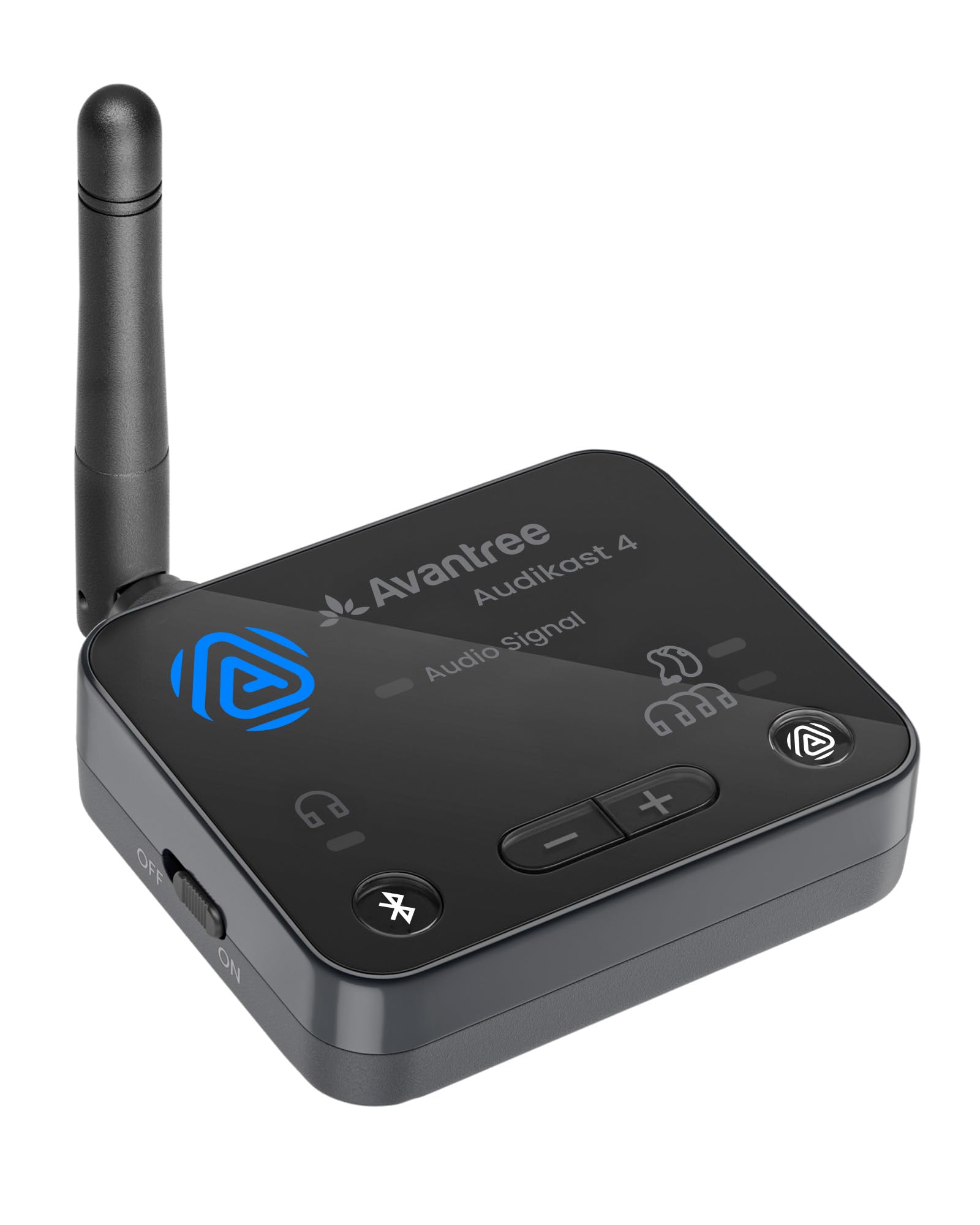
The Avantree Audikast 4 is the only unit here supporting Auracast broadcast audio, which allows multiple listeners with Auracast-enabled hearing aids or headphones to stream TV audio simultaneously at their own volume. It connects to your TV via optical (TOSLINK) or 3.5mm AUX output — note that HDMI-only TVs or soundbar passthrough setups are not compatible. In classic Bluetooth mode, it transmits to a single headphone or speaker, but the Auracast mode is the standout feature for households with hearing-impaired members.
User reports confirm rock-solid performance with Oticon Intent, Jabra Enhance Pro 20, and Starkey Edge AI hearing aids, with no discernible lip-sync delay and clear dialogue reproduction. The transmitter includes firmware-upgradeable hardware, meaning future Auracast profiles can be added as the standard evolves. Setup is straightforward: plug into the TV’s optical port, pair the hearing aids via the Avantree app, and adjust volume independently from the TV speakers.
At a mid-range price, the Audikast 4 costs significantly less than dedicated hearing-aid TV streamers from audiologist brands. The one-device limit in classic Bluetooth mode and the need for Auracast-compatible receivers are important compatibility checks. For anyone needing private TV listening without disturbing the room, especially with modern hearing aids, this is a purpose-built solution that standard Bluetooth transmitters can’t match.
Why it’s great
- Auracast broadcast works with multiple hearing aids simultaneously
- No lip-sync delay reported with major hearing aid brands
- Firmware-upgradeable for future Auracast improvements
Good to know
- Not compatible with HDMI-only TV outputs
- Classic Bluetooth limits to one headphone at a time
3. UGREEN USB-C Bluetooth Adapter
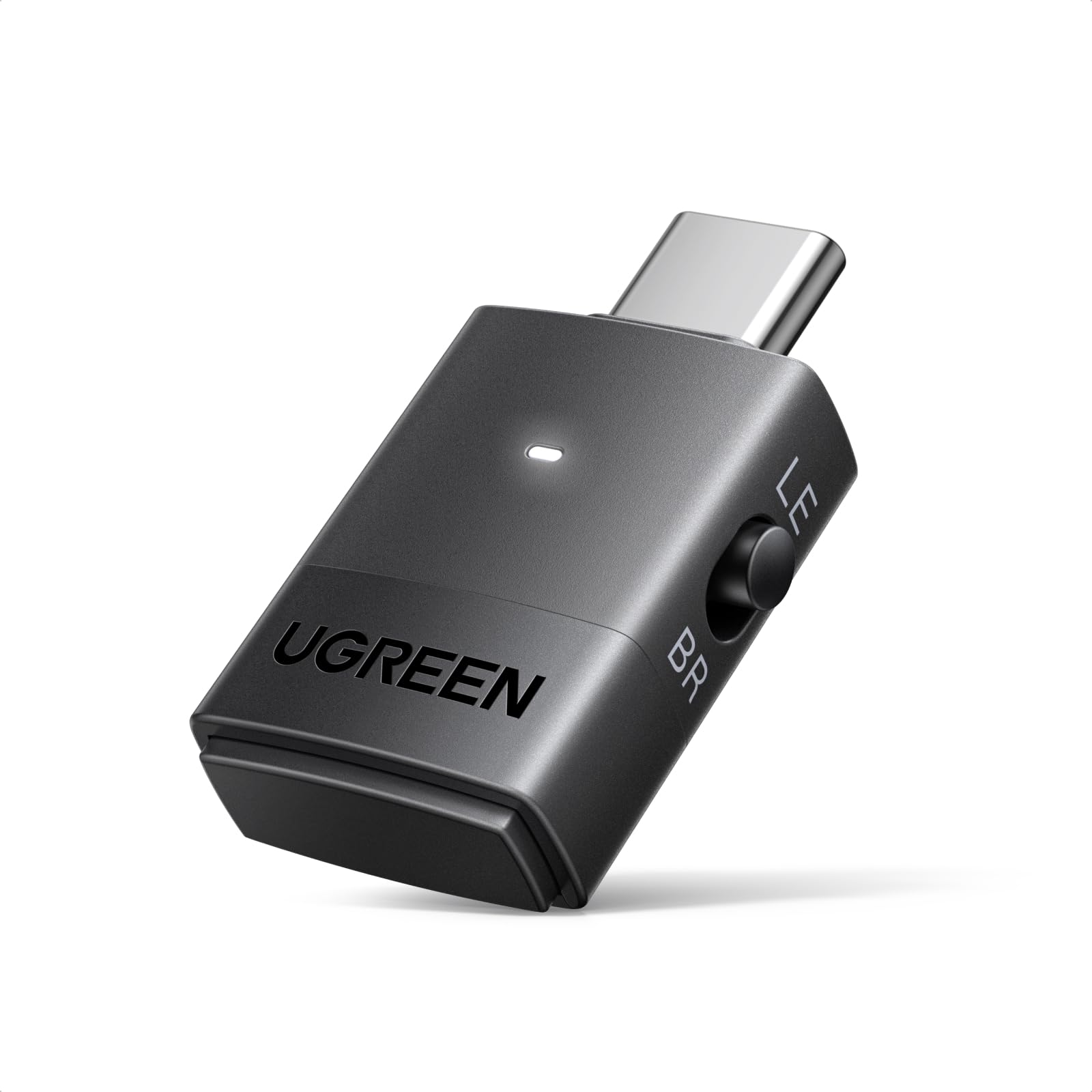
Designed for the PS5 and gaming PC crowd, the UGREEN USB-C adapter is a compact dongle that delivers aptX Adaptive (24-bit/96kHz) and LE Audio support via the Qualcomm QCC3086 Bluetooth 6.0 chip. In LE Audio Low Latency mode, latency drops to 15–30ms — essential for keeping gunshots and dialogue in sync with on-screen action. The one-to-many LE Audio broadcast mode lets multiple listeners share the same stream, useful for late-night multiplayer sessions.
Out of the box, it’s plug-and-play with no driver installation on Windows or PS5. The multi-function button cycles through codecs with distinct LED colors, and pairing is done via a double-click. Dual-device connection in classic Bluetooth mode works well for two pairs of earbuds, though aptX HD is disabled during dual-device use. For AirPods Pro 2 on Windows 11, the adapter defaults to SBC, and users report stable connections with a custom EQ to compensate for the codec limitation.
The form factor is small enough to leave plugged into a front USB-C port, and the Bluetooth 6.0 chip provides solid range through a single wall. It’s not suitable as a permanent home-stereo adapter because it lacks dedicated audio outputs like RCA or optical. But for gamers who want wireless, low-latency audio from their console or PC without replacing their headset, this is a refined, budget-friendly dongle that outperforms generic Bluetooth sticks.
Why it’s great
- LE Audio Low Latency mode delivers 15-30ms sync for gaming
- aptX Adaptive 24-bit/96kHz support for high-def audio
- Dual-device connection for sharing audio
Good to know
- Not for speakers; designed for headsets and earbuds
- aptX HD disabled when two devices are connected
4. 1Mii B06S+ LDAC Bluetooth Receiver
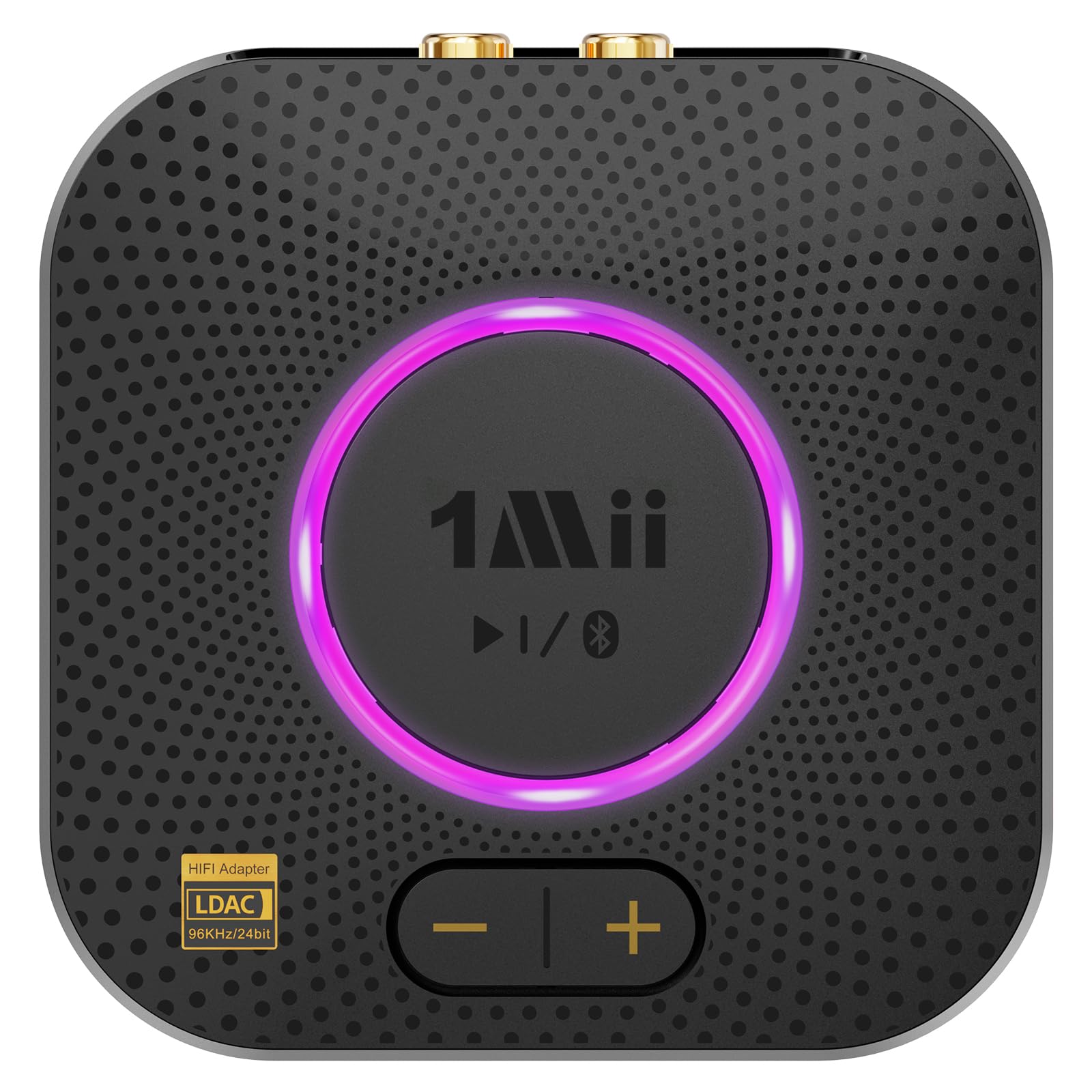
The 1Mii B06S+ is the straightforward solution for adding Bluetooth to a vintage stereo receiver or bookshelf speakers. It supports LDAC at 990 kbps, making it a strong option for Tidal or Amazon Music HD subscribers streaming hi-res tracks to an older amplifier. The Bluetooth 5.3 chip provides fast pairing and stable connections up to 50 feet in open air, and the included power adapter and 3.5mm-to-RCA cable mean you can set it up right out of the box without extra purchases.
The on-board volume buttons and long-press track skip functionality eliminate the need to reach for your phone for basic playback control — a welcome convenience on a nightstand or desk. The small, low-profile enclosure blends into a component stack without dominating the shelf. Users report converting old Bose SoundDocks, Denon receivers, and even turntable preamps to wireless streaming with no audio degradation.
aptX Low Latency and aptX HD are both supported, so TV audio sync is tight when used with a soundbar or powered speaker that supports those codecs. At an entry-level price point, the B06S+ lacks balanced XLR outputs and a premium DAC like the blafili B3, but for the vast majority of home stereo setups, the RCA and 3.5mm outputs are exactly what’s needed.
Why it’s great
- LDAC support delivers near-lossless wireless audio
- On-board volume and track skip without phone
- Includes power adapter and RCA cable
Good to know
- No balanced XLR output for pro gear
- Single pairing mode; no multi-device connection
5. Xvive P3 Wireless XLR Bluetooth Receiver

The Xvive P3 is purpose-built for the live sound environment, plugging directly into the XLR input of a powered PA speaker, mixer, or active monitor. It pairs instantly with a phone for playing intermission music or backing tracks, with a range of up to 100 feet — enough to cover a small venue or church sanctuary. The built-in rechargeable battery provides 8 hours of playback, making it a cable-free solution for mobile DJs and musicians who don’t want to run long aux cables across a stage.
The DAC resolution is 16-bit/48kHz, which is sufficient for live sound reinforcement but not critical for hi-fi home listening. Two P3 units can be paired together for true stereo playback from a single phone. Users report clean, distortion-free audio for events when placed away from strong RF interference — though one reviewer noted noise when positioned within 6 feet of multiple wireless microphones, suggesting that RF shielding in the XLR connector should be considered in dense wireless environments.
The USB-C charging completes in about 2 hours, and the compact build fits easily into a gig bag. At a mid-range price, the P3 offers a practical, portable solution that standard RCA-based receivers simply cannot replicate. For church sound teams, wedding DJs, or fitness instructors needing wireless playback through a PA system, the XLR form factor is the defining advantage. The lack of hi-res codecs (no LDAC or aptX HD) is a non-issue for sound reinforcement, where source quality is often compressed anyway.
Why it’s great
- XLR plug-and-play for PA systems and mixers
- Built-in 8-hour rechargeable battery
- 100-foot range covers most event spaces
Good to know
- 16-bit/48kHz only; no hi-res codec support
- May experience RF interference near multiple wireless mics
6. YMOO 2.4GHz Wireless Audio Transmitter Receiver Kit
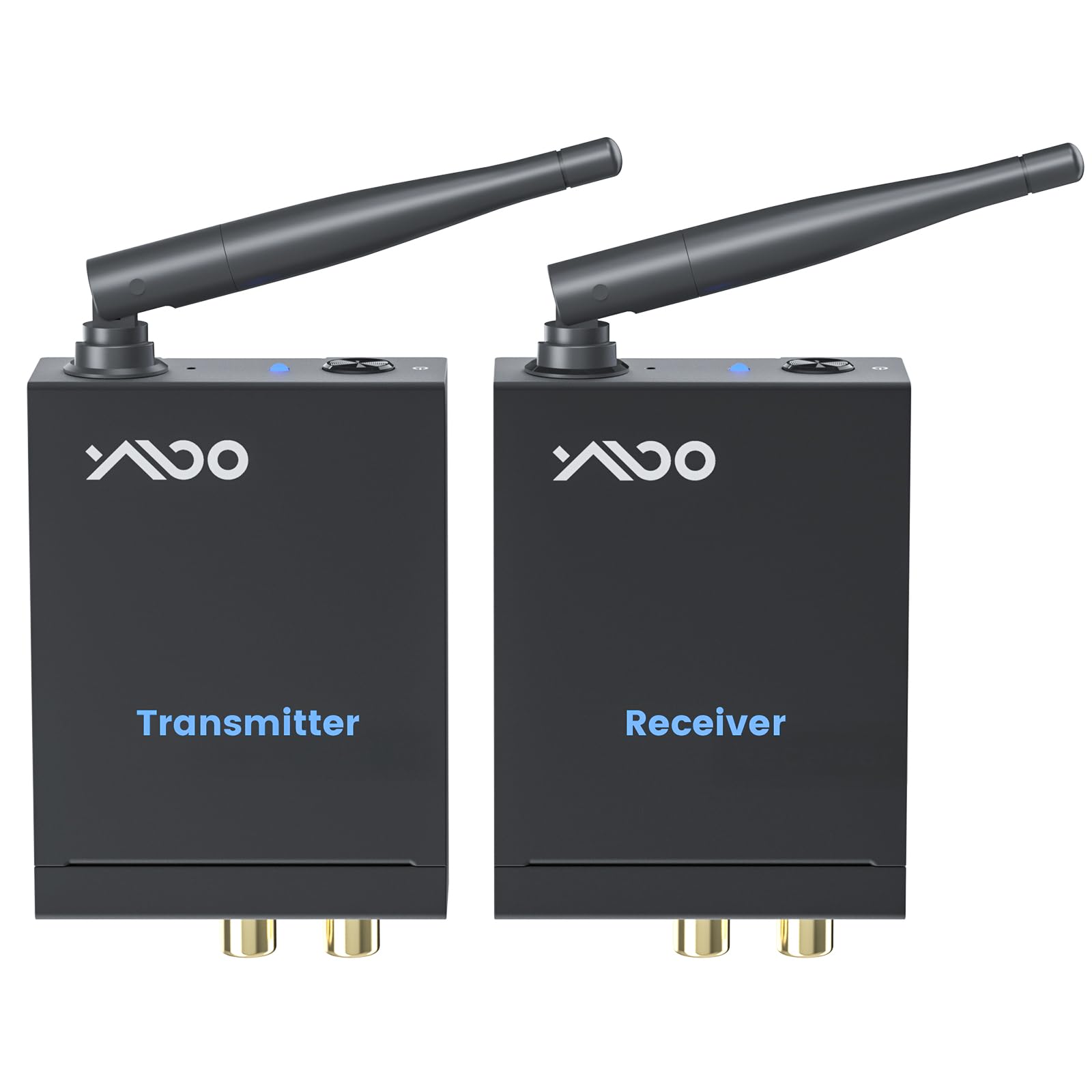
The YMOO kit uses 2.4GHz radio frequency instead of Bluetooth, which means it operates entirely free of Bluetooth codec compression and pairing limitations. The transmitter connects to a TV, CD player, or projector via RCA or 3.5mm, and the receiver connects to a powered speaker or amplifier. The rated 20ms latency and 328-foot line-of-sight range make it a serious contender for sending audio to outdoor patio speakers, a garage system, or a whole-house audio zone where walls would cripple Bluetooth.
The metal enclosure gives the units a durable, non-toy feel, and the automatic power-on and pairing eliminates the need for button combos. Users have successfully transmitted TV audio 70 feet through brick and sheetrock to an outdoor stereo, and DJs have used it for reinforcement across multiple floors at events. The 24-bit CD-quality transmission is clean and noise-free, and the lack of any audible compression artifacts is noticeable compared to standard Bluetooth SBC streaming.
The trade-off is that this is a dedicated point-to-point wireless link, not a multi-device Bluetooth adapter. You cannot pair a phone directly to the receiver without the transmitter connected to the phone, which adds complexity. At a mid-range price, the metal build and exceptional range make it the best choice for permanent installations where latency and reliability matter more than convenience. For sending TV audio 50 feet across the house, this outperforms any Bluetooth adapter in terms of sync and stability.
Why it’s great
- 20ms ultra-low latency with no codec compression
- 320-foot range reaches outdoor and remote speakers
- Rugged metal enclosure for permanent installation
Good to know
- Not a Bluetooth receiver; requires paired transmitter
- Not for direct phone-to-speaker streaming without TV source
7. SVS Soundpath Wireless Audio Adapter

The SVS Soundpath Wireless Audio Adapter is a specialized 2.4GHz transmitter/receiver kit designed exclusively for connecting a subwoofer or amplifier to a home theater receiver wirelessly. It bypasses Bluetooth entirely, transmitting uncompressed stereo audio over a dedicated radio frequency with no codec loss. This is important for subwoofer applications where even slight compression or latency can muddy low-frequency transients and ruin the tactile impact of a bass hit.
Setup takes under 5 minutes: plug the transmitter into your AVR’s subwoofer pre-out, plug the receiver into the sub’s line-level input, and power both with the included USB adapters. The units are factory-paired, so there is no pairing button to press. Users report flawless performance at 20–30 feet through walls, with no signal dropouts or interference from WiFi networks. The 3.5mm-to-RCA cables included in the box are functional but feel slightly thin — upgrading to thicker shielded cables is a common recommendation for audiophile builds.
At a premium price, the SVS Soundpath is the most expensive product in this lineup, but it solves a very specific problem: placing a subwoofer in an acoustically optimal position without running a long RCA cable across the room. For home theater enthusiasts who have battled with floor runs or who need a sub behind a couch, the cost is justified by the clean, uncompressed signal path. Bright blue LEDs on both units may need dampening with tape in a dark theater room, a minor aesthetic gripe.
Why it’s great
- Uncompressed 2.4GHz transmission with zero audio quality loss
- Factory-paired; no pairing process required
- Reliable 30-foot range through walls and floors
Good to know
- Bright blue LEDs may be distracting in dark rooms
- Included cables are lower quality than the unit
FAQ
Can I use any Bluetooth adapter with passive speakers?
What is the difference between a Bluetooth transmitter and receiver for speakers?
Does LDAC or aptX HD make an audible difference on most speaker systems?
Final Thoughts: The Verdict
For most users, the bluetooth adapter for speakers winner is the blafili B3 because its combination of balanced XLR outputs, ESS Sabre DAC, and universal codec support future-proofs any system from a desktop setup to a professional studio. If you want an affordable, plug-and-play upgrade for a vintage stereo with RCA inputs, grab the 1Mii B06S+. And for live sound or PA applications where XLR connectivity and battery portability are non-negotiable, nothing beats the Xvive P3.